Categories
Inspiration Posts Walk Reports

Dead Man’s Fingers walk

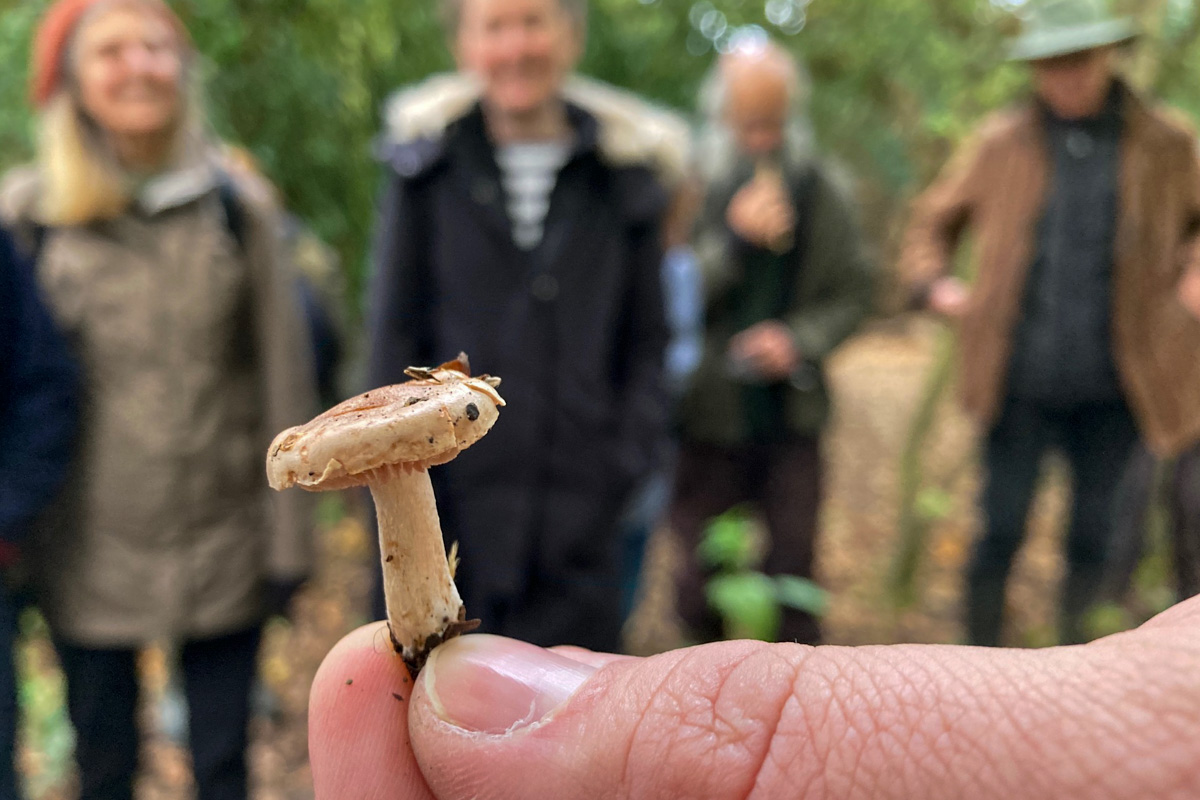
To be fair, I could have picked any of the names to headline today’s two-hour, ‘sold out’ Lukas Large fungi walk around Moseley Bog. But Dead Man’s Fingers were one of my favourite’s with their pointy black protuberances that look nothing like what anyone would imagine a mushroom to be.

dead man's fingers fungus

There was also:

The amethyst deceiver, which changes colour, almost like camouflage.

amethyst deceiver fungus

The white saddle or elfin saddle, a convoluted spore shooter that looks a bit like a biology book diagram.

white elfin saddle fungus

Clustered brittlestem – which grows in clusters with er brittle stems.

clustered brittle stem

Brown roll-rim – the only fungus known to have killed a mycologist (someone who studies fungi). Julius Schaeffer died after eating it. Apparently it can cause an allergic reaction which leads the body to kill own blood cells. “Eating one is a bit like Russian roulette,” says Lukas.

brown roll-rim fungus

Trooping funnel – which grows in troop lines or rings.

trooping funnel fungus

Birch brackets – which grow on birches and have lots of medicinal properties.

birch bracket

Apricot clubs – a lovely yellow coral fungus.

apricot clubs fungus

Sheathed woodtufts – shiny!

sheathed woodtuft fungus

Inkcaps – I think these were the ones that were highly poisonous if alcohol is consumed a few days before or after.

ink cap fungus

I think the photo below is of the red cracked bolete – which drops spores out of pores instead of gills on the underside…

Candlesnuff – because that’s what it looks like.

candle snuff fungus

Hairy curtain crust which commonly grows on oaks.

hairy curtain crust

Shaggy inkcap aka lawyer’s or judge’s wig.

Green elf cups – although some walkers thought it was blue. Maybe teal? Anyway, this vivid coloured small mushroom also discolours the decomposing wood it grows on.

green elf cap

From what I can gather, the 2021 ‘mushroom season’ (Sept-Nov or until the first severe frost) is a good one. Certainly once we started looking in the Moseley Bog nature reserve they were everywhere, popping their heads above ground, on trees, in mud in order to spread their spores.

There are 15,000 species in the UK, all running on a limited number of describable characteristics – shape, size, colour, texture, gills, tubes, webbing, caps, cups, smell, sap, relationship with nearby trees. Even Ray Mears doesn’t fully trust his fungus ID skills when eating in the wild.

Or as someone said at the start: “All mushrooms can be eaten once, not all can be eaten twice…”

Thanks again to Lukas Large, Natural Sciences Curator at Birmingham Museums, who led the walk. You can check out his Flickr stream for some great photos.

We found out about him from fellow Walkspace member Jacob Williams, who led one of our members walk on a journey to the Centre of the Earth and urged us to look out for Lukas Large’s next walk. Follow him on Twitter @lukaslarge.

Or just get out there and look. But as Lukas says: “If you want to go foraging for fungi, please do it ethically. Many of our nature reserves and country parks are the last fragments of nature in a sea of people and agriculture, so the fungi there are precious and should be left for wildlife and other people to enjoy.”

All photos: Pete Ashton (except for amethyst deceiver and white saddle by Fiona Cullinan)
Categories
Upcoming Events Walkspace Erratics

Walking the Stirchley Skull for Halloween

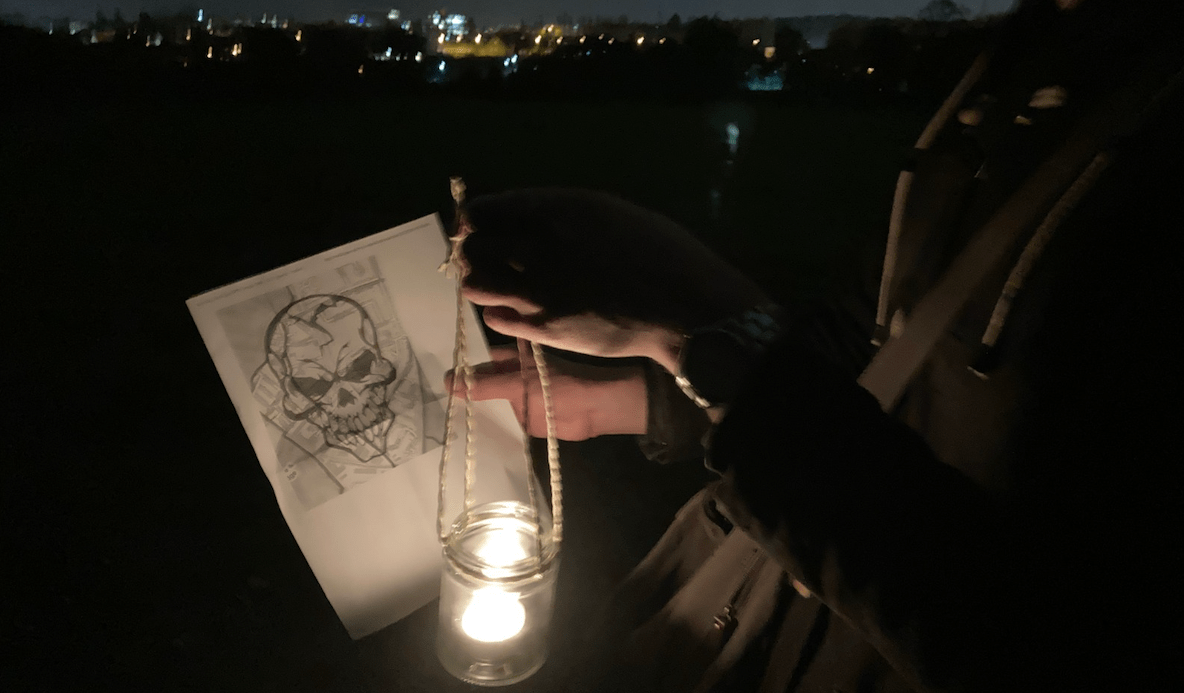
For this month’s Halloween-themed Erratic we invite you to walk the Stirchley Skull with us. We created the skull last year by overlaying a map of Stirchley with a spooky skull and then walking it into existence on Halloween night. We were necessarily limited to six people due to plague restrictions but this time we hope a few more of you will be able to join us.

Halloween is a time when the veil between this world and the spirit world is at its thinnest and for one night only the spirits of the departed may return to walk the earth. It’s possible that some demons may get through too so for protection we recommend walking with a lantern. A limited number of jar lanterns will be provided on the night but please feel free to bring your own if you prefer. We shall also be providing home-made soul cakes, tasty baked treats said to contain the souls of Christians trapped in Purgatory.

This gentle but chilling walk will start at 7:30pm, Sunday 31st October, outside Stirchley Library. As long as we don’t lose anyone to the spirit world along the way then it shouldn’t last longer than 90 minutes. The terrain will mostly be pavement and roads, with a bit of grass and a gravelly track. Prepare for muddy conditions and incursions from the Otherworld. It’s a circular (or skull-ular) route finishing back at the library, at which point you’re free to leave or come with us to the pub to de-spook.

Book

Although the Erratic walks are free to attend, booking in advance lets us know what sorts of numbers to expect and also makes it easier for us to communicate any changes or announcements.

Categories
Walk Reports Walkspace Erratics

Photos from “In Search of the Brumphalos”

On Sunday 22nd August we launched our new series of public walks with In Search of the Brumphalos, a journey to find the heart of Birmingham. The walk was devised and lead by Walkspace members Andy Howlett and Robson and was inspired by an article in The Guardian which revealed the precise geometric centres of the UK’s 10 largest cities.

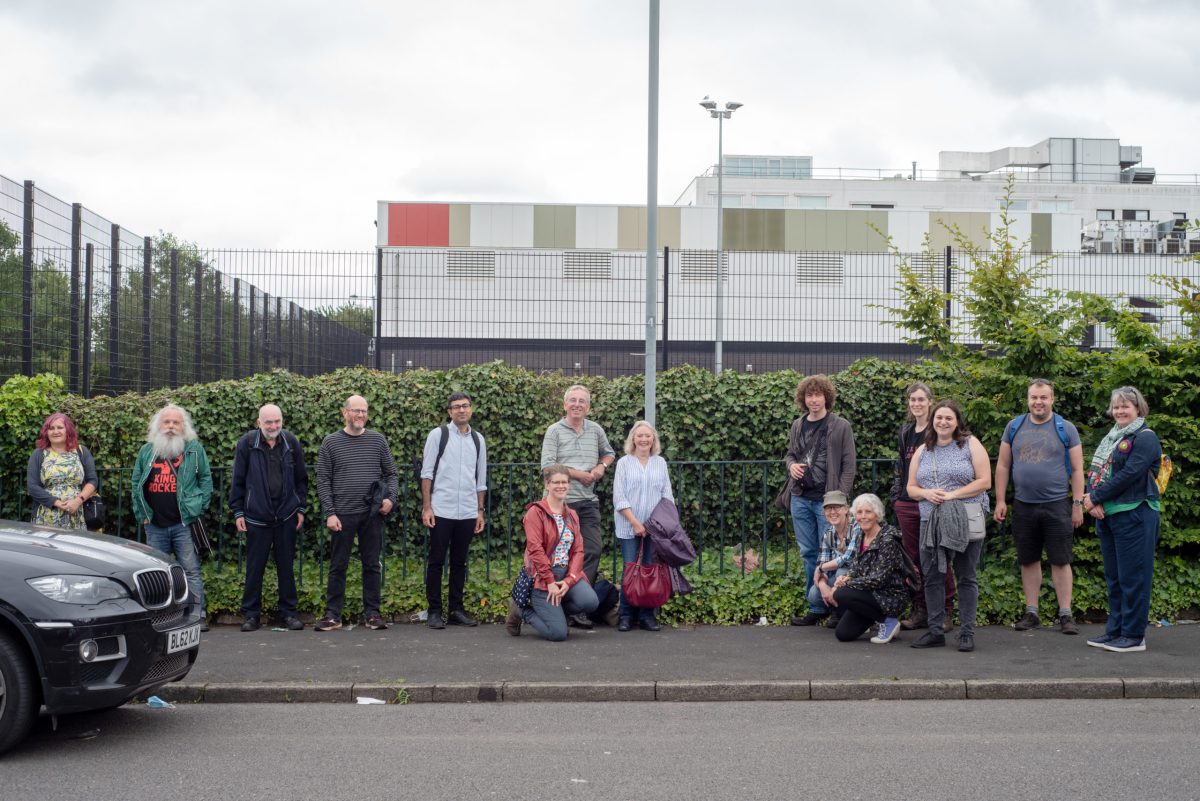
There were seventeen of us on the day and we visited various sites that might be considered the centre of the city, some obvious, some a bit more esoteric, before finishing at the mathematically calculated “real” centre which turned out to be on a residential street in Duddeston.

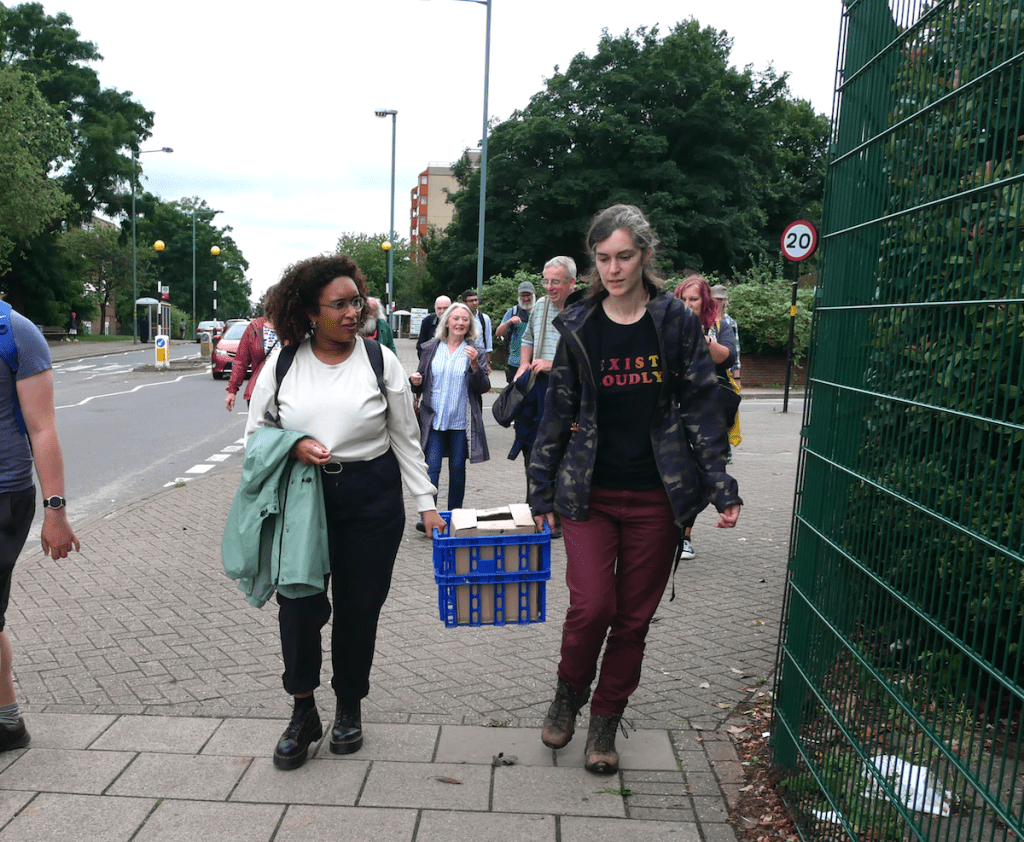
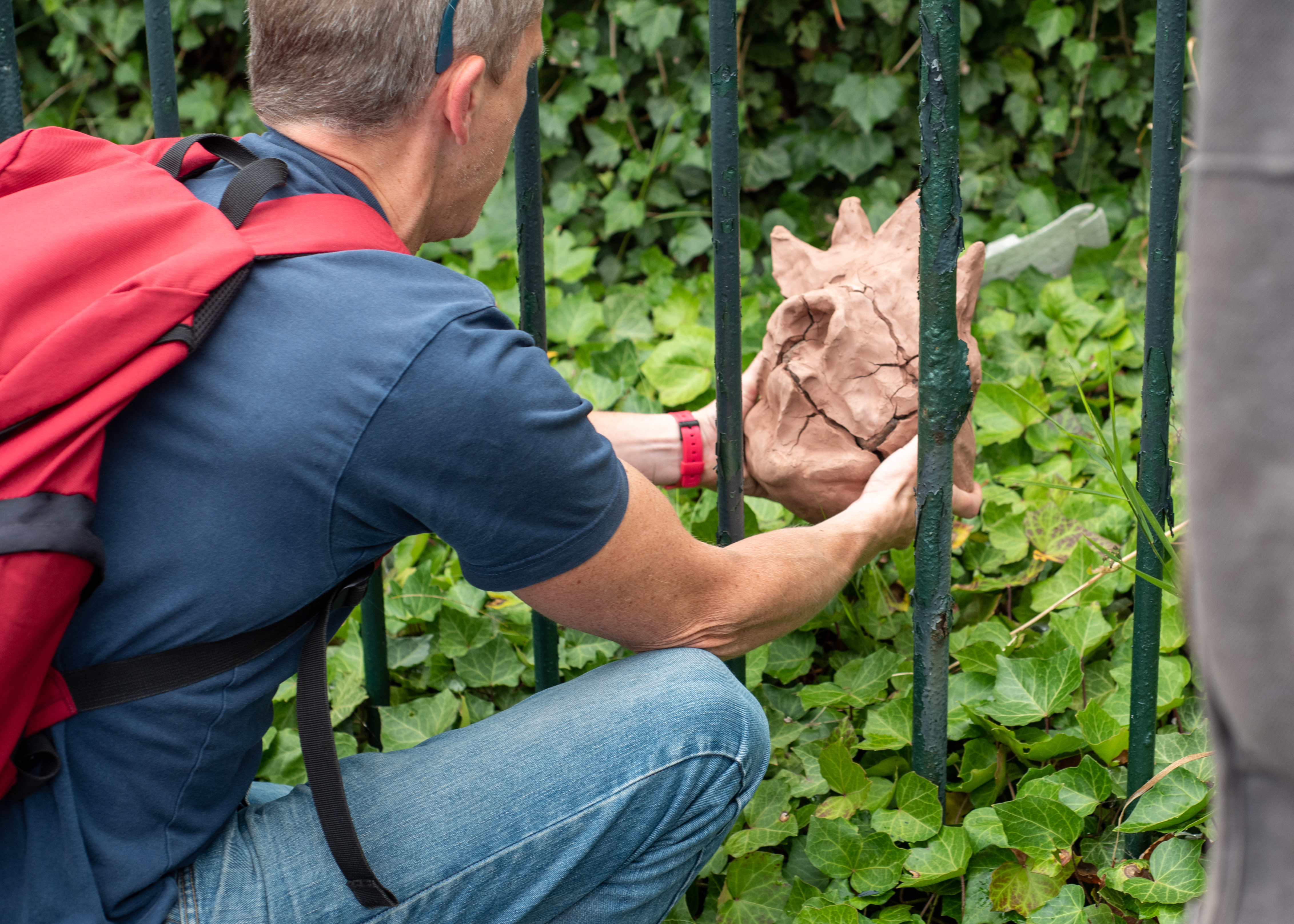
Inspired by Greek mythology we carried a specially made “Brumphalos” stone with us to mark the spot. The original Omphalos (meaning “navel”) is a sacred stone in Delphi, believed to have been placed there by Zeus to mark the centre of the ancient world. Our Brumphalos was created by visual arts duo Hipkiss and Graney and participants on the walk took it in turns to carry it in pairs in a concealed crate. The stone was only revealed once we reached our destination, at which point we carefully placed it on a bed of ivy behind a railing where it shall remain until it is reclaimed by the earth.

Photo by © Fiona Cullinan
Photo by © Pete Ashton
Photo by © Fiona Cullinan
Photo by © Pete Ashton
Photo by © Andy Howlett
Photo by © Pete Ashton
Photo by © Andy Howlett