Categories
Inspiration

Robson on… Solitary strolling

I like to walk alone. It’s my preferred ‘method’ for walking. Either from the front door or, before lockdown, farther afield. I like to cover the miles and this is easier done alone. Companions can be distracting. Add just one like-minded wanderer to the mix and mph drops by around 25%. If that like minded wanderer is interesting and enlightening I find I use up most of my limited brain-power on conversation, leaving very little left for the walking, looking, seeing (slightly different from looking) and thinking. 

There’s a real sense of adventure, no matter how small, in going it alone. The beguilingly big hill, the unfamiliar sector of suburbia, the mosaic of moorland, the wild wood all create a sense of completion when you open the front door at journey’s end. The feeling of ‘I’ve done that’ is valuable to me. To steal a word often used by the excellent John Rogers, a really great local-explorer, the walks I take are ‘restorative’. 

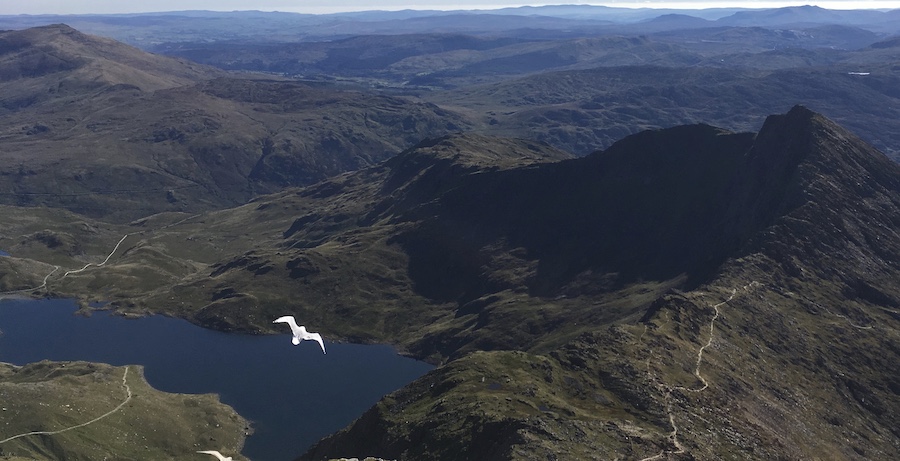
There is a contemplation, a sense of wonder and oneness to solitary walking that I don’t get in the company of others. I have find a comforting insignificance in sitting alone on a hillside watching the day wheel by.  

To quote some oft used lines from Childe Harold’s Pilgrimage by Lord Byron – 

There is a pleasure in the pathless woods,
There is a rapture on the lonely shore,
There is society, where none intrudes,
By the deep Sea, and music in its roar:
I love not Man the less, but Nature more,

Like young Harold it is not that I do not like my fellow humans, some of them are quite pleasant, it’s just that I can enjoy the world with out them. In fact it’s more acute than that, sometimes I need to enjoy the world without them. 

This is not unique to me, of course. Most of us at some point will desire solitude of one sort or another. Perhaps it is more important now when solitude, or at least a lack of socialising, is a necessity. Some of us will be holed up with loved ones or house mates who we might not be used to spending so much time with. That personal space, a chance to turn off and on again, is important so take it if you get the chance. (In case you were wondering it’s entirely acceptable to say to your fellow lockdown-ees ‘I am going for my daily walk and no, you can’t come.’)

I prefer to walk alone. I encourage you to do the same. 
@robson72ep

Categories
Inspiration

Walking in lockdown

In this time of lockdown many of us will be doing a lot of our walking vicariously through books, films, podcasts etc. so we thought we’d offer some suggestions for ambulatory entertainment to help scratch the walking itch.

First up is the new film by “wandering artist” Andrew Kötting, The Whalebone Box, released today on MUBI.

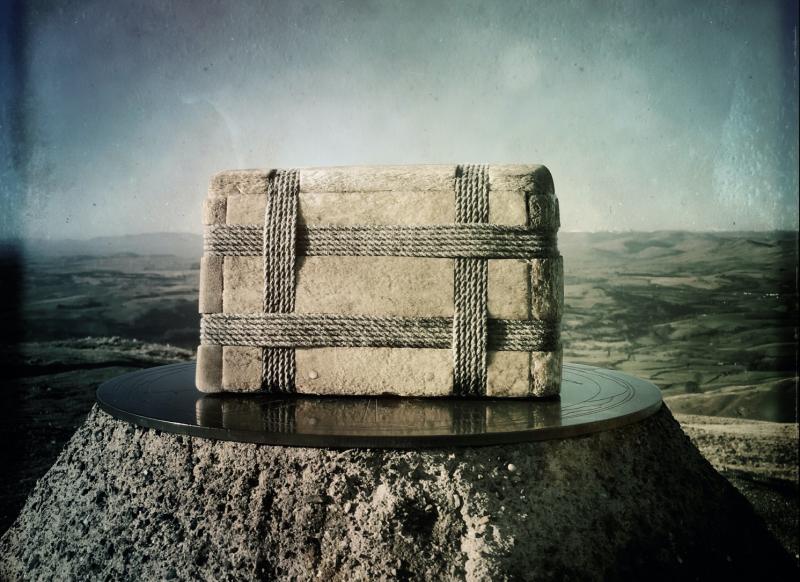
Synopsis: Some time ago, a whalebone box that was found washed up on a remote beach was given to writer Iain Sinclair. Once touched the box can change lives. In 2018 filmmaker Andrew Kötting, photographer Anonymous Bosch and Sinclair take the box on a reverse pilgrimage from London back to the Isle of Harris.

I haven’t watched it yet but it’s Andrew Kötting so you can’t really go wrong. Watch it here and check out the other Kötting titles available while you’re at it.

A fellow Walkspacer tipped me off about this episode of the Weird Studies podcast Green Mountains Are Always Walking. Hosts JF and Phil exchange ideas about the weirdness of walking in a conversation that meanders between zen monks, novelists, Jesuits and more. Again I must confess I haven’t got round to listening myself yet but that’s what weekends are for.

As for actual physical walking you can do yourself (currently limited to 1 hour a day) we direct you to the words of Phil Smith over at Triarchy Press for some inspiration. Phil’s piece Walking in a Time of Virus suggests some ways we might make the most of our daily state-sanctioned strolls.

Part of what needs to be broken here is the idea that natural beauty or history is exclusively (or even more intensely) present in special sites, usually with big car parks and information boards. Every street you walk down is a treasure of geology and materials, each window is a museum of symbols, every tree is a drama of buds, enkissings, wounds and blossoming. For once, many of us have the time to teach ourselves about these things.

That’ll do for now. If you have any recommendations of your own get in touch!

Stay safe.

Categories
Walk Reports

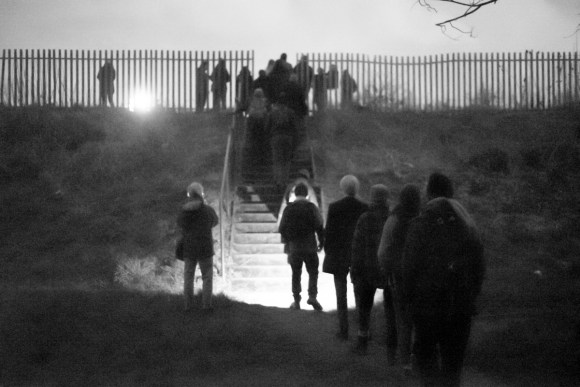
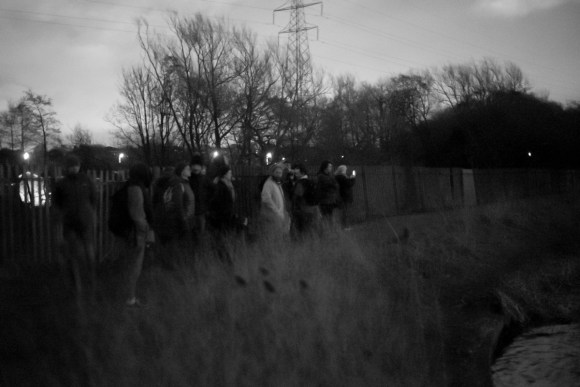
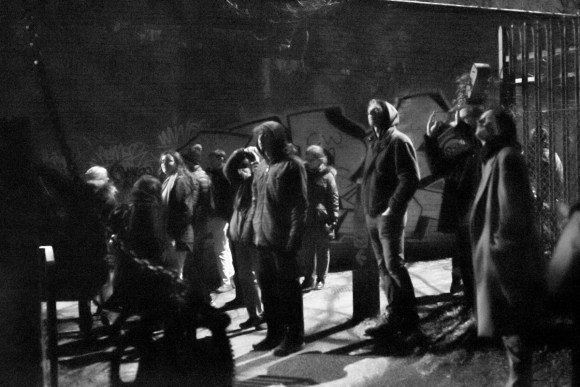
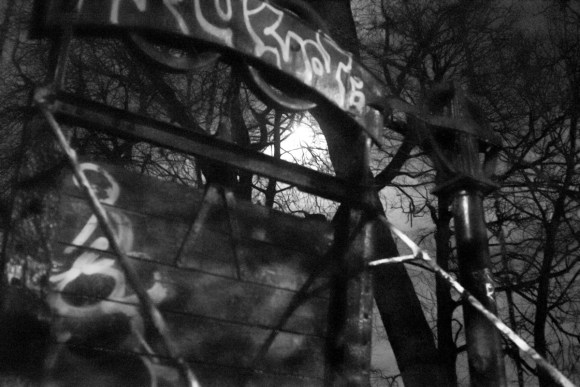
Photos from full moon walking

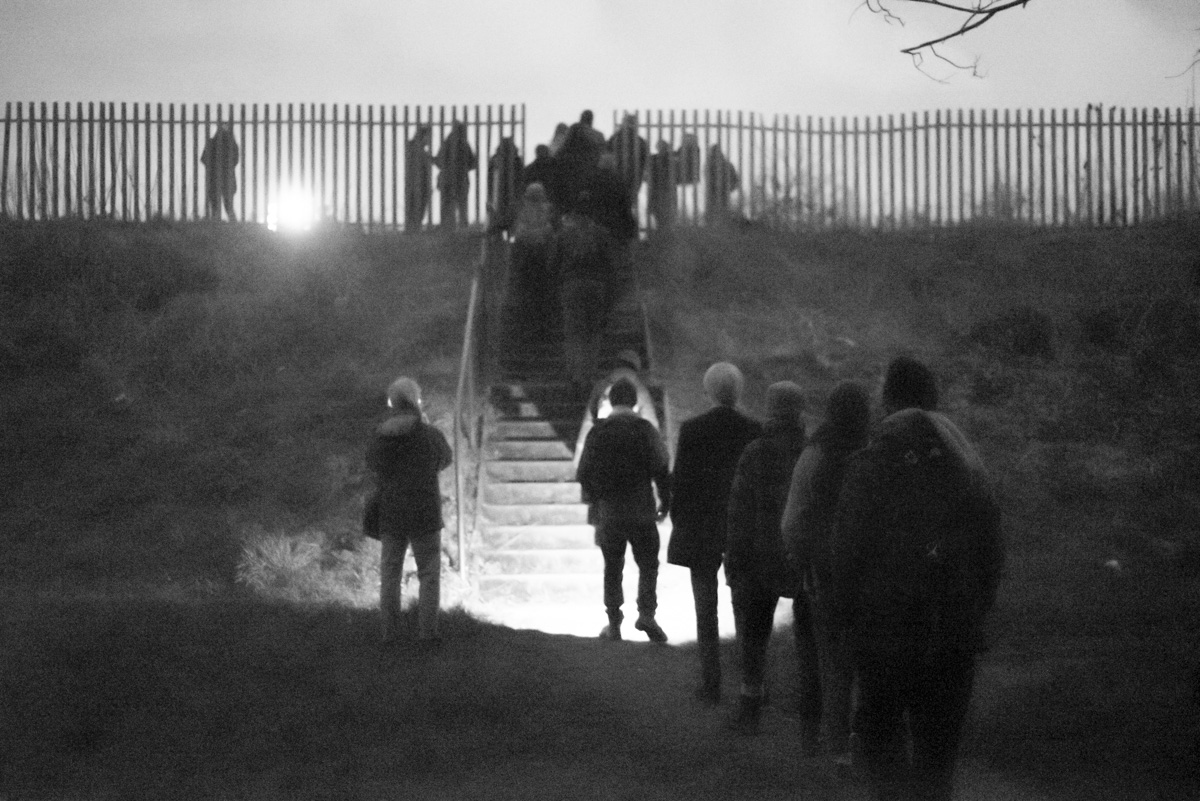
Our second Walkspace walk was another night walk, but happening a fortnight after New Moon Walking it was significantly brighter as the moon was now so bright it was casting shadows.

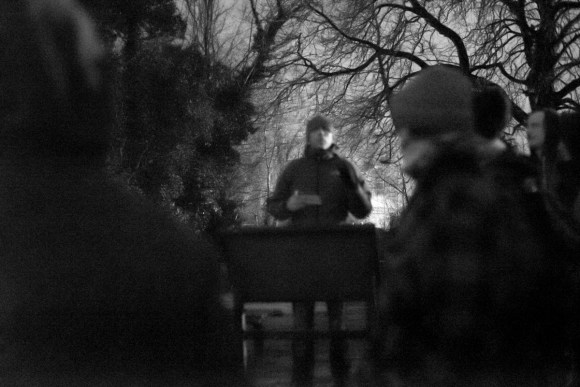
We had 22 people on the walk, which was way more than we anticipated so there’s certainly an appetite for this sort of thing. Yay!

This walk riffed off Fiona’s original ideas and brought in Andy and our first associate member Robson who brought some local history and mythology to the proceedings.

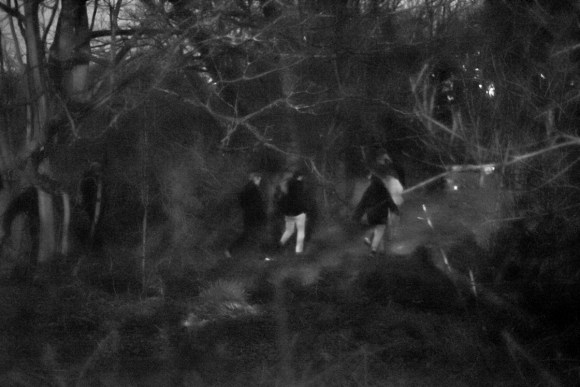
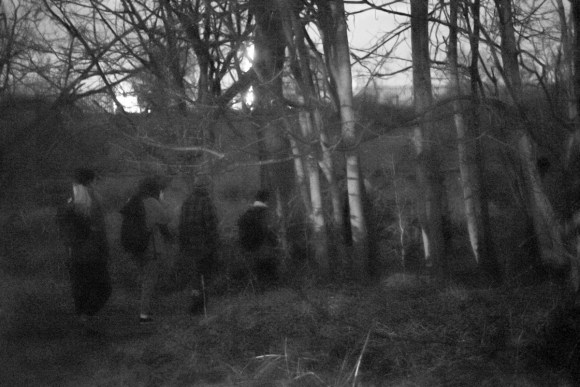
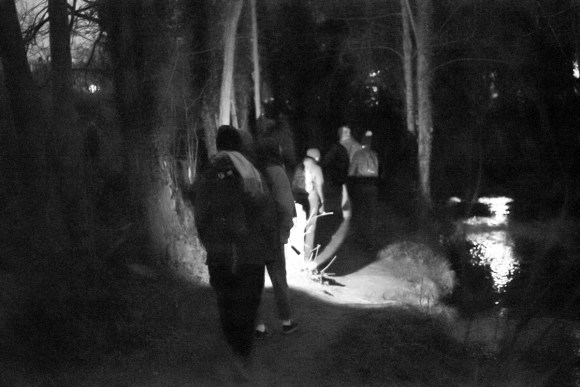
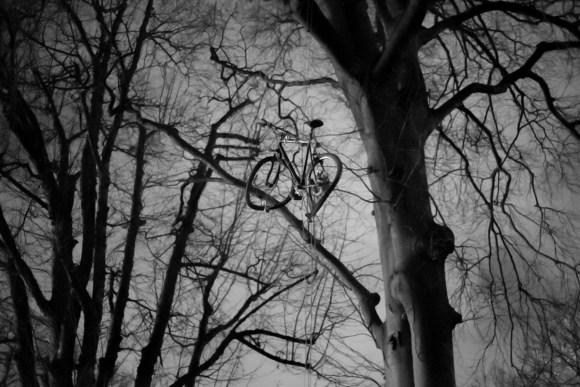
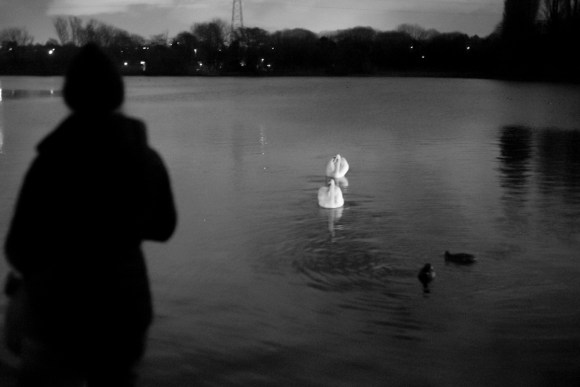
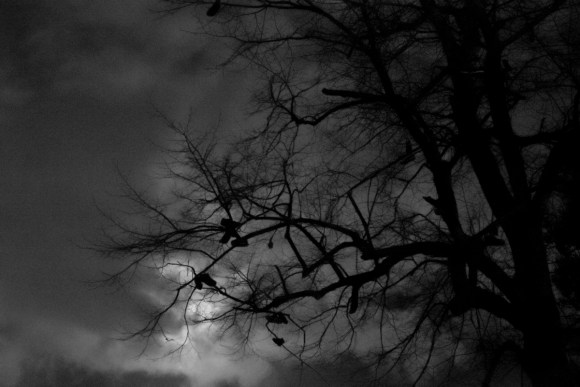
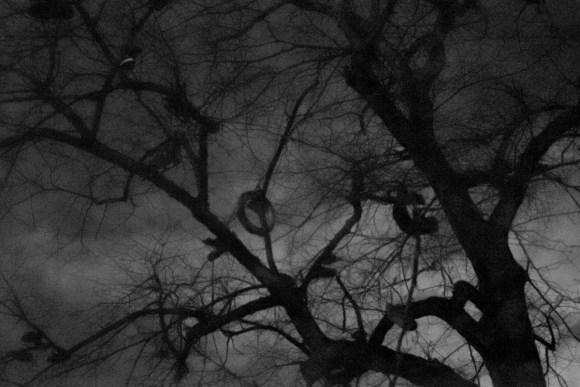
We started on Fordhouse Lane at the River Rea bridge then made our way through the Worthings tunnel to the Lifford Woodland which leads to the Reservoir. Passing the various trees, strewn with offerings of bikes and shoes, and the mineral factory we joined the canal and wended our way back to Stirchley.

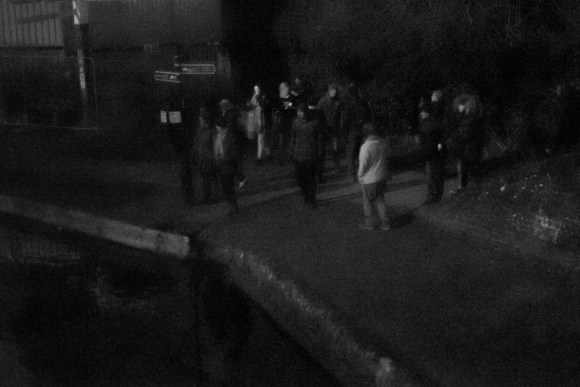
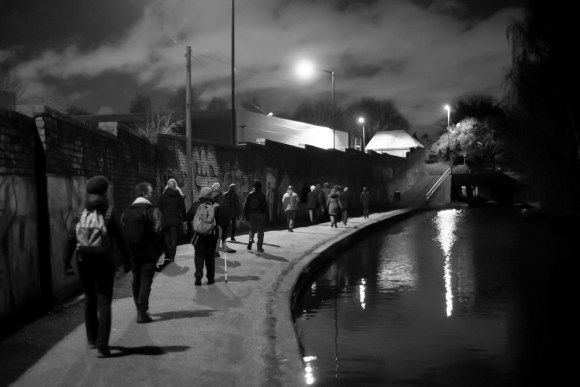
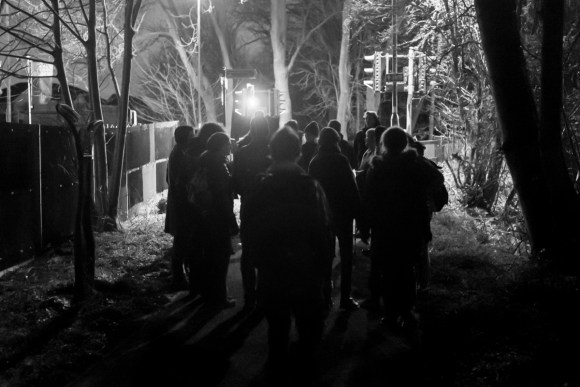
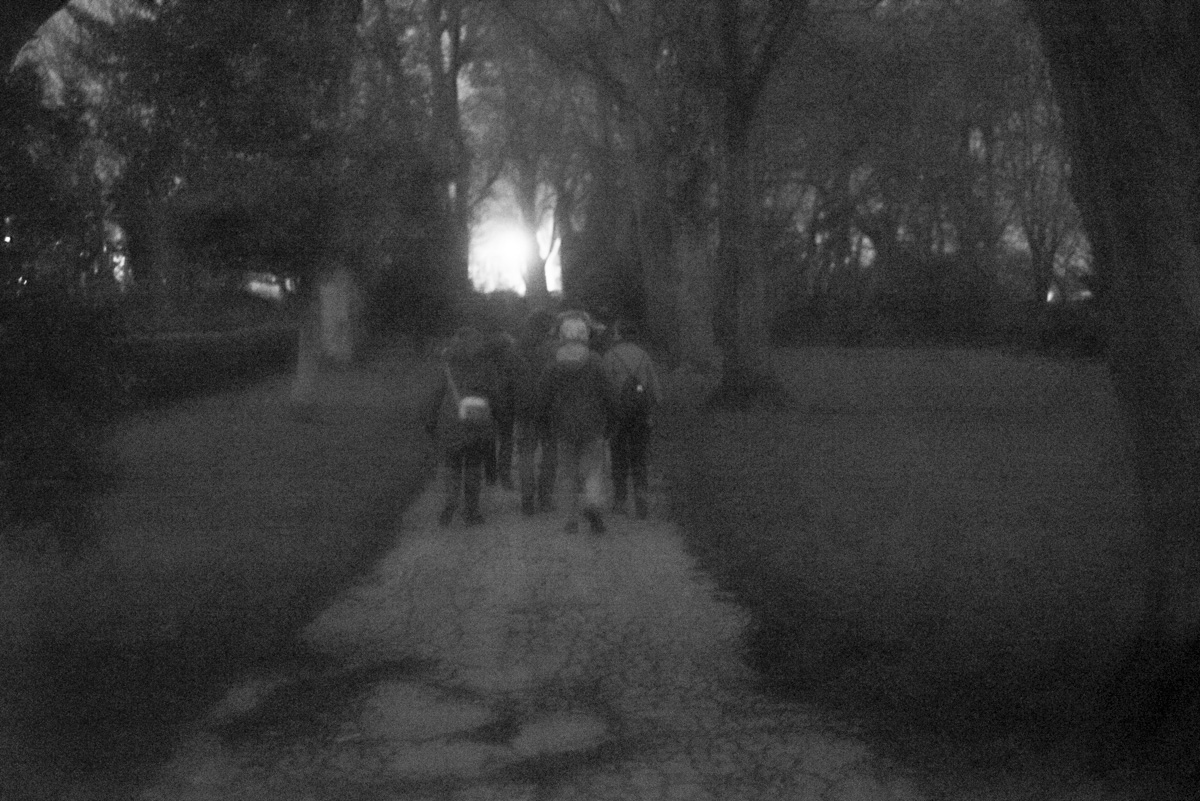
A full report will follow soon, with details of the third and final (for now!) night-time walk on March 22nd, but for now here are Pete’s grainy photos to prove it actually did happen.

Thanks everyone!

Categories
Upcoming Events

Full moon walking

An expedition to explore our local waterways by full moon.

The countdown to our second Stirchley moon mission has begun. After the success of Dark Moon Walking, we are running a second Stirchley moon walk on the evening of Sunday 8th March, just ahead of full moon. 

For this bewitching – if slightly scary – group walk, we shall follow a circular route around the waterways of Stirchley and Lifford. If it is a clear night there will be the chance to view some lunar-charged moon water ripe for rituals and spells.

Our water-themed walkabout features secret tunnels, woodland paths, a swan lake, the calm of the canals and a babbling river. 

We think this walk will be magical and look forward to reclaiming these places by night. However our second walk is a lot more off-piste than the first, so please read the small print on the booking page before signing up.

Booking is essential. We will only run night walks if we have a minimum number in the group. More details on the booking page or contact Fiona with any questions.

Categories
Posts

Wayfaring with Kruse

Susan Kruse is one of the first people we thought of when making a list of “people we know who make art using walking in the Midlands”. Her work is multifaceted and always fascinating and I’m delighted to see she’s revamped her blog, titling it Wayfaring: On walking, magic and the landscape of Britain.

Two new posts appeared recently:

All Shall Be Well

I was at the beginning of a long walk, an adventure that had no fixed time to it. I only knew that I wanted to stay ‘out,’ in the world and away from my usual life for several weeks. It felt right to take some time to contemplate my journey in the home of a woman who had chosen to go the other way; inward rather than outward.

The Midnight Emperors

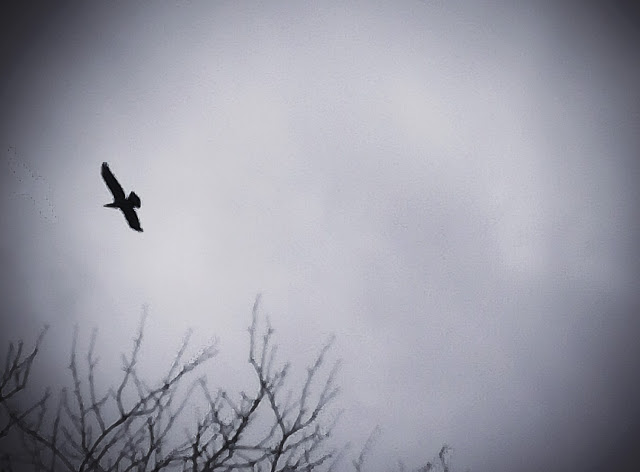
People get confused between ravens and crows, but once you have seen (and heard) ravens, they are unmistakable. Crows are smaller, with a flapping flight that looks as if it takes some effort; head on, their wing tips curve up in a distinctive arc. Ravens however, are Emperors; lifting off and away with a graceful, soaring flight, they soar more than they flap and are masters of the air. Ravens will fold their wings and fall through the air, flipping onto their backs and rolling before snapping out those great wings and lifting up again, an action that seems to be executed for the sheer joy of it.

Definitely one to add to your “walking blogs” feeds.

Categories
Inspiration

SW Coast Path on the telly

I just happened across this by accident but the BBC is showing a new five-part series in which explorer Paul Rose walks the 630 miles of the SW Coast Path – Britain’s longest national walking trail. The first episode just went out and you can catch it on iPlayer here: Coastal Path.

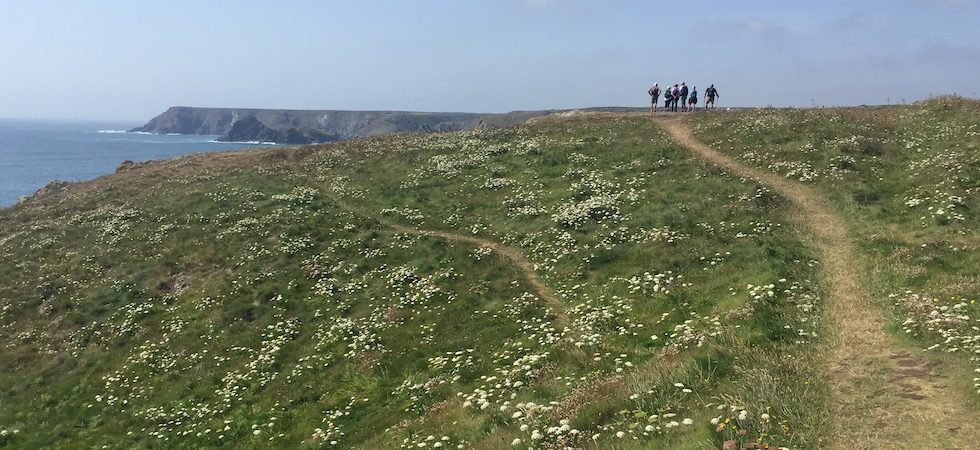
After walking a couple of bits of the SW Coast Path last year (photo is from Lizard to Kynance Cove), and reading The Salt Path (highly recommended), I’ve become a bit obsessed by SWCP. Hopefully this show will do it justice.

Categories
Walk Reports

Photos from dark moon walking

The inaugural Walkspace walk took place on Sunday night and we were very pleased with how it went. Eight of us were led by Fiona Cullinan through a recreation ground, a park and along the canal under the clear black skies of a new moon.

We were walking through areas that held no fear during the day but at night were forbidden territory. What would we find and how would we feel to leave the street lights and enter the dark?

We met at Bournville Station and quickly made our way to the Cadbury Women’s Recreation Ground, a beautiful hidden gem in the day but a bit spooky by night. After spreading out to contemplate the darkness in silence for five minutes we moved on to Cotteridge Park, pausing for a chat at the glacial boulders.

After the relative quiet and dark of the parks it was back to the shock of the lit main streets before joining the canal for the walk back to Bournville station. The walk completed we adjourned to the British Oak for refreshments and the planning of future adventures.

Fiona will be processing the walk soon – the third in her Stirchley walk series – but for now here are some photos Pete took at a deliberately high ISO and barely in focus.

Categories
Posts

Footnotes – a YouTube channel

I’ve just launched a YouTube channel called Footnotes as an outlet for my walking related videos. Having spent several years working on a ridiculously massive film project about the Central Library (coming soon), it will be nice to get back to shorter, more regular output. The first video is an account of the Cross City Walks project Pete and I did five years ago – have a look and if you like, please subscribe for more!

The plan is to re-upload my old videos at a rate of one every couple of weeks to trick the algorithm into thinking I’m a reliable uploader and by the time I’ve got my back-catalogue up hopefully I’ll have something new to share.

Categories
Inspiration

Dazzle walks

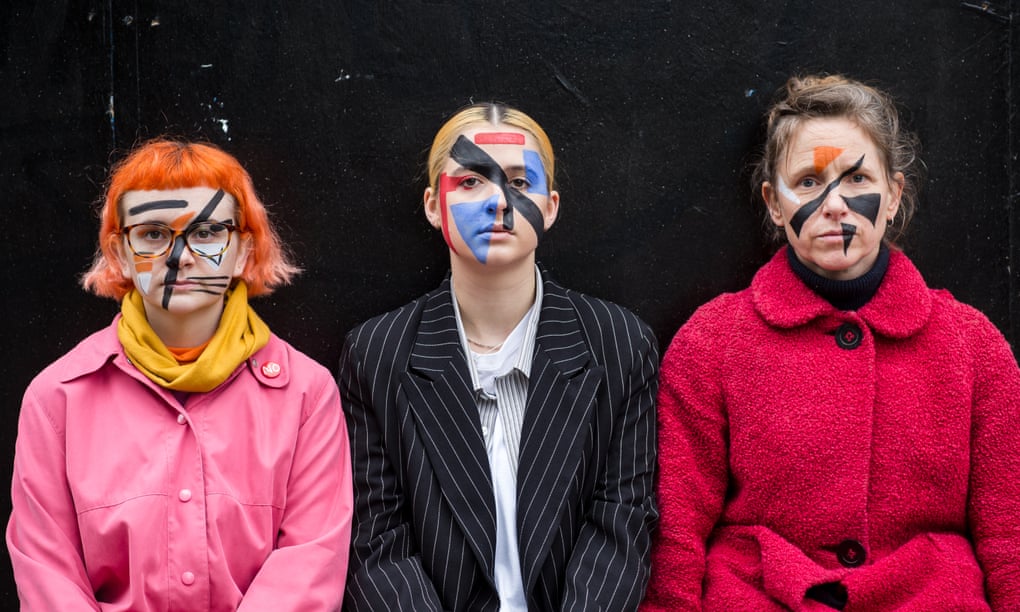
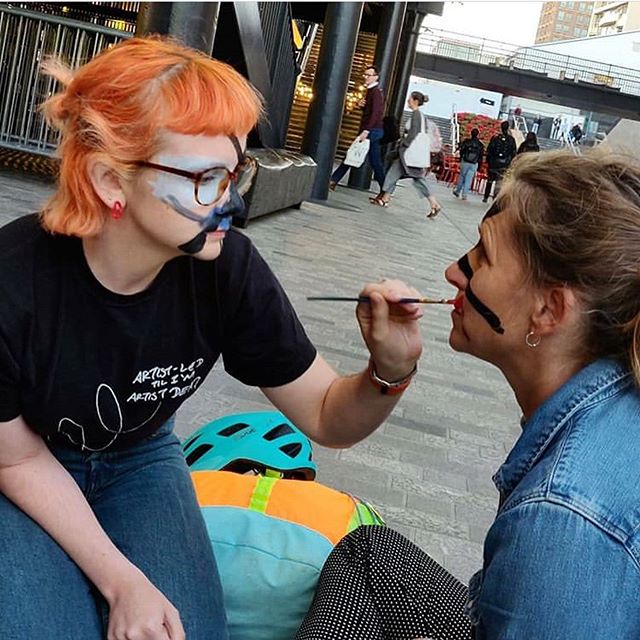
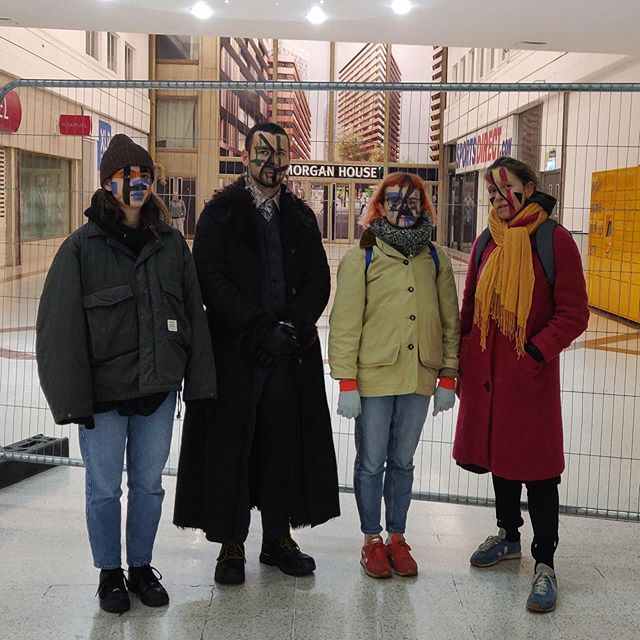
Emily Roderick, who splits her art-life between the Midlands and that London, was featured in the Guardian the other week along with the rest of The Dazzle Club, doing walks through the capital with their faces painted with abstract shapes.

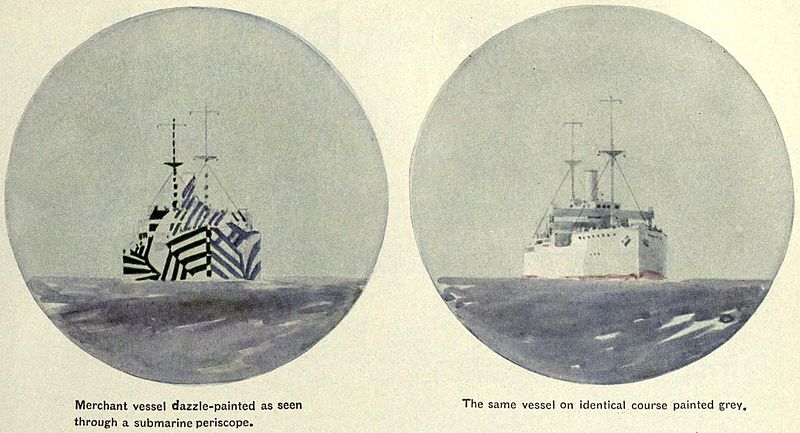
They’re using a technique developed by artist Adam Harvey that he called CV Dazzle in 2010 which is based on the pre-radar method of protecting ships from torpedos in WWI by painting them with abstract shapes. This Dazzle Camouflage confused submarines who were unable to accurately calculate the distance and heading of a ship and thus unable to hit it with a torpedo.

via Wikipedia

CV Dazzle makeup, standing for Computer Vision Dazzle, is intended to work in a similar way by either making the face invisible to recognition software or simply disguising the individual so they can’t be tracked.

There’s a lot of this sort of art around, but it’s interesting, and relevant to our interests, to see the Dazzle Club using group walks as the way to get it out there. It turns the act of wearing the makeup into a protest and it’s no coincidence their walks coincide with the London police starting to use live facial recognition systems in the capital.

Wearing the makeup as an individual probably doesn’t work – the technology is improving every day and doesn’t just depend on faces for identification – but combining it with a silent group walk, which features in the long history of protest, helps raise issues around its adoption without full consideration of the flaws and civil implications.

Dazzle Club walks take place in London on the 3rd Thursday of the month. Sign up to their newsletter for location information. And hopefully Emily & co will bring this up to the Midlands soon.

Categories
Inspiration

A walk is a tool and a platform

The latest issue of Craig Mod’s Ridgeline, his excellent newsletter about walking to which you should all subscribe, appeared in my inbox with the above title and got me all excited because it would make the perfect manifesto for Walkspace. Walking as tool for creating something new, be it ideas or actualised work. Walking as a coherent and defined platform that enables an anticipated outcome but allows for serendipity and surprises.

Of course, letting my mind race ahead like that meant mild disappointment as Craig was giving the title to a talk at a tech conference where the audience build digital tools on digital platforms, but that’s OK.

The talk is worth watching because it summarises a inspirational walk Craig did last year where he tried to find a good balance between being connected and being alone. He would be travelling with a camera and a phone but he would set strict rules on how he would use them. Some, like having to take a portrait of a stranger before 10am, forced him to have encounters he might not have. Others, like restricting him communication with the outside world to one SMS text message a day, enabled him to, as he says in the talk, “be present in the world while connecting with my community in meaningful ways.”

Along the 1,000km walk over 43 days Craig would send a photo and a text message which would be relayed to anyone who had opted in to receive them. These recipients could reply but Craig would not see the replies until he got home where a large book containing his photos, messages and all the replies would be waiting for him.

As someone who uses walks to take photos (or uses photos to take walks) and has experimented in the past with platforms like Twitter or Instagram to document a journey, I often struggle to know what to do with the documentary detritus, or whether capturing the walk detracted from the walk itself. Cross City Walks is a perfect case in point – was it made or broken by the way I co-opted it as a tool/platform?

Casting the walk as a tool could be a useful way of mitigating this. A tool is, fundamentally, matter which has been shaped to facilitate an outcome, be it a hammer to bash in nails or a rocket to get you to the moon. If you know why you’re undertaking a walk (and that can be a big “if”), how can your act of walking be shaped to facilitate that?

Subscribe to Craig Mod’s newsletters and explore his extensive writing on his website.