Categories
Opportunities Upcoming Events

Sound walk September

Walks that use sound, either as an artificial accompaniment or through actively listening, are a broad and inspiring part of the walking practice. I first properly realised this on a sound walk run by SoundKitchen for Still Walking in 2013 where we walked around Edgbaston reservoir engaging in different forms of listening, from the amplified scratches of bugs burrowing in a log to parabolic microphones in the trees transporting us to locations miles away, and of course simply standing still and paying attention to the soundscape. In hindsight that walk totally changed they way I think about photographing my walks, which was a nicely unexpected outcome.

Sound Walk September looks like an excellent way to get a similar sort of inspiration, should you be looking for it. Having evolved over a number of events and projects, the 2019 month became:

not only a showcase for innovation, but also a valued community-building resource, bringing practitioners together, many of whom are remotely working creatives who had previously felt isolated or ‘ploughing a lonely furrow’.  

As expected, this year’s gathering will be somewhat distributed, but will hopefully emphasise the international nature of the event, and there’s an open call for submissions, be they walks or events or workshops. The call is:

Open to everyone, for instance: creatives, artists, sound artists, musicians, poets, architects, performers, designers, anthropologists, writers, health and wellness professionals, cultural and social professionals, educators, teachers, students, those interested to explore the impact and possibilities of sound walking.

More details are here and the deadline is August 1st.

Categories
Walk Reports

A non-essential walk

I went to town today.

Since lockdown began I have been to town a handful of times. The first was a mission of artistic curiosity at the beginning of the ‘official’ lockdown – in the middle of a project about urban spaces, ‘edgelands,’ and pigeons, I reckoned the area surrounding the Bullring would take on a distinct charm in the absence of people. I cycled in, anticipating waves of inspiration to emerge from the quiet, desolate streets and darkened shop fronts.

None came. I realised you can walk through near enough the same town after 6pm on an ordinary Sunday, the only difference being there was nowhere to get fast food.

Feeling somewhat useless, I put the word out that I was near Boots if anyone needed anything. One friend asked if I would pick him up some Nytol, another requested toothpaste. Now armed with essential supplies for friends in need, I cycled back home imagining that this had been my objective the whole time. A hero, you might say.

Three months on, as of today, ‘non-essential retail’ is permitted to reopen under social distancing guidelines – of course I had to go and take a look. I have come to realise in this long yawn of lost weeks that the Bullring in lockdown didn’t inspire me precisely because it is the presence of people that makes it a place in any conceivable sense.

On my long walks, bike rides and public transport journeys I go looking for the places you could collectively describe as familiar but ignored. Beneath motorways, disused power stations and factories, canal tunnels, forgotten walkways – all of which often exist on the intersection between urban and rural environments, the places between places. I don’t particularly want to encounter other people there, and if I do, I keep my distance, make them part of the landscape like the birds and the concrete. Meanwhile, my fascination with marketplaces, shopping centres and high streets is rooted in community and culture. An empty mall is only remarkable if it’s open. In this instance, the mall being open at all is in itself remarkable, so like many others I am compelled towards it.

Setting off, I began on the Rea Valley route but at the last moment changed my mind and decided to backtrack and take the canal. The area around the Mailbox and Brindleyplace is mostly occupied by bars and restaurants, all still closed. But there has been a clear shift in atmosphere – more people, most of whom were wearing masks and occasionally gloves, all looking quite pleased to be out, but maintaining respectful space between groups.

I circled around onto Oozells Square and peered into the still closed Ikon Gallery hoping for a sign of life. No joy. Across Centenary Square then, where I found myself thinking about how I definitely would have found the inspiration I was looking for at the start of lockdown if Paradise Place still existed, and onto New Street which almost out of nowhere seemed to erupt with people.

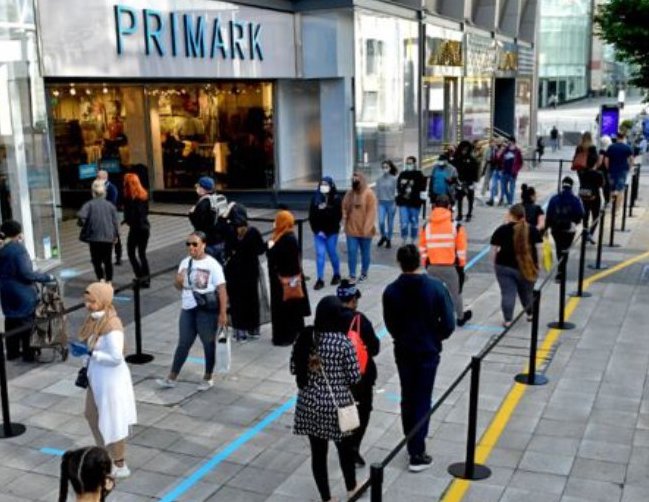
I locked up my bike and wandered around. At this time, around 1pm, the only notable queue outside a shop was for Apple, although I understand that Primark dealt with hour long waiting times at their tills for the majority of the day. What stood out about the bustling high streets was the slow realisation that it really wasn’t bustling at all. There were far fewer people than you would expect to see under more familiar circumstances, particularly inside New Street Station and Grand Central where the staff on duty outnumbered the general public. Still, town felt like a living thing again and so I did too, drifting with the flow of returning people.

When I eventually circled back to my bike and rode off – towards the Rea Valley route this time – I made a quick stop at the China Court bakery. As I ordered a trio of buns, a man who had queued up behind me excitedly said, “Don’t these guys do such good buns?” I grinned back, “They really do! I love tasty buns!” This infantile back and forth continued as I got back on my bike, and I wondered which of us had been more starved of social interaction to get to this point. We wished each other a nice afternoon and I didn’t feel irritated or hassled at all. So much for a return to normality.
Categories
Upcoming Events

Lucy Parris’ social distancing walking project

Lucy Parris is looking for people to take part in her socially distanced walking project on June 20th. We included Lucy in our recent round-up of West Midlands walking artists and we look forward to seeing how this turns out.

Says Lucy:

I would like you to join me in a ‘socially distanced walk’ (this means we will be a group of people all walking ‘together’ with the same intention but each in our own chosen location). At the agreed time, each participant will go for a walk in a place that they have been able to use during lockdown. Using any medium, I would like us to record evidence of and feelings about the ways we have had to change how we experience these places with regards to other people, social distancing and visible/invisible boundaries.

The responses will be collated by Lucy and made into an artwork displayed on her website as a record.

For more information and to sign up go here.

Categories
Inspiration

Robson on… Marvellous maps

I can’t really write about walking without writing about maps. Hand drawn, Ordnance Survey, road, tube, physical, nautical, political, climatic, thematic, ancient, fictional maps, if you can think of it there is probably a map for it. A note before we proceed, everyone can learn to read maps, don’t believe any nonsense that some people just can’t, they just can.

Ordnance Survey (OS) Explorer maps are the best maps you can purchase of these islands. If anyone ever tries to persuade you differently, politely correct them and clarify that they should never raise the matter again. There are currently 403 available and you can spot them by their orange cover. They are 1:25000 scale, meaning what ever the distance on the map multiply it by 25000 to get the actual distance across the land. I encourage you to buy the explorer map of the area you wish to explore, open it on the table or the floor and pore to your hearts content. (Bing maps has a useful OS layer but is not available on mobiles devices and it’s not the same as studying a paper map.)

Maps are political even when they are physical. They have been used for 100’s of years to show borders, denote ownership of land and, often, imply the exclusion of one people in preference of another. (Ordnance means artillery, the original remit of OS was to map Scotland after the Jacobite uprising of 1745.) To be ‘put on the map’ suggests recognition. A map can explain why a border is in a particular place and they are often situated where there is already a natural boundary. A river, a range of hills or sometimes a change in flora have all indicated a change of ‘ownership’. When you live on an island, as we do in the UK, you have a big wet natural boundary, usually called the sea, but when you sail out of UK coastal waters there is no bobbing line of buoys on the ocean to inform you. Similarly when you cross the Welsh Marches on foot from England into Wales there is not a painted line on the fields or hillsides.

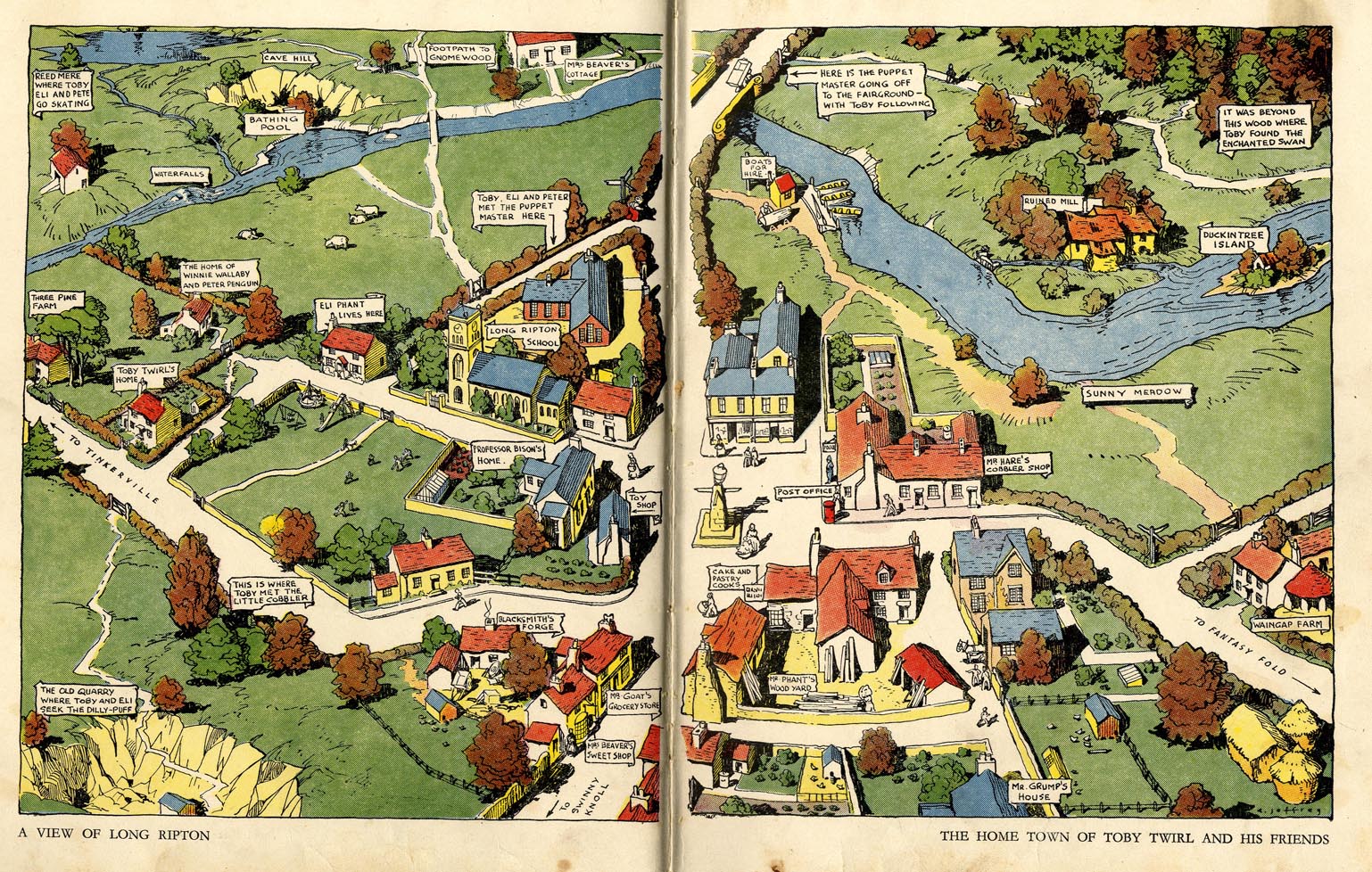
Maps are show us a version of what is really there but, in a sense, they are all fictional. Many fantastic books start with a fictional map. A map helps immerse the reader in the world that is being created. Treasure Island, Winnie the Pooh, The Hobbit, The Wind in the Willows, Toby Twirl, all these books have maps, often picture maps, that have become as cherished by readers as the stories themselves and the way we read those maps is the same as we would for real locations.

There are too many wonderful ‘real’ maps to do justice here but the Mappa Mundi in Hereford Cathedral is worth a mention and a visit. It’s a 700 year old map of what was then the ‘known’ world, from a European perspective, painted on vellum. Amongst many accuracies it includes several species of dubious provenance including the Sciapods, who used their one giant foot to shield them from rain and the cynocephalus who had a human body and the head of a dog.

Draw your own map or map a route for friends to follow. Remember though, as famous explorer Jon Bon Jovi said, ‘Map out your future – but do it in pencil.’ He really did. A good map can be trusted but they are rarely 100% accurate. By the time a map goes to print a row of shops might have been knocked down or a road layout might have changed. Generally, what you can see in front of you with your actual eyes is probably actually there. If the map you’re reading says there is a small stream at the bottom of the valley but when you get there it’s a raging torrent at the bottom of a gorge, no matter what the map suggests, the raging torrent is really there.

Investigate a map of a distant district, one you may never even visit, and you will start to be able to read the terrain, the vales and valleys, roads and rivers, schools and scree. Study an OS map of your own neighbourhood and look for the features you have not noticed before. Learn where the stream flows under the railway or where the high ground is. Studying old maps of your manor can inform you why a street has a particular name or where a farm used to sit. This will enrich your understanding and your enjoyment of you local environment.

So go and buy a map and explore the area in your head, then buy a map of your local area and go for a walk.

Categories
Inspiration

Six lockdown walks with Alys and John

There’s much to enjoy in this correspondence between writer Alys Fowler (who you may know from her memoir Hidden Nature kayaking Birmingham’s canals) and artist John Newling (whose exhibition Dear Nature was on at Ikon before lockdown). It takes the form of six letters with photographs over April and May.

You can read them on Ikon’s website or download a PDF.

As a taste, in the second letter Alys talks about finding a lost pigeon, which her dog scares away before she can persuade it to live with her.

For a good hour, I mourn not having that pigeon as a friend. I look for her the next day, but she is nowhere. I hope that, refuelled on my chicken corn, she has gone home. That or she met another pigeon and now is living a wild life along the rail tracks.

I’m very interested in pigeons. I am fascinated in how they transcend so many different spaces for us. They are feral and domesticated, prized, fattened (a fancy pigeon eats a very refined diet) and despised. They have raced, travelled over boundaries as spies carrying messages, won medals at fairs for their plumage, been food for working families, a source of manure, psychological test subjects and even taught to recognise breast cancer. They can apparently spot it as accurately as any oncologist.   

Meeting the pigeon sent me back to reread the multispecies feminist writer Donna Haraway’s Staying with the Trouble, Making Kin in the Chthulucene (2016). Do you know it? It is about how we must find new way ways to reconfigure our relationship to the earth and its inhabitants in the midst of spiralling ecological devastation. She writes of pigeons;

“Everywhere they go, these cosmopolitical pigeons occupy cities with gusto, where they incite human love and hatred in equal measures. Called ‘rats with wings’ feral pigeons are subject of vituperation and extermination, but they also become cherished opportunistic companions who are fed and watched avidly the world over.”

Haraway is interested in species that are boundary crossers for us: occupying more than one place in our minds and thus are able to cross over and create threads of stories of how we, as multispecies, as kin, might get on better together.

Alys Fowler. Letter 2/6 Monday 9 April.

I picked this out because one of the walks we were hoping to run before lockdown scotched them all was a guide to Stirchley’s pigeon communities with Megan Henebury. When I first discovered Megan’s obsession with the noble pigeon it seemed odd, in a good way. Now it appears I’ve been living a sheltered life. We must run that pigeon walk and soon.

I could have excerpted any number of bits from these letters though. Wonderful stuff. Thanks Ikon!

Photo at top by Alys Fowler.

Categories
Posts

The impossibility of straight walking

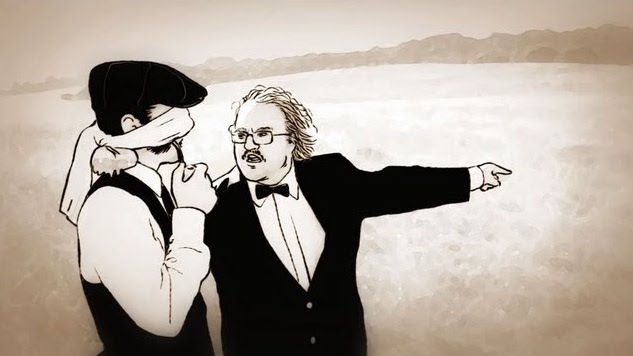
While chatting about walking the other day, as we do, Fiona mentioned something she’d read in Shane O’Mara’s excellent book In Praise Of Walking. Humans are, apparently, incapable of walking in straight lines when blindfolded or otherwise prevented from seeing landmarks.

Participants were asked to walk either in a large and dense forest or in the Sahara desert. Their task was simple: to walk in a straight line for a minimum set period, usually a few hours. Some walked in the day, others at night. All wore GPS tracking devices. While walking without reliable visual cues in the fog, or with heavy cloud-cover, the subjects regularly veered left or right, and eventually crossed the path they had been on. In clear daylight, they sometimes veered from a straight path but neither systematically walked in circles nor repeatedly crossed their own path. The result was the same in moonlight.

O’Mara, p84

Here’s another account of the phenomena, from Robert Krulwich and NPR.

https://youtu.be/dYcvLw_jkkk, via

The idea that walkers might drift a bit is fine, but that you might go in actual circles seems ridiculous. It’s evidently true though, so why this reaction?

Did our ancestors find this phenomena weird? Did nomadic tribes just abandon the very notion of going for a walk in the fog? Does this happen with people who have lived for generations in deserts and forests or just with interlopers?

Do we find it weird because in an urban environment there are always visual cues to guide us? We might not know exactly where we are but we know what direction we’re going in, most of the time.

Maybe straight walking is an anomaly, a relatively recent invention of the Romans? In Watling Street, John Higgs talks about how, before the Romans, British roads meandered and weaved around the physicality of the landscape. Maybe we didn’t need the ability to navigate because the land would get us there eventually. It was only when we imposed our lines and made the land a problem to be solved that we started getting lost without them.

I don’t know, and that makes it really interesting.

Categories
Inspiration

Marching against racism in Birmingham

I’ve seen some comparisons of the Black Lives Matter protests with the tumultuous events of 1968, some wondering if we’re witnessing the start of something similarly historic. While comparisons can threaten to diminish rather than strengthen, it might be empowering for those marching to make some connections and know history has their back.

Andy went on the Birmingham protest on Thursday and posted some footage from within the crowd.

https://youtu.be/-jg0UUzNES0

Andy writes:

Amazing scenes at the #BlackLivesMatter rally yesterday. When it began the last thing I expected was to end up marching over the Hockley Flyover but there you go. Incredibly all that was planned was a stationary protest so this wild procession somehow came about spontaneously. Huge energy, overwhelming solidarity from car drivers and onlookers and not a single police officer in sight. An unforgettable experience. Let’s hope it never happens again.

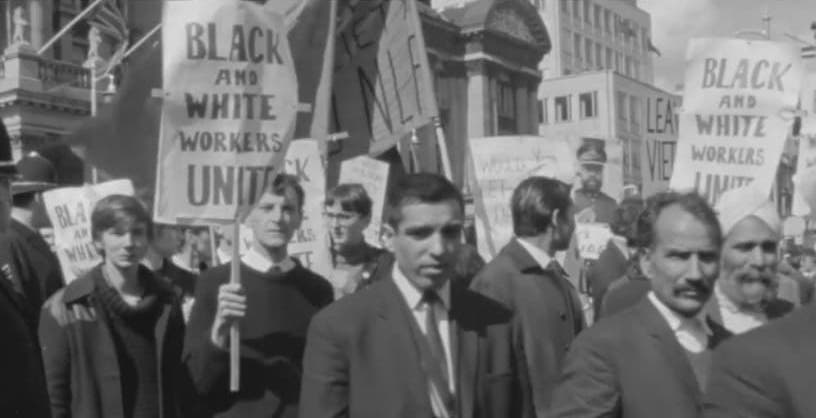
A frame from ATV footage of the 1968 march in Birmingham. via

I found myself reminded of footage filmed by an ATV news cameraman on 5 May, 1968 of protests in Victoria Square. Ian Francis of the Flatpack festival showed it last year when talking about his new book, This Way To The Revolution, a look at art and activism in Birmingham in 1968. The footage isn’t online but he has published an excerpt of the book covering that moment on the Flatpack blog.

It’s a crisp, warm Sunday afternoon in central Birmingham. Demonstrators are filing into Victoria Square in anticipation of a visit from Prime Minister Harold Wilson, due to give a speech in the Town Hall at 3pm. There’s an eclectic array of placards on display: students in donkey-jackets proclaim ‘Yankee Aggressors Out of Vietnam’ and ‘Wilson is an Optical Illusion’; smarter and more orderly, a large group of Indian and Pakistani workers carry signs reading ‘Black and White Unite and Fight’ and ‘Prosecute Fascist Powell’; bringing up the rear, a group of dancing, singing African protestors attack the ‘Nigerian genocide’ in Biafra. There’s a large crowd of curious onlookers, from school-kids to old ladies, and on Galloways Corner at the top of the square a pocket of fascists is chanting “Send ’em back!” Among them is Colin Jordan, a former Coventry school teacher and prominent British nationalist. 

Black and White Unite and Fight – Flatpack blog

He goes on to outline the people and organisations that were active then and what they were fighting for. It’s sobering to see what has and hasn’t changed.

I also found myself thinking of this photograph from Vanley Burke‘s excellent photo book By The Rivers of Birminam published by the MAC for his exhibition there and available from their shop when it re-opens.

Vanley Burke – “A demonstration organised by the Asian community in protest against racist immigration laws and deportation – 1978”

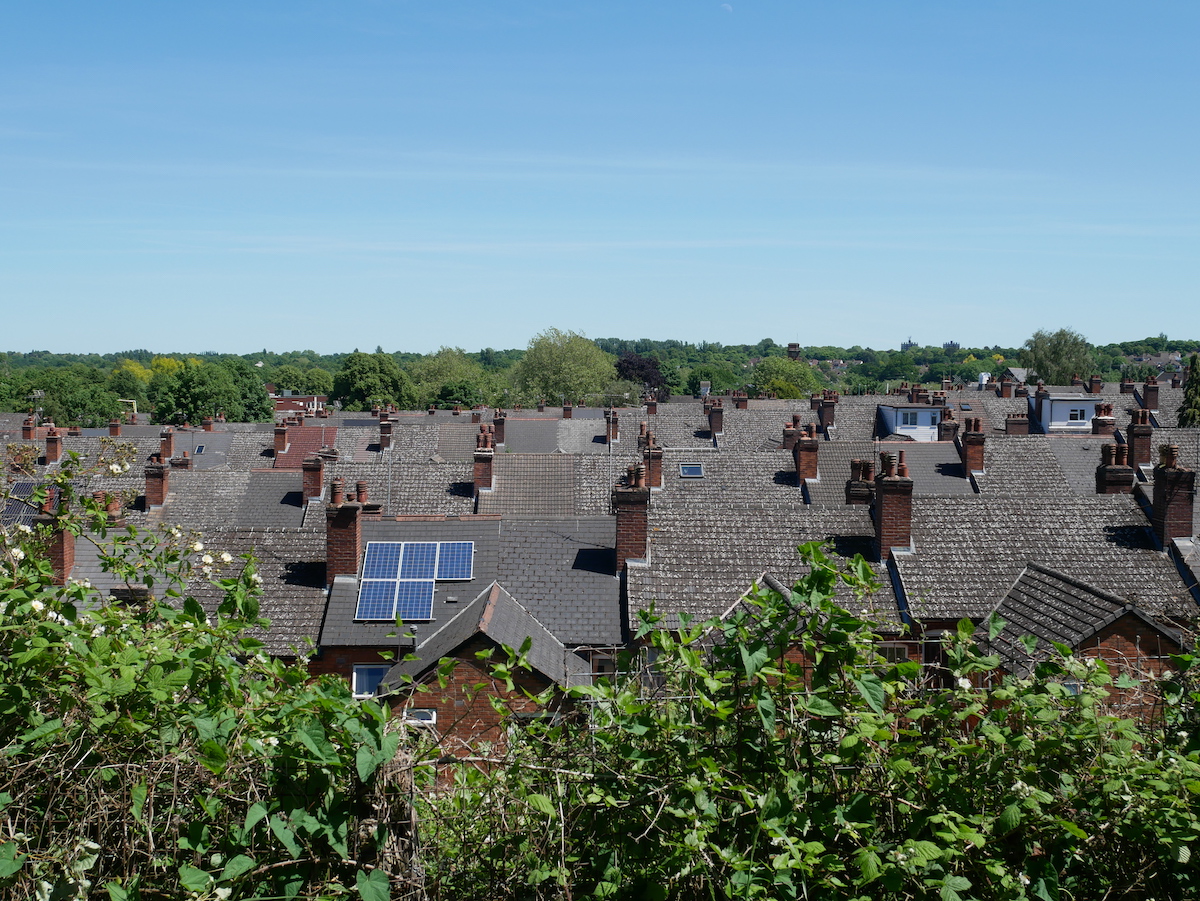
I love its sense of place, that these people are clearly marching in a residential Birmingham street, identified by the skyline, and that they belong there.

Vanley has been documenting the lives and experiences of the Afro-Caribbean community in Birmingham since 1967 which has of course involved protests, demonstrations and riots. By The Rivers of Birminam juxtaposes them with portraits and candid shots of people just being people, lending a depth and humanity to a community that has been wildly misrepresented over the years.

A 20 minute documentary about Vanley’s life and work

Walking together is often a radical act with a long history. I hope these two examples from Birmingham’s past are of use to the current generation.

Categories
Posts

A time capsule of art in the age of Covid

Have you made a piece of work, walking or otherwise, in response to the Coronavirus pandemic? As the world suddenly changed a lot of us found our art practice was a vital way to make sense of it all and the National Academy of Sciences in the USA is looking to archive this hopefully unique moment. You just need to fill out a short form with a link to your work and they’ll do the rest.

I’d encourage people to take their criteria as a broad invitation, not a narrow “proper artists only” filter. Creative responses that seem small, indulgent or insignificant are often the most interesting in a situation like this, coming as they do from the gut.

More info here. (via WAN)

Categories
Posts

Walking artists in the West Mids we’ve recently come across

We announced ourselves to the venerable Walking Artists Network (WAN) email list this weekend, asking for any people doing walk-work in the West Mids to say hello. And a few did! So this is the first WAITWMWRCA, roundups of people new to use that you might want to check out.


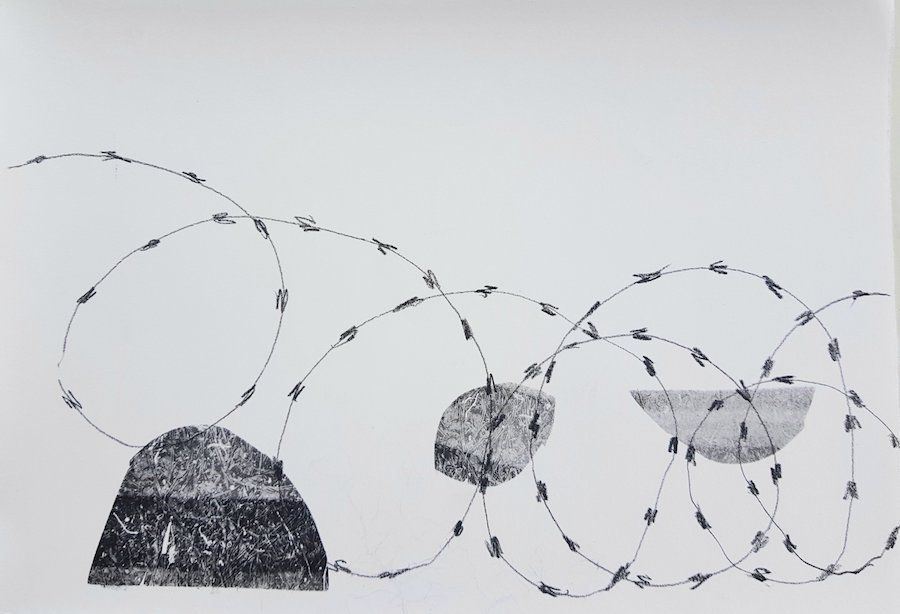
Lucy Parris is a printmaker and walker who lives in Kiddiminster but is finishing a fine art MA at Birmingham. She’s a member of Walking The Land, a Gloucestershire-based group of artists who we will definitely be investigating further, and is exploring the concept of socially distanced walking to conclude her MA.

Lucy Parris

Petra Johnson is an artist currently in China but returning to Stourbridge once air travel is a thing again. Her Walk With Me project took place in Beijing, Cologne, Shanghai, Xiamen, Taidong (Taiwan) and Berlin where she and a participant walk from a convenience store or kiosk to building or a landscape that defines the city. In 2017 she produced this short film from her work.

Petra Johnson

Daniella Turbin returned to Wolverhampton after completing her fine art masters in Glasgow but on the way stopped in Cumbria for 6 months where she got the walking bug. Her current (lockdown permitting) project is DRAWER where she’s “walking the UK, simply, to explore, meet and document the landscape and its inhabitants. These walks could be instigated for any number of reasons – from historical and political through to environmental or personal.” Lots of pics on her Instagram.

Daniella Turbin

Andrew Howe is an interdisciplinary artist based in Shrewsbury who uses walking and mapping to explore how people interact with places. He sent a very long email detailing lots of exciting projects and works, far too many to mention here, so we recommend ploughing through his website. A good starting point would be his blog post on the Acts of Resistance project involving small boxes left in public spaces.

Andrew Howe

If you’re a West Midlands based artist, writer or some other variety of maker-of-things (we prefer the broad definition of “artist” here at Walkspace) for whom walking is an important part of your practice, please get in touch. We’d love to hear what you’re up to, and if you include a link to your work we’ll include you on the next WAITWMWRCA!

Categories
Inspiration

Walking the Pipe with Kate Green

Following an arbitrary line is a tried and tested technique for the curious walker. The landscape and its contents will reveal themselves in a sequence determined by your line. Pick a start, an end and draw line between them. Follow that line and keep you eyes and ears open.

Kate Green spent the last year walking a line that was drawn from the Welsh mountains to south Birmingham by Victorian engineers when they were trying to figure out how to bring water to the rapidly growing city. Birmingham’s waterways are a bit puny due to it being one of the highest points on the British isles and in the 19th century it was festering with disease in dire need of sanitation.

Kate and her dog by the aqueduct.
Kate employing the walking-artist’s trope of pointing at things.

Thankfully the Elan Valley is 52 metres higher than Birmingham. A pipe angled at a gradient of 1:2300 will transport water over a day and half using gravity alone from the waterlogged mountains of mid-Wales. Building started in 1896 lasting a decade, and that’s why we rarely have a hosepipe ban in Birmingham!

But I digress. Kate, who describes herself as a short interdisciplinary artist with dark hair, decided to walk the Elan aqueduct primarily to gather and share stories. She does this by writing and performing songs in a style that would have been popular during the build, drawing parallels between its creation and the present day. For example the navvies that built it were itinerant workers, moving their families from one job to the next. A century later the workers repairing and maintaining the pipe are predominantly migrants from Europe.

The Tunnelling Navies from the Walking the Pipe Song Book

Her project has seen her run workshops, coffee mornings, exhibitions and performances along the towns and villages near the pipe, all fed by a steady walk eastwards. They’re documented in The Pipe Chronicle, a cod-Victorian newsheet.

We got to meet Kate and her infectious personality when she presented Walking The Pipe at the Plymouth walking conference in November last year. Rather than a lecture, is was wisely run as a singalong performance in the evening when beers had been consumed. We’ve been singing “This is the damn, this is the damn, that feeds the thirst of Birmingham” ever since.

Kate performing at an event along the pipe.
A poster for an event.

It’s rare to find art that is both high-concept and high-nerdery while also being fun and accessible. Walking the pipe is a gem.

Kate has produced a songbook and zine-style collection of her newsletters. A formal Walking The Pipe book is in production. Contact her for details.