Categories
Inspiration

Resources for vicarious walking

Here’s another selection of walking-related media to help you through this time of going nowhere.

Audio

Eve Phillips and Roxie Collins are co-hosts of Corporeal, a themed music show on Brum Radio. In a different lifetime Eve came on our Full Moon Walk and she told us about the show and in particular an episode they had done on the theme of… yes, walking. Join Eve, Roxie and special guest Ben Waddington of Still Walking Festival for two hours of songs and conversation about walking.
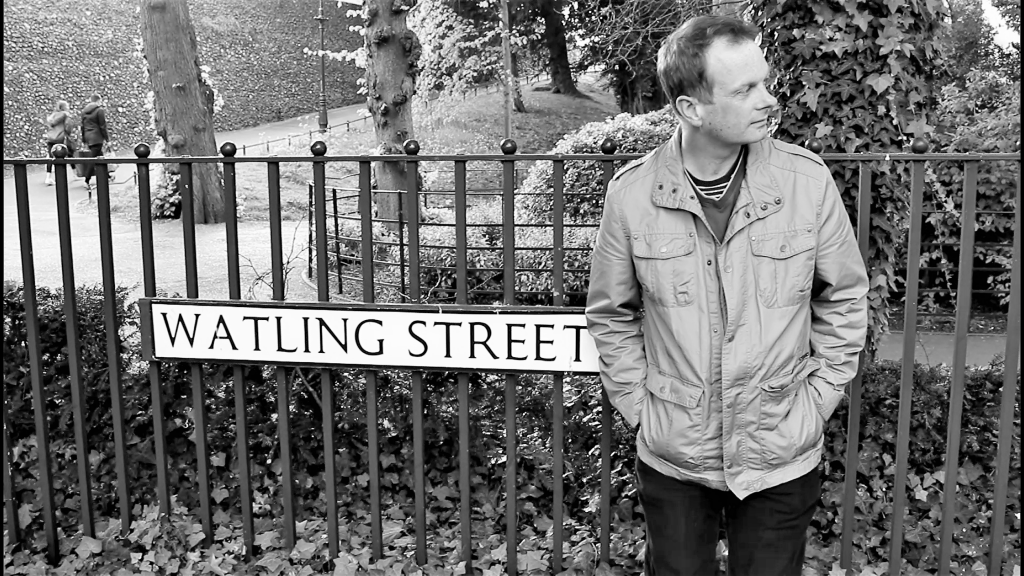
Long ago a path was created by the passage of feet tramping through endless forests. Gradually that path became a track, and the track became a road. It connected the White Cliffs of Dover to the Druid graves of the Welsh island of Anglesey, across a land that was first called Albion then Britain, Mercia, and eventually England and Wales.

Long ago Pete lent me his copy of Watling Street by John Higgs. The book charts Higgs’s journey along this ancient route (now variously known as the A2, the A5 and the M6 Toll) in search of “the hidden history that makes us who we are today”. I never got round to reading it but luckily they made a podcast. In episode one Higgs and author David Bramwell travel to Kent to explore the themes of pilgrimage and the conflict between spiritual and political powers.

Film/Video

In response to the pandemic our friends at Video Strolls have compiled a COVID playlist on YouTube. “Being in lockdown affects everything, but artists and film makers are still making journeys of one sort or another.” Join a voyage around a bedroom, become a back garden archaeologist and witness a herd of goats reclaiming a Welsh town. I found it particularly poignant joining John Rogers on his last walk before lockdown.

In a similar vein kottke.org has shared a selection of videos from all over the world of people simply going for a walk around their city (pre-lockdown). The videos are mostly unedited and without music or narration, just ambient city sounds. Very therapeutic.

I’m going to take this opportunity for a bit of shameless self-promotion and direct you to the latest video I’ve uploaded to my YouTube channel Footnotes. I’ve been re-uploading my old stuff until I have something new to share and this one is a tour of some of Digbeth’s ghost signs and typographical curiosities with Ben Waddington (yes, him again) from 2014.

Words
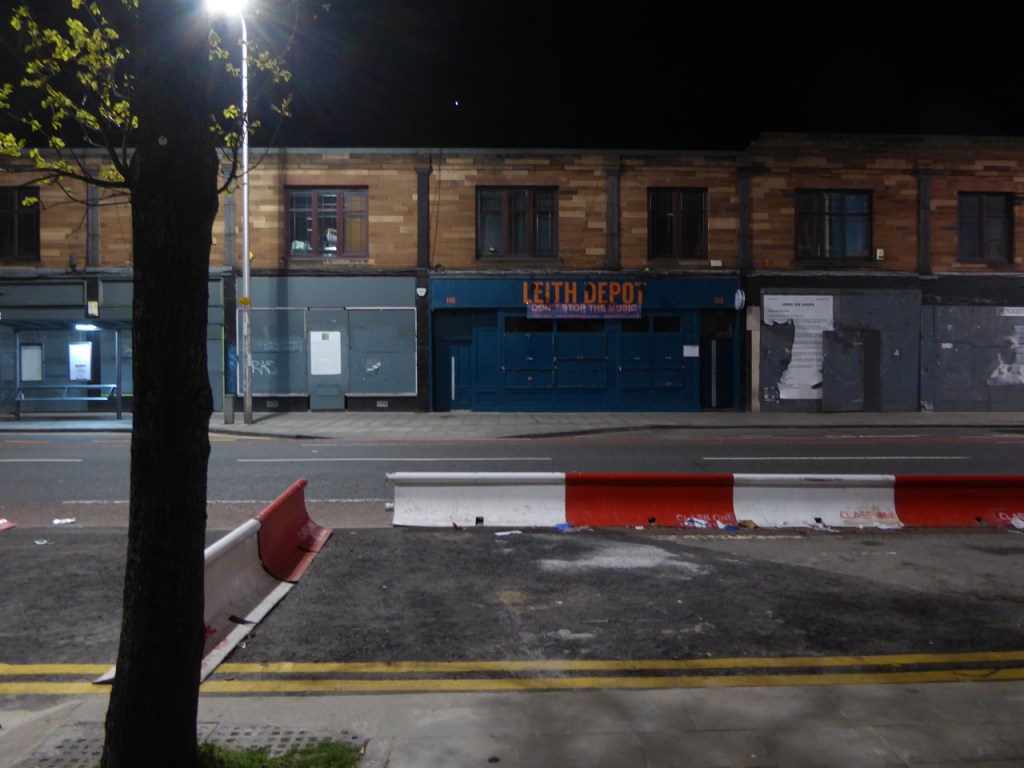
The Liminal Residency is “an alternative writers’ retreat which takes place in a range of neglected and unusual spaces, from service stations to theme parks to the terminals of international airports.” Their latest blog post is an evocative write-up of a walk around Leith on lockdown.

A suitcase lies open in a door, bedding and plastic cups and clothing scattered in a pall around it. In another doorway a meal kit delivery has been plundered, ripped open, the contents disgorged. Signs are everywhere. They adorn shutters, are taped to boards. In one case a notice of closure is scrawled in pen directly onto a wall.

Read the full piece here and check out some of their other posts which include a tour of Alton Towers’ hidden relics and an ode to New Street Signal Box.

Stay safe and if you have any recommendations of your own get in touch!
Categories
Inspiration

Robson on… Sociable Strolling

I recently wrote regarding my preference, and indeed need, for solitary walks over hill and vale.

Having said that in recent years I have come to enjoy some of the pleasures of walking with a companion or companions. I have gained accomplices for both local walks and those taken farther abroad. 

A conversation at work revealed a colleague who likes to do hill, moor and mountain walking. So I have spent the last two or three years, exploring the Peak District, Snowdonia, the Brecon Beacons and the Welsh Marches with an able collaborator. Those walks have become important and are missed.

More recently and more locally I was introduced to a someone through a mutual friend with an interest in walking in all its forms. Before all this ‘bother’, said friend and I would walk about once a month from the car park of the British Oak pub, in fashionable Stirchley. The walks thus far have been to ‘local’ places that caught our attention. This has included an angry wall in Highbury Park, a couple of moated sites from the Civil War, some entirely invisible burnt mounds in Woodlands Park and following Icknield Street, the Roman road built around 2000 years ago. When conditions allow we’ll be walking to, or from, Birminghams omphalos in Duddeston, the concrete fish at Fox Hollies and, at some point, the length of one of Birminghams rivers. As poet Roy Fisher noted of rivers of Birmingham, there are Two. More or Less.

Both these types of affable regular walking put me in mind of Mary Shelley’s Frankenstein in which Robert Walton, the ‘narrator’, writes to his sister Margaret of his adventures in Arkhangelsk, northern Russia – 

But I have one want which I have never yet been able to satisfy, and the absence of the object of which I now feel as a most severe evil, I have no friend, Margaret: when I am glowing with the enthusiasm of success, there will be none to participate my joy; if I am assailed by disappointment, no one will endeavour to sustain me in dejection. 

Walton has secured the services of dependable sailors for his trip but craves some one he knows to share his adventure. Some one with whom to look at the sun setting over the ice fields and exchange a glance of mutual recognition.

I read Frankenstein many years ago and have forgotten most of it but, for all my preference for solo wanderings, this section always resonated with me. The acknowledgement that, sometimes, the view is somehow ‘more’ when shared. 

Lastly, all these words about walking are making my feet itch. I will be out this evening for my hour a day, letting my feet lead the way. So, if you can, get out of the house and go for a walk. If you’re isolating with others sometimes it is OK for them come with you. Share the experience, make an effort take joy from a walk with a comrade.

To be clear, I still prefer walking alone but now it would be a much closer contest!

@robson72ep

Categories
Inspiration

Robson on… Solitary strolling

I like to walk alone. It’s my preferred ‘method’ for walking. Either from the front door or, before lockdown, farther afield. I like to cover the miles and this is easier done alone. Companions can be distracting. Add just one like-minded wanderer to the mix and mph drops by around 25%. If that like minded wanderer is interesting and enlightening I find I use up most of my limited brain-power on conversation, leaving very little left for the walking, looking, seeing (slightly different from looking) and thinking. 

There’s a real sense of adventure, no matter how small, in going it alone. The beguilingly big hill, the unfamiliar sector of suburbia, the mosaic of moorland, the wild wood all create a sense of completion when you open the front door at journey’s end. The feeling of ‘I’ve done that’ is valuable to me. To steal a word often used by the excellent John Rogers, a really great local-explorer, the walks I take are ‘restorative’. 

There is a contemplation, a sense of wonder and oneness to solitary walking that I don’t get in the company of others. I have find a comforting insignificance in sitting alone on a hillside watching the day wheel by.  

To quote some oft used lines from Childe Harold’s Pilgrimage by Lord Byron – 

There is a pleasure in the pathless woods,
There is a rapture on the lonely shore,
There is society, where none intrudes,
By the deep Sea, and music in its roar:
I love not Man the less, but Nature more,

Like young Harold it is not that I do not like my fellow humans, some of them are quite pleasant, it’s just that I can enjoy the world with out them. In fact it’s more acute than that, sometimes I need to enjoy the world without them. 

This is not unique to me, of course. Most of us at some point will desire solitude of one sort or another. Perhaps it is more important now when solitude, or at least a lack of socialising, is a necessity. Some of us will be holed up with loved ones or house mates who we might not be used to spending so much time with. That personal space, a chance to turn off and on again, is important so take it if you get the chance. (In case you were wondering it’s entirely acceptable to say to your fellow lockdown-ees ‘I am going for my daily walk and no, you can’t come.’)

I prefer to walk alone. I encourage you to do the same. 

@robson72ep

Categories
Inspiration

Walking in lockdown

In this time of lockdown many of us will be doing a lot of our walking vicariously through books, films, podcasts etc. so we thought we’d offer some suggestions for ambulatory entertainment to help scratch the walking itch.

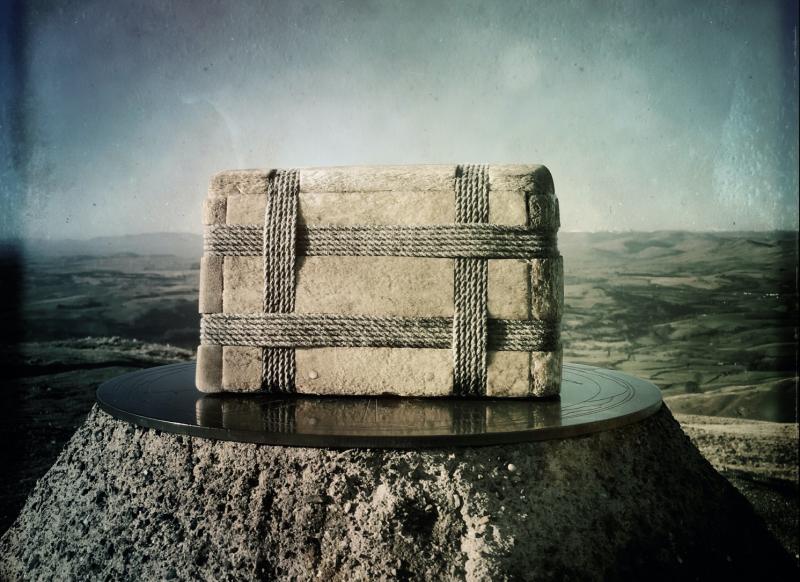
First up is the new film by “wandering artist” Andrew Kötting, The Whalebone Box, released today on MUBI.

Synopsis: Some time ago, a whalebone box that was found washed up on a remote beach was given to writer Iain Sinclair. Once touched the box can change lives. In 2018 filmmaker Andrew Kötting, photographer Anonymous Bosch and Sinclair take the box on a reverse pilgrimage from London back to the Isle of Harris.

I haven’t watched it yet but it’s Andrew Kötting so you can’t really go wrong. Watch it here and check out the other Kötting titles available while you’re at it.

A fellow Walkspacer tipped me off about this episode of the Weird Studies podcast Green Mountains Are Always Walking. Hosts JF and Phil exchange ideas about the weirdness of walking in a conversation that meanders between zen monks, novelists, Jesuits and more. Again I must confess I haven’t got round to listening myself yet but that’s what weekends are for.

As for actual physical walking you can do yourself (currently limited to 1 hour a day) we direct you to the words of Phil Smith over at Triarchy Press for some inspiration. Phil’s piece Walking in a Time of Virus suggests some ways we might make the most of our daily state-sanctioned strolls.

Part of what needs to be broken here is the idea that natural beauty or history is exclusively (or even more intensely) present in special sites, usually with big car parks and information boards. Every street you walk down is a treasure of geology and materials, each window is a museum of symbols, every tree is a drama of buds, enkissings, wounds and blossoming. For once, many of us have the time to teach ourselves about these things.

That’ll do for now. If you have any recommendations of your own get in touch!
Stay safe.

Categories
Inspiration

SW Coast Path on the telly

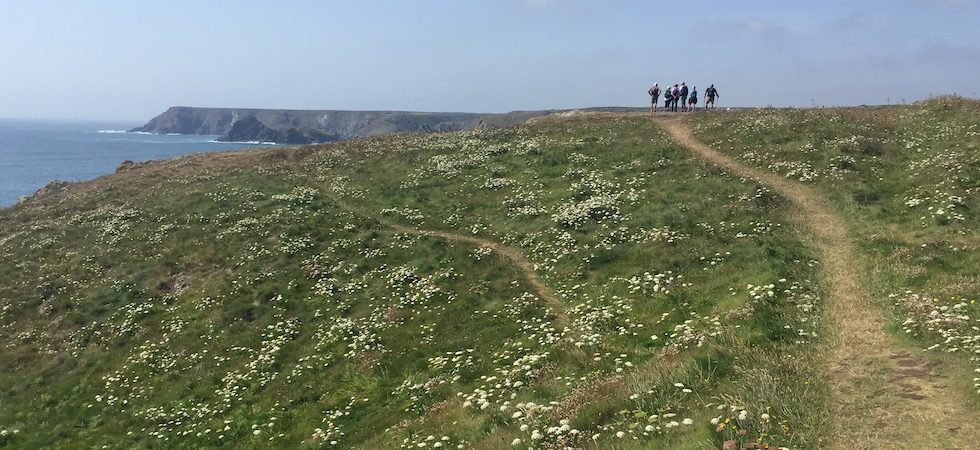
I just happened across this by accident but the BBC is showing a new five-part series in which explorer Paul Rose walks the 630 miles of the SW Coast Path – Britain’s longest national walking trail. The first episode just went out and you can catch it on iPlayer here: Coastal Path.

After walking a couple of bits of the SW Coast Path last year (photo is from Lizard to Kynance Cove), and reading The Salt Path (highly recommended), I’ve become a bit obsessed by SWCP. Hopefully this show will do it justice.

Categories
Inspiration

Dazzle walks

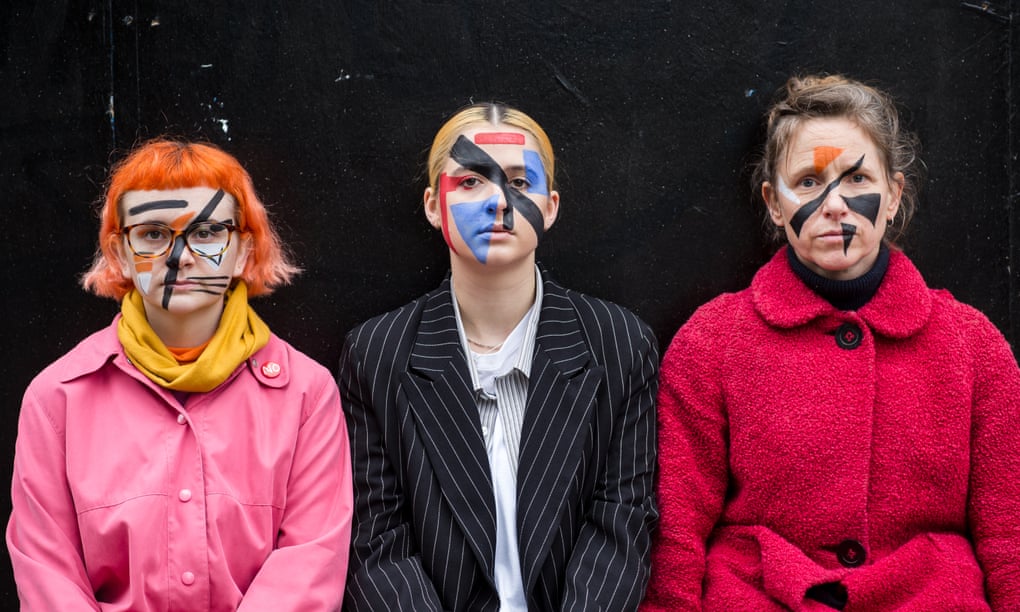
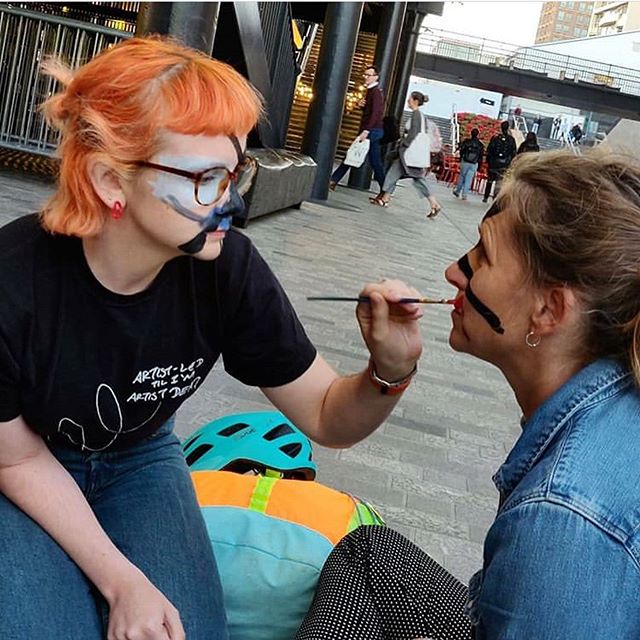
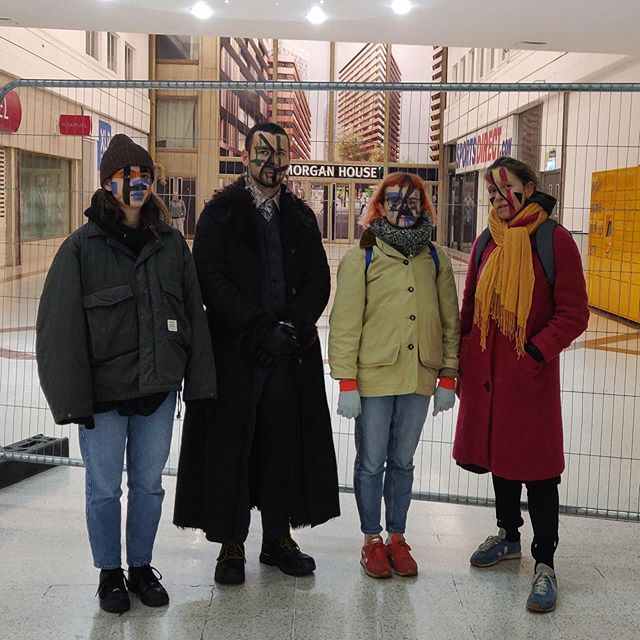
Emily Roderick, who splits her art-life between the Midlands and that London, was featured in the Guardian the other week along with the rest of The Dazzle Club, doing walks through the capital with their faces painted with abstract shapes.

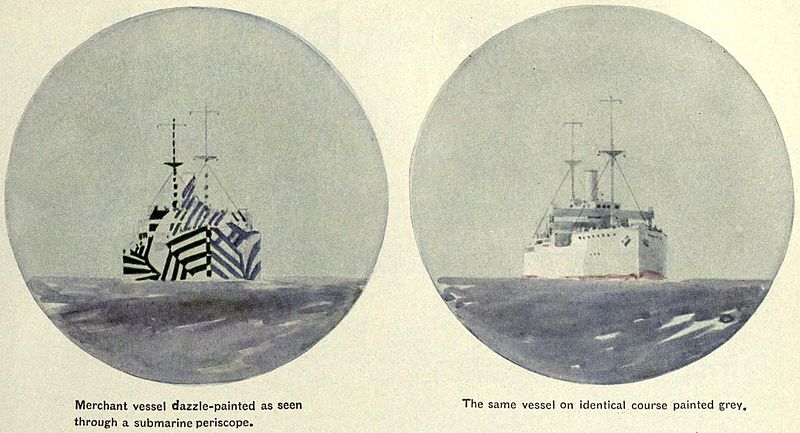
They’re using a technique developed by artist Adam Harvey that he called CV Dazzle in 2010 which is based on the pre-radar method of protecting ships from torpedos in WWI by painting them with abstract shapes. This Dazzle Camouflage confused submarines who were unable to accurately calculate the distance and heading of a ship and thus unable to hit it with a torpedo.

via Wikipedia

CV Dazzle makeup, standing for Computer Vision Dazzle, is intended to work in a similar way by either making the face invisible to recognition software or simply disguising the individual so they can’t be tracked.

There’s a lot of this sort of art around, but it’s interesting, and relevant to our interests, to see the Dazzle Club using group walks as the way to get it out there. It turns the act of wearing the makeup into a protest and it’s no coincidence their walks coincide with the London police starting to use live facial recognition systems in the capital.

Wearing the makeup as an individual probably doesn’t work – the technology is improving every day and doesn’t just depend on faces for identification – but combining it with a silent group walk, which features in the long history of protest, helps raise issues around its adoption without full consideration of the flaws and civil implications.

Dazzle Club walks take place in London on the 3rd Thursday of the month. Sign up to their newsletter for location information. And hopefully Emily & co will bring this up to the Midlands soon.

Categories
Inspiration

A walk is a tool and a platform

The latest issue of Craig Mod’s Ridgeline, his excellent newsletter about walking to which you should all subscribe, appeared in my inbox with the above title and got me all excited because it would make the perfect manifesto for Walkspace. Walking as tool for creating something new, be it ideas or actualised work. Walking as a coherent and defined platform that enables an anticipated outcome but allows for serendipity and surprises.

Of course, letting my mind race ahead like that meant mild disappointment as Craig was giving the title to a talk at a tech conference where the audience build digital tools on digital platforms, but that’s OK.

The talk is worth watching because it summarises a inspirational walk Craig did last year where he tried to find a good balance between being connected and being alone. He would be travelling with a camera and a phone but he would set strict rules on how he would use them. Some, like having to take a portrait of a stranger before 10am, forced him to have encounters he might not have. Others, like restricting him communication with the outside world to one SMS text message a day, enabled him to, as he says in the talk, “be present in the world while connecting with my community in meaningful ways.”

Along the 1,000km walk over 43 days Craig would send a photo and a text message which would be relayed to anyone who had opted in to receive them. These recipients could reply but Craig would not see the replies until he got home where a large book containing his photos, messages and all the replies would be waiting for him.

As someone who uses walks to take photos (or uses photos to take walks) and has experimented in the past with platforms like Twitter or Instagram to document a journey, I often struggle to know what to do with the documentary detritus, or whether capturing the walk detracted from the walk itself. Cross City Walks is a perfect case in point – was it made or broken by the way I co-opted it as a tool/platform?

Casting the walk as a tool could be a useful way of mitigating this. A tool is, fundamentally, matter which has been shaped to facilitate an outcome, be it a hammer to bash in nails or a rocket to get you to the moon. If you know why you’re undertaking a walk (and that can be a big “if”), how can your act of walking be shaped to facilitate that?

Subscribe to Craig Mod’s newsletters and explore his extensive writing on his website.

Categories
Inspiration

Exploring micro sovereignties

I often think about the group slow walk Hamish Futon ran in Birmingham in 2012 for the Ikon and Fierce Festival where he got people to walk lines marked behind Curzon Street Station, some very short, some the length of the site, as slowly as necessary to complete the walk in the time allowed. Here’s a short interview with him, filmed by Chris Keenan.

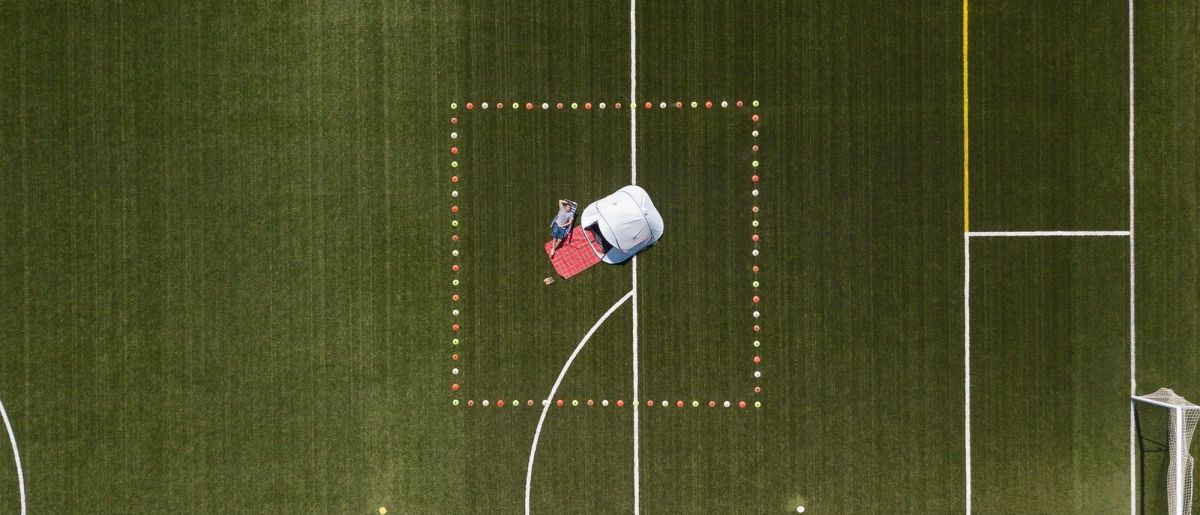
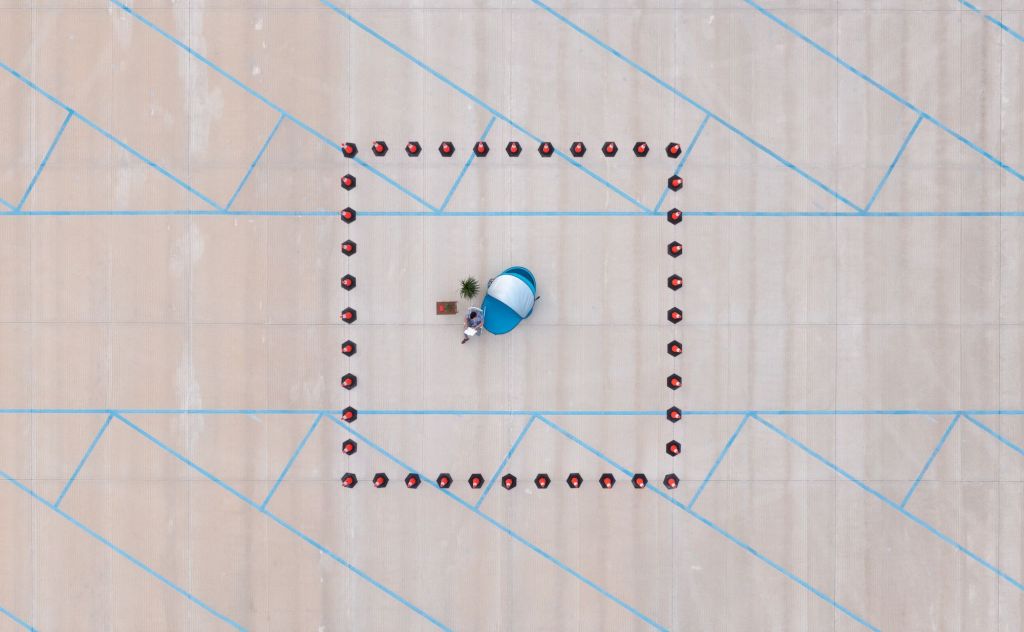
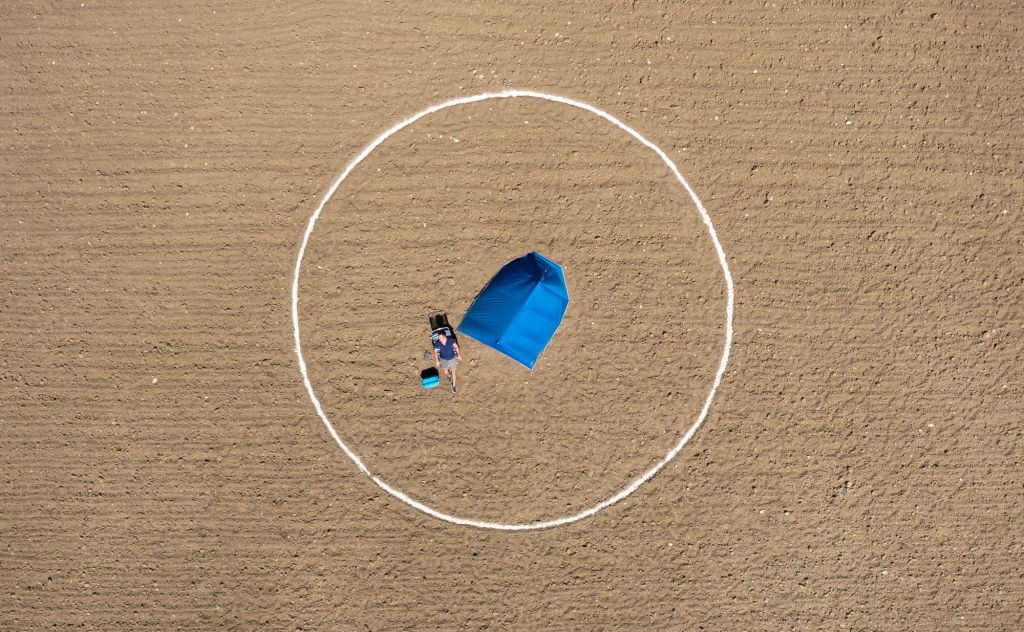
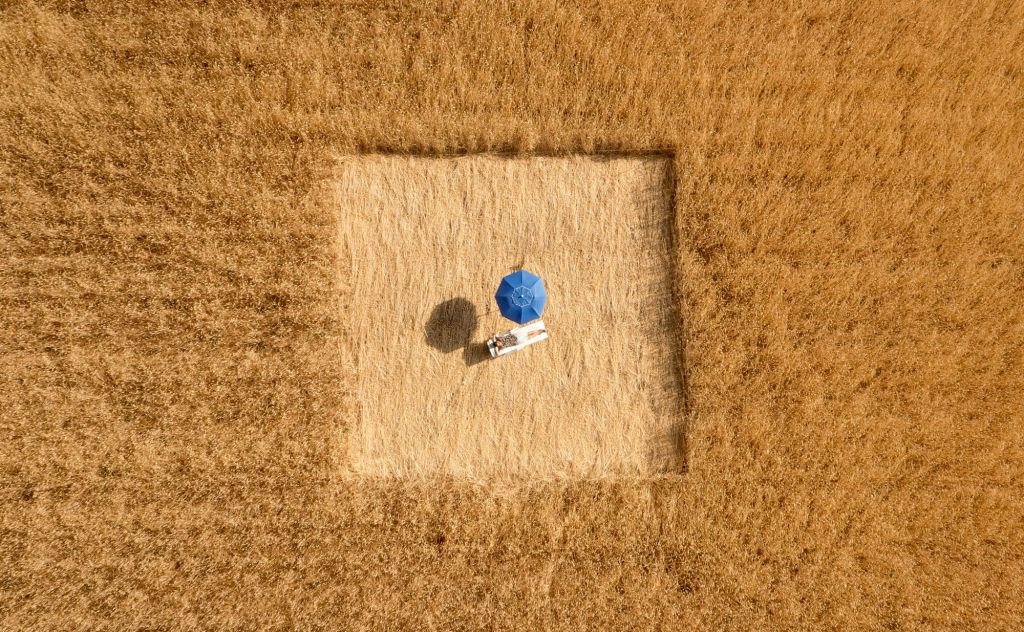
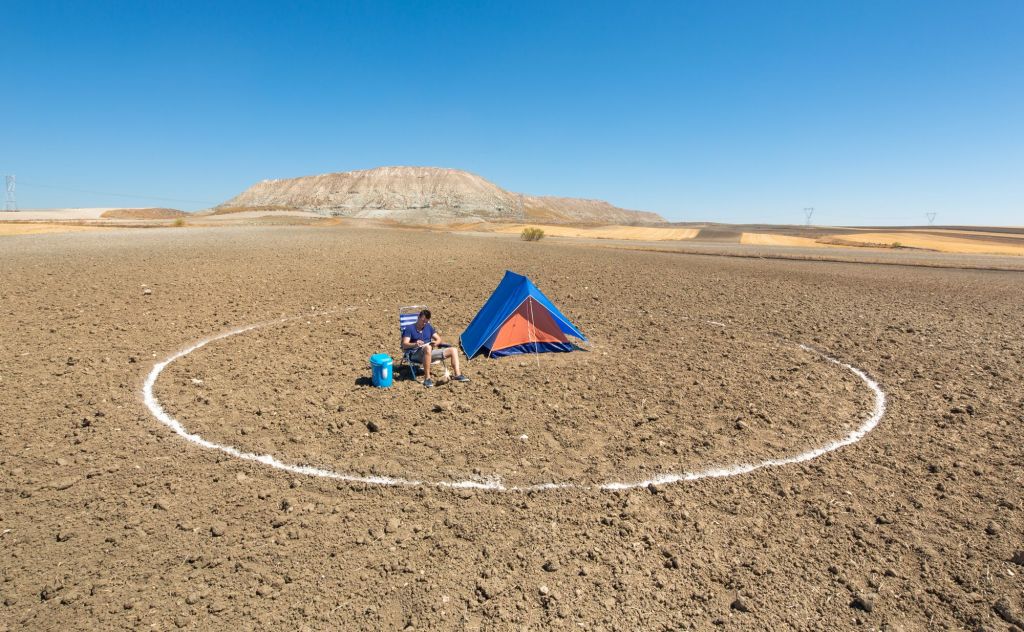
I was reminded of this when reading about Rubén Martín de Lucas‘s art project Minimal Republics where he marks off a 100m2 area of land, declares it to be a sovereign nation, and inhabits it for up to 24 hours. He documents them using aerial photography which looks very pleasing.

The work is about the absurdity of the concept of nations, which I approve of because nations are absurd concepts, but I’m intrigued by the idea of forcing yourself to stay within a specific boundary for up to a day, especially when that boundary is set up in an “uninteresting” area.

It’s doubtless meditative with an element of endurance, but the idea of exploring that 100 square metres, of really getting to know every rock in the sand or mark on the tarmac, is really interesting to me.

I’ve often wanted to do an hour-long photography workshop where people can only explore a small patch of land that they wouldn’t consider interesting at first – the corner of a car park, for example – forcing them to look beyond the obvious and start to see patterns and beauty in the details. I think the photos that would come out of such an exercise would be really interesting.

I wonder what it would be like to make one of de Lucas’s pieces, to define a micro-country and occupy it for a day. Once the boredom passes, what would you see?

Via the always excellent and inspiring Geoff Manaugh. Photos from, and credits in, the Lens Culture article.