Categories
Posts Walk Reports

A full moon night hike in the snow

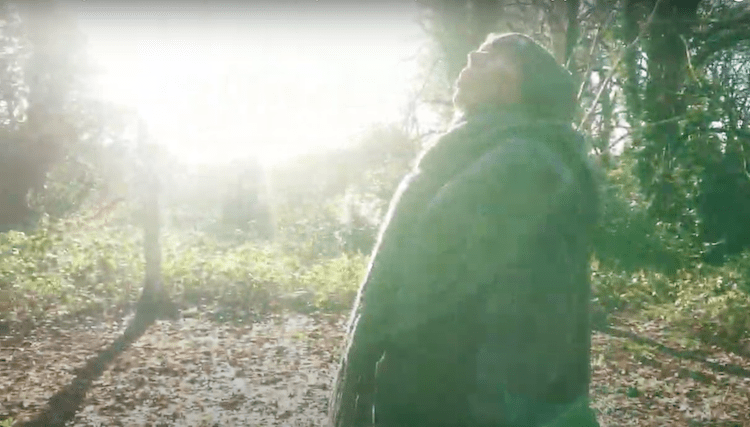
There is something about walking at night. The experience of it is so different from walking in the daytime. There is pleasant disorientation even in familiar terrain. The known becomes unknown and new. The darkness, and the cold of winter, keep others away bringing a stillness and communion with things that are bigger than the us – the moon, the stars, the far distant horizons.

Photo: © Laura Babb

The ability to blend in with the night is a lure: to become enveloped by the darkness and the security of not being seen. To become the people who lurk in the shadows. There is empowerment in being a woman who walks at night, in rewriting the script of fear that runs alongside the female experience of the city. There is a reclaiming of the night and a mating of two strange bedfellows: exhilaration and peacefulness.

Photo: © Fiona Cullinan

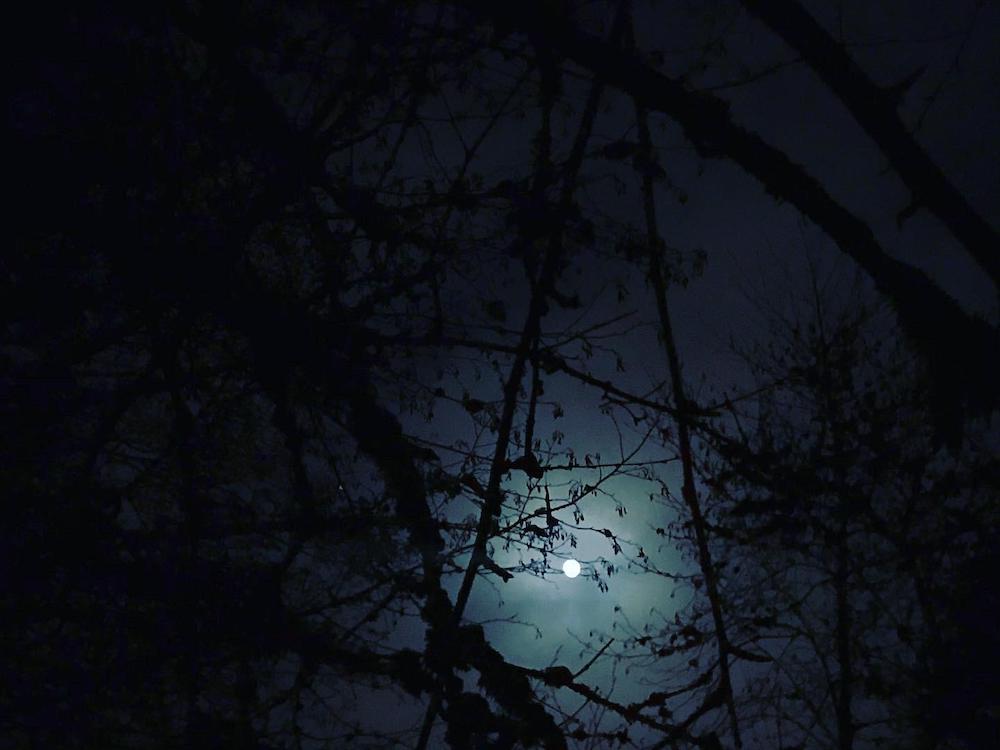
Human night vision slowly unfolds as the minutes pass, honing all the other senses; the process of becoming a nocturnal animal is a powerful one. There is walking at night and then there is walking by the light of a clear full moon. Now is a chance to turn off artificial light from torches – which can draw unwanted attention – and really see beyond a small halo of vision.

Photo: © Fiona Cullinan

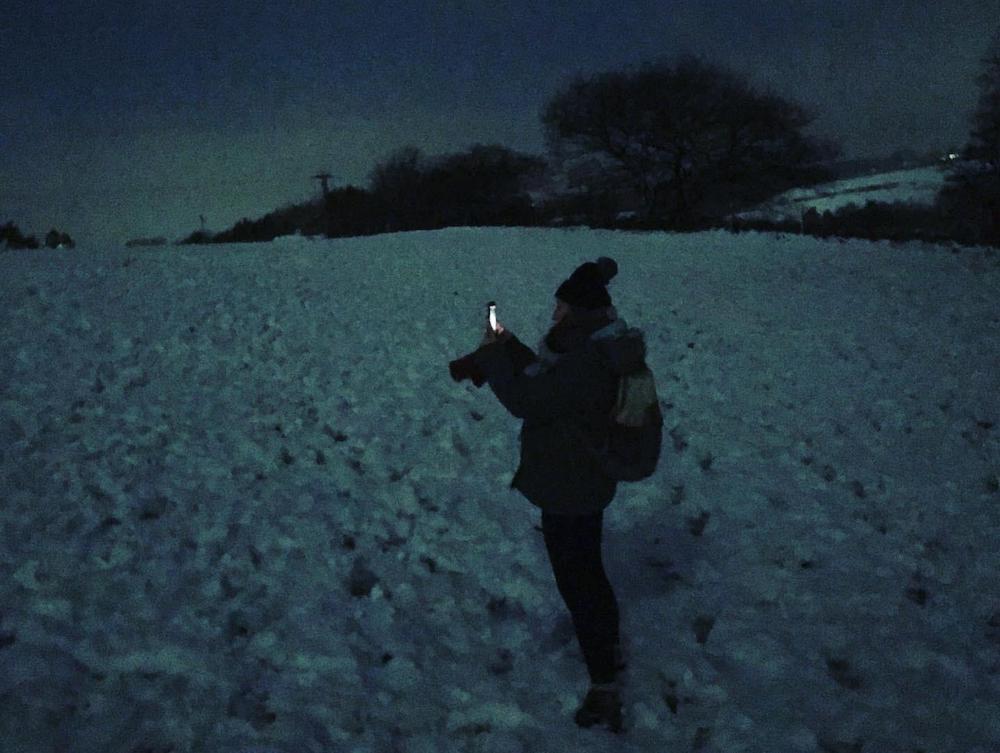
There is hiking on the hills at the edge of the city, usually busy with people but empty now except for a few silhouetted horned cattle. There is crunching through a carpet of fresh snow, reflecting the moonlight and lighting the way.

Photo: © Laura Babb

There is doing all this with other women. The conversations and experiences are different somehow. A snowman with carefully moulded male genitals brings a fun opportunity to smash the patriarchy – or at least crack a few jokes about it. It is a bonding experience.

Photo: © Fiona Cullinan

It’s important to stop and listen, too. Too much talking and the experience is lessened. Stop and a meltwater path can be heard softly bubbling down the hill. The squelch of deep mud. The scrunch of snow. The M5’s distant hum. The fizz of an electricity pylon.

Photo: © Laura Babb

I long for a silent walk but I also don’t want to walk alone at night. Besides walking together and sharing the experience is important. How do you find others to walk with? A few weeks ago I met Laura Babb for the first time. We went for a walk around our home neighbourhood of Stirchley and discussed doing a night walk. Last week we merged our female friends who walk into a Whatsapp group called ‘Wild Women Walking’ and it feels like something exponentially bigger and connective has been born from that first walk. We may not know each other yet but we are all fish of the same stripe. There will be more walks. Because, for sunrises and night walks, winter is our time.

Photo: © Laura Babb

More night walk reports:

Categories
Projects Walk Reports

A Figure Walks – the grand old face of the plateau

Transcript of a talk given by Megan Henebury about her walking project, A Figure Walks, on November 24th 2020.


A Figure Walks: the Rea, and other rivers you can’t see, is an ongoing project applying my walking practice to a psychogeographical investigation of Birmingham’s River Rea. The expected results are an essay, a short film, and an archive – together forming a body of work that will define my BA in Fine Art.

Over the summer, I was inspired by the thinking of Donna Haraway in her 2016 book, Staying With The Trouble: Making Kin in the Chthulucene. I’d been told she wrote about pigeons – this was enough to make me seek her out. But her ideas about a new ecology concerned with interspecies kinship, making space to acknowledge intimate relationships between more than just other human beings, led me to reflect more consciously on the way I communicate with other bodies, other things, how I feel for them, gather them, accumulate them.

My walking practice is a performance, but recording it is instinctive. I have filled pockets, taken photographs, made field notes and sketches. If I don’t, I can’t say with certainty that I’ve done anything at all. Stones, birds, fungi, litter, scum accumulated in polluted corners, moss, broken birdhouses, clouds of midges, used stericups, condom wrappers, bramble, snails: these are all soggy extensions of my own unclean presence in the river’s cut, and I need to acknowledge them. I anticipated a personal reaction to the walks, to the things I have met, but I falsely believed I would be in control. The reality is different.


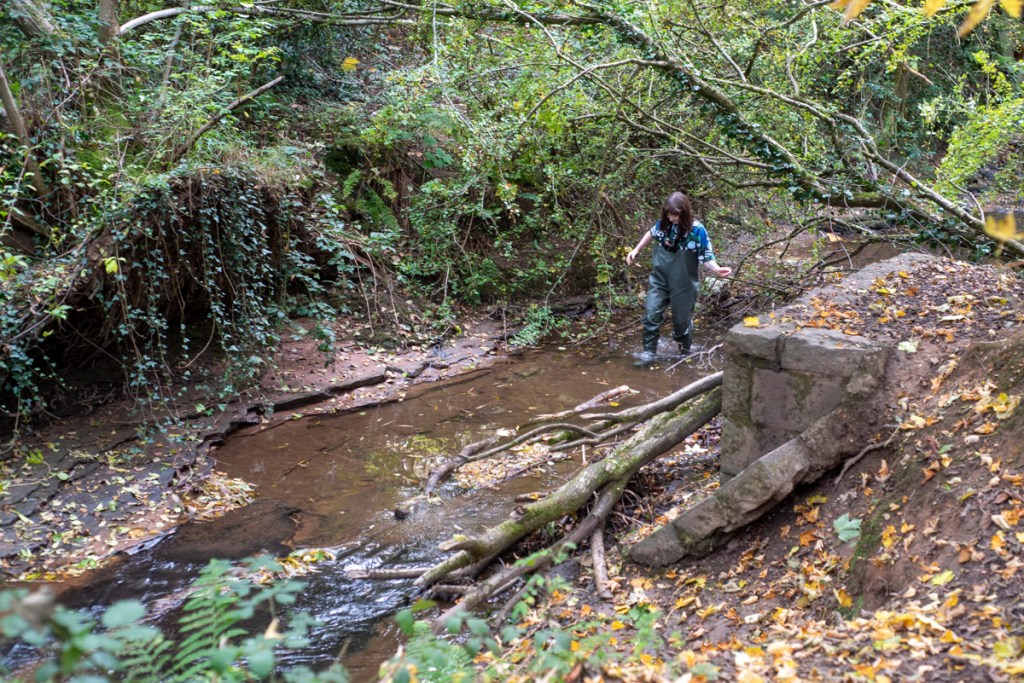
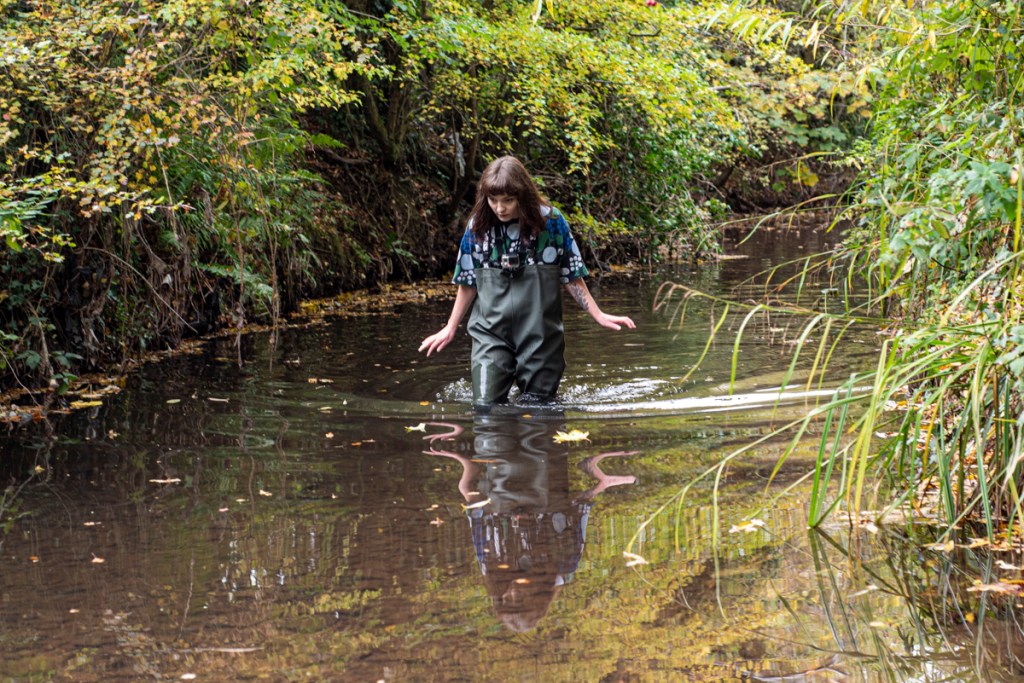
At the beginning of October – bringing in autumn, my favourite season – piercing boggy soil in my wading boots and clearing pathways through gnarls of bramble was a joyful escape: the honeymoon period of a new relationship between me and this wet, secret place that was both a stranger and home. But here now, in late November, I’m only halfway through. I last stepped out of the Rea as it passes under Cartland Road at the edge of Stirchley. And now that my walk has brought me closer to those long, hostile culverts that hide the river beneath the industrial grind of the inner city, the truth is that I don’t really want to go back in.

I allow heavy rains to delay walks, feigning disappointment. I injured my back on the last walk and, wrapped up warm in the glow of tramadol, I felt relieved that this too would keep me out of the water a little longer. Lockdowns under other names have prevented friends from accompanying me, and my own chronically despondent way of being means I’m reluctant to push ahead.


Forward is not my natural state. I prefer to linger in familiar spaces, long after all light and life has passed through them. I realise, to my horror, that this plateau in the project is a garish analogy for every other relationship I’ve sabotaged via refusal to work, to change, to go Forward. It may be more comfortable to hang around old, familiar shadows, but they’re cold and long dead and have nothing new to tell me.

The Rea is a river you often can’t see. It begins as a messy, chaotic network of puddles, streams and bogs before it approaches Longbridge and becomes remotely recognisable as a rivery thing. Those early streams are flowing somewhere – but on that first walk, I couldn’t find them, or couldn’t get into them, or lost patience entirely and retreated to footpaths. I can only imagine how the Rea must feel, having no other choice. So, following its lead, I cut other routes, make new mess, let the work change, listen to other bodies, and take different walks.

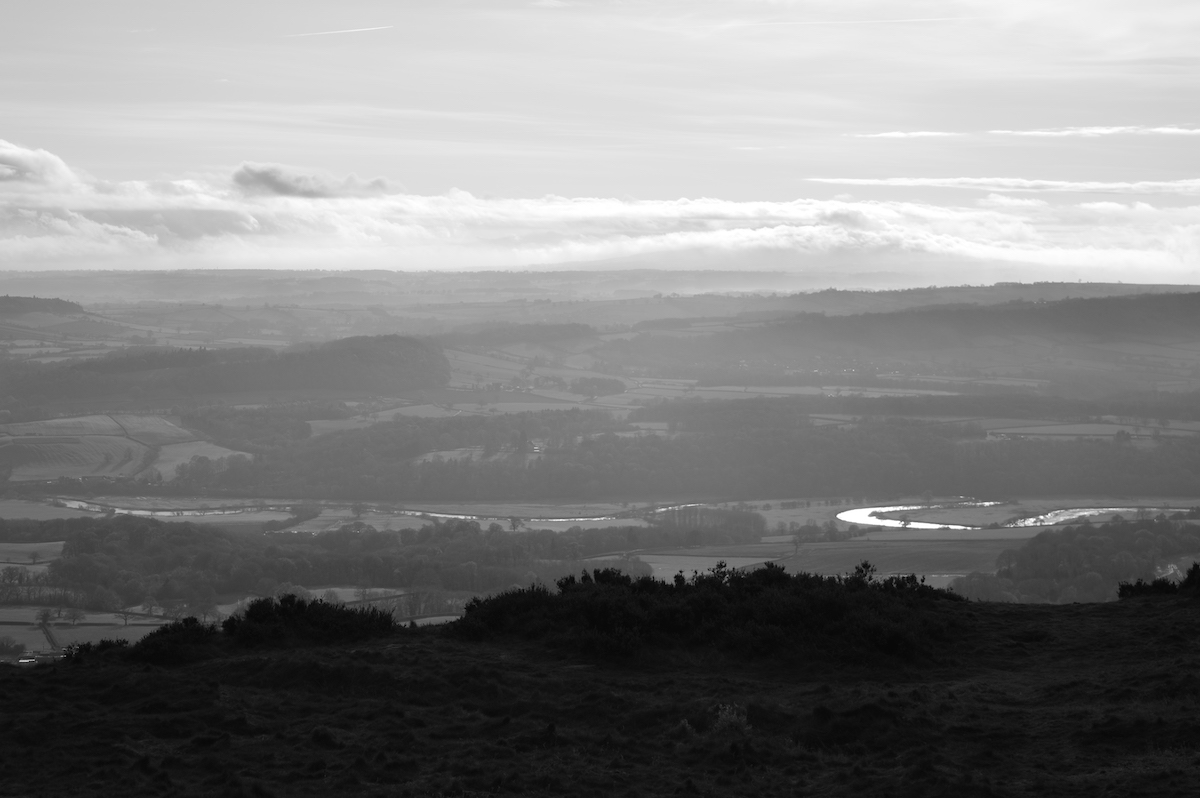
From the top of the Wrekin, the hill that keeps watch over much of the West Midlands, the sparkle of the River Severn a few miles south west catches my eye. It’s the longest river on this island, and a source of our tap water. I watch the late autumn sunlight shatter over its snaking course – from this distance, it looks deceptively still. I realise I am still working after all. There is an old regional saying about going all around the Wrekin. It’s a lovely, lyrical way to tell you, usually in exasperation – you are taking the long way around.

All Walkspace posts on this project are here.

Categories
Projects Walk Reports

A Figure Walks – day 4

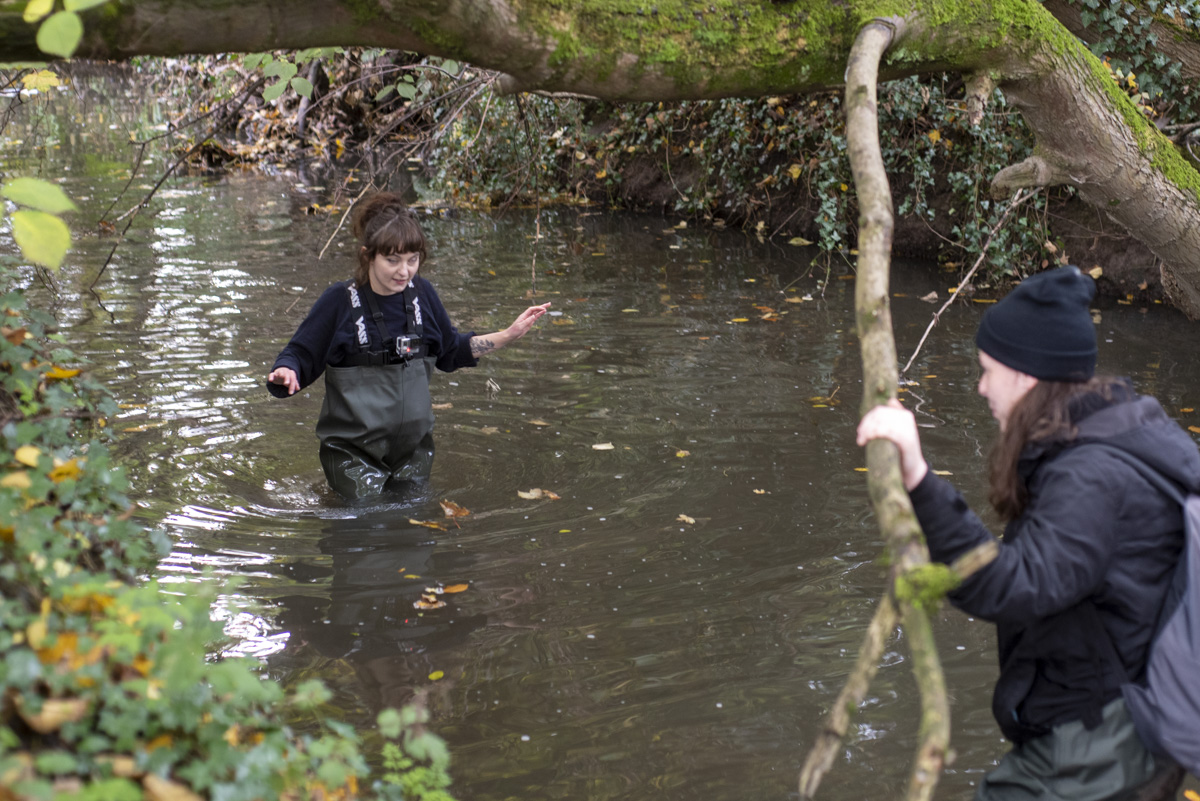
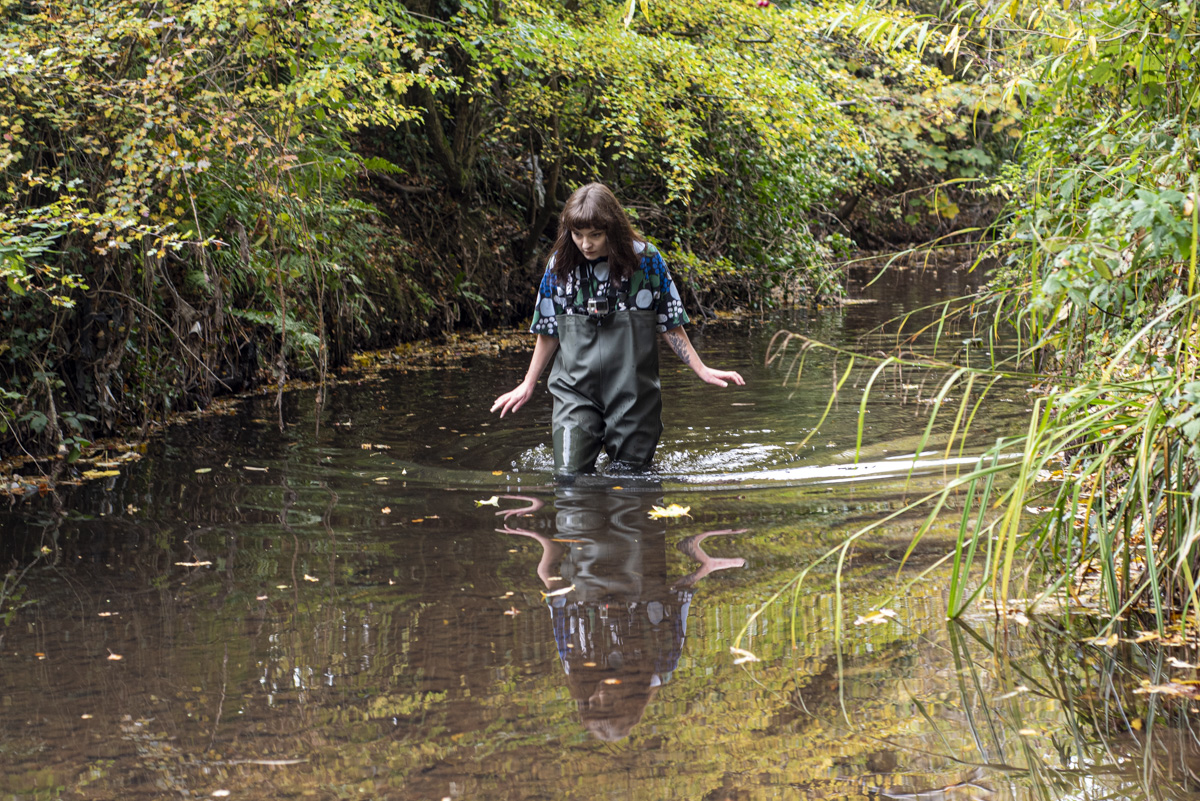
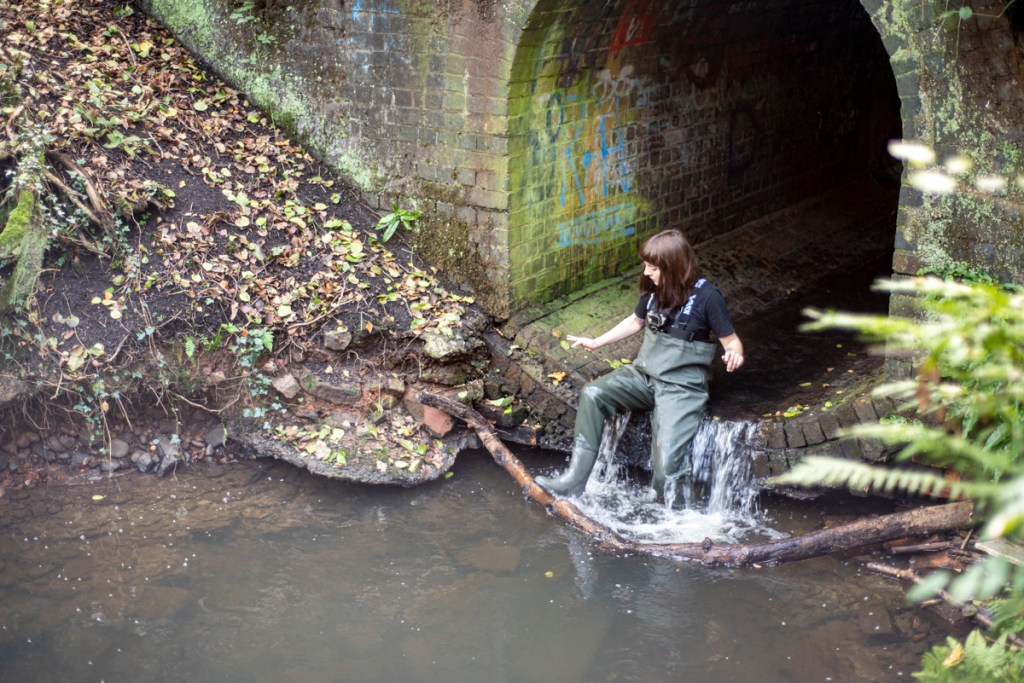
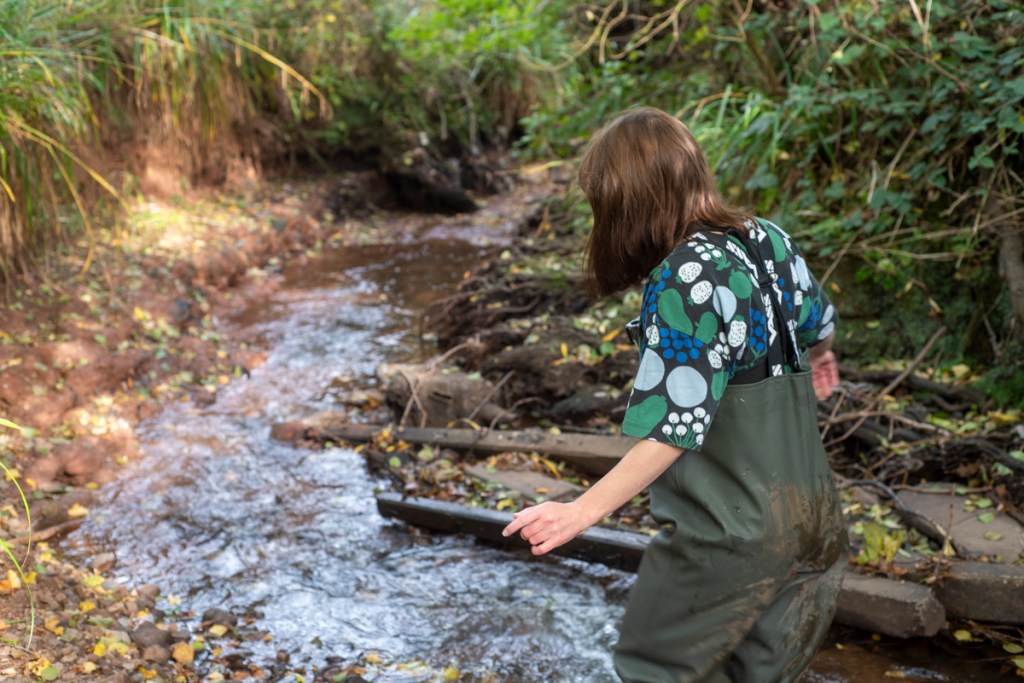
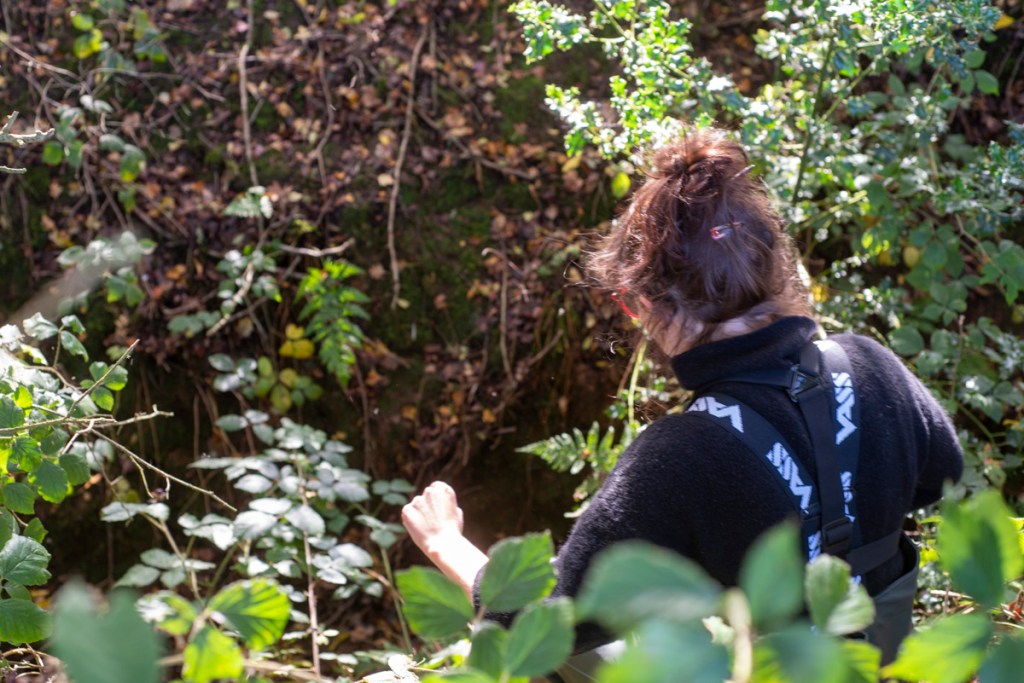
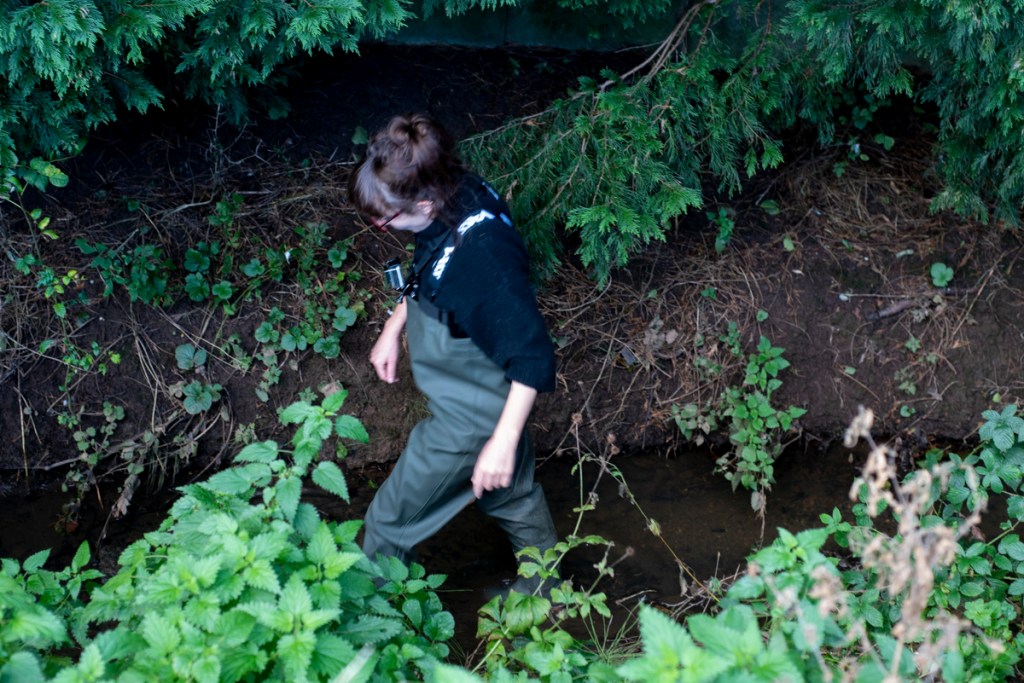
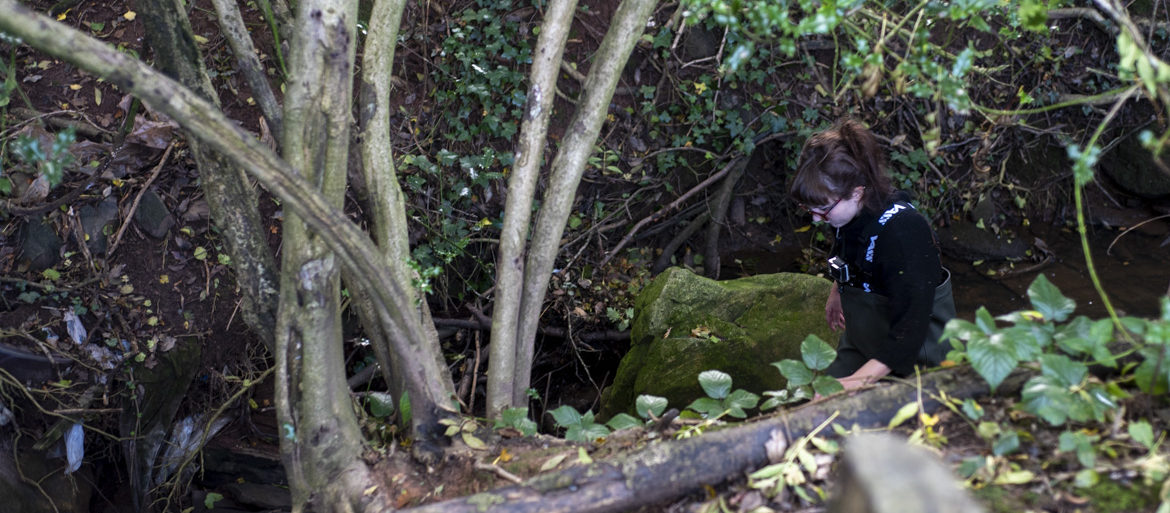
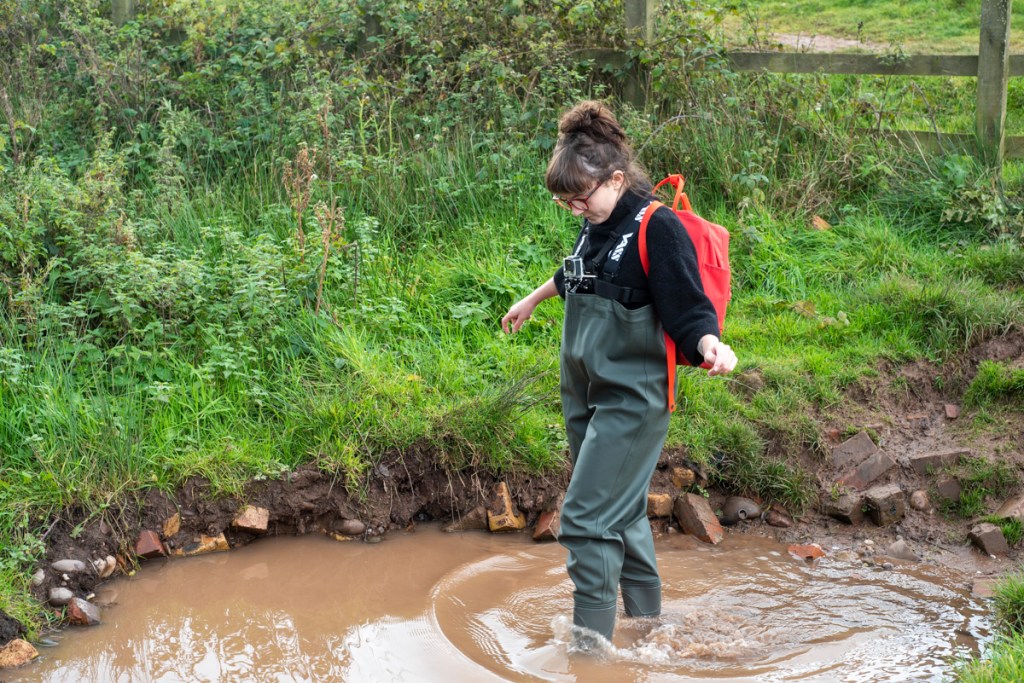
During October we’re documenting Megan Henebury’s walk along the route of the River Rea, walking in the river itself as much as possible. Pete is following her with a camera and Megan will be producing a film in the new year. All Walkspace posts on this project are here.

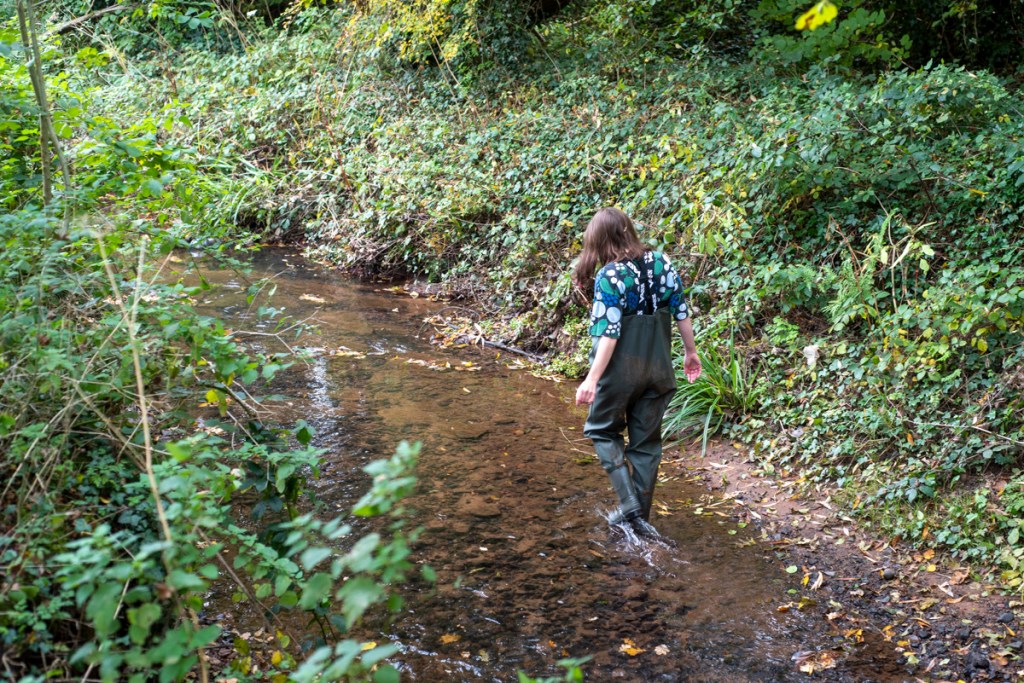
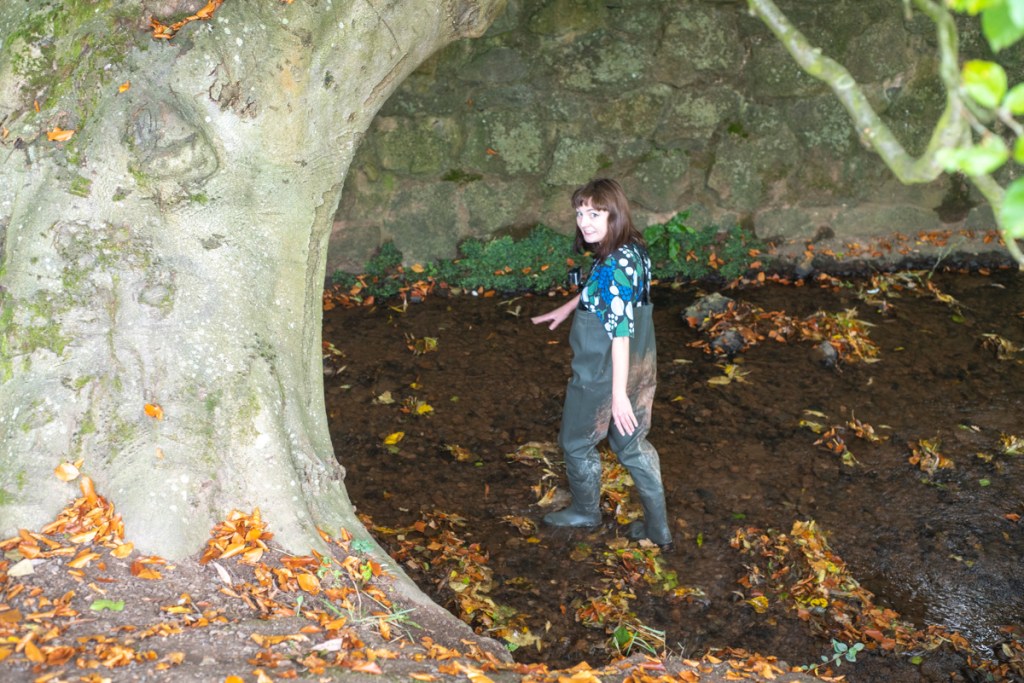
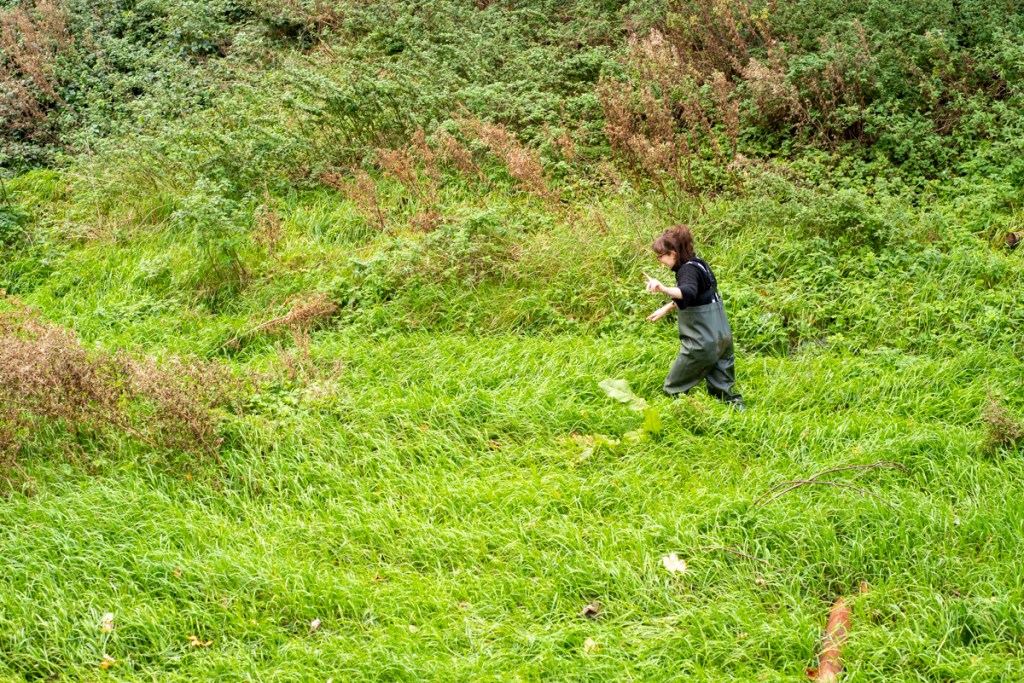
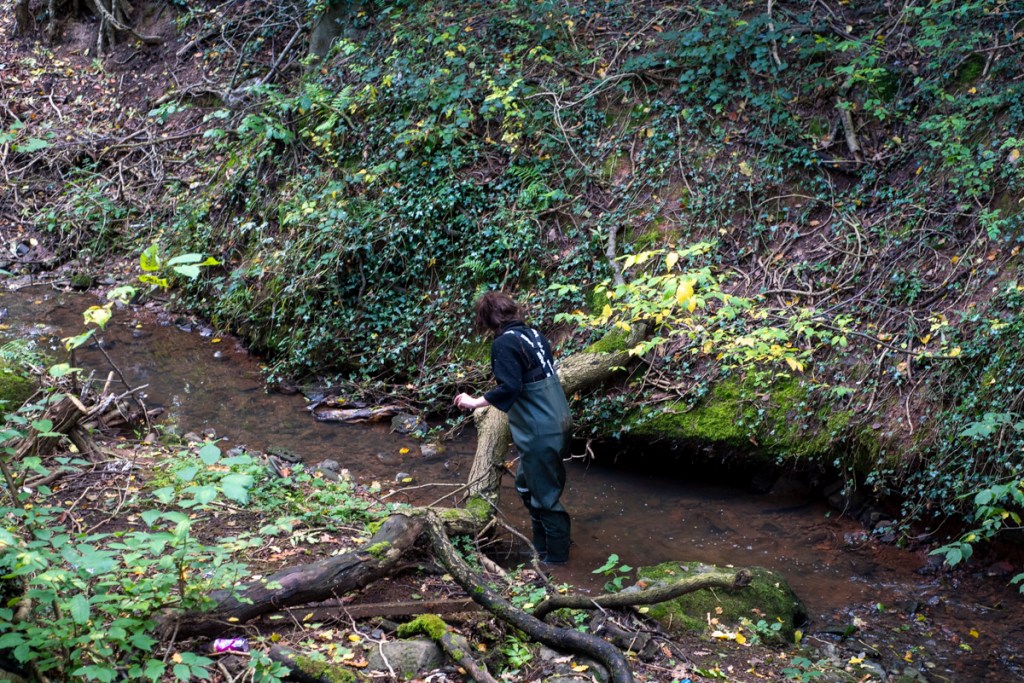
For the fourth stretch along the Rea, Megan was joined by another wader, her friend Lin, whose effect on Megan’s mood was dramatic. They started in Kings Norton Park and by the time I joined them with my camera at Lifford Reservoir, a serious artist doing serious work had transformed into a grinning loon (doing serious work).

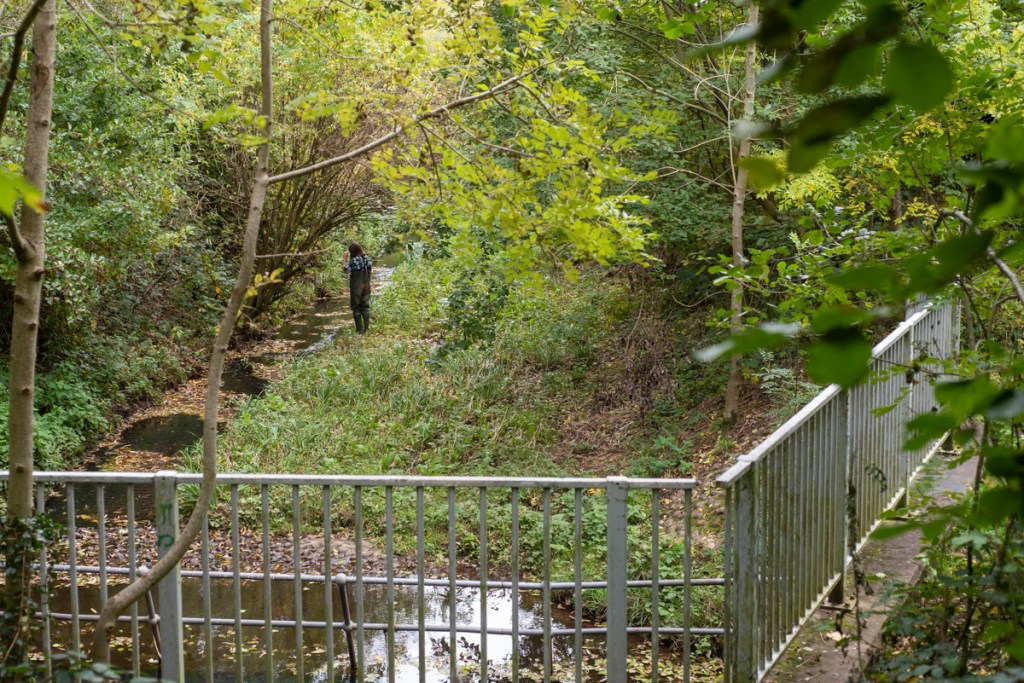
As Stirchley residents this was home turf, but it was still novel for me to be walking this area at such a slow pace, waiting for Megan and Lin to make their steady way through the frequently deep waters. I found myself contemplating the many paths that had been beaten through the undergrowth from the footpath to the river, seemingly with no purpose. Then it struck me – they were desire lines carved by dogs desperate to get in the water.

Dusk called the day to an end on Cartland Road. Three days later the November lockdown was announced, putting the walk on hold. Stay tuned for developments…

Categories
Posts Walk Reports

Walk your neighbourhood skull this Halloween

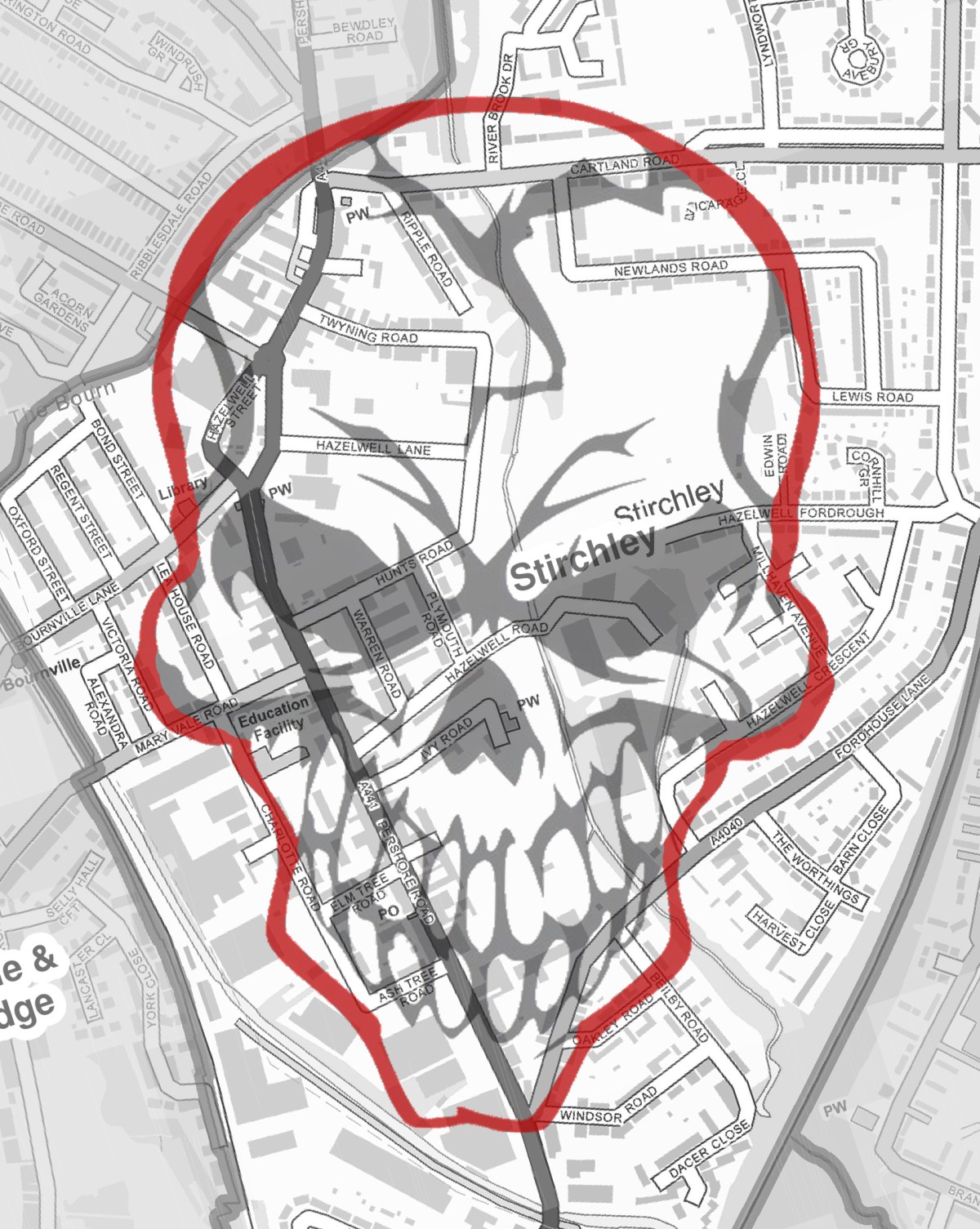
We wanted to do an informal rule-of-six compliant Halloween walk, so Fiona grabbed a scary looking skull of the internet and laid it on top of a map of Stirchley to see how it might fit.

We’ll be following the red outline as best we can on Saturday and then retiring to our garden for skyclad dancing a beer or two by the fire.

Following a shape randomly drawn on a map is an old flaneur trick, forcing you to follow routes and paths you wouldn’t normally consider. Andy and I used this for our Cross City Walks project, drawing straight lines and trying to stick to them. Bill Drummond famously scralled BILL on an A-Z map of London and tried to walk it.

The thing with this is not to try and do it religiously. Not only does this often lead to barbed wire and trespass, it missed the point of the exercise which is to get off your beaten tracks and start associating areas you might be familiar with in new ways.

For example, despite living here for over a decade I’ve never walked that specific route down the right-hand side of the skull, from Cartland Road, down a cut-through to Newlands, then across the park to Millhaven Ave and down Hazelwell Crescent to the river. Always nice to have a first.

Of course, not everyone lives in Stirchley, so we’ve prepared a transparent PNG for you to overlay on your own map.

Enjoy your spooky walk!

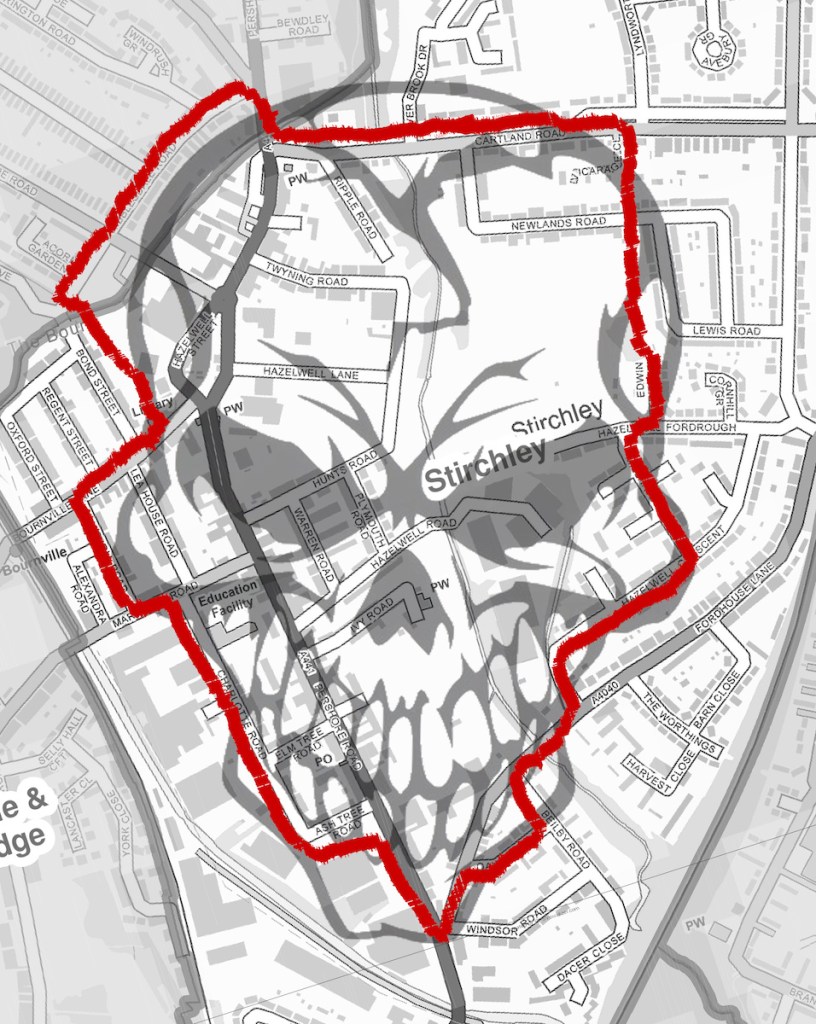
Update:

We did the walk and had a lovely time. Fiona recorded a GPS trace so here’s the skull-as-walked!

Categories
Projects Walk Reports

A Figure Walks – days 2 and 3

During October we’re documenting Megan Henebury’s walk along the route of the River Rea, walking in the river itself as much as possible. Pete is following her with a camera and Megan will be producing a film in the new year. All Walkspace posts on this project are here.

Day two of Megan’s intra-river walk started well, working through Balaam’s Wood in Rubery ending at this delightful bridge, water-falling into a surprisingly deep pool.

But then it all went a bit wrong. Megan went through a tunnel which took the river away from any and all public paths and Pete was not able to join her again. Phone battery issues multiplied the problems and we decided to call it a day around Bournville college.


For day three we were a lot more prepared, and confident that the footpath would follow the river nicely from Longbridge to Kings Norton.

The river along this section seemed more managed yet still fairly wild. We came across a number of remains of mills and places where the river had been co-opted by early industry, a history that was almost invisible from the footpaths.

We also started to see the current river management infrastructure – mysterious looking flood-prevention overflows and pumping stations around the Wychall reservoir.

And we also saw a lot of people. These paths are a beaten track, and not just by dog walkers and cyclings. The river still connects the city up.

We made it to Kings Norton Park, nearly at our home bases in Stirchley. Now we’re just waiting for a dry day that doesn’t follow heavy rain (which swells the river above Megan’s waders), something that’s become less common as we move into British Winter Time.

Categories
Projects Walk Reports

A Figure Walks – day one

During October we’re documenting Megan Henebury’s walk along the route of the River Rea, walking in the river itself as much as possible. Pete is following her with a camera and Megan will be producing a film in the new year. All Walkspace posts on this project are here.

Megan started her walk on Sunday, beginning at the official source of the Rea in Waseley Hills, the watershed between the Severn and Trent catchments. The water in this humble puddle will eventually make its way to the Humber estuary, but first it has to travel through Birmingham.

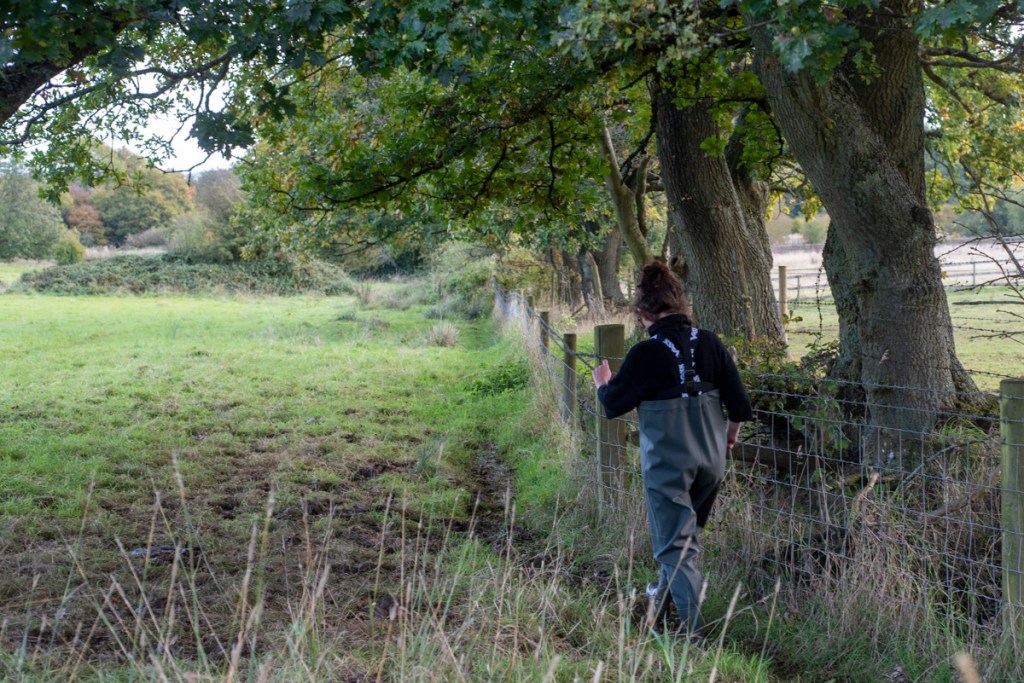
The Rea consists of a number of minor streams for a kilometre or so before coalescing into the river proper. Megan chose the most visible and headed off, looking for a gap in the fence.

After battling brambles, branches and the odd barbed wire, the stream passed into suburbia corralled between houses and roads.

Although there was the occasional patch of boggy marsh.

On the whole it was slow work through overgrown brambles, though as the stream headed into Rubery it slowly became more river-like, especially around the bridges.

And very soon the tunnels under the roads became large enough to pass through.

After two hours we had made it to Balaam Wood, just shy of Rubery Great Park, where it seems the multiple Reas becomes one. Weather permitting Megan will continue from here later this week, aiming to reach Kings Norton park.

Categories
Posts Walk Reports

A walk around a closing supermarket

Back in January, our local Stirchley Co-op supermarket closed forever; a Coop had been on that particular site for 106 years and in the Stirchley, Birmingham, area for 145 years.

Several Walkspace members planned a processional last walk up and down the aisles to say goodbye properly, and also see what lay behind the layers of goods to the emerging skeleton of the store. The closing of this Co-op was no small deal to the local community and about 100 other people wanted to join them.

Fast forward to July, and this week, delayed by a global pandemic and subsequent lockdown, a Morrison’s opened on the site.

It was finally time to write up that doomed walk, lay Stirchley’s greatest ever retail character to rest and tell the story of what happened on the Co-op’s last day.

The full walk report is a photo essay memorial. It lives here as part of a series of local walks called ‘Perambulate With Me’. Here’s an excerpt:

On 25th January 2020, the Stirchley Co-op sadly closed forever. The urge to see it one last time was strong. It was a strange feeling, after all it was just a shop. And yet… this was the supermarket I had grown up with in the 1970s-80s and returned to in the 2000s-10s. 

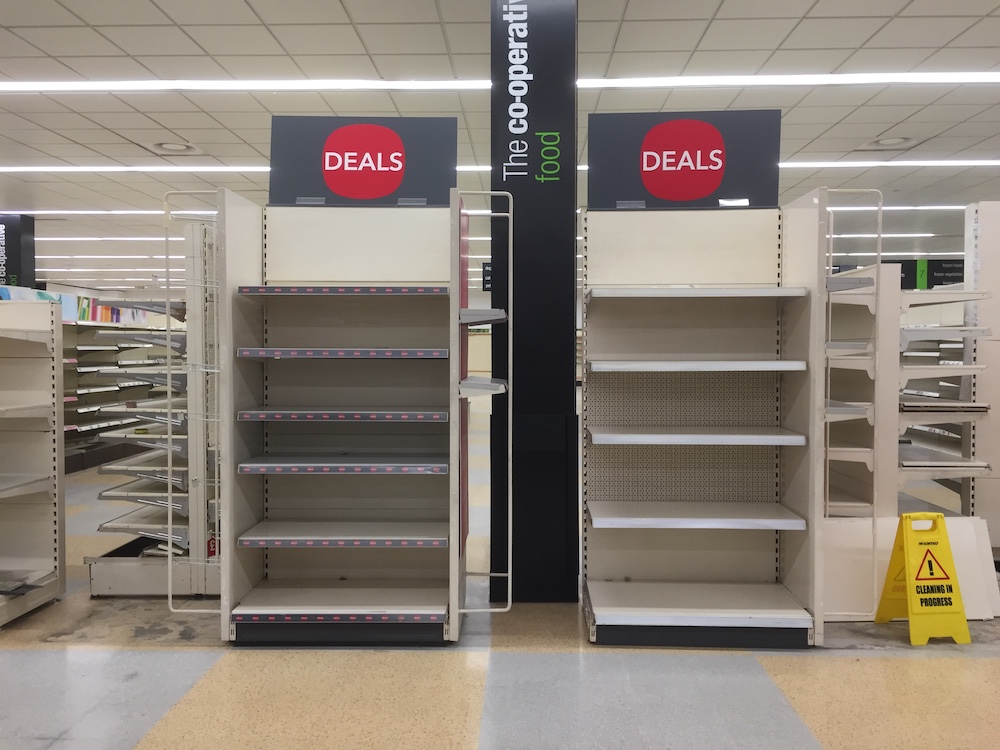
The Stirchley Co-op’s last day was a Saturday and there wasn’t much shopping to be done anymore. The shelves had been slowly emptying over the previous weeks and whole sections of the store were now being closed off… Locals were tweeting about the ‘apocalyptic scenes’ as if the end were nigh. Given what was to come, it was prescient.

Fellow Stirchley resident and psychogeographer Andy Howlett and I decided to walk the Co-op.

To: “mournfully walk up and down the empty isles, browsing instead the infrastructure that remains”.
To embrace: “The stark angles of empty metal shelving! The receding vistas of shopper-free aisles! The rhythm of its layout and walkways! The final beeps of the disappearing tills! The barren promotional structures offering no deals!”

To say a last goodbye.
Read the rest here…

More Stirchley-based deep walk explorations are coming soon, which take our community-sourced lockdown ‘Map of Noticed Things’ as the raw material. See the map and read about the project here: Mapping Stirchley.

Categories
Walk Reports

A metaphysical treasure hunt

In what has become a monthly lockdown tradition I once again joined The Loiterers Resistance Movement (remotely) for July’s First Sunday stroll. For reports on previous month’s walks see here and here. This month’s outing took the form of a “metaphysical treasure hunt” with participants receiving walking instructions to their phones via WhatsApp or Twitter. The walk began at 2pm and instructions were sent out at ten minute intervals resulting in a 100+ minute synchronised but geographically dispersed group walk.

Living as I do in the Stone Age, I don’t own, nor have I ever owned a smartphone so it was with some dismay that I learnt that one would be necessary to take part. After trying and failing to rouse the other Walkspace members to join me and grant me access through their superior hardware, Loiterer in Chief Morag took pity and agreed to let me join in via SMS.

Taking part in a walk like this grants you license to slow down and really tune into your local environment in a way that you’re unlikely to on a self-guided walk. Usually I have a destination in mind when I leave the house and I tend to rush through the immediate neighbourhood on the way to places less familiar. On a First Sunday walk however there is no “familiar”. The discovery begins the moment I step foot outside with the first instruction:

1. Let’s start with something light. Look for the brightest yellow thing you can find.

2. Now let’s play street cribbage. Find a playing card or something with a link (hearts, spades, clubs, diamonds, jokers or queens perhaps?)

I spot the heart immediately on looking up from my phone so decide to coast for the rest of the ten minutes. Towards the end however I spot another heart and a playing card shaped label with a possible reference to Alice’s nemesis the Queen of Hearts:

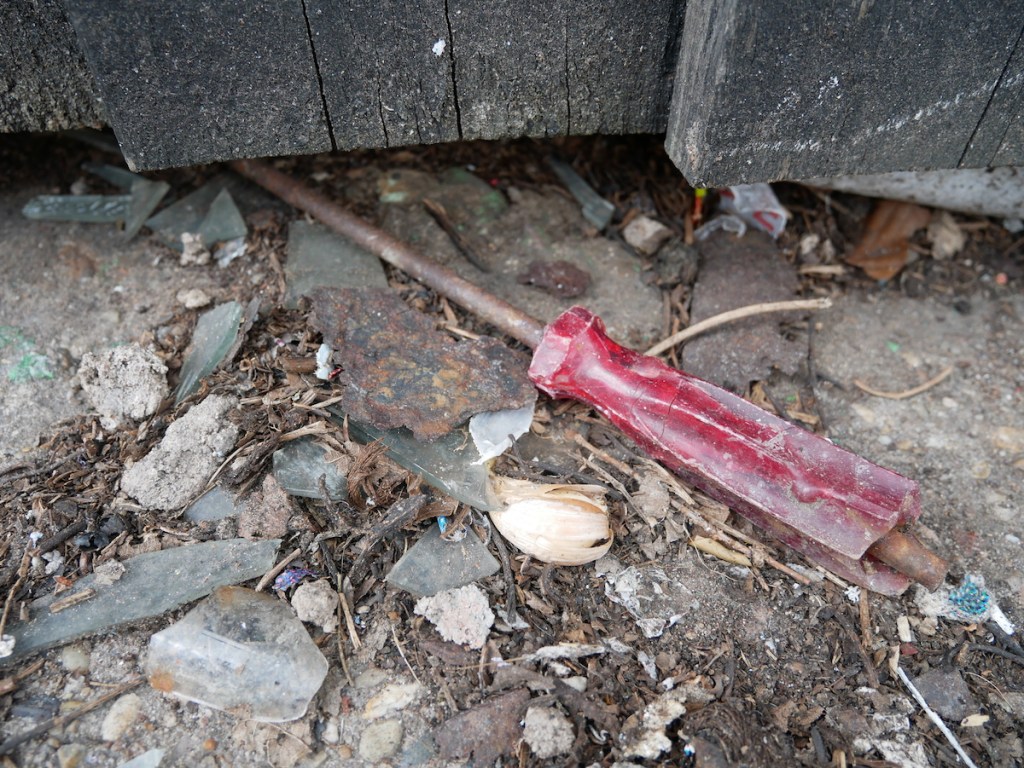
3. Look Down at the flotsam and jetsom. What are traces and rubbish trying to tell you?

A screwdriver and a clove of garlic… a makeshift vampire defence kit?

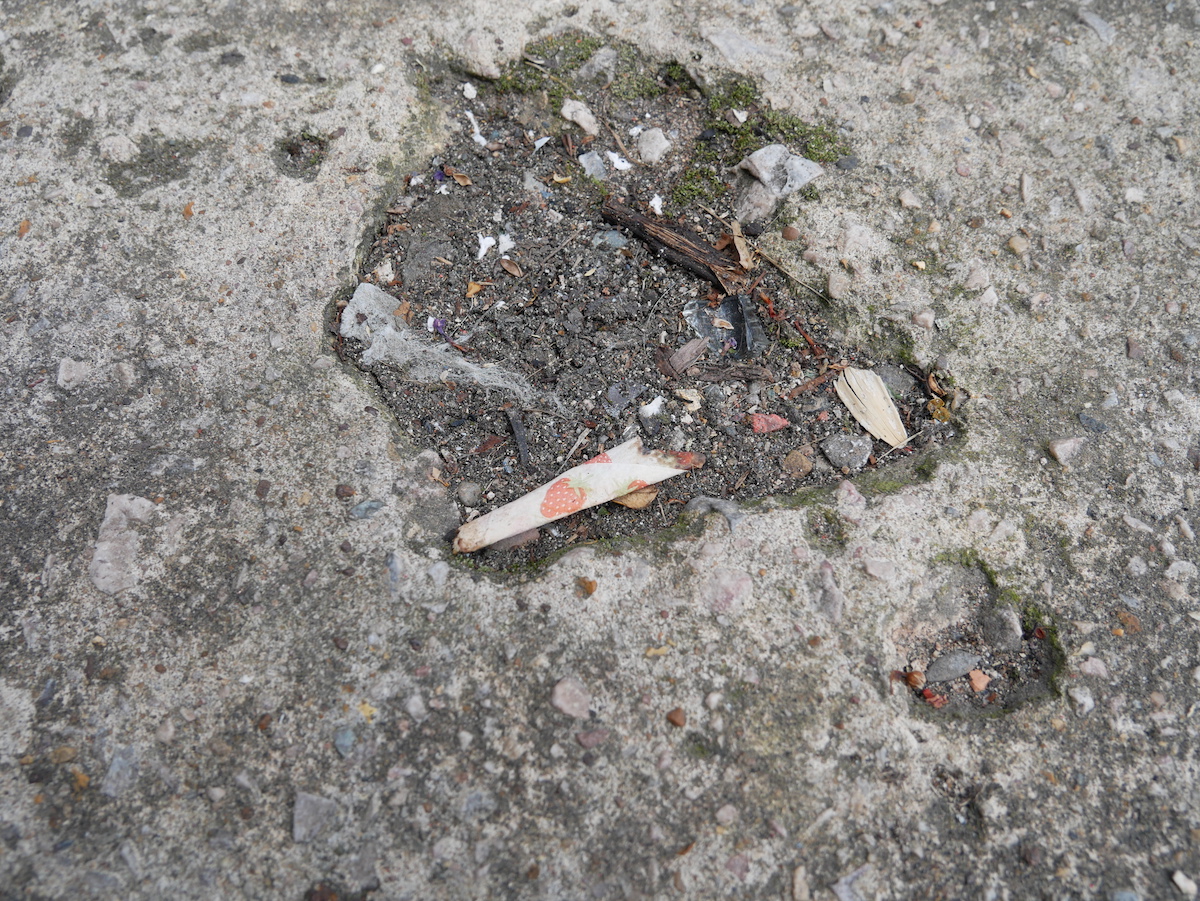
Then a hedge trimmer heralds the reopening of hairdressers and a discarded roach indicates that wild strawberry season is upon us:

4. Now look up… hunt for UFOs or signs of extra-terrestrial life.

5. Stop! You’ve wandered onto a film set. What’s the story? Where’s the drama? Can you spot the cameras or any glitches that reveal it’s all made up?

6. Let’s go back to nature. Follow the local flora and fauna. What can non-human beings teach us about where we are?

7. Hunt for patterns, regular, designed or coincidental.

8. What’s the smallest interesting thing you can find…

… and the biggest?

9. Can you find evidence or rumour of the supernatural or mythological in your landscape? Do ghosts linger?

10. To end this wander please look for signs of hope and promises for the future. What do you want to happen next?

Nothing says hope quite like an opening to the wilderness and the promise of future adventures.

I made my way back to the house with heightened senses and a renewed alertness to the fantastical eruptions of the familiar. It was in this state that I spotted for the first time a Top Cat figurine upon a satellite dish above the premises of TopSat Digital. I must’ve walked past it a hundred times before completely oblivious.

Categories
Walk Reports

A non-essential walk

I went to town today.

Since lockdown began I have been to town a handful of times. The first was a mission of artistic curiosity at the beginning of the ‘official’ lockdown – in the middle of a project about urban spaces, ‘edgelands,’ and pigeons, I reckoned the area surrounding the Bullring would take on a distinct charm in the absence of people. I cycled in, anticipating waves of inspiration to emerge from the quiet, desolate streets and darkened shop fronts.

None came. I realised you can walk through near enough the same town after 6pm on an ordinary Sunday, the only difference being there was nowhere to get fast food.

Feeling somewhat useless, I put the word out that I was near Boots if anyone needed anything. One friend asked if I would pick him up some Nytol, another requested toothpaste. Now armed with essential supplies for friends in need, I cycled back home imagining that this had been my objective the whole time. A hero, you might say.

Three months on, as of today, ‘non-essential retail’ is permitted to reopen under social distancing guidelines – of course I had to go and take a look. I have come to realise in this long yawn of lost weeks that the Bullring in lockdown didn’t inspire me precisely because it is the presence of people that makes it a place in any conceivable sense.

On my long walks, bike rides and public transport journeys I go looking for the places you could collectively describe as familiar but ignored. Beneath motorways, disused power stations and factories, canal tunnels, forgotten walkways – all of which often exist on the intersection between urban and rural environments, the places between places. I don’t particularly want to encounter other people there, and if I do, I keep my distance, make them part of the landscape like the birds and the concrete. Meanwhile, my fascination with marketplaces, shopping centres and high streets is rooted in community and culture. An empty mall is only remarkable if it’s open. In this instance, the mall being open at all is in itself remarkable, so like many others I am compelled towards it.

Setting off, I began on the Rea Valley route but at the last moment changed my mind and decided to backtrack and take the canal. The area around the Mailbox and Brindleyplace is mostly occupied by bars and restaurants, all still closed. But there has been a clear shift in atmosphere – more people, most of whom were wearing masks and occasionally gloves, all looking quite pleased to be out, but maintaining respectful space between groups.

I circled around onto Oozells Square and peered into the still closed Ikon Gallery hoping for a sign of life. No joy. Across Centenary Square then, where I found myself thinking about how I definitely would have found the inspiration I was looking for at the start of lockdown if Paradise Place still existed, and onto New Street which almost out of nowhere seemed to erupt with people.

I locked up my bike and wandered around. At this time, around 1pm, the only notable queue outside a shop was for Apple, although I understand that Primark dealt with hour long waiting times at their tills for the majority of the day. What stood out about the bustling high streets was the slow realisation that it really wasn’t bustling at all. There were far fewer people than you would expect to see under more familiar circumstances, particularly inside New Street Station and Grand Central where the staff on duty outnumbered the general public. Still, town felt like a living thing again and so I did too, drifting with the flow of returning people.

When I eventually circled back to my bike and rode off – towards the Rea Valley route this time – I made a quick stop at the China Court bakery. As I ordered a trio of buns, a man who had queued up behind me excitedly said, “Don’t these guys do such good buns?” I grinned back, “They really do! I love tasty buns!” This infantile back and forth continued as I got back on my bike, and I wondered which of us had been more starved of social interaction to get to this point. We wished each other a nice afternoon and I didn’t feel irritated or hassled at all. So much for a return to normality.

Categories
Walk Reports

Reading the streets

One small consolation for walkers in lockdown is that it’s no longer necessary to travel to Manchester to join the Loiterers Resistance Movement for one of their First Sunday strolls. For the past three months the Loiterers have been conducting their group walks remotely meaning that anyone can join in from anywhere in the world. You can read my report of April’s walk lead by Blake Morris here.

The theme of this month’s walk was “reading and writing space”. Loiterer in Chief, Morag Rose writes:

Lets read the streets (or our rooms or gardens or ginnels or wherever). This month I invite you wherever, and whenever you are to find scraps of texts. Writing on walls, fragments of rubbish, slogans on t-shirts or placards or billboards, shop fronts and flyers…. Whatever you can find. Take a picture or make a note and if you feel like doing so call it poetry. Its a way to begin to rewrite the city by taking what it says to us and rearranging in new ways. Detournement of trash and textual treasures.

I enjoyed this walk, it took me back to the time I became fascinated with the manifold typographical layerings of Digbeth while making this film with Ben Waddington:

https://youtu.be/0UlGSFtDXQQ

Getting back into that mindset I headed straight for Stirchley high street, camera in hand, and was immediately bombarded by text from all directions: “Elite apple”, “Pandora’s Box”, “Wine Wanker?”, “No free newspapers”. My favourite discovery however was this vintage notice on the side of a postbox. I can’t even comprehend what’s being communicated here. The past is a foreign country and its mystifying artefacts hide in plain sight:

I left the high street, headed down some residential roads and made my way to the canal. The bombardment subsided and I actually had to start paying attention. The textual treasures were still plentiful however:

It was nice to walk without a route or destination pre-planned and instead just allow myself to be guided by the poetry of the streets. I ended up in a deserted industrial estate and passed back into the civilisation of Kings Norton through an avenue of lime trees before returning home.

When back I uploaded my photos and had a go some detournement of my own. It was fun.


Once again thanks to Morag for this opportunity to walk together, alone. Until actual group walks become a thing again this is a valuable substitute.