This weekend (Sept 4-6) is the 4th World Congress of Psychogeography. Usually it’s held in Huddersfield but due to you-know-what it’s happening online for 2020. Pete, Fiona and Andy submitted a talk about the Mapping Stirchley which takes the form of a video essay.
There are a number of talks, essays and short films going live on the 4WCOP website on Friday, though you’ll need to register (free) to access them. Once you’ve done this you can also join the discussions and panels. Our panel, The Same Place Through Different Eyes, is on Saturday at 11:30am. Please join us!
Update: The panel happened and was recorded. Watch it here:
This video marks a line in the sand for Walkspace. After our plans were scotched by lockdown we’re now ready to try this art-walking collective malarkey again. Watch for ways to get involved, or just drop us a note.
THIS EVENT IS BACK! The new date is August 23rd, 1pm.
We are delighted to be teaming up with visual arts duo Hipkiss and Graney for Drawing Attention: A Walking Drawing Workshop!
Using our digitised map of Stirchley curios we’ll be questing through the streets and stopping to draw objects, buildings, flora, fauna and landscapes.
Such exciting landmarks include:
The Blue Shipping Container
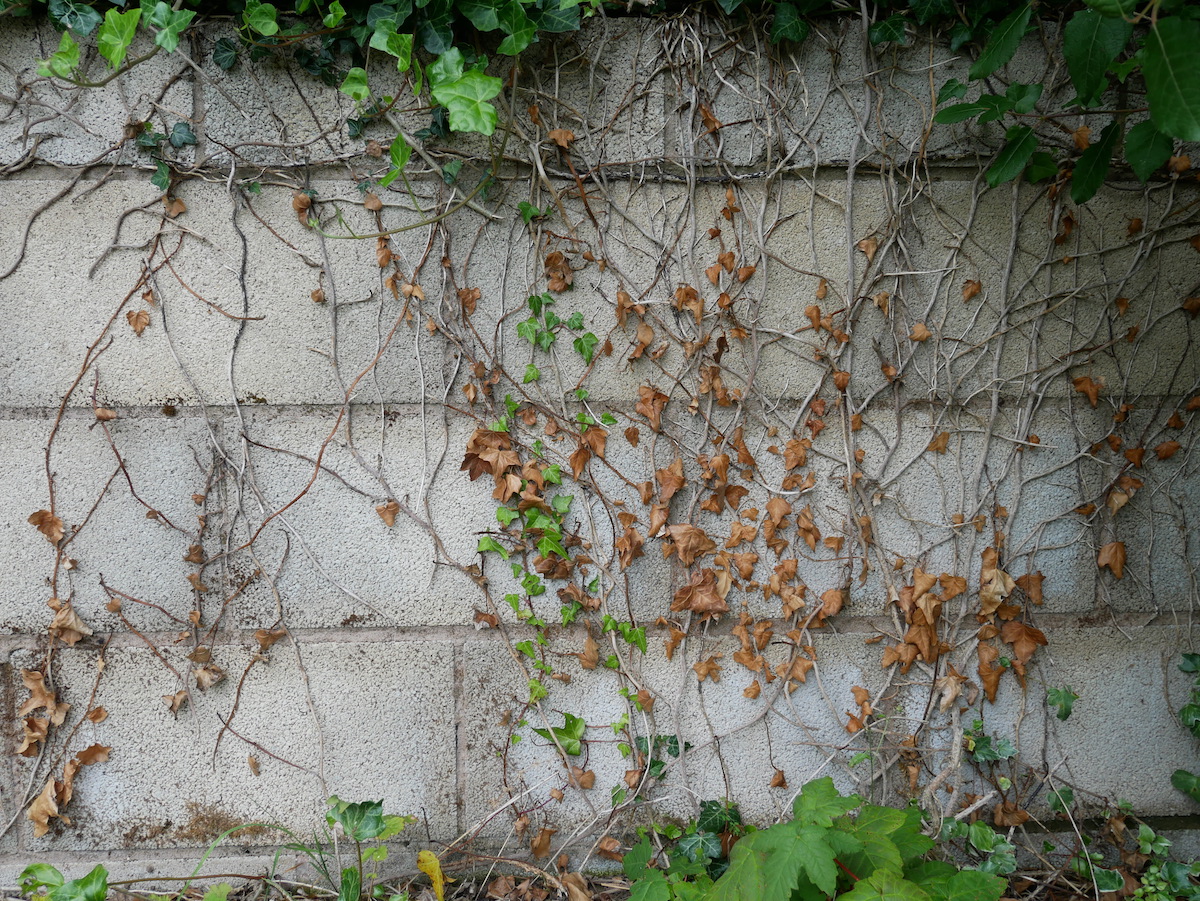
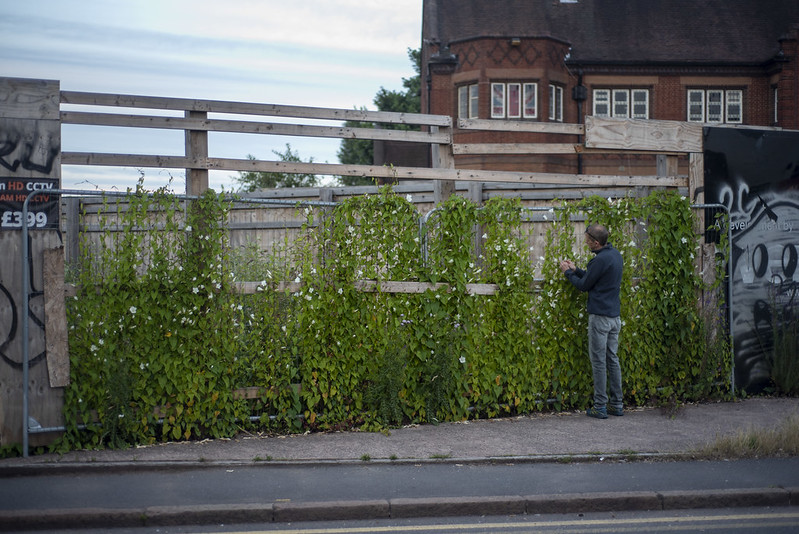
The Bindweed Curtain
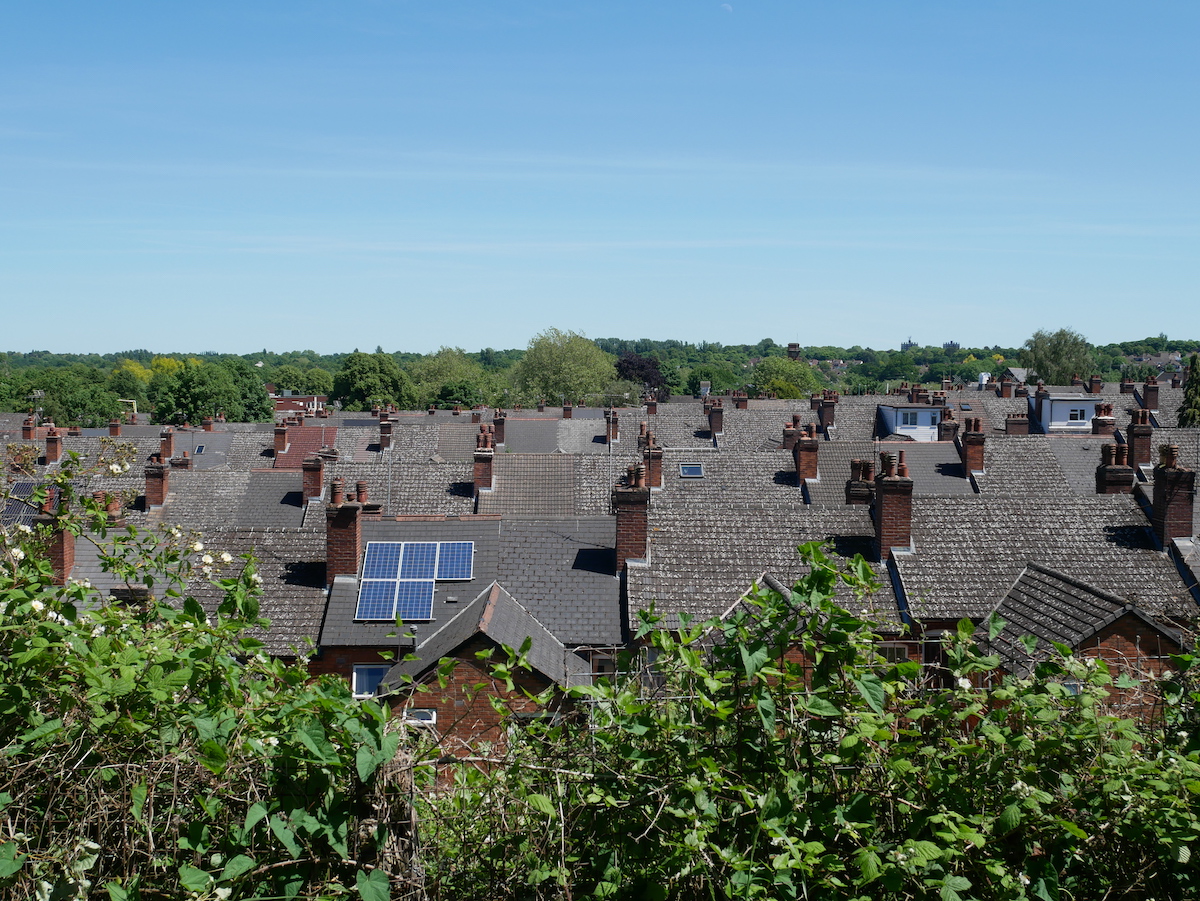
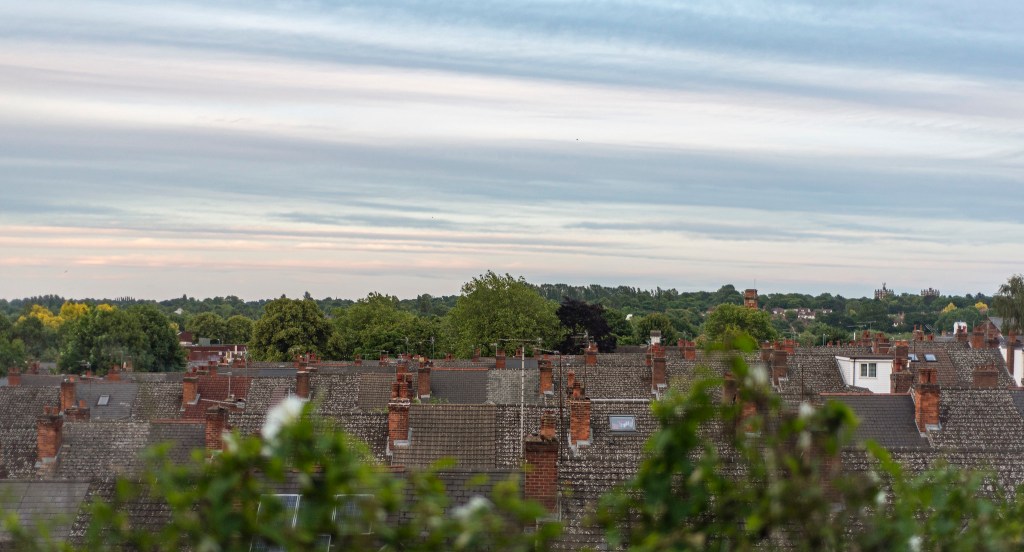
The Rooftops of Little London
The Rogue Poplar
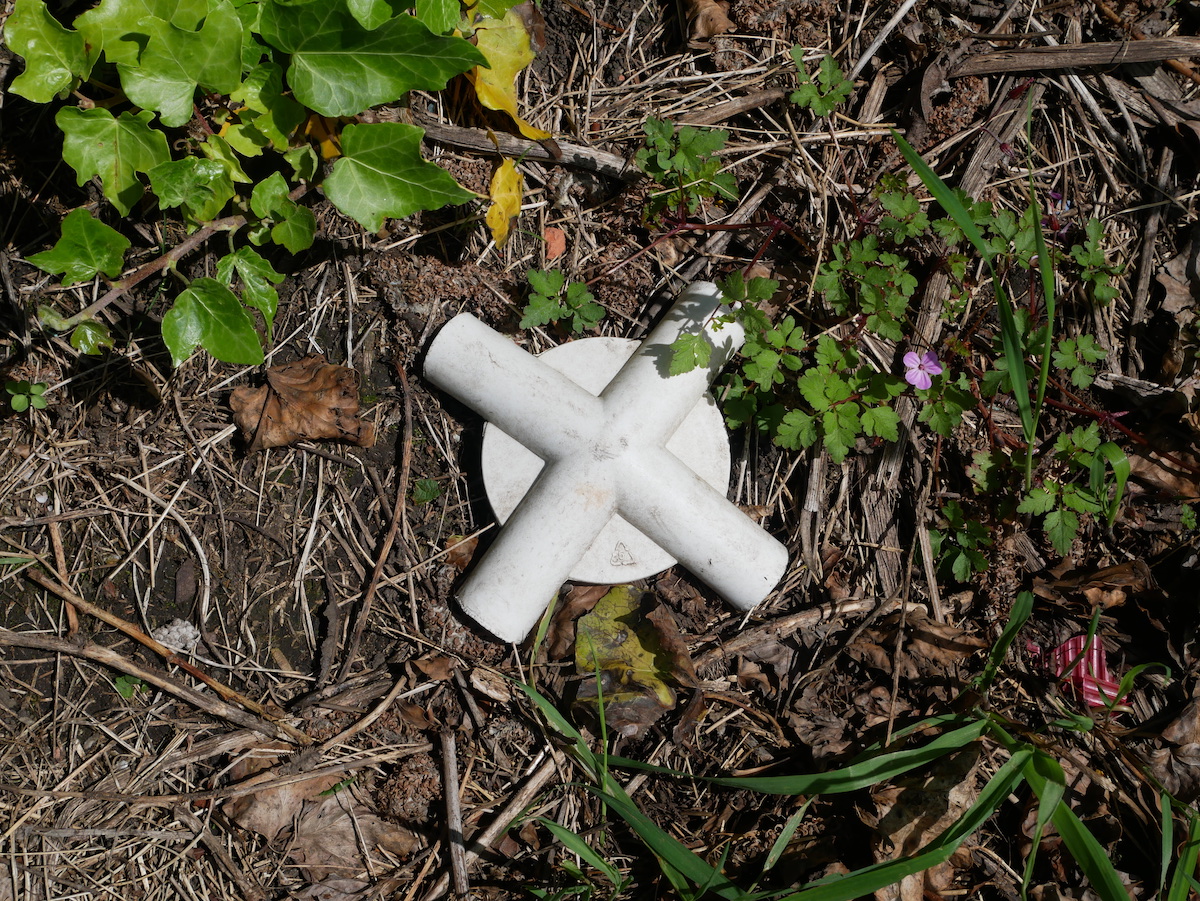
The Stone Table
And many more!
To take part please email: hipkissandgraney@outlook.com
We’ll meet at the mysterious neolithic structure in Hazelwell Park at 12:45pm to begin adventure at 1pm.
//SOCIAL DISTANCING//
Bring facemasks, we will provide sanitizer and creative resources.
To ensure participants health we will be capping the number of participants at 6.
Please note that while this isn’t a children’s workshop, children are welcome if accompanied by an adult.
//THE STIRCHLEY TAPESTRY//
This is a community art project, and we want to work with everyone- no previous art and drawing experience needed. This will be a fun and relaxing daytime art workshop with some really wonderful outcomes that you are part of!
This is the first in a series of Hipkiss and Graney community workshops for The Stirchley Tapestry. During these creative workshops we will create sustainable and fairer future communities through monochromatic drawings.
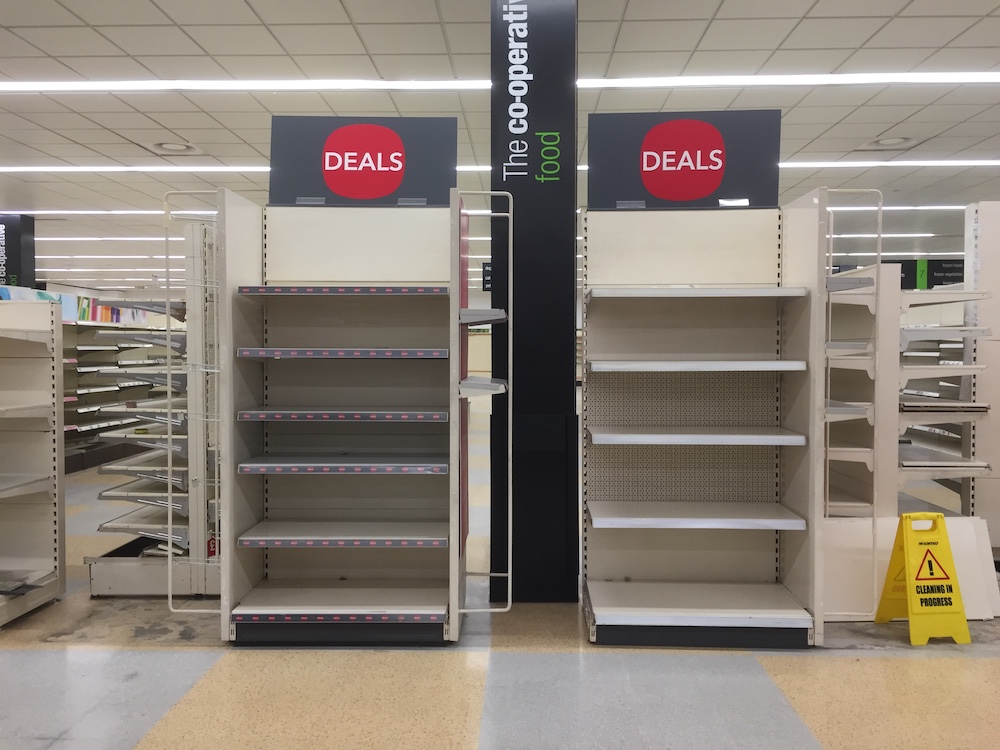
Back in January, our local Stirchley Co-op supermarket closed forever; a Coop had been on that particular site for 106 years and in the Stirchley, Birmingham, area for 145 years.
Several Walkspace members planned a processional last walk up and down the aisles to say goodbye properly, and also see what lay behind the layers of goods to the emerging skeleton of the store. The closing of this Co-op was no small deal to the local community and about 100 other people wanted to join them.
Fast forward to July, and this week, delayed by a global pandemic and subsequent lockdown, a Morrison’s opened on the site.
It was finally time to write up that doomed walk, lay Stirchley’s greatest ever retail character to rest and tell the story of what happened on the Co-op’s last day.
The full walk report is a photo essay memorial. It lives here as part of a series of local walks called ‘Perambulate With Me’. Here’s an excerpt:
On 25th January 2020, the Stirchley Co-op sadly closed forever. The urge to see it one last time was strong. It was a strange feeling, after all it was just a shop. And yet… this was the supermarket I had grown up with in the 1970s-80s and returned to in the 2000s-10s.
The Stirchley Co-op’s last day was a Saturday and there wasn’t much shopping to be done anymore. The shelves had been slowly emptying over the previous weeks and whole sections of the store were now being closed off… Locals were tweeting about the ‘apocalyptic scenes’ as if the end were nigh. Given what was to come, it was prescient.
Fellow Stirchley resident and psychogeographer Andy Howlett and I decided to walk the Co-op.
To: “mournfully walk up and down the empty isles, browsing instead the infrastructure that remains”.
To embrace: “The stark angles of empty metal shelving! The receding vistas of shopper-free aisles! The rhythm of its layout and walkways! The final beeps of the disappearing tills! The barren promotional structures offering no deals!”
More Stirchley-based deep walk explorations are coming soon, which take our community-sourced lockdown ‘Map of Noticed Things’ as the raw material. See the map and read about the project here: Mapping Stirchley.
In what has become a monthly lockdown tradition I once again joined The Loiterers Resistance Movement (remotely) for July’s First Sunday stroll. For reports on previous month’s walks see here and here. This month’s outing took the form of a “metaphysical treasure hunt” with participants receiving walking instructions to their phones via WhatsApp or Twitter. The walk began at 2pm and instructions were sent out at ten minute intervals resulting in a 100+ minute synchronised but geographically dispersed group walk.
Living as I do in the Stone Age, I don’t own, nor have I ever owned a smartphone so it was with some dismay that I learnt that one would be necessary to take part. After trying and failing to rouse the other Walkspace members to join me and grant me access through their superior hardware, Loiterer in Chief Morag took pity and agreed to let me join in via SMS.
Taking part in a walk like this grants you license to slow down and really tune into your local environment in a way that you’re unlikely to on a self-guided walk. Usually I have a destination in mind when I leave the house and I tend to rush through the immediate neighbourhood on the way to places less familiar. On a First Sunday walk however there is no “familiar”. The discovery begins the moment I step foot outside with the first instruction:
1. Let’s start with something light. Look for the brightest yellow thing you can find.
2. Now let’s play street cribbage. Find a playing card or something with a link (hearts, spades, clubs, diamonds, jokers or queens perhaps?)
I spot the heart immediately on looking up from my phone so decide to coast for the rest of the ten minutes. Towards the end however I spot another heart and a playing card shaped label with a possible reference to Alice’s nemesis the Queen of Hearts:
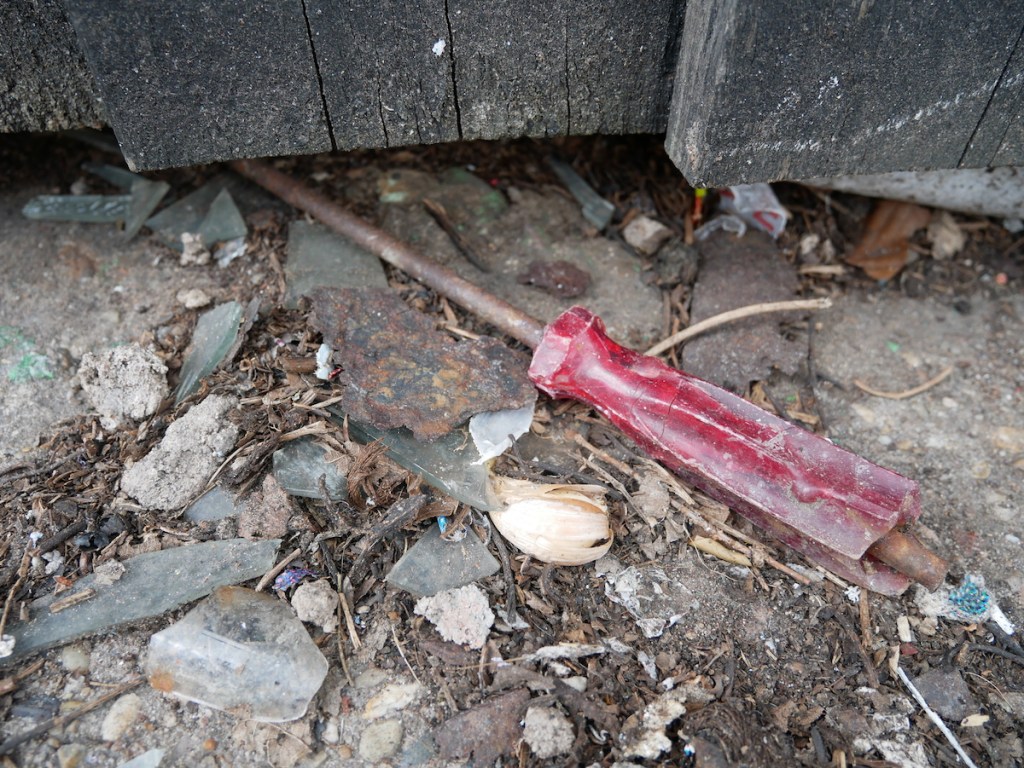
3. Look Down at the flotsam and jetsom. What are traces and rubbish trying to tell you?
A screwdriver and a clove of garlic… a makeshift vampire defence kit?
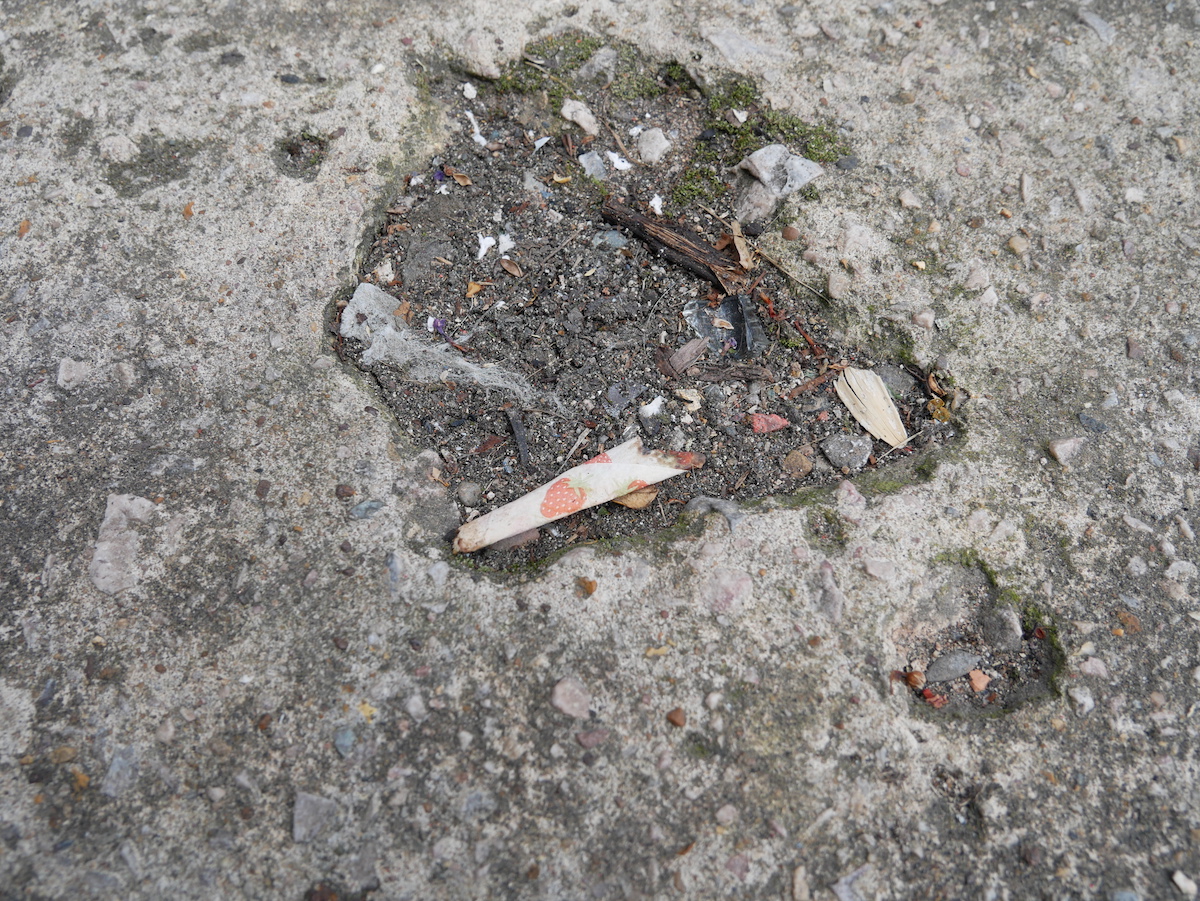
Then a hedge trimmer heralds the reopening of hairdressers and a discarded roach indicates that wild strawberry season is upon us:
4. Now look up… hunt for UFOs or signs of extra-terrestrial life.
5. Stop! You’ve wandered onto a film set. What’s the story? Where’s the drama? Can you spot the cameras or any glitches that reveal it’s all made up?
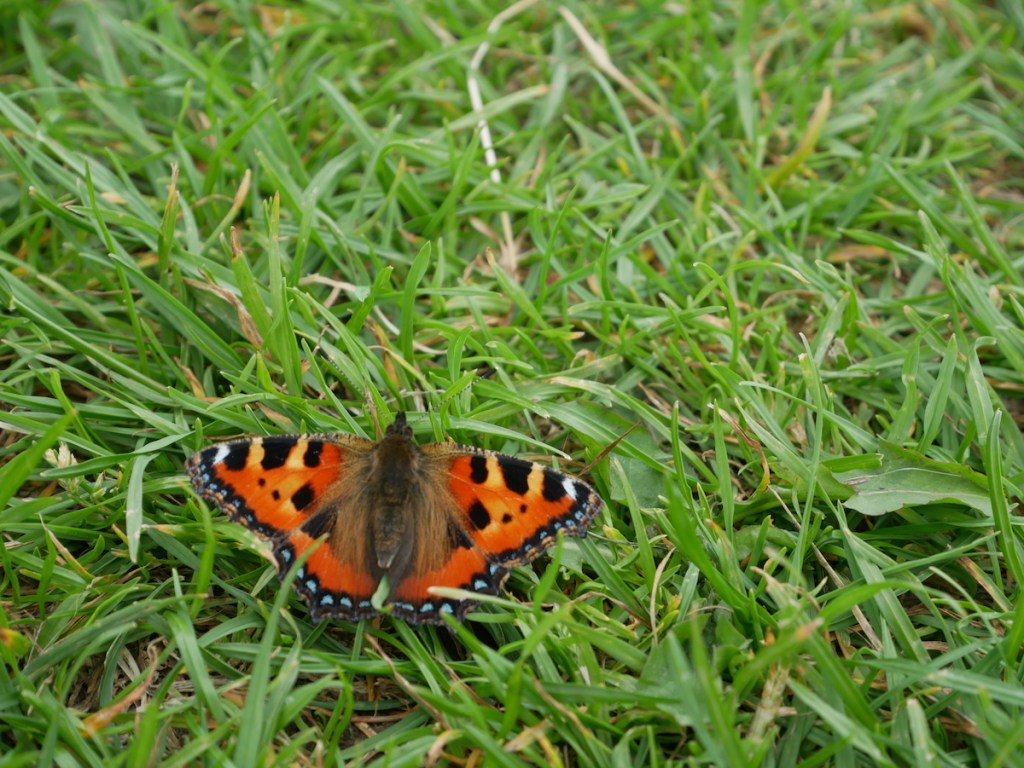
6. Let’s go back to nature. Follow the local flora and fauna. What can non-human beings teach us about where we are?
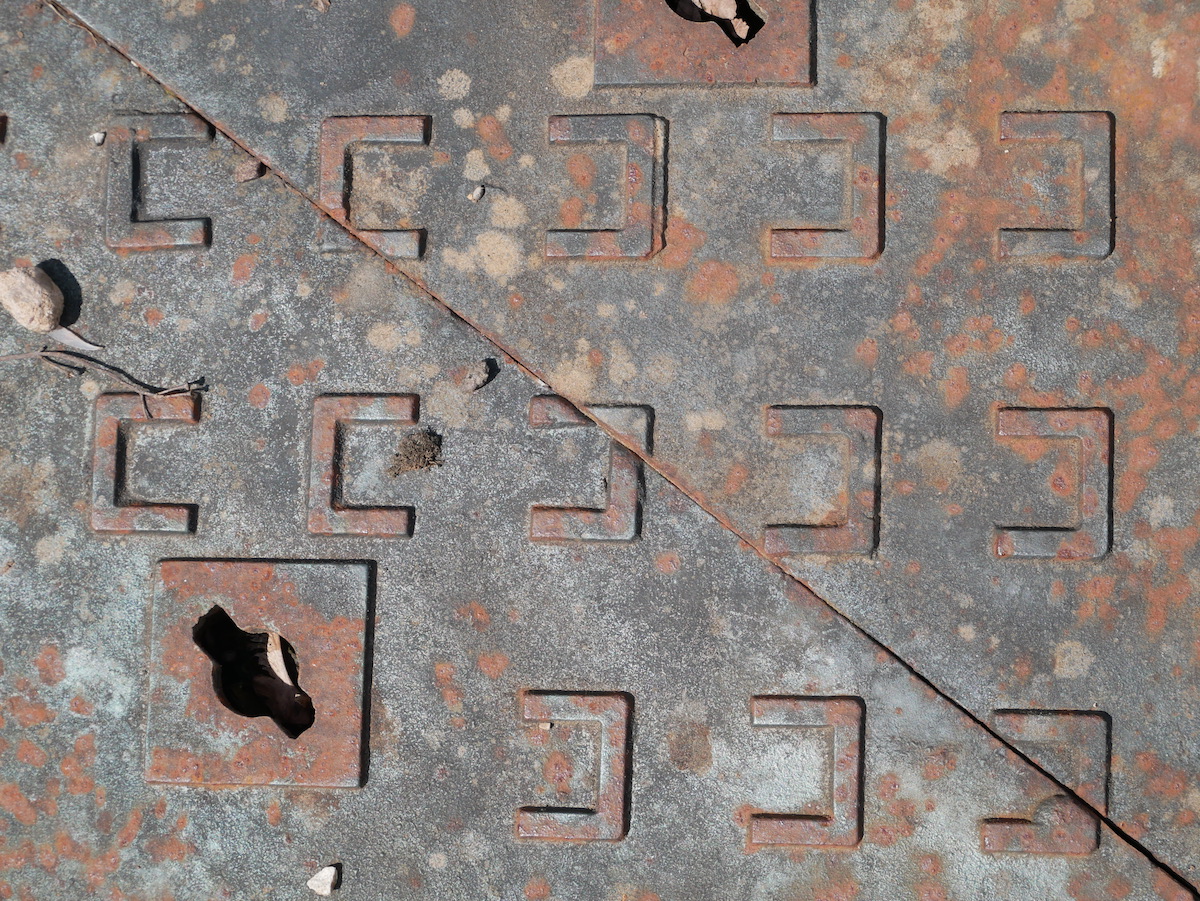
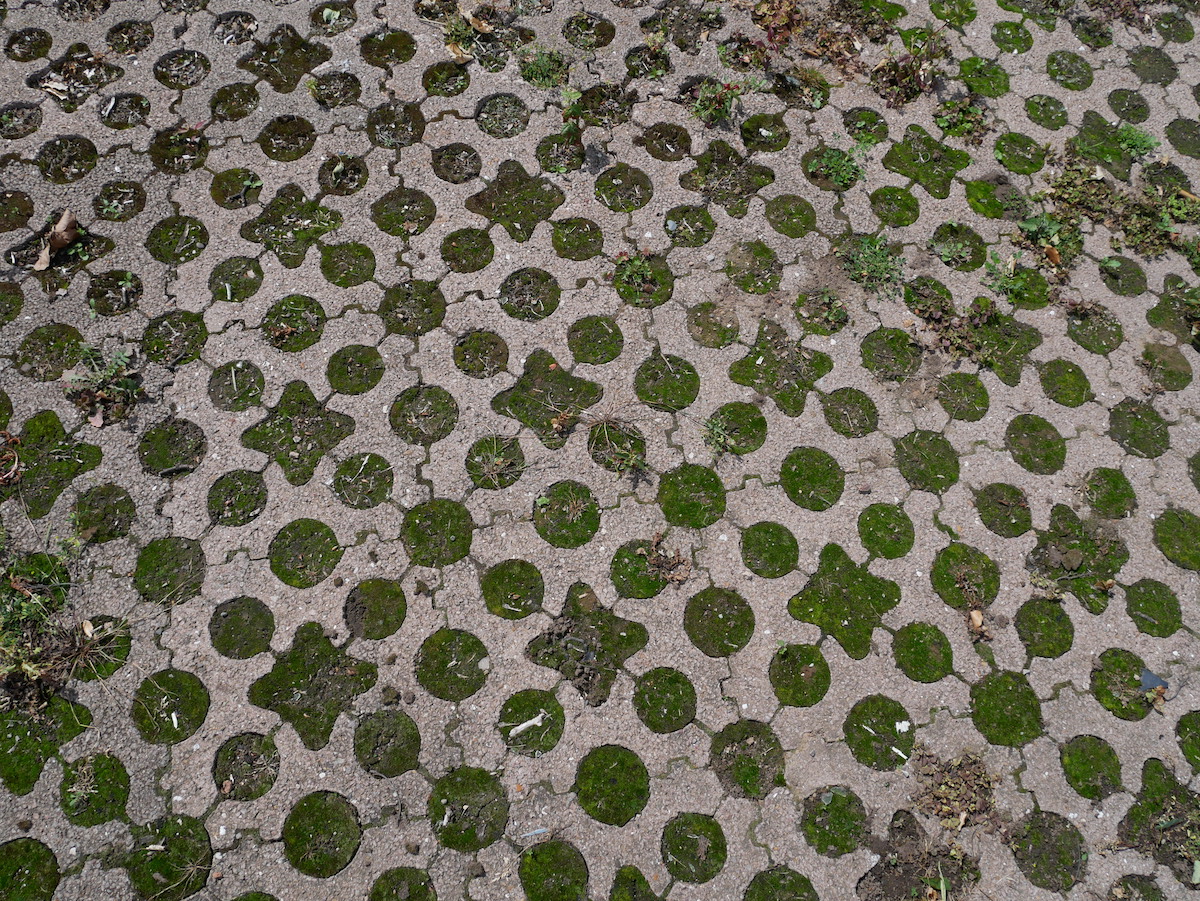
7. Hunt for patterns, regular, designed or coincidental.
8. What’s the smallest interesting thing you can find…
… and the biggest?
9. Can you find evidence or rumour of the supernatural or mythological in your landscape? Do ghosts linger?
10. To end this wander please look for signs of hope and promises for the future. What do you want to happen next?
Nothing says hope quite like an opening to the wilderness and the promise of future adventures.
I made my way back to the house with heightened senses and a renewed alertness to the fantastical eruptions of the familiar. It was in this state that I spotted for the first time a Top Cat figurine upon a satellite dish above the premises of TopSat Digital. I must’ve walked past it a hundred times before completely oblivious.
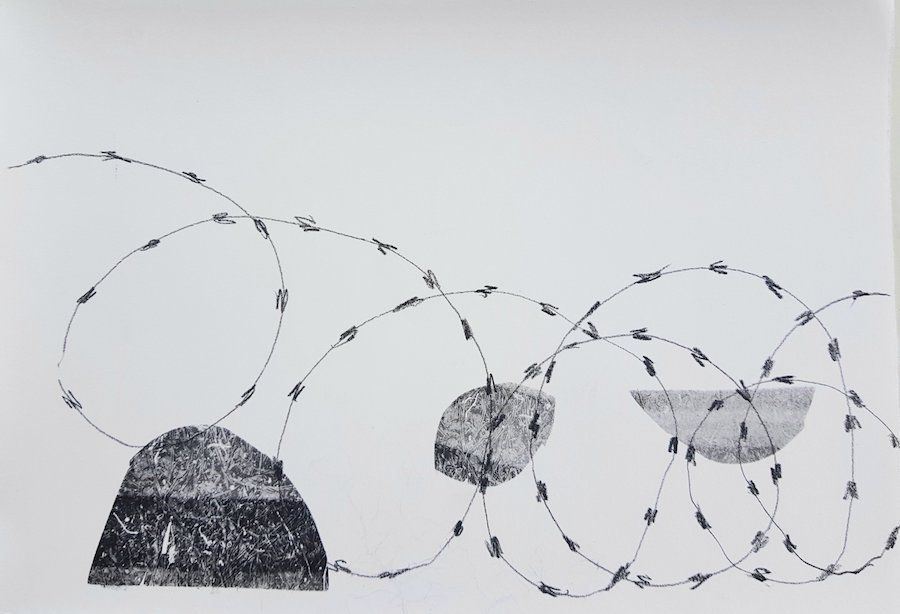
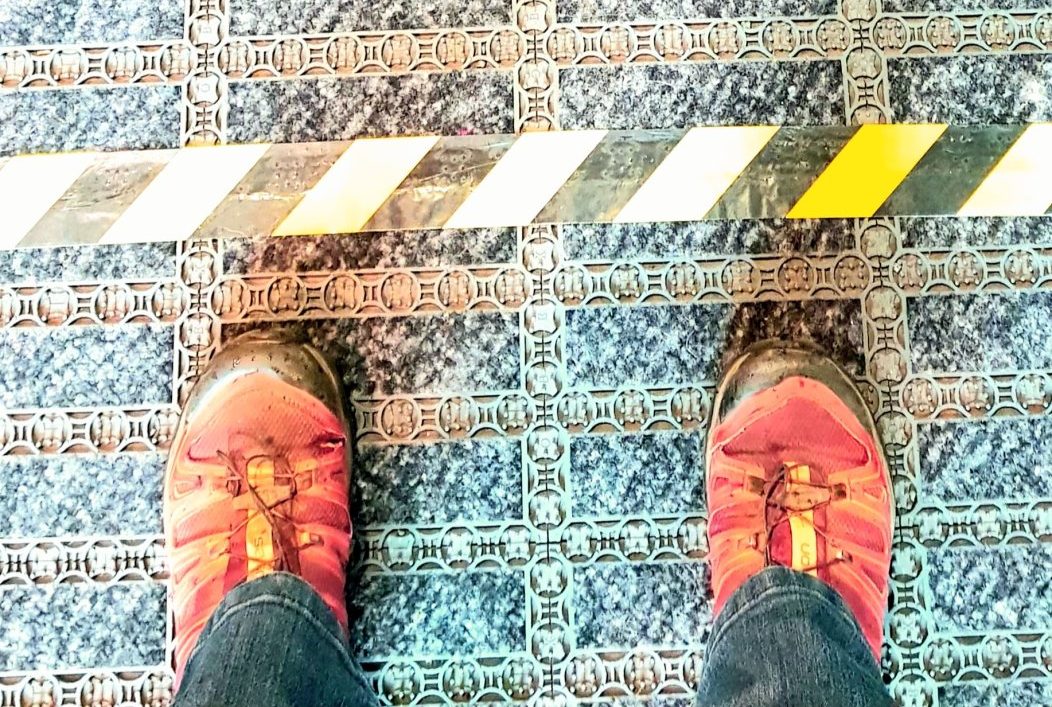
These prints were in response to boundaries. I have been thinking a lot recently about visible and invisible boundaries. I chose the walk as I knew it would involve boundaries, I have begun walking the perimeter of Kidderminster, (the Edgelands) this takes me around the edges of industrial estates, pumping stations, sewage works, all those unaesthetic but necessary industries that keep our communities working so well. Covid has also thrown up new boundaries, most of these though are not so obvious, personal space boundaries mainly and different peoples’ interpretations of what is acceptable and what isn’t.
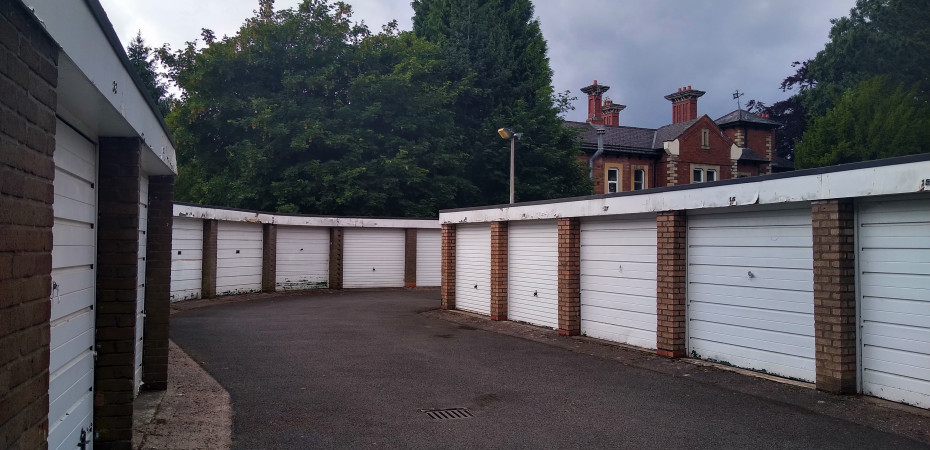
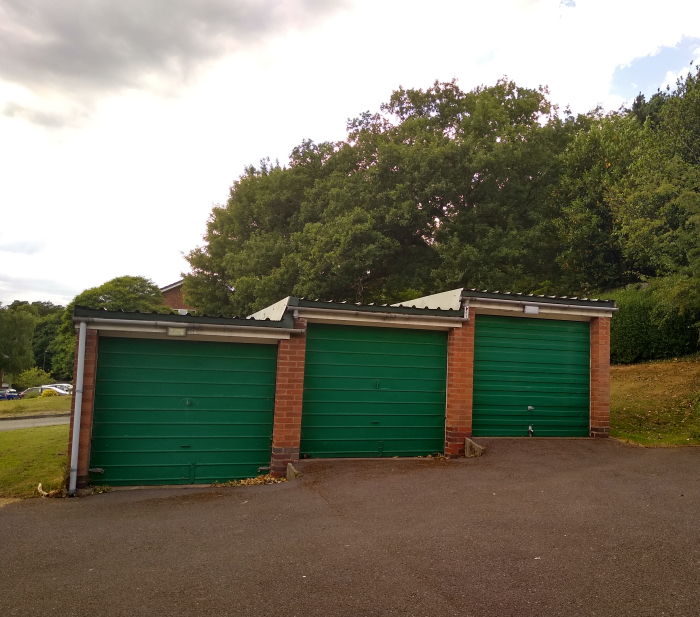
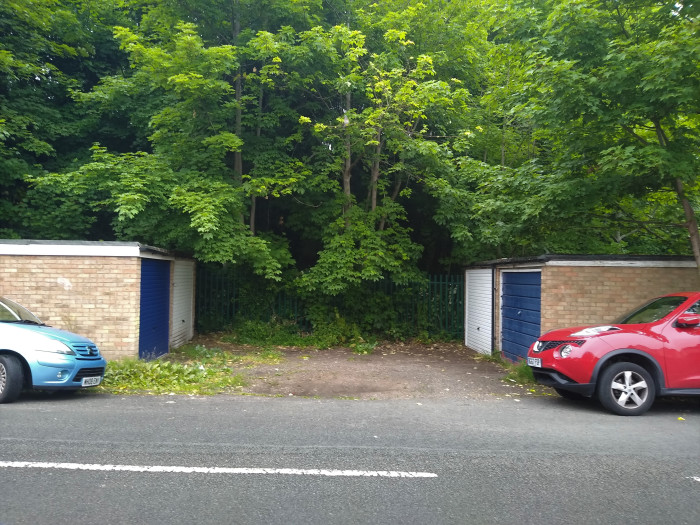
Urban conservationist Kat Pearson has been using her lockdown walks “to explore the housing estates of Stirchley, Kings Heath, Bournville and Selly Park […] looking at how cars, and especially garage blocks, are integrated into these estates”. The result are some fantastic photos and observations collected as Lockdown Lockups.
As she says, many of these are becoming run-down and disused, which as someone who lives on a road constantly jammed with parked cars surprises me. But then motorcar culture was never logical.
Focussing on mundane structures to see how peculiar they are is a great thing.
Walks that use sound, either as an artificial accompaniment or through actively listening, are a broad and inspiring part of the walking practice. I first properly realised this on a sound walk run by SoundKitchen for Still Walking in 2013 where we walked around Edgbaston reservoir engaging in different forms of listening, from the amplified scratches of bugs burrowing in a log to parabolic microphones in the trees transporting us to locations miles away, and of course simply standing still and paying attention to the soundscape. In hindsight that walk totally changed they way I think about photographing my walks, which was a nicely unexpected outcome.
Sound Walk September looks like an excellent way to get a similar sort of inspiration, should you be looking for it. Having evolved over a number of events and projects, the 2019 month became:
not only a showcase for innovation, but also a valued community-building resource, bringing practitioners together, many of whom are remotely working creatives who had previously felt isolated or ‘ploughing a lonely furrow’.
As expected, this year’s gathering will be somewhat distributed, but will hopefully emphasise the international nature of the event, and there’s an open call for submissions, be they walks or events or workshops. The call is:
Open to everyone, for instance: creatives, artists, sound artists, musicians, poets, architects, performers, designers, anthropologists, writers, health and wellness professionals, cultural and social professionals, educators, teachers, students, those interested to explore the impact and possibilities of sound walking.
Never in a million years did I think I’d be going on a tour of my local postcode, but lockdown has changed all that. Various Stirchley-based walkers – and I’m sure it’s not just us – have developed a talent for ‘extreme noticing’ on our mandated daily lockdown walks throughout March to May. And the result has been laid out on a map – nearly 120 pins documented so far of the weird, transitory, historical, natural, lyrical and creative.
For yesterday’s Summer Solstice I suggested using the map to generate a walk, ending at a high ground sunset point for some beers. We each picked an element on the map that we wanted to visit and from this I formed a basic tour:
Meet: Bournville train station 8.45pm. Hazelwell Park/Allotments for sunset 9.34pm. Solstice 10.43pm. BYOB.
Points of interest from the map:
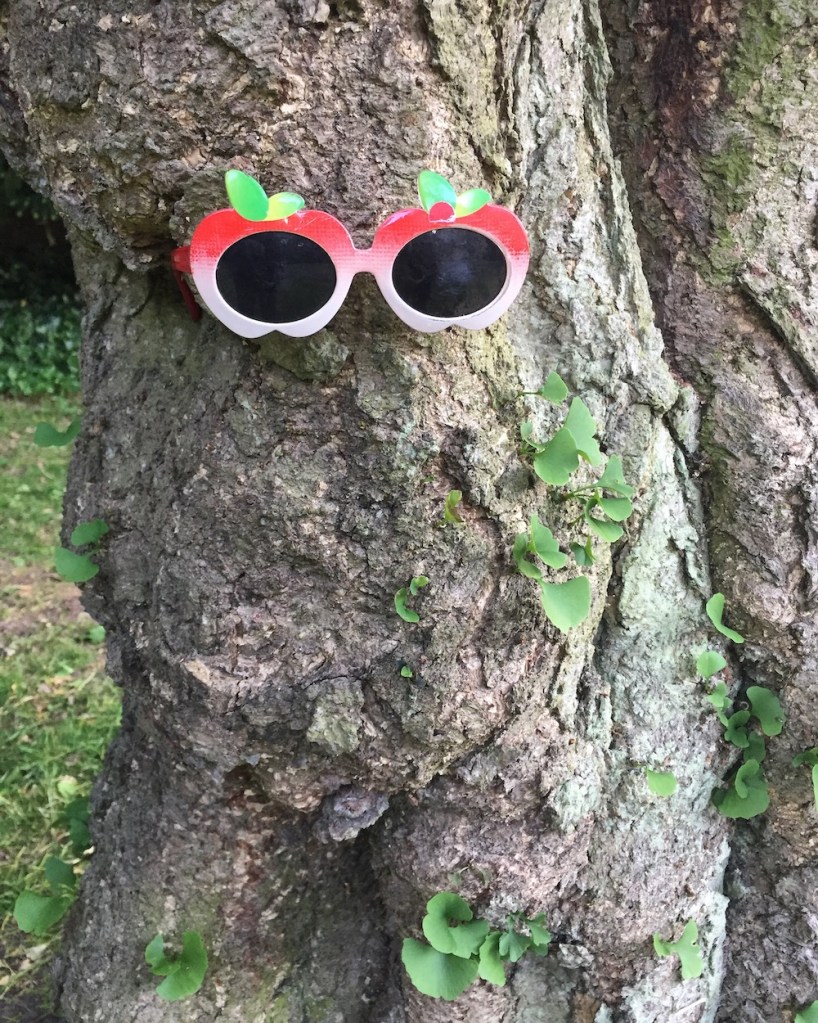
ginkgo biloba tree wearing sunglasses
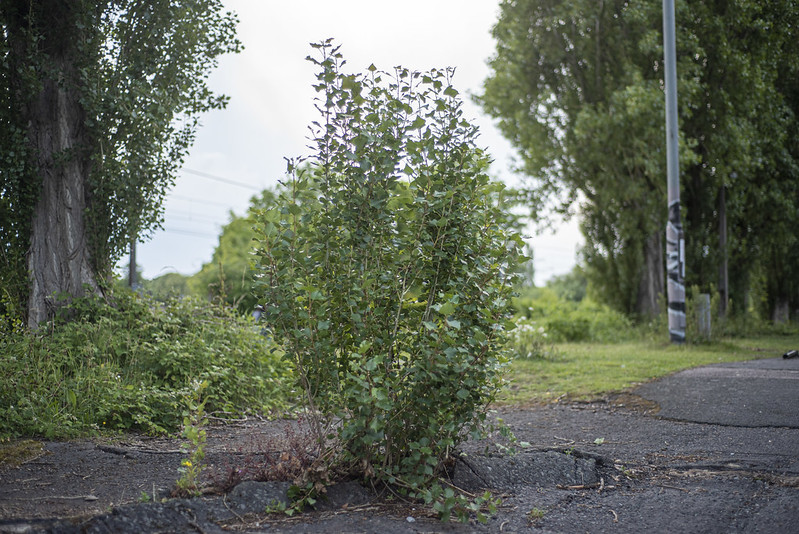
rogue poplar
I sound my barbaric yawp over the roofs of Little London
bindweed curtain
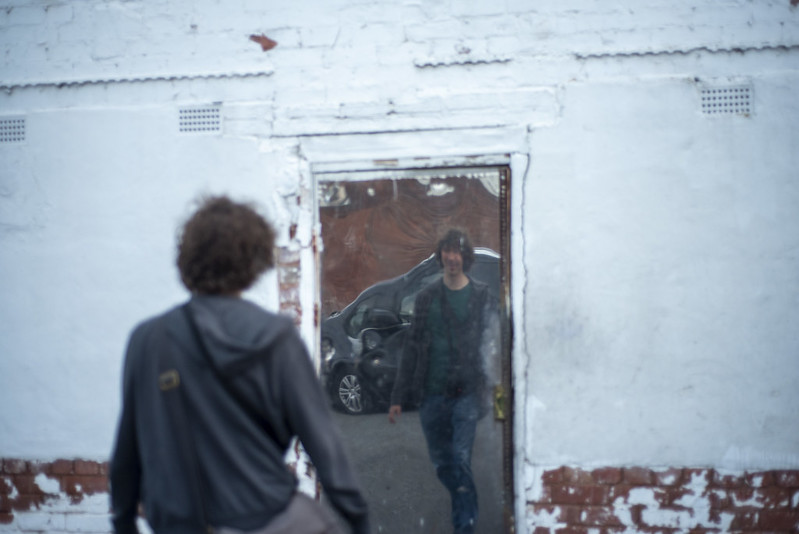
hall of mirrors door
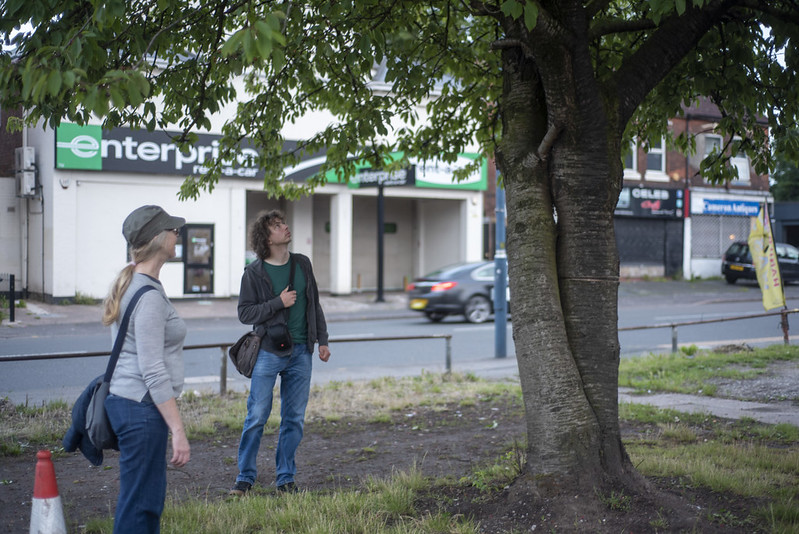
double-trunked tree
experimental caged garden
hidden cricket club
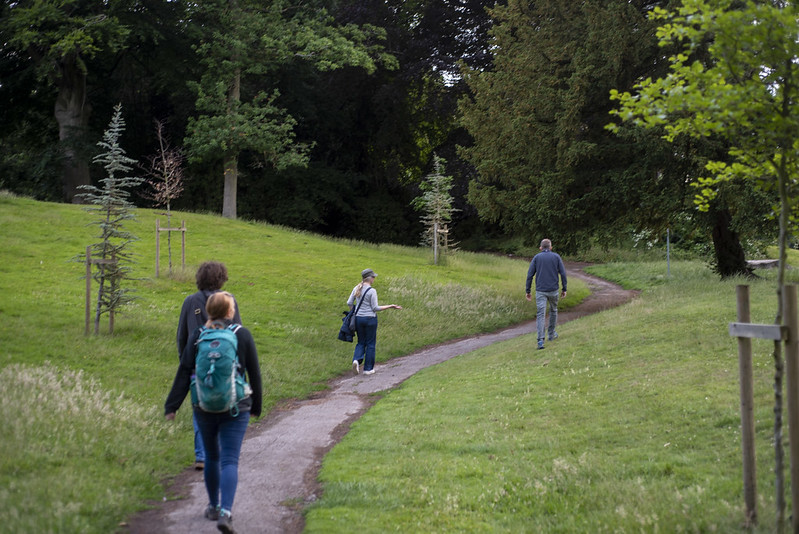
Five of us came: four Walkspacers from Stirchley and a guest from the Selly Oak/Bournville borders. We had to make a fast pace to get to the sunset point but the cloud cover meant it wasn’t crucial to be in situ for the actual horizon drop.
The gingko biloba tree in Cadbury’s Ladies Rec had lost its jaunty Banana Splits sunglasses since it was pinned. But it was no matter. The tree is remarkable in its own right for its smooth, fan-shaped leaves with no spines. It’s also known as the ‘maidenhair tree’ – it’s basically a 20m high houseplant. Local spoon carver JoJo Wood on the high street tipped me off as to the three gingko biloba trees in the area and I’m now a big fan.
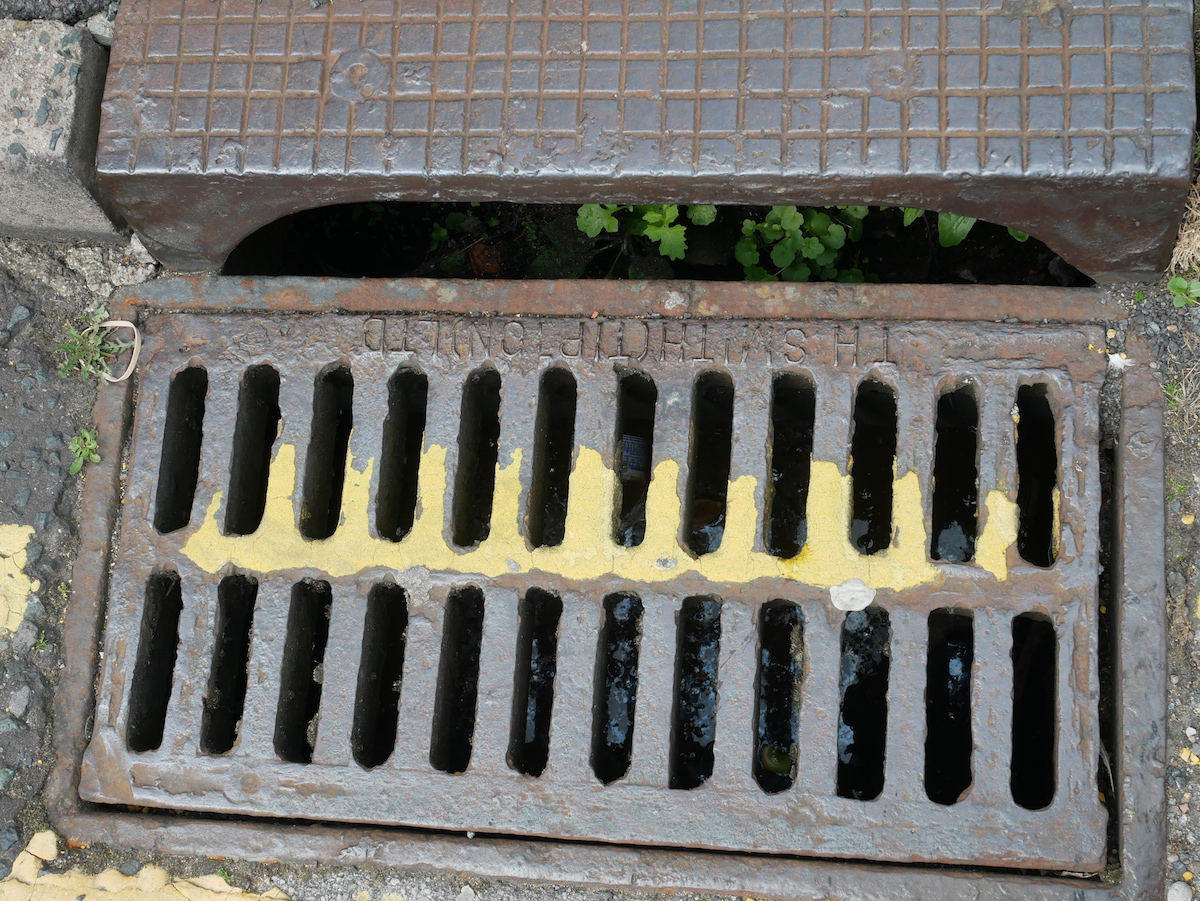
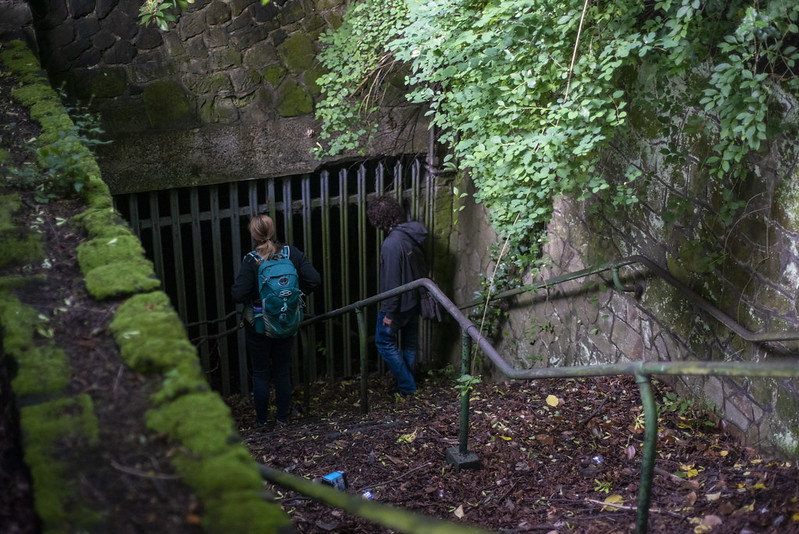
On the way to our next map point, we stopped briefly at the ‘Entrance to hell’. The path to it is getting very overgrown so it is becoming more hidden over time. It was less scary to visit in the daylight of night.
The rogue poplar on the Stirchley side of the canal by Bournville Lane’s rail bridge. It’s a rebel teen that has stepped outside of the strict line of parental poplars, showing little regard for our human tarmacking and popping up right in the middle of a pathway like a perfect Fuck You to both trees and people. And that’s why Andy liked it enough to put it on the map.
In the same spot you can look over the rooftops of Little London and sound your barbaric YAWP over Stirchley, as Walt Whitman might have said, had he lived on Oxford, Regent or Bond Street in B30. The Solstice sky was softly striped. I YAWPED. It felt good. No one joined me or I would perhaps have YAWPED more barbarically.
The bindweed curtain had sadly shut up its array of morning glories for the evening, but hiding behind it were some yellow evening primroses, freshly popped at dusk albeit born to blush unseen and waste their fragrant sweetness on the polluted high street air.
If there was one tourist photo opportunity on this tour, it was the hall of mirrors door. In a car park off the main Pershore Road, we all took turns at elongating our bodies for amusement.
Not only is this a beautiful (ornamental cherry?) tree when in bloom but it has a conjoined double trunk. I had to look this up – it’s called inosculation, or more colloquially ‘husband and wife’ trees, or ‘marriage trees’. Some forms can be quite suggestive.
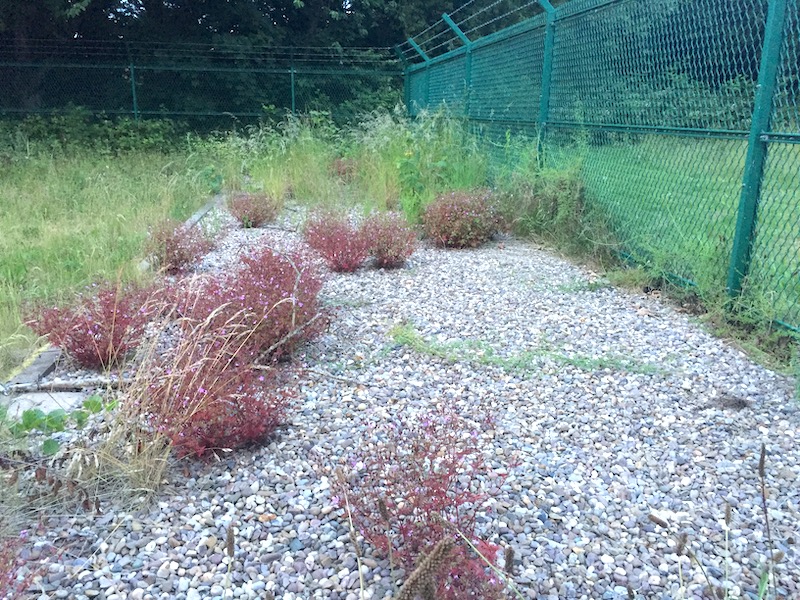
The ‘experimental caged garden’ is busy with stinking Bob, aka herb robert geraniums, and also the beginnings of a tree. I think there is a large flood defence system under here, put in to stop the Pershore, Cartland and Ripple Road floods. I’m guessing it drains into the River Rea just behind it. I like how the barbed wire cage frames the space and makes it a ‘thing’ to look at.
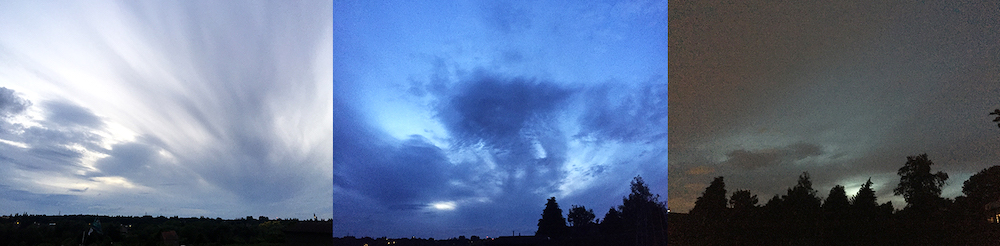
We didn’t have time to get to the hidden cricket club – it would have been locked and inaccessible anyway. With sunset imminent, we bombed up to Hazelwell Park to see not the sunset but some beautiful partially lit skies. The photos run from the sunset at 9.34pm to the solstice – the moment the sun stands still – at 10.43pm.
I, for one, am reluctant to let the sun leave us. There is always a moment of melancholy for me after midsummer. But instead we performed our Solstice rituals, not knowingly or formally but as if it is in our pagan DNA – to light a candle, sit in a loose circle, exchange stories (of sage highs) and poems (of YAWPS in Walt Whitman’s Verse 52), to drink and make merry, and hail the solstice.
After months of lockdown, this was like an emergence back into the world of celebration. And mother nature, fecund, abundant, looked down and saw it that it was good.
Since lockdown began I have been to town a handful of times. The first was a mission of artistic curiosity at the beginning of the ‘official’ lockdown – in the middle of a project about urban spaces, ‘edgelands,’ and pigeons, I reckoned the area surrounding the Bullring would take on a distinct charm in the absence of people. I cycled in, anticipating waves of inspiration to emerge from the quiet, desolate streets and darkened shop fronts.
None came. I realised you can walk through near enough the same town after 6pm on an ordinary Sunday, the only difference being there was nowhere to get fast food.
Feeling somewhat useless, I put the word out that I was near Boots if anyone needed anything. One friend asked if I would pick him up some Nytol, another requested toothpaste. Now armed with essential supplies for friends in need, I cycled back home imagining that this had been my objective the whole time. A hero, you might say.
Three months on, as of today, ‘non-essential retail’ is permitted to reopen under social distancing guidelines – of course I had to go and take a look. I have come to realise in this long yawn of lost weeks that the Bullring in lockdown didn’t inspire me precisely because it is the presence of people that makes it a place in any conceivable sense.
On my long walks, bike rides and public transport journeys I go looking for the places you could collectively describe as familiar but ignored. Beneath motorways, disused power stations and factories, canal tunnels, forgotten walkways – all of which often exist on the intersection between urban and rural environments, the places between places. I don’t particularly want to encounter other people there, and if I do, I keep my distance, make them part of the landscape like the birds and the concrete. Meanwhile, my fascination with marketplaces, shopping centres and high streets is rooted in community and culture. An empty mall is only remarkable if it’s open. In this instance, the mall being open at all is in itself remarkable, so like many others I am compelled towards it.
Setting off, I began on the Rea Valley route but at the last moment changed my mind and decided to backtrack and take the canal. The area around the Mailbox and Brindleyplace is mostly occupied by bars and restaurants, all still closed. But there has been a clear shift in atmosphere – more people, most of whom were wearing masks and occasionally gloves, all looking quite pleased to be out, but maintaining respectful space between groups.
I circled around onto Oozells Square and peered into the still closed Ikon Gallery hoping for a sign of life. No joy. Across Centenary Square then, where I found myself thinking about how I definitely would have found the inspiration I was looking for at the start of lockdown if Paradise Place still existed, and onto New Street which almost out of nowhere seemed to erupt with people.
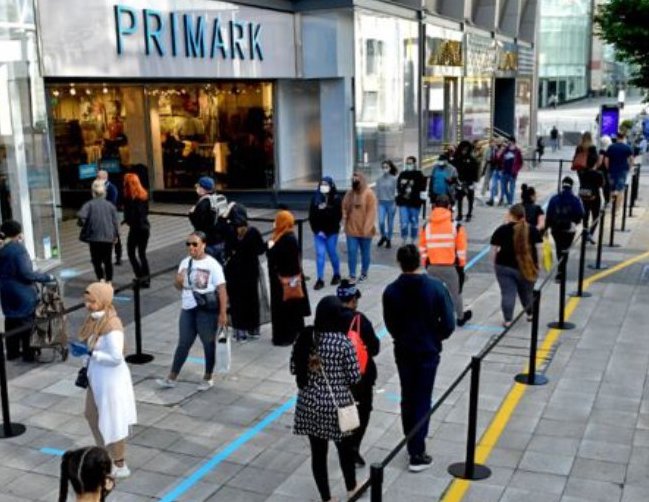
I locked up my bike and wandered around. At this time, around 1pm, the only notable queue outside a shop was for Apple, although I understand that Primark dealt with hour long waiting times at their tills for the majority of the day. What stood out about the bustling high streets was the slow realisation that it really wasn’t bustling at all. There were far fewer people than you would expect to see under more familiar circumstances, particularly inside New Street Station and Grand Central where the staff on duty outnumbered the general public. Still, town felt like a living thing again and so I did too, drifting with the flow of returning people.
When I eventually circled back to my bike and rode off – towards the Rea Valley route this time – I made a quick stop at the China Court bakery. As I ordered a trio of buns, a man who had queued up behind me excitedly said, “Don’t these guys do such good buns?” I grinned back, “They really do! I love tasty buns!” This infantile back and forth continued as I got back on my bike, and I wondered which of us had been more starved of social interaction to get to this point. We wished each other a nice afternoon and I didn’t feel irritated or hassled at all. So much for a return to normality.
Lucy Parris is looking for people to take part in her socially distanced walking project on June 20th. We included Lucy in our recent round-up of West Midlands walking artists and we look forward to seeing how this turns out.
Says Lucy:
I would like you to join me in a ‘socially distanced walk’ (this means we will be a group of people all walking ‘together’ with the same intention but each in our own chosen location). At the agreed time, each participant will go for a walk in a place that they have been able to use during lockdown. Using any medium, I would like us to record evidence of and feelings about the ways we have had to change how we experience these places with regards to other people, social distancing and visible/invisible boundaries.
The responses will be collated by Lucy and made into an artwork displayed on her website as a record.


















 Walkspace