I can’t really write about walking without writing about maps. Hand drawn, Ordnance Survey, road, tube, physical, nautical, political, climatic, thematic, ancient, fictional maps, if you can think of it there is probably a map for it. A note before we proceed, everyone can learn to read maps, don’t believe any nonsense that some people just can’t, they just can.
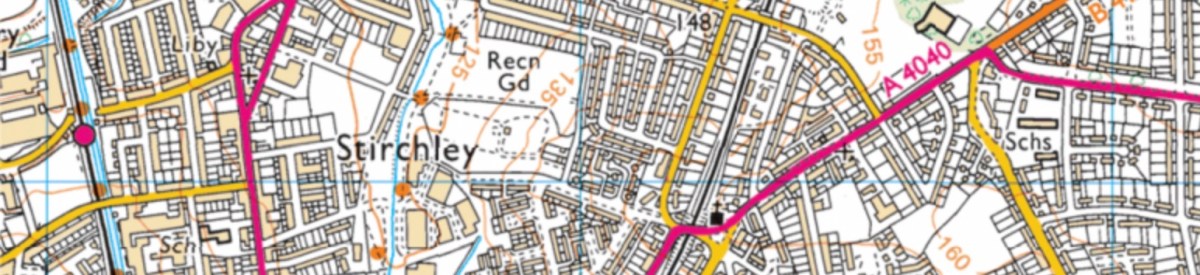
Ordnance Survey (OS) Explorer maps are the best maps you can purchase of these islands. If anyone ever tries to persuade you differently, politely correct them and clarify that they should never raise the matter again. There are currently 403 available and you can spot them by their orange cover. They are 1:25000 scale, meaning what ever the distance on the map multiply it by 25000 to get the actual distance across the land. I encourage you to buy the explorer map of the area you wish to explore, open it on the table or the floor and pore to your hearts content. (Bing maps has a useful OS layer but is not available on mobiles devices and it’s not the same as studying a paper map.)
Maps are political even when they are physical. They have been used for 100’s of years to show borders, denote ownership of land and, often, imply the exclusion of one people in preference of another. (Ordnance means artillery, the original remit of OS was to map Scotland after the Jacobite uprising of 1745.) To be ‘put on the map’ suggests recognition. A map can explain why a border is in a particular place and they are often situated where there is already a natural boundary. A river, a range of hills or sometimes a change in flora have all indicated a change of ‘ownership’. When you live on an island, as we do in the UK, you have a big wet natural boundary, usually called the sea, but when you sail out of UK coastal waters there is no bobbing line of buoys on the ocean to inform you. Similarly when you cross the Welsh Marches on foot from England into Wales there is not a painted line on the fields or hillsides.
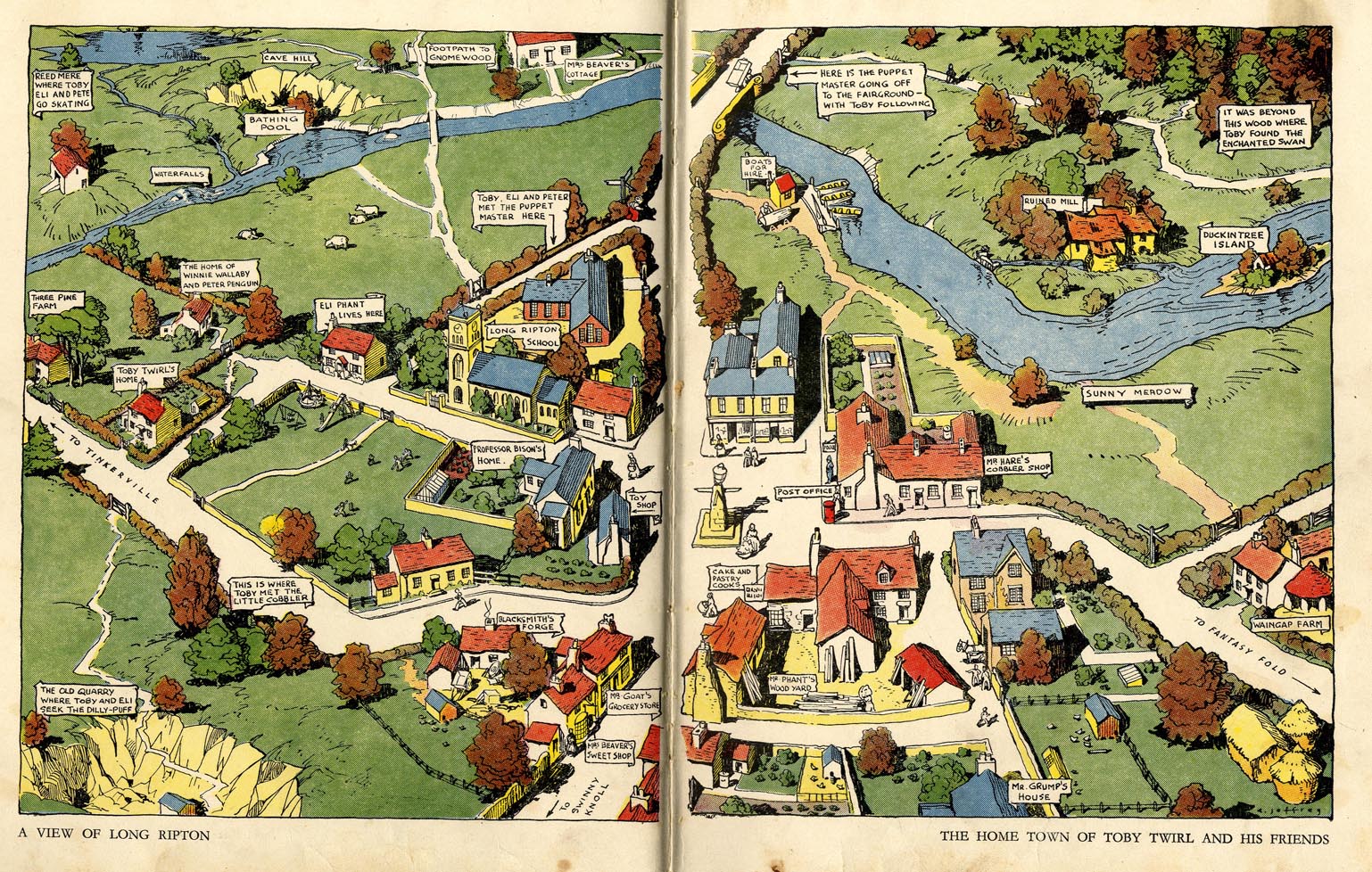
Maps are show us a version of what is really there but, in a sense, they are all fictional. Many fantastic books start with a fictional map. A map helps immerse the reader in the world that is being created. Treasure Island, Winnie the Pooh, The Hobbit, The Wind in the Willows, Toby Twirl, all these books have maps, often picture maps, that have become as cherished by readers as the stories themselves and the way we read those maps is the same as we would for real locations.
There are too many wonderful ‘real’ maps to do justice here but the Mappa Mundi in Hereford Cathedral is worth a mention and a visit. It’s a 700 year old map of what was then the ‘known’ world, from a European perspective, painted on vellum. Amongst many accuracies it includes several species of dubious provenance including the Sciapods, who used their one giant foot to shield them from rain and the cynocephalus who had a human body and the head of a dog.
Draw your own map or map a route for friends to follow. Remember though, as famous explorer Jon Bon Jovi said, ‘Map out your future – but do it in pencil.’ He really did. A good map can be trusted but they are rarely 100% accurate. By the time a map goes to print a row of shops might have been knocked down or a road layout might have changed. Generally, what you can see in front of you with your actual eyes is probably actually there. If the map you’re reading says there is a small stream at the bottom of the valley but when you get there it’s a raging torrent at the bottom of a gorge, no matter what the map suggests, the raging torrent is really there.
Investigate a map of a distant district, one you may never even visit, and you will start to be able to read the terrain, the vales and valleys, roads and rivers, schools and scree. Study an OS map of your own neighbourhood and look for the features you have not noticed before. Learn where the stream flows under the railway or where the high ground is. Studying old maps of your manor can inform you why a street has a particular name or where a farm used to sit. This will enrich your understanding and your enjoyment of you local environment.
So go and buy a map and explore the area in your head, then buy a map of your local area and go for a walk.
There’s much to enjoy in this correspondence between writer Alys Fowler (who you may know from her memoir Hidden Nature kayaking Birmingham’s canals) and artist John Newling (whose exhibition Dear Nature was on at Ikon before lockdown). It takes the form of six letters with photographs over April and May.
As a taste, in the second letter Alys talks about finding a lost pigeon, which her dog scares away before she can persuade it to live with her.
For a good hour, I mourn not having that pigeon as a friend. I look for her the next day, but she is nowhere. I hope that, refuelled on my chicken corn, she has gone home. That or she met another pigeon and now is living a wild life along the rail tracks.
I’m very interested in pigeons. I am fascinated in how they transcend so many different spaces for us. They are feral and domesticated, prized, fattened (a fancy pigeon eats a very refined diet) and despised. They have raced, travelled over boundaries as spies carrying messages, won medals at fairs for their plumage, been food for working families, a source of manure, psychological test subjects and even taught to recognise breast cancer. They can apparently spot it as accurately as any oncologist.
Meeting the pigeon sent me back to reread the multispecies feminist writer Donna Haraway’s Staying with the Trouble, Making Kin in the Chthulucene (2016). Do you know it? It is about how we must find new way ways to reconfigure our relationship to the earth and its inhabitants in the midst of spiralling ecological devastation. She writes of pigeons;
“Everywhere they go, these cosmopolitical pigeons occupy cities with gusto, where they incite human love and hatred in equal measures. Called ‘rats with wings’ feral pigeons are subject of vituperation and extermination, but they also become cherished opportunistic companions who are fed and watched avidly the world over.”
Haraway is interested in species that are boundary crossers for us: occupying more than one place in our minds and thus are able to cross over and create threads of stories of how we, as multispecies, as kin, might get on better together.
I picked this out because one of the walks we were hoping to run before lockdown scotched them all was a guide to Stirchley’s pigeon communities with Megan Henebury. When I first discovered Megan’s obsession with the noble pigeon it seemed odd, in a good way. Now it appears I’ve been living a sheltered life. We must run that pigeon walk and soon.
I could have excerpted any number of bits from these letters though. Wonderful stuff. Thanks Ikon!
One small consolation for walkers in lockdown is that it’s no longer necessary to travel to Manchester to join the Loiterers Resistance Movement for one of their First Sunday strolls. For the past three months the Loiterers have been conducting their group walks remotely meaning that anyone can join in from anywhere in the world. You can read my report of April’s walk lead by Blake Morris here.
The theme of this month’s walk was “reading and writing space”. Loiterer in Chief, Morag Rose writes:
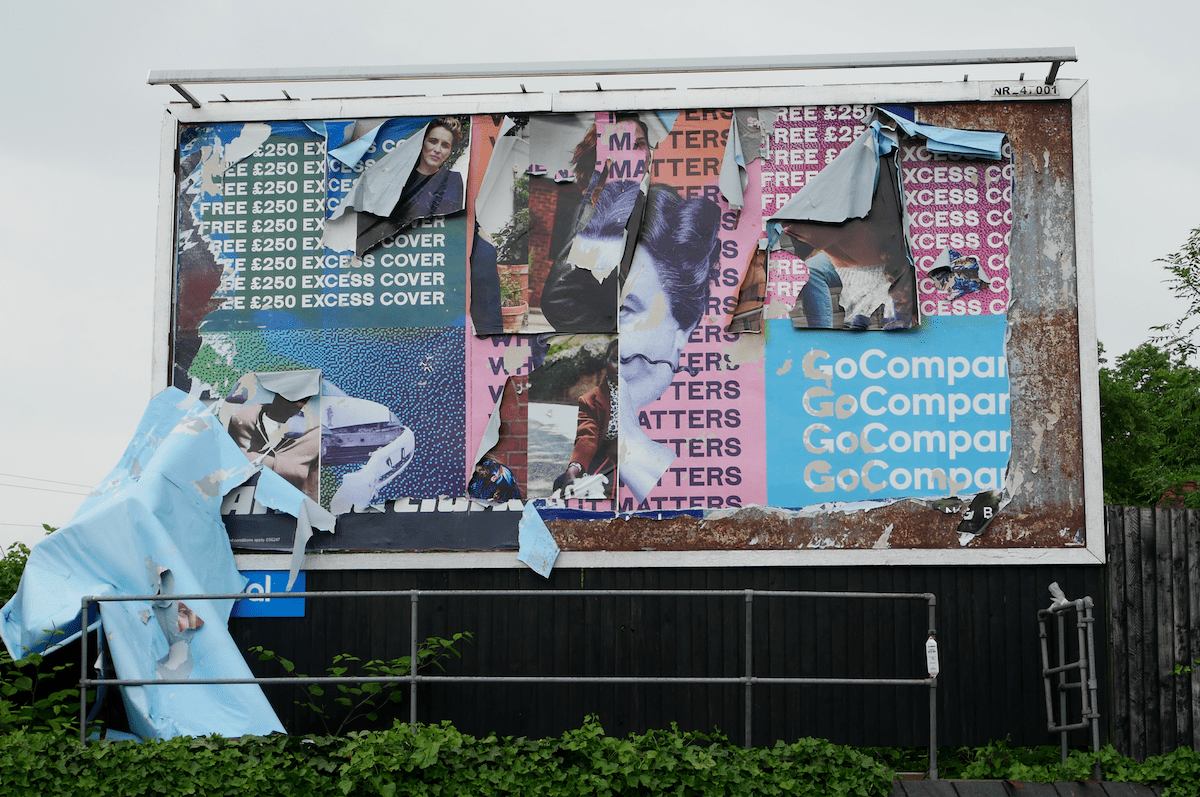
Lets read the streets (or our rooms or gardens or ginnels or wherever). This month I invite you wherever, and whenever you are to find scraps of texts. Writing on walls, fragments of rubbish, slogans on t-shirts or placards or billboards, shop fronts and flyers…. Whatever you can find. Take a picture or make a note and if you feel like doing so call it poetry. Its a way to begin to rewrite the city by taking what it says to us and rearranging in new ways. Detournement of trash and textual treasures.
I enjoyed this walk, it took me back to the time I became fascinated with the manifold typographical layerings of Digbeth while making this film with Ben Waddington:
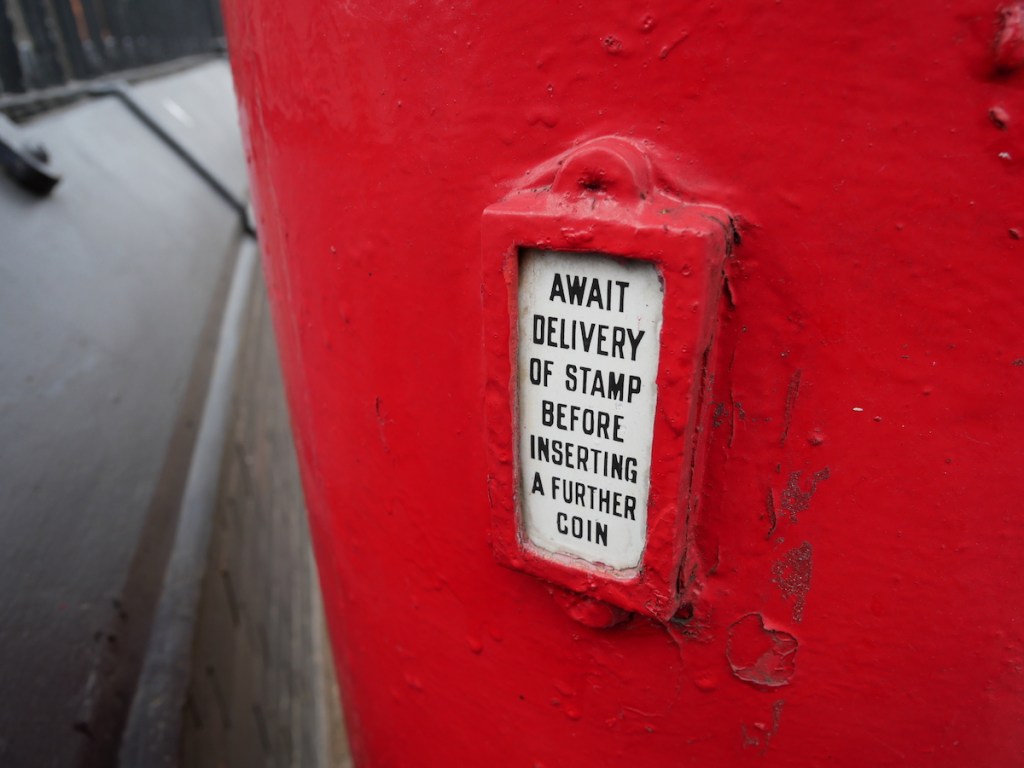
Getting back into that mindset I headed straight for Stirchley high street, camera in hand, and was immediately bombarded by text from all directions: “Elite apple”, “Pandora’s Box”, “Wine Wanker?”, “No free newspapers”. My favourite discovery however was this vintage notice on the side of a postbox. I can’t even comprehend what’s being communicated here. The past is a foreign country and its mystifying artefacts hide in plain sight:
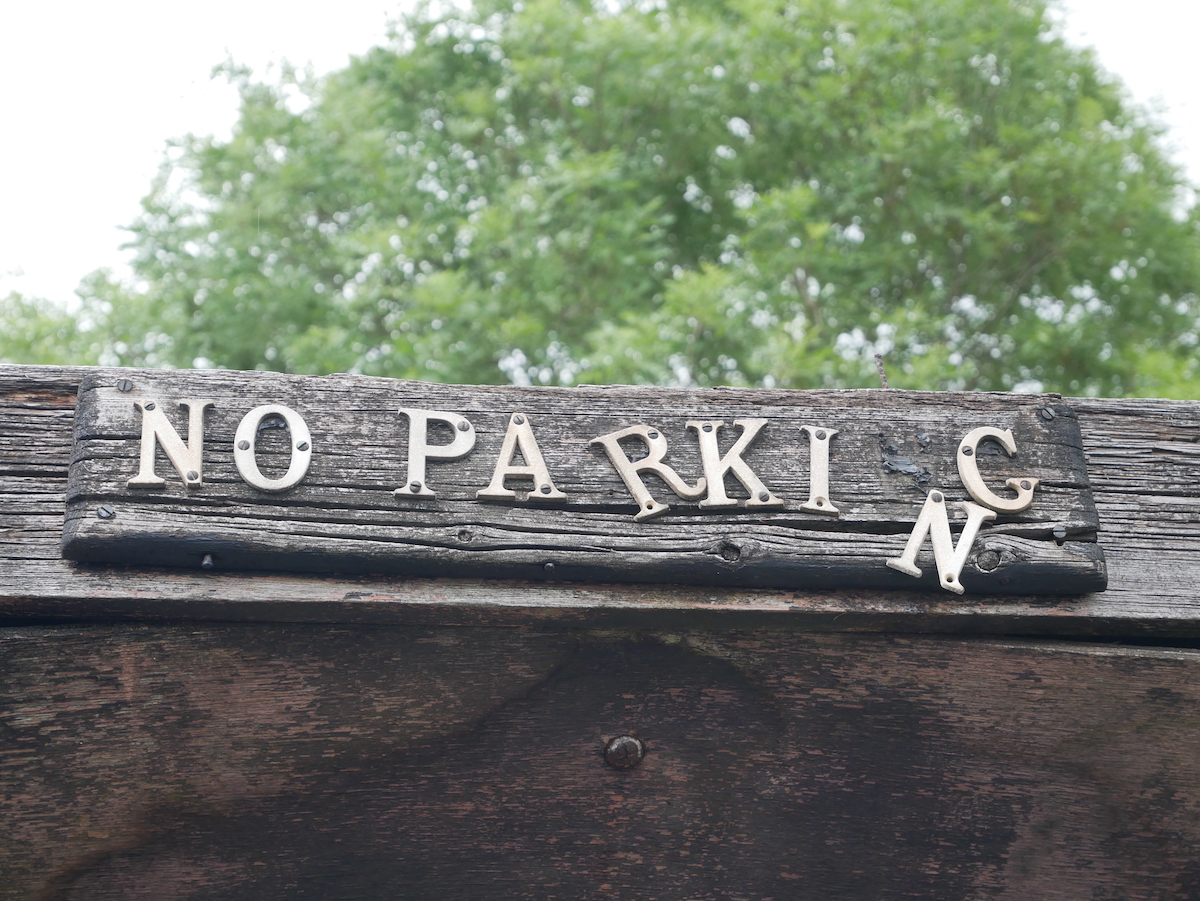
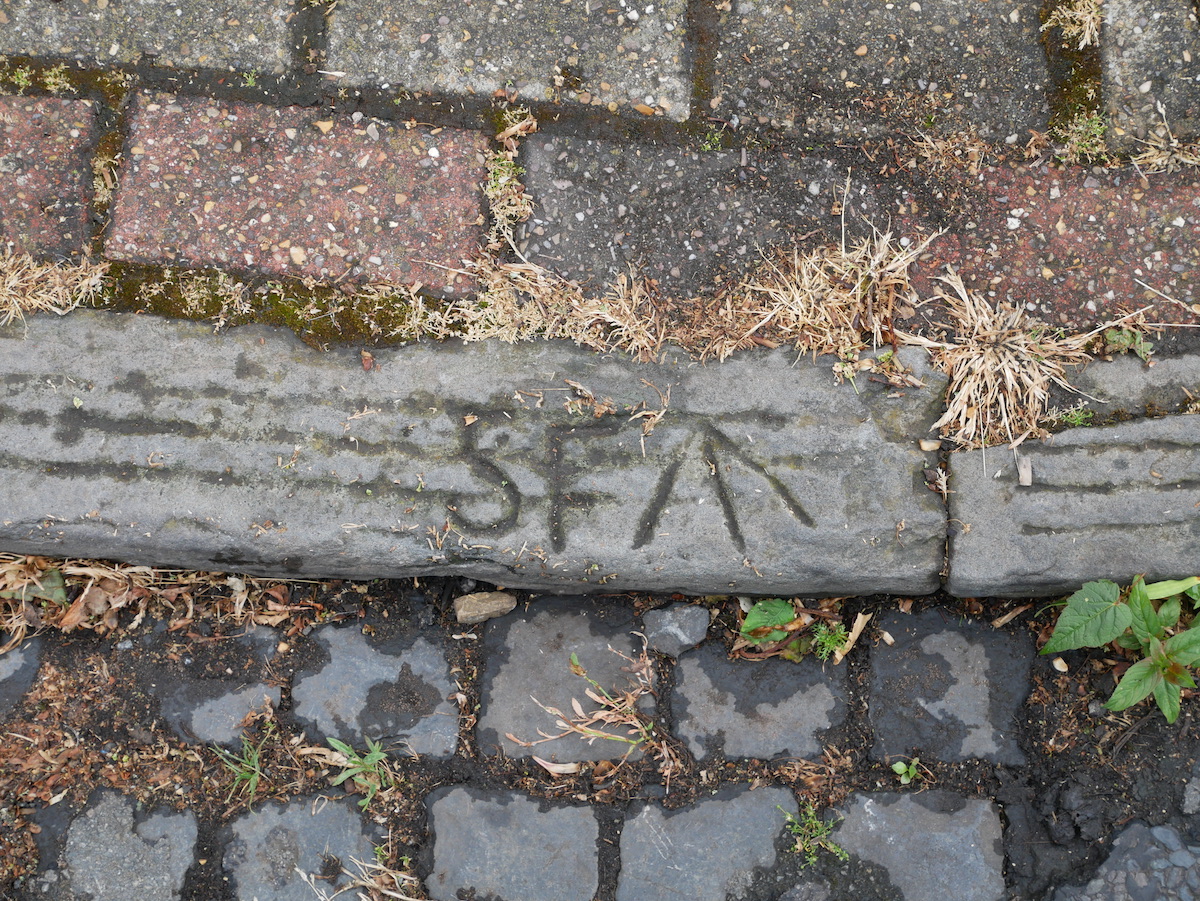
I left the high street, headed down some residential roads and made my way to the canal. The bombardment subsided and I actually had to start paying attention. The textual treasures were still plentiful however:
It was nice to walk without a route or destination pre-planned and instead just allow myself to be guided by the poetry of the streets. I ended up in a deserted industrial estate and passed back into the civilisation of Kings Norton through an avenue of lime trees before returning home.
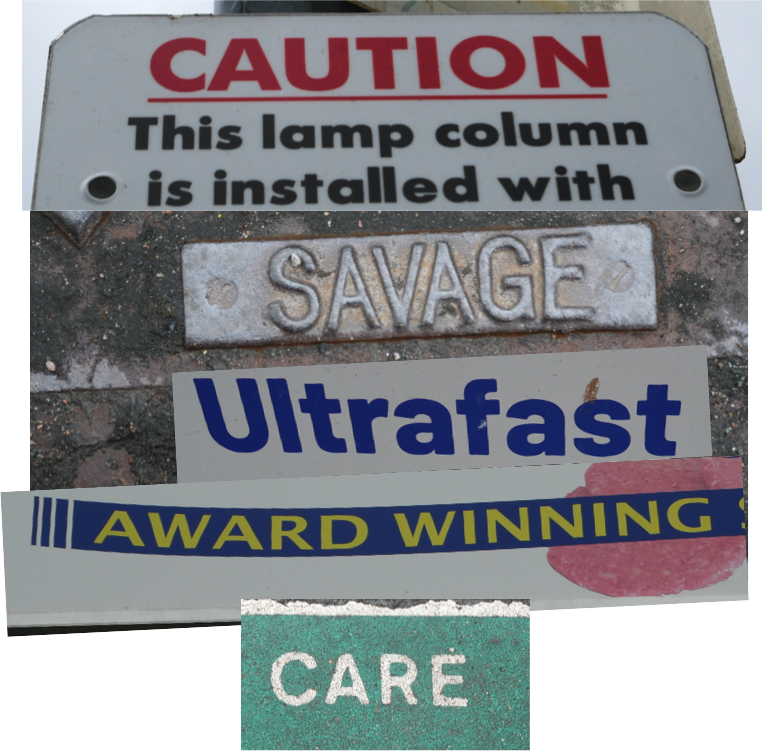
When back I uploaded my photos and had a go some detournement of my own. It was fun.
Once again thanks to Morag for this opportunity to walk together, alone. Until actual group walks become a thing again this is a valuable substitute.
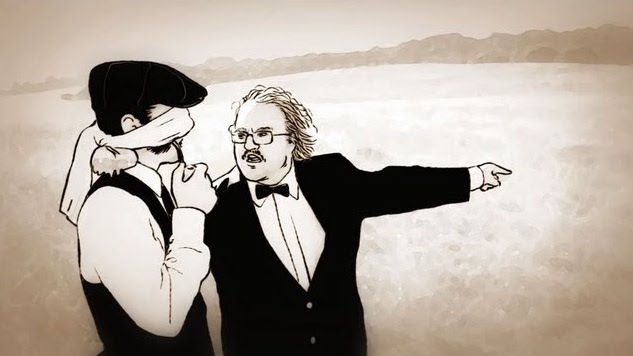
While chatting about walking the other day, as we do, Fiona mentioned something she’d read in Shane O’Mara’s excellent book In Praise Of Walking. Humans are, apparently, incapable of walking in straight lines when blindfolded or otherwise prevented from seeing landmarks.
Participants were asked to walk either in a large and dense forest or in the Sahara desert. Their task was simple: to walk in a straight line for a minimum set period, usually a few hours. Some walked in the day, others at night. All wore GPS tracking devices. While walking without reliable visual cues in the fog, or with heavy cloud-cover, the subjects regularly veered left or right, and eventually crossed the path they had been on. In clear daylight, they sometimes veered from a straight path but neither systematically walked in circles nor repeatedly crossed their own path. The result was the same in moonlight.
O’Mara, p84
Here’s another account of the phenomena, from Robert Krulwich and NPR.
The idea that walkers might drift a bit is fine, but that you might go in actual circles seems ridiculous. It’s evidently true though, so why this reaction?
Did our ancestors find this phenomena weird? Did nomadic tribes just abandon the very notion of going for a walk in the fog? Does this happen with people who have lived for generations in deserts and forests or just with interlopers?
Do we find it weird because in an urban environment there are always visual cues to guide us? We might not know exactly where we are but we know what direction we’re going in, most of the time.
Maybe straight walking is an anomaly, a relatively recent invention of the Romans? In Watling Street, John Higgs talks about how, before the Romans, British roads meandered and weaved around the physicality of the landscape. Maybe we didn’t need the ability to navigate because the land would get us there eventually. It was only when we imposed our lines and made the land a problem to be solved that we started getting lost without them.
I don’t know, and that makes it really interesting.
I’ve seen some comparisons of the Black Lives Matter protests with the tumultuous events of 1968, some wondering if we’re witnessing the start of something similarly historic. While comparisons can threaten to diminish rather than strengthen, it might be empowering for those marching to make some connections and know history has their back.
Andy went on the Birmingham protest on Thursday and posted some footage from within the crowd.
Amazing scenes at the #BlackLivesMatter rally yesterday. When it began the last thing I expected was to end up marching over the Hockley Flyover but there you go. Incredibly all that was planned was a stationary protest so this wild procession somehow came about spontaneously. Huge energy, overwhelming solidarity from car drivers and onlookers and not a single police officer in sight. An unforgettable experience. Let’s hope it never happens again.
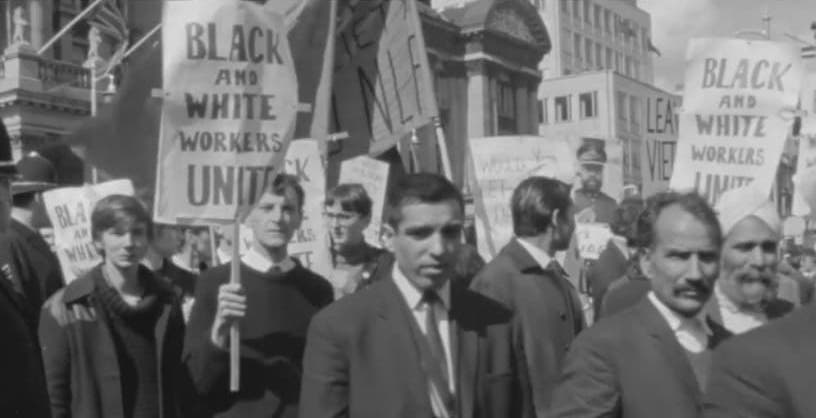
A frame from ATV footage of the 1968 march in Birmingham. via
I found myself reminded of footage filmed by an ATV news cameraman on 5 May, 1968 of protests in Victoria Square. Ian Francis of the Flatpack festival showed it last year when talking about his new book, This Way To The Revolution, a look at art and activism in Birmingham in 1968. The footage isn’t online but he has published an excerpt of the book covering that moment on the Flatpack blog.
It’s a crisp, warm Sunday afternoon in central Birmingham. Demonstrators are filing into Victoria Square in anticipation of a visit from Prime Minister Harold Wilson, due to give a speech in the Town Hall at 3pm. There’s an eclectic array of placards on display: students in donkey-jackets proclaim ‘Yankee Aggressors Out of Vietnam’ and ‘Wilson is an Optical Illusion’; smarter and more orderly, a large group of Indian and Pakistani workers carry signs reading ‘Black and White Unite and Fight’ and ‘Prosecute Fascist Powell’; bringing up the rear, a group of dancing, singing African protestors attack the ‘Nigerian genocide’ in Biafra. There’s a large crowd of curious onlookers, from school-kids to old ladies, and on Galloways Corner at the top of the square a pocket of fascists is chanting “Send ’em back!” Among them is Colin Jordan, a former Coventry school teacher and prominent British nationalist.
He goes on to outline the people and organisations that were active then and what they were fighting for. It’s sobering to see what has and hasn’t changed.
I also found myself thinking of this photograph from Vanley Burke‘s excellent photo book By The Rivers of Birminam published by the MAC for his exhibition there and available from their shop when it re-opens.
Vanley Burke – “A demonstration organised by the Asian community in protest against racist immigration laws and deportation – 1978”
I love its sense of place, that these people are clearly marching in a residential Birmingham street, identified by the skyline, and that they belong there.
Vanley has been documenting the lives and experiences of the Afro-Caribbean community in Birmingham since 1967 which has of course involved protests, demonstrations and riots. By The Rivers of Birminam juxtaposes them with portraits and candid shots of people just being people, lending a depth and humanity to a community that has been wildly misrepresented over the years.
Have you made a piece of work, walking or otherwise, in response to the Coronavirus pandemic? As the world suddenly changed a lot of us found our art practice was a vital way to make sense of it all and the National Academy of Sciences in the USA is looking to archive this hopefully unique moment. You just need to fill out a short form with a link to your work and they’ll do the rest.
I’d encourage people to take their criteria as a broad invitation, not a narrow “proper artists only” filter. Creative responses that seem small, indulgent or insignificant are often the most interesting in a situation like this, coming as they do from the gut.
We announced ourselves to the venerable Walking Artists Network (WAN) email list this weekend, asking for any people doing walk-work in the West Mids to say hello. And a few did! So this is the first WAITWMWRCA, roundups of people new to use that you might want to check out.
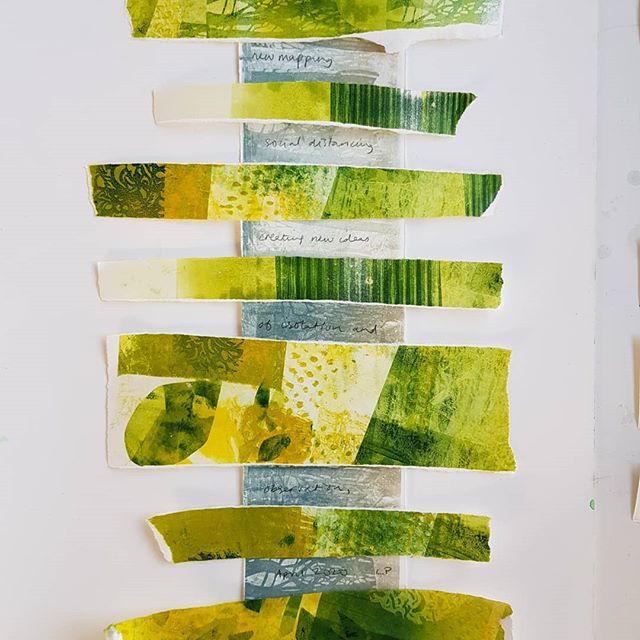
Lucy Parris is a printmaker and walker who lives in Kiddiminster but is finishing a fine art MA at Birmingham. She’s a member of Walking The Land, a Gloucestershire-based group of artists who we will definitely be investigating further, and is exploring the concept of socially distanced walking to conclude her MA.
Petra Johnson is an artist currently in China but returning to Stourbridge once air travel is a thing again. Her Walk With Me project took place in Beijing, Cologne, Shanghai, Xiamen, Taidong (Taiwan) and Berlin where she and a participant walk from a convenience store or kiosk to building or a landscape that defines the city. In 2017 she produced this short film from her work.
Daniella Turbin returned to Wolverhampton after completing her fine art masters in Glasgow but on the way stopped in Cumbria for 6 months where she got the walking bug. Her current (lockdown permitting) project is DRAWER where she’s “walking the UK, simply, to explore, meet and document the landscape and its inhabitants. These walks could be instigated for any number of reasons – from historical and political through to environmental or personal.” Lots of pics on her Instagram.
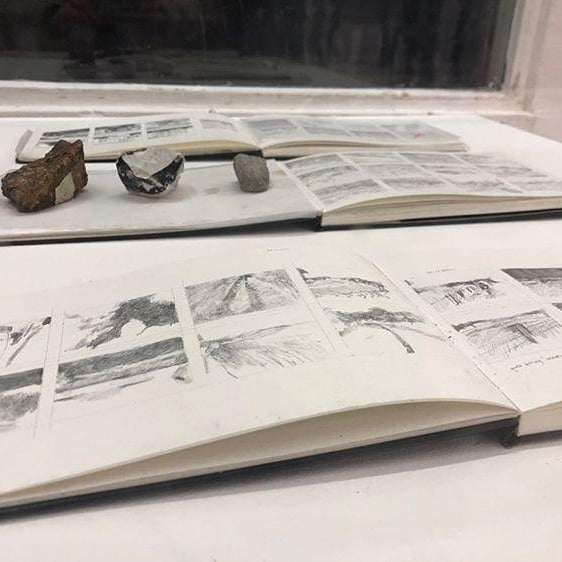
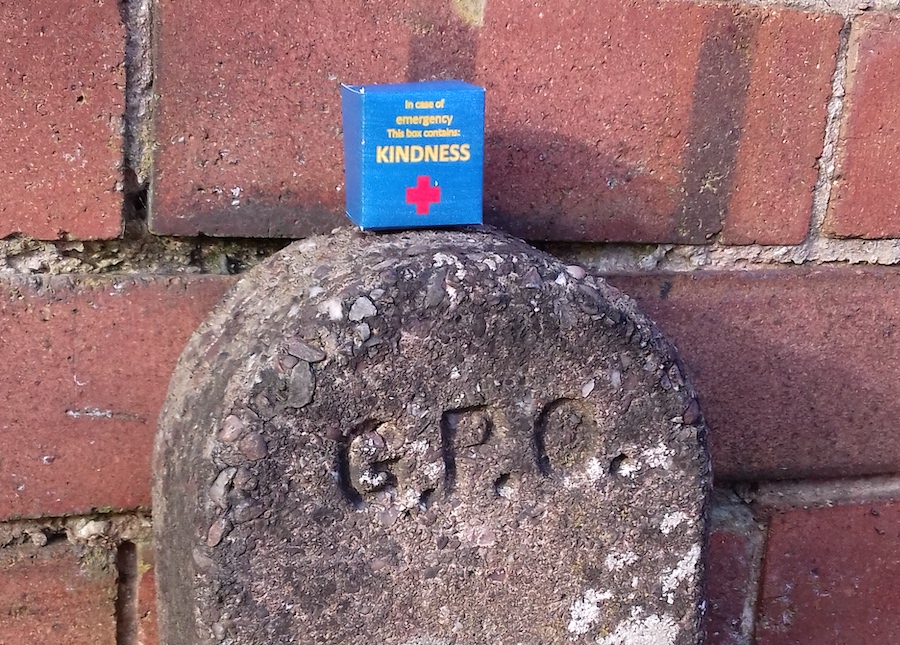
Andrew Howe is an interdisciplinary artist based in Shrewsbury who uses walking and mapping to explore how people interact with places. He sent a very long email detailing lots of exciting projects and works, far too many to mention here, so we recommend ploughing through his website. A good starting point would be his blog post on the Acts of Resistance project involving small boxes left in public spaces.
If you’re a West Midlands based artist, writer or some other variety of maker-of-things (we prefer the broad definition of “artist” here at Walkspace) for whom walking is an important part of your practice, please get in touch. We’d love to hear what you’re up to, and if you include a link to your work we’ll include you on the next WAITWMWRCA!
Following an arbitrary line is a tried and tested technique for the curious walker. The landscape and its contents will reveal themselves in a sequence determined by your line. Pick a start, an end and draw line between them. Follow that line and keep you eyes and ears open.
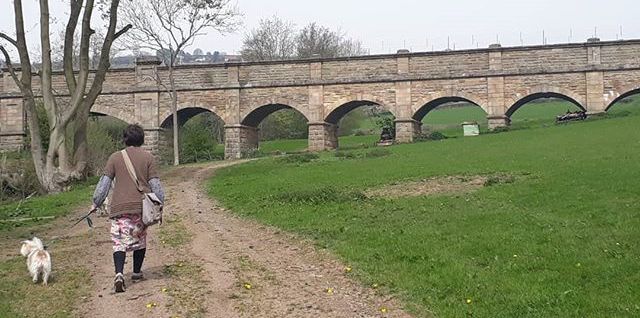
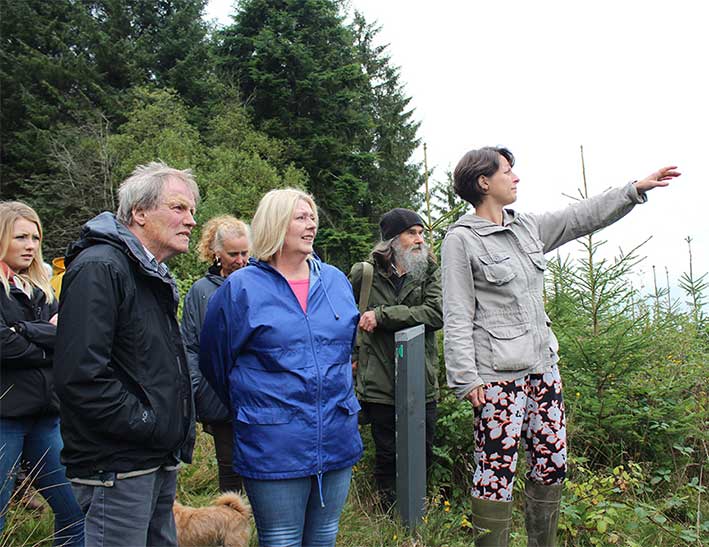
Kate and her dog by the aqueduct.Kate employing the walking-artist’s trope of pointing at things.
Thankfully the Elan Valley is 52 metres higher than Birmingham. A pipe angled at a gradient of 1:2300 will transport water over a day and half using gravity alone from the waterlogged mountains of mid-Wales. Building started in 1896 lasting a decade, and that’s why we rarely have a hosepipe ban in Birmingham!
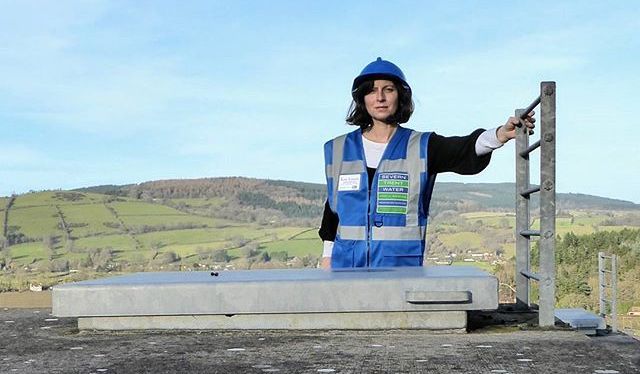
But I digress. Kate, who describes herself as a short interdisciplinary artist with dark hair, decided to walk the Elan aqueduct primarily to gather and share stories. She does this by writing and performing songs in a style that would have been popular during the build, drawing parallels between its creation and the present day. For example the navvies that built it were itinerant workers, moving their families from one job to the next. A century later the workers repairing and maintaining the pipe are predominantly migrants from Europe.
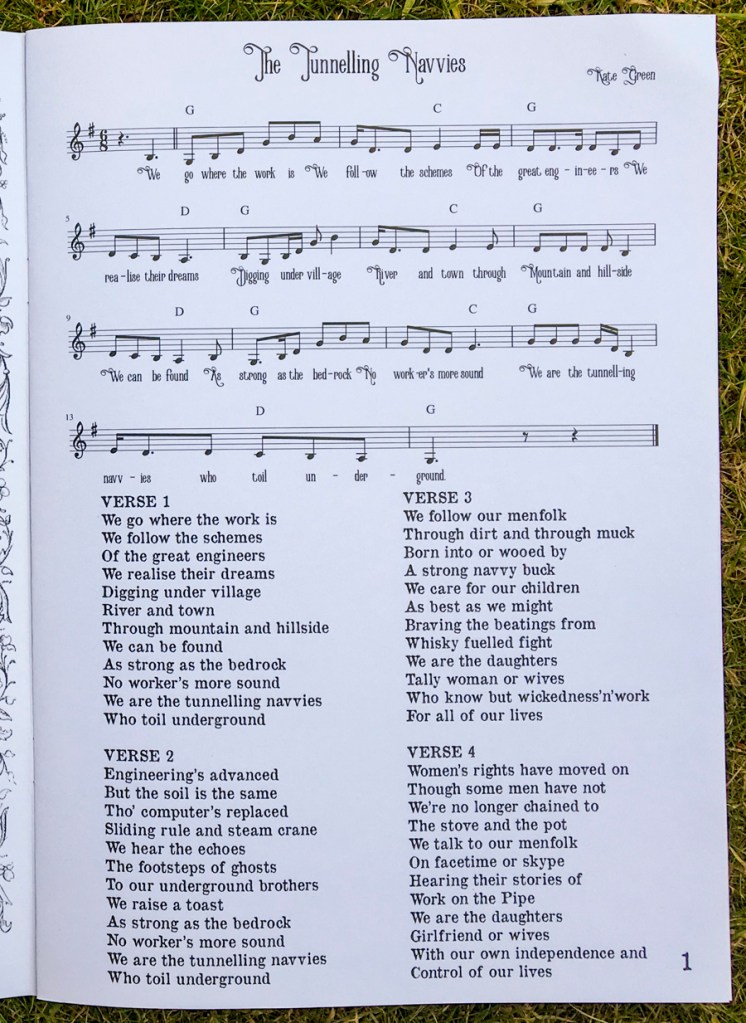
The Tunnelling Navies from the Walking the Pipe Song Book
Her project has seen her run workshops, coffee mornings, exhibitions and performances along the towns and villages near the pipe, all fed by a steady walk eastwards. They’re documented in The Pipe Chronicle, a cod-Victorian newsheet.
We got to meet Kate and her infectious personality when she presented Walking The Pipe at the Plymouth walking conference in November last year. Rather than a lecture, is was wisely run as a singalong performance in the evening when beers had been consumed. We’ve been singing “This is the damn, this is the damn, that feeds the thirst of Birmingham” ever since.
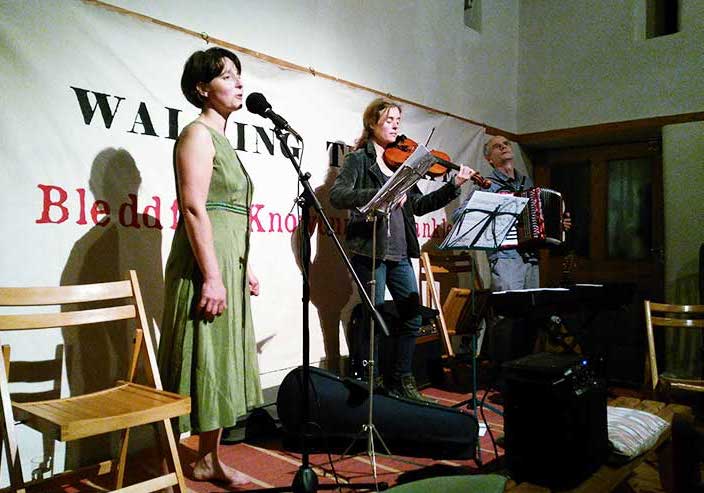
Kate performing at an event along the pipe.
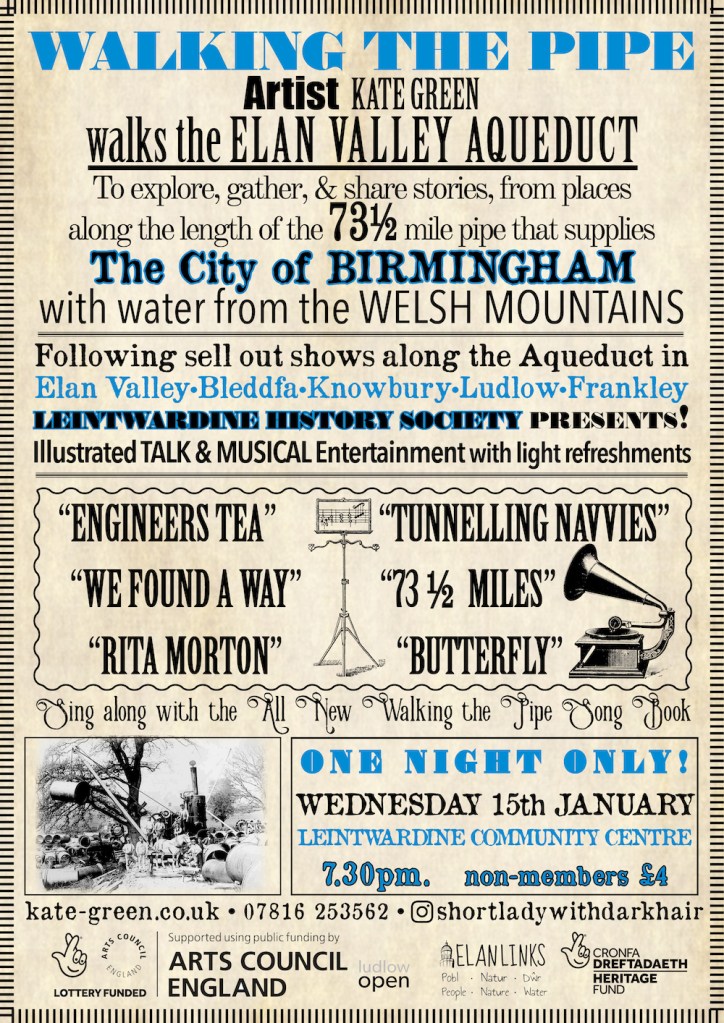
A poster for an event.
It’s rare to find art that is both high-concept and high-nerdery while also being fun and accessible. Walking the pipe is a gem.
Kate has produced a songbook and zine-style collection of her newsletters. A formal Walking The Pipe book is in production. Contact her for details.
Note: This project has been a success and is now ongoing! Please visit Mapping Stirchley for updates.
Everyone currently involved in Walkspace lives in the Birmingham suburb of Stirchley and the lockdown has made us keenly aware of our immediate surroundings. Walking the same routes again and again means we’re noticing things for the first time and figuring out new routes to perambulate along.
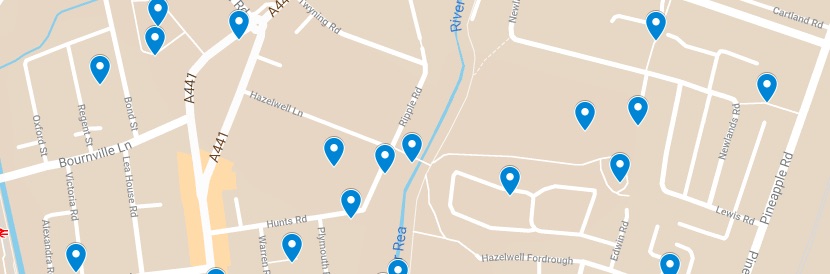
So we’ve started mapping things-of-note. It’s currently just a Google map, because they’re easy to manage, but in time we’d like it to be something more interesting on OpenStreetMap data, maybe like that excellent Tree Talk service that builds walks around its database of trees in London.
Right now it’s just got stuff from the four of us, and that’s not good enough. If you’re also from Stirchley (and we know at least 20 of you are because you came on our pre-lockdown night walks!) and would like to contribute a thing-of-note, there are two ways.
Send us a pin
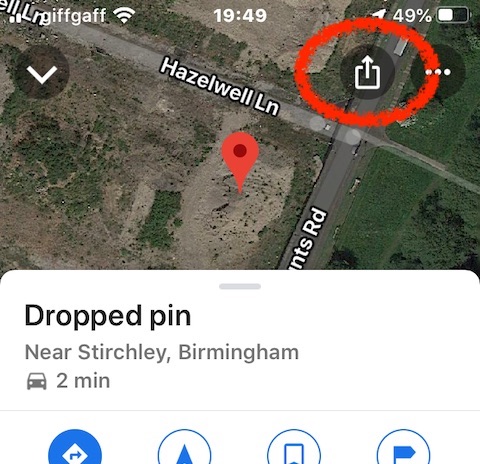
In your mapping app of choice, drop a pin where the thing-of-note is. Look for the Share button (usually a box with an arrow leaving it) and email it to walkspace.uk@gmail.com. Make sure you include at least a title and feel free to provide more context. Your name won’t be put on the map but we’ll keep a record in case we want to credit people in the future. (We won’t use your email for anything else, promise.)
Make your own map
If you’re a regular explorer of Stirchley and have loads of pins to send it’s probably easier to just make your own map. That way you also have your own map! Google Maps is probably the easiest but any service that lets you export the data will do.
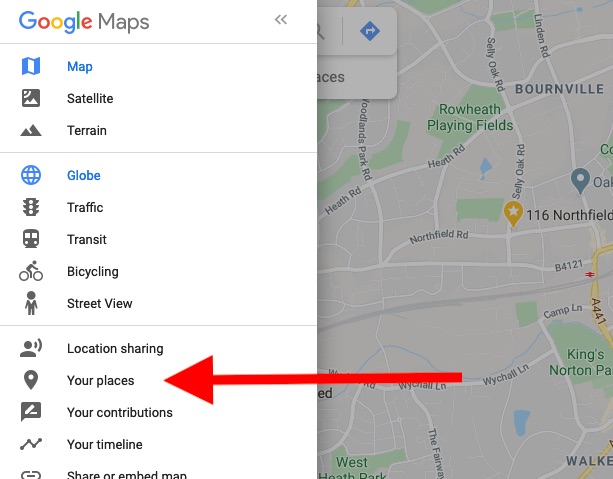
To create a Google Map go to google.co.uk/maps on your desktop browser and click on the menu bar in the top right. Look for Your Places and click on that.
You should see four tabs, Labled, Saved, Visited and Maps. Click on Maps and then, at the bottom, click on Create Map. You can now drop pins on the map and label them. Feel free to write descriptions or link to pages with more info. Photos are also great.
Once you’ve made your map, click on the Share button and figure out how to copy a link that means anyone with that link can view the map. (Google keep changing how to do this). Send that link to walkspace.uk@gmail.com.
Phew! Anyone would think Google don’t want you to make your own maps! But once you get through the setup it’s all really simple. If you need help, drop us a line.
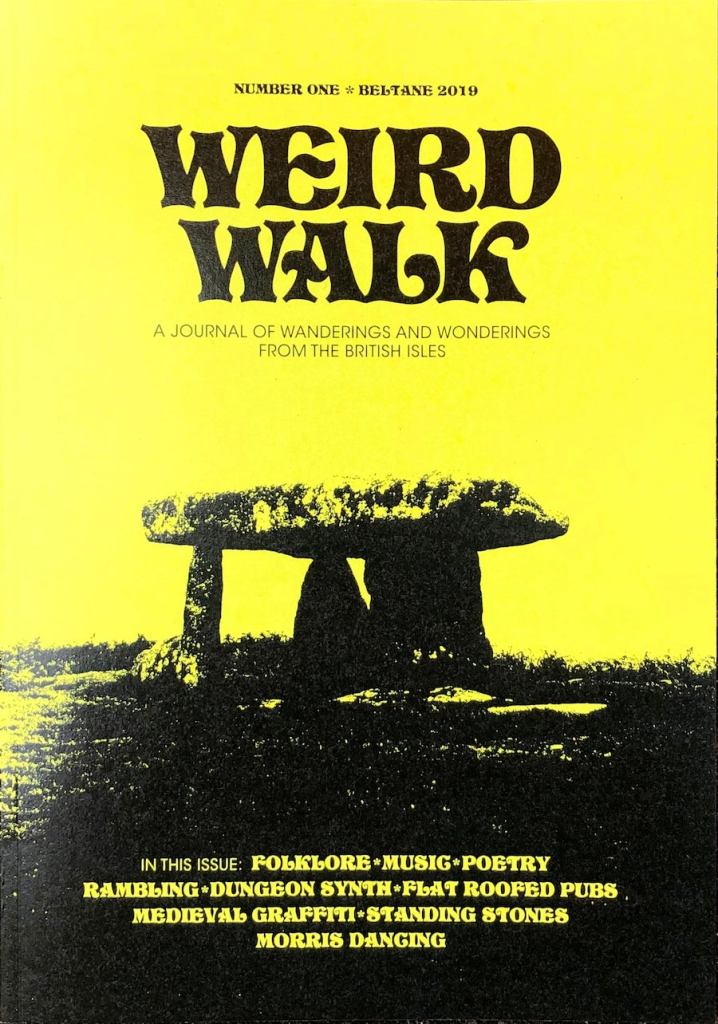
Weird Walk is a zine in the true sense of the word. Sure, it’s an A5 publication of 40-odd pages that you get in the post, but it’s also a collection words and pictures about a thing that the authors are obsessed with and which they need to put in a package to send into the world, hoping it reaches others who are equally obsessed with said thing. A zine, in other words. And in an era of zines-in-name-only (don’t get me started) it’s refreshing to see a real one.
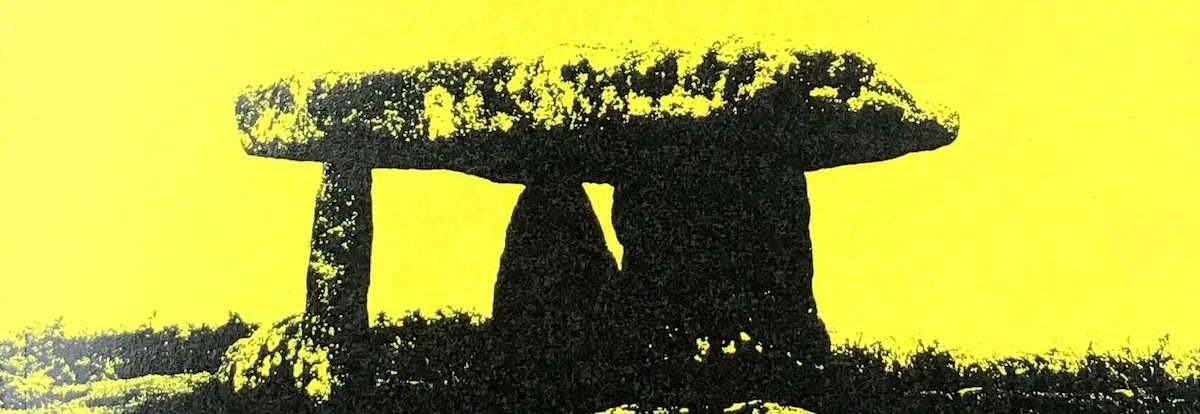
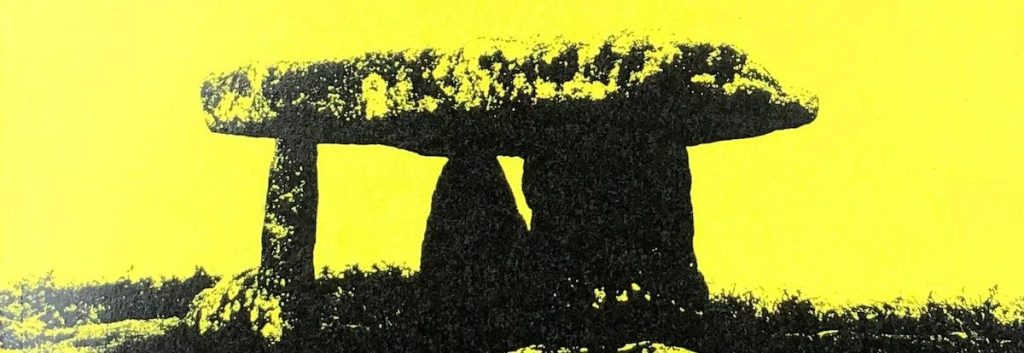
Weird Walk is about walking, obviously, and the stone dolmen on the cover, not to mention the typeface, indicates an interest in the old and ancient. Heading the editorial introduction is Julian Cope quote from his Modern Antiquarian period which pulls us away from traditional heritage and focusses us on a more contemporary take on the old, a revivalism of the pre-modern, looking far, far back for something, anything, that might save us from the eternal now of regurgitated pop-culture nostalgia. A search for something weird.
This idea of the New Weird has been bubbling around for a few years. John Doran of music/culture site The Quietus coined the phrase New Weird Britain as a bucket for all the acts he was seeing at gigs and festivals that didn’t fit into the music industry but also weren’t really part of the art world. Freaks and weirdos doing their thing because they needed to. He wrote a nice introduction to the concept for the BBC and themed The Quietus’ guide to Birmingham’s Supersonic Festival around it. Notably, however, New Weird Britain isn’t a unifying sound or genre. You will find stuff that sounds like folk music in the NWB bucket – Richard Dawson springs to mind – but that’s not why it’s in there. It’s more about being outside of the mainstream, but not in a tedious rebellious way. Less punk, more WTF.
When the New Weird crops up in movies the aesthetic is much more focussed. Paul Wright’s Arcadia, a feature formed from 100 years of archive footage, leans hard into Weird Britannia, joining up ancient pagan rituals with 20th century non-comformity. It’s a celebration of that which the Victorians and Modernists found horrific, but whose attempts to remove it from British identity left an urban, post-colonial Britain unmoored.
I always find it quite telling that, according to the horror tropes, we’re supposed to root for the Edward Woodward’s policeman in The Wicker Man but modern audiences are all about the islanders. Summerisle is no longer a heathen backwater but a utopia that has escaped the futility of the modern world. We want to follow Christopher Lee’s Lord Summerisle, to sing songs and copulate in the fields and burn Christians.
For contemporary movies I always think of Amy Jump and Ben Wheatley’s A Field In England as epitomising the New Weird. This story of four civil war deserters tripping balls in a mushroom-infested 17th century field bypasses heritage period drama, neatly sidesteps Monty Python absurdity and barely nods at Hammer Horror. It seems to be reaching for something older, something Shakespeare or Chaucer might have struggled to reach. The hallucinogenic mycelium threading this field brings the soldiers into contact with a land so vast and unknowable it’s closer to a Lovecraftian void. Britain is old. So old that even people in olden tymes could get lost in it.
English identity is a particularly fraught thing to go in search of, particularly when you associate it with the land. Richard Smyth’s article on Nature Writing’s Fascist Roots is a cautionary tale for those who would seek answers in England’s green and pleasant land. When we talk of the land we think of the countryside and forget that villages and farms are as “natural” as an urban factory and just as infused with class and race inequality, if not more so. In navigating this the weird is a helpful guide. When confronted by an idealisation of England, does it make you feel comfortable? Or does it seem a bit weird? Always go with the weird.
In the introduction to his epic survey of 1970s esoterica, High Weirdness, Erik Davis spends a while unpicking the word and its many applications through history. This bit on “weird naturalism” felt relevant.
Most of us have had experiences that, unless we have utterly misread them, put severe pressure on conventional realistic accounts of how the world works. We may have had a prophetic dream, or been struck by an absurdly recurrent synchronicity, or received advice from a forest creature, or glimpsed a bizarre object in the sky, or felt the presence of a loved one at the time of their distant death. Or we know people who report such experiences in ways we have no reason to disbelieve. If we want to earnestly describe such experiences without rejecting common-sense realism, we reach for the language of the weird. “I know it sounds totally weird but…” or “Pretty weird, huh?”
Why do we do this? One reason is that to characterize a phenomenon or object as “weird” is to sneak in no extra metaphysical claims; no divine writ or occult rumor is needed to vouchsafe the existence of strange and uncanny impressions or experiences. They are part of human life, at least if you are paying attention. At the same time, the weird does announce the appearance of something like anomaly, or at least deviancy—inexplicable, aberrant, or unsettling events or encounters that pull or twist against the norm. Statistically, such deviations may be perfectly routine. But they never feel that way. So we don’t know where to put them. Many of us forget such events, or sweep them under the carpet. And by using the label weird, we acknowledge them, but also trivialize them. The weird twists the profound depths it seems to point to into banal, even throwaway, surfaces.
High Weirdness, p8
The weird is the bucket we put things in that don’t make sense but don’t really matter. Once that bucket fills up and overflows, maybe we should start looking at it.
Weird Walk is a zine about walking. It has photos of prehistoric standing stones and Tudor woodcut figures. The typeface evokes a 70s hippy publication found in an Avebury cafe. Other than a feature on a suburban pub east of Birmingham, its content is firmly beyond the city. It’s a zine in search of something old, something from before. Something weird.
After invoking the arch-drood Julian Cope our editors ask “What is a Weird Walk?”
For us, walking is an active engagement with the British landscape and its lore. Whether traversing the chalk paths of the South Downs, or the shifting landscape of the Black Mountains we want to not just stretch the legs but also get thinking and talking and creating around the land and its history, both real and imagined.
Which strikes me as an admirable refusal to define the weird! You know it when you see it, and when you see it you put it in your zine.
The two main pieces in the first issue are interviews and mark out the boundaries of Weird Walking quite nicely.
Justin Hopper is quickly established as the spiritual father of this enterprise with his book The Old Weird Albion serving as a touchstone for the zine. An exploration of the South Downs, I was struck by how he approaches his walking as someone disconnected from the land. Like myself, he had a rootless upbringing, not really being “from” anywhere specific. So when his grandmother took him on walks he was like a sponge, ready to be “part of something old and wise”. The familiar is the enemy of understanding. To really see something it helps for it to be strange, beyond our everyday understanding. It’s an understandable irony that the rootless are the ones who best see the roots.
The other interview is with Matthew Champion of The Norfolk Medieval Graffiti Survey who leads a growing community of amateur historians looking for ancient markings in churches and other surviving buildings. He sees these scratched symbols as a link to all levels of medieval society, not just the priests and nobility. They also tell us about how people related to these buildings in an active way, physically manifesting their prayers with markings. Indeed, leaving a mark only became frowned upon in the Victorian era. It was seen as an acceptable way of communing with god, to leave your mark in his house.
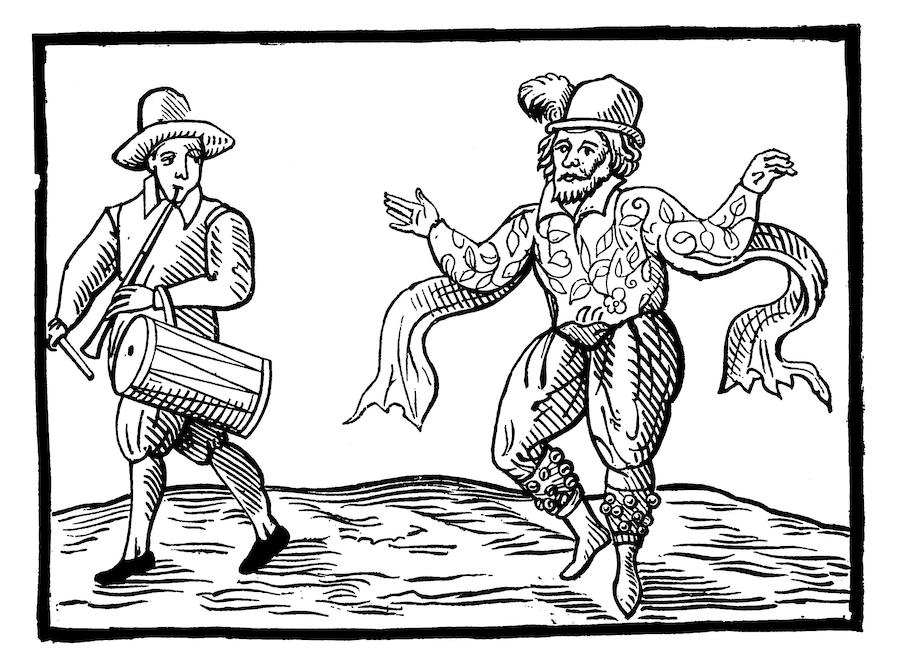
These two interviews give a necessary depth to the Weird Walk venture, anchoring and contextualising what would otherwise be fluffy zine-staples like music reviews and the obligatory poetry page. A two page history of William Kempe, the Shakespearian comic actor who undertook a 100 mile morris dance from London to Norwich, takes on a new pathos in this context. Kicked out of the theatre for his anarchic tomfoolery he embarked on his long dance across the land, embraced by the public and imbibing of much ale. But within three years he had died in poverty and obscurity. The English Renaissance had no place for his medieval pagan nonsense.
Kempe makes for a worthy icon of the weird walk because he was there when the sensible really started to kick in. Let us walk in his shoes and imagine a different, weirder world.
Weird Walk issues 1 and 2 cost £5.50 each plus postage and can be ordered from weirdwalk.co.uk.
This review covers the first issue. I’m saving the second for later, once I’ve properly digested this one.





 Walkspace