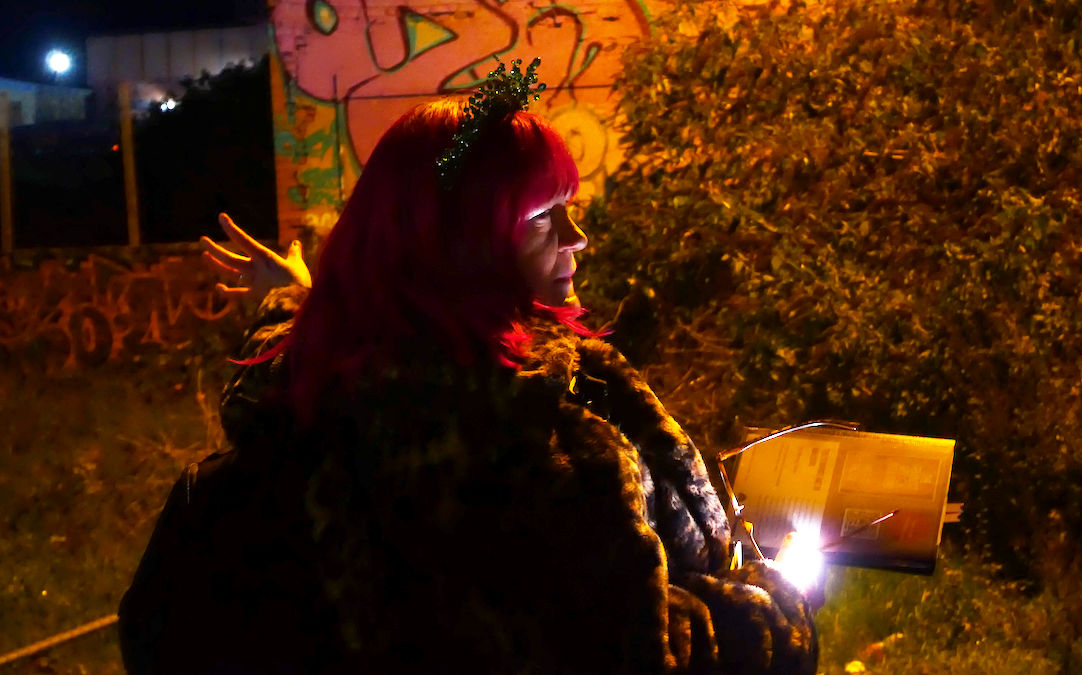
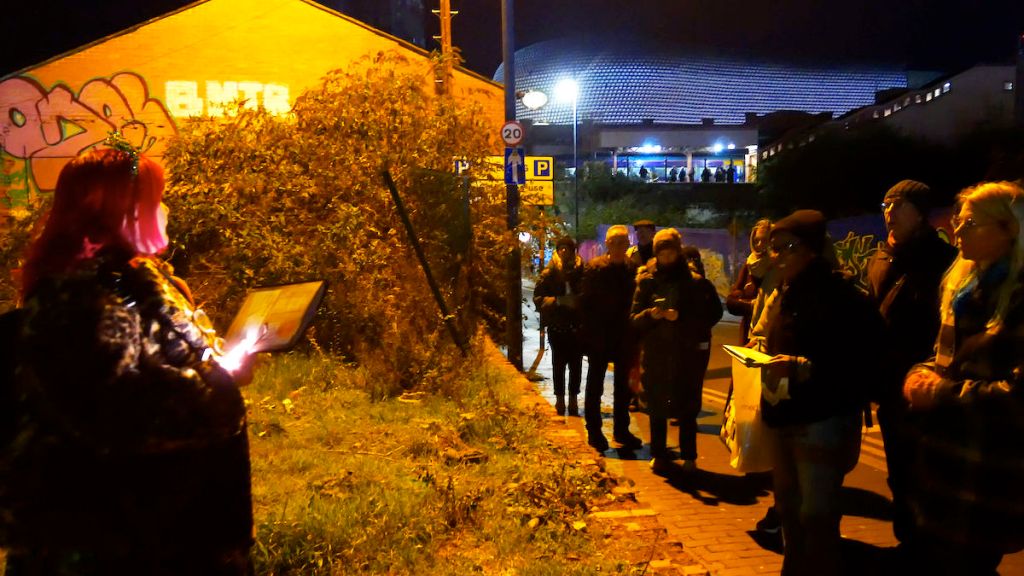
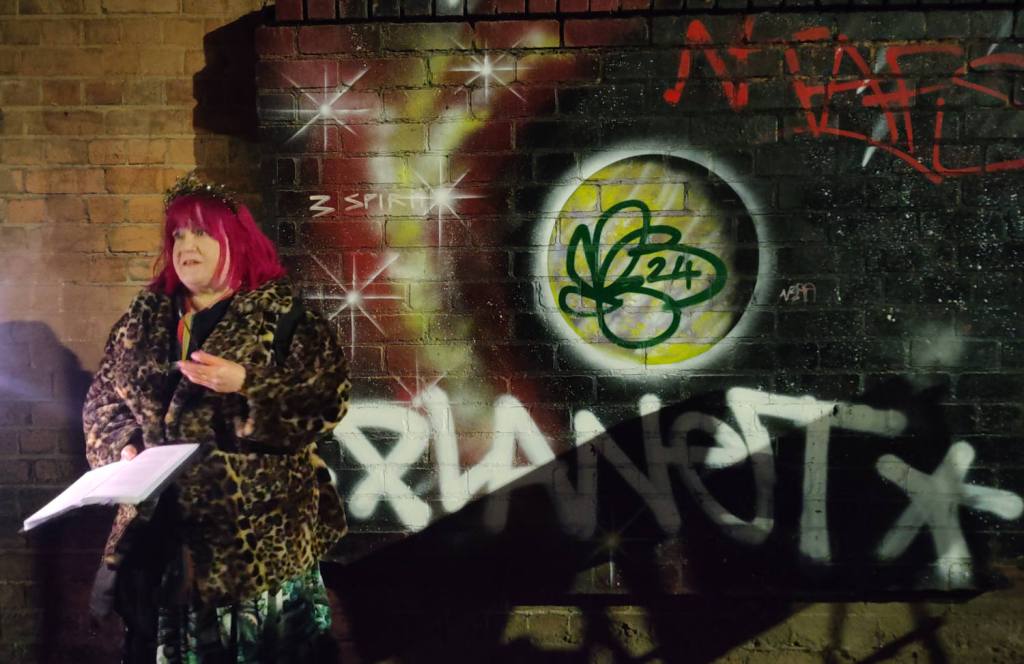
Close your eyes for a few moments, and take a walk in your mind. Wandering urban backstreets and city corners, you pause at a piece of graffiti where a woman with bright pink hair is speaking into the night beneath a spray-painted cosmos of planets and stars. A group of curious-looking people in warm coats stand around her, listening intently. To the average passer-by, we are an intriguing collection of oddballs standing around, loitering on an almost freezing November night. They would be right.
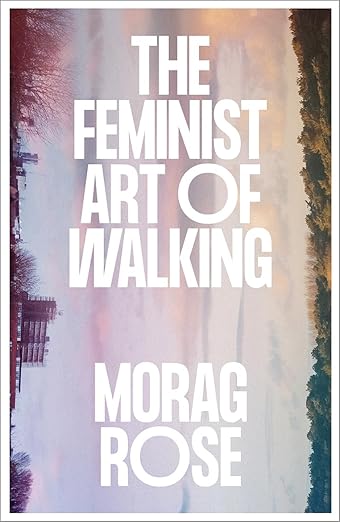
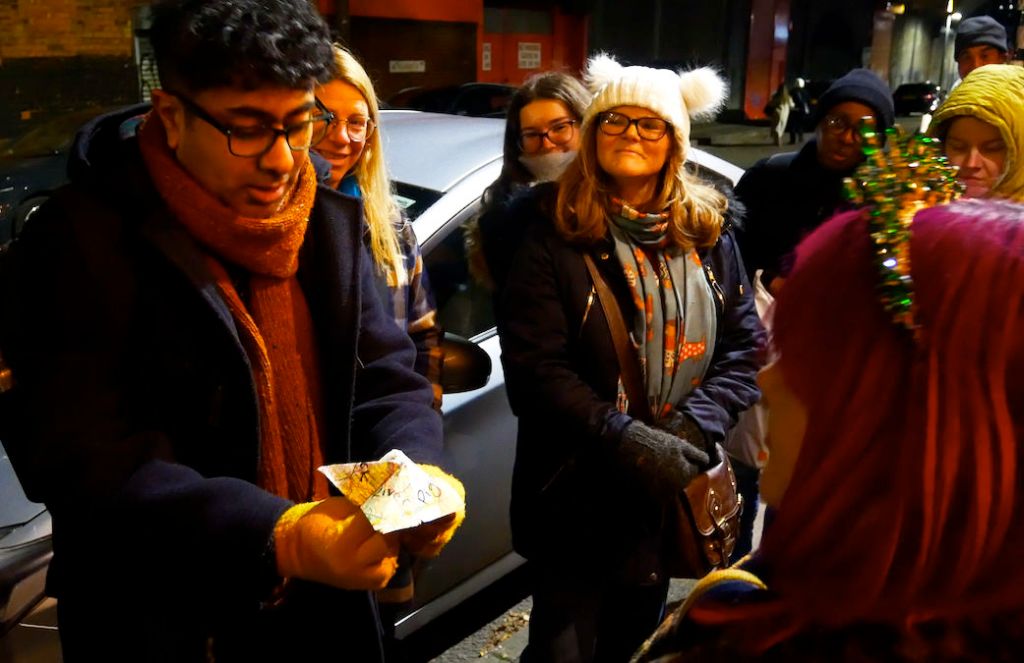
We gathered on that chilly evening for a book launch with a difference. Morag Rose, author of The Feminist Art of Walking, led us on a walk around the streets of Digbeth before her launch event at Voce Books. We stayed close to the bookshop for the duration, doing more loitering than walking whilst Morag gave several readings from the book. As founder of the Loiterer’s Resistance Movement (LRM), Morag is accustomed to reclaiming the art of loitering with intent. A Manchester-based not-for-profit collective of artists, activists and urban wanderers, the activities of the LRM form a radical context for much of this unique publication.
“I am a loiterer because I am curious, I want to explore and ask awkward questions.” – Morag Rose
Rose claims the mantle of anarcho-flaneuse, alongside performance artist and part-time lecturer in Geography at The University of Liverpool. Her new book is based partly on a PhD thesis about women walking the city, as well as LRM activities and her lived experience. She actively campaigns for better-designed public spaces to make walking and belonging easier for those living with disabilities and from marginalised groups. Rose points out that the “assumption that walking is simple: one foot in front of the other, easy does it, primal, instinctive. This assumption is a fallacy that all bodies are alike and walking comes ‘naturally’ to all”.
As for many creatives, the pandemic offered opportunities to say new things about walking and how we get around (or don’t). The Walking Publics/Walking Art: Walking Wellbeing and Community During Covid-19 initiative was an AHRC-funded project by Rose and her collaborators, which explored the potential of the arts to sustain, encourage and more equitably support walking during and following the pandemic. Our lockdown months were when I reoriented my own work towards walking art, having received an Arts Council development grant, which led to a PhD in landscape and inclusion. As a researcher in this field, I can confidently say that walking art is no longer the terrain of lone, white male artists, but an inclusive field nurtured by collectives such as Walkspace. As Rose writes, walking provides “an opportunity for multi-sensual exploration and a deep connection with space, place and communities”. Through the medium of creativity, these opportunities are extended far and wide.
Tracing our footsteps back to the book, Rose builds particularly on feminist perspectives to explore the act of walking in an inclusive and intersectional way. Integrating queer and disabled perspectives, the book also outlines issues around privilege. The Feminist Art of Walking makes assertive strides into questions of where we walk and who public space is for. Taking the reader on a journey through several locations, Rose examines mostly urban locations, with references to the rural. Beginning in Manchester, the book meanders through Liverpool, Sheffield, Eastbourne and smaller communities. The Eastbourne chapter pinpoints the start of Rose’s journey in thinking about how women walk, and the fear-based narratives that inform so much of women’s wayfinding. Rose writes of learning her ‘gender limits’ in younger life, through all-too-common experiences of harassment and intimidation. She asserts that women’s need to protect themselves is “embedded in our daily routine”, a narrative that the LRM attempts to undo. As Rose writes: “I am a loiterer because there are places I feel scared to go alone”. Most chapters in The Feminist Art of Walking are set in England, except for a spin through Ebbw Vale and Rose’s Welsh ancestry. As a resident of Cymru, I particularly enjoyed this chapter and the author’s comments on connections to place and ancestry.
“There wasn’t an actual photograph in my pocket in Ebbw Vale as I feared a relic would get crumpled or put though the wash. I don’t think I need it – the dialogue is in my head. If I do fancy a visual nudge, there’s a galaxy of images on my phone. We all walk with ghosts, ancestors and descendants wherever we go, it’s whether we choose to let our imaginations tune into them that determines the conversations we have (…) Wherever I walk now, my mother and nan are here, in my genes, my dreams, my wayfinding and my wonky footprints”.
After the official launch at Voce books (co-organised by Walkspace) our group of temporary loiterers disbanded, all the wiser and a little bit more at home in the world. This is a book about belonging on a deep level, and sharing experiences of what it means to be here. Rose reminds the reader that “you belong here and if that is not obvious then create your own welcoming committee”. Using the metaphor of desire lines, Rose asserts that a path made through intuition may well be walked by others, deepening the grooves and creating bolder paths.
The Feminist Art of Walking does just that, encouraging people of all genders and expressions to move in resistance and solidarity. What strikes me most about this book is the potentiality within its pages, and the power inherent within a simple, everyday walk. As Rose writes, walking is a source of belonging and community, solace and standing up for what we believe in; all within a passing hour, or as Rose puts it “everything and nothing written with our feet”.
Morag Rose and Digbeth graffiti. Photo Emily Wilkinson
The Feminist Art of Walking is available at Voce Books (online, or if you’re in Birmingham) for £16.99, from bookshop.org or your usual bookseller.
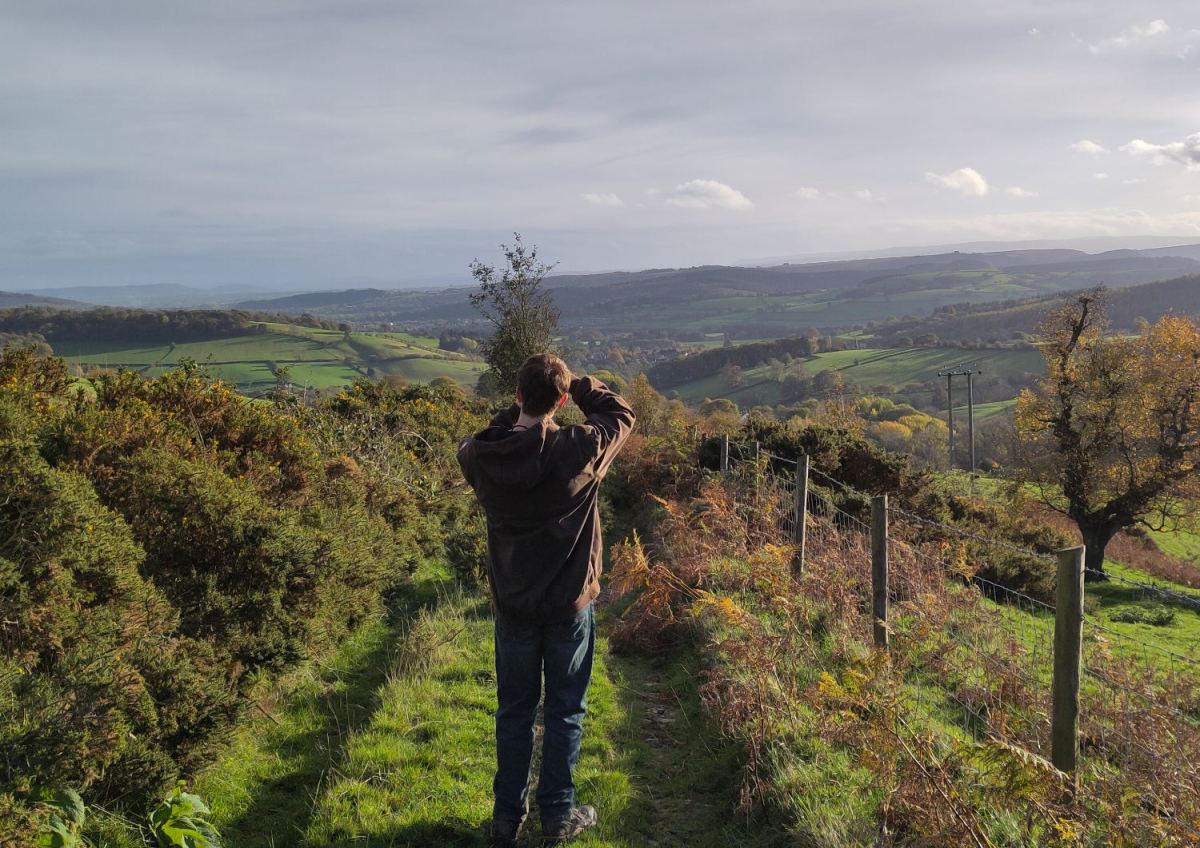
A few weeks after moving from Birmingham to Knighton in Powys, my son and I walked from the town to neighbouring Presteigne and back along the Offa’s Dyke Path. In the mist and drizzle of the morning, the ancient earthwork guided our steps as we crossed fields and old drovers’ lanes as it must have done for countless others over the centuries. That walk, with its mix of history, landscape and companionship, reminded me that paths are more than routes on maps: they are threads stitching together people, places and stories. That walk has since framed some thoughts on what Knighton has taught me about community.
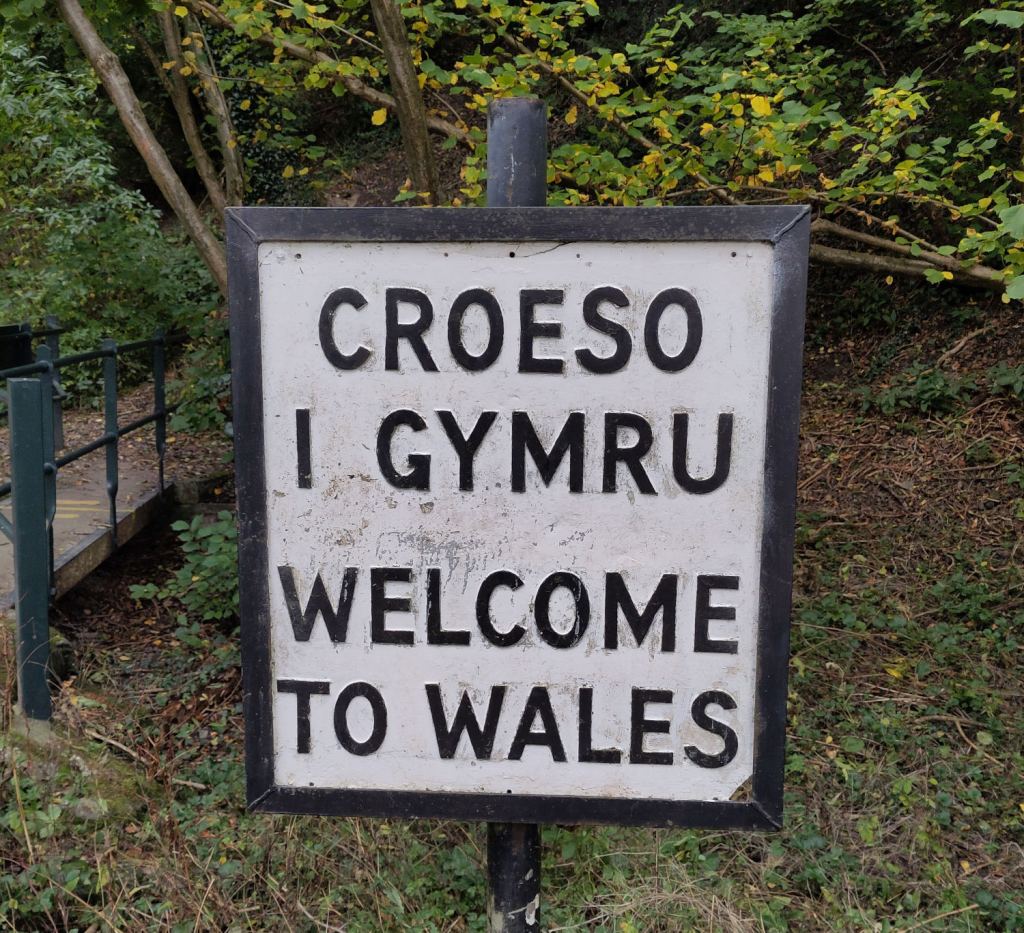
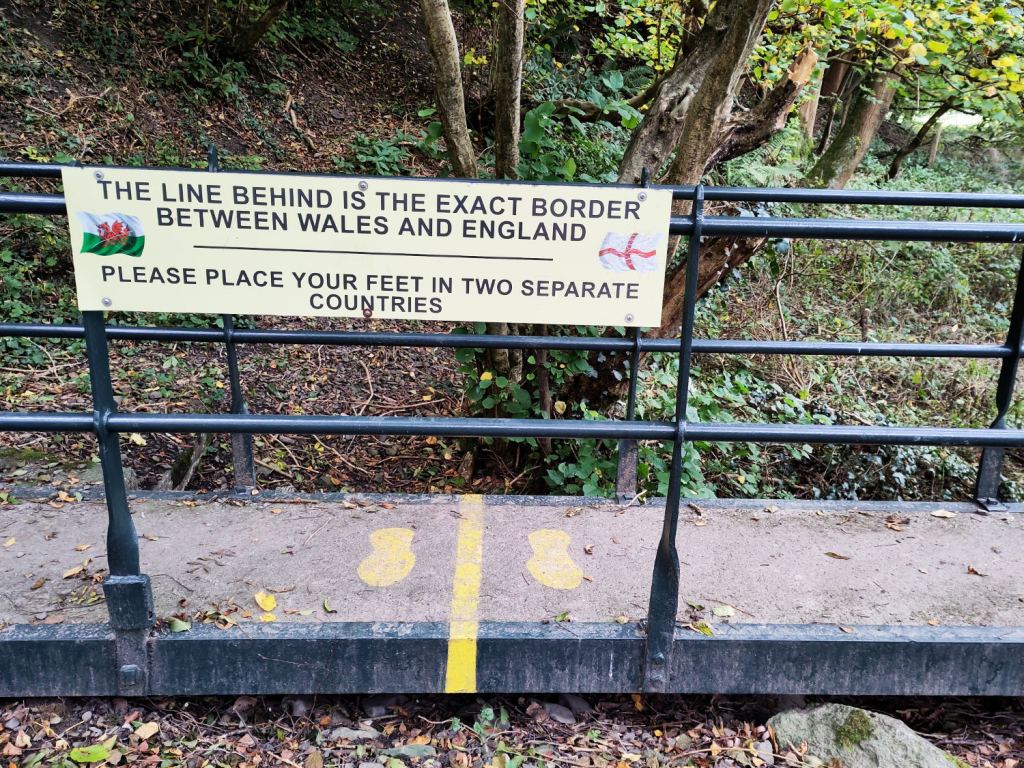
Knighton sits exactly on the English-Welsh border. Its Welsh name Tref-y-Clawdd or ‘The Town on the Dyke’, is a reminder of a layered history. The town is beautiful: hemmed in by wooded, rolling hills and criss-crossed by ‘the narrows’, higgledy-piggledy lanes that run between houses replete with gnomes, stone lighthouses and pot plants on steps. Yet beneath the charm lies a demographic reality: Knighton has a predominantly older population. Like many rural areas, it attracts retirees, while younger people often move away for education and work. The result is a community rich in heritage but stretched thin when it comes to energy and resources.
Within weeks of arriving, I jumped into local cultural life. I became the social media coordinator for the Knighton & District Concert Society, joined the committee for the Knighton Festival, and was invited to join the Tourism Committee. These groups are small, powered by volunteers who have carried the load for decades. They are the beating heart of Knighton’s cultural scene. Their resilience and dedication are remarkable, but they also need fresh energy to sustain the work.
Fabric of rural social life
Rural communities are more than geographic clusters; they are patchworks of relationships, trust, and shared meaning. When those ecosystems weaken, everything else – economic resilience, mental health, public services and possibly even democracy – begins to fray. Sustaining them requires people willing to do unglamorous work: attend evening meetings, open bank accounts, put up posters, bid for grants, deal with contractors, make sandwiches, and give up evenings and weekends. This is the work of belonging. And while it is demanding, it also brings rewards: time given freely builds bonds that money cannot buy.
Compared to cities, rural ties often run deeper. Family networks, neighbourly reciprocity, and shared traditions create a closeness that urban life with their promise of anonymity (and the quick tempers that it facilitates) can sometimes lack. I left Birmingham after the third time I was assaulted – this time when someone threw a brick at my head. It is commonplace for younger people to move away to the economic opportunities of cities, but those who remain, and those who return, need to balance the fabric of loyalty and care without feeling smothered.
Why social capital matters
Social capital isn’t just a warm idea. Communities with strong social ties cope better with crises, innovate more effectively, and offer richer lives to their members. In rural areas, where formal services are often thin, social capital is the safety net. It’s the neighbour who lends you logs for the stove in winter, the one who grits the shared walkway, lends you tools, or leaves cooking apples on your doorstep. It’s the volunteers who coach the junior rugby team, and the committee that keeps the arts alive. Here, volunteers just about keep the Offa’s Dyke Centre and the Knighton Museum open.
But social capital doesn’t happen by accident. It is built through participation, common endeavour and trust, and through the slow, sometimes frustrating work of showing up, listening, compromising, and creating together. People need to know that their efforts will be rewarded and reciprocated before they start. In game theory, this is known as “tit-for-tat plus” – or “giving the benefit of the doubt’ in simpler terms. If we think we’ll never see the other person again, why bother saying hello?
Culture as a connector
Henry Hemmings, in his book Together, argues that shared experiences are the glue that binds us. Festivals, concerts, and community arts aren’t luxuries; they’re lifelines. They create spaces where people of different ages, backgrounds, and beliefs can meet – not as avatars, but as neighbours.
Knighton’s concert society and festival are perfect examples. They bring world-class music and vibrant ideas to a small town. The Talland Quartet from the Royal Northern College of Music, who performed the first of this season’s concerts, were brilliant: young, energetic, and committed to bringing culture to far-flung corners of the country. Behind the scenes, volunteers juggle budgets, marketing, logistics, and online payment software. It’s hard work, but without it, the cultural life of the town would wither. We look with admiration to chi-chi Presteigne (Llanandras in Welsh) and smile wryly at the global renown of Hay-on-Wye (Y Gelli Gandryll), but Knighton’s efforts are no less vital.
The moral imperative
Jonathan Haidt’s The Righteous Mind reminds us that morality isn’t just about abstract principles; it’s about the foundations that allow us to live together. One of those foundations is loyalty: not blind tribalism, but a commitment to the groups that sustain us. In an age of unseeing digital tribes and their blinkered acolytes, we need to rediscover loyalty to our real-life communities. Try burning a digital log on your stove in December.
Social media can be a double-edged sword. While it can atomise and distract, it also helps rural communities connect and discover what’s happening in towns just down the road. The challenge is to use it as a tool for connection, not a substitute for presence.
Lessons from Knighton
My short time in Knighton has taught me this: community doesn’t just happen. It is forged through effort, through resisting the pull of doomscrolling, through the willingness to give more than you take. Rural life is complex and demanding, but deeply rewarding. I’ve made more friends in six weeks here than in twenty years in Birmingham.
When I sit in a committee meeting, surrounded by people who have been doing this for decades, I feel a sense of continuity that no algorithm can replicate and no amount of secret spite or can compensate. When I see a packed hall for a concert, I see the payoff of countless unseen hours. This is what sustains a town. Shared endeavours and human interactions are what sustain us: not digital likes and ‘followers’.
Walkspace: Turning paths into possibilities
Knighton isn’t just a place on the map – it’s a landscape alive with stories. The Black Hill of Bruce Chatwin’s On the Black Hill is nearby, and the Radnor Hills rise in the distance. Walking here is part of the culture: besides the Offa’s Dyke Centre, Knighton even has its own walking festival. When we walk these paths, we’re not only tracing ancient routes walked by sheep drovers of old, Owain Glyndwr and King Offa; we’re part of something much bigger.
This is where Walkspace comes in. Walkspace isn’t just a website or a WhatsApp group. It’s a cooperative of artists and walkers, powered by volunteers and guided by a shared vision. Every walk, every photograph, every reflection adds to a collective tapestry. As members, we’re not just participants but co-creators of a community with extraordinary potential.
Knighton reminds us why this matters. Its paths, lanes and narrows (and miniature nautical statuary) invite us to slow down, to notice, to connect not only with nature but with each other. Walkspace and other community groups are more than platforms; they are movements. Rare spaces where creativity and community meet.
Knighton is teaching me that the work of community is never finished. But it matters more than ever. In a fractured, polarised and increasingly isolated world where most people would rather stare at a phone than smile or talk to each other, the simple act of turning up and helping people can be genuinely radical. Choose effort over convenience, togetherness over isolation. Our communities, services and maybe one day even democracy, depend on it.
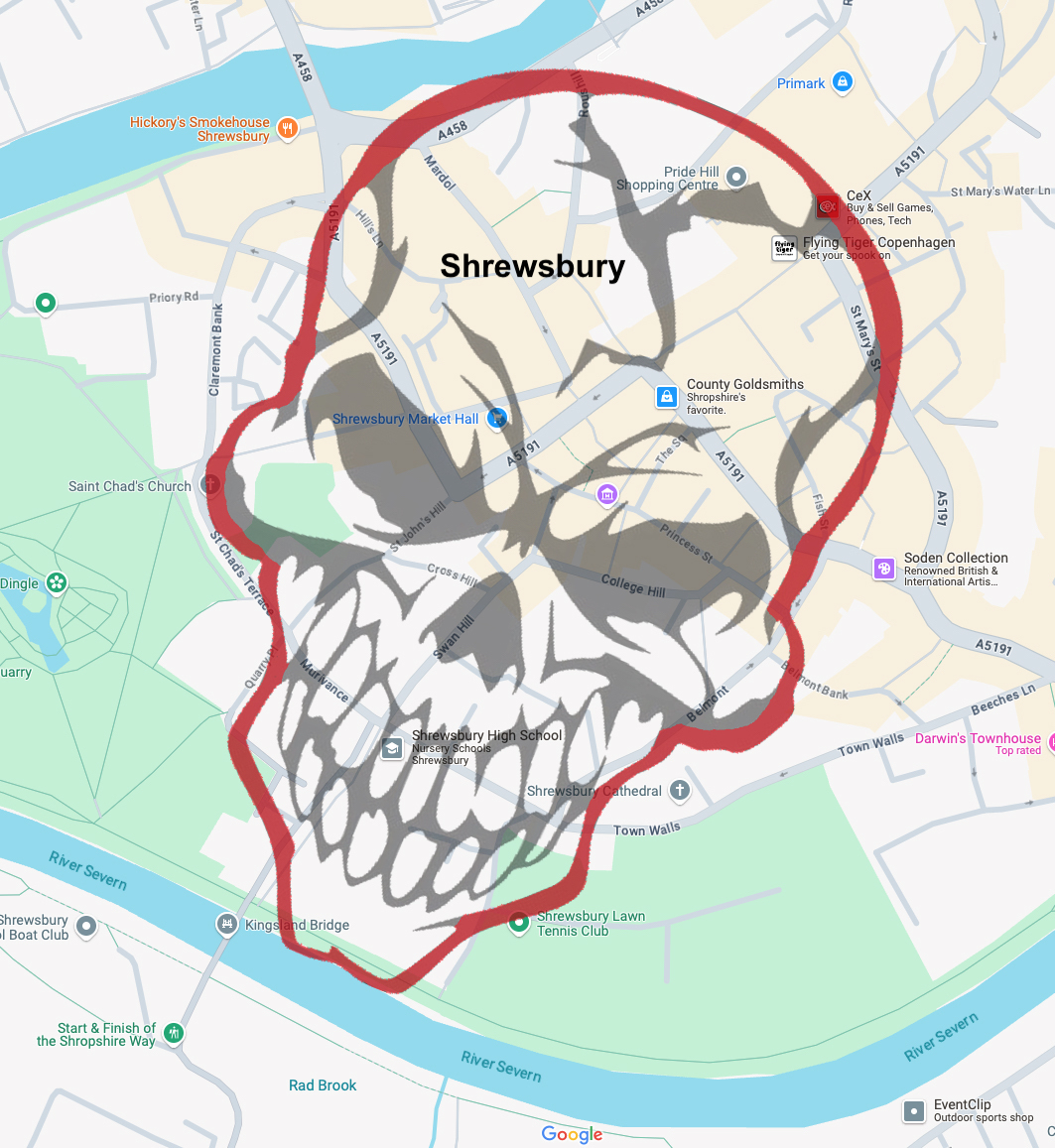
Inspired by the long running ‘Walking the Stirchley Skull‘, the Shrewsbury Skull has been devised by members of Walkspace’s Shropshire contingent as a spooky walk within the historic setting of Shrewsbury Town Centre.
The Shrewsbury Skull was created by Paul Wakelam and Andrew Howe by superimposing a skull image on a map of the town centre, within the course of the River Severn, and then walking the outline in the real world on Halloween night last year. This year they’re ready for company.
The walk will take place on Friday 31st October at 7:30pm and will start and finish outside St Chad’s Church, a 13 minute walk from the train station. The walk is free to attend and open to both locals and those from further afield. Costumes are entirely optional but if you wish to bring a skull-themed object or mask you are very welcome to do so.
Please book your place by emailing: walkspace.uk@gmail.com
This is a circular walk of approximately 2 and a quarter miles, mostly over pavement, with some moderately steep inclines and one set of steep steps. Toilets are available in pubs along the route. The walk will last around 90 minutes with the option of retiring to one of Shrewsbury’s many fine pubs for a de-spook.
Please note, the original Stirchley Skull walk will NOT be taking place this year. We are officially passing the torch. If you wish to organise your own skull walk with friends, you can do so wherever you live by following these instructions.
Walkspace is delighted to be contributing to A Dudley Day Out, a day-long celebration of Dudley’s green spaces featuring guided walks, a buffet lunch and creative collage. This event is the culmination of the Dudley’s Path to Nature Recovery project by Birmingham & Black Country Wildlife Trust.
Walkspace artists Daniella Turbin and Andy Howlett will be facilitating one of the day’s four walks. We hope you will join us!
Taking inspiration from local landscapes, overlooked heights, and the legacy of Dudley’s own “God’s Mountaineer” Bert Bissell, this walk will explore how the dramatic geography of the Black Country has long inspired journeys of imagination and endurance.
Drawing on Daniella’s background in long-distance walking and rock climbing, and Andy’s practice of walking-as-art, this journey will launch a playful black box treasure trail, featuring postcards hidden across the hills with original artworks and writings that connect Dudley’s peaks to far-flung places like Ben Nevis, the Humber Bridge, and the Ural Mountains.
Along the way, participants will take part in a gentle water ritual at the Severn/Trent watershed line, build a miniature “peace cairn” in honour of Bissell, and design their own postcards inspired by the landscape and lore.
The walk ends at a venue in Dudley Town Centre, where a buffet lunch will be served and there’ll be time to reflect, connect, and contribute to a collective collage on the project so far.
Please note, this walk is not suitable for under 16s due to health and safety.
Meeting Point: Bury Hill Park, Oldbury further details will be shared upon booking
Arrival Time: From 9:50am, setting off at 10am
Duration: Approx. 2-4 hours
Terrain: The ground is variable, including roads, rocky paths, grassy areas, stiles, steps and significant inclines that some may find difficult. Wear sturdy footwear, dress appropriately for the weather, and bring plenty of drinking water, snacks, and sun cream.
Toilets: Available at The Lakeside pub near the start and venue at the end
This event is part of Dudley’s Path to Nature Recovery, a project launched in 2024 by Birmingham & Black Country Wildlife Trust, thanks to support from their funders. The project connected local communities to nature across Dudley’s rich landscape of hills through five interlinked strands: conservation work, community engagement, citizen science, partnership development, and the creation of new walking routes.
PLEASE NOTE: This walk starts at 10am NOT 11am as previously advertised. This is to avoid the hottest hours of what will be a very hot day. RESPECT THE SUN! If you wish to attend you MUST email: walkspace.uk@gmail.com
Three years ago we led a pilgrimage to Spaghetti Junction to celebrate its 50th birthday. We explored some of the ways the famous motorway interchange could be considered a sacred site, a “confluence of confluences” and a gateway to the underworld. Great as it was, this walk barely scratched the surface and so we’re making a return visit for this year’s Summer Solstice. We hope you’ll join us to honour the Great God Interchange.
In recent years the artist and writer Jen Dixon has joined the ranks of Walkspace and her work reveals new layers of sacred significance to the site now known as Spaghetti Junction. Her INTERCHANGE field guide posits the site at Gravelly Hill as not merely a motorway junction, but a place of “physical and spiritual interchange over hundreds, if not thousands, of years.”
Jen will be joined by Andy Howlett to help untangle the watercourses, crossings, caverns and megaliths that come together to form this utterly unique environment. Discover the Hawthorn Brook. Cross the ancient ford. Enter the Dwarf Holes. Honour the Holy Oak. Draw back the thin veil between worlds and leave your offering.
The pilgrimage will begin at 10am in Chamberlain Square, central Birmingham on Saturday 21st June. Meet Andy and Jen beside the fountain. From here we will make our way down to the Birmingham and Fazeley Canal which we shall follow all the way to Spaghetti Junction along the towpath – a distance of about 3.5 miles. After observances round and about the Interchange, we’ll aim for a picnic lunch at around 12:30-1pm beside Aston Reservoir.
To book please email: walkspace.uk@gmail.com
Bring a packed lunch, plenty of water, sun cream and wear sturdy shoes. The terrain is mostly pavement and towpath with some uneven and sloping sections, cobbles and narrow tunnels. Buses 65, 66, 67 and 68 all take you back to Birmingham and can be caught on Lichfield Road. Aston Station is also a 10-15 minute walk from the walk’s finishing point. For your evening festivities we heartily recommend Acid Solstice in Digbeth.
15th December 2024. Wolverhampton. I meet Clive outside The Sunbeam pub, a Greene King lacklustre lounge, where, according to a subtitle as you hover on google maps, ‘a warm welcome awaits you.’ I wonder aloud to Clive whether this is something the company boasts of all their chains or is a specific, solar play on words meant to delight the locals of this city. He doesn’t respond particularly to this, either because he is embarrassed for me by my attention to this dull detail, giving the first inkling of missteps in our badinage as the day will progress, or because he hasn’t yet had any breakfast. If I had known, I suppose I could have brought his attention to the association of the name ‘Sunbeam’ to the car industry in the area, but then I have, uncharacteristically, not done my research.
Nevertheless, I want to hang the day on something, and I will attempt to talk and walk with Clive around the theme of ‘things being re-purposed, and who gets to decide why and how.’ He’s come over to this territory at my behest, and the latest main seam in our rich friendship has passed from football, books, and boozing to walking. I’m not sure how this happened, but the Black Country has had something to do with it.
We go inside in search of a cheap full English and are not disappointed, at least by the price. Where we sit, mock-ups of Sunbeam car manuals are noticeable on the walls above Clive’s head, similar in form to the Volkswagen car manual T-shirts racked up in supermarket ‘fashion’ sections, hoping soon to be stretched over the belly of a man with no practical working knowledge of cars. Whether someone is supposed to look up from their rubbery pork and take pride in the fact that Wolverhampton once made vehicles such as The Sunbeam 1000hp (the first to break the 200mph speed barrier at Daytona Beach in Florida in 1927) is unclear.
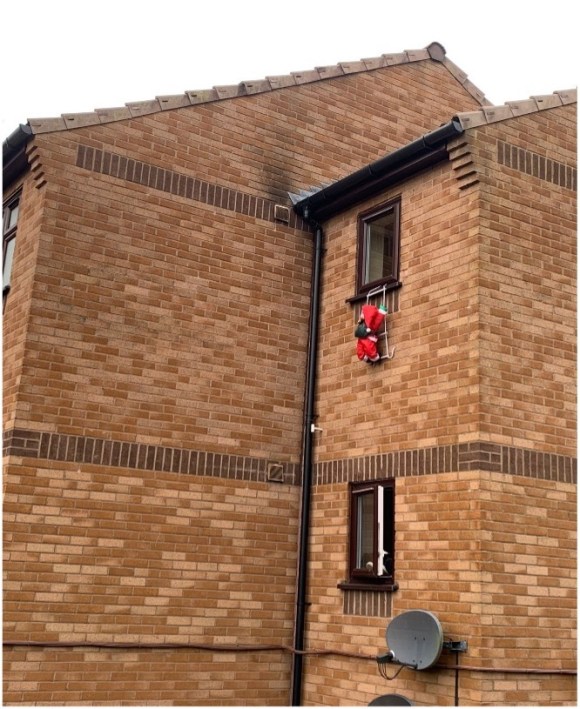
What is noticeable, stacked at the lectern facing the door, (to which no member of staff goes anywhere near), are white laminated signs with wadges of blu-tack in the corners, and the badge of Wolverhampton Wanderers Football Club in the middle. Bold Times New Roman underneath this states, ‘Home Supporters Only’. Anything like this makes you feel immediately sorry for the staff. It suggests that at some point in the recent past there must have been conflict amongst the patrons of The Sunbeam along football-tribal lines, alcohol seeping through the pores of men unable to put aside their performed differences for the sake of a £4.99 breakfast, and transmuting itself as the fuel for threats vague or specific, possibly precisely underneath where the ‘elf on the shelf’ figurines now dangle from the ceiling, next to the ‘fancy an extra sausage?’ signage.
How far this all is, a sanguine onlooker might think, from the diligent workers on the Daytona Beach project, competing healthily with their American rivals to get to the speed record first. A recent appeal by The National Motor Museum and the local Express and Star newspaper sought to find family members of those who helped build The Sunbeam 1000hp. It seems unlikely in 100 years that any organisations will be looking for relatives of those who worked behind the bar of The Sunbeam on matchdays, but who knows? ‘We’d love to uncover and record memories before they fade’ John Murden of The National Motor Museum states. Indeed.
The football club and the adjacent university compete for dominance in Wolverhampton, kept apart by a 1970s ring road referee. Both today will have occasion to haunt my own experiences of the city, as I share them with Clive. They are polished new-ish builds in bold colours that contrast with the discarded shell, picked over by various migratory birds, that characterises the built environment of the rest of the city centre. Walking through it, you feel that if the town had a taste, it would be of a cardboard toasted panini that you bought in desperation but regret immediately and don’t want to finish. Which is how, as a student here in the mid-2000s I often felt about my undergraduate degree.
Out of the underpass and wandering around the edge of Molineux stadium, a jarring, much earlier memory lodges; of being in a stand behind one of the goals at around 15 years old. It is late summer, late 1990’s and I am with my dad, and two of his mates from work. My dad and I are Villa fans, and the tickets are pre-season friendly freebies from these mates of his. Prior to this outing, my dad has shared an anecdote about one of them, who has sold his recently deceased mum and dad’s Wolverhampton house. He had apparently gone out of his way to assure his late parents’ neighbours that he would not be selling their house ‘to an Asian person.’
It’s half time, and this mate asks me, nodding towards the pitch, ‘What do you think then?’ I assume that, as it is my first time at his home team’s stadium, rather than get my tactical assessment of the first half action, he means what I think of the building’s aesthetics, and I point out how much I like the orange stanchion areas jutting into the sky at each corner of the ground. I remember the laughter, the incredulous faces, and the pensive look of my dad, who must have felt like he had brought a young Denton Welch to the game. The memory still frustrates (I like football; I just struggle when discussing tactics). What would those two mates of my dad think of our walk today? If I try hard, maybe I can convince myself that my walks in the last year or two have rejected the moral of this story, the idea that you’re not meant to look up at places, buildings, things at the expense of the more obvious ‘present’ action. Have they been in part exercises at re-training myself to notice what might mean more than, say, a pre-season friendly? Bit of a stretch, maybe. But, for today at least, we are just wanderers.
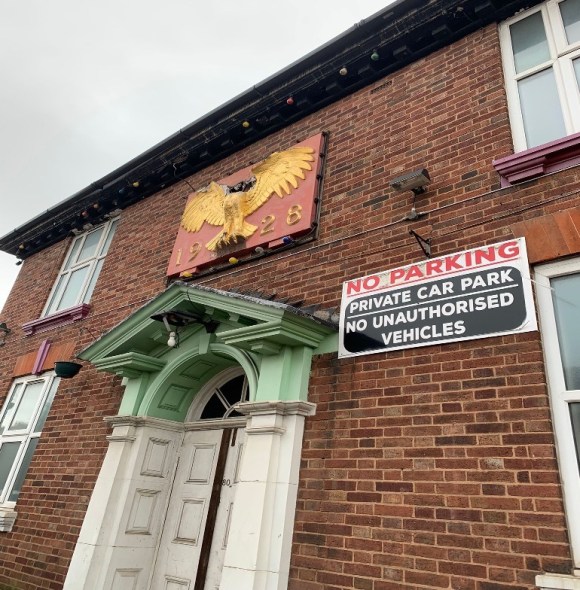
We head northwest out of the city centre looking for the Hordern Road. Halfway along Hordern, in Tettenhall, The Golden Eagle pub sits at the junction with Court Road. It’s square, stocky, brick façade features an arched double doorway that has a large red plaque above it bearing the date 1928. Perched atop the date is the eponymous animal in gold, wings aloft, with a gaping hole reaching far back into the brickwork where its head should be. A similar sized but much younger sign to the right of the doorway bears the imperatives ‘NO PARKING. NO UNAUTHORISED VEHICLES.’ This sign hints at the more recent history of this public house building, which was in the local news for being repurposed as a mosque without the proper planning permission. Reports on this ‘misuse’ included quotes from residents complaining of ‘chocablock’ traffic on Fridays. One unidentified Tettenhall resident swore that they had no problem with the building being used as a mosque, ‘as long as it was done through the proper channels’’. In tribute perhaps to the 16th Century English Reformation and its rejection of requiring the assistance of the proper channels to access salvation, the number of cars parked outside the building and on the pavement on the day Clive and I walk past suggest that the following of local council rules and regulations is still not the primary concern of the current patrons.
In recent Wolverhampton news prior to our walk there has been soul searching in the city over the fate of its most famous brewery, Banks’, whose final closure was apparently on the cards as soon as they were sold to international majority shareholders The Carlsberg Group a few years ago. Perhaps this is a money-spinner that was overlooked, leasing the empty public houses on the outer edge of the ring road as repurposed places of worship for the current working class of the city. But of course, something would have to have been done about that Friday traffic. There’s something about the Golden Eagle building and the contradictions about its use and reuse, permissions granted, refused or ignored.
Not far from here in Whitmore Reans is West Park Primary School, infamously alluded to in an alarmist speech (not that one) by Enoch Powell in the late 1960s in which he wrongly stated that it had only one white child on its registers. Powell himself recently (2018) fell afoul of the planning permission politics of local government when the Civic and Historical Society of Wolverhampton refused calls from some quarters for a blue plaque to be placed in the city honouring his status as a famous local MP. One of the difficulties, other than the obvious apparently, was finding a suitable place to locate the thing. Perhaps using it to paper over the gaping hole of this beheaded Golden Eagle, or even adding an Enoch bust to the bird, so that he could stand guard over this holy place and prevent ‘unauthorised access’ being ignored in perpetuity? Later on this same day we will stop at a ‘desi pub’, The Firs in Castlecroft which forms a nice contrast to the fate of the Golden Eagle. You can continue operating as a pub and sell food that tastes of things, it seems to say, but don’t bring your God into our sacred buildings. And please ensure you have ample parking.
Clive reacts well to a brief history of The Eagle, his eyes really lighting up for the first time today, and he starts taking photos. I immediately become aware of being watched while he does this; fearing questions from furtive looking local residents, I try and move us on a bit further only to be confronted by The Suncentre, surely one of the oddest-looking buildings ever to be repurposed as a tanning salon. It is a barn like brick shed, quite long, with an obvious lack of possible entry points for any natural sunlight. To add to the visual unease, it has a Wicker Man-esque smiling sun logo. These uncontroversial pagan worship spots crop up on many local high streets in the Black Country and are always irresistible to eyeball, hoping to catch a glimpse of the orange proprietor or find out just who the hell can be using them. Clive gets snapping and he’s really enjoying himself now as we amble down the road past a man waiting at a bus stop who gives us a good stare. I feel self-conscious and embarrassed that we are seen laughing at the area this man may call home, even though I can be fairly confident he’s not either the small business owner of the tanning salon or worshipper at the covert mosque. I need some of Clive’s confidence and ease, he’s a more seasoned flâneuric piss-taker with a purpose than I.
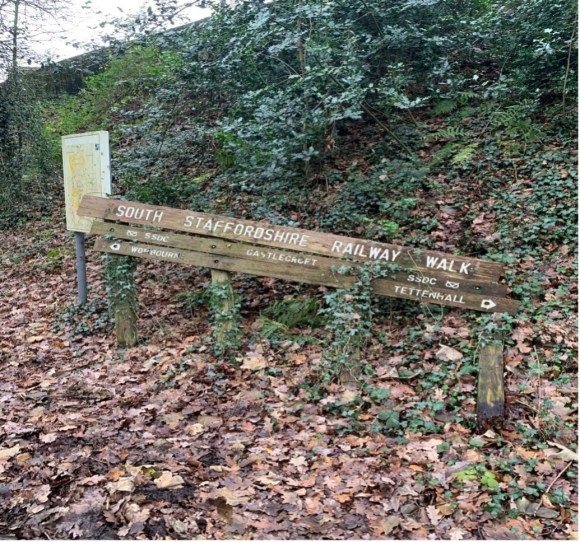
We are finally at the point where we can access the old railway line, by following the canal along Hordern Road Bridge. After some faffing about trying to get down onto the canal, I feel we need to push on and make progress with daylight hours against us. Clive though, is just getting warmed up, his senses awakened by the Suncentre and its surrounds. He wants to stop and do a reading and pulls from his backpack a copy of Anne Dillard’s ‘Pilgrim at Tinker Creek’. After noting how rare it is for him to read a book that carries a recommendation from former Archbishop of Canterbury Rowan Williams on its back cover, he proceeds to read from a section entitled ‘The Present.’ What exactly constitutes the present action, how to decide what is most deserving of your noticing? This is exactly the struggle we are having today, me looking for where I can interject my histories, Clive wanting to take the walk Dillard-like as it comes. I wasn’t present enough at the time of the reading, again casting timid looks up and down and over the canal, too concerned with what people in Whitmore Reans think of Pulitzer Prize prose being read aloud on the towpath.
The canal is the terrain the walk needs at this point. As repurposed places they are hard to beat, perhaps because of how democratically this has happened. They can be approached in the same spirit as Dillard’s thoughts on the present, as ‘a freely given canvas’. No planning permission required. However, I’m in danger of causing its constant ‘ripping apart and washing downstream’, as I’ve come with an over-eager agenda today and its theme starts to persist in the forefront of my mind.
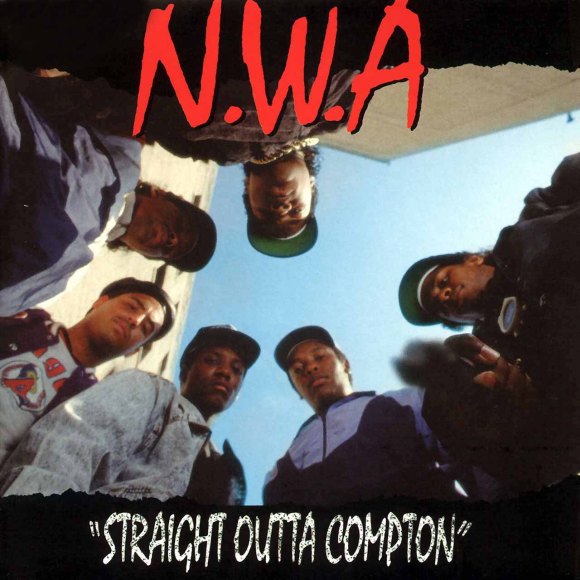
We access the old railway line via an arched bridge, passing a grandad, father and son playing with toy guns. The father is slumped convincingly motionless in the middle of the bridge, and I initially suspect alcohol or madness rather than the play acting of a street shootout. I should have known; we are about to head through the suburb of Compton. While at university in Wolverhampton I remembered the name of this area as it held part of the campus (a business school). I now recall the incongruity of the more famous name of N.W.A.’s LA home associated in my mind with the ‘scream bar’ cosseted culture of my new labour university experience, when I used to crave some sort of transgressive authenticity. I know this Compton campus has long since closed and want to see some evidence of what the building has become. The walk doesn’t want me to go there, and the old railway line affords us no such viewing point. We head straight out of the area.
With university rearing its head, we have entered the dangerous territory of my virginal past, very blank and one dimensional. Not unlike the physical route we take today. Much as we will discover of this path at the end of the walk; we’ll stay on it too long and it won’t want to give us up, golden glow on the horizon, to reality. An unintentional loss of time. We will have to circuitously get back to where we’re supposed to be.
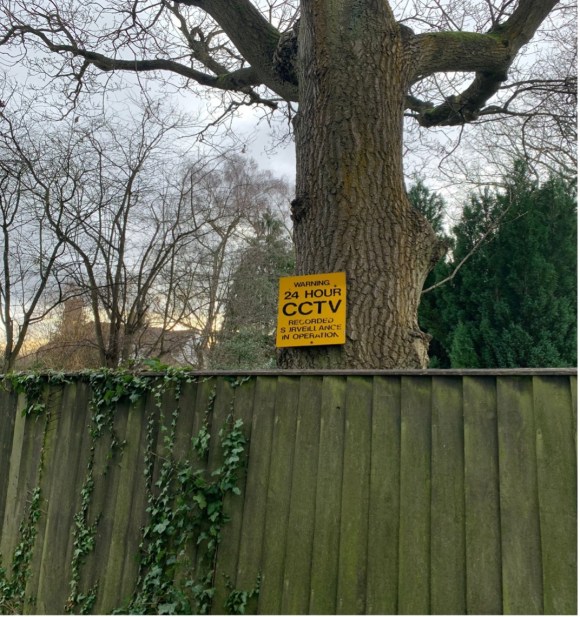
Post-Compton, at this point we come off the line and investigate Castlecroft Gardens to admire (if that is the right word) the work of Major Kenneth Hutchison Smith, who repurposed buildings in the 19th Century from other rural counties in the West Midlands in the hope of creating a utopian ‘village green’ type living quarter in this area west of the industrial city. We count less than five buildings that could remain from this period, so it is clear his project did not get very far. However, the spirit of his idea vampirically lives on amongst the current residents, who live in sizeable dwellings aping the mock Tudor ‘black and white with beams’ aesthetic of the Hutchison originals. Whilst Kenneth may have been originally seeking to set up a golden ticket salve to the realities of industrial working-class life in his lofty ambitions for Castlecroft Gardens, the present atmosphere is a long way from usefulness or industry, being one of pure preservation of exclusivity and bought privilege. Walking through, we would be disappointed not to find that nailed to various old trees are signs such as 24 HOUR CCTV RECORDED SURVEILLANCE IN OPERATION. YOUR ACTIONS ARE BEING RECORDED. In fact, an expansive balcony surveying the garden of one property finds me scanning the scene for Ralph Fiennes as Amon Goth, patrolling Castlecroft with his rifle.
What is the point of this preservation society and what type of life are they protecting? In other words, ‘What’s the frequency now, Kenneth?’ Since I lived in fairly central Birmingham for most of my life before moving to the Black Country around 5 years ago, the ubiquity of these ‘managed’ estates in the satellite town areas of major cities was something I had hitherto failed to notice. They speak so specifically of being ‘a prophylactic tunnel to the isolation zone’ and I worry myself that my young family, by being in proximity to their dangerous radiation, is living a sort of ‘half-life’. I pass through them en-route to work or with my son at weekends with a malignant blankness in my throat. Uncomfortably numb. I don’t drive an Isuzu though, maybe this is where I am going wrong.
After several more miles on the route Clive and I reach the last residential area that our walk passes through, the M Night Shyamalan infused (whatever the horror twist is, it would surely be McGuffined by the arrival of the first Deliveroo McDonalds breakfast) village of Wombourne. It’s no coincidence that here is the only place along the walk that one of the old train stations has been repurposed as a kitschy café. This town is really going in for something earnestly inauthentic, and whatever it is culturally approximates to a cross between David Cameron emerging from his shepherd’s hut, memoirs written, and Ruth Madoc popping to the post office in a scene from ‘Oh Doctor Beeching’.
I return to take a proper look at this example of ‘village life from which the villagers have long been expelled’ on the Sunday before Christmas. The high street is stretched around a large, green, square space with room for tennis courts, cricket pitch and pony. The first sign of life is a lad who can’t be more than 17-18 parking a 4×4 then walking with his girlfriend into ‘Farmer & Friends’ coffee shop. They may well be meeting with pals once inside, but by the look of the sunglasses he wears and the pontiff-like whiteness of the soles of his trainers, I doubt he is an agricultural labourer. The high street brand names which have a presence here also know the audience they are performing for: the ‘Boots Chemist’ sports a wooden swinging board above its shop window with the legend ‘since 1845’, a contrast to the neon-lit stratosphere of a retail park.
Unsurprisingly, through street signage I discover that there is a Wombourne ‘Best Kept Village Committee’, the most notable contribution of it being the ‘Arbour Tree’, planted by the side of the road on the edge of the green centre in 2008: ‘to replace the original Old Tree which stood at this road junction for over a hundred years.’ What happened to this ‘Old Tree’? Maybe the clue is in the phrase ‘road junction.’ I suspect some Cronenberg’s ‘Crash’ influenced local youngster got sick of the cleanliness of their trainer and ploughed into it at speed. It speaks of the odd collective attempt at nostalgia on constant display here that you would want, via committee, to plant a tree to replace one that’s uniqueness was that it was the oldest standing tree in the village. And draw attention to this with a plaque. A ‘Trigger’s broom’ approach to a deliberately artificial hauntology.
The busiest place on that quiet Sunday morning was the butchers, which had a quite spectacularly long queue snaking its way around the corner shopfront. Patrons waited patiently in the cold for the produce, showing to all how discerning they are in who they buy meat from and how the animal they consume has been treated. Is it too fanciful to imagine that if you were to listen closely you might hear someone turn to the next in line and say, ‘have you heard about that pub in Wolverhampton being used as a mosque?’
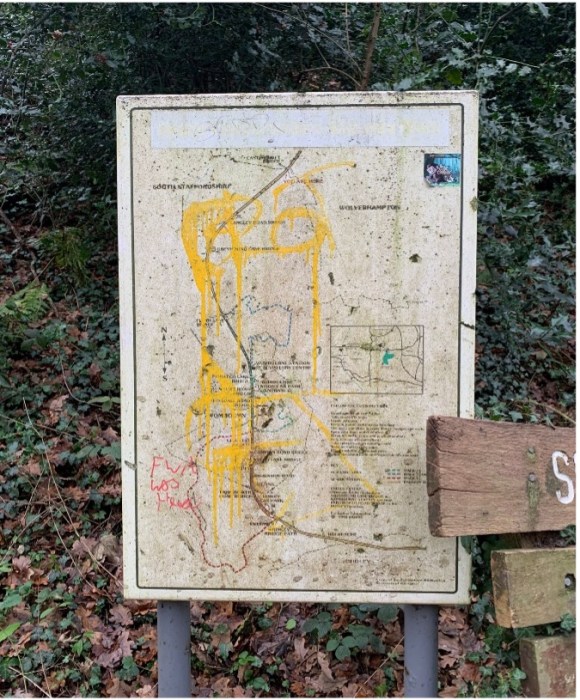
Getting back to the main route, and for the final part of the old railway Clive and I are by now moving with silences stretched out; the constant hum of traffic and bursts of birdsong bringing down the gloaming. The path is interrupted by a series of short, deep-cut bridges, the most infamous of these known as the ‘Wombourne Bridge’. It is this I am looking for to facilitate our departure from the line and bring the day to a close. The sides of those we pass under are covered in forgettable graffiti, but this caused enough of a concern locally for former South Staffordshire and Boris Johnson cabinet MP Gavin Williamson to be photographed in the news next to these daubs, as part of a campaign to protect the ‘Best Kept Village’ reputation. In contrast, no politician has thus far been photographed next to the racist slogans that often appear on the aforementioned ‘Wombourne Bridge’, not hidden below it but put boldly on the sides facing oncoming traffic. In the last year this has meant drivers on the A449 have passed daily under directives such as ‘White Lives Matter’, until they are washed over by the council. I play detective on two fronts for a while, not only keeping an eye out for the bridge itself but speculating if any of the very few people we come across could be the culprit, popping out to walk the dog with a can of (obviously) white paint in the back pocket.
At one point in a small layby, we pass one of those square, silvery, nondescript vehicles, covered in ash and full of bric a brac, that become metal furniture on overgrown driveways. Today though, this one has made an ill-advised journey. The bonnet is up and a fat man who looks a bit like Pavarotti in a worn-out Millets fleece waddles purposefully around the side, adding something from a bottle to one of the apertures in the engine. Could this be the phantom bridge sprayer? In addition, if passionate dog owners can start to look like the breed of the animal they are devoted to, perhaps in the Black Country drivers can take on the appearance of their cars? The ubiquitous half oval peaks of the headgear on speeding cruisers echo spoilers, and there is definitely something reflected back at the Pavarotti man by the shabby coat and squat build of his vehicle. He seems to know what he is doing with the engine though, and we leave him to it, the legacy of expertise of the Sunbeam engineers receding in the distance in the dying daylight.
Not long after, we notice the path isn’t curving towards the road as the OS map suggests it will, and the sky grows ever darker. We give up and google only to find we have missed the racist bridge terminus after all. I want to retrace our steps, but Clive won’t have it, once again his greater confidence in the moment coming through. We plod on, frustrated and sore, hoping the path will release us further up. Eventually, and in almost total darkness, we can make out a fly tipping site that causes Clive to exclaim, with the authority of a millennial Ernest Shackleton: ‘if a car has brought that up, there must be a way down.’ Sure enough, we find here an alternative exit to the one I had planned, a spot which locals have chosen to repurpose as a dumping ground for used household items, rather than for regurgitated xenophobia.
Before we join up with our main road destination for Clive’s Uber back to Birmingham, we pass through a silent industrial estate where large opaque trucks, detached from their cabs, loom out at us like alien objects from the blackness. It’s difficult to know whether this space and many others like it in the region would be any more active in tomorrow’s daylight, or we have just seen it in its permanent ghost-state. Uncertain black belt land. Static haulage, empty receptions.
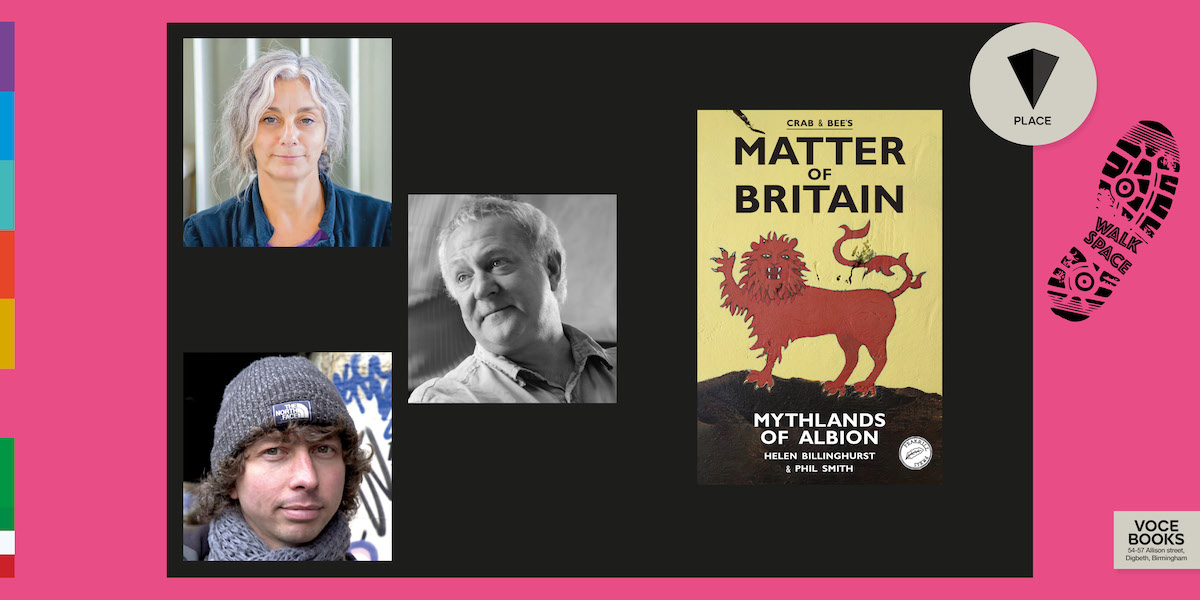
Walkspace is delighted to be teaming up with Voce Books to welcome walking artists and performance makers, Phil Smith (Crab) and Helen Billinghurst (Bee) on the launch of their new book “Matter of Britain: Mythlands of Albion“.
Helen and Phil will be joined by Walkspace co-founder Andy Howlett for an evening of conversation, performance and readings from their new work of re-enchanted & hallucinatory landscapes.
Crab & Bee have been gathering the ‘old stories’ for their new Matter of Britain, using the map of their own instincts, travelling on foot, and always ‘being there’.
These are not the stories of the medieval manuscripts, or their nationalist retellings for the BBC or the readership of the Times. This is how the old stories tell themselves these days, in their own places, the places where their genii loci dwell.
Matter of Britain is a banishing spell against nostalgia and a magical working for the remaking of the Matter in the ruins of the present, from the treasures of the past, speaking into the bodies of weird future.
Join us on Thursday 22nd May, 7pm at Kilder Bar, 5 Shaw’s Passage, Digbeth, Birmingham.
This is one of Voce’s PLACE events, taking drifts, detours & derives with writers exploring the contemporary practices of psychogeography, hauntology, creative walking & our relationship with the places & spaces that make us.
Amazingly it’s been five years since three friends in Stirchley decided to start a walking-art collective. Walkspace has come a long way since then but to mark this anniversary we’ve decided to return to our roots by reimagining one of the first public walks we ever did. We hope you can join us on 14th March to renew the magic for another 5 years.
Full Moon Walking took place on 8th March 2020 and was described as a “bewitching – if slightly scary – group walk around the lunar-charged waterways of Stirchley and Lifford.” It was a spirited combination of local history, folklore and magic, with contributions from each of the early members. Our experiments in collective walking were soon to be cut short by the pandemic but the overwhelming response to that early walk convinced us to hang in there and weather the storm.
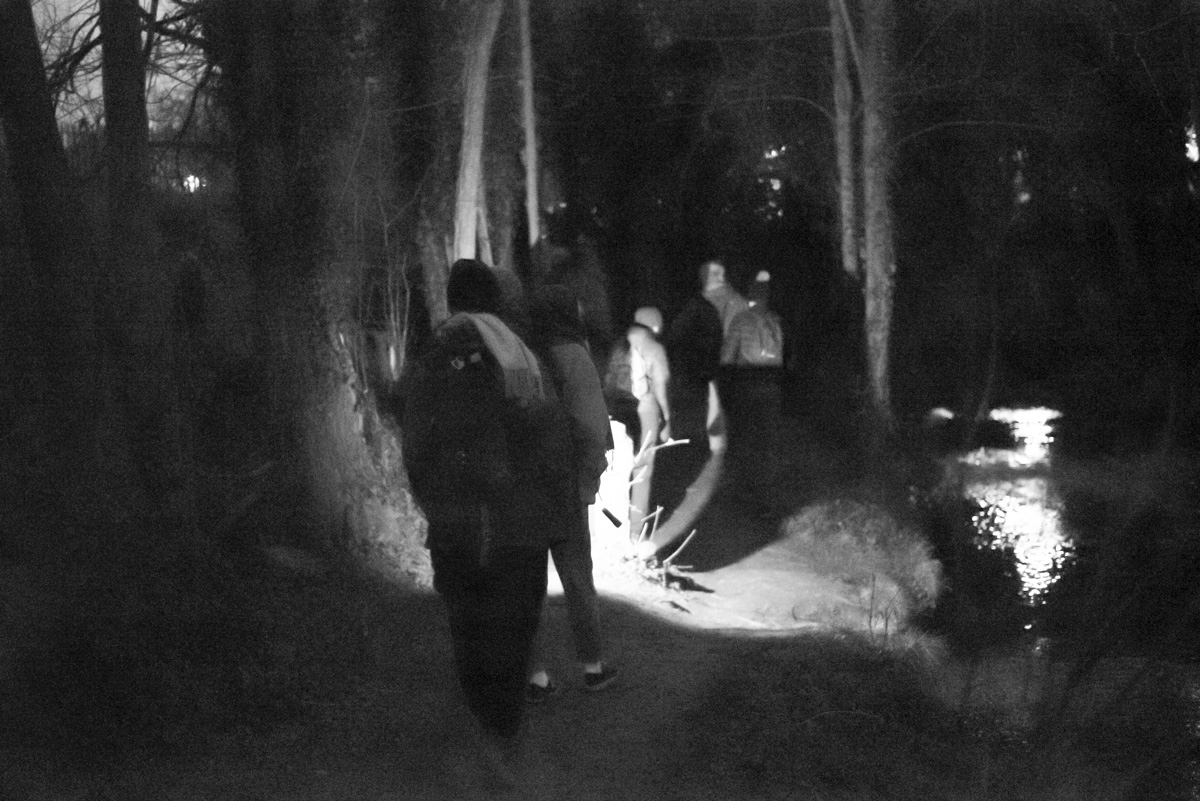
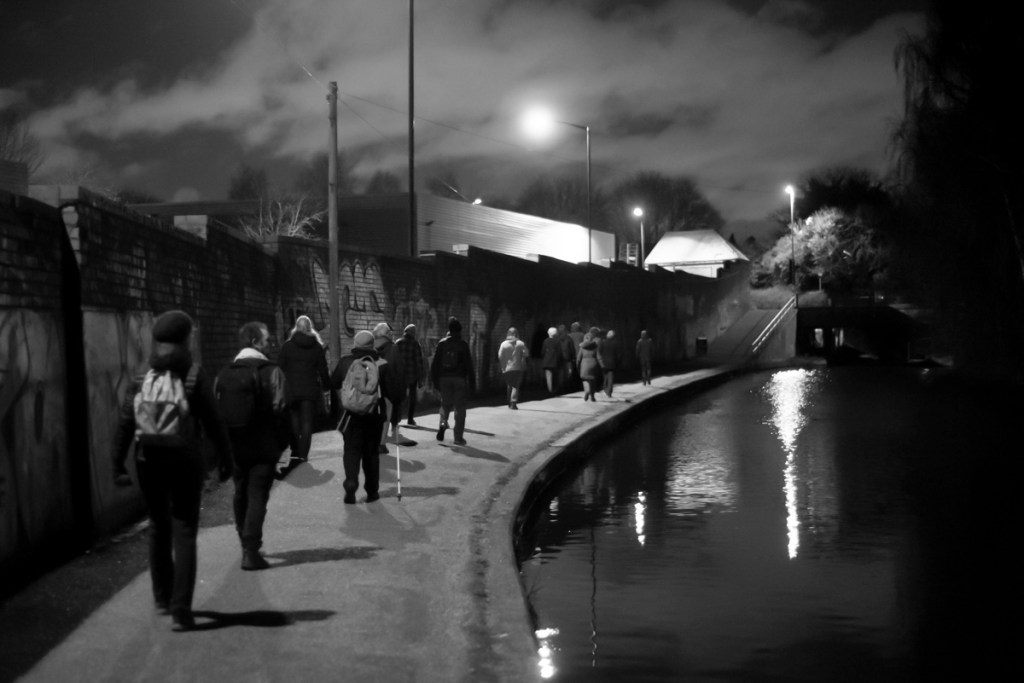
This time around we shall be walking the same route but with fresh ideas, 5 years of walk-leading experience, and with invaluable input from newer members. Join us on the night of the full moon, Friday 14th March, 7pm at Fordhouse Lane at the pedestrian crossing by the River Rea bridge, Stirchley. To book your place please email: walkspace.uk@gmail.com
This water-themed walkabout is a circular route along riverside paths, woodland trails, reservoirs and canals. It features uneven surfaces, slippery bits, tunnels and steps. Please wear appropriate clothing and footwear for a nighttime winter walk and please bring a torch. This event is for adults only.
The walk will last 1.5 – 2 hours, finishing up back at the starting point, from which there will be the option to retire to a pub. The power of the full moon is unaffected by the weather so we shall not be deterred by clouds or showers. In the event of truly unpleasant weather however you shall be notified by email of any changes or cancellation.
You can relive those early days of Walkspace with this short film by Andy which opens with an account of the original full moon walk.
An invitation landed in the Walkspace inbox that was too good to pass up:
“I’m writing to bring your attention to an event – the launch of a pamphlet of writing about walking – that might be of some interest to your members. I’m told there aren’t many tickets left, but there’ll doubtless be walk-ups.”
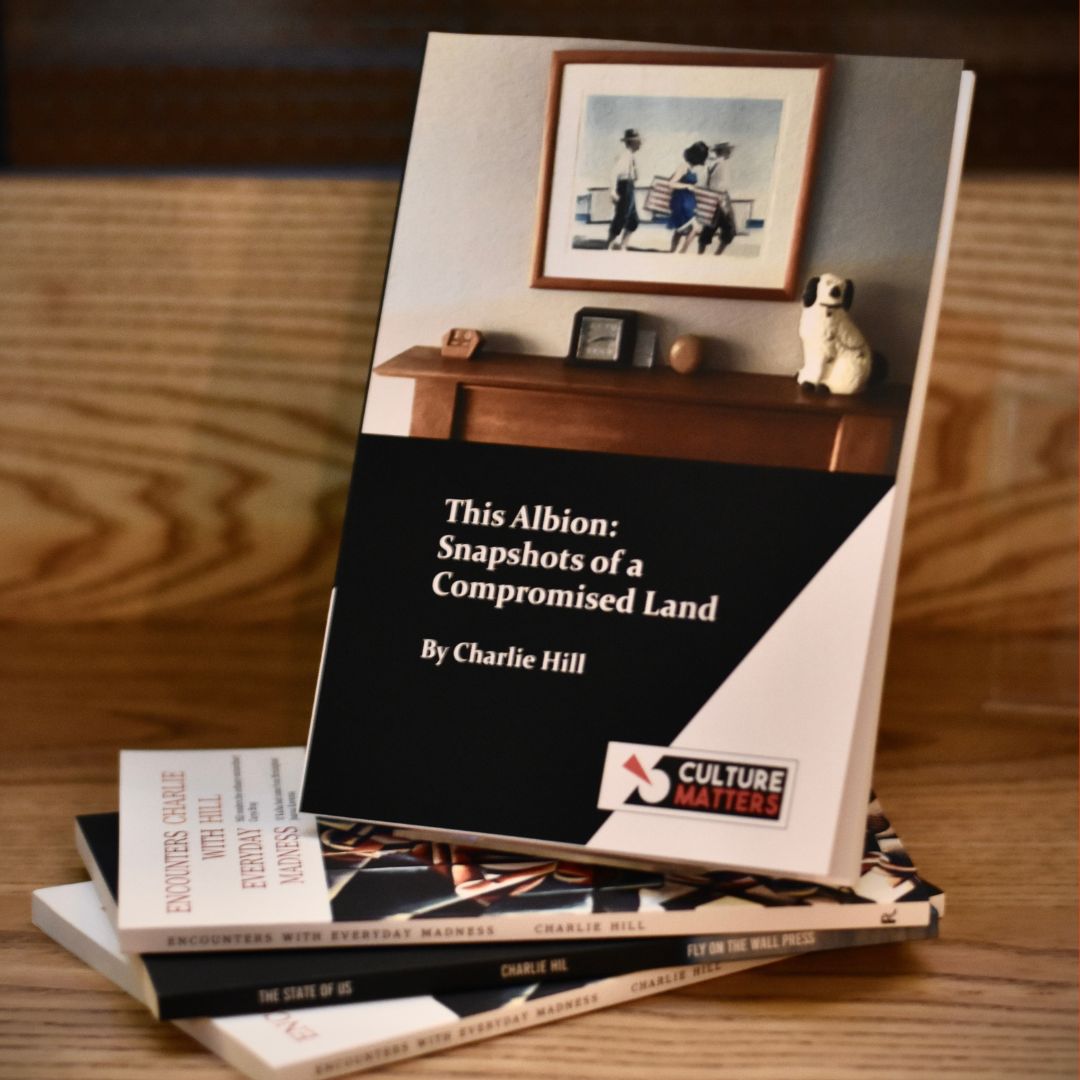
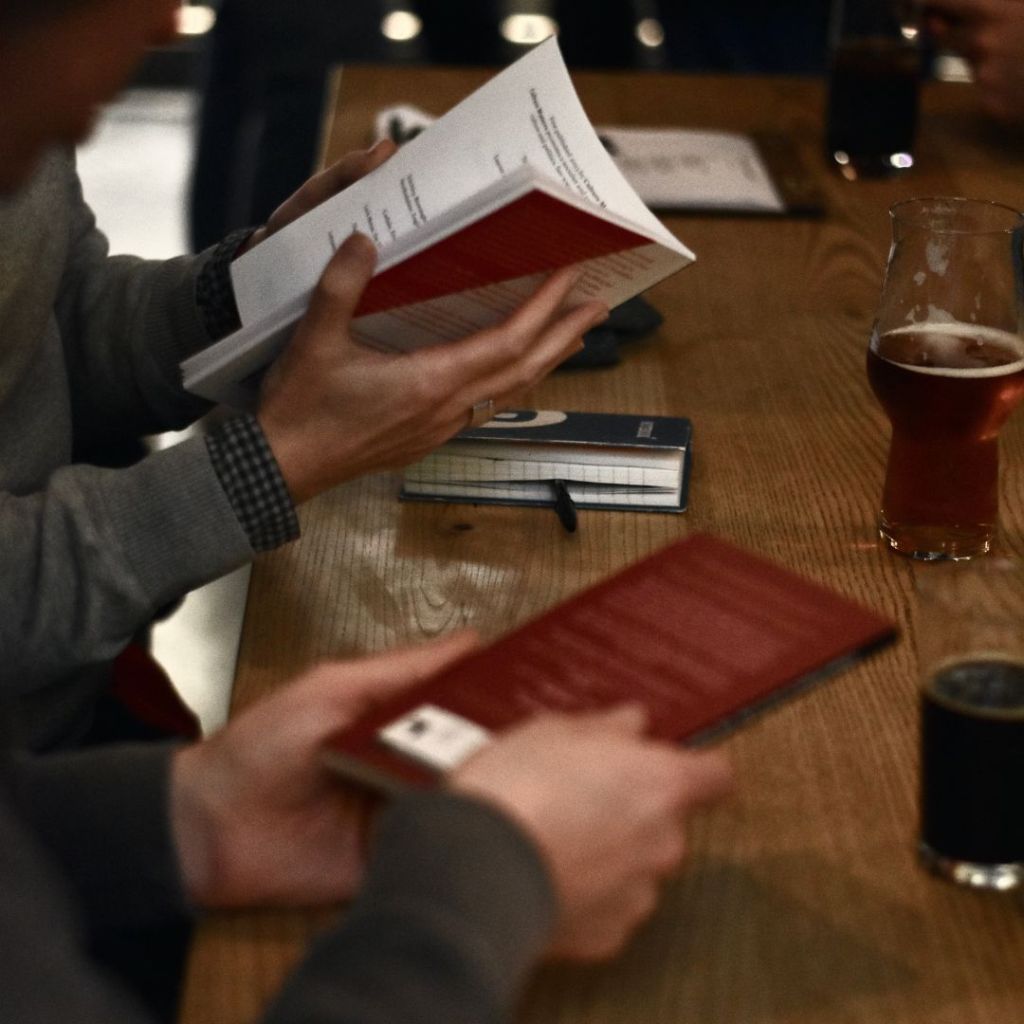
The event was hosted by Voce Books and the pamphlet was “This Albion: Snapshots of a Compromised Land” by Charlie Hill, an author once described as Birmingham’s answer to Franz Kafka. Curiosity piqued, a group of us headed out to Digbeth on a bitter November evening to see what Birmingham’s Kafka had to say about walking.
In the last two years Digbeth has become a hub of Birmingham’s literary scene with the arrival of Voce Books and the founding of Floodgate Press. Between them these two have done invaluable work in championing and showcasing homegrown talent, revealing just how much great writing there is going on in the city. Stepping into the railway arches that house Kilder Bar for one of Voce’s events, you can feel the buzz in the air, and this night is no different.
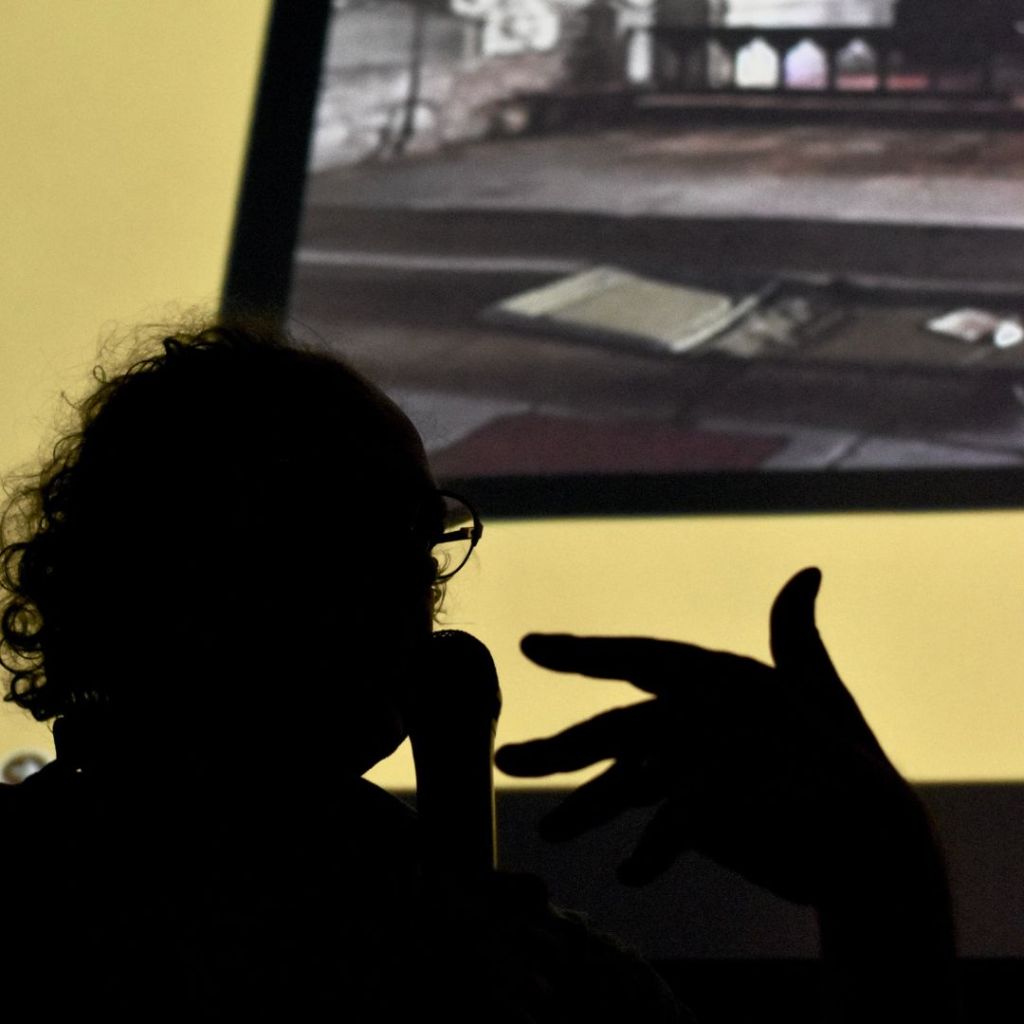
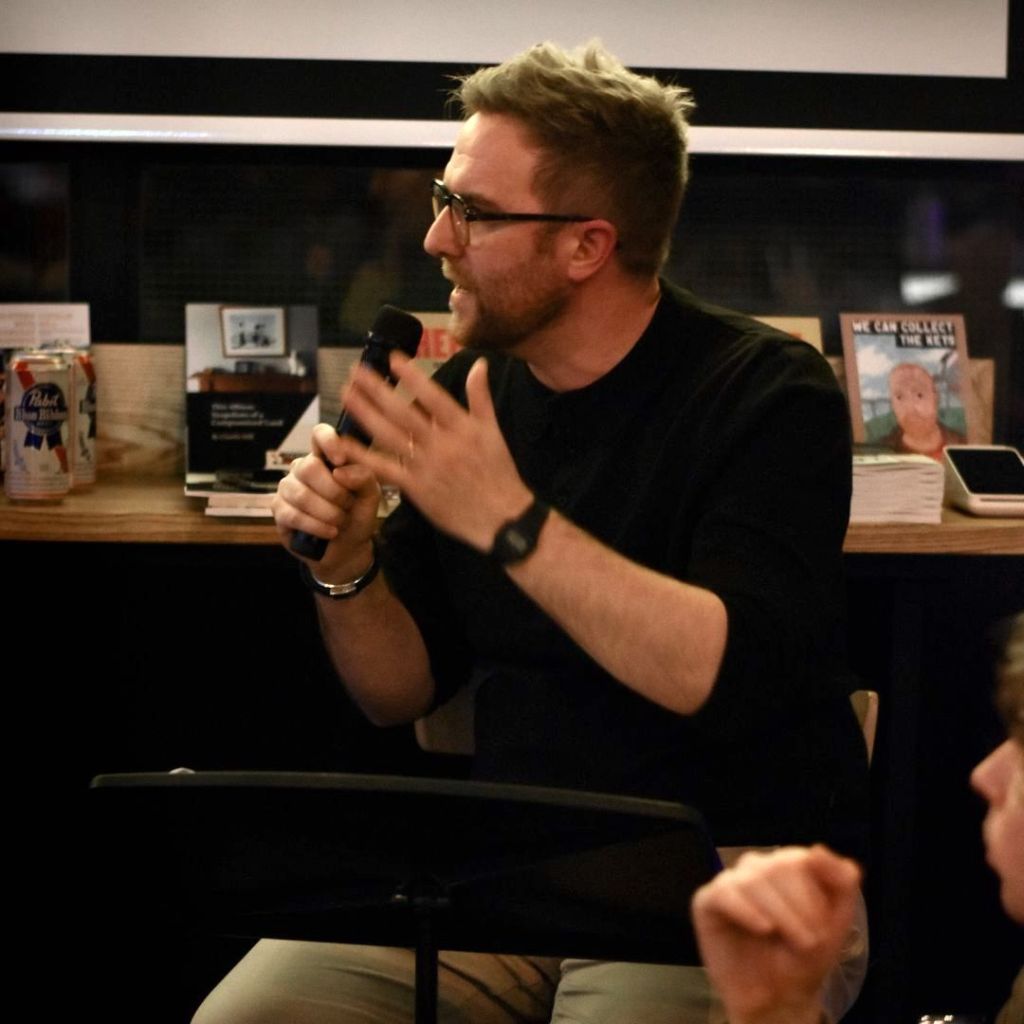
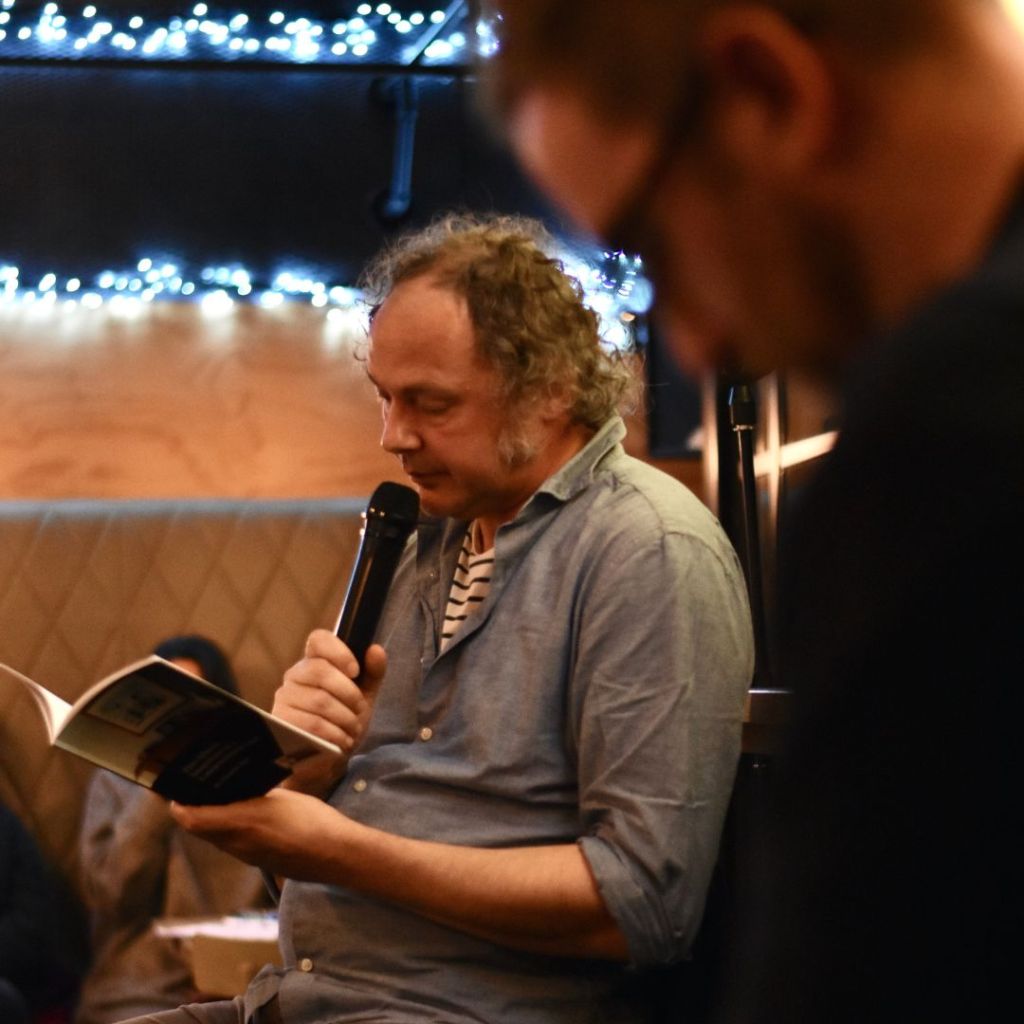
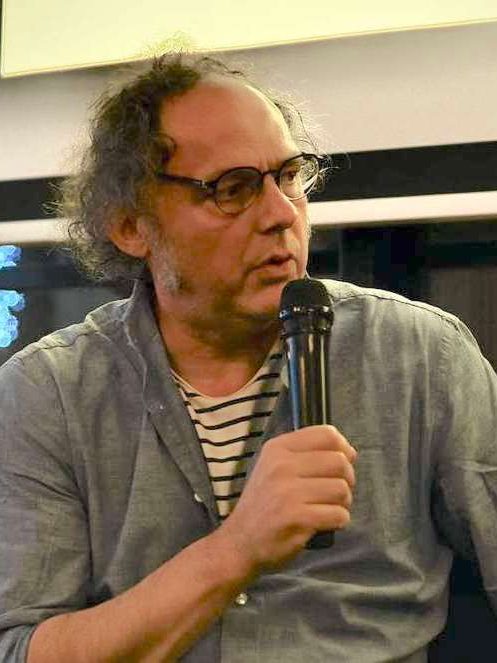
Another sell-out event, we fight our way to the bar and then take the only seats left, right at the front, within sniffing distance of the author. The night unfolds as a casual back-and-forth between Hill and Voce Books co-owner Clive Judd, riffing off some of the themes explored in the book such as authenticity, “champing” (church camping), the joy of Premier Inns and the overuse of the term “edgelands” in contemporary place-writing. Photos from the book appear onscreen behind them; literal snapshots from Hill’s travels, demonstrating his eye for the absurd within the mundane.
The book itself is an offbeat travelogue and part memoir that is by turns poignant, sardonic, world-weary and compassionate. Over the course of its modest 47 pages we visit 21 locations across England, Wales and Scotland and are treated to Hill’s observations and musings about second-hand bookshops, old pubs, Victorian cemeteries and the etiquette of countryside walking. His writing is direct and concise, sometimes very funny and he has a way of crafting a final sentence that reframes all that’s come before, landing a real emotional punch.
With the subtitle “Snapshots of a Compromised Land” this easily could have been a lot of sneering from another grumpy old man but mercifully that’s not the case. Don’t get me wrong, Charlie Hill IS a grumpy old man but his grumpiness stems from a long-simmering rage and sadness at the injustices and indignities of a land riven by inequality. There may not be much hope in these snapshots but there is plenty of humanity.
Charlie kindly shared with us this extract about the Birmingham to Worcester canal to give you a flavour of the work. If you like what you read do consider buying a copy through the link below.
…
Birmingham to Worcester Canal
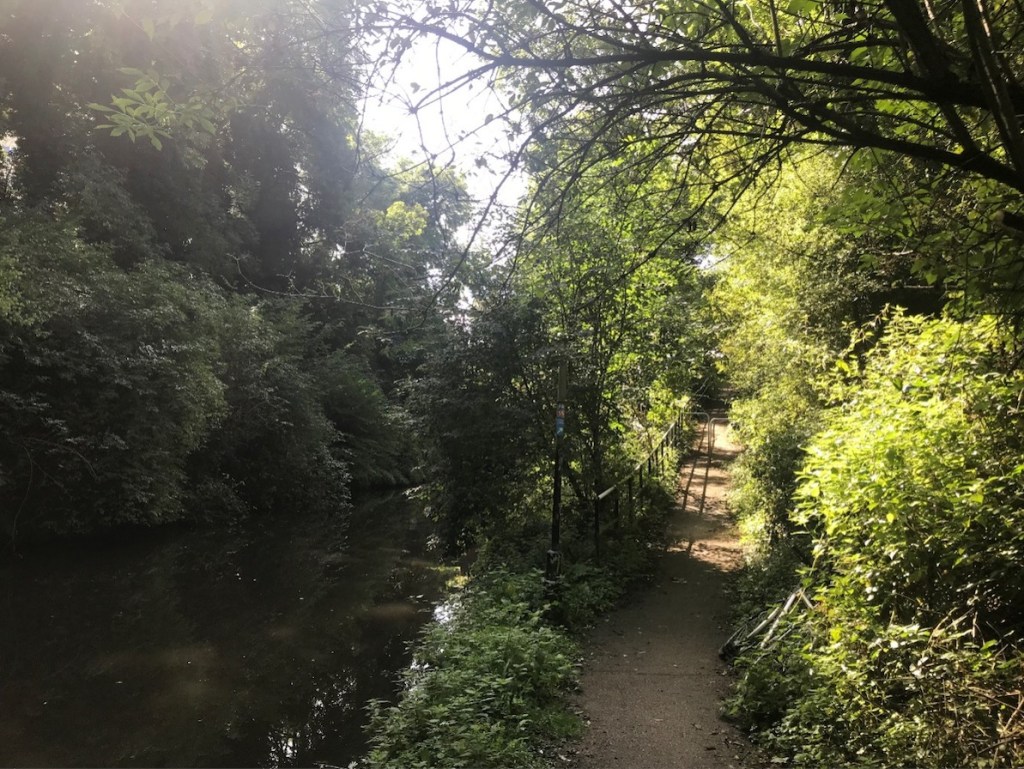
The canals of Birmingham – with their kingfishers and railway lines, their willow herb and jays and graffiti – exist outside the less obviously mutable suburbs they pass through: underneath too; the banks of the towpath are steep and dark and when you re-enter the city, you emerge blinking with surprise at where you are, and how different the light seems.
There’s a directness to walking the canals. Although they turn corners and curve, they feel like 18th century ley lines connecting factory yards, parks, churches, and other areas of communal ritual. The Birmingham to Worcester canal is like this. From the city centre it goes out past the commercial junctions of Five Ways, through the student accommodation and apple trees of the Vale, past the university itself to Bournville, where the station is done out in Cadbury purple and the air smells of chocolate. You might see egrets here.
Just beyond Kings Norton is Wast Hills tunnel. It’s a mile and a half long. Kings Norton is a parish that used to be in Worcestershire, outside the city’s boundaries. There is no towpath through the tunnel and walkers are sent up and onto the Hawkesley estate, in the overground outskirts of the suburbs. Once I tried to find the other end of the tunnel, setting off past a canalside cottage and a large secondary school in the direction a heron might fly.
I didn’t find it. Roads sweep through Hawkesley but it’s warren-like in places too, with shortcuts as criss-crossed as the towpaths seem straight. There are discarded shopping trollies in this closely-knit patchwork of social housing, twisting alleyways and shin-high picket fences, there are desire paths, and deep scarlet haws in confusions of undergrowth. It’s easy to project, to romanticise this anti-burb, this liminal space, this neither-one-thing-nor-the-other-ness, and that of the waterway that has created an underworld beneath the estate; the entrances to the tunnel are called portals, and I found Yarrow Drive led to Harebell Gardens, which led to Bargehorse Walk. But it’s worth remembering that the canal was cut into the earth like an industrial wound, by working people who died in its cutting.
This Albion is available to buy at Culture Matters. Charlie Hill’s other published works can be browsed on his website.
About Charlie
Charlie Hill is an internationally-acclaimed author from Birmingham. He has written long and short form memoir, and contemporary, historical and experimental fiction. He has been described by Natalie Haynes as ‘the chronicler Birmingham needs’ and compared by his fellow writers to Kafka, Beckett and Georges M Perec. His second collection of short stories – Encounters With Everyday Madness – was shortlisted for the 2024 Edge Hill Prize.
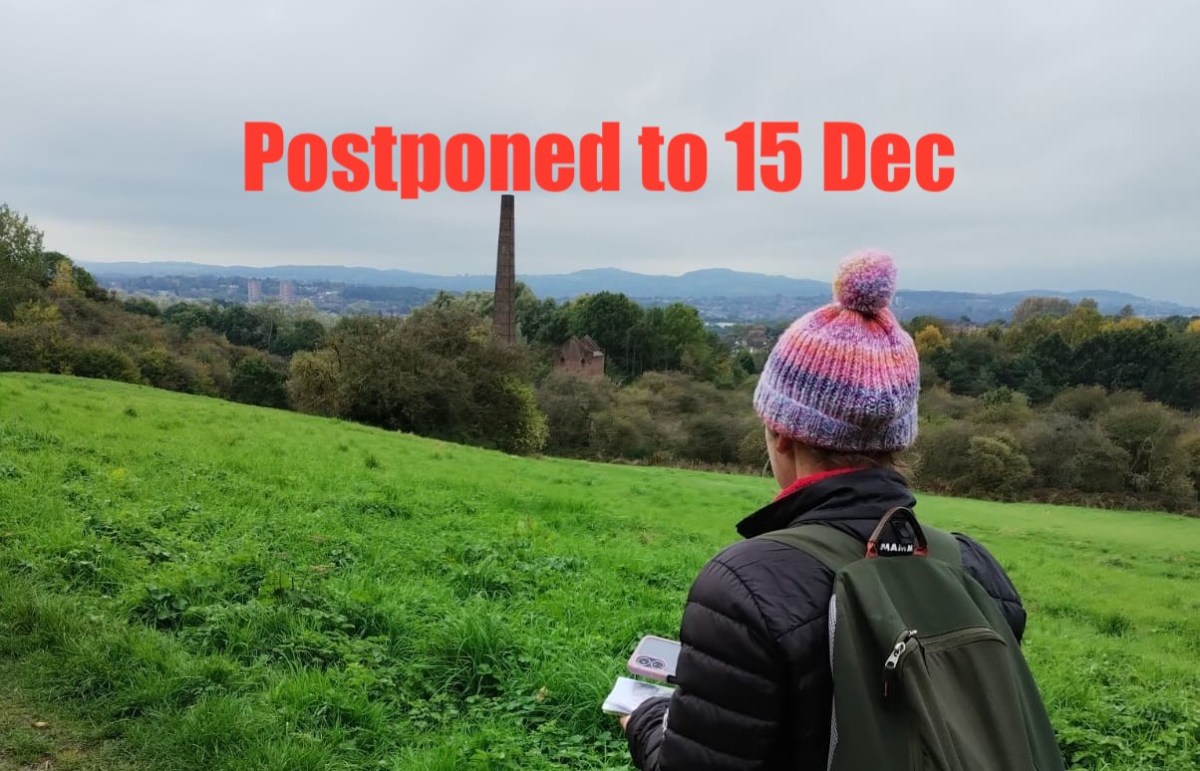
PLEASE NOTE THIS WALK HAS BEEN POSTPONED TO 15TH DECEMBER. IT WILL NO LONGER GO AHEAD ON THE 8TH.
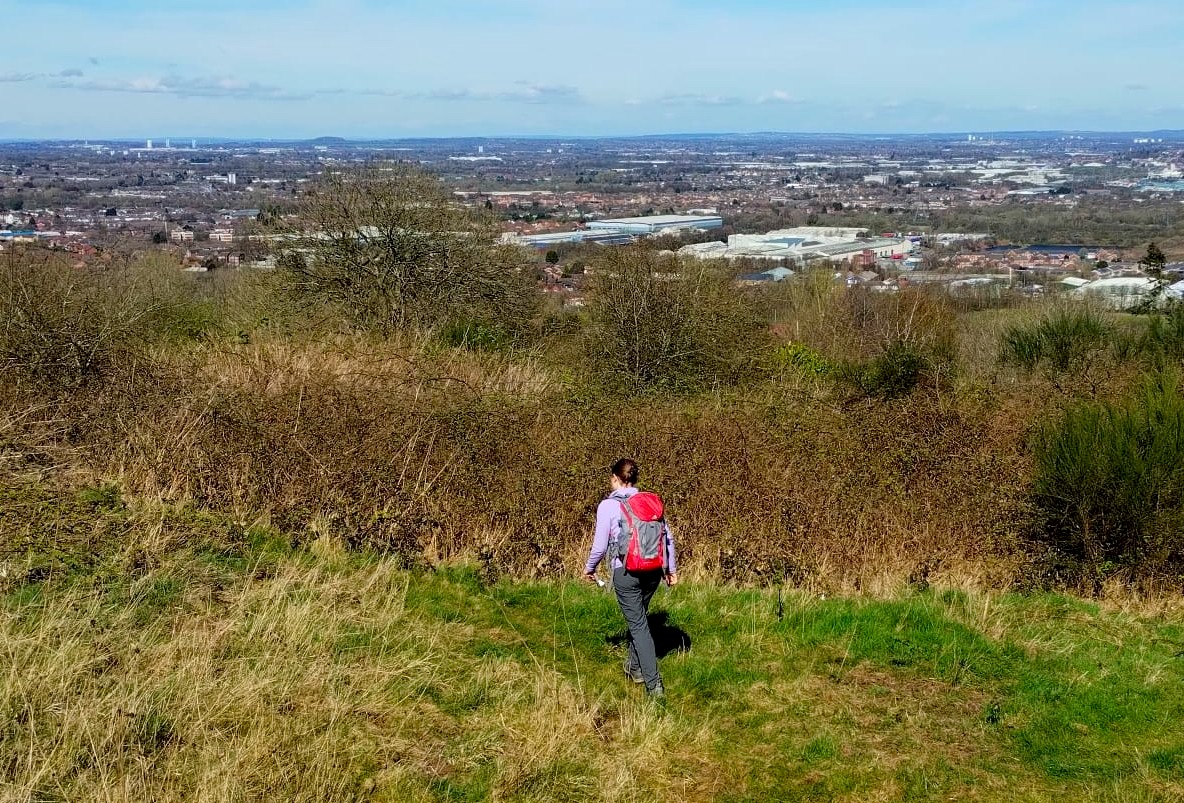
Dudley might not be the first place people associate with hiking and outdoor adventure. It is predominantly an urban area best known for its zoo, museum and out-of-town shopping centre, but there is a wilder, rockier side to the borough too. Dudley’s geography is overwhelmingly shaped by a dramatic hill range spanning over 6 miles from Sedgley Beacon in the north to Rowley Regis in the south.
Reaching heights of over 250 meters above sea level, this rocky ridge contains an abundance of green space amongst the commercial, cultural and residential districts. It’s an extremely rich and biodiverse landscape that does indeed lend itself to the type of outdoor adventuring more associated with national parks and mountain ranges.
For this public walk, artists Daniella Turbin and Andy Howlett will be demonstrating creative ways of exploring the southern half of the Rowley/Dudley hill range. They’ll be drawing on Daniella’s experience as a long-distance walker and rock climber, and they’ll be taking inspiration from the adventures of Dudley-born mountaineer and peace campaigner Bert Bissell, AKA “God’s Mountaineer”. Please note: no mountaineering experience required! Just a good pair of walking boots.
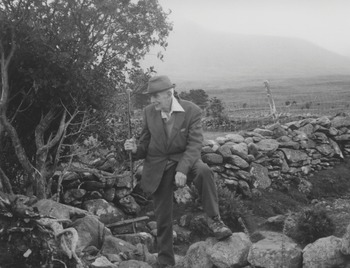
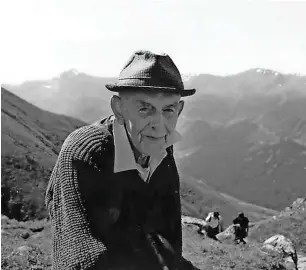
“God’s Mountaineer” Bert Bissell on Ben Nevis
The artists will draw on their creative practices to explore how the remarkable geology of the hills determines so much about the landscape including what sort of plants can grow, how the land is used, what animal species can make their homes here, and even which directions the local rivers flow. They’ll demonstrate the intrigue to be found in the urbanised areas as well as the green spaces and they’ll explore some unexpected connections to other locations such as Ben Nevis, the Humber Bridge and Ancient Rome.
Join Andy and Daniella at 10am on Sunday 15th December (postponed from the 8th) at the Wolverhampton Road entrance to Bury Hill Park in Oldbury, B69 2BJ. The walk is about 5.5 miles long, finishing up at the market place on Dudley High Street at around 3:30pm. The walk is free to attend but booking is essential.
The terrain includes roads, pavements, rocky footpaths, grassy areas, stiles, steps and considerable inclines. Please dress accordingly for a winter walk and be prepared for some muddy sections. Bring a packed lunch as we’ll be stopping for a break at Bumble Hole nature reserve. Toilet facilities can be found at The Lakeside pub/restaurant near the start of the walk (if you ask nicely), at Bumble Hole visitor centre at the half way point, and in various establishments in Dudley town centre at the end.



 Walkspace