Categories
Posts Reviews

What is Walkspace three years on?

1 A community and a regional hub

The main benefit of Walkspace – and the reason for starting it – was simply to gather weird walkers together. After attending a walking conference in Plymouth, we figured that between us we probably knew enough people in the Midlands who might be interested in walk-based arts, too. So we made a list and reached out to people across the region.

We’ve had a pretty solid response from that original seed. In three years we grew from three to nearly 50 members (now back down to 30 committed members) and formed a central hub for anyone interested in walking as a creative practice. 

Our community of creative walkers hailed from all kinds of backgrounds, reflecting the universal act of walking (or moving, since not everyone walks). There are, in the group, artists, writers, poets, photographers, filmmakers, academics, conservationists, ethnoecologists, horticulturalists, sociologists, journalists, mindfulness teachers, musicians, performers, producers, curators, pavement plant chalkers and long-distance walkers. 

All we asked as entry criteria were that members:

  • live in the West Midlands region (so we’d have a chance to walk together)
  • use walking in a creative way 
  • share what they were up to with other members

We don’t want there to be a hierarchy. Anyone can run a walk (a Walkspace members walk or a public ‘Erratic’), write for the website, social media or newsletter, pitch ideas to the group, or ask for help, support or collaboration. But for practical reasons, there is a small committee to keep things semi-organised and think about overall direction .

In three years, it’s become a functioning community of quiet lurkers, dip-in-occasionally types and more regular interactors. It blooms into life seasonally with ideas and projects like desert flowers, but also hibernates for days and weeks at a time. And that’s fine.

The point is, we are no longer alone in our various weird walks. We’ve found fish of the same stripe.

2 A place to find collaborators and audience

What’s been interesting to see is the forming of various collaborations. Many of us have now met in person on various members walks or at online member salons where we’ve shared what we’ve been doing walkwise. There’s also a group WhatsApp for everyday chat. Getting a sense of people beyond their member bios has created a lot of connective tissue, inspiration and friendship. 

The first time we met up, for example, I vividly remember long-distance walker and artist Daniella Turbin getting out her highlighter criss-crossed OS map on a beer garden picnic table and impressing everyone with her plan to walk in every single kilometre square. We then visited her on her walking art residency at the New Art Gallery Walsall, went on a walk together and virtually tracked her year-long walk around the UK – which was documented via Daniella’s Instagram. In the background, we also acted as an informal online support crew should she need us.

That’s just one journey within Walkspace. There’ve been plenty more examples of mutual support and collaboration happening as a result of Walkspace. For example:

  • Filmmaker Ben Crawford found a key interviewee in Kate Green for his film From The End of the Road (Ben also roped a few of us into a Dazzle Walk to serve as a visual thread through the film – pictured above). 
  • Interdisciplinary artist Kate Green called out for a team of willing testers for her WalkCreate commission – and so, on a day out to Leominster, we wandered in non-linear ways to understand the challenges facing people with dementia. 
  • Artist …kruse and photographer and mindfulness teacher Laura Babb responded to a call out for walks for Birmingham’s first Urban Tree Festival that I helped organise for a tree charity.
  • Visual artist Andrew Howe, musician Bethany Kay Hopkins and walking artist Andy Howlett came together on a funded project as Walkspace to celebrate a Dudley nature reserve
  • In Parallel Walking, we embarked on a walk-based cultural exchange between Walkspace in Birmingham, UK, and Jalan Gembira collective in Yogyakarta, Indonesia, funded by British Council.
  • Ultimately, in June this year, we held our first group exhibition, – Walkspace 23 – showcasing the works, walks and creative practices of 20 Walkspace members.

It’s been great to see members joining up and doing their thing – individually, together or even en masse. And, of course, many of these walks and projects are publicly oriented, interacting with other arts orgs, reaching different communities and introducing different ways of walking to a wider audience.

3 A support system and a resource

Walkspace members group walk through Handsworth

Originally we thought Walkspace might become a peer learning platform. And that has happened to some extent, although in informal ways. With many different experience levels, skills and backgrounds in the group, there is usually someone to ask for advice or connections. (Personally I’ve learnt a lot from chatting directly with more experienced artists and been given some very useful feedback and support on my first Arts Council application.)

Members learn ambiently through contributing conversations, walk photos and links on the group chat. And there’s a big social element to the members’ walks (Handsworth stone circle walk and picnic, pictured), where people can practice leading walks in a relaxed environment.

Support can also be practical. We’ve been walk marshals, joined walk experiments and promoted member projects through our social channels. For Megan Henebury’s A Figure Walks, for example, we acted as a safety and support crew as she walked the length of the River Rea IN the River Rea – and also created documentation with Pete Ashton following along with a camera. You can read all the Walkspace posts on this project here.

I also think we’ve supported people to join who might not see themselves in a traditional ‘arts context’ to play a part in the collective. It’s been interesting to read the blog posts of Robson, one of the long-distance walkers in the group, for example. And one day I’ll get up early enough to join the Walkspace member who is secret pavement chalker.

4 A place for artistic development

Fiona and Kruse

As a personal example of Walkspace’s value, my experience as part of a collective has been pretty transformational. Before Walkspace I was a walker for health and fitness reasons only, doing my daily 10,000k steps to a soundtrack.

Through Walkspace, I started to develop into a more creative walker: working individually, collaboratively and collectively, personally and publicly, and being mentored through an emerging walking art practice by generous fellow members.

It’s been quite the journey from 2020 to here – from initial walk experiments, to local walk ‘n’ talks, to leading walks, to getting walk commissions, to creating live art walks, to an international walk exchange, to presenting at 4WCoP on how women walk, to being part of the group exhibition. Sometimes I look back in wonder at the projects I’ve been involved in, such as:

  1. Extreme Noticing under Lockdown – a collaborative Walkspace video essay about starting a walking collective during a pandemic.
  2. Night walks – group walks by new moon, full moon and in the snow, tapping into the power of invisibility. 
  3. Birmingham Dazzle Walk (pictured) – testing city surveillance with fellow Walkspace member …kruse using the cloak of female invisibility in middle age (counterbalanced by a follow-up collaborative Crone Walk of high visibility). 
  4. Stirchley High Street Highlights – a counter-touristic, anti-gentrification walk tour leaflet compiled with Walkspace alumni Pete Ashton (that the local newspaper took a bit too seriously).
  5. Parallel Walking – in which three Walkspace artists and three Indonesian artists explored their motor cities in parallel, resulting in an exhibition and digital zine.

All of these were made possible in no small part due to Walkspace.

5 An opportunity to go on a collective journey

At our our last big online salon we asked what the group has meant to members:

“It’s been amazing – I’ve met someone that is now going into a new collaboration”

“It’s a chance to meet other walking artists and understand the range of practices. 

“I value the social walks – a rich experience of walking and talking”

“It’s made me write about not being able to walk, to seize the opportunity to explore that because I’ve been missing something”

“Creating a great community is like tending a garden”

“I like that is has a loose structure but is also fertile ground for collaboration”

“Being part of a cohort is huge, to get to know each other and collaborate – it’s a precious resource”

At our next meet-up, so that we can continue on our collective journey together, we’ll be asking the following question:

Where do we go from here?

Dawn walk through Digbeth

The next steps are about to be decided – with our first ‘AGM’ happening this weekend.

We’ve been approached to run walks, to collaborate on projects and to work with more formal organisations on occasion – and yet we are still informal and loose, and that is part of the charm for many of us. As one member put it, Walkspace is “sliding into being an entity, an organisation – and that’s where things get tricky”.

Whatever path we end up taking, it needs to be one that is viable, sustainable and creative for the membership. And one that we decide to walk together.
Find out more

Categories
Inspiration Posts Walk Reports

“This is Water” extract – Stourport to Worcester along the Severn Way

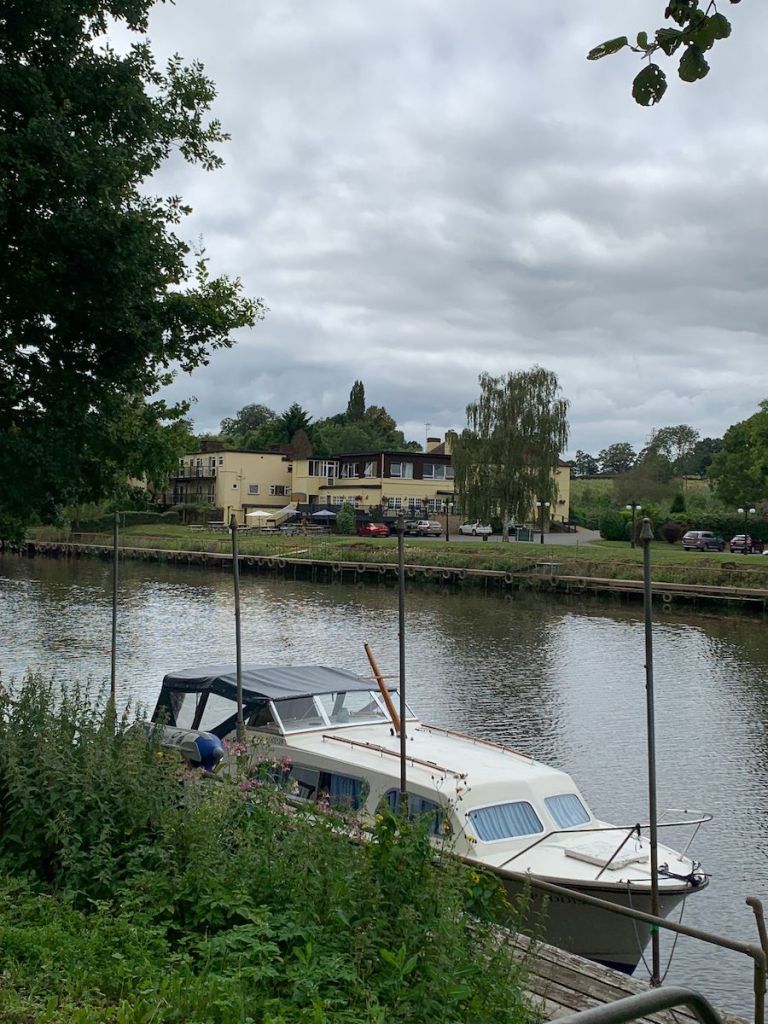
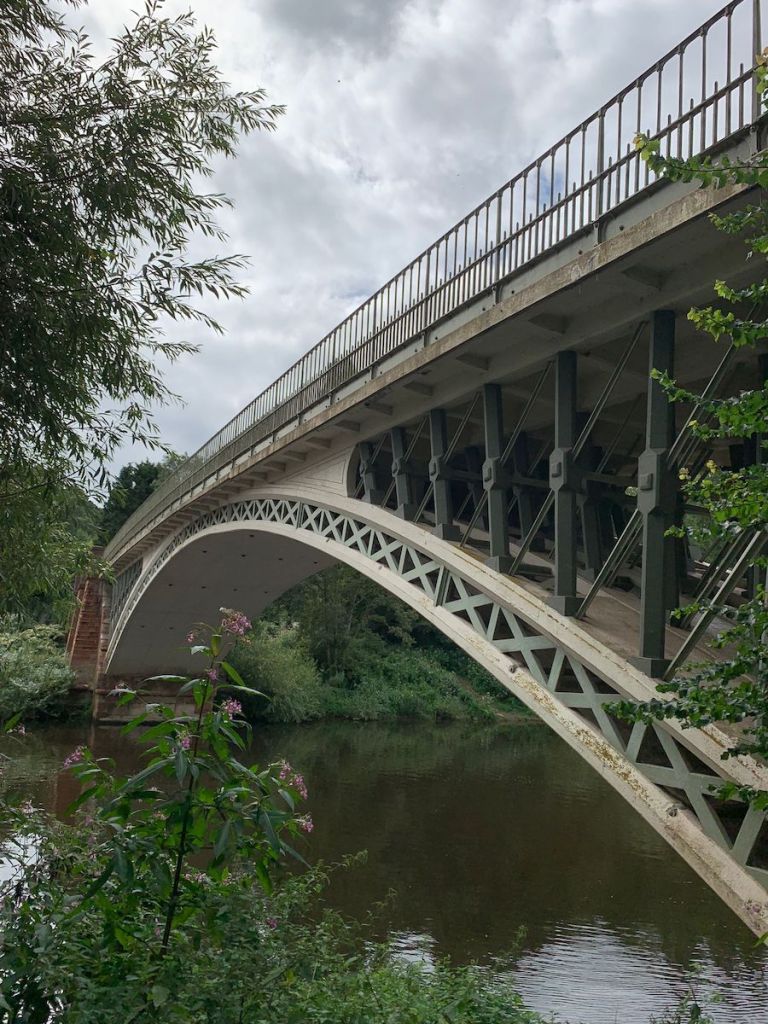
In late-August 2022, I took a walk with my good friend James Glover from Worcester to Stourport-on-Severn. The twelve-mile walk replicated the Saturday bus journey I would take each week as a kid with my mom and my brother to visit my grandparents. A year to the date, I decided I would close the loop by walking in the opposite direction, taking the pathway from the amusement park in Stourport and along the Severn Way in the direction of the city. The following is an extract of a new piece inspired in some part by that walk.


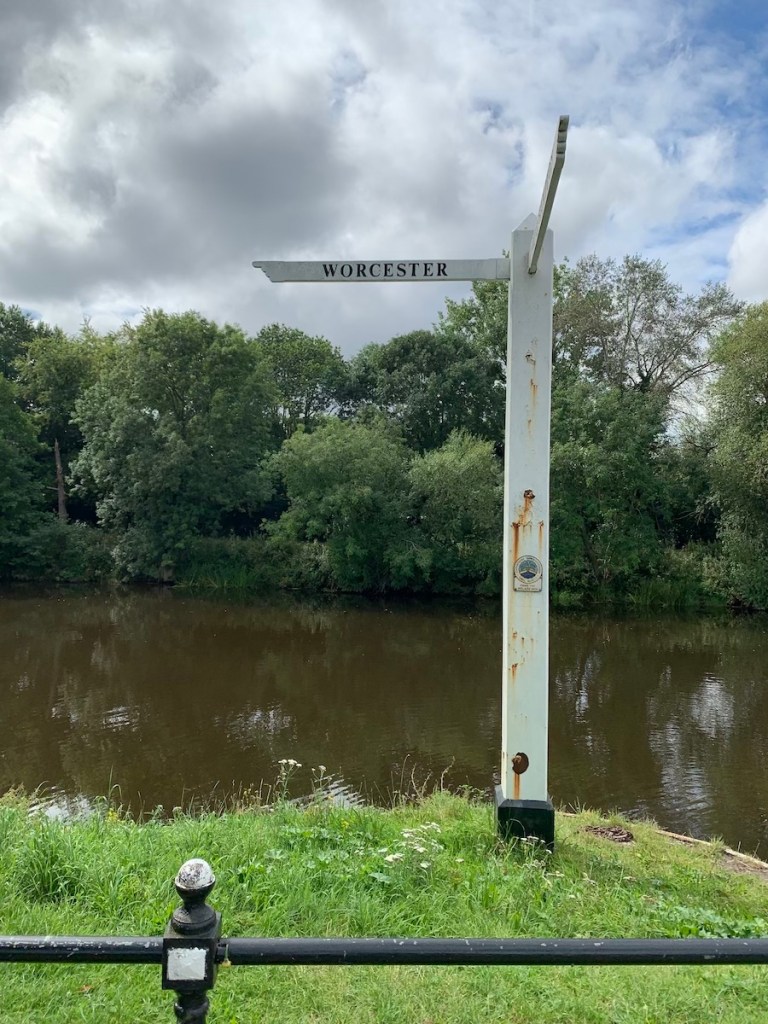
Taking another photo, now, of a sign pointing confidently in the opposite direction to the orange horizon image still on my phone from last year, and to the Bewdley walk I took only two weeks ago. I drop the image into the Walkspace WhatsApp group.

Stourport to Worcester along the Severn Way.
Dodgy knee has decided to make an appearance but hoping it holds up.

Strike out, buoyed by the returning messages, best wishes and good lucks, from the members of the collective. I have only recently joined and it’s the first time I’ve thrown one of my walks into the chat. I am also flying solo. No James to rely on with his astute way of nudging a narrative out of a landscape, a necklace of interconnected stories and historic points of interest. No Ben either to lean ideas against, emotional ballast against the spectres of the past. I’ll have to do it myself.

Beyond the lock at Stourport, and the first small indication of the crude potential of this walk. A wall, where a series of bricks have been marker pen inked, a kind-of mind map of contemporary conspiracy theory, with accompanying links to YouTube. I take the customary photo and send it on to Ben.

Good start to the walk, eh?

The Severn rolls its way along to my right, a thick brown soup boiling a watery pathway between two muddy verges. I dip under a canopy of trees, leaving in my wake an old factory which would once have been the operational headquarters of one ‘T. P. Activity Toys’, manufacturers of plastic slides and playhouses and other colourful pre-school play equipment. Now though, the name of this former fun provider is in a state of manic disarray, its erratic pattern of letters arranged along the river facing flank, giving the overall impression of someone having shaken up a bag of Scrabble squares and thrown an indeterminate handful at the wall. ‘Countdown’ for the Late-Capitalist.

Half hour in and I hit the first in a series of caravan parks, but where one might expect to discover flashy, gleaming static units, I find a graveyard of grubby, green and brown cuboids, their axles propped up by a tower of slate grey breeze blocks. The atmosphere of the place is rural-American. Ranch-like. It’s curiously unpeopled, too, like the abnormal pastoral landscape of the walking simulator ‘Everybody’s Gone to the Rapture’. I imagine a golden orb of light drawing me through this awkwardly arranged pop-up village to a site of past memory. Light striking into form. Human. Voices revealing themselves like ghosts in the air. I imagine being treated to some crucial crux point in the narrative, brief, charged, voices becoming light, fading away back into orbic form as Jessica Curry’s soundscape, all cello and oboe and choral verse and soaring, textured emotion transforms the landscape into something other, something peopled in an entirely new sense. I imagine peeling off back to the river’s edge in search of the next trace of the narrative jigsaw, piecing together the ‘what happened?’, the ‘why did everyone leave?’ and the ‘where the fuck did they go?’

There are more macabre tales that could be motioned toward in this place, too. Stories entirely in line with the current, insatiable desire for true crime documentary and podcast serial. I’m not immune to this either, capitulating to the mental ‘what if?’ of this already weird encounter with place. Three or four thrillers start writing themselves in my mind. Detective stories without a detective. Think Claudia Piñeiro in the rural English Midlands. Some sad bod searching for another lost soul. The criminal, the perp, or at the very least, the fingered suspect twitches a mucky net curtain, the ripples of their watch caught for a second by the protagonist, the (non) detective, as they tip-toe through the lush expanse now commandeered by whoever it is that has decided to construct a life here. We all have to get by, somehow? Don’t we?

When it comes to caravans, I perhaps know more than your common-or-garden member of the cos-playing middle-class. The haunted visage of these, now surely decommissioned-for-commercial-use dwellings takes me back to my teenage years, twelve to seventeen, living in a ‘mobile home’ on a retirement park for the over fifty-fives.

We don’t live in a caravan, okay love?
These are static homes.
They don’t even have wheels.

Mom’s wrong. They do have wheels.

You can’t take one of these on holiday, can you?

It’s this kind of tangled logic that I’ll spend the best part of the next twenty years attempting to unpick. Still, Matthew and I love this place. The Village of Mobile Homes. We’ve visited a few times, riding around the park on our bikes with the only other kid to have found himself ensconced in what is quite literally a post-work environment. We’ve been running through the fields flanking the (not) caravans, ever since New Year’s Day, nineteen-ninety-eight. The day after the incident in the Stourport branch of ‘Road User’ where my brother, nine-years-old, watched on as our mother’s partner chased some robbers down a busy High Street, diving into the open door of the getaway car like some sort of Midlands-based John McClane. The car accelerated away with this brave (or insane) retail worker sticking out of its side, his now dangling legs resembling those of the guy bitten off the bog by a Tyrannosaurus Rex in Jurassic Park. It all happens in a flash. The body of mom’s beau, spat out into oncoming traffic, and rolling his way down the road like an empty crisp packet. A brave (or insane) attempt to reclaim a hastily snatched handful of Blaupunkt stereos. Matthew’s seen it all through the window of the shop. He’s still holding the plastic shop phone in his hand, responding dutifully to the last instruction he’d been given.

Call the police.

Pre-Millennium tension. Pre-teen dreams. Pre-the move to the (not) caravan park in Warwickshire. Alex dumps me after a four-week, whirlwind romance. Rumoured interest from Katy, the mad lass who climbed on the school roof for no other reason than why the hell not? Vague interest on my part in Carla, despite my best-mate Matt’s constant warnings that, in his experience, she’s ‘as cold as a fridge’. And definite, confirmed interest from Siobhan who, due to her kindly nature and the fact she’s a tad taller than most of us lads, we have nicknamed ‘The Friendly Giant’. What complicates things here, is that Siobhan is Terri’s cousin. Terri who, here’s a theme, ditched me in the school holidays. Terri, who I’m still raging about, not because I’m particularly damaged emotionally at the age of eleven years old by her sudden uncoupling from our tryst, after all we did only kiss the once, and it wasn’t even really a kiss, more a brief coming together of faces, and after all we did only go for one lousy walk together in the summer holidays, and I stuttered and, uh, stumbled and, uh, spent most of the time unable to unfix my gaze from her, uh, not really any of that but more the fact that, due to getting together with Terri in the last few weeks before the move to big school, it meant that there could be no repeat of last summer’s end-of-school-year-barbeque-cum-disco where I danced all night with Lizzie, the true source of all the light in my life since that memorable day she arrived at the school, in Year One, and was forced to sit next to me and was weirdly confident and canny with a put down and didn’t really seem to like me at all. With Terri now on the scene, an ill-advised ‘yes’ in response to a question I’d never solicited, there was now little chance of finally revealing to Lizzie what, in hindsight, was clear all along. That despite her nascent relationship with Luke, the best footballer in our class, the lad who Keith, the manager of Worcester Juniors, had tried in vain to lure into the squad after he gave up playing for perennial champions Nunnery Wood, using me, a child, as a sort of go-between, to pass messages on to and to woo, and also despite that weird four year period in the mid-nineties where she, Lizzie, and every single girl in the entire fucking world was obsessed with that knobhead Robbie Williams, despite all of this I was still truly, madly, and very much deeply in love with her. And, come to think of it now, I would really like more opportunities to dance with Lizzie at the summer disco to UB40 and go fishing in Laugherne Brook like that time when Luke and the rest of the crew I hang out with (mainly in trees) had gone home, leaving us, Lizzie and I, in worryingly close proximity, crouched on the bank and peering into the crystal clear water, spotting minnows and on the look-out for trout, that time we fished together for around two hours (in memory, let’s be honest it was probably ten minutes) and then walked back to the estate, me to two-forty, her onwards up to the new-builds by Grove Farm.

Night of the disco, and Lizzie runs up to me on the school field as the sun sets in the summer sky. She gives me a big hug and whispers, softly in my ear.

Me and Luke have just got off.
Four times.


Extract from a story currently titled “This is Water” © Clive Judd 2023. One of four narrative drift works Clive is currently working into book form. All photos © Clive Judd. Follow Clive on Instagram or visit him in his excellent independent bookshop, Voce Books.