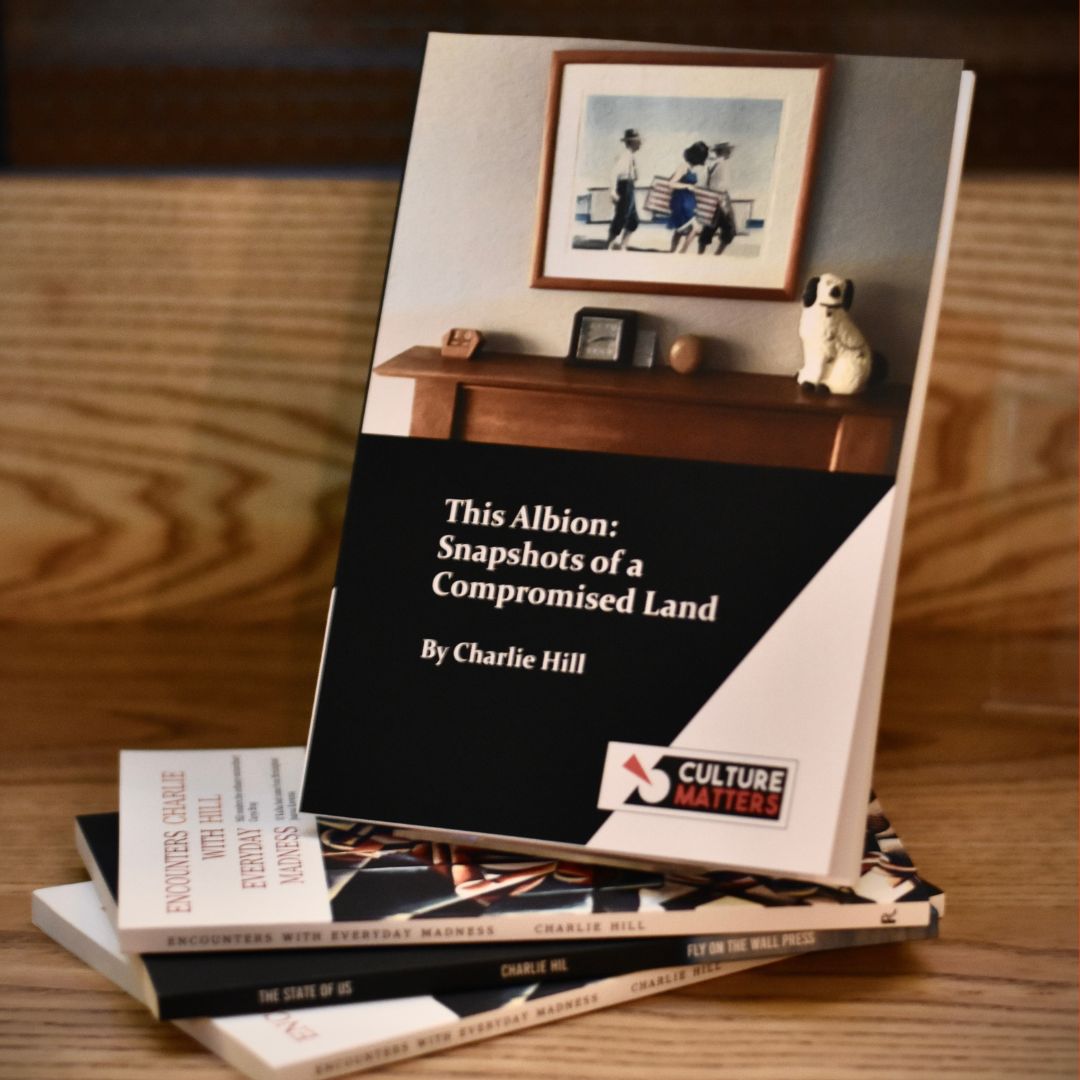
An invitation landed in the Walkspace inbox that was too good to pass up:
“I’m writing to bring your attention to an event – the launch of a pamphlet of writing about walking – that might be of some interest to your members. I’m told there aren’t many tickets left, but there’ll doubtless be walk-ups.”
The event was hosted by Voce Books and the pamphlet was “This Albion: Snapshots of a Compromised Land” by Charlie Hill, an author once described as Birmingham’s answer to Franz Kafka. Curiosity piqued, a group of us headed out to Digbeth on a bitter November evening to see what Birmingham’s Kafka had to say about walking.
In the last two years Digbeth has become a hub of Birmingham’s literary scene with the arrival of Voce Books and the founding of Floodgate Press. Between them these two have done invaluable work in championing and showcasing homegrown talent, revealing just how much great writing there is going on in the city. Stepping into the railway arches that house Kilder Bar for one of Voce’s events, you can feel the buzz in the air, and this night is no different.
Another sell-out event, we fight our way to the bar and then take the only seats left, right at the front, within sniffing distance of the author. The night unfolds as a casual back-and-forth between Hill and Voce Books co-owner Clive Judd, riffing off some of the themes explored in the book such as authenticity, “champing” (church camping), the joy of Premier Inns and the overuse of the term “edgelands” in contemporary place-writing. Photos from the book appear onscreen behind them; literal snapshots from Hill’s travels, demonstrating his eye for the absurd within the mundane.

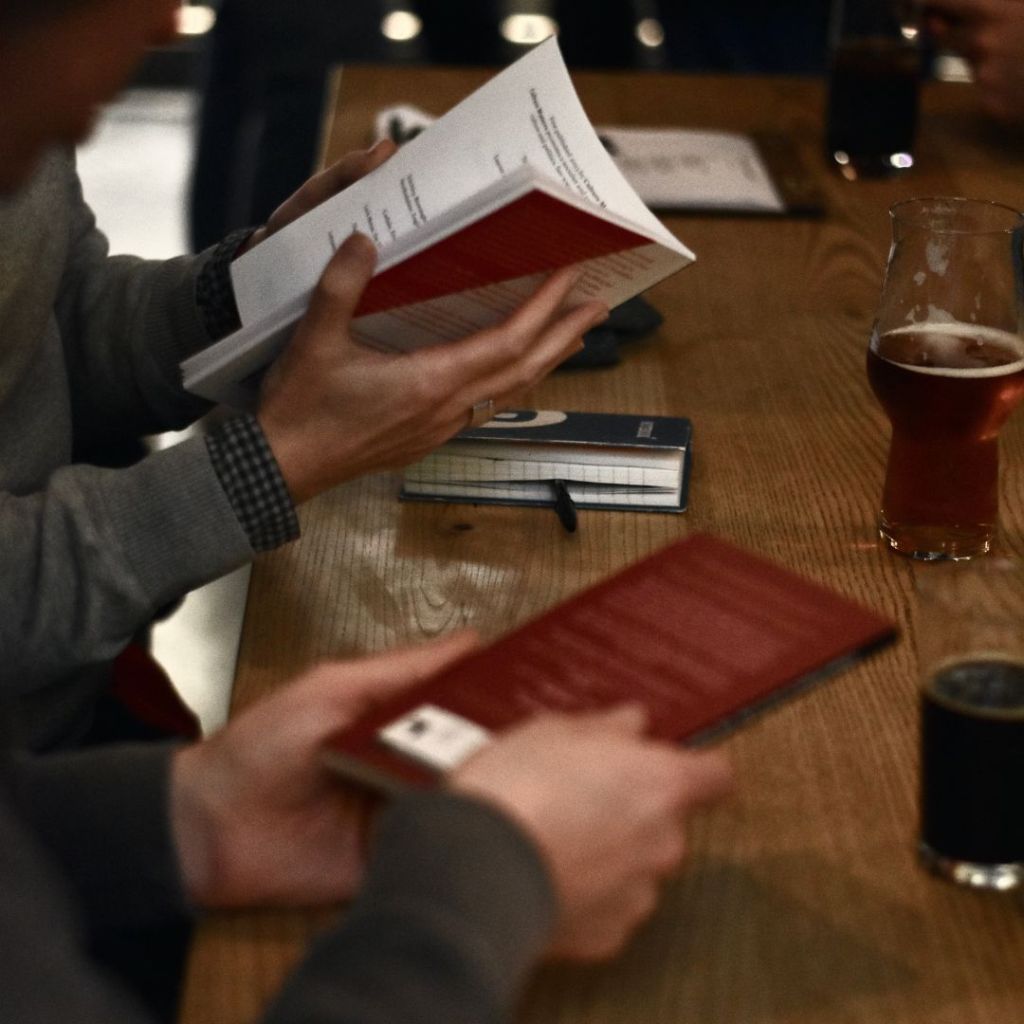
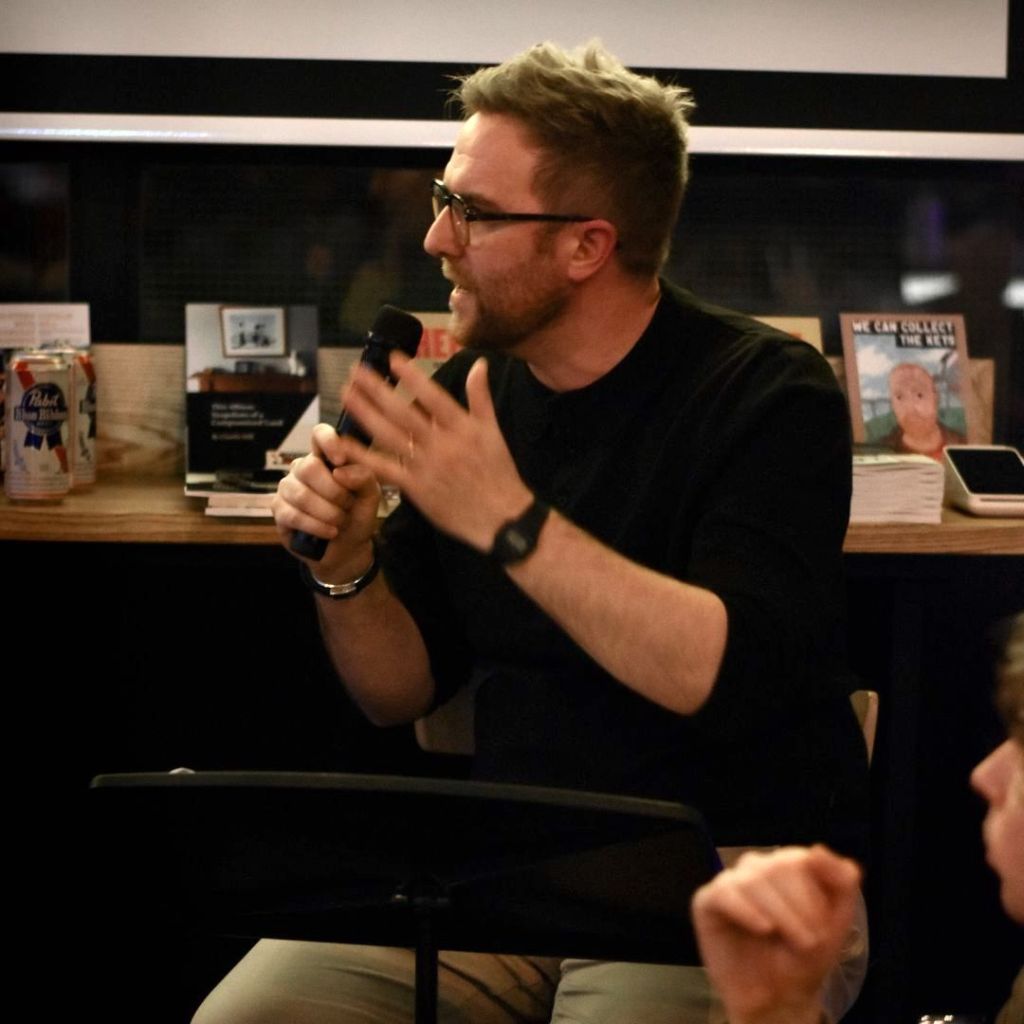
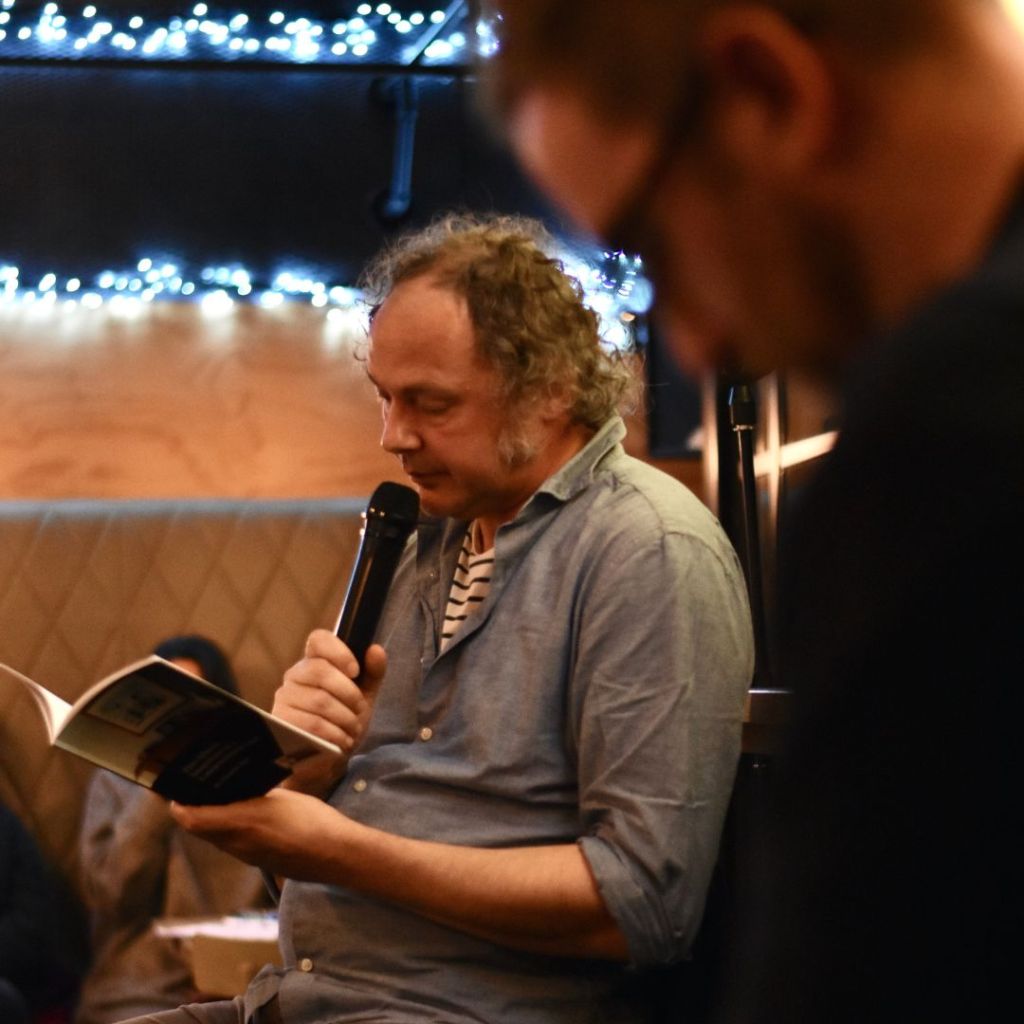
The book itself is an offbeat travelogue and part memoir that is by turns poignant, sardonic, world-weary and compassionate. Over the course of its modest 47 pages we visit 21 locations across England, Wales and Scotland and are treated to Hill’s observations and musings about second-hand bookshops, old pubs, Victorian cemeteries and the etiquette of countryside walking. His writing is direct and concise, sometimes very funny and he has a way of crafting a final sentence that reframes all that’s come before, landing a real emotional punch.
With the subtitle “Snapshots of a Compromised Land” this easily could have been a lot of sneering from another grumpy old man but mercifully that’s not the case. Don’t get me wrong, Charlie Hill IS a grumpy old man but his grumpiness stems from a long-simmering rage and sadness at the injustices and indignities of a land riven by inequality. There may not be much hope in these snapshots but there is plenty of humanity.
Charlie kindly shared with us this extract about the Birmingham to Worcester canal to give you a flavour of the work. If you like what you read do consider buying a copy through the link below.
…
Birmingham to Worcester Canal
The canals of Birmingham – with their kingfishers and railway lines, their willow herb and jays and graffiti – exist outside the less obviously mutable suburbs they pass through: underneath too; the banks of the towpath are steep and dark and when you re-enter the city, you emerge blinking with surprise at where you are, and how different the light seems.
There’s a directness to walking the canals. Although they turn corners and curve, they feel like 18th century ley lines connecting factory yards, parks, churches, and other areas of communal ritual. The Birmingham to Worcester canal is like this. From the city centre it goes out past the commercial junctions of Five Ways, through the student accommodation and apple trees of the Vale, past the university itself to Bournville, where the station is done out in Cadbury purple and the air smells of chocolate. You might see egrets here.
Just beyond Kings Norton is Wast Hills tunnel. It’s a mile and a half long. Kings Norton is a parish that used to be in Worcestershire, outside the city’s boundaries. There is no towpath through the tunnel and walkers are sent up and onto the Hawkesley estate, in the overground outskirts of the suburbs. Once I tried to find the other end of the tunnel, setting off past a canalside cottage and a large secondary school in the direction a heron might fly.
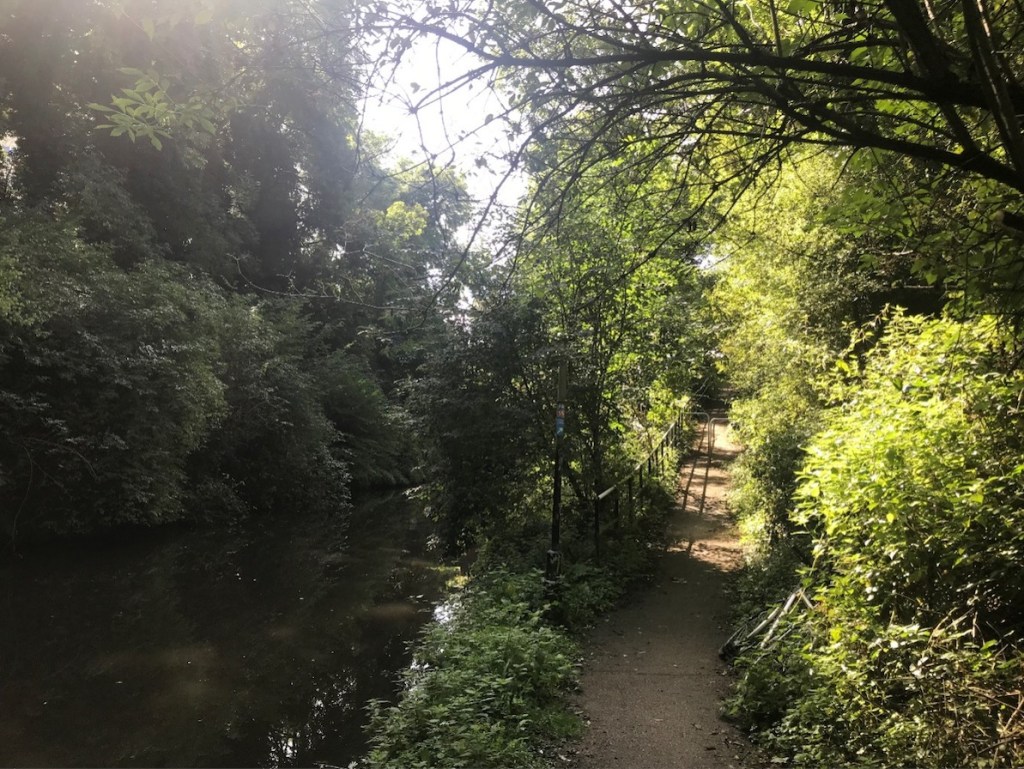
I didn’t find it. Roads sweep through Hawkesley but it’s warren-like in places too, with shortcuts as criss-crossed as the towpaths seem straight. There are discarded shopping trollies in this closely-knit patchwork of social housing, twisting alleyways and shin-high picket fences, there are desire paths, and deep scarlet haws in confusions of undergrowth. It’s easy to project, to romanticise this anti-burb, this liminal space, this neither-one-thing-nor-the-other-ness, and that of the waterway that has created an underworld beneath the estate; the entrances to the tunnel are called portals, and I found Yarrow Drive led to Harebell Gardens, which led to Bargehorse Walk. But it’s worth remembering that the canal was cut into the earth like an industrial wound, by working people who died in its cutting.
Extract from This Albion: Snapshots of a Compromised Land © Charlie Hill, 2024
This Albion is available to buy at Culture Matters. Charlie Hill’s other published works can be browsed on his website.
About Charlie

Charlie Hill is an internationally-acclaimed author from Birmingham. He has written long and short form memoir, and contemporary, historical and experimental fiction. He has been described by Natalie Haynes as ‘the chronicler Birmingham needs’ and compared by his fellow writers to Kafka, Beckett and Georges M Perec. His second collection of short stories – Encounters With Everyday Madness – was shortlisted for the 2024 Edge Hill Prize.
 Walkspace