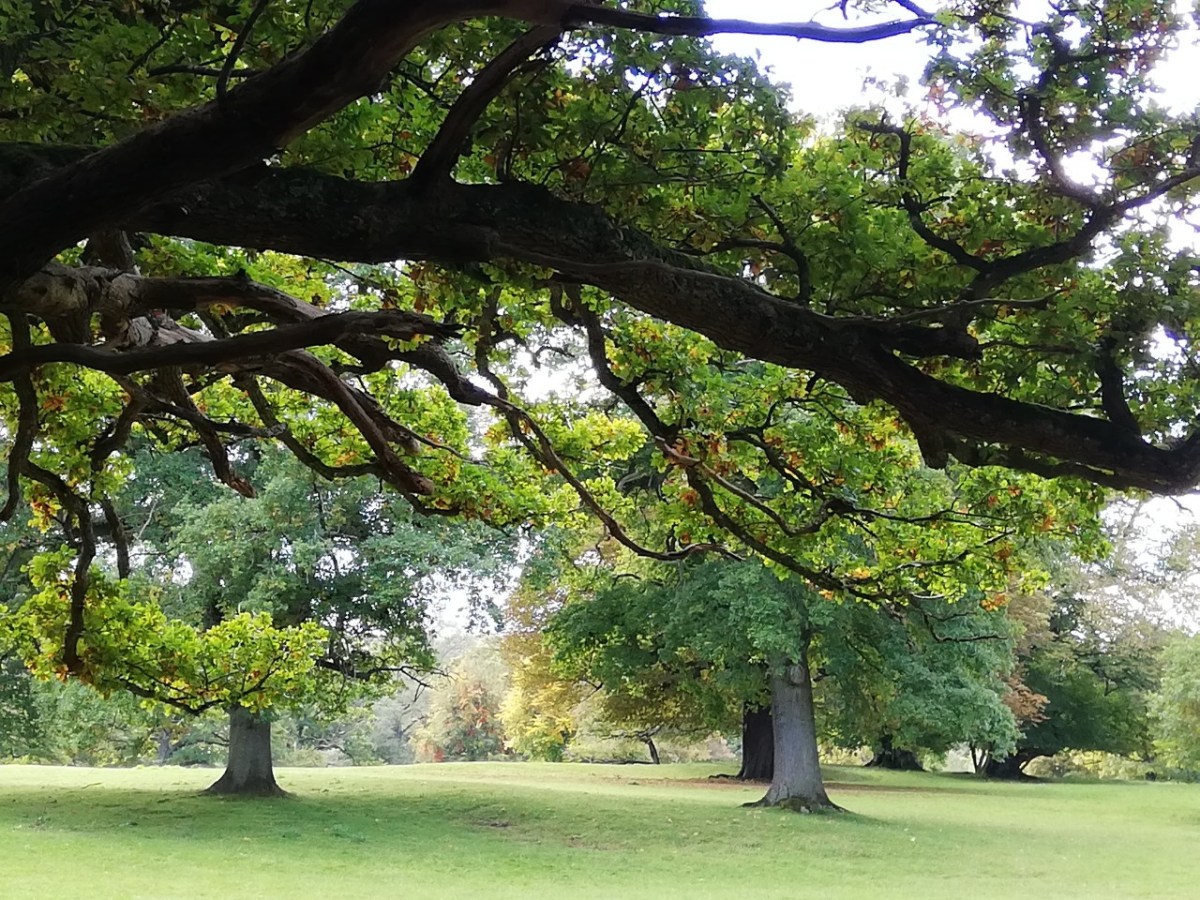
This is an actual walk you can do if you print this post and follow the directions. It’s also a walk you can do from the comfort of your sofa, or if you live a long way away from Dorridge and are missing it and feeling nostalgic and just want to remember your favourite place (this might just be me).
Take the train to Dorridge. Leave the busy, tidy platform through the ticket office. Go ahead, past the car park, turn right. Past houses most folk would never be able to afford, not even renting, and go to the right down an alley between manicured gardens, through a cul-de-sac of starter homes and turn right.
Up a small slope roofed with the branches of scrawny sycamores and over the railway bridge, past six brick and slate houses facing each other in a gossipy circle, then left towards the trees.
Take a deep breath, feel suburbia drop off your shoulders, walk into the arboreal tunnel. A straight tarmac road one car wide, leads to an unknown destination. We do not go along it very far, that journey is not for us today.
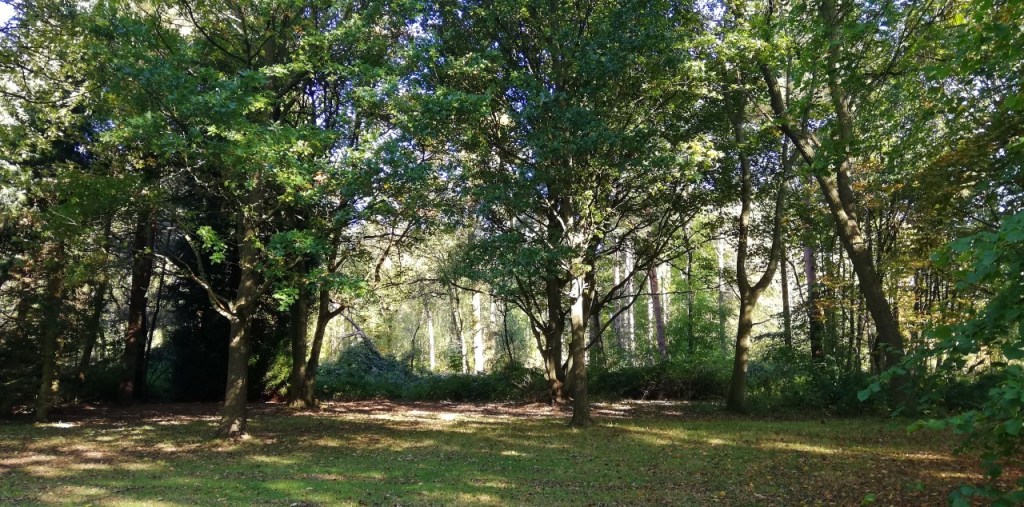
The road is lined with oak and beech and birch and roofed with fluttering leaves. It is always shadowed, even in winter. As soon as you are under the trees step to your right, away from the road, gingerly over the muddy verge and left into the wood proper.
Woodpeckers knock. Jays swoop silently overhead. Blackbirds, robins, chiffchaff and wrens trill and chatter and warble. A muddy path winds beneath orange barked pines, around dark hollies, between scrawny birches riddled with plates of fungi. In autumn toadstools burst from stumps and mossy logs; push through leafmould burnished by beech leaves.
Now you leave the wood, come out into the park, heading south west across shaved grass encountering happy dogs and cheerful owners. Go past the dead oak, pale and sculptural, down to the shallow stream burbling bright and clean under the bridge where there might be trolls, then step along a rising boardwalk to the narrow lane.
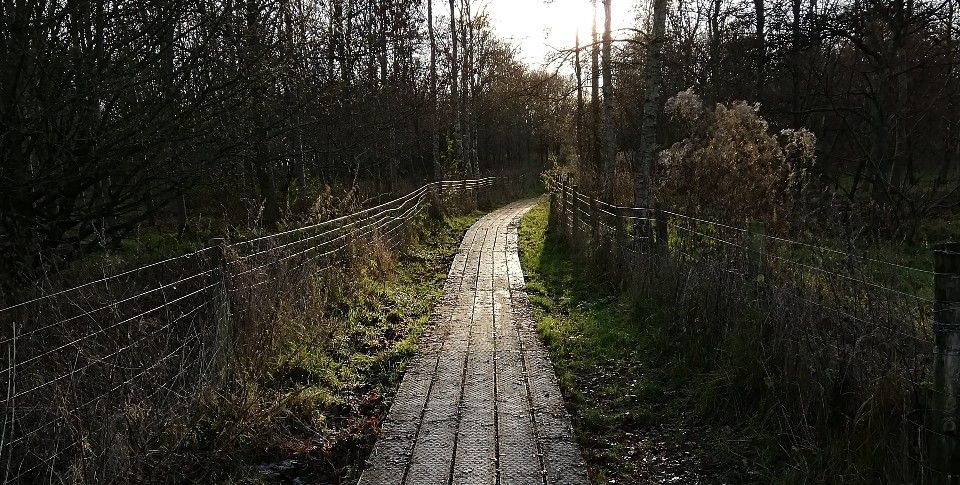
Cross the lane into a coppice of teenage oaks, deeply muddy at the wrong time of year. The path is pockmarked here with boot prints and paw prints and sometimes the half moons of a small pony’s shod hooves. Come out into fields, take a left skirting the crops, keeping to the hedge, and take another left after passing through an ungated gateway, past trees that began life when this was still Shakespeare’s Arden Forest.
A curved iron kissing gate is next, then we walk down a lane between mansions. Ten foot high yew and laurel hedges on each side of us hide a barking dog.
“Go away” say the high hedges, the fancy iron gates, the barking dog.
Imagine for a moment the stress of holding on to all that wealth, the work it requires. Maybe not hard work, like that which farmers, cleaners, nurses do, but effort; hiring staff to trim the hedges and walk the dog, making sure the alarms are on when you’re out, paying insurance and keeping up appearances. Take a deep breath and let any envy transform into the joy and freedom of the welcoming path and turn right onto a little country road.
A few hundred yards on, turn right at the triangle of grass, a rural roundabout serving only two tractors and seven cars the whole day, and go left over the wobbly wooden stile. It’s hard on the hips because it was made for tall men.
Walk across three fields, one, two, three. Sometimes there are sheep, sometimes flowers, once a startled detectorist. Fields one and two go down to a streamlet, over another troll bridge, one person wide and only five feet long. A small troll then.
Field three rises to a road. On your right a church, a manor, a moat, oddly melancholy, dark with ghosts. We turn left at another kissing gate, rusty and squeaking. We take a right along a road towards the big house, busy with day trippers. Beautiful gardens and a noisy cafe, and a good place for tea and scones.
You walk the straight road that cuts through the estate. On your left a field and a long straight track, centuries old, bordered with oaks and grazing sheep. To our right the big house, a lake, roses and flower beds, ancient yews, ravens and sparrowhawks, specimen trees of ravishing beauty.
Go on past this magical place, dense with stories of Puritans and ancient feuds, of a sad man long dead putting all his unrequited love into objet d’art and not the lad he really wanted. The house is a reliquary of loves and tragedies and agonies and joys untold. An archive of the edge folk; women, servants, the poor and queer. Only the stones know all, and they are not speaking.
Walk on past the house and on down a road straight as a Roman, to a dangerous corner as it joins a busier thoroughfare. A short, but tense walk beside this busy road, sharply noisy, picking your way along the rutted grass verge.
At another corner, dangerous with rushing SUV’s turn left onto a stony track. Only pedestrians and the owners of the farm at the end are allowed here. It’s quiet again. It looks like a place where there should be owls.
At the end of the track turn right to the canal, past the red brick lock-keepers cottage, busy with flowers in pots, and scattered buckets and timber, all the stuff of countryside living.
Follow the canal east. Seven locks. Ducks in the reeds. After the seventh, cross over the water and continue east. At the bridge take the steps up onto a narrow road and turn left over the ancient, humpback bridge.
Walk on a quiet country lane. More raven calls and jackdaw, robin, wren and goldfinch and the gunfire crack of startled pigeons bursting from the hedges. An Elizabethan house half hidden behind brick and wrought iron. The road rises a little and we lean in a little.
Half hidden among trees and the hedgerow, on the other side of the lane, another kissing gate, wooden, green with lichen. Three very beautiful very old oaks stand sentinel alongside the field boundary. Take the little path through this field and the next, both rich with flowers and wild grasses. Butterflies and horseflies, beauty and the beasts, dance here in summer. In winter the bottom of the field is sodden, in spring, bluebells paint the banks with sky.
Right at the stile, broken and rickety and suddenly, steps! Metal steps, a second railway bridge, postered with kind entreaties from a mental health charity. Step down onto the quiet platform. Take a bench and sit in peace among the songbirds, waiting for the train to fetch you back to the city.
Find out more about …kruse and their work at https://www.krusework.info/
 Walkspace