Categories
Inspiration Posts

Notes from the estuary: a walking arts residency

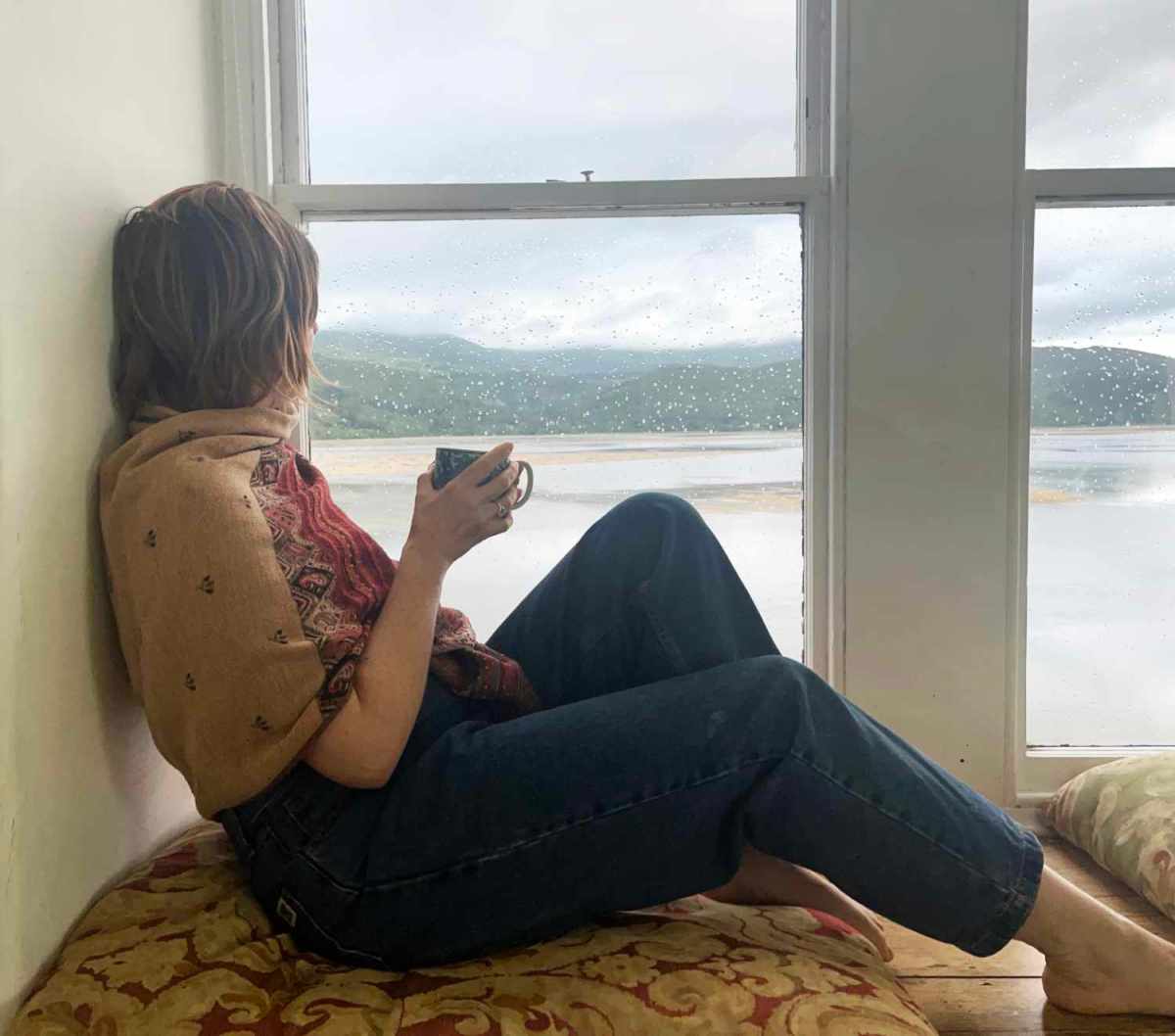
I write from an opening; a meeting of river, land and sea. These early heat-drenched days of summer find me spending two weeks at the Mawddach Residency; a residential space where artists, writers and musicians are invited to spend two weeks away from distractions along the banks of the Mawddach Estuary, within the Eryri National Park.

Whilst here, I have been focusing on sound recording, walking and writing, leaving space to also experiment with other things. Much of the time here has been spent outside, a chance to rediscover my slightly rusty wandering skin. Blessed with about five days of summery weather, these stunning landscapes and last week’s sun have filled me to the brim with much-needed pre-solstice brightness.
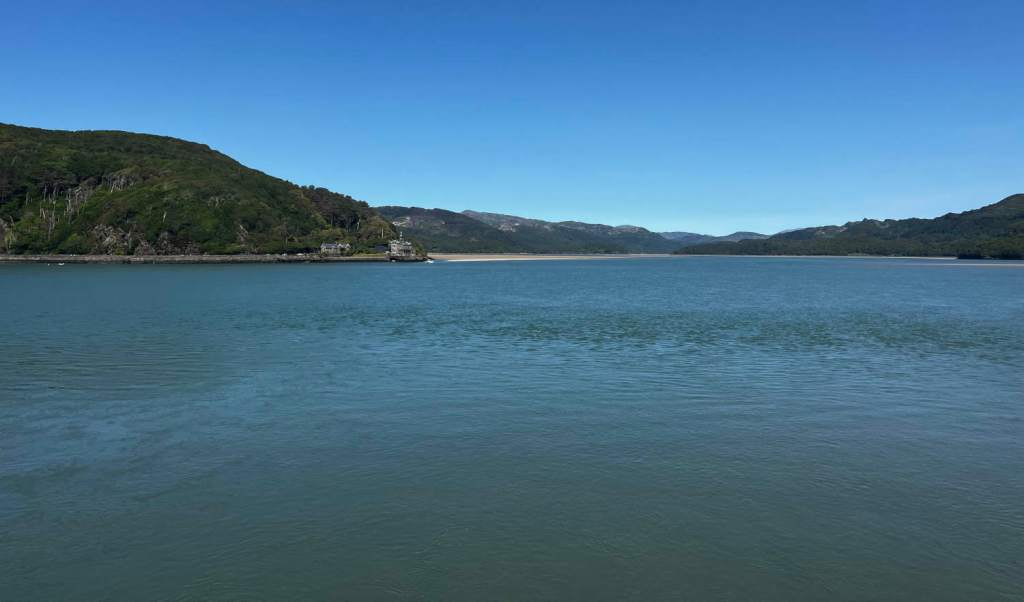
 A sweeping sea view of an estuary on a sunny day
Image © Emily Wilkinson

The day after arriving, I began to explore the many local footpaths. I was struck by how many lovely trails are nearby, and how easy it is to get around without a car. A surprisingly unfamiliar feeling of complete safety began to settle in my body, and I realised that for the first time in a long time, I felt completely safe as a woman wandering. This is due in large part to the Mawddach trail, a 15km multi-use route created along a disused railway track on the southern side of the Mawddach Estuary between Dolgellau and Barmouth.
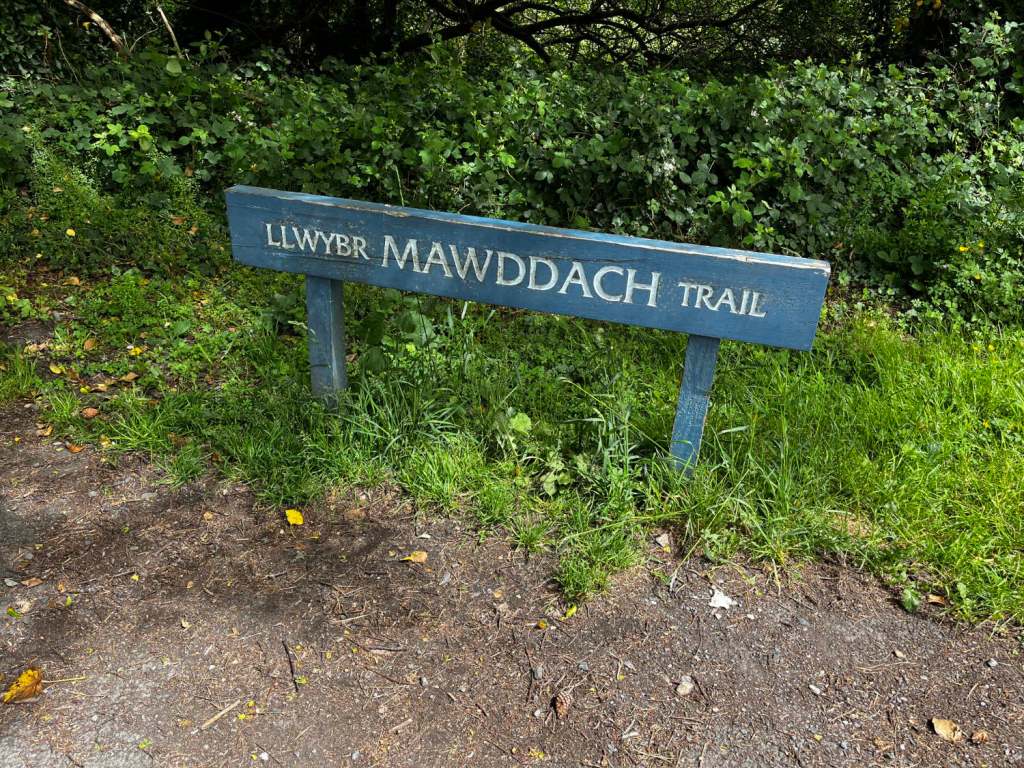
A blue sign at the edge of a footpath reading "LLWYBR MAWDDACH TRAIL"
Image © Emily Wilkinson

The path is popular with walkers, cyclists, runners, wheelchair users and those using mobility aids. It is wide, which is a good thing. Doing some recent research about footpaths and accessibility revealed some lesser-known details to me, such as the exact width a path must be to qualify as truly accessible (a preferred width of 1.5 to 1.8 metres). A wide, flat path made for all offers a lovely sense of openness, encouraging free movement and physical activity. Trails like this really change the feel of an area, and soon I am walking 15k-20k steps per day, taking two or three walks per day. It is a choice made by my body rather than the mind. Residency life easily affords these walking breaks, naturally woven into the day’s activities. I hadn’t been walking enough at home, and arrived here with a lot of unravelling to be done.
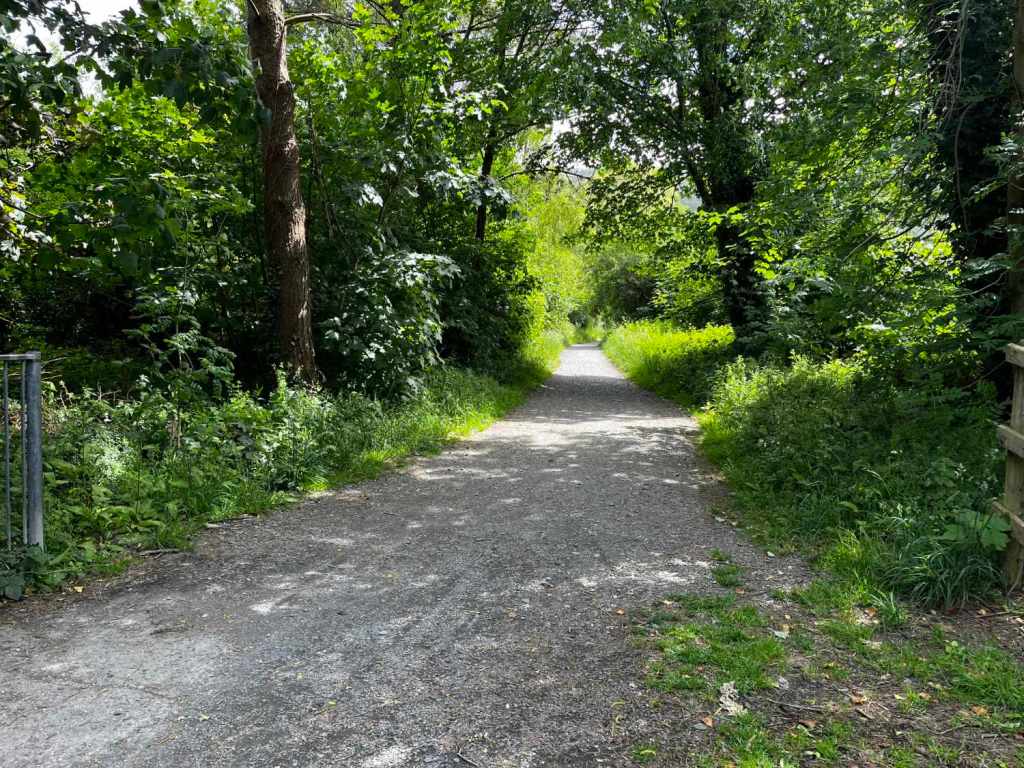
A wide, flat path with tree lined sides, sunlight falling through branches
Image © Emily Wilkinson

The ease of walking here parallels a fundraiser that the fabulous Jonathan Stalls has just been leading (over on the other side of the big pond) for the Pedestrian Dignity project. Pedestrian Dignity will be creating a bilingual mobility justice zine full of art, poetry, stories, and advocacy tips, which I cannot wait to see when it’s finished. The crowdfunder has finished, but do reach out to Jonathon if you’d still like to support the project. At this time of year, the few small roads by the Welsh coast get very busy indeed. I intended to try and come by train, but couldn’t quite make it with multiple bits of equipment and quite frankly being bad at packing light. Having been in the area for a few days, I wouldn’t hesitate to get public transport next time. Luckily, the Mawddach Residency sits quietly in a secret row of houses away from the bustle of Barmouth and local tourist activity. Barmouth can feel a bit like Benidorm in the summer, but this little nook is blissfully quiet.
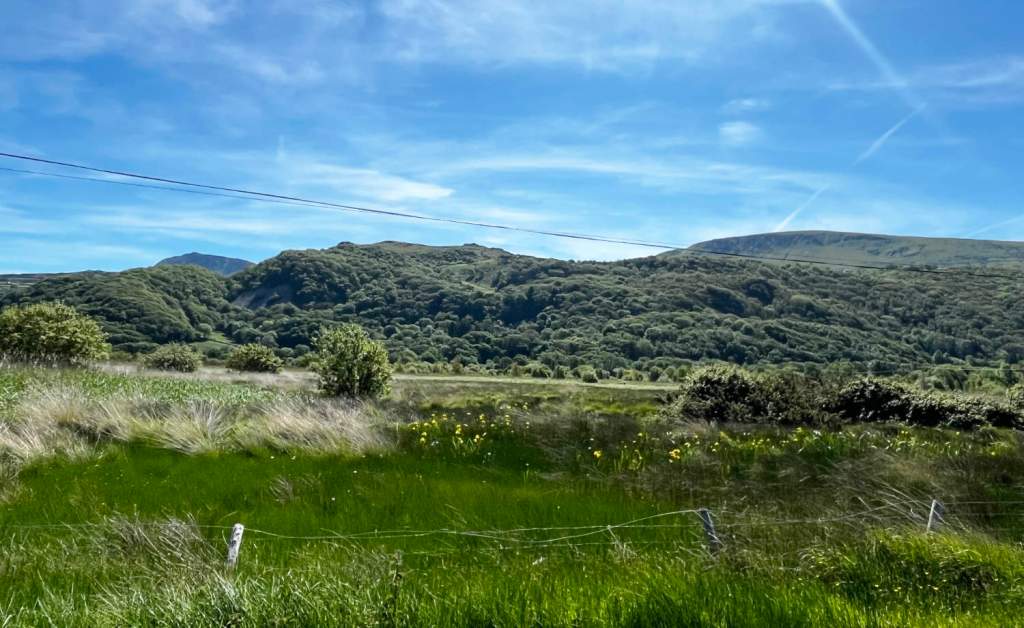
A view of the coastal welsh hills near the Mawddach estuary on a sunny day, grassy marshlands in foreground
Image © Emily Wilkinson

Tourism has been woven into the area’s identity for a long time, with the local landscape attracting visitors during the Romantic period, such as William Wordsworth (who referred to ‘the sublime estuary’) and the Ladies of Llangollen. It was later promoted as a retreat for wealthy Midlands industrialists. Following the opening of the railway in 1867, the town (like Aberystwyth) became a primary summer destination for thousands of industrial working-class families from the West Midlands and North West England. The Mawddach Estuary has a rich and layered history, involving complex industrial heritage with echoes of shipbuilding, gold mining, railways, wool trade, slate, metals and forestry. Barmouth Bridge (also known as Barmouth Viaduct) is the longest timber bridge in Wales at 820 metres, and crosses the estuary.

Ecologically, the estuary is designated both a Site of Special Scientific Interest and a Special Area of Conservation on account of its salt marsh and lowland peat habitats, while the nearby Arthog Bog RSPB nature reserve supports rare flowers, grass snakes, butterflies, and a wide variety of bird species. I have used this residency opportunity to test out an exciting new binaural microphone). This creates a beautifully immersive effect when listened to with headphones. Here is a dusky recording made at the water’s edge, with some exciting Oystercatcher action. Do listen with headphones for full effect. Go and get them, now!

What I am loving about my field recording journey, is that it involves a lot of interaction with the outdoors. Presence and listening come with the territory, as well as scrambling over big pointy rocks to try and get a hydrophone down into the water. When recording, the sounds you actually hear through headphones are amplified, as if someone has turned up the auditory dial. I find this has a powerful, sensory therapy type effect on my body and nervous system.

Alongside field recording and writing, I’ve enjoyed tapping into other mediums I love. These include cut-up poetry, making books, photography, mark-making and experimenting with asemic writing. Asemic writing is the act of writing without legibility; a form of mark-making which fuses writing and visual art. Instead of reading words, the viewer interprets marks and symbols through intuition, emotion, and the energy of the lines themselves. I’ve also been playing with natural objects, enjoying the permission to be free and explore.
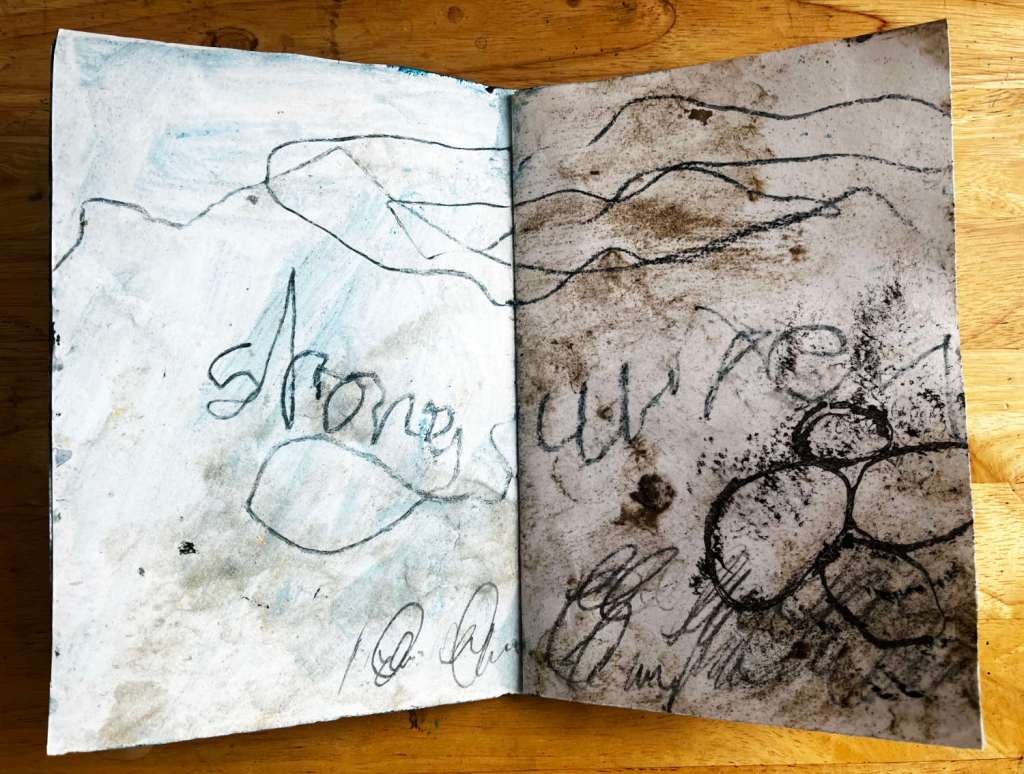
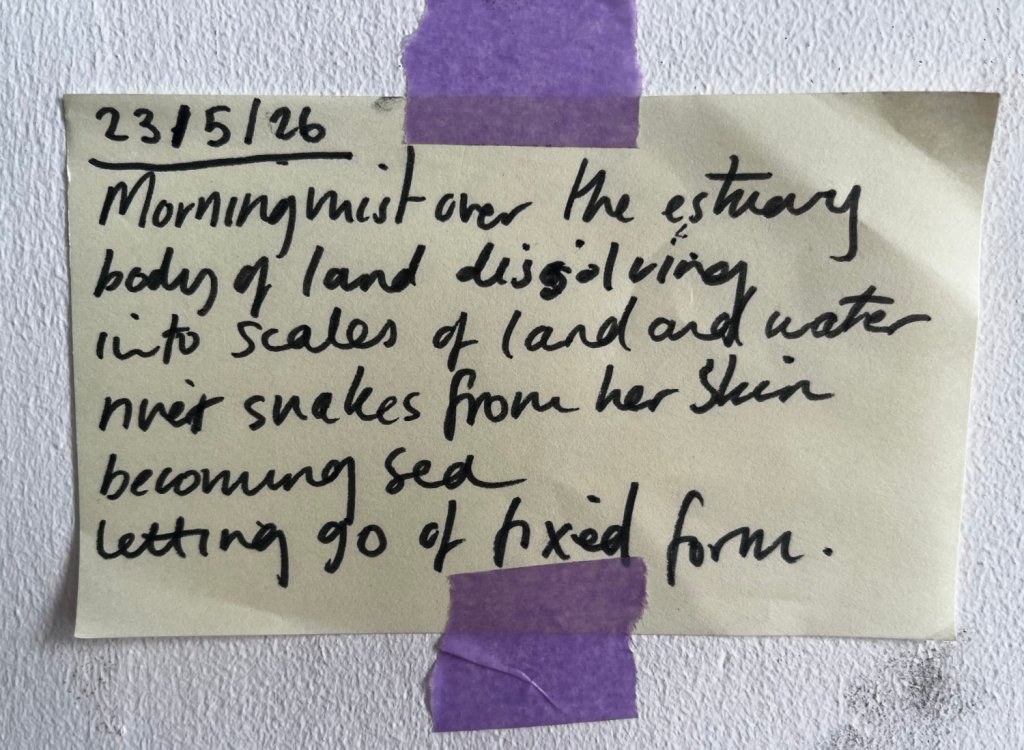
An artists book with marks and handwriting suggesting a coastline
post it it containing handwriting:

"Morning visit over the estuary
body of land dissolving
into scales of land and water
river snakes from her skin
becoming sea
Letting go of fixed form"
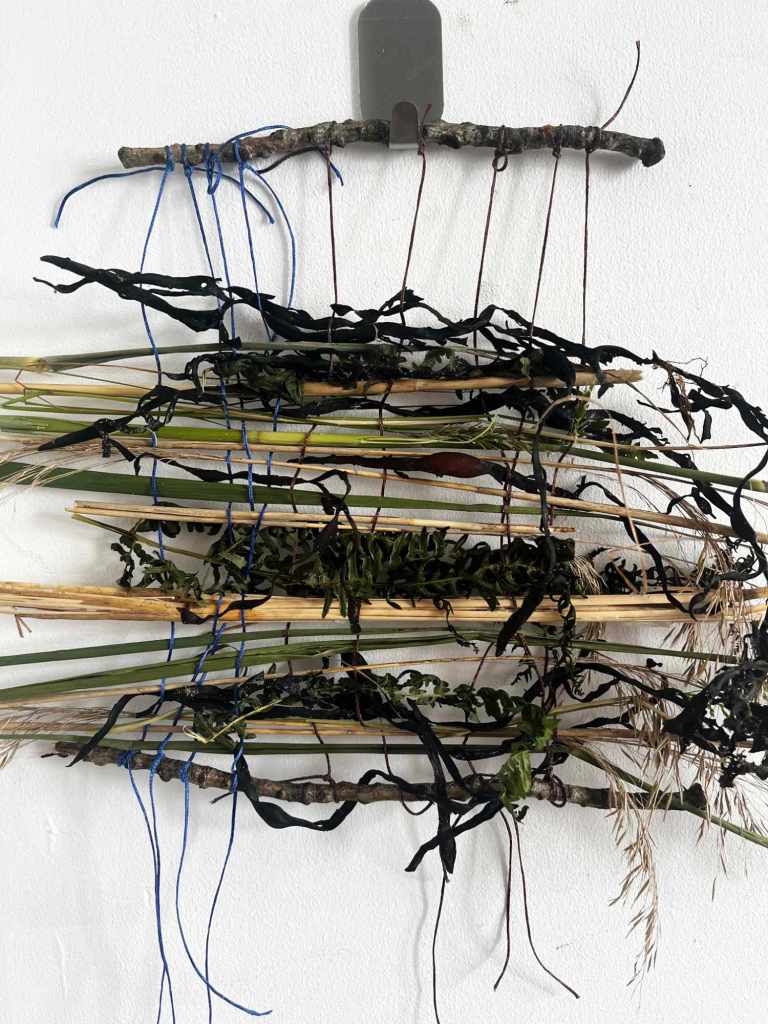
A small handmade weaving made of sticks, grasses and seaweed
Images Image © Emily Wilkinson

The work of my co-resident Hyunah Koh deserves a mention here. Hyunah is a painter based in London making immersive, multisensory paintings inspired by the textures and surfaces of ponds and bodies of water. Here are some of Hyunah’s own words about her fascinating practice:

“What can painting be? It can be a space to melt into, to pass through, to go beyond, together with others. It dissolves boundaries and reveals infinite possibilities, something I have learned and confirmed through years of practice. I continue to expand my attempts to enter the gaps within painting itself, exploring how each person sees, feels, and inhabits that space. I want my work to awaken the senses, quietly inviting us to notice, to connect, and to begin again.” – Hyunah Koh

Korean woman with dark hair stood in front of large scale abstract paintings
Image © Hyunah Koh

It has been a pleasure sharing space with Hyunah for two weeks, and our overlapping practices have provided a new source of inspiration. Interpreting the estuary in our different sensorial ways created a shared language and portals for deeper interaction.

The literal language of Mawddach is interesting too. I could not put my finger on a direct translation of this Welsh river name, only some streams of meaning to follow. Maw is linked to the word mouth with the nearby Abermaw (AKA Barmouth) influencing the name of this river. Other interpretations I found suggested that broad waters, drowning waters or black waters are possible related meanings. The magical village of Arthog (where Mawddach Residency is situated) could have numerous interpretations, including a reference to the sound the river makes as it cascades down the waterfalls. Making water recordings and being in the water is a feast for the senses. I am also using this time to become more practised with my contact mic and hydrophone, recently purchased from Jez Riley French. Here is a recording made at the nearby Arthog waterfalls, where there are many small waterfalls and lush little pools.

Edgelands always feel like home to me. Estuaries are a literal wild margin, a liminal zone between land and water. It has been such a reset to swim in open water most days, now that the UK has warmed up. An unexpected gift came my way last week, in the form of a waterproof phone case which my co-resident had ordered online. This enabled exciting in-water image making, and yet another way to interact with the surrounding environment.

Water is a significant theme for me at the moment, and capturing imagery whilst swimming is a revelation. I have since been offered a no-longer-used underwater camera! This feels like the start of something big, yet remembering not to get too cold (whilst getting high on taking water snaps) is also fairly important. I realised this whilst sitting in bed afterwards with a hot water bottle, drinking many cups of tea to get warm. It was worth it. I hope to make a filmpoem with some of the footage, as a new spoken word piece began to write itself during my time here.
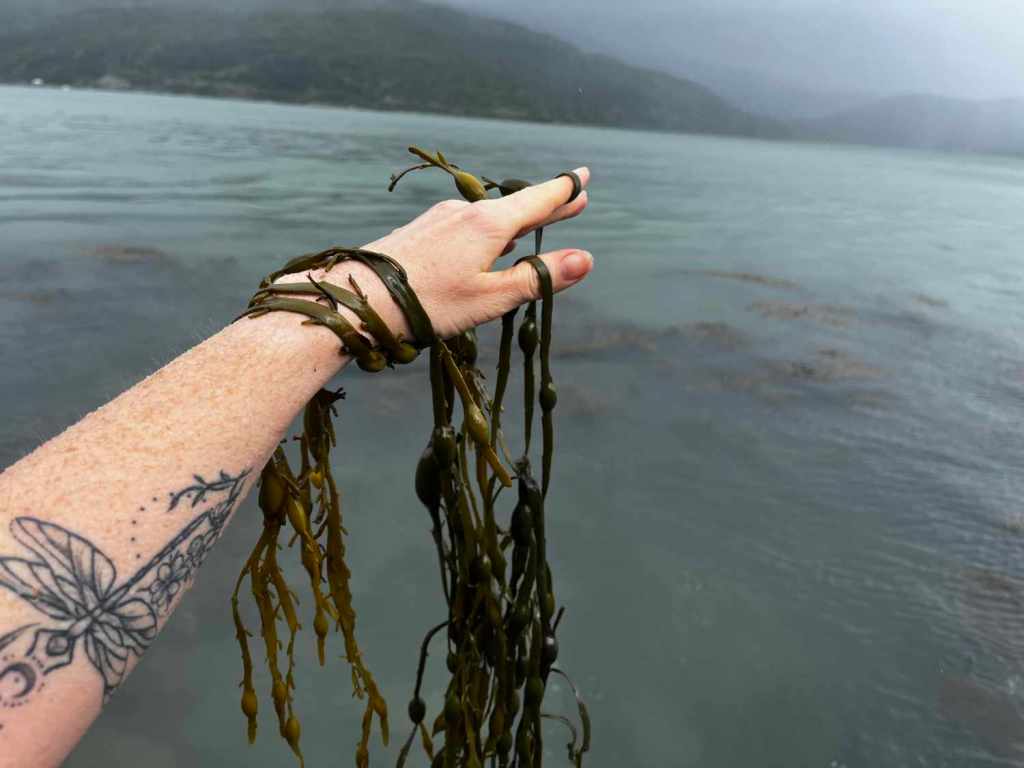
Outstretched arm of white woman holding strands of seaweed
Image © Emily Wilkinson

It is my last evening here at Mawddach Residency, and I write with some sadness about leaving, entwined with the exciting new spaces that this opportunity has opened up. I very much value particular kinds of experiences these days: ones where you can walk into a completely new situation (with new people), to be utterly welcomed and made to feel completely at home. Being here for two weeks has offered me a chance to slow down and retune to a more natural rhythm of working and living, perhaps the first chance I have had to truly decompress since suddenly losing a parent last summer. Grief, too, has been a thread of this residency, alongside the many joyful strands. There is still a painful part of most days (whether seconds, minutes or hours), but making new friends and singing sea shanties does a lot for the soul. It is in this space that I remember that the things I love most are the things I do to be well; walking, writing, being creative and wild swimming. It is being devoted to my motherland of Cymru, to the hills and waters, to my creative gifts. It is being in easeful community and wide open landscapes, with permission to be oneself as an artistic being. I understand now that what residencies offer is sustained time to anchor that permission within ourselves.

Let us end with a big heartfelt thanks to Scarlett, Jake, Hyunah and of course Toby the cat, without whom this residency wouldn’t be what it is. Look out for the next episode of Desire Lines podcast, where I talk with founders Jake Spicer and Scarlett Rebecca about the Mawddach Residency and the creative community they are nurturing here. You can also keep up to date with my walkling arts practice by following me on Instagram @_wildmargins or subscribing to my Wild Margins Substack.
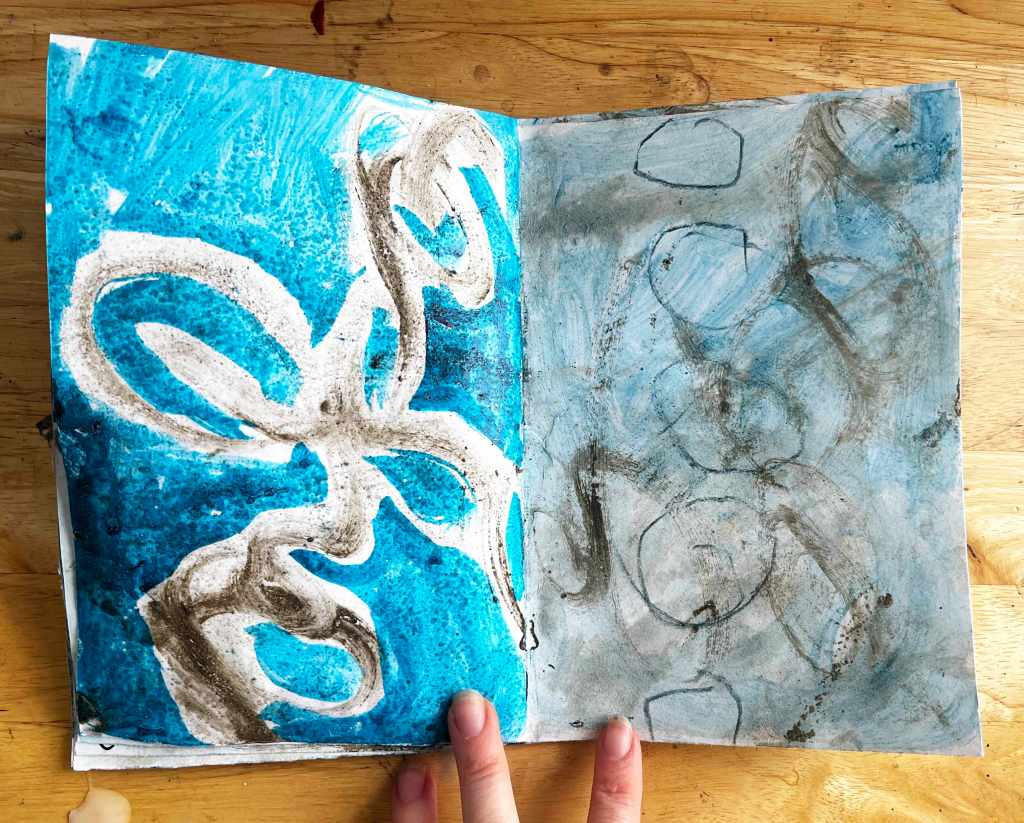
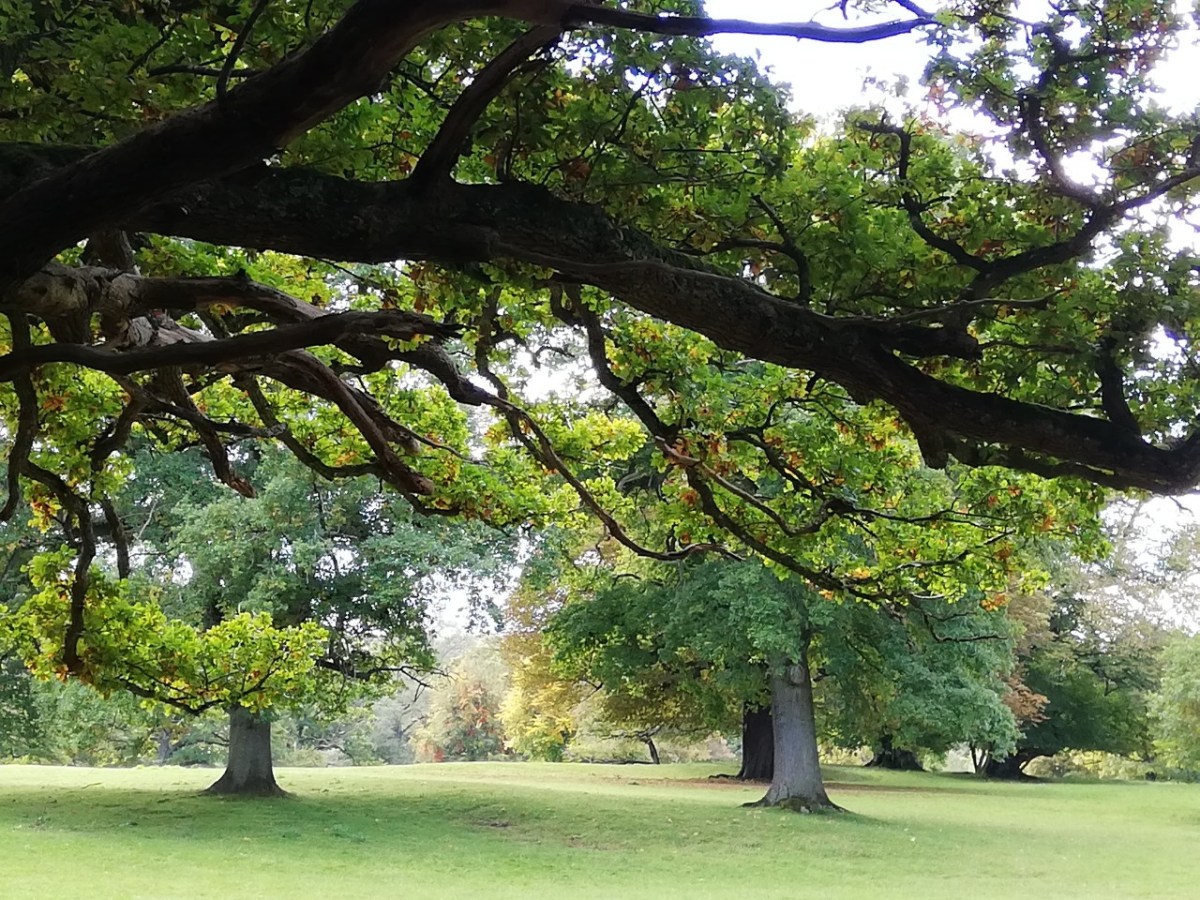
Image © Emily Wilkinson

Categories
Uncategorized

Escaping suburbia – a walk from your sofa

This is an actual walk you can do if you print this post and follow the directions. It’s also a walk you can do from the comfort of your sofa, or if you live a long way away from Dorridge and are missing it and feeling nostalgic and just want to remember your favourite place (this might just be me).

Take the train to Dorridge. Leave the busy, tidy platform through the ticket office. Go ahead, past the car park, turn right. Past houses most folk would never be able to afford, not even renting, and go to the right down an alley between manicured gardens, through a cul-de-sac of starter homes and turn right.

Up a small slope roofed with the branches of scrawny sycamores and over the railway bridge, past six brick and slate houses facing each other in a gossipy circle, then left towards the trees.

Take a deep breath, feel suburbia drop off your shoulders, walk into the arboreal tunnel. A straight tarmac road one car wide, leads to an unknown destination. We do not go along it very far, that journey is not for us today.

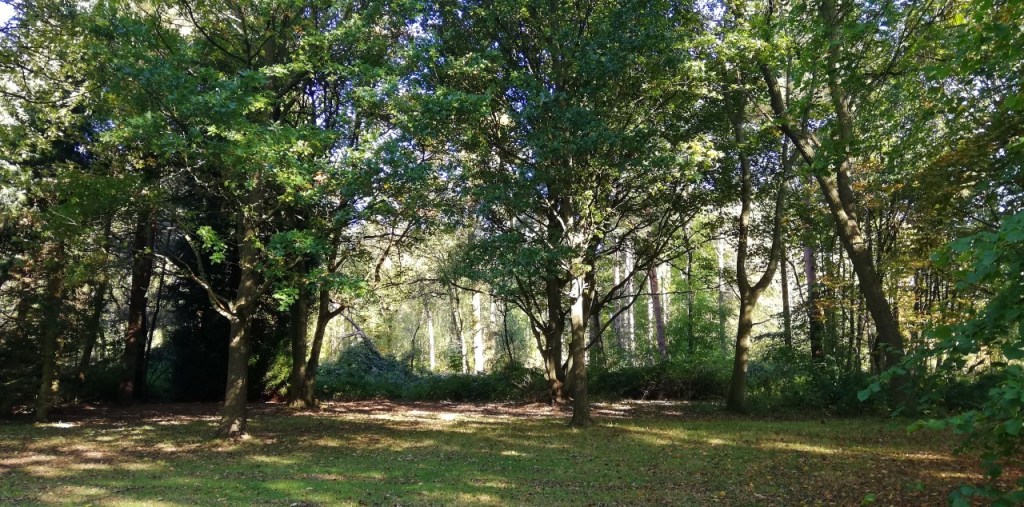
The road is lined with oak and beech and birch and roofed with fluttering leaves. It is always shadowed, even in winter. As soon as you are under the trees step to your right, away from the road, gingerly over the muddy verge and left into the wood proper.

Woodpeckers knock. Jays swoop silently overhead. Blackbirds, robins, chiffchaff and wrens trill and chatter and warble. A muddy path winds beneath orange barked pines, around dark hollies, between scrawny birches riddled with plates of fungi. In autumn toadstools burst from stumps and mossy logs; push through leafmould burnished by beech leaves.

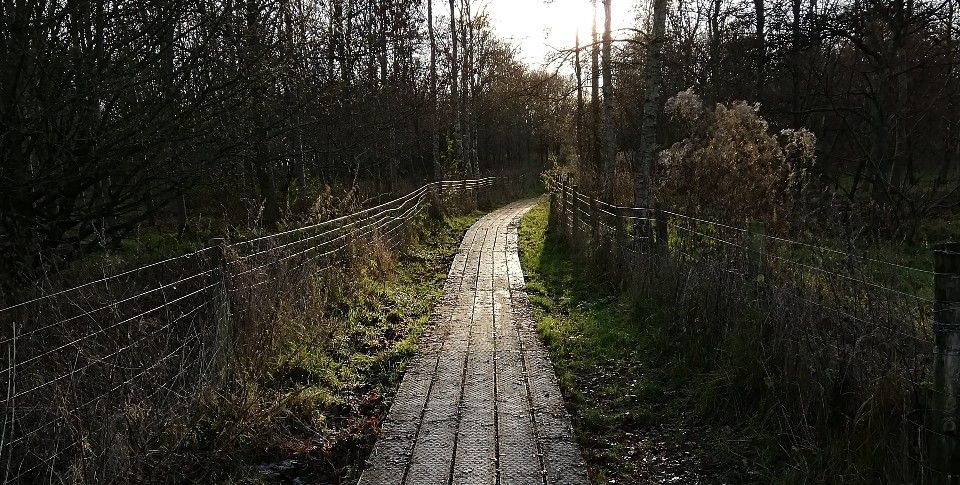
Now you leave the wood, come out into the park, heading south west across shaved grass encountering happy dogs and cheerful owners. Go past the dead oak, pale and sculptural, down to the shallow stream burbling bright and clean under the bridge where there might be trolls, then step along a rising boardwalk to the narrow lane.

Image © …kruse

Cross the lane into a coppice of teenage oaks, deeply muddy at the wrong time of year. The path is pockmarked here with boot prints and paw prints and sometimes the half moons of a small pony’s shod hooves. Come out into fields, take a left skirting the crops, keeping to the hedge, and take another left after passing through an ungated gateway, past trees that began life when this was still Shakespeare’s Arden Forest.

A curved iron kissing gate is next, then we walk down a lane between mansions. Ten foot high yew and laurel hedges on each side of us hide a barking dog.

“Go away” say the high hedges, the fancy iron gates, the barking dog.

Imagine for a moment the stress of holding on to all that wealth, the work it requires. Maybe not hard work, like that which farmers, cleaners, nurses do, but effort; hiring staff to trim the hedges and walk the dog, making sure the alarms are on when you’re out, paying insurance and keeping up appearances. Take a deep breath and let any envy transform into the joy and freedom of the welcoming path and turn right onto a little country road.

A few hundred yards on, turn right at the triangle of grass, a rural roundabout serving only two tractors and seven cars the whole day, and go left over the wobbly wooden stile. It’s hard on the hips because it was made for tall men.

Walk across three fields, one, two, three. Sometimes there are sheep, sometimes flowers, once a startled detectorist. Fields one and two go down to a streamlet, over another troll bridge, one person wide and only five feet long. A small troll then.

Field three rises to a road. On your right a church, a manor, a moat, oddly melancholy, dark with ghosts. We turn left at another kissing gate, rusty and squeaking. We take a right along a road towards the big house, busy with day trippers. Beautiful gardens and a noisy cafe, and a good place for tea and scones.

You walk the straight road that cuts through the estate. On your left a field and a long straight track, centuries old, bordered with oaks and grazing sheep. To our right the big house, a lake, roses and flower beds, ancient yews, ravens and sparrowhawks, specimen trees of ravishing beauty.

Go on past this magical place, dense with stories of Puritans and ancient feuds, of a sad man long dead putting all his unrequited love into objet d’art and not the lad he really wanted. The house is a reliquary of loves and tragedies and agonies and joys untold. An archive of the edge folk; women, servants, the poor and queer. Only the stones know all, and they are not speaking.

Walk on past the house and on down a road straight as a Roman, to a dangerous corner as it joins a busier thoroughfare. A short, but tense walk beside this busy road, sharply noisy, picking your way along the rutted grass verge.

At another corner, dangerous with rushing SUV’s turn left onto a stony track. Only pedestrians and the owners of the farm at the end are allowed here. It’s quiet again. It looks like a place where there should be owls.

At the end of the track turn right to the canal, past the red brick lock-keepers cottage, busy with flowers in pots, and scattered buckets and timber, all the stuff of countryside living.

Follow the canal east. Seven locks. Ducks in the reeds. After the seventh, cross over the water and continue east. At the bridge take the steps up onto a narrow road and turn left over the ancient, humpback bridge.

Walk on a quiet country lane. More raven calls and jackdaw, robin, wren and goldfinch and the gunfire crack of startled pigeons bursting from the hedges. An Elizabethan house half hidden behind brick and wrought iron. The road rises a little and we lean in a little.

Half hidden among trees and the hedgerow, on the other side of the lane, another kissing gate, wooden, green with lichen. Three very beautiful very old oaks stand sentinel alongside the field boundary. Take the little path through this field and the next, both rich with flowers and wild grasses. Butterflies and horseflies, beauty and the beasts, dance here in summer. In winter the bottom of the field is sodden, in spring, bluebells paint the banks with sky.

Right at the stile, broken and rickety and suddenly, steps! Metal steps, a second railway bridge, postered with kind entreaties from a mental health charity. Step down onto the quiet platform. Take a bench and sit in peace among the songbirds, waiting for the train to fetch you back to the city.

Image © …kruse

Find out more about …kruse and their work at https://www.krusework.info/

Categories
Posts Walk Reports

Mitchell’s Fold manoeuvre

On 3 May 2025, a bright but windy spring day, several Walkspace members undertook a walk around Stapeley Hill and Corndon Hill in Southwest Shropshire, close to the Welsh border near the village of Priest Weston.

The walk centred on Mitchell’s Fold stone circle and the myths that gather around this ancient monument. Conceived as a members-only event, it was also structured so that it could be repeated as a guided walk open to the public.

I designed the walk as a manoeuvre: a form of guided walk devised in the 1990s by the artist Tim Brennan, with whom I have collaborated on several projects. Brennan describes a manoeuvre as a walk built out of quotations which are recited to the group at stations along a predesigned route” (Brennan, 2017).

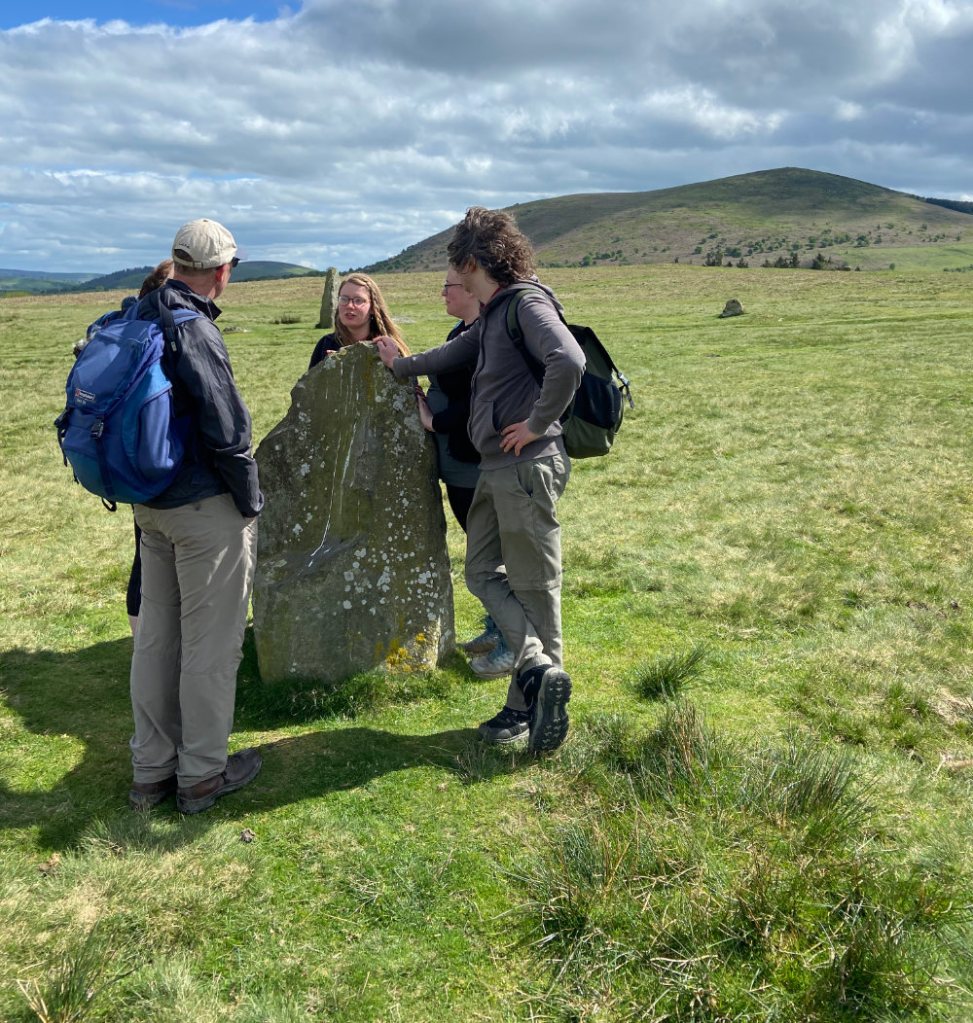
A group of walkers gather around a shoulder-height standing stone against a moorland backdrop
Photo © Paul Wakelam

Alongside documented folklore and historical sources, I introduced a series of invented quotations – what I think of as neo-myths. These were attributed to fictional authors through what I call pseudo-references. The intention was not to deceive, but to mirror the ways authority, myth, and landscape are often braided together in accounts of ancient sites, where scholarship, oral tradition, and imaginative speculation coexist and overlap.

The Mitchell’s Fold manoeuvre followed a predefined route, with readings delivered at specific locations. These combined well-known folklore, historical commentary, and the neo-myths written for the walk.

From the car park, we headed north, directly into a stiff north-westerly wind, much as others might have done before us. The route across Stapeley Common runs alongside a holloway: a sunken lane formed by centuries of traffic, scoured out by drovers moving livestock between pastures or on towards market.

Mitchell’s Fold

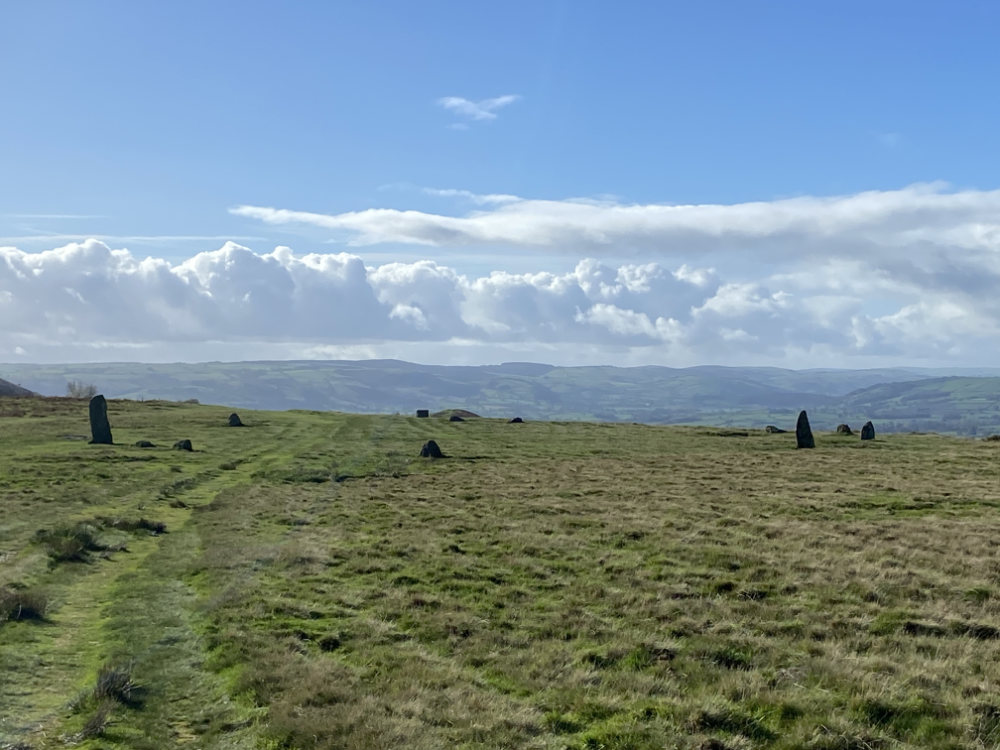
The first station reached was the Bronze Age stone circle of Mitchell’s Fold (also referred to as Medgel’s Fold and Medgeley’s Fold). The name may derive from the Old English micel or mycel, meaning ‘big’. Fifteen stones remain, though it is thought that there may originally have been around 30.

“The peasantry of the neighbourhood tells us that this district, without being more fertile, was once more populous than it is at present, and that the population was kept from starvation by a benevolent being which came nightly, in the shape of a white cow, and abundantly supplied the inhabitants with milk. A condition, however, was attached to the comparative happiness of the people, and this was, that if the cow were milked dry, which it appears could not happen so long as each person took only a pailful at a time, she would disappear for ever, and the people would be reduced to extreme misery.

Now, there lived at the same time a malevolent old witch, who was envious of the flourishing condition of the people of this neighbourhood, and meditated continually on the means of overthrowing it. Her name was Mitchel. One night she went with the others, apparently one of the peasantry of the neighbourhood, but carried a pail with a sieve for the bottom. The milk, of course, passed through this, and the cow, who always allowed herself to be milked by each person until the pail was full, let Mitchel go on milking until at last she became dry. The condition was immediately fulfilled, and the population of this now solitary district all died miserably for the want of their usual food; but Divine vengeance fell upon the wicked hag, who was turned to a stone on this lofty hill, and the circle of stones was raised to imprison her. Hence it is called Mitchel’s Fold.’”(Wright, 1862).

Cow Stone

Continuing northeast along the ancient route, the next station reached was the Cow Stone, also known as the Dead Cow. The name derives from its resemblance to a reclining cow and is clearly linked to the legend of Mitchell’s Fold (Burnham and Pearson, 2018, p.133).

“They say the Cow Stone was once a living beast – gentle, broad-backed, and endless in her giving. Each morning she wandered the slopes of Stapeley Hill, offering milk to any who were hungry. But a witch, greedy for more, tricked her with a cursed pail. Realising the betrayal, the cow bellowed once and fled, her hooves cracking stone, her body stiffening mid-stride. She stands there still, turned to rock by sorrow. The wind, on certain days, moves around her like breath.” (Ellis, 2014).

The Hoarstones

From here we headed towards the Hoarstones, the second stone circle on the walk. This part of the route carried an element of uncertainty. During a reconnaissance walk, I had attempted to follow directions from an old printed guide, Stapeley Hills Historic Sites. On the ground, however, the described paths no longer aligned with fencing or access points, and after some effort I abandoned the search.

My intention on the day had been to stop at a particular point and tell a story about a missing stone circle. In the event, one of the participants knew the route, and we crossed a fence marked ‘Private – Keep Out’ to reach a circle of 37 small stones.

“The Hoarstones are marked clearly in the old guide – precise in distance, confident in direction. But on the ground, nothing held. Paths faded, landmarks changed, and the stones themselves seemed to withdraw. Some say they sink deeper with each decade, tired of being sought. Others suggest the map was never right to begin with. Older still is the tale of six fairesses who danced there on moonlit nights, their footsteps circling into the ground until stone rose to meet them. Now, the ring hides itself. In this landscape, absence is not an error, but a kind of message.” (Darnley, 1958).

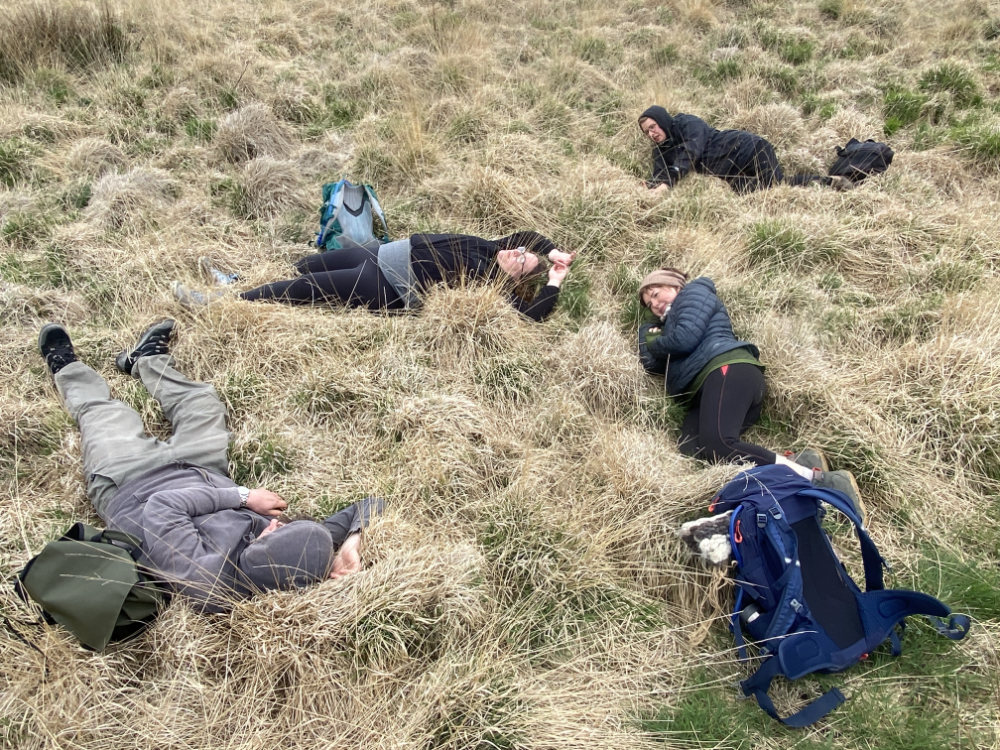
Four walkers rest on the ground in long grasses
Walkspacers resting amongst the Hoarstones. Photo © Paul Wakelam

Stapeley Hill Cairn

From the Hoarstones we began the ascent of Stapeley Hill, a saddle-backed rise with expansive views across Shropshire and into Wales. At its summit lies a ring cairn.

“The cairn on Stapeley Hill rests like a spine beneath the sky. Some say it marks a place where the world thinned – where the old ones stepped between sky and soil. Walking here feels like entering a sentence left unfinished. The cairn does not offer answers, only presence.” (Hallet, 2001).

Cromwell’s Trench

Walking south from the cairn, we approached Cromwell’s Trench: a series of scooped hollows dug as test pits in the search for minerals, a reminder of the lead-mining heritage of south-west Shropshire (Shropshire’s Great Outdoors, 2013).

“Cromwell’s Trench lies folded into the side of Stapeley Hill – an interrupted rhythm of hollows and scoops, dug by hands chasing minerals through shale and silence. The ground here feels restless, worked over, as if thought itself had been quarried. It’s a place of absences: ore not found, labour long vanished, names forgotten. And yet the trenches remain – cuts in the skin of the hill that still hold weather, lichen, and the slow return of stillness.” (Carver 1994).

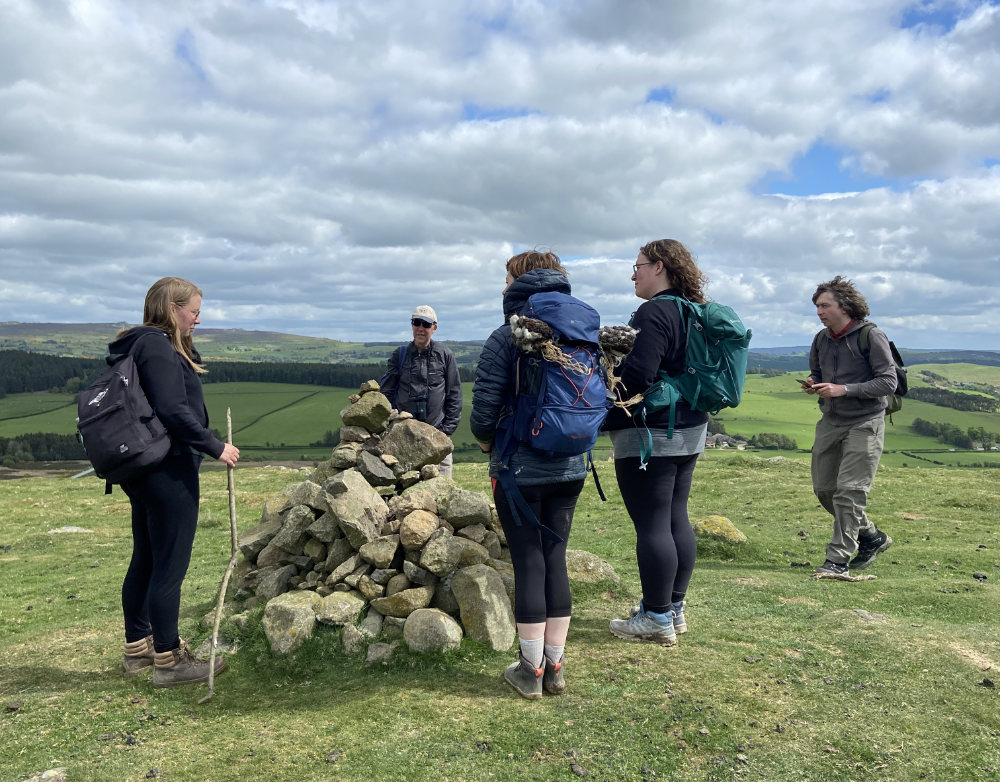
A group of walkers gather around a cairn in the Shropshire landscape
Photo © Paul Wakelam

Re-storying the landscape

Continuing south, we passed further cairns, stone rings, a Bronze Age ring barrow, and a network of linear earthworks before beginning the steep ascent of Corndon Hill. From the summit, the landscape opened out into a wide, circling view – fields, ridges and borders unfolding in every direction.

By this point, the quotations had accumulated. Voices – some historical, some imagined – had been laid into the land, not to explain it, but to thicken it. The manoeuvre did not resolve the myths of Mitchell’s Fold so much as redistribute them, allowing them to cling to stones, paths, absences and weather.

In future iterations, the quotations and their attributions may shift, disappear, or be replaced – treated as materials rather than fixed texts, responsive to route, weather and the particular group walking them.

If the walk achieved anything, it was to suggest that these landscapes are not fixed by archaeology or story alone. They are continually re-made through movement, speech, and attention: each step a small act of re-inscription, each pause a moment where the ground might speak back.

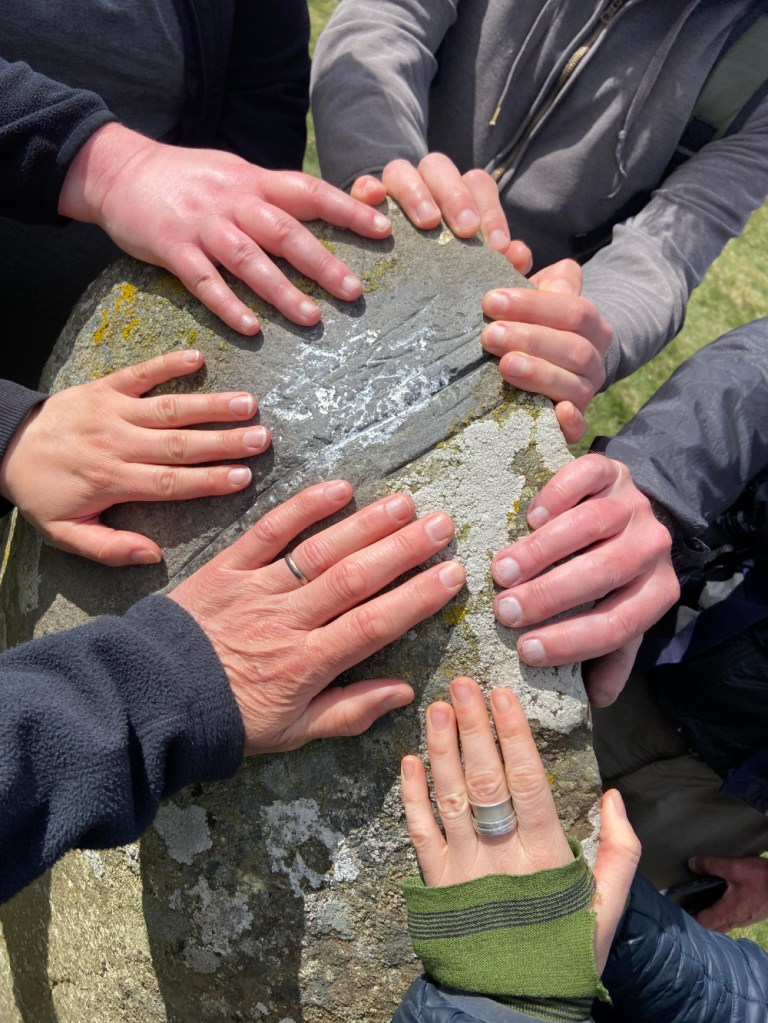
Close-up of six walkers' hands placed on a standing stone
Photo © Paul Wakelam
References

Burnham, A. and Pearson, M. P. (2018) The Old Stones: A Field Guide to the Megalithic Sites of Britain and Ireland. Watkins.

Brennan, T. (2017) Manoeuvre: Discursive Performance. Available at: https://www.timbrennanartist.co.uk/projects-fieldworks-performances/the-manoeuvre/manoeuvre-discursive-performance (Accessed: 26 December 2025).

Carver, I. (1994). Steps to the Sky: Notes on Walking and Vertical Mythology. Oswestry.

Ellis, R. T. (2014). Beasts that Became Stone, in Where the Hills Speak: Oral Tradition and Living Myth along the Anglo-Welsh Border. Hereford.

Darnley, I. (1958). Standing Stones and Straying Paths: A Rambler’s Guide to Forgotten Circles. Oswestry.

Hallet, M. (2001). Margins of Stone: Landscape, Memory, and the Mythic Borderlands. Ludlow.

Wright, T. (1862). Shropshire’s Great Outdoors (2013) Stapeley Hill’s Historic Trails. Leaflet. ‘On the Local Legends of Shropshire’, Collectanea Archaeologica, 1(1), pp. 50–66.