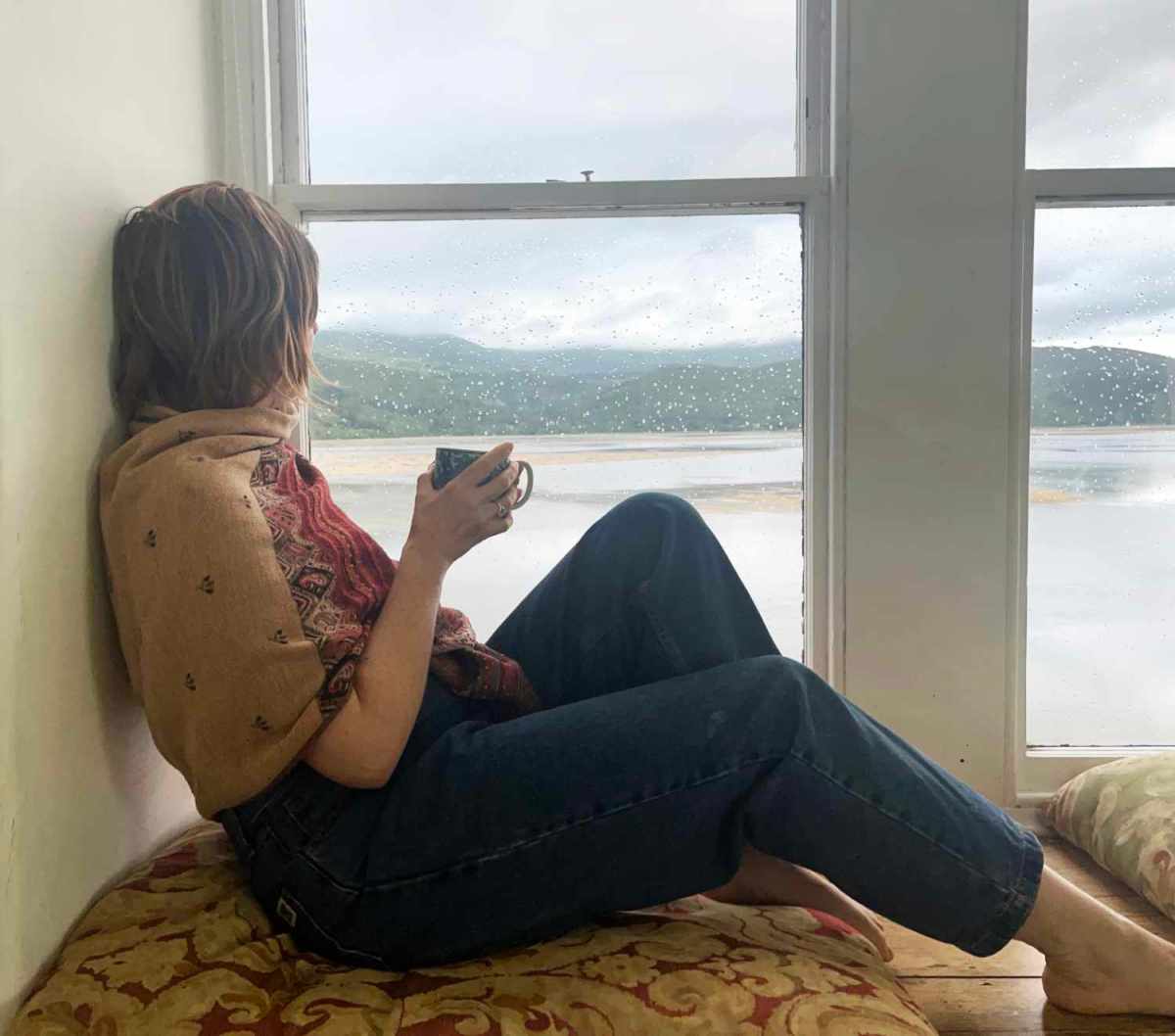
I write from an opening; a meeting of river, land and sea. These early heat-drenched days of summer find me spending two weeks at the Mawddach Residency; a residential space where artists, writers and musicians are invited to spend two weeks away from distractions along the banks of the Mawddach Estuary, within the Eryri National Park.
Whilst here, I have been focusing on sound recording, walking and writing, leaving space to also experiment with other things. Much of the time here has been spent outside, a chance to rediscover my slightly rusty wandering skin. Blessed with about five days of summery weather, these stunning landscapes and last week’s sun have filled me to the brim with much-needed pre-solstice brightness.
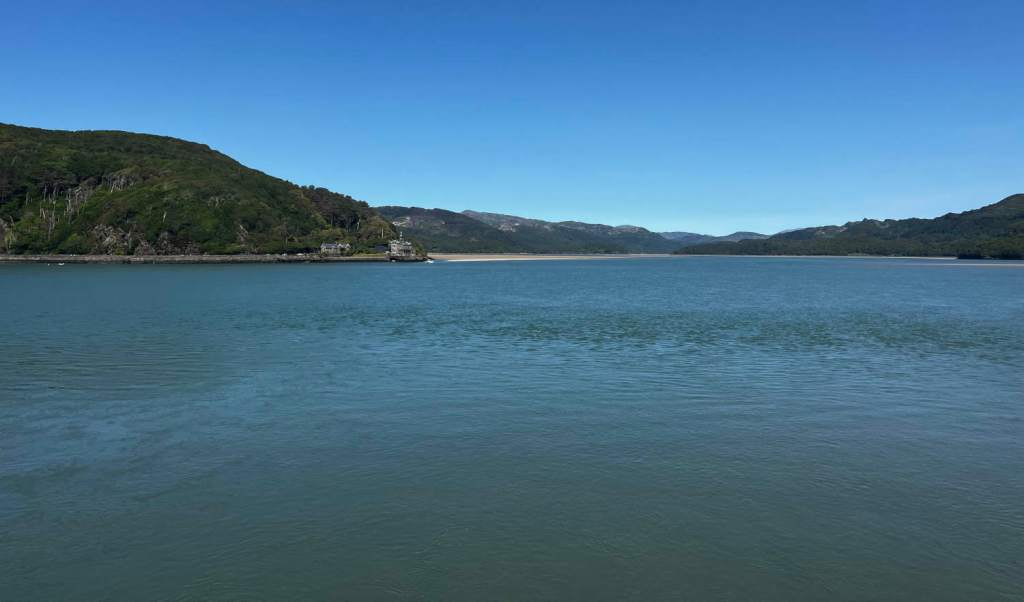
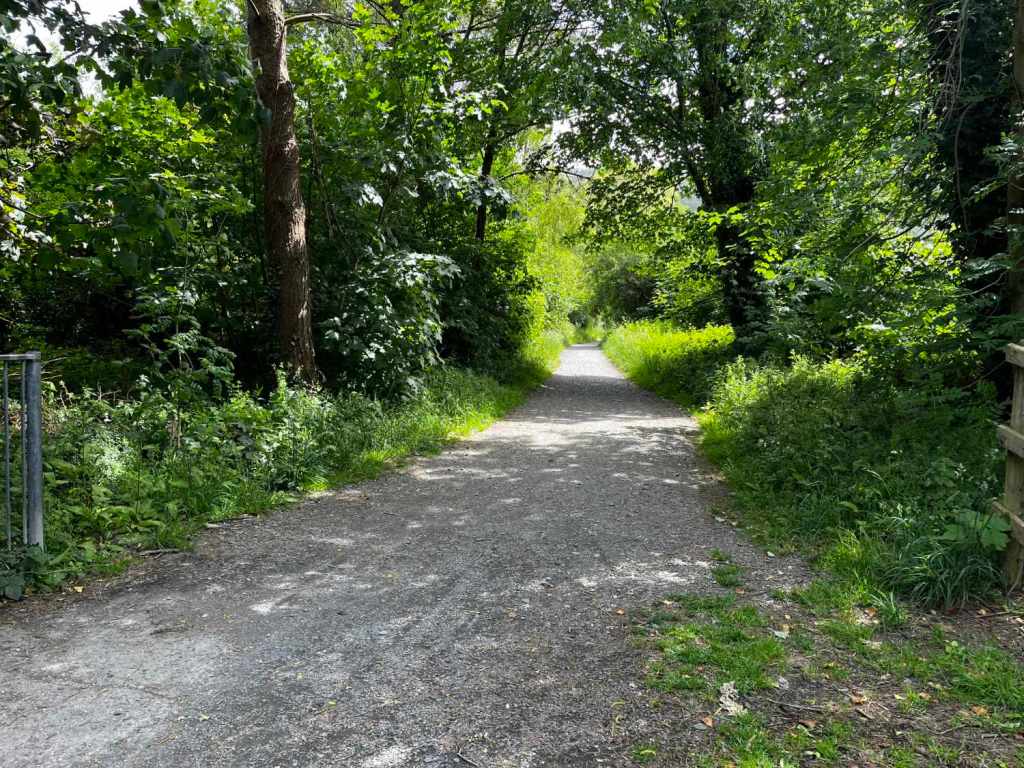
The day after arriving, I began to explore the many local footpaths. I was struck by how many lovely trails are nearby, and how easy it is to get around without a car. A surprisingly unfamiliar feeling of complete safety began to settle in my body, and I realised that for the first time in a long time, I felt completely safe as a woman wandering. This is due in large part to the Mawddach trail, a 15km multi-use route created along a disused railway track on the southern side of the Mawddach Estuary between Dolgellau and Barmouth.
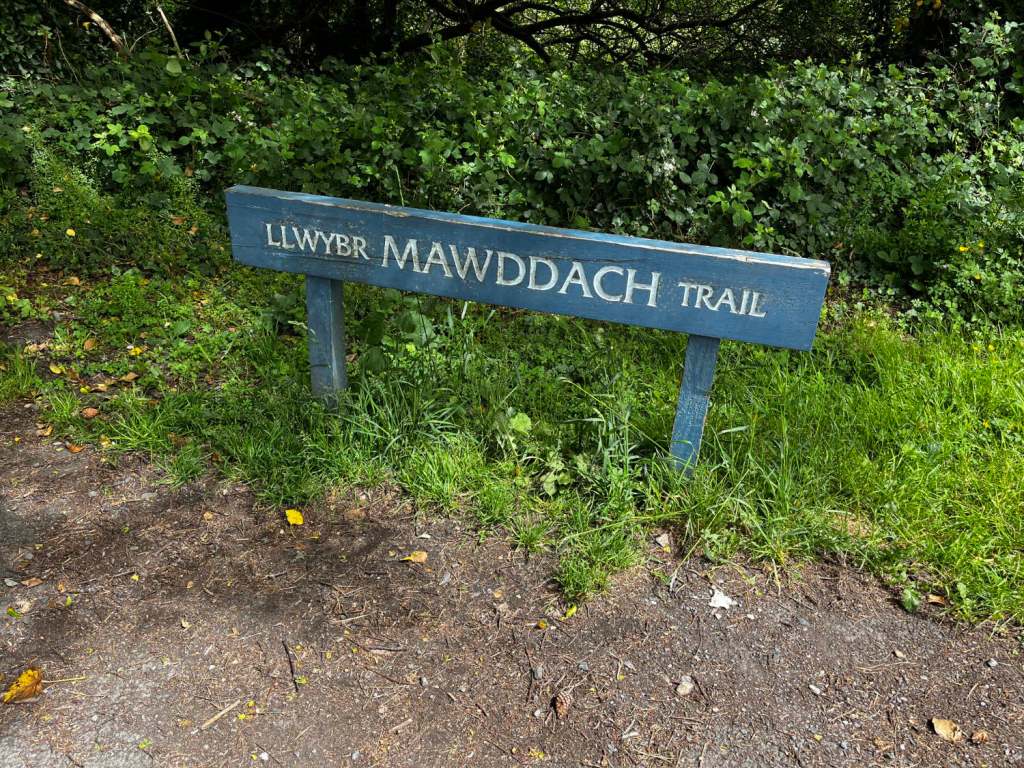
The path is popular with walkers, cyclists, runners, wheelchair users and those using mobility aids. It is wide, which is a good thing. Doing some recent research about footpaths and accessibility revealed some lesser-known details to me, such as the exact width a path must be to qualify as truly accessible (a preferred width of 1.5 to 1.8 metres). A wide, flat path made for all offers a lovely sense of openness, encouraging free movement and physical activity. Trails like this really change the feel of an area, and soon I am walking 15k-20k steps per day, taking two or three walks per day. It is a choice made by my body rather than the mind. Residency life easily affords these walking breaks, naturally woven into the day’s activities. I hadn’t been walking enough at home, and arrived here with a lot of unravelling to be done.
The ease of walking here parallels a fundraiser that the fabulous Jonathan Stalls has just been leading (over on the other side of the big pond) for the Pedestrian Dignity project. Pedestrian Dignity will be creating a bilingual mobility justice zine full of art, poetry, stories, and advocacy tips, which I cannot wait to see when it’s finished. The crowdfunder has finished, but do reach out to Jonathon if you’d still like to support the project. At this time of year, the few small roads by the Welsh coast get very busy indeed. I intended to try and come by train, but couldn’t quite make it with multiple bits of equipment and quite frankly being bad at packing light. Having been in the area for a few days, I wouldn’t hesitate to get public transport next time. Luckily, the Mawddach Residency sits quietly in a secret row of houses away from the bustle of Barmouth and local tourist activity. Barmouth can feel a bit like Benidorm in the summer, but this little nook is blissfully quiet.
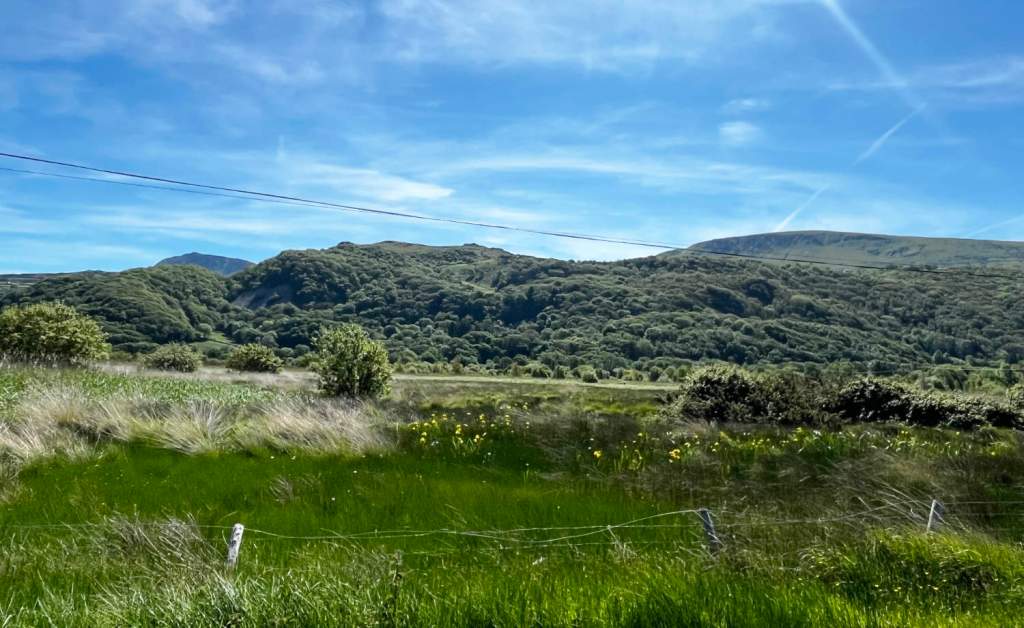
Tourism has been woven into the area’s identity for a long time, with the local landscape attracting visitors during the Romantic period, such as William Wordsworth (who referred to ‘the sublime estuary’) and the Ladies of Llangollen. It was later promoted as a retreat for wealthy Midlands industrialists. Following the opening of the railway in 1867, the town (like Aberystwyth) became a primary summer destination for thousands of industrial working-class families from the West Midlands and North West England. The Mawddach Estuary has a rich and layered history, involving complex industrial heritage with echoes of shipbuilding, gold mining, railways, wool trade, slate, metals and forestry. Barmouth Bridge (also known as Barmouth Viaduct) is the longest timber bridge in Wales at 820 metres, and crosses the estuary.
Ecologically, the estuary is designated both a Site of Special Scientific Interest and a Special Area of Conservation on account of its salt marsh and lowland peat habitats, while the nearby Arthog Bog RSPB nature reserve supports rare flowers, grass snakes, butterflies, and a wide variety of bird species. I have used this residency opportunity to test out an exciting new binaural microphone). This creates a beautifully immersive effect when listened to with headphones. Here is a dusky recording made at the water’s edge, with some exciting Oystercatcher action. Do listen with headphones for full effect. Go and get them, now!
What I am loving about my field recording journey, is that it involves a lot of interaction with the outdoors. Presence and listening come with the territory, as well as scrambling over big pointy rocks to try and get a hydrophone down into the water. When recording, the sounds you actually hear through headphones are amplified, as if someone has turned up the auditory dial. I find this has a powerful, sensory therapy type effect on my body and nervous system.
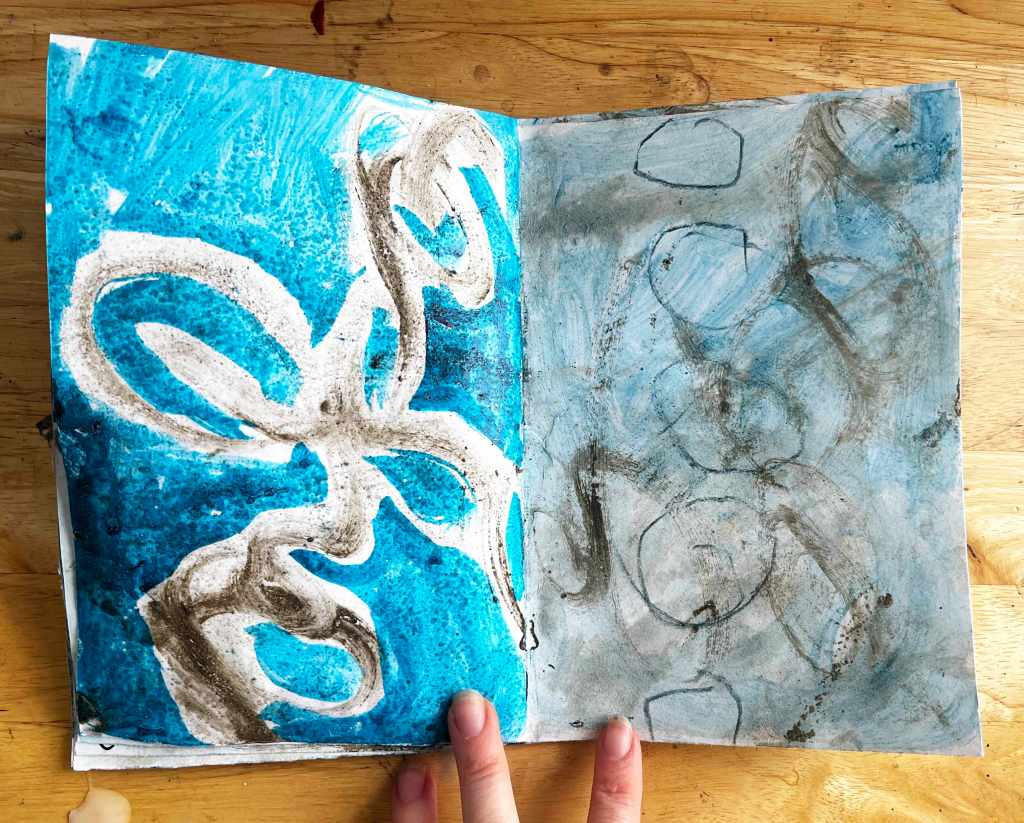
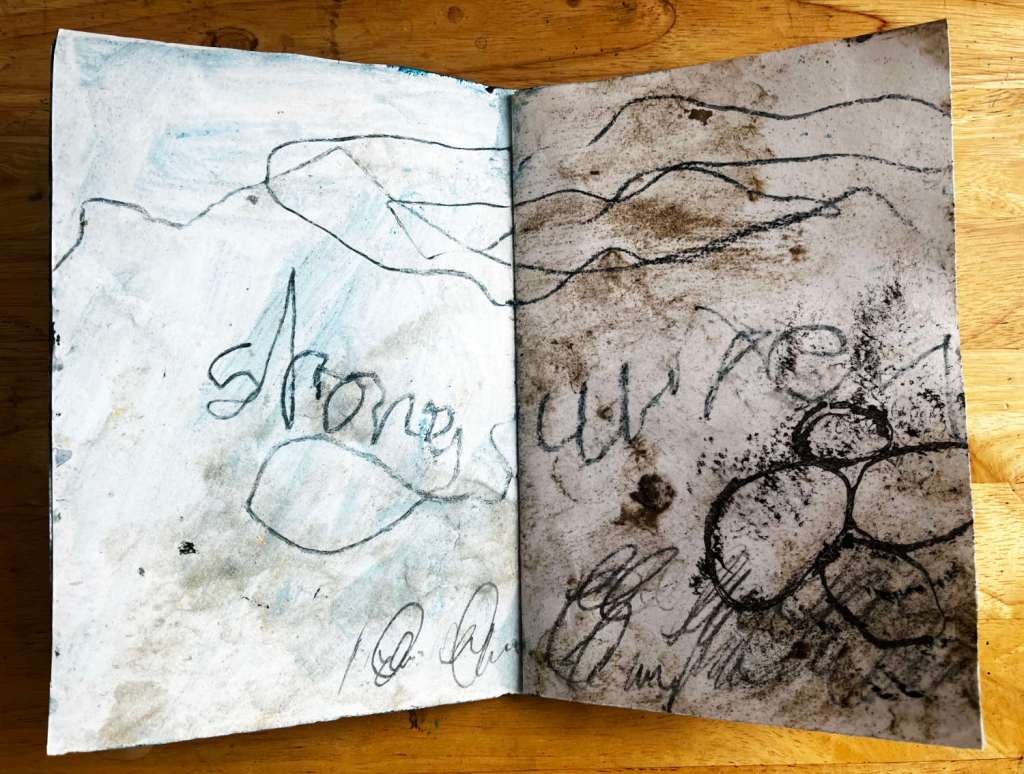
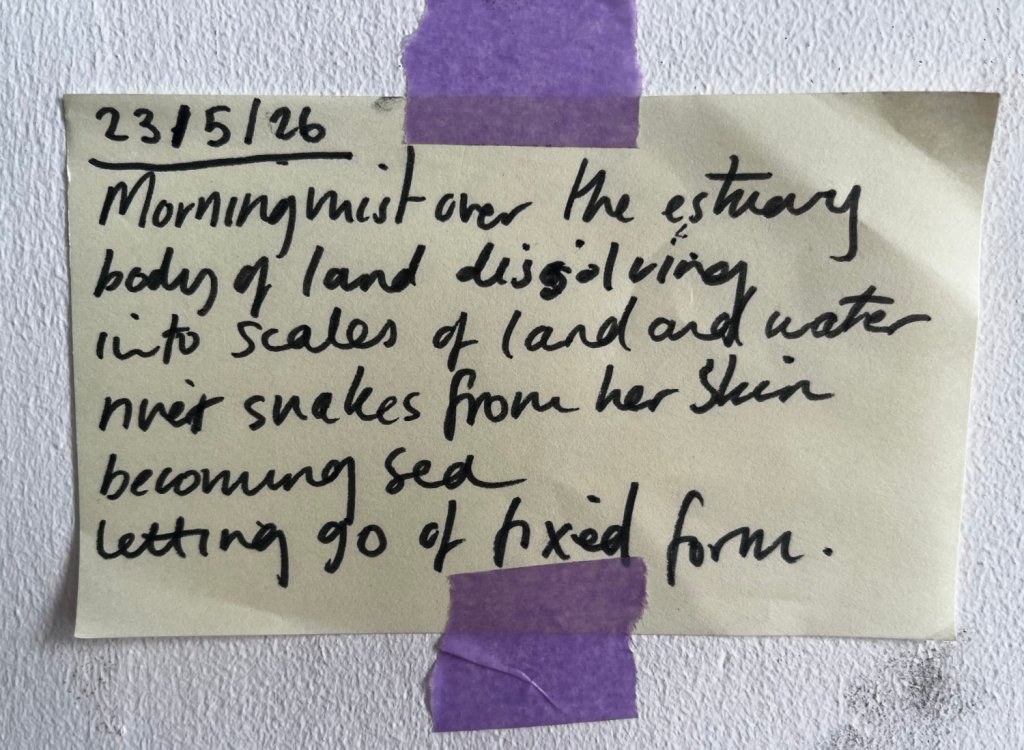
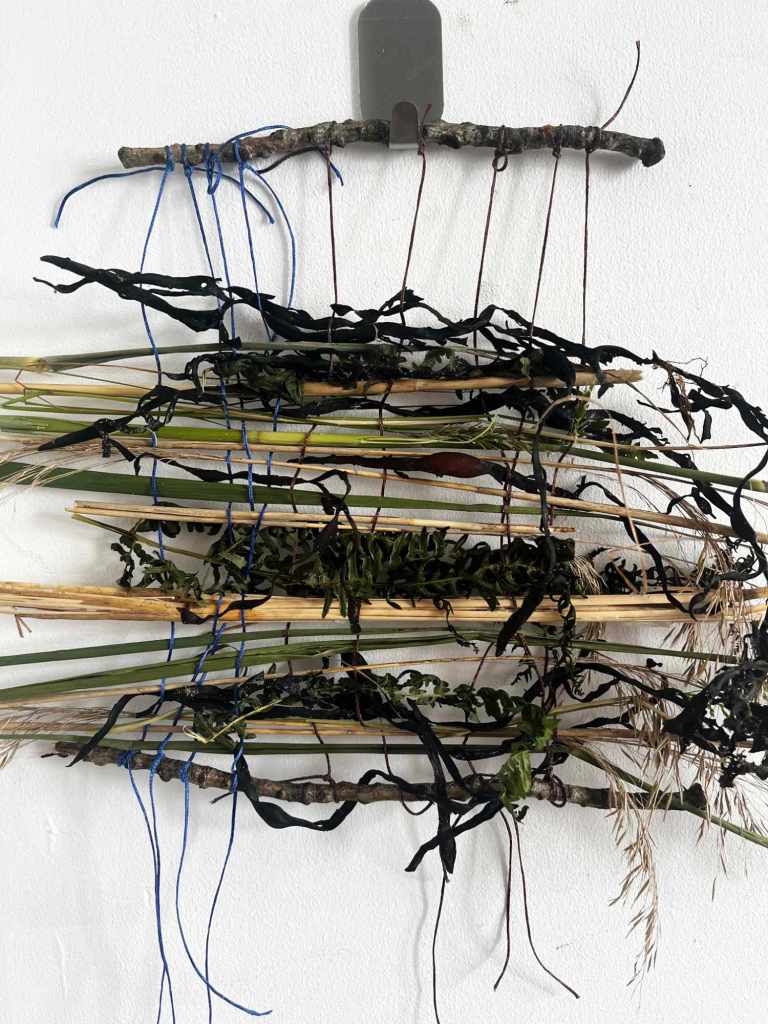
Alongside field recording and writing, I’ve enjoyed tapping into other mediums I love. These include cut-up poetry, making books, photography, mark-making and experimenting with asemic writing. Asemic writing is the act of writing without legibility; a form of mark-making which fuses writing and visual art. Instead of reading words, the viewer interprets marks and symbols through intuition, emotion, and the energy of the lines themselves. I’ve also been playing with natural objects, enjoying the permission to be free and explore.
The work of my co-resident Hyunah Koh deserves a mention here. Hyunah is a painter based in London making immersive, multisensory paintings inspired by the textures and surfaces of ponds and bodies of water. Here are some of Hyunah’s own words about her fascinating practice:
“What can painting be? It can be a space to melt into, to pass through, to go beyond, together with others. It dissolves boundaries and reveals infinite possibilities, something I have learned and confirmed through years of practice. I continue to expand my attempts to enter the gaps within painting itself, exploring how each person sees, feels, and inhabits that space. I want my work to awaken the senses, quietly inviting us to notice, to connect, and to begin again.” – Hyunah Koh
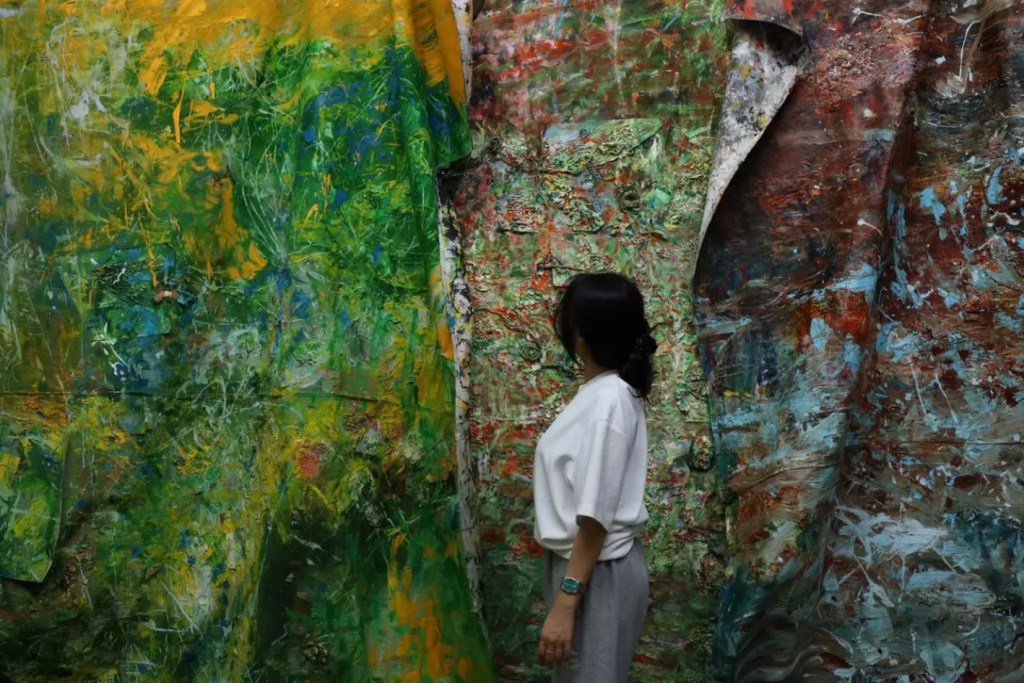
It has been a pleasure sharing space with Hyunah for two weeks, and our overlapping practices have provided a new source of inspiration. Interpreting the estuary in our different sensorial ways created a shared language and portals for deeper interaction.
The literal language of Mawddach is interesting too. I could not put my finger on a direct translation of this Welsh river name, only some streams of meaning to follow. Maw is linked to the word mouth with the nearby Abermaw (AKA Barmouth) influencing the name of this river. Other interpretations I found suggested that broad waters, drowning waters or black waters are possible related meanings. The magical village of Arthog (where Mawddach Residency is situated) could have numerous interpretations, including a reference to the sound the river makes as it cascades down the waterfalls. Making water recordings and being in the water is a feast for the senses. I am also using this time to become more practised with my contact mic and hydrophone, recently purchased from Jez Riley French. Here is a recording made at the nearby Arthog waterfalls, where there are many small waterfalls and lush little pools.
Edgelands always feel like home to me. Estuaries are a literal wild margin, a liminal zone between land and water. It has been such a reset to swim in open water most days, now that the UK has warmed up. An unexpected gift came my way last week, in the form of a waterproof phone case which my co-resident had ordered online. This enabled exciting in-water image making, and yet another way to interact with the surrounding environment.
Water is a significant theme for me at the moment, and capturing imagery whilst swimming is a revelation. I have since been offered a no-longer-used underwater camera! This feels like the start of something big, yet remembering not to get too cold (whilst getting high on taking water snaps) is also fairly important. I realised this whilst sitting in bed afterwards with a hot water bottle, drinking many cups of tea to get warm. It was worth it. I hope to make a filmpoem with some of the footage, as a new spoken word piece began to write itself during my time here.
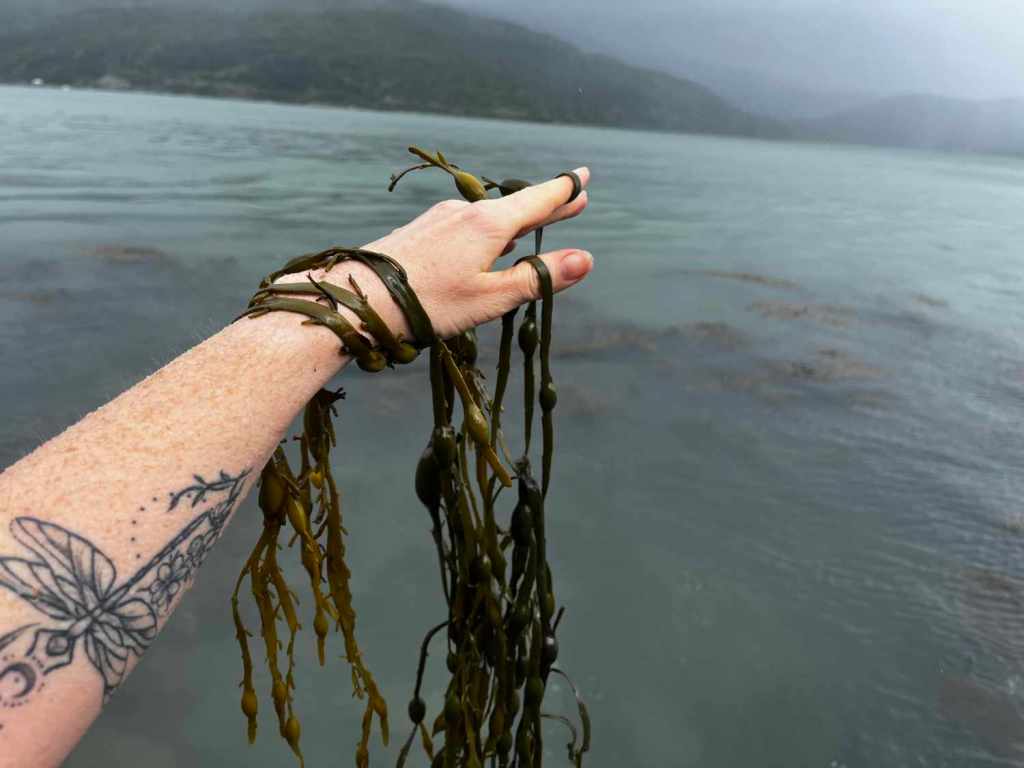
It is my last evening here at Mawddach Residency, and I write with some sadness about leaving, entwined with the exciting new spaces that this opportunity has opened up. I very much value particular kinds of experiences these days: ones where you can walk into a completely new situation (with new people), to be utterly welcomed and made to feel completely at home. Being here for two weeks has offered me a chance to slow down and retune to a more natural rhythm of working and living, perhaps the first chance I have had to truly decompress since suddenly losing a parent last summer. Grief, too, has been a thread of this residency, alongside the many joyful strands. There is still a painful part of most days (whether seconds, minutes or hours), but making new friends and singing sea shanties does a lot for the soul. It is in this space that I remember that the things I love most are the things I do to be well; walking, writing, being creative and wild swimming. It is being devoted to my motherland of Cymru, to the hills and waters, to my creative gifts. It is being in easeful community and wide open landscapes, with permission to be oneself as an artistic being. I understand now that what residencies offer is sustained time to anchor that permission within ourselves.
Let us end with a big heartfelt thanks to Scarlett, Jake, Hyunah and of course Toby the cat, without whom this residency wouldn’t be what it is. Look out for the next episode of Desire Lines podcast, where I talk with founders Jake Spicer and Scarlett Rebecca about the Mawddach Residency and the creative community they are nurturing here. You can also keep up to date with my walkling arts practice by following me on Instagram @_wildmargins or subscribing to my Wild Margins Substack.