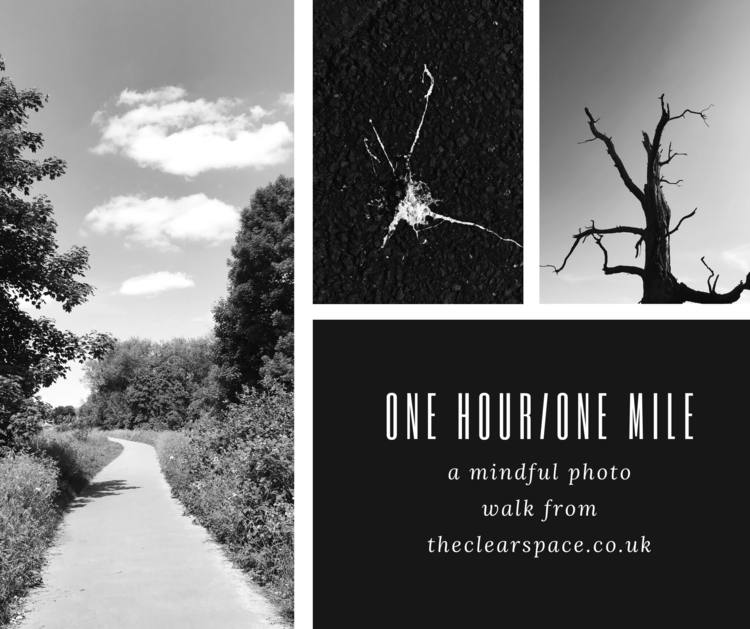
Join Laura and The Clear Space on March 16th for this socially distant and Covid safe mindful exploration!
We’ll use a combination of mindfulness and photography to really slow down and explore the environment. Our initial zoom workshop will involve a guided mindfulness session, and you’ll also receive a brief, along with some mindfulness and mindful photography exercises to follow on your One Hour / One Mile self-guided mindfulness photo walk.
You’ll carry out your walk using mindfulness and mindful photography techniques to engage with your environment and document your exploration.
You don’t need any experience of mindfulness or photography to take part, and the only equipment you’ll need is a camera phone or a disposable camera.
There will be an optional debrief via Zoom on the 30th March at 7pm, where we’ll talk about our experiences and share our findings.
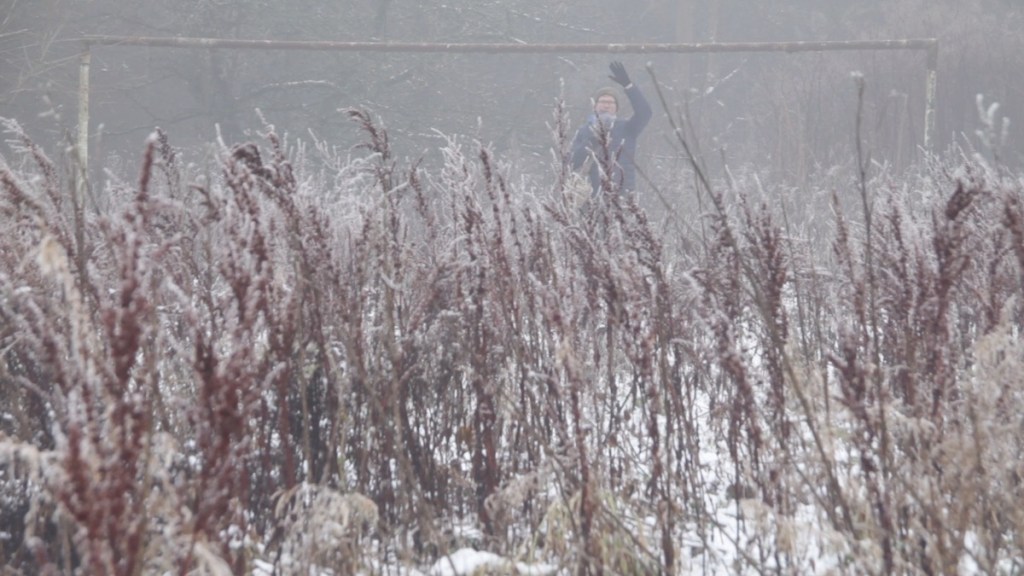
I’ve used Mind (the charity) both personally and as a professional mental-health worker a lot over the years – they’re just about the most useful resource in Britain for mental health support. So I’ve decided to walk around my local park every day throughout January to raise money for them. This might not seem much but it’s this type of simple activity that keeps a lot of us going. To make it a bit more of a challenge, however, I’ll be taking my camera with me each day in order to make a diary-film about this experience within my local environment, which I hope can be an additional and beneficial outcome for others. It’ll involve walking, looking, listening, talking and maybe even some singing…
That was my mission statement when I began this project at the start of January. One of the fun things about setting yourself simple restrictions, however, is allowing the improvisation of daily making within an uncontrollable environment loosen those restrictions almost immediately. This is my second attempt at a long-form diary film within the past few months and I’d recommend it to anyone wanting to embrace a lack of preciousness and the idea that what we cannot plan for can be often more interesting and rewarding than what we think we want.
You can watch the film, which is updated weekly until the end of January, here:
And your donation would be greatly appreciated here.
About Owen
Owen Davey (sometimes known as OD Davey for musical purposes) is a Manchester based writer, director and performer, working in song, film and the gallery. In 2014 he founded Video Strolls, a nonprofit that curates art and film events that explore place and journeying.
He is currently an AHRC North West Consortium funded and Disabled Students Allowance supported PhD candidate at the University of Salford, doing practice-based research into ‘The Enfoldment of Song and First Person Filmmaking’.
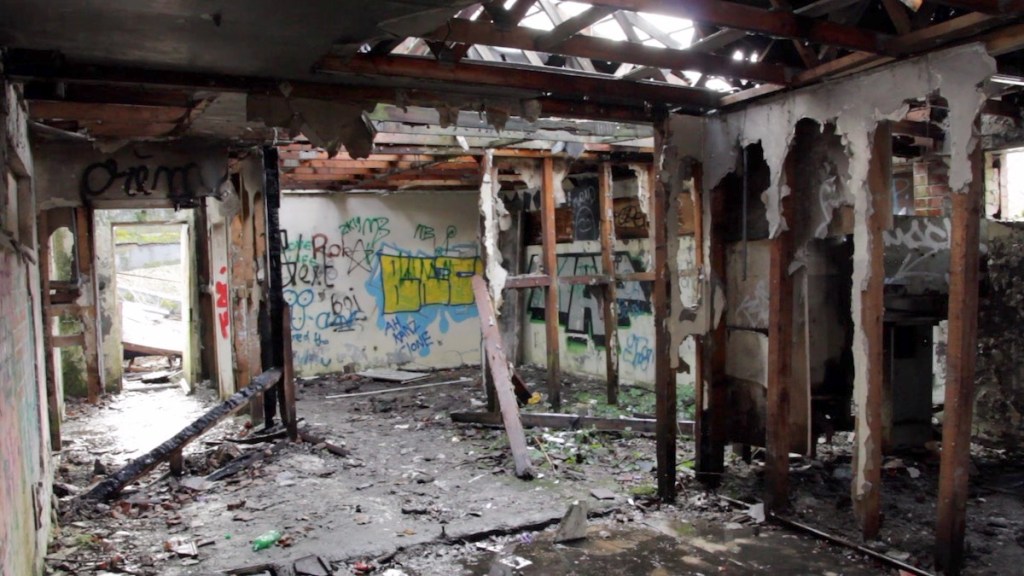
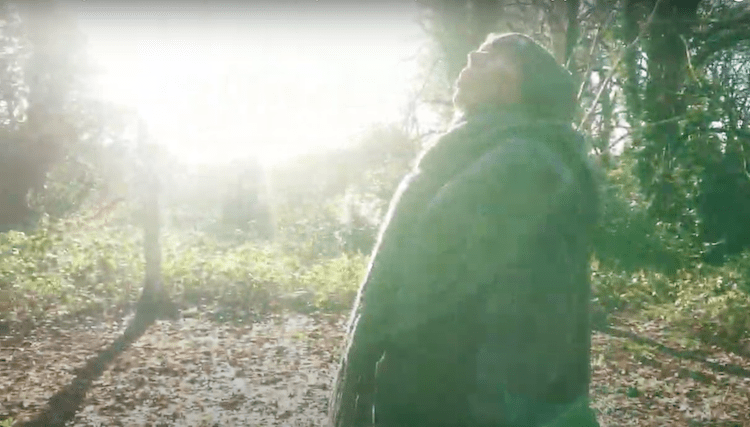
On Christmas Eve I met up with local podcaster and author of At Walking Pace, Nyla Naseer for a walk around Highbury Park. Nyla captured some of the walk and conversation on video for her walking-themed YouTube channel. Part interview, part impromptu tour of some of the park’s curios (including an “Angry Wall” and a Twin Peaks-style tree circle), we hope you enjoy this little wintertime jaunt.
We recently published an extract of Nyla’s book which you can read here.
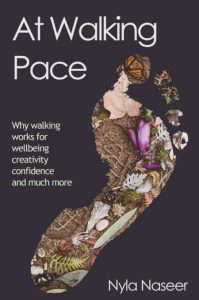
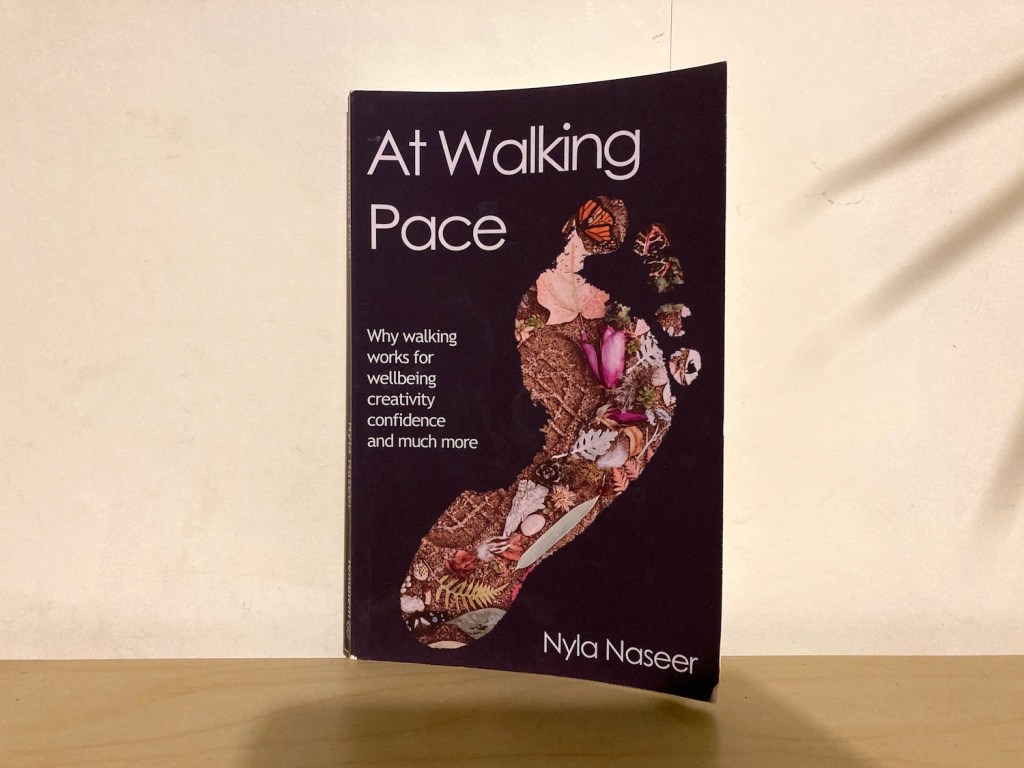
Nyla Naseer is an author and walker based in King’s Heath, Birmingham. During lockdown she wrote a book to celebrate walking. ‘At Walking Pace‘ was published last month, is easy to read, well researched and has one of the most pleasing book covers of all the walking books!
Nyla’s book is all about how walking can be used in different ways – for wellbeing, enjoyment, thinking and resilience.
Obviously we got in touch straight away to suggest going for a walk and to chat about walking in the process (because we are nothing if not meta here at Walkspace).
We also cheekily asked if we could republish an extract from the book. So thank you Nyla for the opportunity to support a local author. Here is the chapter on art and creativity that first lured us into buying the book.
Please do scroll to the end for links to buy At Walking Pace, to be a part of the accompanying podcast and to find out more about Nyla’s work.
…
There is no universal definition of creativity, but a common definition outlines a creative idea as being novel or original as well as useful, adaptive, or functional. It is the first criteria that applies to the ‘arts’ and the second criteria that applies more to problem-solving and work (more of which later). Taken together, the two dimensions of creativity play an enormous part in shaping personal and societal development.
Earlier in this book I described how writers and philosophers though the ages have used walking to generate their ideas. For example, Aristotle, used to give lectures while walking around his school in Athens, followed by his pupils who became known as ‘peripatetics’ (meaning moving around). Charles Dickens was an avid daily walker who regularly walked twenty to thirty miles a day! Other groups of creatives, including musicians and visual artists have turned to walking to inspire them. Beethoven, for example, relied on daily walking forays for inspiration; during his walks he would continue to write music, scribbled on sheets of music paper that he carried with him.
Visual artists have long been inspired by the landscapes they walked within. Think of any painting by a landscape artist such as Turner and you will instantly feel aware of the walk that they took, ending up at the point that they decided to capture for us. Not only have artists used walking as a way of replenishing their energy and wellbeing, they have actively incorporated the walk as a way to record the world around them, stamping the identity of other walkers within their work. This, to me, is homage to walking itself.
Walking as an integral element of art has a long history. As walkers, artists gain the experience of more fully immersing themselves in their subject matter, or of considering elements such as the political, social or environmental relevance of their work. Walking is now present in art in many different ways: from collective art groups who go on walks, to the long history of political or protest walks that incorporate art forms such as music and banners. Walking and art are intertwined. Indeed walking is a legitimate form of expression in itself. Walking is an ‘attitude’.
Members of the Dada art movement in 1920s Paris organised a series of excursions to ‘places that have no reason to exist.’ Although only one of their nihilistic walks eventually took place, it sounds quite an event: the walk was accompanied by poetry recitals and was performed as a parody of a tour guide, making the walk a piece of performance art itself. A few decades later, artist and philosopher Guy Debord created walking maps highlighting ‘psychogeographic contours’ through the city, drawing attention to the ‘ambience’ elicited by different surroundings. His notion of ‘derive’ saw the city as a living organism, where a walk became a creative experience that generated feelings that could be put to use in any number of ways: from the political to the artistic (Hermon Bashiron Mendolicchio 2020). Thus, walking has long been part of a daringly avant-garde and counter-culture scene.
Some contemporary artists centre their work on walking. They make art where walking is the subject matter: Richard Long’s ‘A Line made by Walking’ photograph, showing a straight line of trampled grass receding towards tall bushes or trees at the far side of what appears to be a field, is a good example. Another is ‘walking artist” Hamish Fulton. Since 1973 Fulton has only made works based on the practice of walking, dispensing with what he feels are the materialistic shackles we live with and concentrating on the freedom that walking gives us to think and create. The walk as a symbol of simplicity and an escape from conformity is a well used artistic trope.
Another popular example of ‘walking as art’ is ‘The Lovers’, Artists’ Marina Abramović and Ulay’s 1988 performance, in which they stood 5,995 kilometres apart on the ruins of the Great Wall of China and began walking towards each other. They started from opposite ends: Abramović began from the mountainous provinces of The Yellow Sea while Ulay walked from the Gobi desert. The walk was intended as a metaphor for their love and longing, however it turned into something very different (especially since Ulay had an affair with his translator during the journey) but nevertheless interesting, dramatic and thought-provoking.
This association of walking and journeys with discovery and drama is very well exemplified in books and films, indeed there are too many to mention but I’ll pick out a couple. The classic ‘Wizard of Oz’ tells the allegorical story of Dorothy going through Oz ‘following the yellow brick road’ on a walk with her companions, whilst Cormack McCarthy’s ‘The Road’ offers a disturbing tale of a walk by a father and son though a dystopian post-nuclear destruction America. These two very different stories tap into our deep-seated identification with journeying on foot. The idea of a walk as a means of discovery is deeply embedded within written and visual culture.
Walking then is not a stranger to creative people. Historically, it has been appreciated as a thought and idea-provoking mechanism; walking therefore seems inextricably linked with the creative process. Does research reveal any rationale for walking promoting ideas creation? If indeed walking is a creative force then this opens the door for walking to become a tool, not just for artists but for work that needs people to think of ideas. So, does walking really have a positive effect on creative thinking and, if it does, what could be its greater impact at work?
[To find the answers, you’ll have to read the book! – Ed.]
At Walking Pace is available through the various book retailers, including Amazon and Waterstones. There is also an At Walking Pace podcast – details below.
About Nyla
Nyla Naseer lives in Kings Heath. She is a writer, podcaster and vlogger. Her tough and totally un-stereotypical background brings alternative perspectives to her work.
She has a lifelong interest in people and ways of life, building a repertoire of knowledge for her writing and work on resilience, wellbeing and behaviour in general.
The outdoors, and walking in particular, has been central to her life and is a thread through her research and writing.
Nyla has two masters degrees and a BSc but describes herself as a ‘street-hustler type’ and ‘an interesting person with potential’.
Podcast opportunity
Nyla is interested in interviewing fellow walkers for the At Walking Pace podcast, which broadcasts on Spotify, Apple, Google and more.
In it, she talks to guests about walking, taking them on random walks and sharing views and ideas about living in a more human-paced way. The podcast encourages walking, lo-fi living, and taking things a bit less seriously.
If you’re interested, please get in touch via her website: At Walking Pace. You can also listen to the latest podcast and read more about Nyla’s work there, too.
Walkspace is teaming up with visual arts duo Hipkiss & Graney for a walk and artistic ritual to welcome the sunrise on the shortest day of the year.
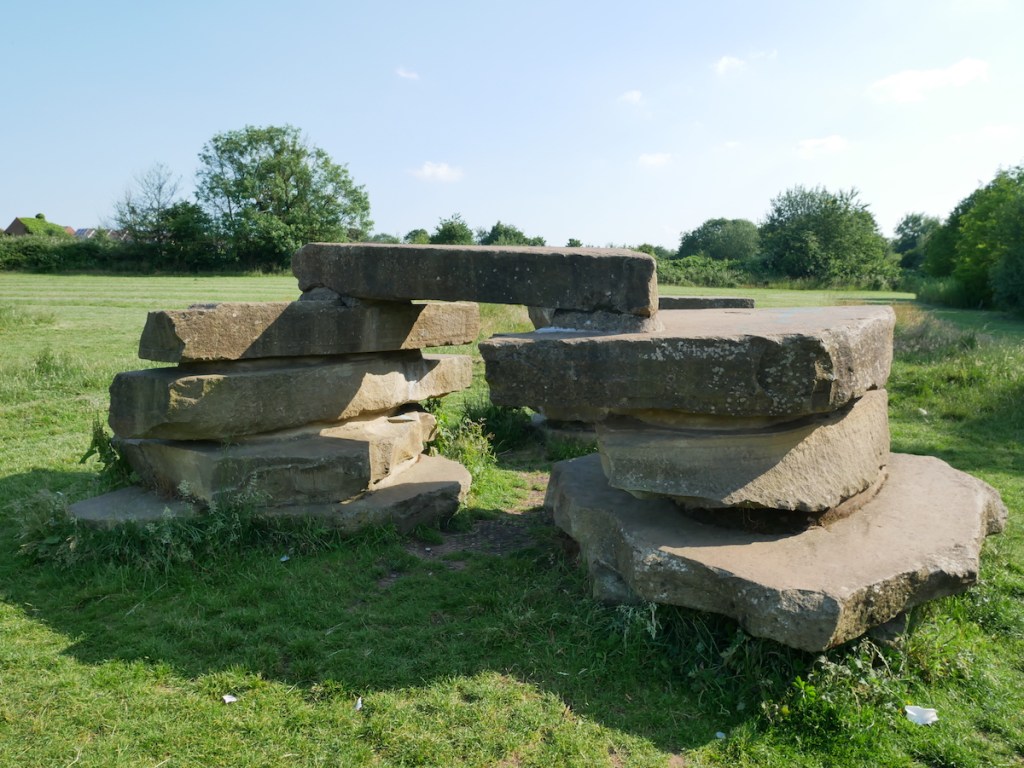
Join us by the monolithic stone table in Hazelwell Park at 7:30am on the Solstice (21 December).
From there we begin a gentle walk from the lowest point of the valley to the highest point to observe and appreciate the sunrise on this Solstice.
Upon arrival you will be given a lantern to carry as we embark on our journey. Once we are overlooking to rooftops of Stirchley you will be given black indian ink and plentiful paper to capture the sunrise over our little community.
Sunrise is at 8:16
BOOKING A SPACE In accordance with Covid restrictions places are very limited. To book onto the walk email: hipkissandgraney@outlook.com If you find you can’t take part we would appreciate 24 hours notice so we can advertise the available space.
CLOTHING Make sure you’re layered up, nice and warm and wearing walking shoes as it can be quite muddy.
Transcript of a talk given by Megan Henebury about her walking project, A Figure Walks, on November 24th 2020.
A Figure Walks: the Rea, and other rivers you can’t see, is an ongoing project applying my walking practice to a psychogeographical investigation of Birmingham’s River Rea. The expected results are an essay, a short film, and an archive – together forming a body of work that will define my BA in Fine Art.
Over the summer, I was inspired by the thinking of Donna Haraway in her 2016 book, Staying With The Trouble: Making Kin in the Chthulucene. I’d been told she wrote about pigeons – this was enough to make me seek her out. But her ideas about a new ecology concerned with interspecies kinship, making space to acknowledge intimate relationships between more than just other human beings, led me to reflect more consciously on the way I communicate with other bodies, other things, how I feel for them, gather them, accumulate them.
My walking practice is a performance, but recording it is instinctive. I have filled pockets, taken photographs, made field notes and sketches. If I don’t, I can’t say with certainty that I’ve done anything at all. Stones, birds, fungi, litter, scum accumulated in polluted corners, moss, broken birdhouses, clouds of midges, used stericups, condom wrappers, bramble, snails: these are all soggy extensions of my own unclean presence in the river’s cut, and I need to acknowledge them. I anticipated a personal reaction to the walks, to the things I have met, but I falsely believed I would be in control. The reality is different.
At the beginning of October – bringing in autumn, my favourite season – piercing boggy soil in my wading boots and clearing pathways through gnarls of bramble was a joyful escape: the honeymoon period of a new relationship between me and this wet, secret place that was both a stranger and home. But here now, in late November, I’m only halfway through. I last stepped out of the Rea as it passes under Cartland Road at the edge of Stirchley. And now that my walk has brought me closer to those long, hostile culverts that hide the river beneath the industrial grind of the inner city, the truth is that I don’t really want to go back in.
I allow heavy rains to delay walks, feigning disappointment. I injured my back on the last walk and, wrapped up warm in the glow of tramadol, I felt relieved that this too would keep me out of the water a little longer. Lockdowns under other names have prevented friends from accompanying me, and my own chronically despondent way of being means I’m reluctant to push ahead.
Forward is not my natural state. I prefer to linger in familiar spaces, long after all light and life has passed through them. I realise, to my horror, that this plateau in the project is a garish analogy for every other relationship I’ve sabotaged via refusal to work, to change, to go Forward. It may be more comfortable to hang around old, familiar shadows, but they’re cold and long dead and have nothing new to tell me.
The Rea is a river you often can’t see. It begins as a messy, chaotic network of puddles, streams and bogs before it approaches Longbridge and becomes remotely recognisable as a rivery thing. Those early streams are flowing somewhere – but on that first walk, I couldn’t find them, or couldn’t get into them, or lost patience entirely and retreated to footpaths. I can only imagine how the Rea must feel, having no other choice. So, following its lead, I cut other routes, make new mess, let the work change, listen to other bodies, and take different walks.
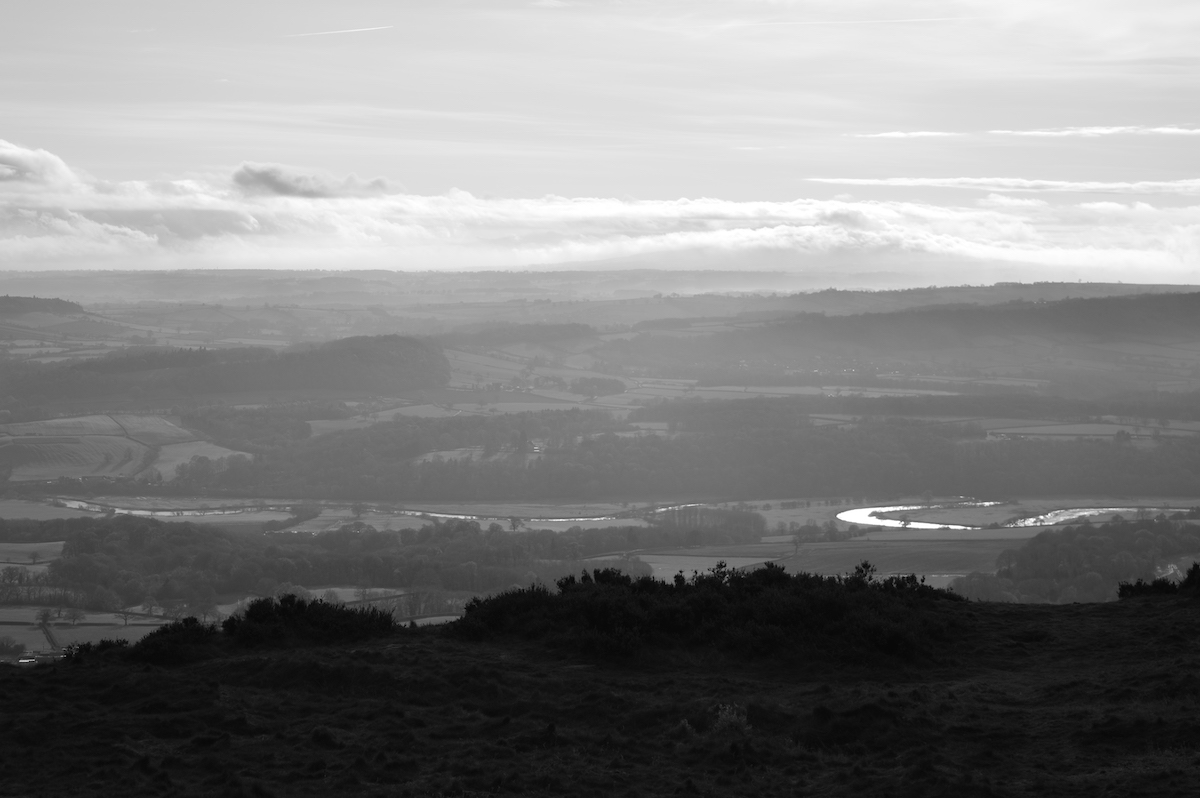
From the top of the Wrekin, the hill that keeps watch over much of the West Midlands, the sparkle of the River Severn a few miles south west catches my eye. It’s the longest river on this island, and a source of our tap water. I watch the late autumn sunlight shatter over its snaking course – from this distance, it looks deceptively still. I realise I am still working after all. There is an old regional saying about going all around the Wrekin. It’s a lovely, lyrical way to tell you, usually in exasperation – you are taking the long way around.
We last wrote about Birmingham-based artist Kruse in February – Wayfaring with Kruse – and then something must have happened that got in the way of all that beautiful creativity…
Happily she is now back after a nine-month hiatus, writing on her walk blog and taking cues from climate change and autonomous things and women walking. Here she invites us to walk as part of nature rather than as a disconnected spectator in You are wild too:
“Do you see the wild birches growing in the disused city lot? The free birds that nest in them? The feral grass growing in the cracks of the pavement? The unruly mosses that make little gardens along the walls? Do you hear the wild foxes and rats that trash the bins and range across the dark city streets?
“You are not separate from these wild things. Your body is host to billions of bacteria, everything you eat connects you to everything else. You are home, you belong here, you are nature, you have not been cast out.
“I invite you to take a walk with the mentality that you are a part of nature, not separate from it.”
Are you up for a vicarious walk across Japan starting tonight?
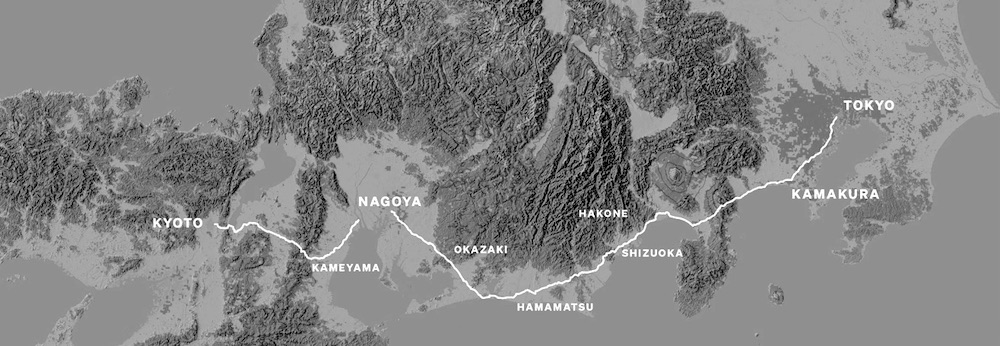
Craig Mod – writer of Roden and Ridgeline newsletters – is inviting people to join him on his durational walk 500km from Tokyo to Kyoto. It starts when he turns 40 at midnight tonight and he will walk daily until the end of November.
He is asking people to sign up and respond to daily walk newsletters with some kind of action that will be turned into a book of the walk.
To explain:
Each day I’ll send out one photograph and a 200-words-or-fewer missive. It’s meant to be visual, short and punchy. A Low Impact™ email. Something you’ll be happy to peek at.
It’s going to be weird! We’ll meet strange folks! Eat pizza toast! Walk along highways! Play some pachinko! Smoke disconcertingly cheap, unfiltered cigarettes! (OK, maybe not that last one.)
Roden 047
Craig Mod has form doing this so it should be enjoyable and an interesting journey to a part of the world that I’d love to visit.
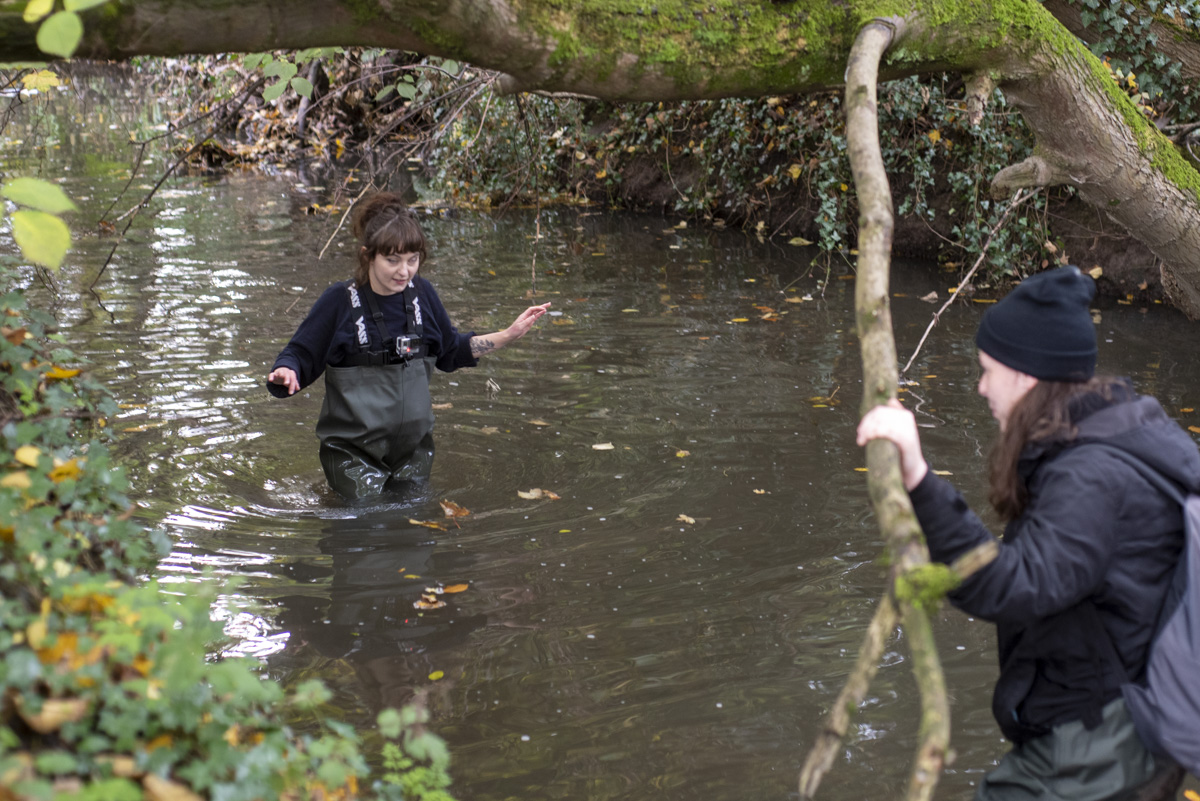
For the fourth stretch along the Rea, Megan was joined by another wader, her friend Lin, whose effect on Megan’s mood was dramatic. They started in Kings Norton Park and by the time I joined them with my camera at Lifford Reservoir, a serious artist doing serious work had transformed into a grinning loon (doing serious work).
As Stirchley residents this was home turf, but it was still novel for me to be walking this area at such a slow pace, waiting for Megan and Lin to make their steady way through the frequently deep waters. I found myself contemplating the many paths that had been beaten through the undergrowth from the footpath to the river, seemingly with no purpose. Then it struck me – they were desire lines carved by dogs desperate to get in the water.
Dusk called the day to an end on Cartland Road. Three days later the November lockdown was announced, putting the walk on hold. Stay tuned for developments…
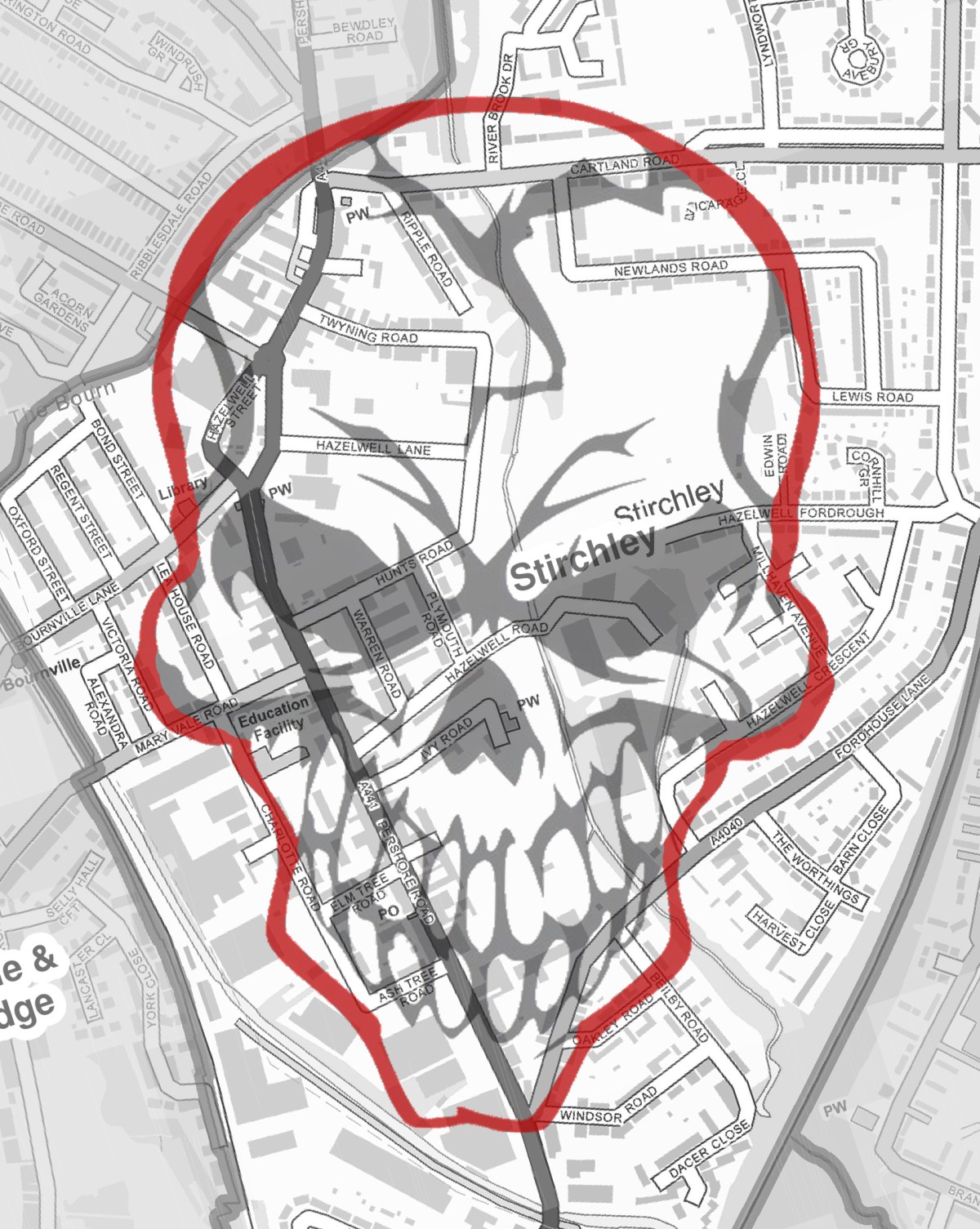
We wanted to do an informal rule-of-six compliant Halloween walk, so Fiona grabbed a scary looking skull of the internet and laid it on top of a map of Stirchley to see how it might fit.
We’ll be following the red outline as best we can on Saturday and then retiring to our garden for skyclad dancing a beer or two by the fire.
Following a shape randomly drawn on a map is an old flaneur trick, forcing you to follow routes and paths you wouldn’t normally consider. Andy and I used this for our Cross City Walks project, drawing straight lines and trying to stick to them. Bill Drummond famously scralled BILL on an A-Z map of London and tried to walk it.
The thing with this is not to try and do it religiously. Not only does this often lead to barbed wire and trespass, it missed the point of the exercise which is to get off your beaten tracks and start associating areas you might be familiar with in new ways.
For example, despite living here for over a decade I’ve never walked that specific route down the right-hand side of the skull, from Cartland Road, down a cut-through to Newlands, then across the park to Millhaven Ave and down Hazelwell Crescent to the river. Always nice to have a first.
Of course, not everyone lives in Stirchley, so we’ve prepared a transparent PNG for you to overlay on your own map.
Enjoy your spooky walk!
Update:
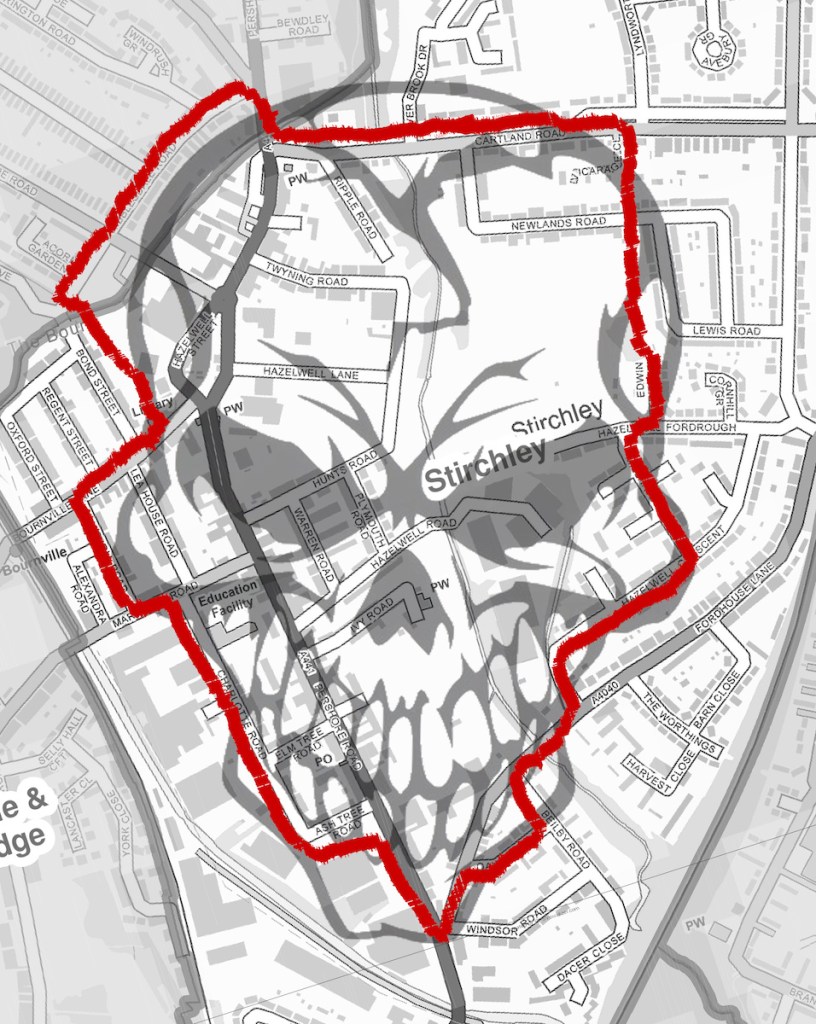
We did the walk and had a lovely time. Fiona recorded a GPS trace so here’s the skull-as-walked!







 Walkspace
