An invitation landed in the Walkspace inbox that was too good to pass up:
“I’m writing to bring your attention to an event – the launch of a pamphlet of writing about walking – that might be of some interest to your members. I’m told there aren’t many tickets left, but there’ll doubtless be walk-ups.”
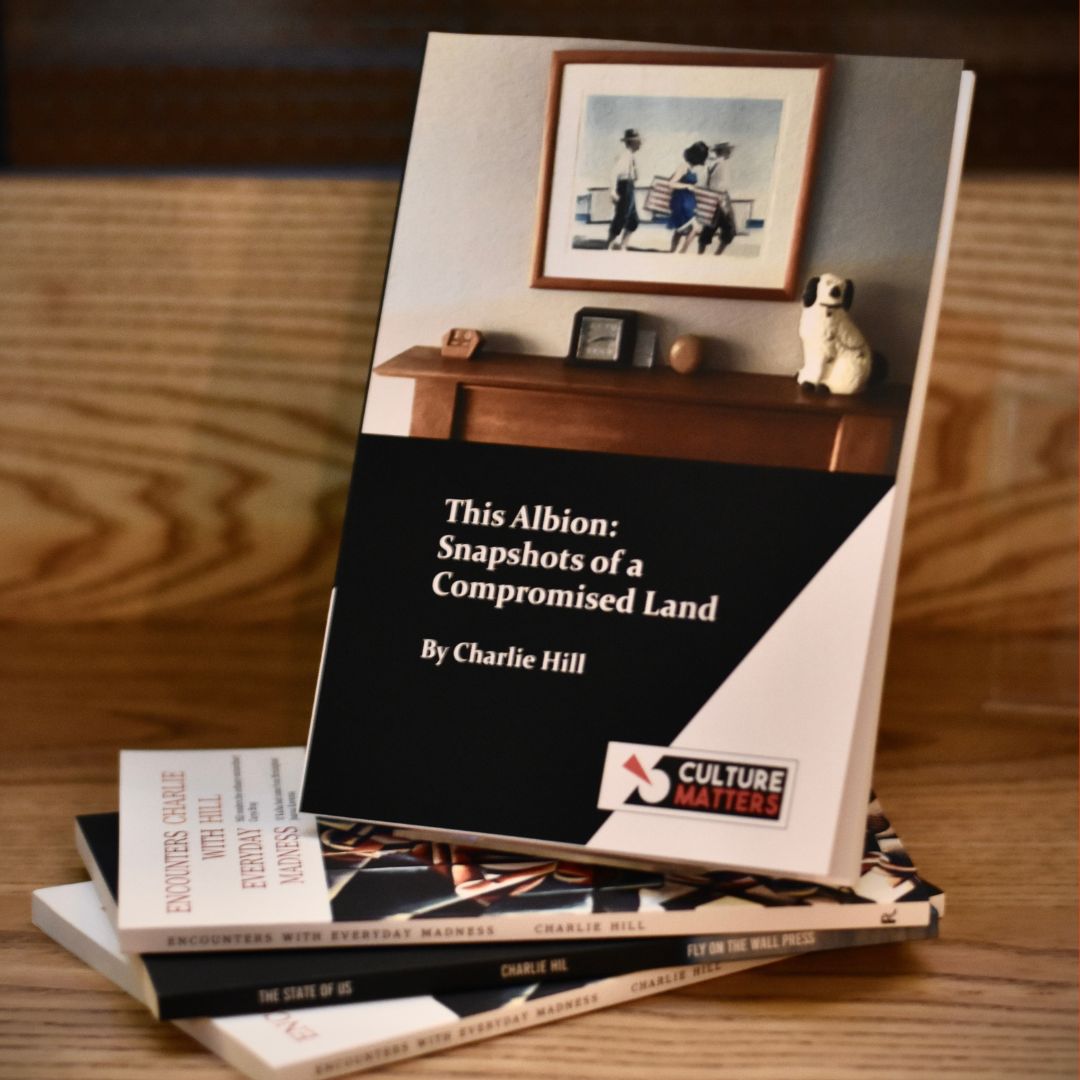
The event was hosted by Voce Books and the pamphlet was “This Albion: Snapshots of a Compromised Land” by Charlie Hill, an author once described as Birmingham’s answer to Franz Kafka. Curiosity piqued, a group of us headed out to Digbeth on a bitter November evening to see what Birmingham’s Kafka had to say about walking.
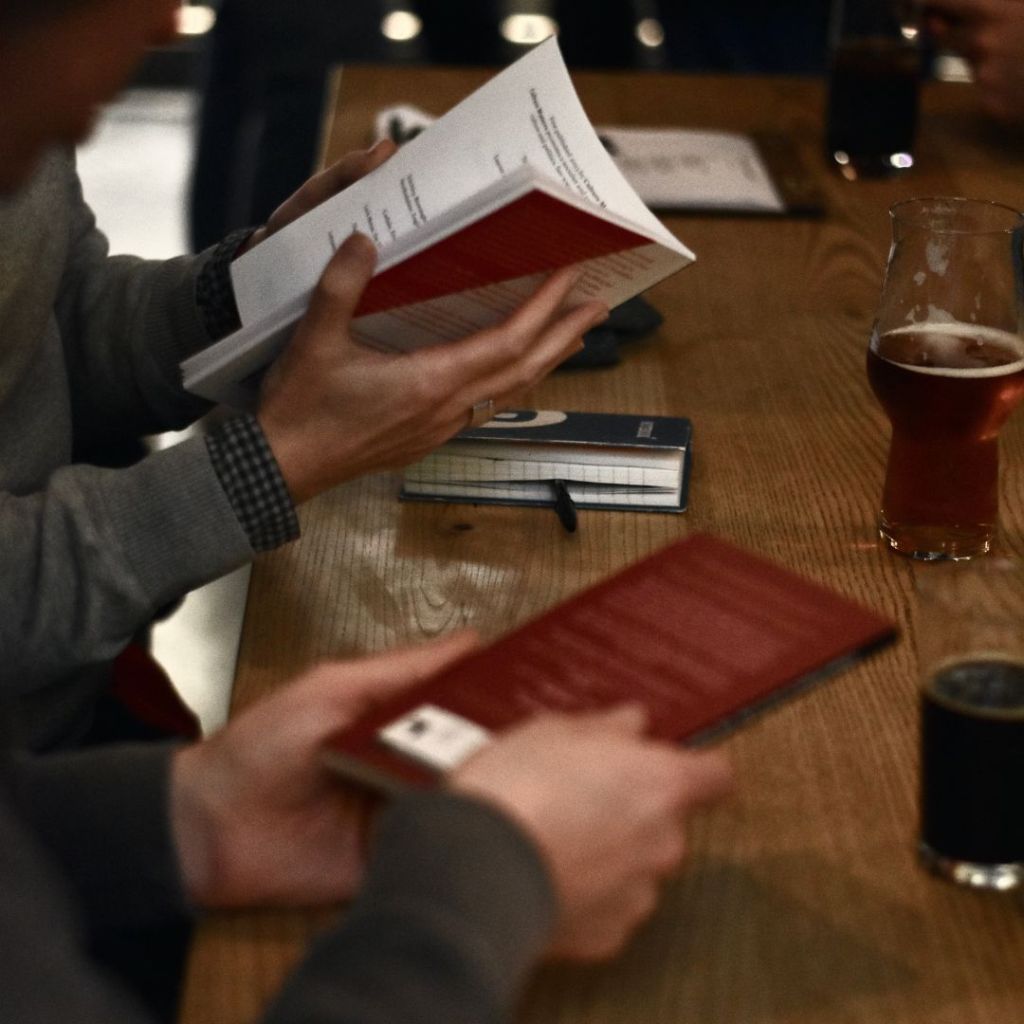
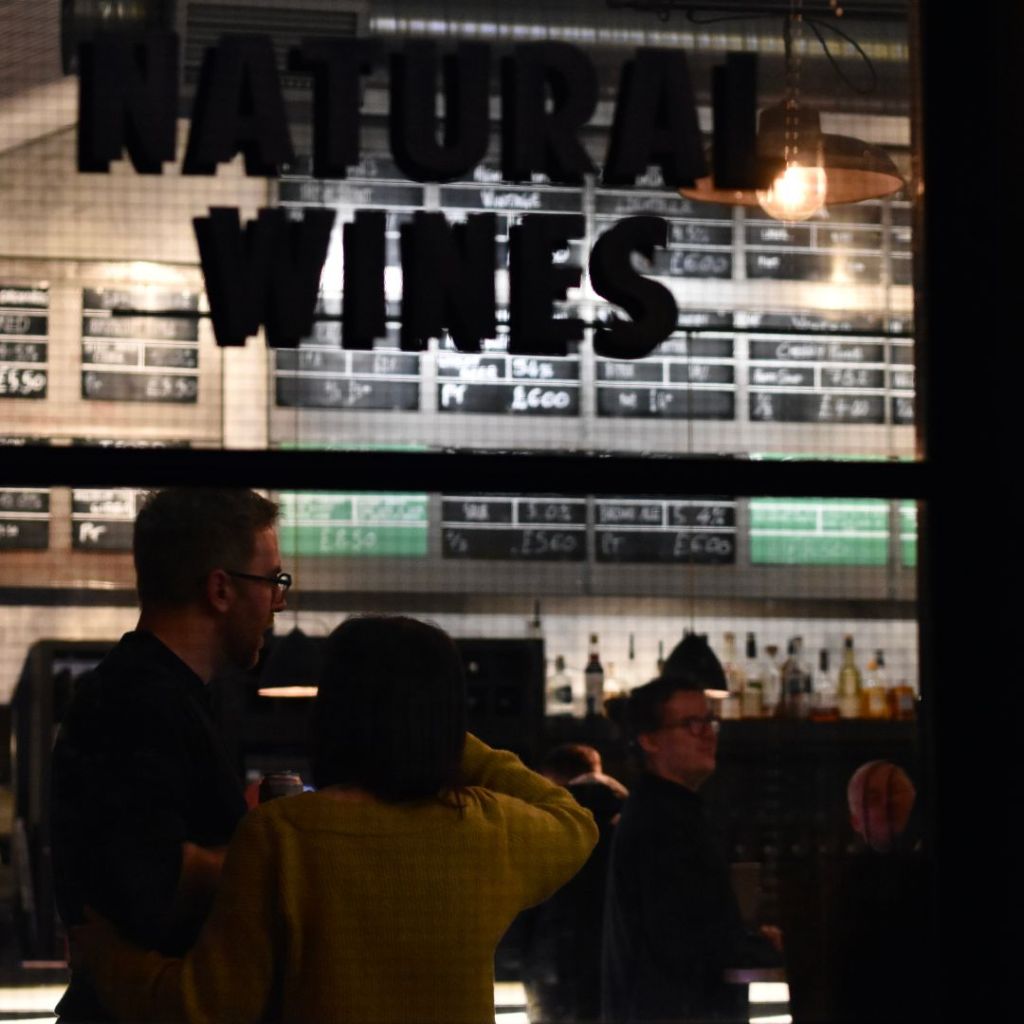
In the last two years Digbeth has become a hub of Birmingham’s literary scene with the arrival of Voce Books and the founding of Floodgate Press. Between them these two have done invaluable work in championing and showcasing homegrown talent, revealing just how much great writing there is going on in the city. Stepping into the railway arches that house Kilder Bar for one of Voce’s events, you can feel the buzz in the air, and this night is no different.
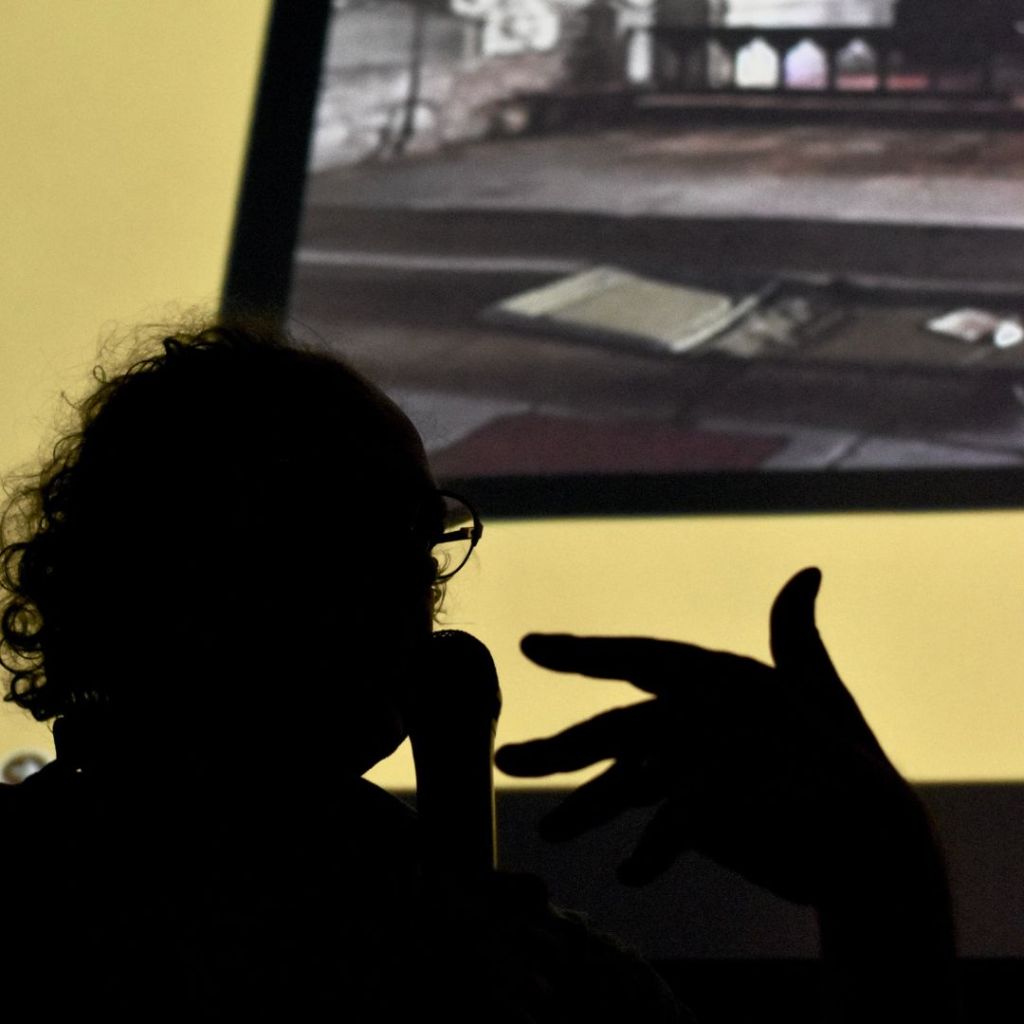
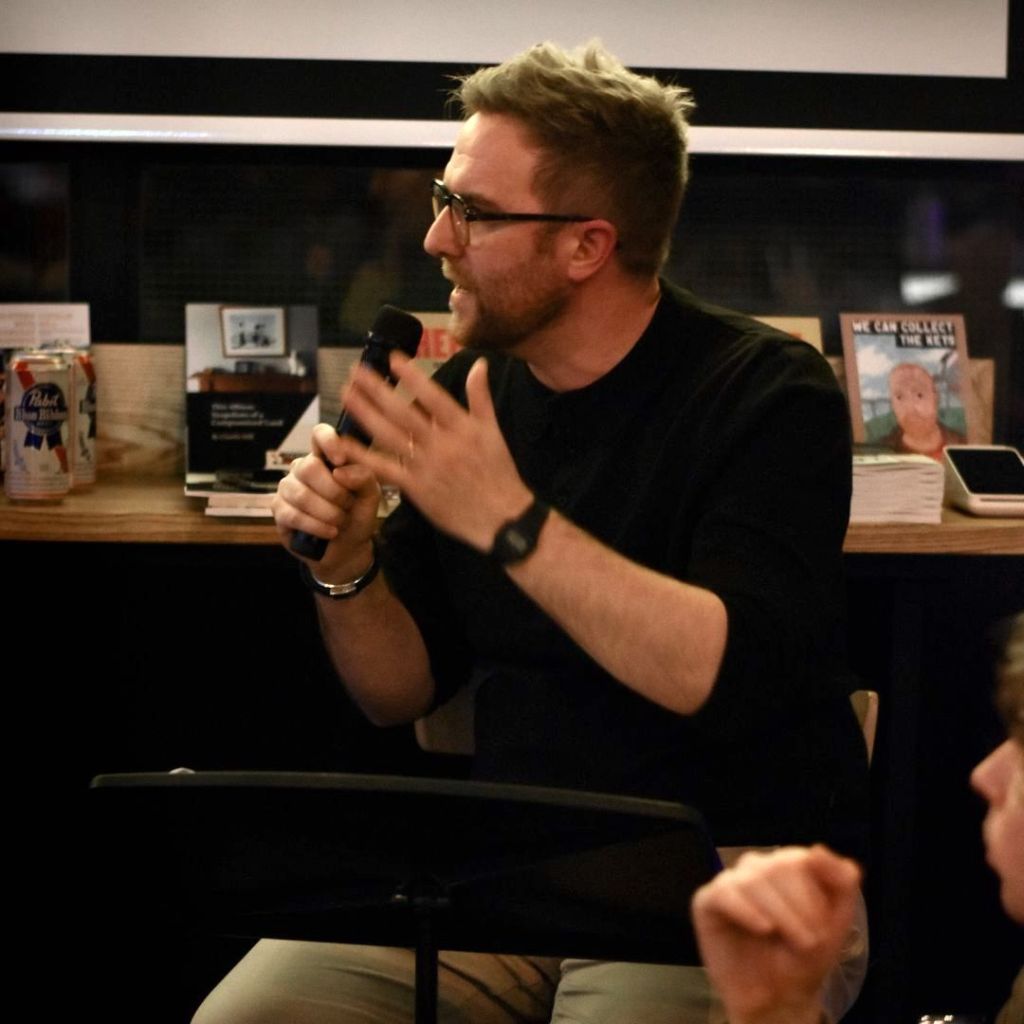
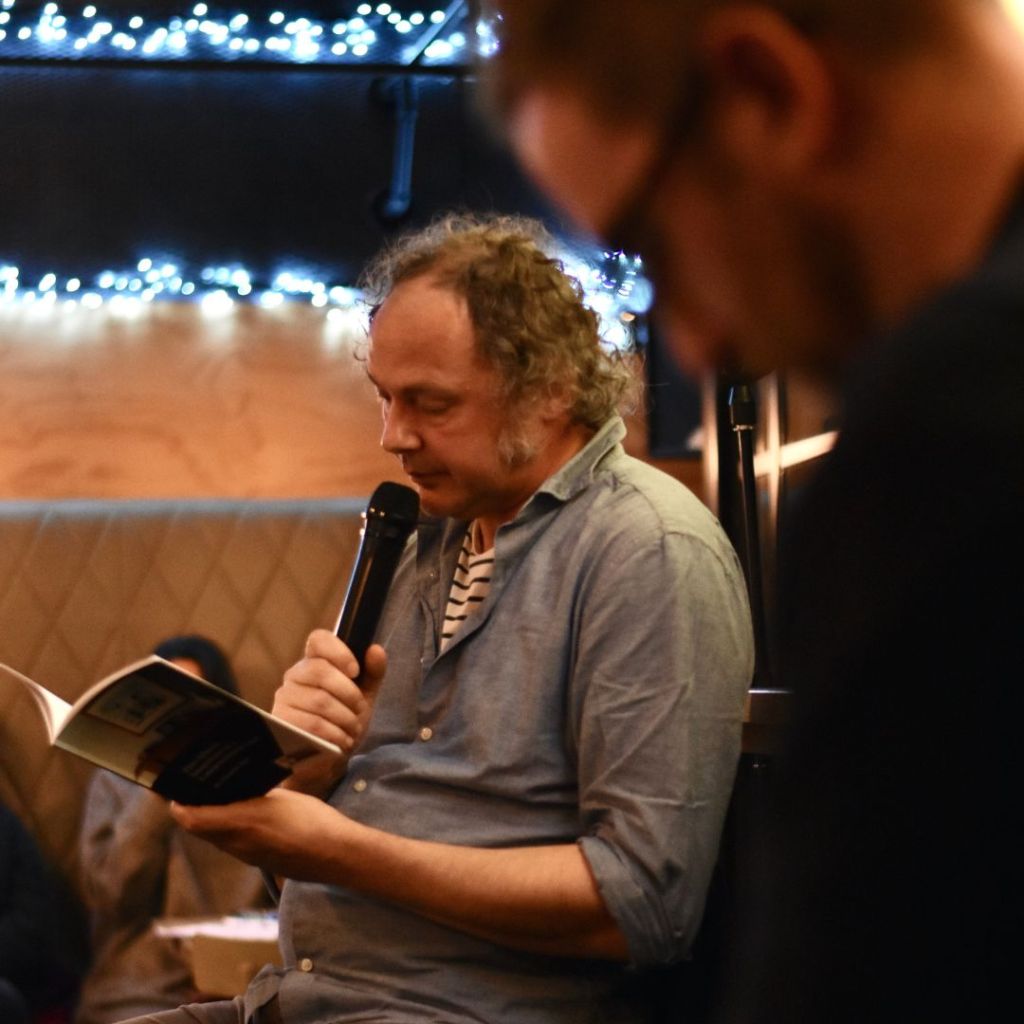
Another sell-out event, we fight our way to the bar and then take the only seats left, right at the front, within sniffing distance of the author. The night unfolds as a casual back-and-forth between Hill and Voce Books co-owner Clive Judd, riffing off some of the themes explored in the book such as authenticity, “champing” (church camping), the joy of Premier Inns and the overuse of the term “edgelands” in contemporary place-writing. Photos from the book appear onscreen behind them; literal snapshots from Hill’s travels, demonstrating his eye for the absurd within the mundane.
The book itself is an offbeat travelogue and part memoir that is by turns poignant, sardonic, world-weary and compassionate. Over the course of its modest 47 pages we visit 21 locations across England, Wales and Scotland and are treated to Hill’s observations and musings about second-hand bookshops, old pubs, Victorian cemeteries and the etiquette of countryside walking. His writing is direct and concise, sometimes very funny and he has a way of crafting a final sentence that reframes all that’s come before, landing a real emotional punch.
With the subtitle “Snapshots of a Compromised Land” this easily could have been a lot of sneering from another grumpy old man but mercifully that’s not the case. Don’t get me wrong, Charlie Hill IS a grumpy old man but his grumpiness stems from a long-simmering rage and sadness at the injustices and indignities of a land riven by inequality. There may not be much hope in these snapshots but there is plenty of humanity.
Charlie kindly shared with us this extract about the Birmingham to Worcester canal to give you a flavour of the work. If you like what you read do consider buying a copy through the link below.
…
Birmingham to Worcester Canal
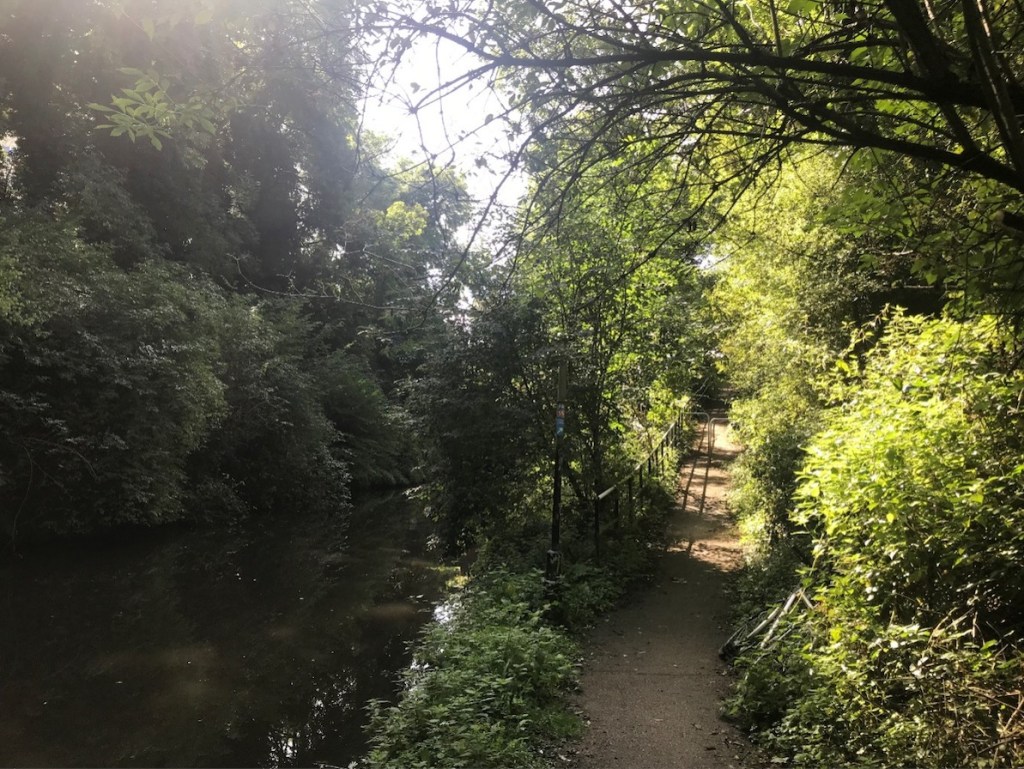
The canals of Birmingham – with their kingfishers and railway lines, their willow herb and jays and graffiti – exist outside the less obviously mutable suburbs they pass through: underneath too; the banks of the towpath are steep and dark and when you re-enter the city, you emerge blinking with surprise at where you are, and how different the light seems.
There’s a directness to walking the canals. Although they turn corners and curve, they feel like 18th century ley lines connecting factory yards, parks, churches, and other areas of communal ritual. The Birmingham to Worcester canal is like this. From the city centre it goes out past the commercial junctions of Five Ways, through the student accommodation and apple trees of the Vale, past the university itself to Bournville, where the station is done out in Cadbury purple and the air smells of chocolate. You might see egrets here.
Just beyond Kings Norton is Wast Hills tunnel. It’s a mile and a half long. Kings Norton is a parish that used to be in Worcestershire, outside the city’s boundaries. There is no towpath through the tunnel and walkers are sent up and onto the Hawkesley estate, in the overground outskirts of the suburbs. Once I tried to find the other end of the tunnel, setting off past a canalside cottage and a large secondary school in the direction a heron might fly.
I didn’t find it. Roads sweep through Hawkesley but it’s warren-like in places too, with shortcuts as criss-crossed as the towpaths seem straight. There are discarded shopping trollies in this closely-knit patchwork of social housing, twisting alleyways and shin-high picket fences, there are desire paths, and deep scarlet haws in confusions of undergrowth. It’s easy to project, to romanticise this anti-burb, this liminal space, this neither-one-thing-nor-the-other-ness, and that of the waterway that has created an underworld beneath the estate; the entrances to the tunnel are called portals, and I found Yarrow Drive led to Harebell Gardens, which led to Bargehorse Walk. But it’s worth remembering that the canal was cut into the earth like an industrial wound, by working people who died in its cutting.
This Albion is available to buy at Culture Matters. Charlie Hill’s other published works can be browsed on his website.
About Charlie
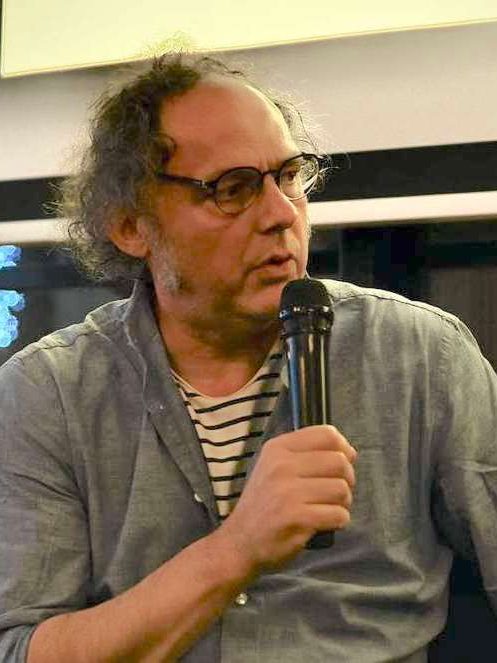
Charlie Hill is an internationally-acclaimed author from Birmingham. He has written long and short form memoir, and contemporary, historical and experimental fiction. He has been described by Natalie Haynes as ‘the chronicler Birmingham needs’ and compared by his fellow writers to Kafka, Beckett and Georges M Perec. His second collection of short stories – Encounters With Everyday Madness – was shortlisted for the 2024 Edge Hill Prize.
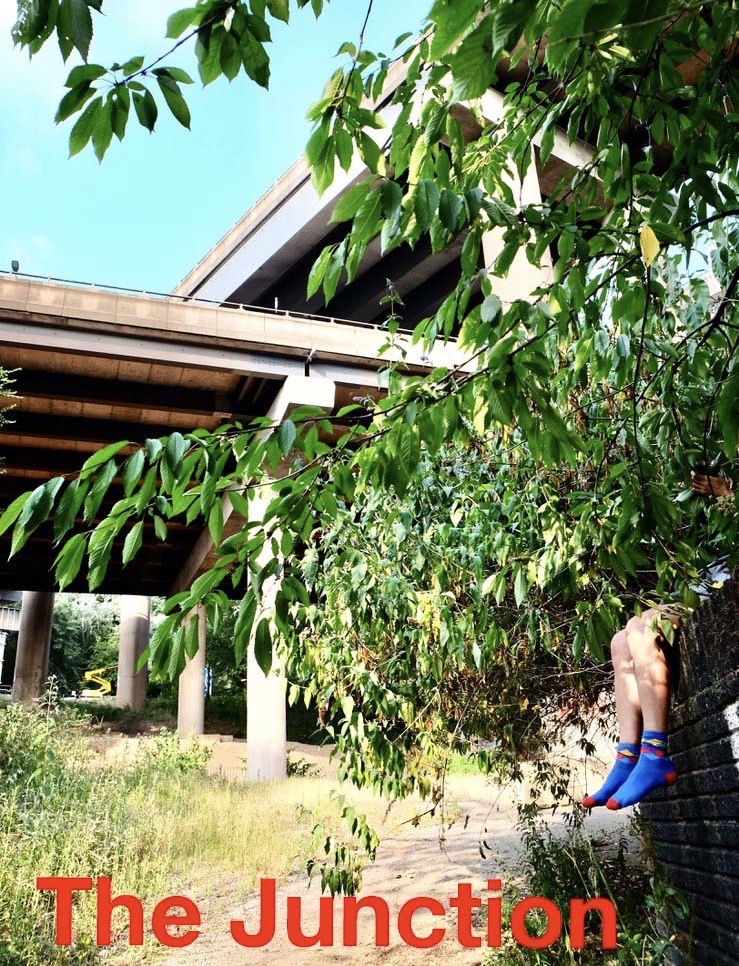
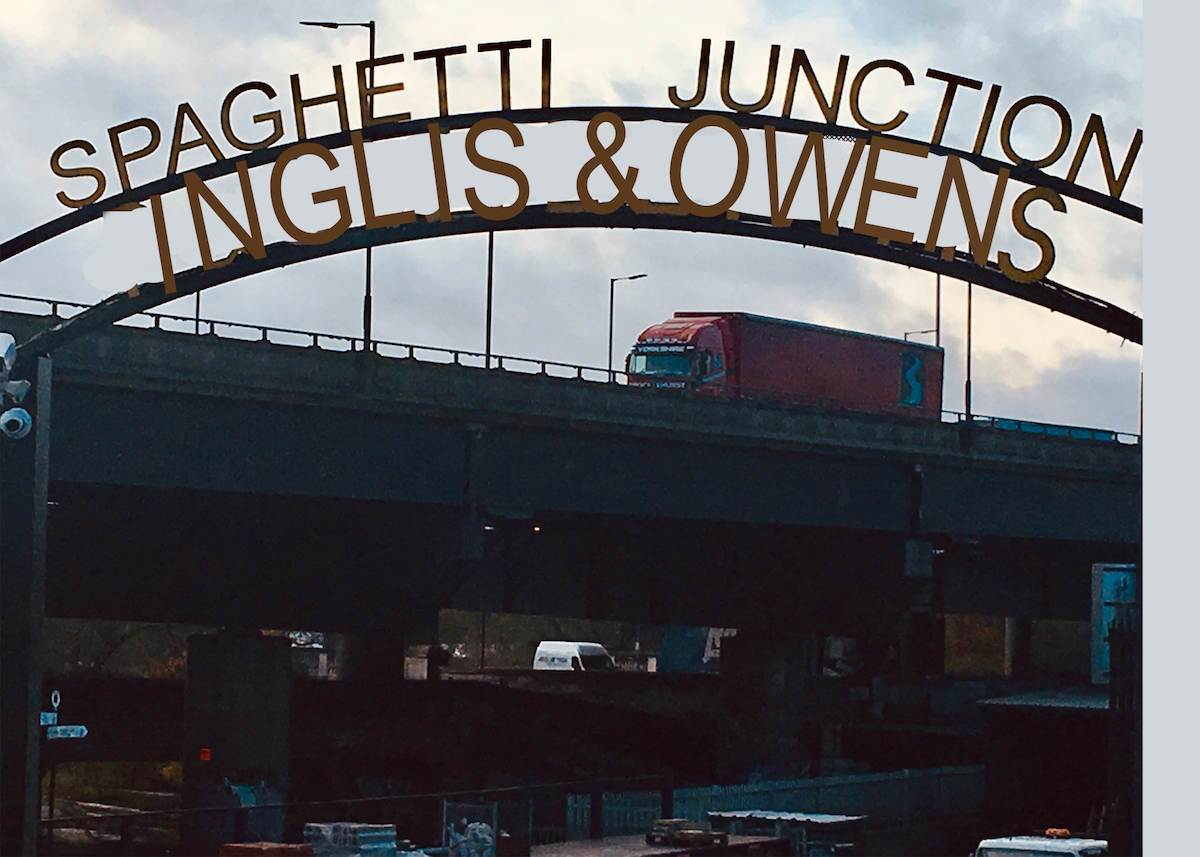
We wanted to celebrate this overlooked landmark, its construction created the Motorway system and it is vast. We spent two years meeting up in Birmingham (we live in Edinburgh & Sussex respectively) and explored the site on foot throughout the seasons. We both grew up in the Midlands and Spaghetti Junction was part of our childhoods.
What we found was two Junctions. Beneath concrete superstructure lies an older, darker junction ,a network of rail line, river, canals and foot/cycle paths intersected by feral undergrowth.
The Junction is part of a wider series examining places of significance throughout England. We are working on a project looking at the Thames Estuary and in the future we want to look at the border with Scotland.
About the Artists
Emily Inglis and Rachel Owens go on walks and make art; their creative collaboration is based on a thirty year friendship and the interplay of tensions and class differences contained within it.
What does walking mean to you? I guess, seeing as how you are reading this, walking is something you enjoy. I wonder why? What is it that you like about it? I wish you could tell me.
For me, walking is powerful medicine. Walking is what humans are designed to do and those of us who can do it will reap many physical benefits from it. Walking is also medicine for my mind and very probably for your mind too. Walking helps us think, improves our brain function, teaches us to be more alert and aware of our surroundings. But most of all, walking is medicine for my soul. I walk to enter my church.
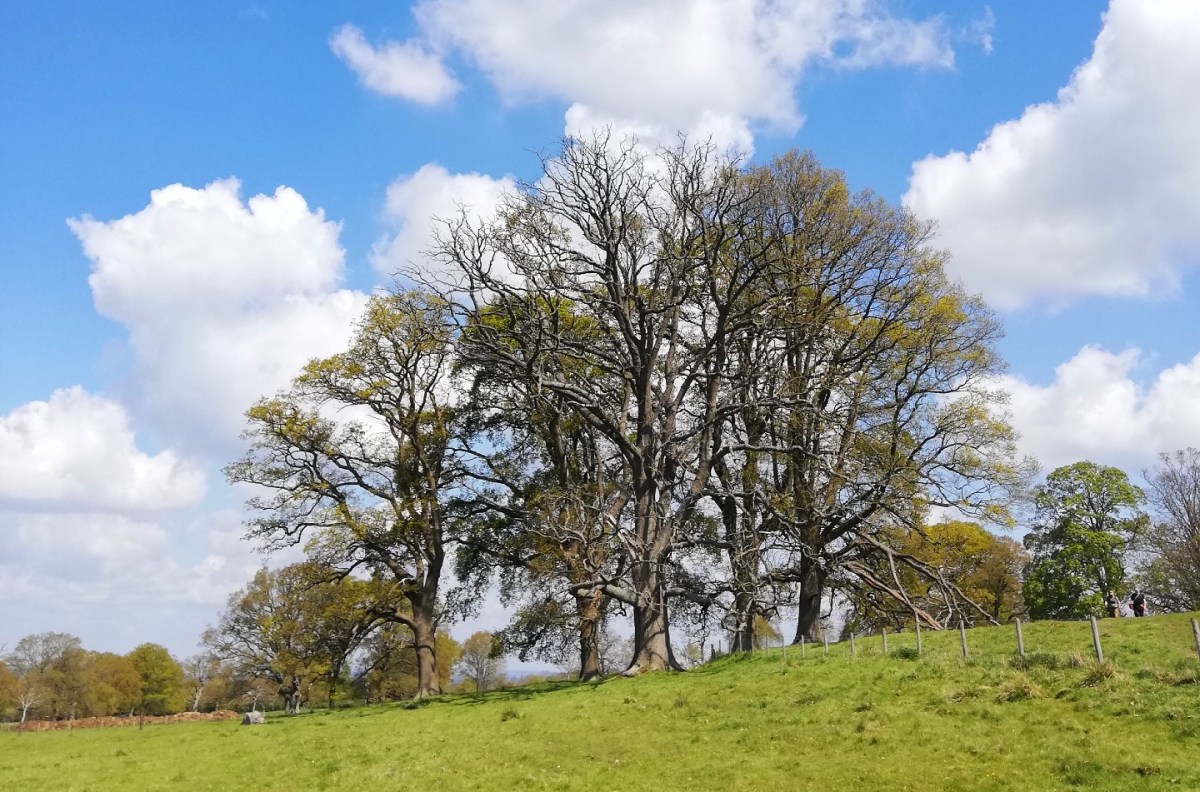
My church is the land. I enjoy walking best in wild places, where that connection to the land and the other non-human people in it is vivid and strong. But even in the city and sometimes on agricultural land I can find that connection and take enormous joy in being surrounded by green, living things, especially trees. Trees are the pillars that hold up my church.
Have you ever planted and nurtured a tree? I hope you have because it is a wonderful thing to do. When we moved to our present house our long suburban garden was nothing but grass and a concrete path to a broken shed. Birds whizzed over our green desert but never stayed. So I planted two apple trees, a quince and three maples. The squirrels planted an oak and two hazels and the birds planted (deposited really) three hawthorns and came to visit (one year we counted thirty different species of bird here). The maples I grew from seed and they are now, at 11 or so years old, beautiful and tall young saplings. The apples and quince are also beautiful and give lovely fruit and the wild, squirrel-planted oak is a joy to watch growing. I hope it will become a mighty tree, but as we are only renting, I do wonder if it will make it.
But think of it, to watch the birth and growing of beings that might live two hundred, three hundred, maybe even as much as nine hundred years! To stand taller than a being that one day will be taller than your house, to see how the trunk and spreading branches begin their first tentative growth. It’s an honor.
In my church there are many cathedrals. Living temples. One might be a stand of beautiful beech on an old long-barrow, another might be a row of elegant limes on a city street, yet another might be a single ancient yew in a churchyard or deep in a wood. When I stand among these fully grown, mighty beings I am moved to spontaneous prayer, a deep joy and lifting of my soul. Only English cultural taboo at ‘making an exhibition of myself,’ stops me from kneeling or prostrating at these arboreal cathedrals, but it’s what I want to do. I am in awe of their age, of their form, that they are harbour and home to countless non-human beings, of their importance in the living cycle of Earth, of their deep-rootedness.
I love their many different shapes, leaf forms, leaf colours, blossoms, fruit and nuts. I love drawing their shapes with my eyes. I am grateful they are here in the city, bringing the church even into the street, car park, industrial estate.
So when Fiona Cullinan asked me if I wanted to make a contribution to the Urban Tree Festival I knew I had to do something that combined walking medicine with the church of trees. A Pilgrimage to the Trees is a set of instructions, a one page printable zine, that invites you to walk out of your door and go find a tree to admire and praise. The instructions in A Pilgrimage to the Trees ask you to observe some common things any urban walker is likely to encounter and use those things to determine how the walk will unfold. How these instructions work mean that every walk you do using them will take you to a different place and hopefully to a different tree.
I have included a short poem in the zine that you can read to the tree as an offering of thanks (if you share my embarrassment of doing odd things in public the poem can be read silently. The trees will know you appreciate them anyway). And one day, if you are walking in a park or wood and come across a stout red haired druid person face down in front of a tree, pass quietly by. It’s only me saying my prayers.
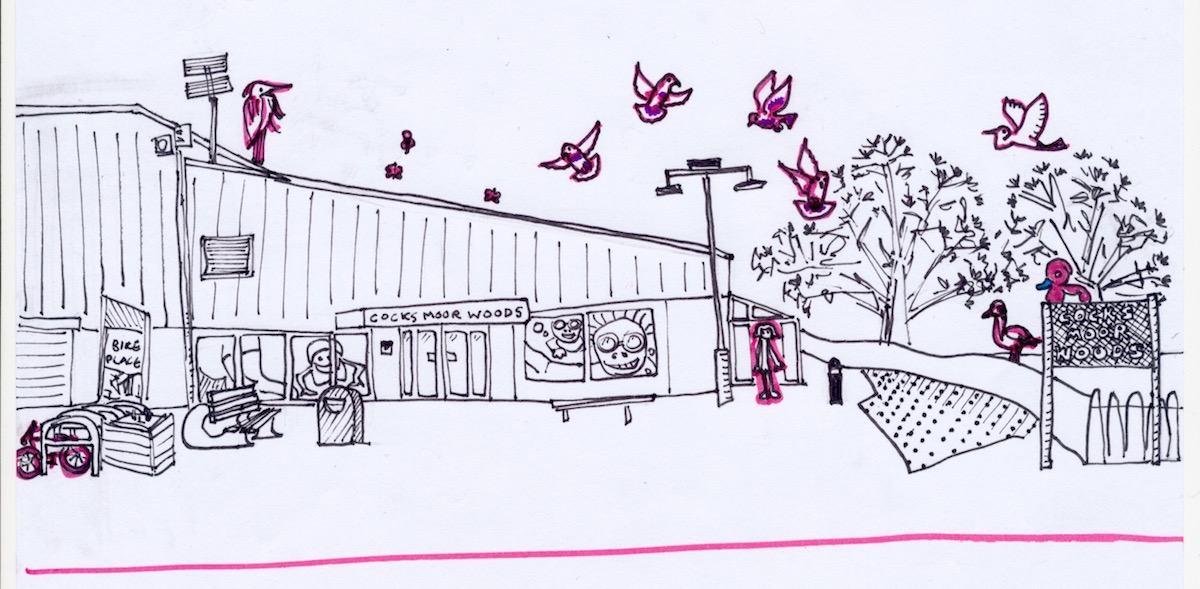
I arrive to see Andy walking from the side of Cocks Moors Woods Leisure centre. I know he is nostalgic for this place after visiting as a child.
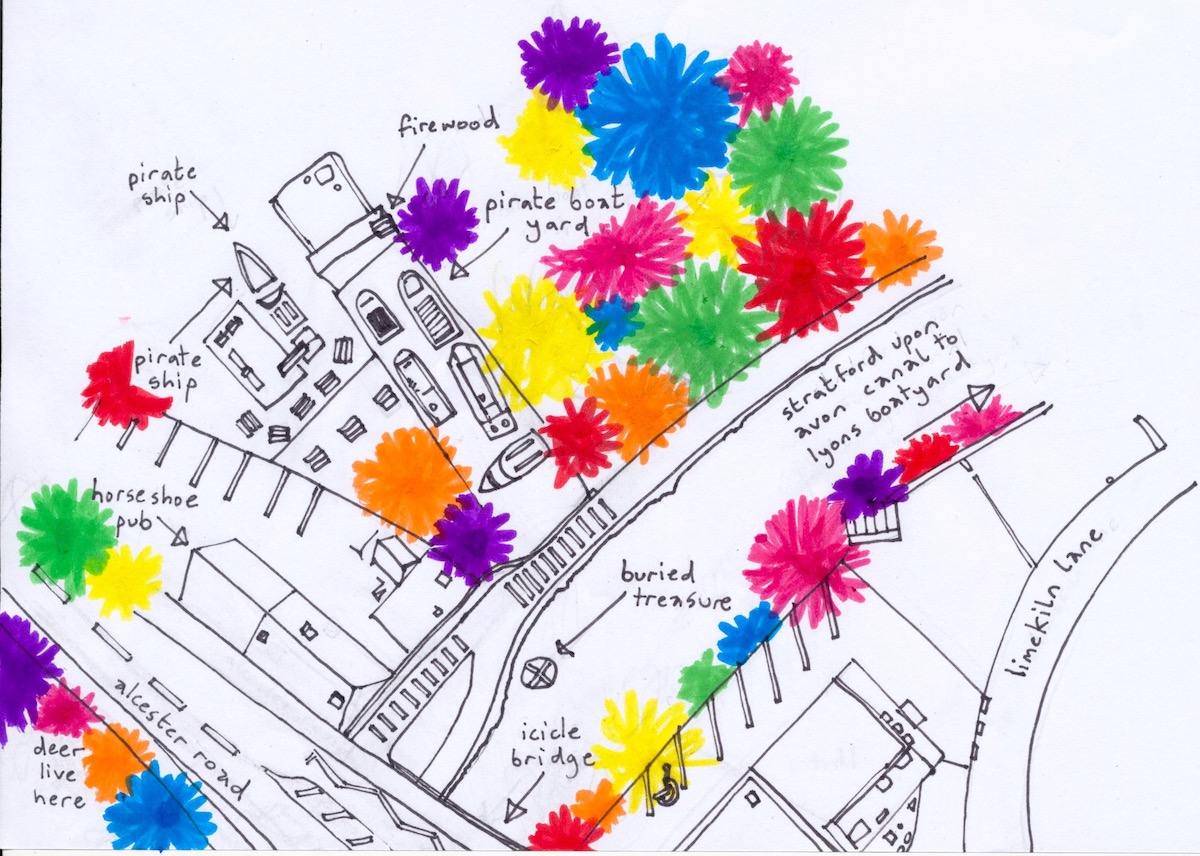
Along the Alcester Road, over the bridge, past the Horseshoe pub and left onto the canal.
Andy comes this way on his bike but hasn’t looked at the boat yard before. Just as I mention that people live there, an inhabitant of the boat steps out and looks up. Perhaps the landlord of the Horseshoe pub that is being renovated? That or a pirate. Kids play on the piratical climbing frame in the pub’s play area and know more than their older counterparts of what lies beyond.
I interrogate Andy on where he has been cycling and it transpires that the other end of our walk is near where he grew up. Armed with this useful information I slide him down a muddy slope onto Cocks Moors Woods golf course. A stressful prospect for me as I am a nervous rule breaker.
I see my second butterfly of the day and am overjoyed. Brown with colourful spots – I think it is a painted lady showing off her freshly healed tatts. But later I learn it is probably too early for that sort of thing. Yesterday, I saw my first bumblebee of the year.
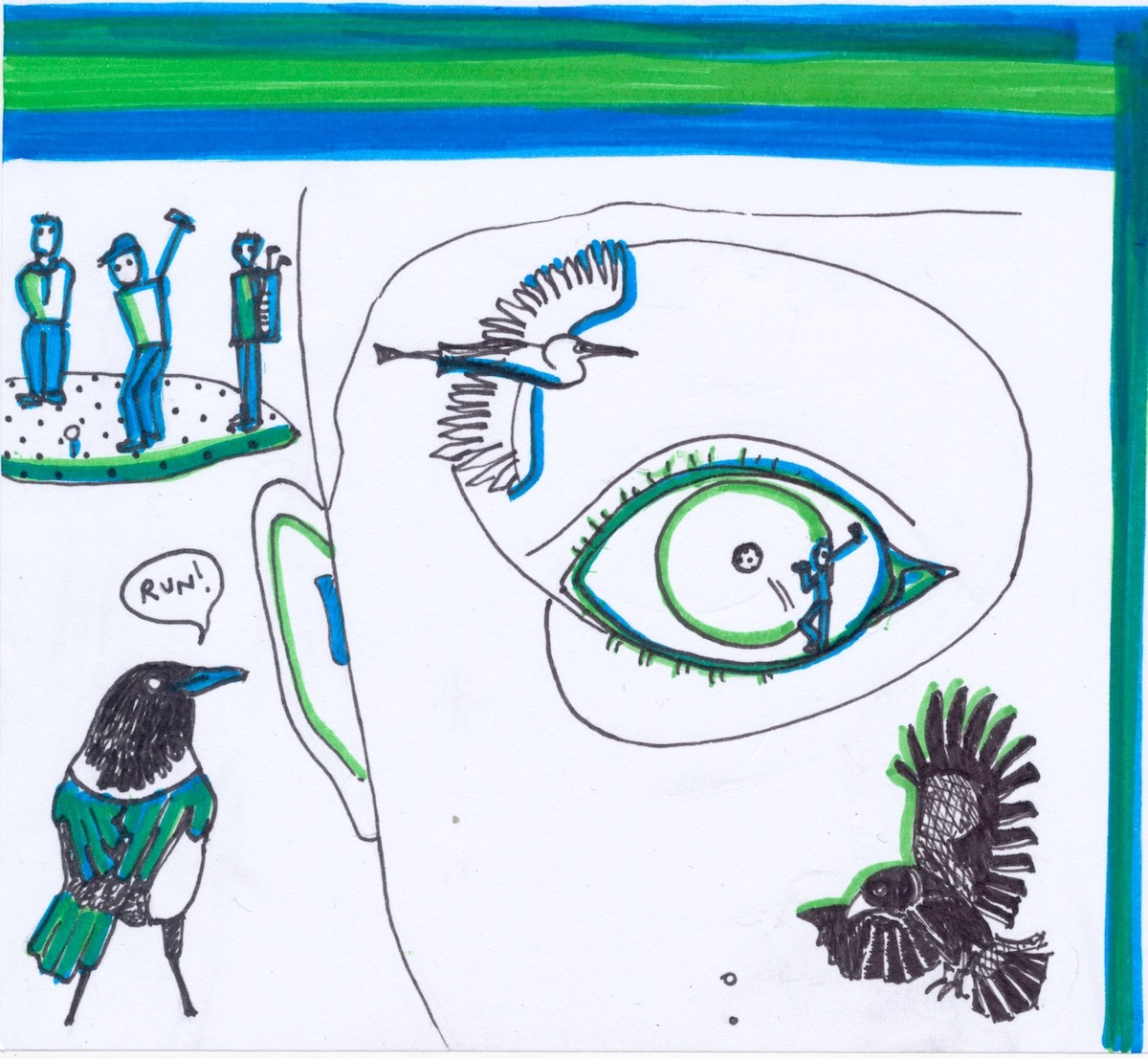
I hear a thwack! and eight… or maybe one and a half minutes later, a golf ball plonks down in front of us. I kick it absentmindedly before turning to see its owner. They are walking towards us – the golfers are attacking! How did that ball spend so long in the air? We barely make it out alive but there’s a bunch of club wielders on our opposite side. Flanked! I watch in dread as one of them hits the ball right in our direction…but then Andy points out a little egret.
The myth of the golf ball who transforms into an egret is a great one and sings praise to the resilience of the little bird. It mingles with some crows like ancient warrior monks and out of the tree pops a magpie! It finally dawns on me that a magpie is the lovechild of an egret and a crow. How naïve I’ve been all these years.
We come to what seems deceptively like a country road. As we slip through a hole in the metal fence (courtesy of a renegade angle grinder) I am wary of a dog walking family, but my hypervigilance is shattered as I say ‘Hello,’ and realise they are waiting to enter the golf course in a calm and seemingly well-rehearsed manner.
We cross the narrow brick bridge over the stream into Chinn Brook Nature Reserve. Two joggers go past, one struggling less than the other.
The sun is bright, bright, bright and the trees are budding.
Andy tells how his film about Birmingham’s lost concrete library is developing to be shown at this year’s Flatpack Festival and I’m excited to see it. This is where our existing nostalgia converges into a walking theme of nostalgia for things we’ve never known.
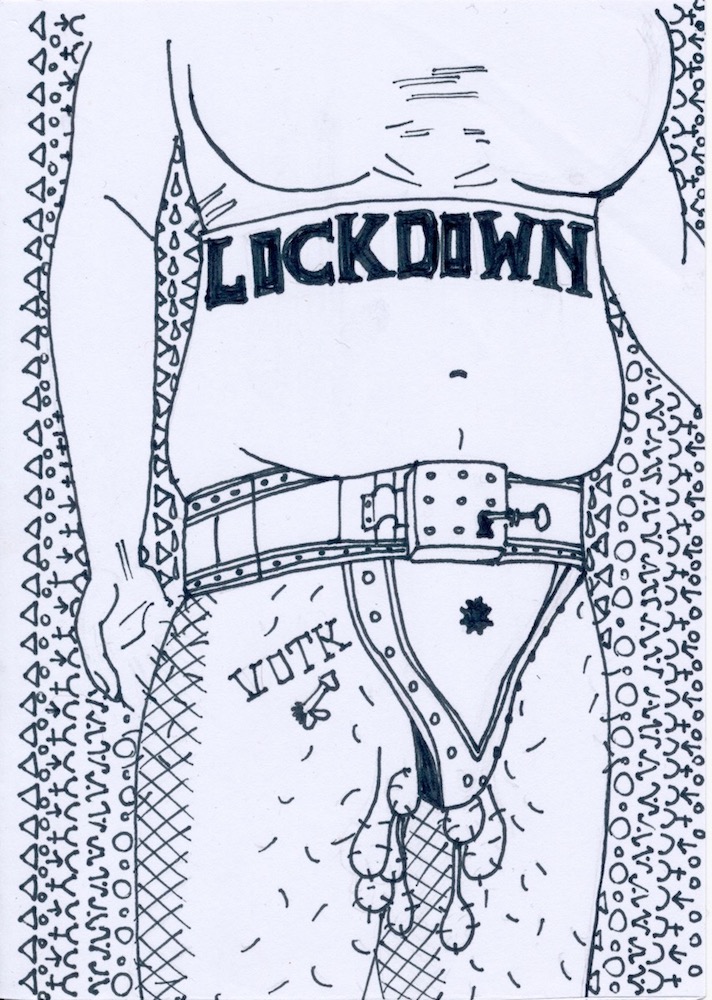
Andy asks if this brook has any link to Carl Chinn. I don’t think so, but I hate to assume. I mention the rap I’m writing which features Carl Chinn serving as a plot link between someone’s cuddly dick and Swingamajig festival via the Peaky Blinders. It’s for a drag act at ‘Valley of the Kings’, the informal night I run. Andy asks about it – little does he know I will later send him a poster featuring eight dangly testicles hanging out of a chastity belt – but what is life if not made up of these wondrous surprises.
We walk some more, through a green alleyway where a lady is wearing a full-on protective mask. It feels like we are in the Russian film ‘Stalker’ and she knows that we should be throwing a sheet tied to a stone before proceeding into unknown territory.
We duck into an overgrown pathway where two dogs are admiring the first flush of ramsons. I have previously seen something exciting and cooing in these parts and am hoping it wasn’t a mirage. We squelch towards the houses that back onto this park and discover a batch of brown and white pigeons in a cage! They must belong to neighbours of the birds I am taking Andy to see. It would appear that pigeon fanciers are abundant in these parts.
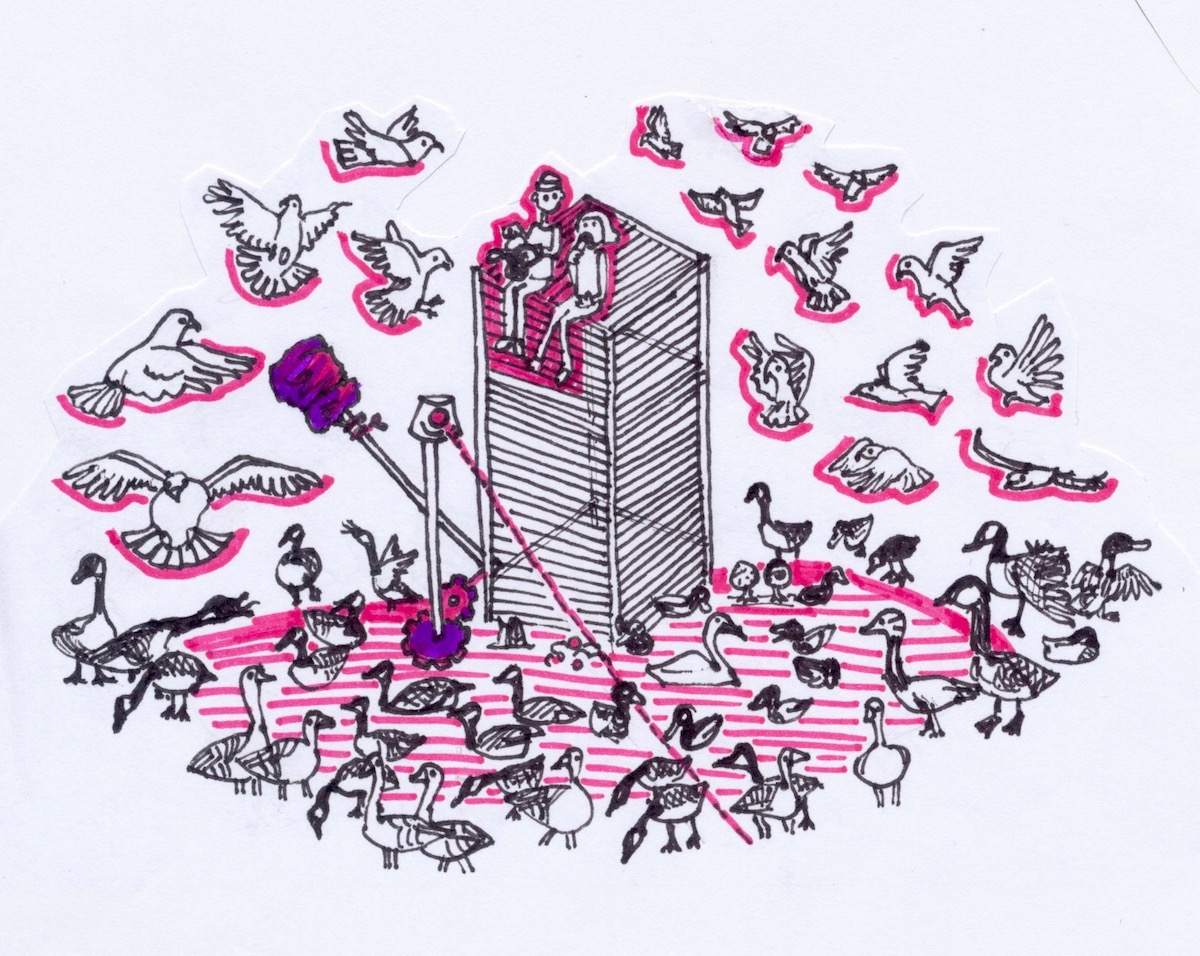
Squelching forwards, a cage towers above us and we hear the purring of white pigeons roosting behind barricades and barbed wire. As I point them out, a big stick with what looks like a bin bag, thrusts up and hits the lumbering cage. The birds erupt high into the bright, blue sky and we are in a cloud of neon purple and pink as the surprising flappers circle above us. Flashes of intense colour nestled under their wings. We realise the stick must be part of a giant automaton that whacks the coop whenever someone steps over a trigger beam or panel, we should probably start throwing a rock with a hanky ahead of us.
It’s not the first time today that we will look up to nature at its most bizarre.
We watch the pigeons for a long time. Eight… or maybe one and a half minutes later, we emerge into a large field, Andy points to a stream and says – that must be Chinn Brook. I am confused then say “Yes”.
This happens again at the end of the walk which, funnily enough, might be the moment Andy realises that I am perpetually perplexed by shifting memories. Andy marvels at what a funny part of the body it is for a brook to be named after. I miss the humour of this as I try to remember if the nearby Haunch Brook, that looks like a bent leg, is actually named after a leg or not.
Anyway, I take him over to Trittiford Mill Pool to see the lonely bar-headed goose and the tundra geese. I tell him my fantastic story about how that bar headed goose must be an escaped convict and is the world’s highest- flying animal reaching 7000m. I refer him to the video on the BBC website of someone slow clapping a goose in an oxygen mask as it flies into a wind tunnel. Quite miraculous.
We stand and look at the geese and the gothically-beautiful, tufted ducks with their blue bills and are profoundly and simultaneously moved to start snacking. Andy has a nature bar which I suppose helps him adapt to his environment whereas I have some rich tea biscuits in a plastic poo bag.
Now we enter the most exciting part of the walk – if this were a graph we would be soaring up to the top edge of the paper.
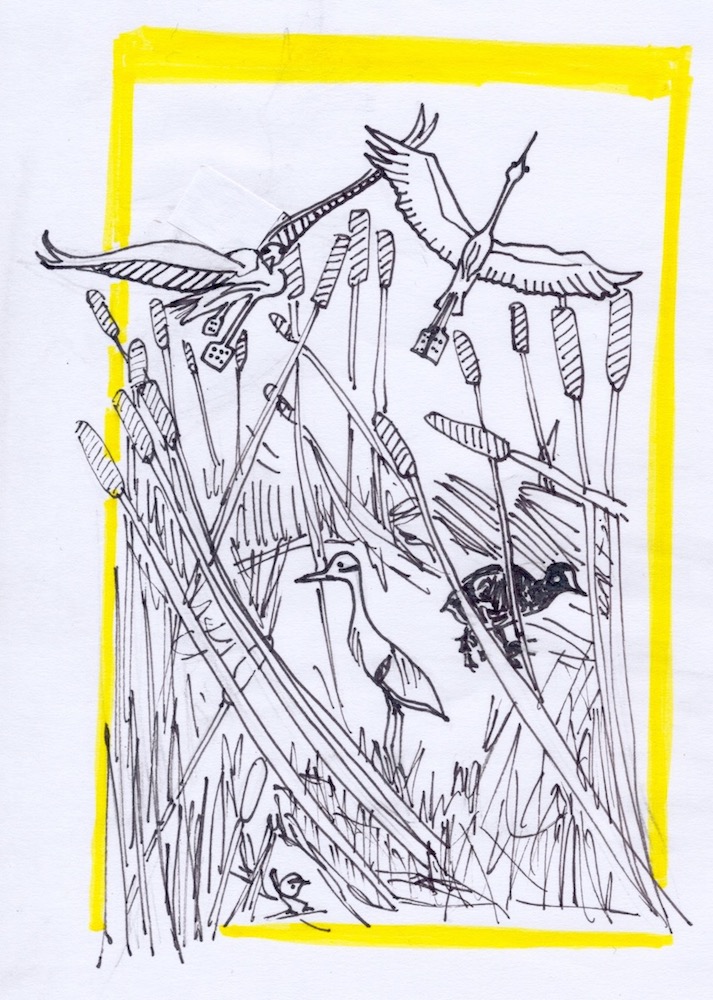
It is the marshy reed bed formed from what I think is the River Cole and I am excitedly looking for the heron and little egret I’ve seen hanging out together recently.
Only slight disappointment to see there is nothing…BUT WAIT – two hulking masses almost too slow to be flying, lurch overhead with dangly legs like spatulas. They are circling the reeds! Then behind us – another heron skulking on a tree branch!?! What is happening? Are the parents of a teenage heron coming to check up on it? Is it a grand day in the Birmingham heron calendar? How many herons are in Birmingham? Three in one place seems worryingly excessive if you ask me! If only I’d taken the nature bar when Andy offered – maybe I would take this all a bit more in my stride.
So, we carry on after the absolute mayhem that is lingering herons.
Now we go to a bit I have only visited once before. The underworld of Solihull Lodge, an unkempt mess of fallen tree trunks and river twisting together. It really is beautiful. Then we are in Solihull Lodge and we talk about the nightmarish memories we have of Shirley and Solihull.
I overshoot the moment to turn right for the canal, but Andy exclaims “I KNOW HERE!” He has recognised a bend in the road not at all from eleven metres but with intense clarity from ten metres away! It is a jubilation! We turn around and Andy leads us to the canal.
It is a great walk so far. I am in vaguely unknown territory and congratulating myself for coming this far away from my house and being such a reliable tour guide.
On the canal, Andy talks about Desmond Morris for some reason, and pulls out a notebook with the script from when he reconstructed Desmond’s destroyed surrealist film by reading out the scene overviews. It is fantastic to hear him recite it with dramatic, yet dulcet tones and I expect to trip over an elephant’s skull at any minute.
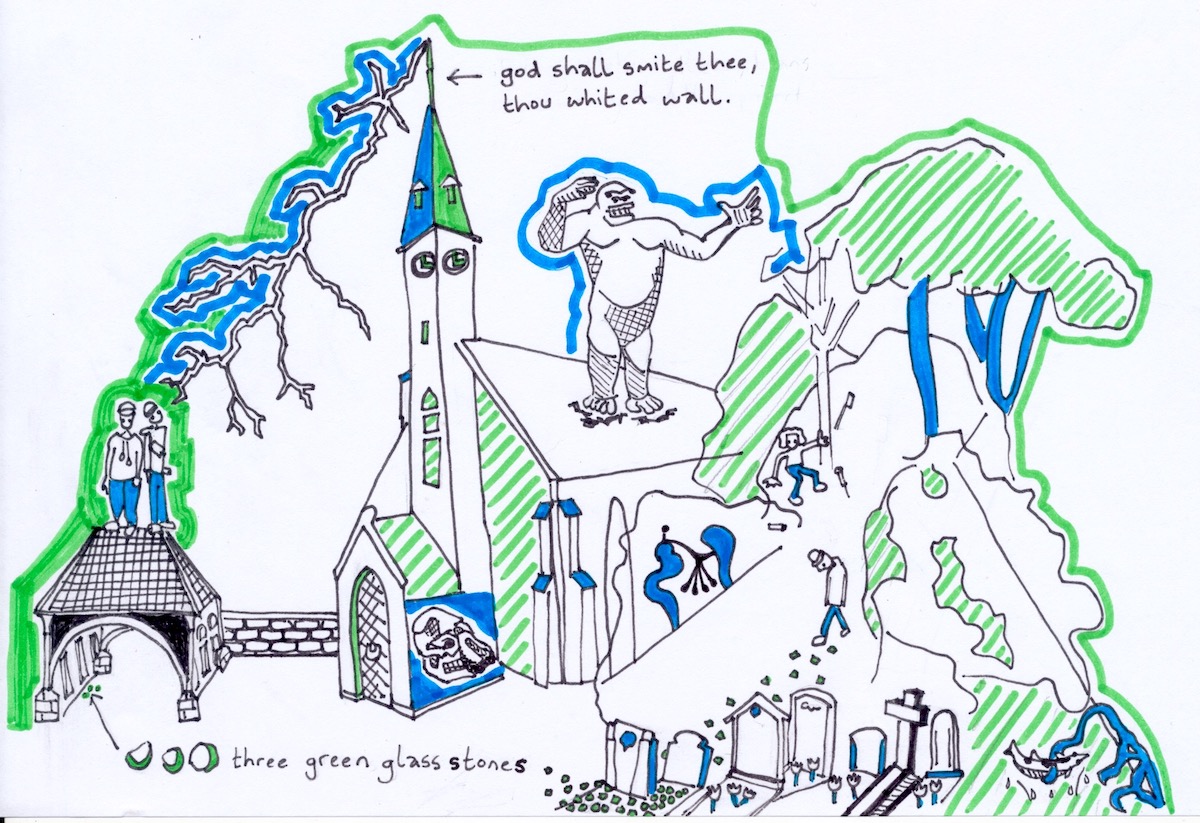
We dip into some mud on the right of the canal and emerge into a picturesque cemetery. We are nostalgic over the Victorians who would picnic in cemeteries and have a healthier attitude to death. We remember the Victorians with their healthy attitudes to death, taking photos with the corpses of their loved ones.
We loop the church seeing the typical titchy-witchy back door and read the brilliant carved tattoo-like messages in the arch entrance where the benches have been removed. I suppose to prevent anyone from sitting there for free and drinking (maybe this church is sponsored by the local pub). We make a guess that we are in Yardley Wood Cemetery (it turns out we were loitering around Christchurch, the parish church for Yardley Wood).
On leaving, we see a group of teenagers ignoring a sign that has asked anyone who isn’t a mourner or is in a group of friends to stay out of the cemetery. I smile and say, “Imagine growing up hanging out in a cemetery”. Andy supposes they will have a healthy relationship with death.
On that mildly threatening note we climb down a firework strewn slope back to the canal.
Andy tells me about a film called ‘King Rocker’ and I start listing the 1990’s rock pop scene that I know of second- hand. Referencing Club Katusi and the many gig posters from promoter Arthur Tapp and the Catapult Club gigs at the Jug of Ale pub. Andy hasn’t heard any of these bands, so I make a mumbled promise to email them over. A small-town Andy and a big city, gender queer, depressive letting their musical memories converge on the edge of a grimy canal which harbours quite gnarly tree roots, big puffs of moss and some really jumpy fish.
I become violently bored (or maybe overwhelmed with memories and nostalgia for things I haven’t known,) so Andy advises me to stare at the path until I get home.
All I see are pebbles for the rest of the walk. Sometimes we look at the tumbling gardens of the canal side houses as they struggle not to collapse into the canal.
He asks me what I am doing and is absurdified to discover that I followed his advice (I think he is a surrealist trickster).
When we get back, I am knackered because there were a lot of pebbles, but Andy is full of excitement to try and glimpse inside his childhood leisure centre. As we walk around the building, I am overjoyed at the second or third time I have heard the story of the boy who put sugar instead of salt on his chips … wait for the punchline…and then cried as he ate them! Andy spontaneously giggles as he tells it. Childhood mischief bubbling out of his eyes like that poor boy’s hilarious tears. It happened here!
Blacked out windows illuminate the mystery of the dog walkers on Cocks Moors Woods. The golfers I’ve been so afraid of are the local community just moseying onto the field. I didn’t need to be worried but am glad I avoided being clonked on the head at the beginning of our perilous escapade.
I hear a yelp of delight. Where I had seen a wall made of plain old bricks, Andy has spotted a HOLE IN ONE! Reaching up to the tiniest of chinks in the brickwork I see the looping of the water slide. It looks much better than from the inside. The pressure out here is a lot more open, not so moist and the sound is less like a thousand bullets ricocheting off tiny sheets of glass.
Completing the journey by hopping over a fence to look into more abandoned areas, Andy collects his bike. I embark on the remaining fifteen minutes of my walk – absolutely exhausted and trying not to limp. Once safely home, I take a page from Andy’s book, writing our journey down. Without it I wouldn’t have been able to sort what happened out of the crumpled-up mess of memories and anxiety swarming through my brain.
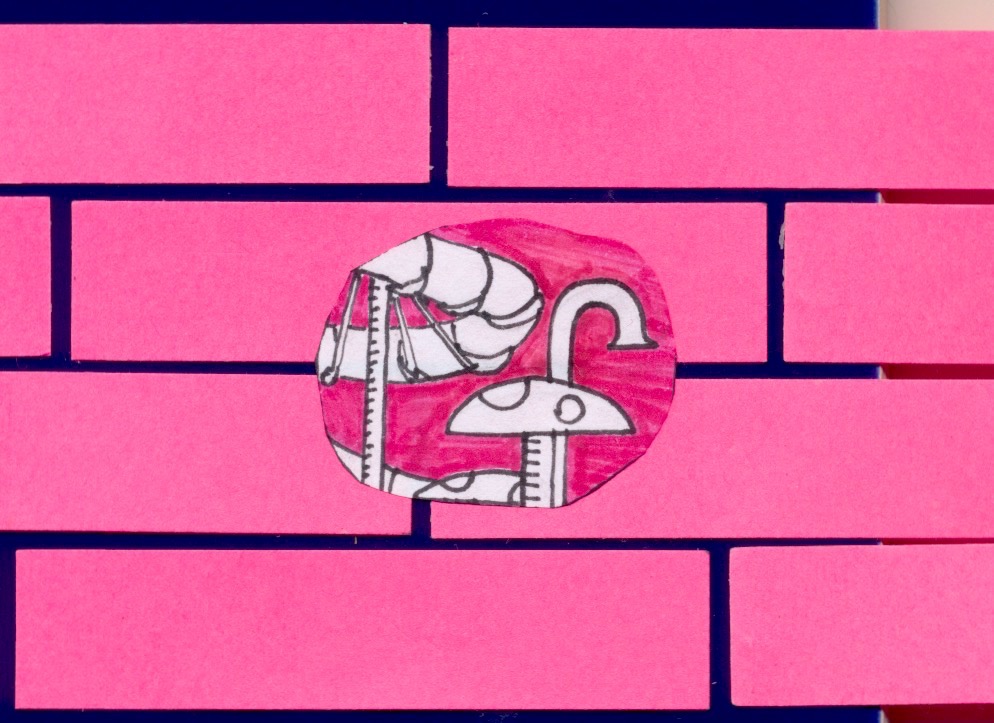
But luckily, I did! If our walk was a graph it would have ended with us flying into the sky with origami herons and pigeons made of neon pink post it notes.
I’ve used Mind (the charity) both personally and as a professional mental-health worker a lot over the years – they’re just about the most useful resource in Britain for mental health support. So I’ve decided to walk around my local park every day throughout January to raise money for them. This might not seem much but it’s this type of simple activity that keeps a lot of us going. To make it a bit more of a challenge, however, I’ll be taking my camera with me each day in order to make a diary-film about this experience within my local environment, which I hope can be an additional and beneficial outcome for others. It’ll involve walking, looking, listening, talking and maybe even some singing…
That was my mission statement when I began this project at the start of January. One of the fun things about setting yourself simple restrictions, however, is allowing the improvisation of daily making within an uncontrollable environment loosen those restrictions almost immediately. This is my second attempt at a long-form diary film within the past few months and I’d recommend it to anyone wanting to embrace a lack of preciousness and the idea that what we cannot plan for can be often more interesting and rewarding than what we think we want.
You can watch the film, which is updated weekly until the end of January, here:
And your donation would be greatly appreciated here.
About Owen
Owen Davey (sometimes known as OD Davey for musical purposes) is a Manchester based writer, director and performer, working in song, film and the gallery. In 2014 he founded Video Strolls, a nonprofit that curates art and film events that explore place and journeying.
He is currently an AHRC North West Consortium funded and Disabled Students Allowance supported PhD candidate at the University of Salford, doing practice-based research into ‘The Enfoldment of Song and First Person Filmmaking’.
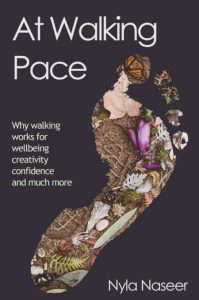
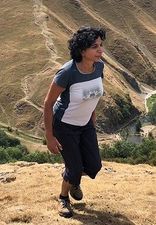
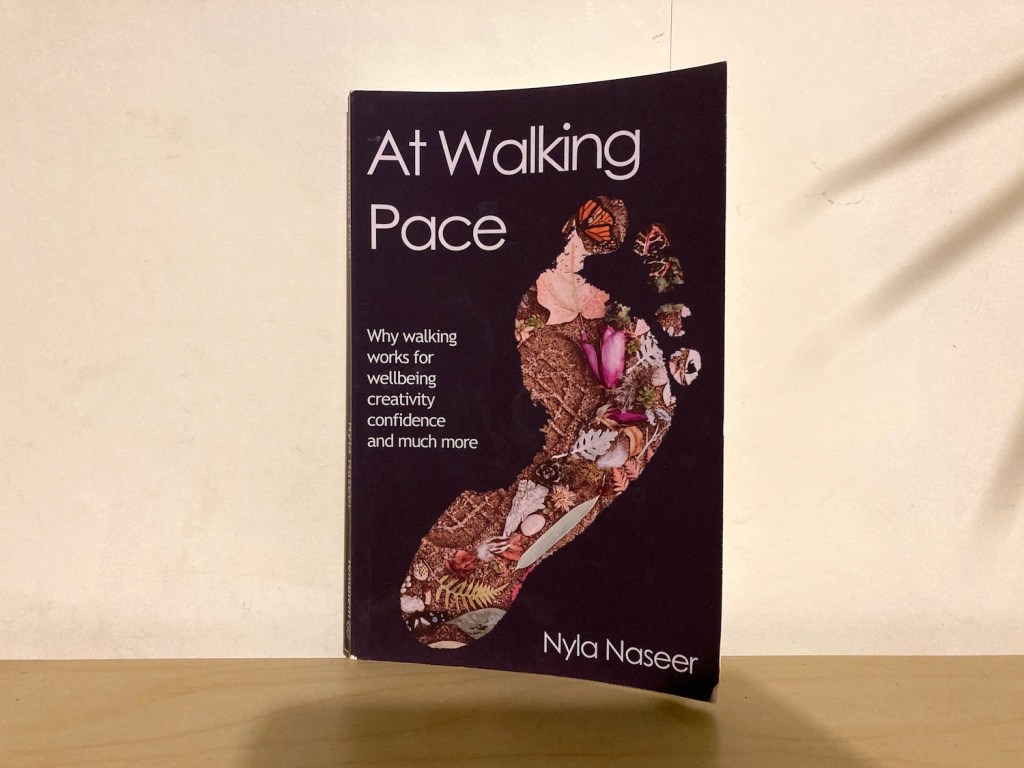
Nyla Naseer is an author and walker based in King’s Heath, Birmingham. During lockdown she wrote a book to celebrate walking. ‘At Walking Pace‘ was published last month, is easy to read, well researched and has one of the most pleasing book covers of all the walking books!
Nyla’s book is all about how walking can be used in different ways – for wellbeing, enjoyment, thinking and resilience.
Obviously we got in touch straight away to suggest going for a walk and to chat about walking in the process (because we are nothing if not meta here at Walkspace).
We also cheekily asked if we could republish an extract from the book. So thank you Nyla for the opportunity to support a local author. Here is the chapter on art and creativity that first lured us into buying the book.
Please do scroll to the end for links to buy At Walking Pace, to be a part of the accompanying podcast and to find out more about Nyla’s work.
…
There is no universal definition of creativity, but a common definition outlines a creative idea as being novel or original as well as useful, adaptive, or functional. It is the first criteria that applies to the ‘arts’ and the second criteria that applies more to problem-solving and work (more of which later). Taken together, the two dimensions of creativity play an enormous part in shaping personal and societal development.
Earlier in this book I described how writers and philosophers though the ages have used walking to generate their ideas. For example, Aristotle, used to give lectures while walking around his school in Athens, followed by his pupils who became known as ‘peripatetics’ (meaning moving around). Charles Dickens was an avid daily walker who regularly walked twenty to thirty miles a day! Other groups of creatives, including musicians and visual artists have turned to walking to inspire them. Beethoven, for example, relied on daily walking forays for inspiration; during his walks he would continue to write music, scribbled on sheets of music paper that he carried with him.
Visual artists have long been inspired by the landscapes they walked within. Think of any painting by a landscape artist such as Turner and you will instantly feel aware of the walk that they took, ending up at the point that they decided to capture for us. Not only have artists used walking as a way of replenishing their energy and wellbeing, they have actively incorporated the walk as a way to record the world around them, stamping the identity of other walkers within their work. This, to me, is homage to walking itself.
Walking as an integral element of art has a long history. As walkers, artists gain the experience of more fully immersing themselves in their subject matter, or of considering elements such as the political, social or environmental relevance of their work. Walking is now present in art in many different ways: from collective art groups who go on walks, to the long history of political or protest walks that incorporate art forms such as music and banners. Walking and art are intertwined. Indeed walking is a legitimate form of expression in itself. Walking is an ‘attitude’.
Members of the Dada art movement in 1920s Paris organised a series of excursions to ‘places that have no reason to exist.’ Although only one of their nihilistic walks eventually took place, it sounds quite an event: the walk was accompanied by poetry recitals and was performed as a parody of a tour guide, making the walk a piece of performance art itself. A few decades later, artist and philosopher Guy Debord created walking maps highlighting ‘psychogeographic contours’ through the city, drawing attention to the ‘ambience’ elicited by different surroundings. His notion of ‘derive’ saw the city as a living organism, where a walk became a creative experience that generated feelings that could be put to use in any number of ways: from the political to the artistic (Hermon Bashiron Mendolicchio 2020). Thus, walking has long been part of a daringly avant-garde and counter-culture scene.
Some contemporary artists centre their work on walking. They make art where walking is the subject matter: Richard Long’s ‘A Line made by Walking’ photograph, showing a straight line of trampled grass receding towards tall bushes or trees at the far side of what appears to be a field, is a good example. Another is ‘walking artist” Hamish Fulton. Since 1973 Fulton has only made works based on the practice of walking, dispensing with what he feels are the materialistic shackles we live with and concentrating on the freedom that walking gives us to think and create. The walk as a symbol of simplicity and an escape from conformity is a well used artistic trope.
Another popular example of ‘walking as art’ is ‘The Lovers’, Artists’ Marina Abramović and Ulay’s 1988 performance, in which they stood 5,995 kilometres apart on the ruins of the Great Wall of China and began walking towards each other. They started from opposite ends: Abramović began from the mountainous provinces of The Yellow Sea while Ulay walked from the Gobi desert. The walk was intended as a metaphor for their love and longing, however it turned into something very different (especially since Ulay had an affair with his translator during the journey) but nevertheless interesting, dramatic and thought-provoking.
This association of walking and journeys with discovery and drama is very well exemplified in books and films, indeed there are too many to mention but I’ll pick out a couple. The classic ‘Wizard of Oz’ tells the allegorical story of Dorothy going through Oz ‘following the yellow brick road’ on a walk with her companions, whilst Cormack McCarthy’s ‘The Road’ offers a disturbing tale of a walk by a father and son though a dystopian post-nuclear destruction America. These two very different stories tap into our deep-seated identification with journeying on foot. The idea of a walk as a means of discovery is deeply embedded within written and visual culture.
Walking then is not a stranger to creative people. Historically, it has been appreciated as a thought and idea-provoking mechanism; walking therefore seems inextricably linked with the creative process. Does research reveal any rationale for walking promoting ideas creation? If indeed walking is a creative force then this opens the door for walking to become a tool, not just for artists but for work that needs people to think of ideas. So, does walking really have a positive effect on creative thinking and, if it does, what could be its greater impact at work?
[To find the answers, you’ll have to read the book! – Ed.]
At Walking Pace is available through the various book retailers, including Amazon and Waterstones. There is also an At Walking Pace podcast – details below.
About Nyla
Nyla Naseer lives in Kings Heath. She is a writer, podcaster and vlogger. Her tough and totally un-stereotypical background brings alternative perspectives to her work.
She has a lifelong interest in people and ways of life, building a repertoire of knowledge for her writing and work on resilience, wellbeing and behaviour in general.
The outdoors, and walking in particular, has been central to her life and is a thread through her research and writing.
Nyla has two masters degrees and a BSc but describes herself as a ‘street-hustler type’ and ‘an interesting person with potential’.
Podcast opportunity
Nyla is interested in interviewing fellow walkers for the At Walking Pace podcast, which broadcasts on Spotify, Apple, Google and more.
In it, she talks to guests about walking, taking them on random walks and sharing views and ideas about living in a more human-paced way. The podcast encourages walking, lo-fi living, and taking things a bit less seriously.
If you’re interested, please get in touch via her website: At Walking Pace. You can also listen to the latest podcast and read more about Nyla’s work there, too.
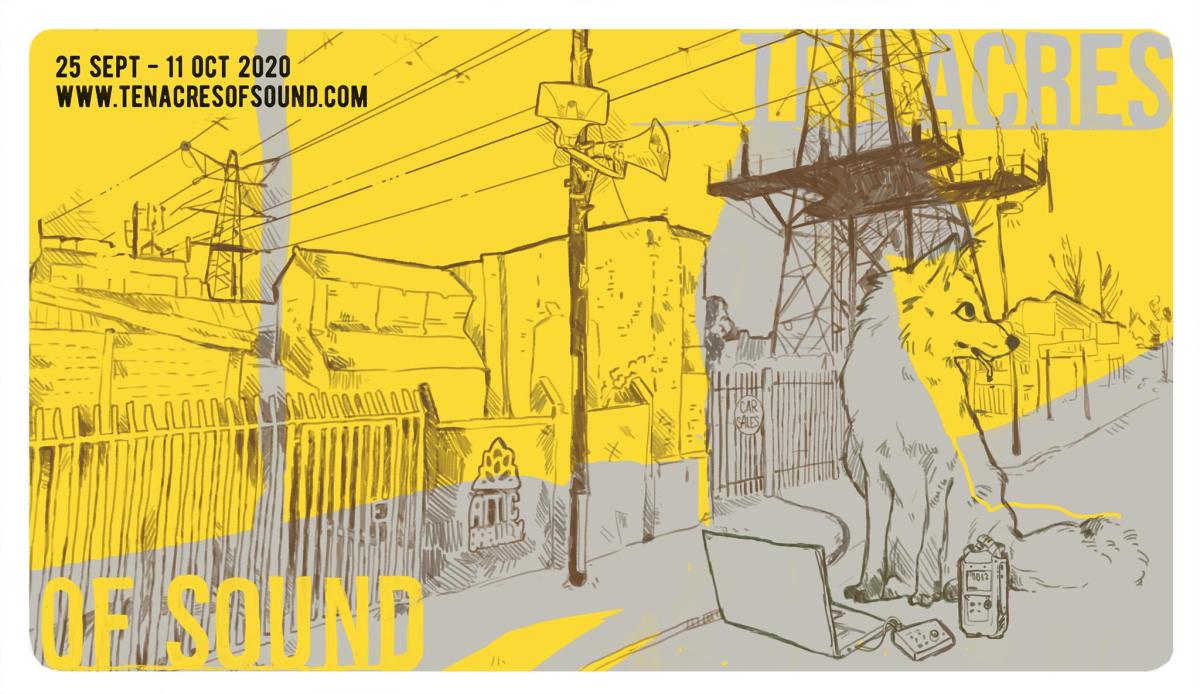
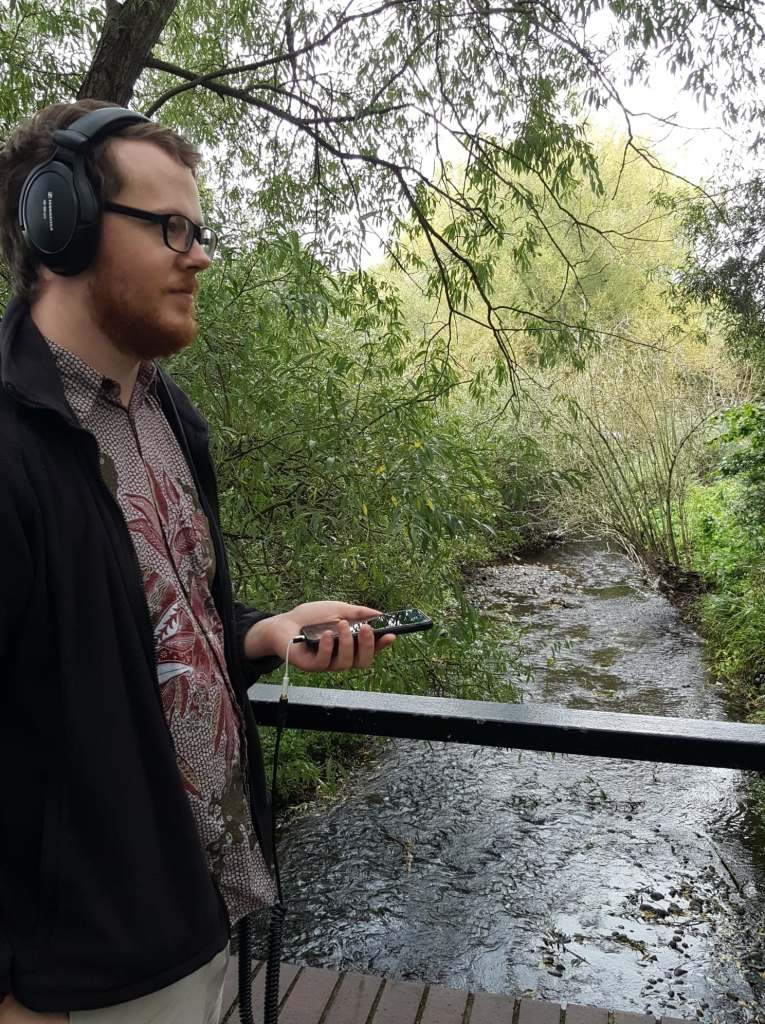
The walk encourages a deeper connection with the natural environment and a new awareness of the hidden sounds around us – both natural and man-made.
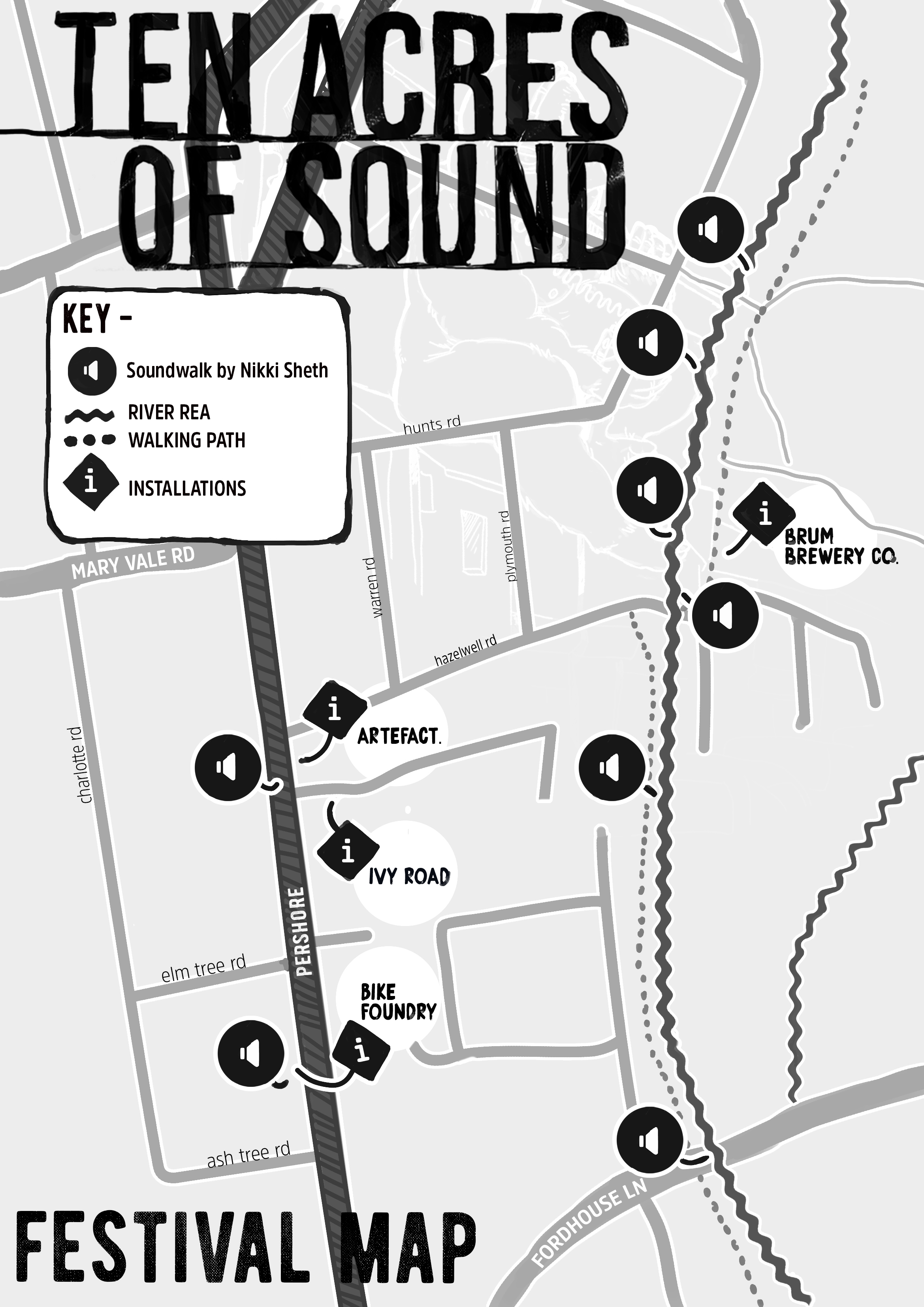
Exploring the area of Stirchley, I’ve created a sound map of interesting listening points in the local area. These points have been recorded and the field recordings produced draw upon a range of sources – the hidden sounds of underwater currents, recordings of bats hunting above the River Rea, the secret world of Birmingham Brew before opening hours. As the walk progresses, the field recordings develop into smaller musical compositions that have been inspired by the mechanical and electromagnetic recorded sounds, progressing from a natural to an abstracted and imaginative sound world.
The Stirchley soundwalk creates a 60-minute self-guided journey of immersive audio experiences which can be experienced using a smartphone. The free SOUNDwalker app uses GPS to guide the walker to different locations and, on arrival, triggers audio tracks which provide site specific responses to the immediate environment.
As you listen to the soundwalk click on the listening points once to see the name of the location and click on the name to read more about the sounds you are hearing.
JOIN NIKKI FOR A GUIDED SOUNDWALK ON THURSDAY 1ST AND FRIDAY 2ND OCTOBER, 5:30PM AT ARTEFACT
Although the walk can be completed entirely independently using the SOUNDwalker app, this is an opportunity to talk to me about the sounds and my practice. The walks will be socially distanced, take place outside and participants are asked to wear a mask where possible.
Participants will need to bring their own headphones and mobile device. It is advised that participants download the SOUNDwalker app and the Stirchley Soundwalk in advance due to possible streaming issues.
The walk will last for one hour and start and end at Artefact, Stirchley. Please be aware that photographs will be taken of participants on the walk.
In the last few years I’ve navigated a mental health break down, a messy divorce from a toxic and abusive marriage, starting a totally new life in a new area, and a whole heap of family ‘stuff’.
At the start of 2020 I was optimistic about this being the year when things shifted away from being a struggle. We all know where this is going… this year I’ve navigated my business collapsing (it’s not a great time to make the majority of your income from wedding photography!) due to Covid, living alone for the first time in my life while under lockdown in a small flat, bereavement, and financial struggles. That might sound like a lot, or not very much, depending on your own experiences. Struggle is relative and, for me, the last few years have been hard and exhausting.
A few years ago my mental health would not have been robust or resilient enough to cope with all of the things that have adversely affected me in the last few years. As things stand, I am leaning into 2020 and weathering the storm.
Actively working on my own resilience has played a huge part in staying balanced. I’ve used all of the usual tools: therapy, a period on medication, self enquiry, exercise, eating nutritionally dense foods, getting enough rest, working on my personal and professional boundaries and drinking enough water, to name a few.
Meditation has also played a huge part and I now teach mindfulness, as well as leading mindfulness photography walks and mindfulness nature walks.
Mindfulness is having a moment in the spot light so a lot of people are aware of its benefits, but if not there’s a whole load of evidence that people who meditate experience less stress, increased focus and concentration, less emotional reactivity and a whole host of other benefits.
Mindfulness is a wonderful tool when used as a formal practice, but few things bring me as much joy as mindfully walking and engaging with the world around me.
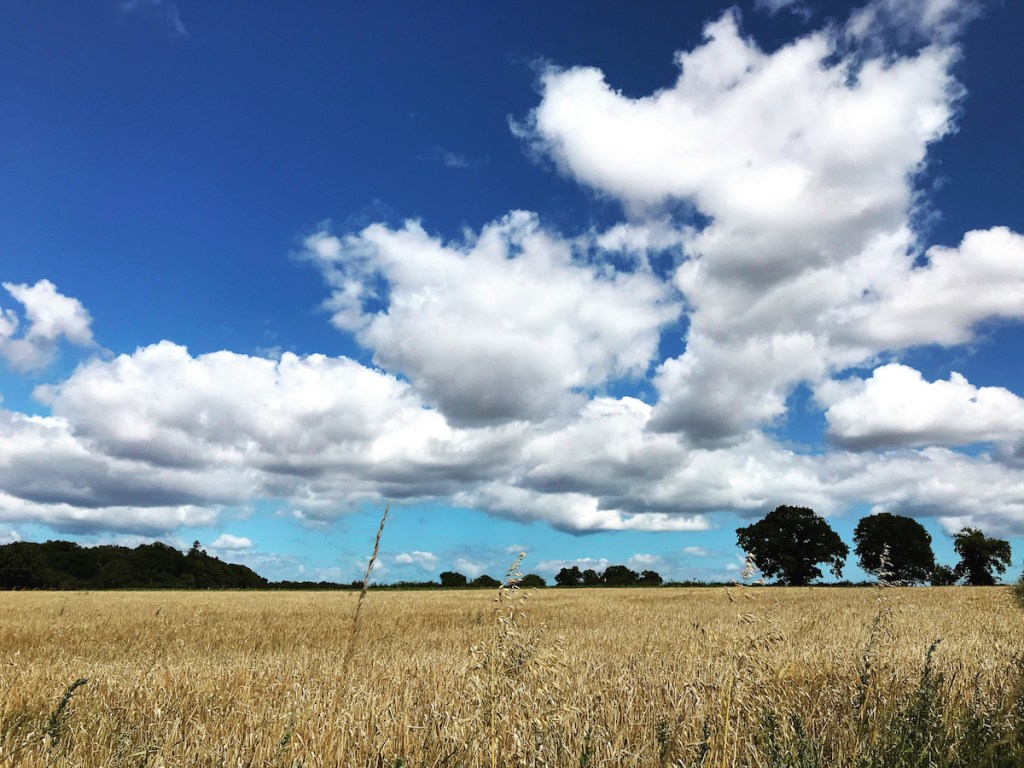
I like to mindfully hike. When I find myself on top of a windy hill in Shropshire or in the depths of the Wyre Forest, I stop and mindfully tune into my surroundings, noticing the feel of the wind on my skin, or dramatic grey clouds rolling across the horizon, the earthy smell of woodland, or finding an unexpected flash of early Autumn colour.
You don’t need to be out in the sticks to employ mindfulness as a tool, though. I also like to mindfully walk around the suburbs of South-Birmingham observing the perfectly manicured front gardens of Bournville, encounters with cats, and listening to birdsong as I walk along the river Rea.
We often engage with the world by moving through it in haste, instead of stopping to fully witness what’s happening around us. To find joy in the beauty of small things you need to slow down.
Take yourself on a Mindful Walk and explore your local area or the countryside. You can even try mindfully exploring your own home.
Start by stopping.
You can sit or stand.
Close your eyes if you wish.
Bring your awareness to your body. Notice where you have contact with the ground and the feeling of its solidity beneath you. Notice any areas of tension or tightness in your body. Are there any areas of softness or warmth?
Bring your attention to any sensations that you feel. Maybe you can feel cool air or a warm breeze on your skin?
Now start to listen. What sounds can you hear in your immediate vicinity? Just observe them and try not to attach to them or label them. What can you hear in the distance?
If your eyes are closed, gently open them. Look around you. What can you see? Really start to notice. What colours can you see? How about textures? What can you see if you look up? And down?
Continue on your walk while maintaining this heightened awareness of the world around you. How does it feel to be mindful and engaged?
For me, practicing mindfulness in this way enables me to find joy, even on hard days. It allows me to focus on beauty and the world around me, while taking some respite from thinking about the things that are a struggle.
There are a million and one reasons to be cheerful; a new leaf unfurling on your favourite house plant, the comforting sound of water pouring from the kettle into your cup, or time spent with your favourite people.
This might seem like an overly simplistic view of the world, and I am no fan of positivity for positivity’s sake and especially the Good Vibes Only brand of toxic positivity that conveniently ignores systems of structural oppression and people’s real life, lived experiences within those structures.
We need to feel the gamut of our feelings and emotions to be emotionally healthy, however I do believe you can find little moments joy, if you look for them. Joy is everywhere. That’s my reason to be cheerful.
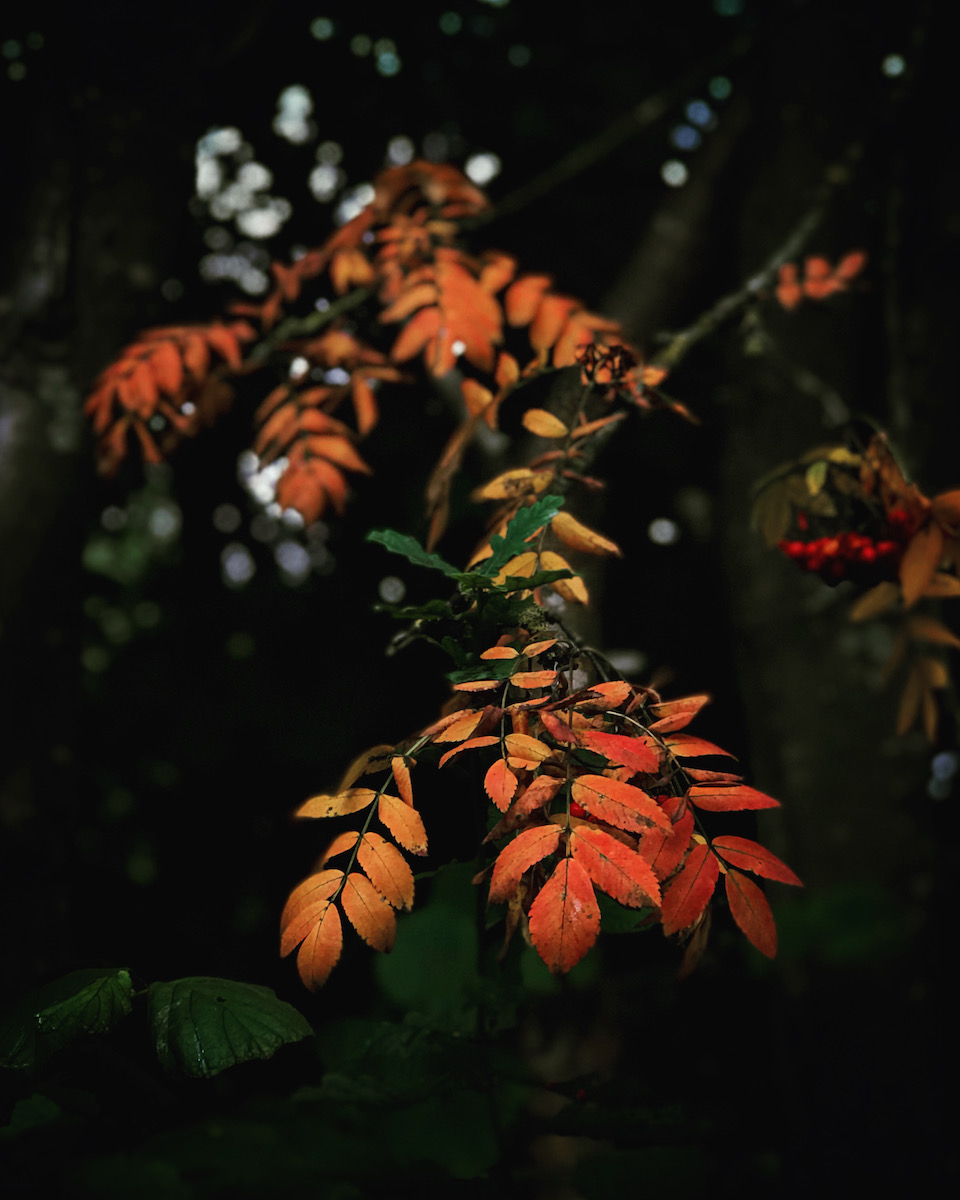
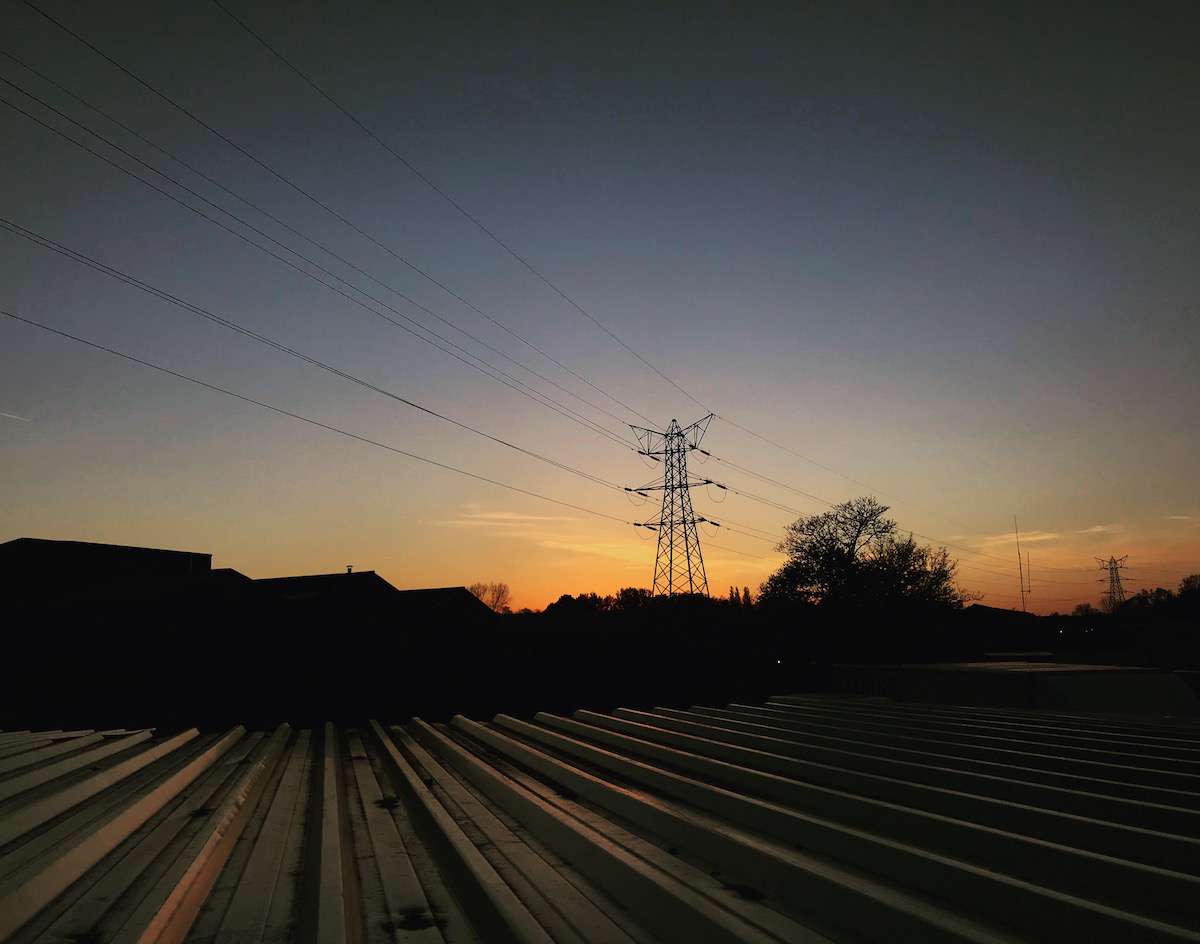
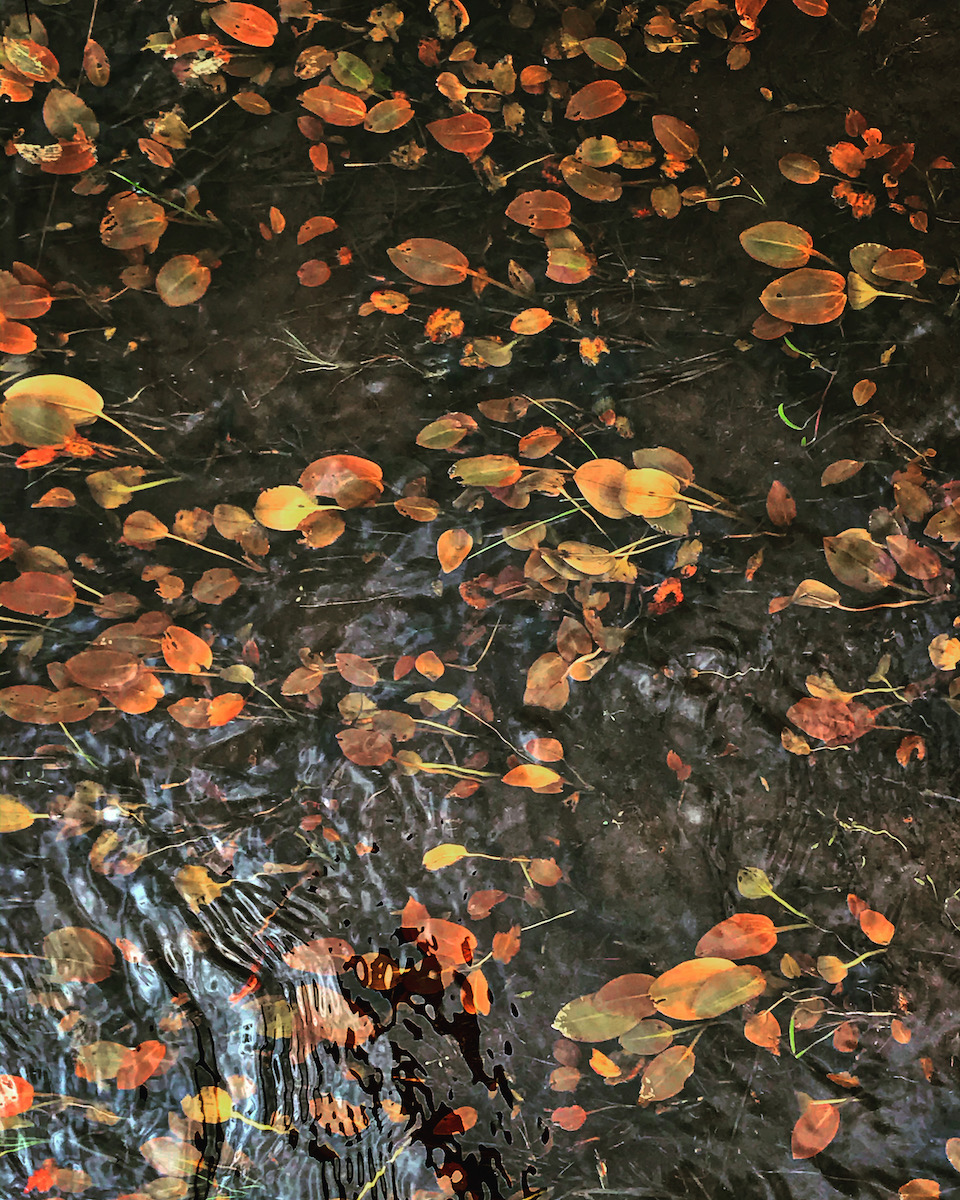
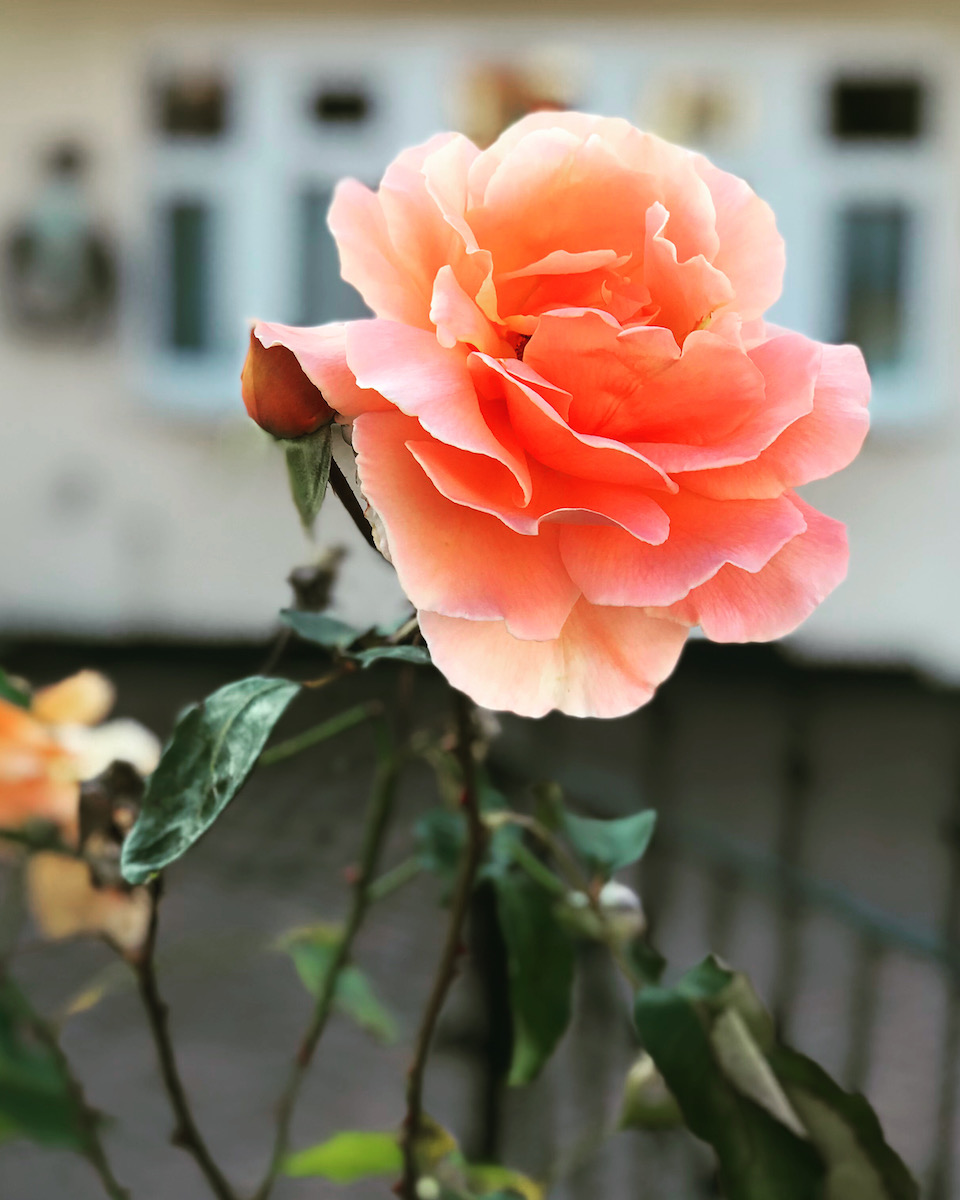
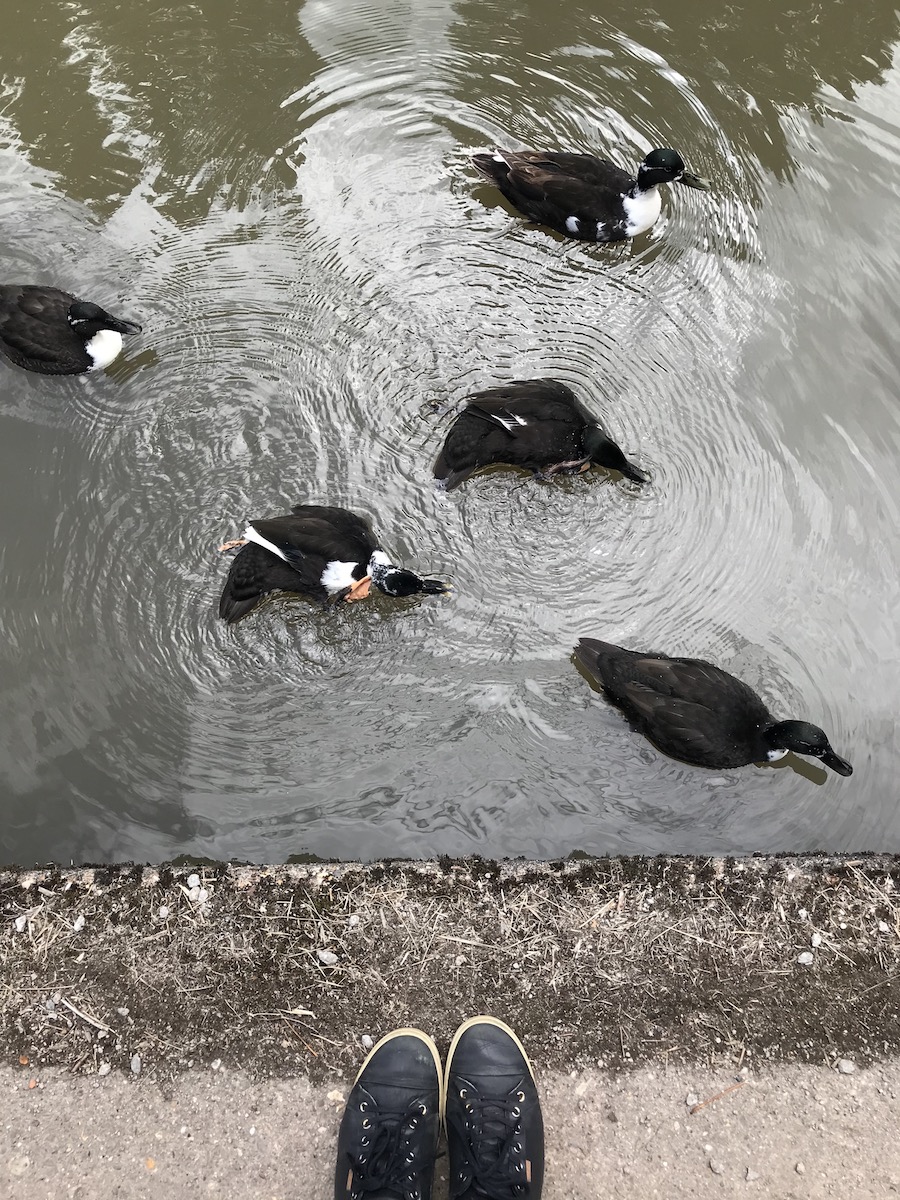
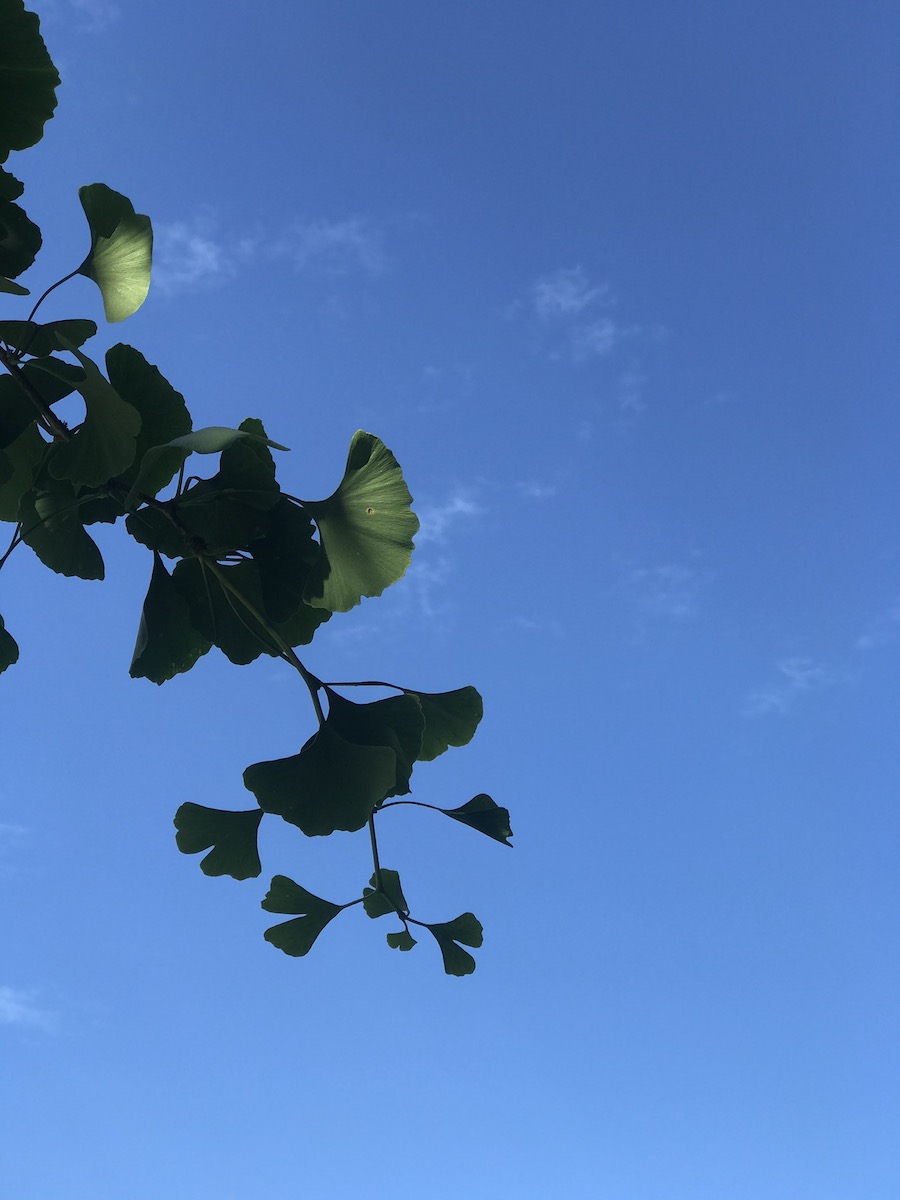
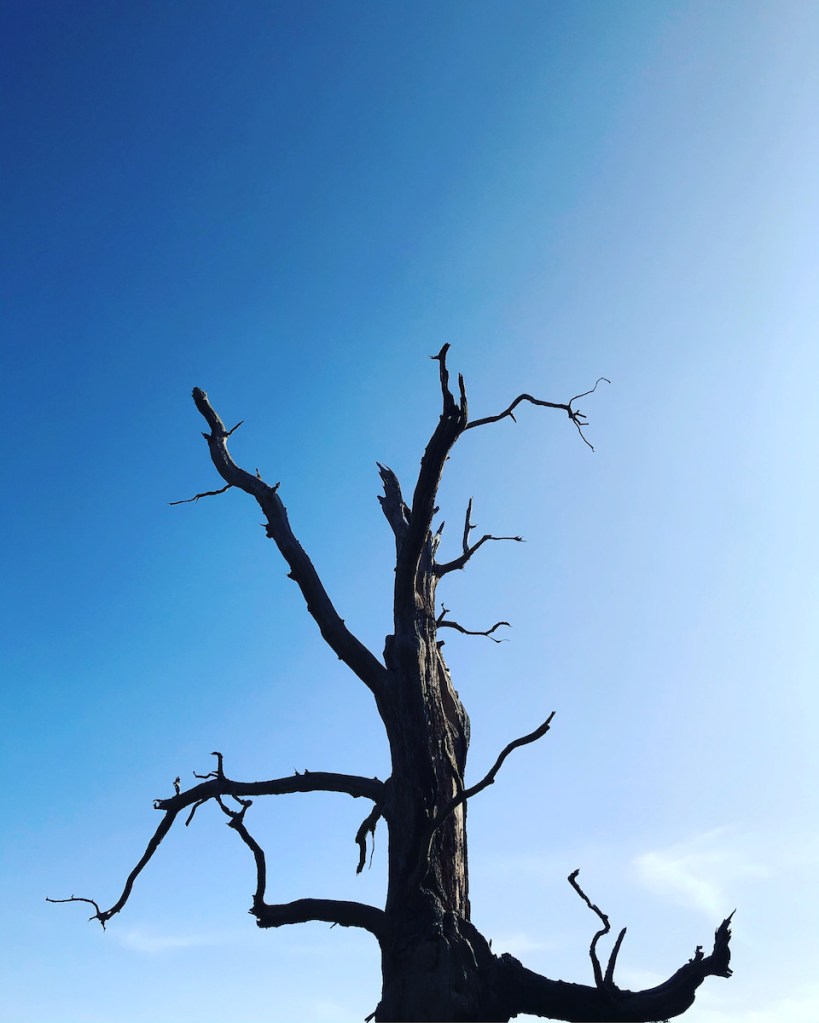
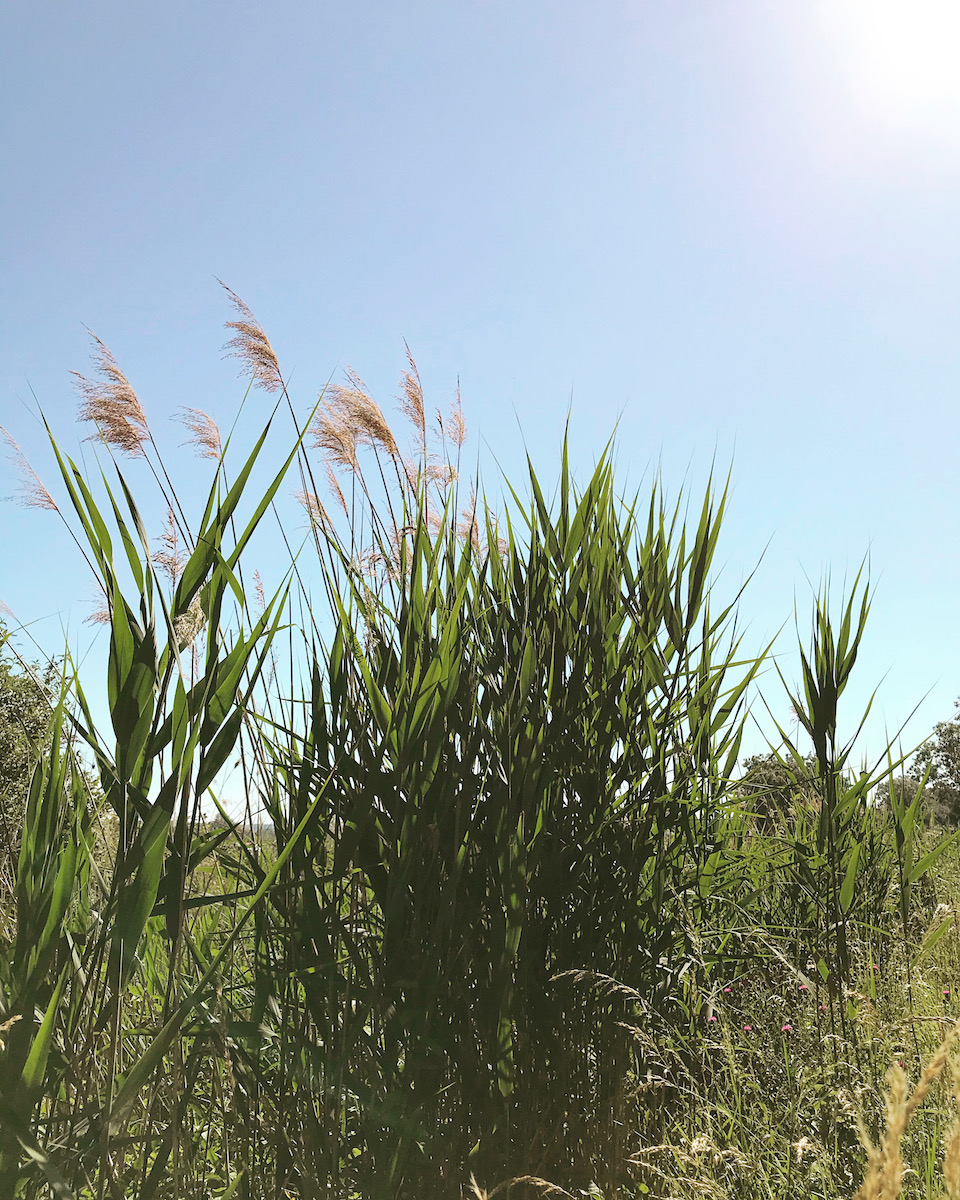
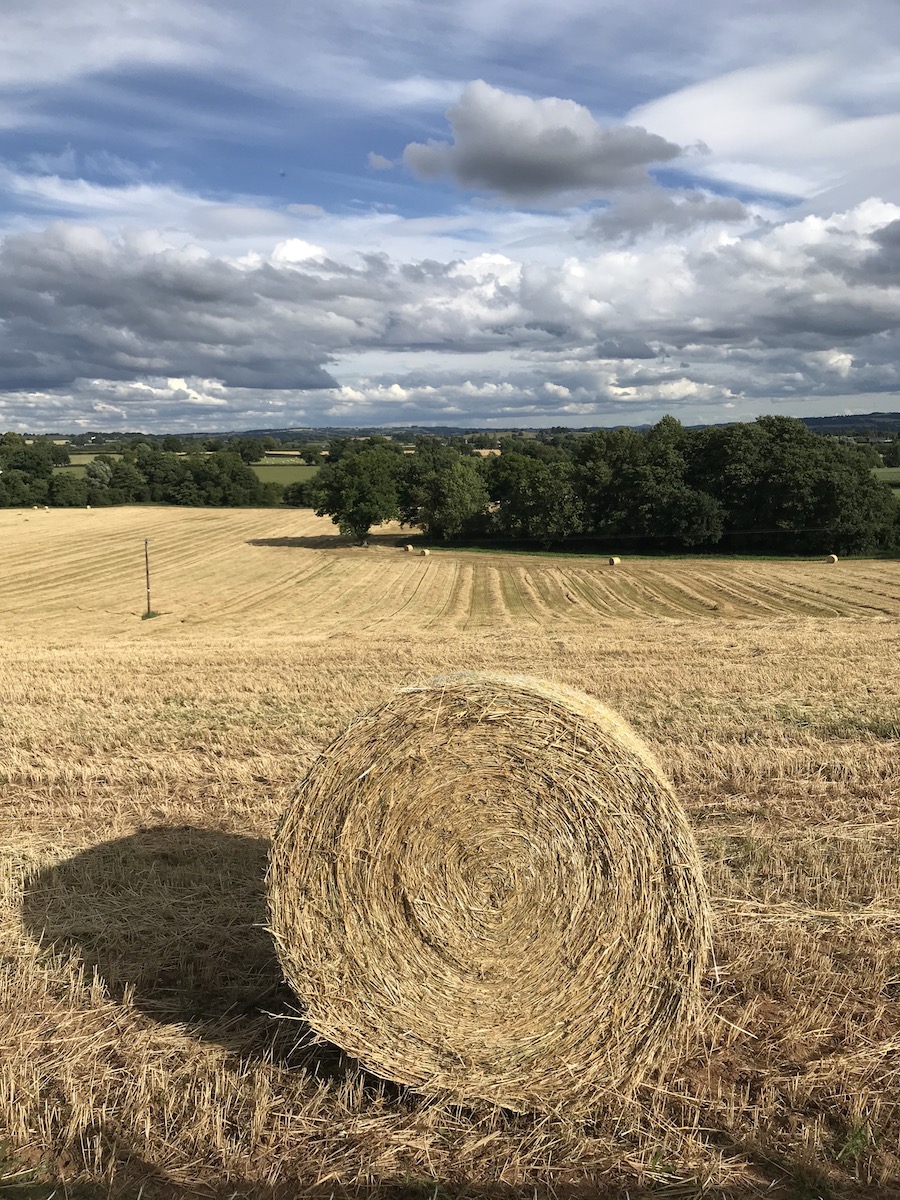
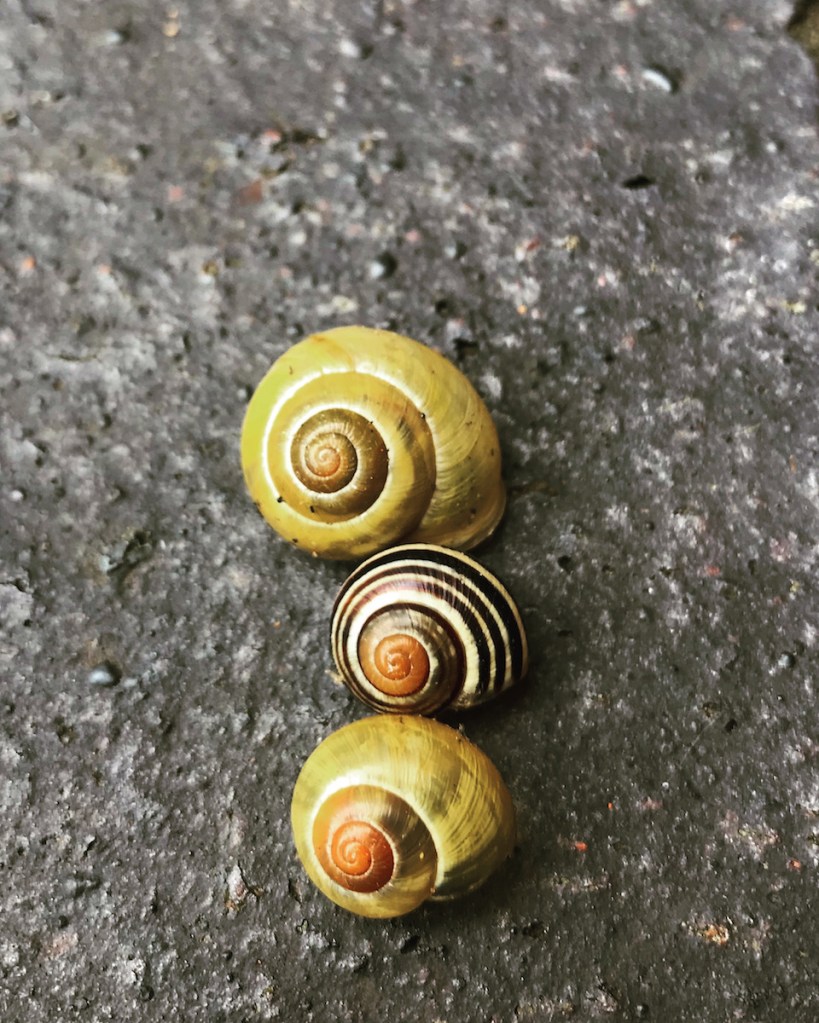
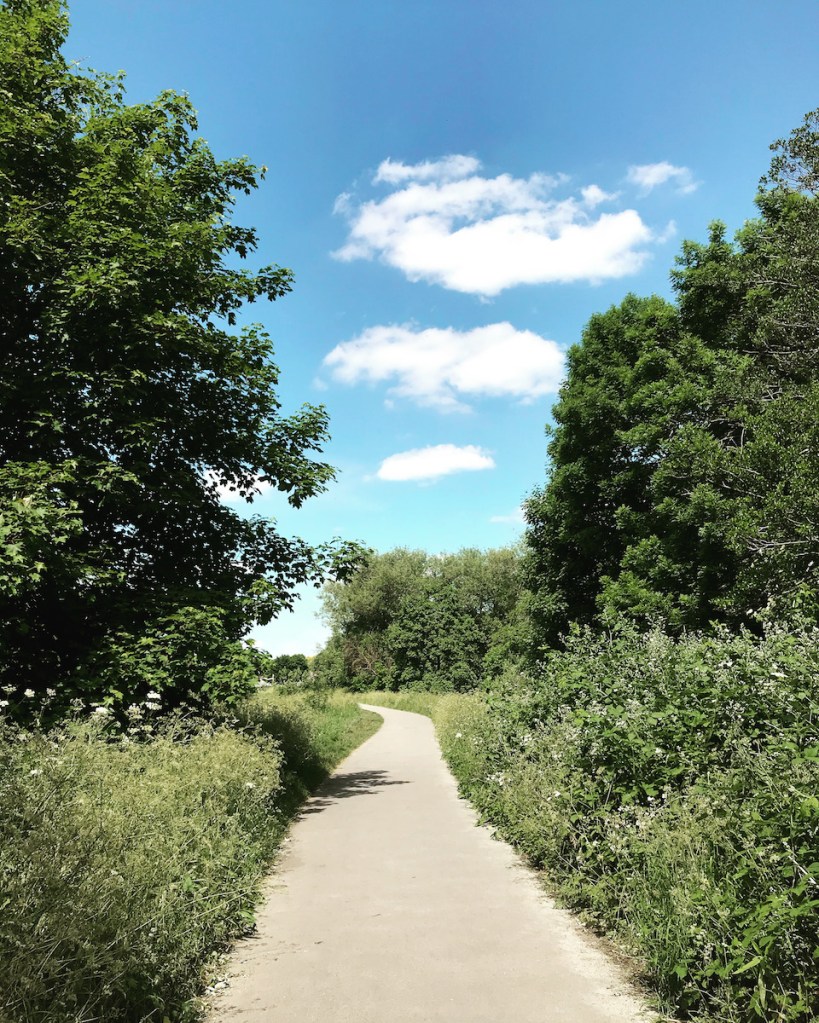
Laura Babb is a photographer, mindfulness teacher and she’s also currently training as a counsellor and psychotherapist. All photos in this post were taken on her ancient phone camera, during walks. Find Laura at @bisforbabb (weddings), @theclearspaceuk (mindfulness) and @babbwashere (walks and things).
Thanks Laura. If you, the reader, have an idea for a guest post, get in touch!





 Walkspace