Categories
Posts Walk Reports Walkspace Erratics

Walk Report: Wandering Rocks 2

For the second walk in our Wandering Rocks series we visited Birmingham city centre for more glacial boulders, geological curiosities and further examples of “beached heritage”.

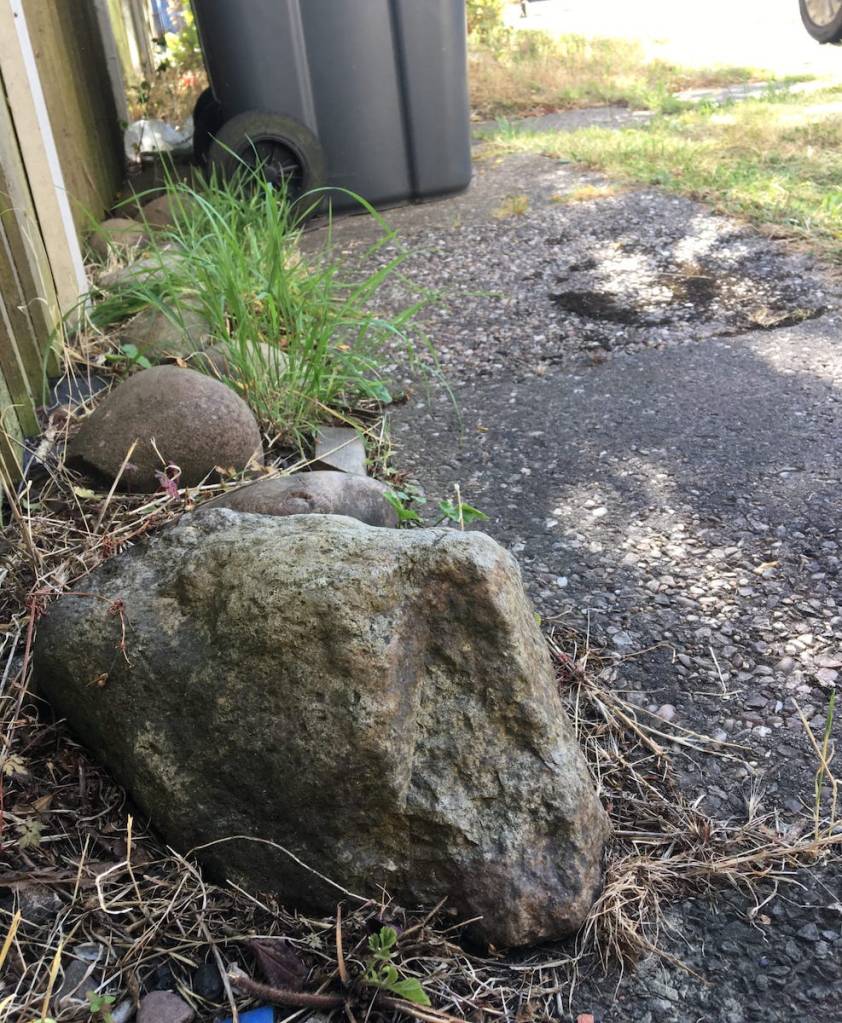
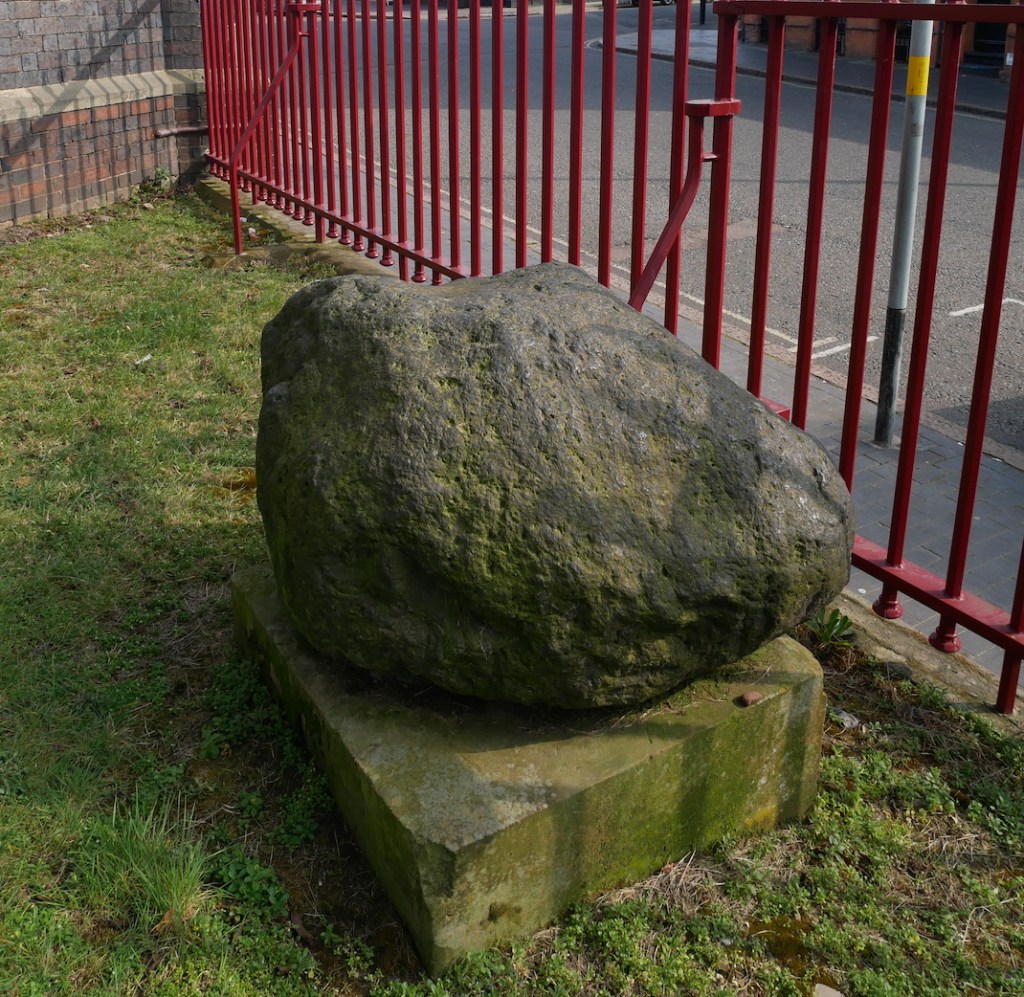
The “wandering rocks” of the title refers to the erratic boulders which travelled to Birmingham from Wales on an ice sheet 450,000 years ago. The catalyst for this walk came when I discovered one of these peripatetic stones hiding out in my front garden beside the footpath.

© Andy Howlett

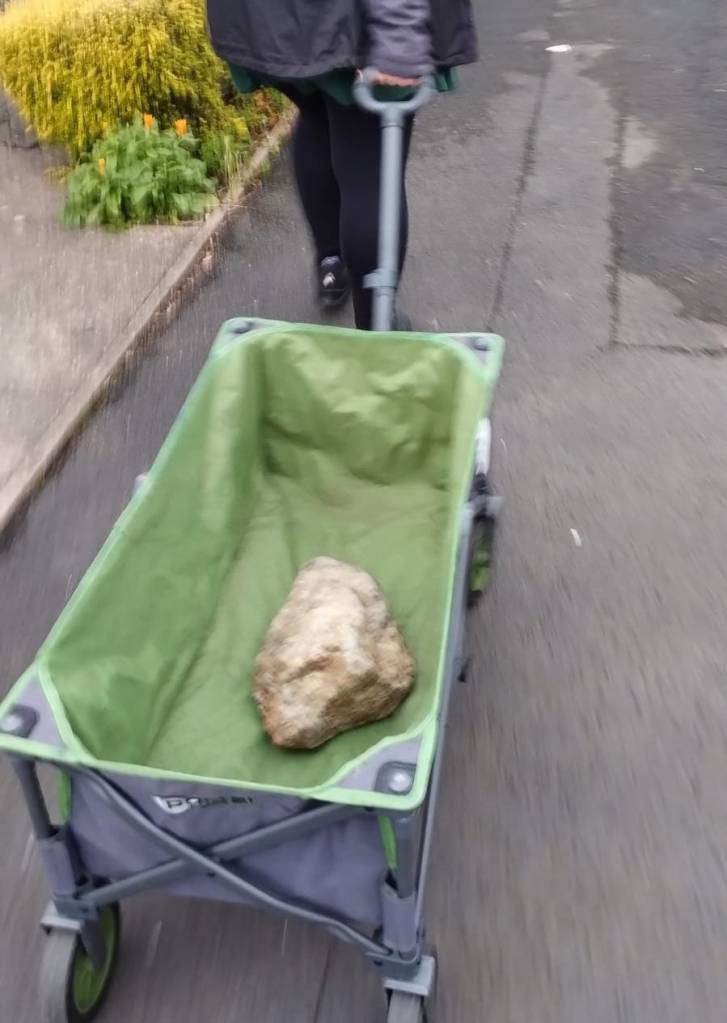
After receiving confirmation of its erraticness from the experts at the Erratics Project, I met up with Robson in the pub and we started plotting the next walk. Taking after the artist Alyson Hallett who travels the world with large stones, we decided to take the garden erratic for a tour of its adopted home city.

© Andy Howlett

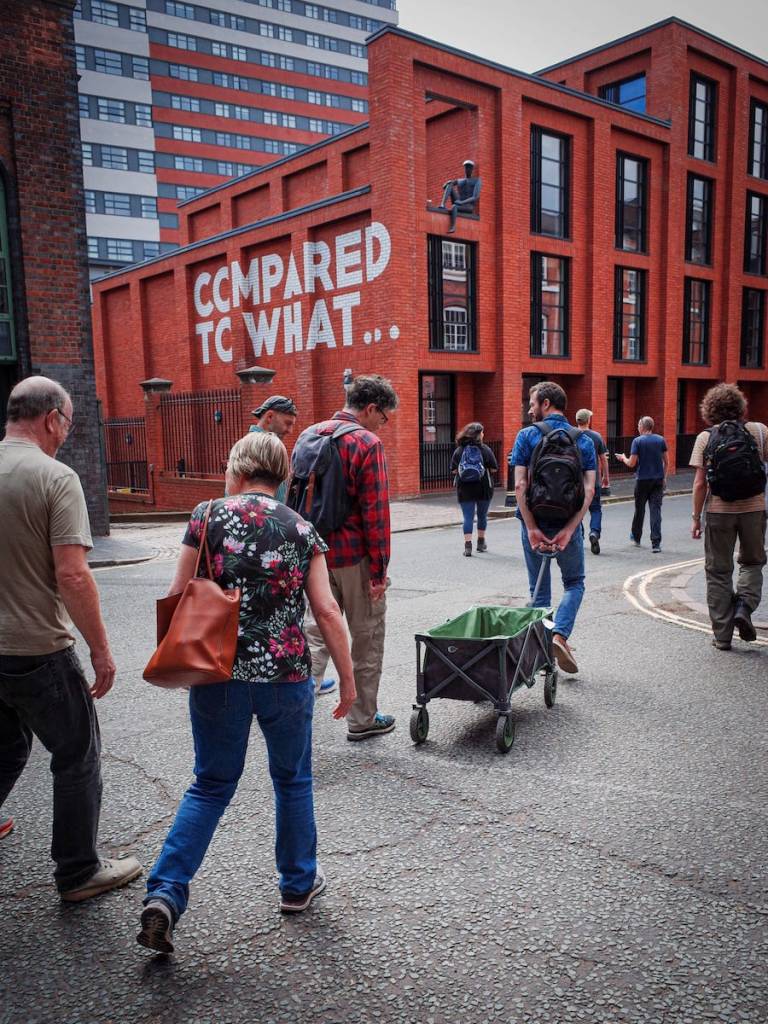
Appropriately enough the walk started in the Jewellery Quarter, a place full of precious stones that have travelled from all over the world. Eleven people came to share this tiny chapter of our stone’s journey by taking a turn pulling the cart.

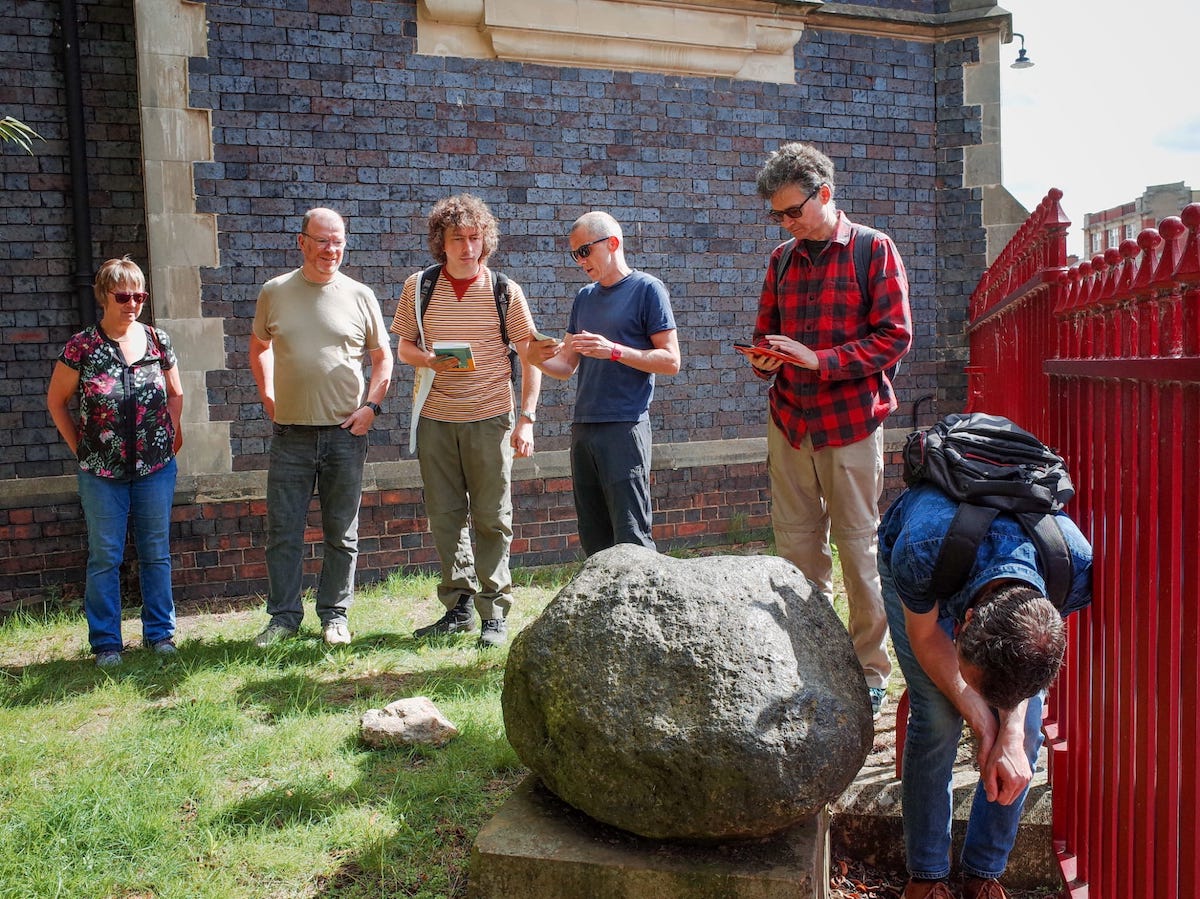
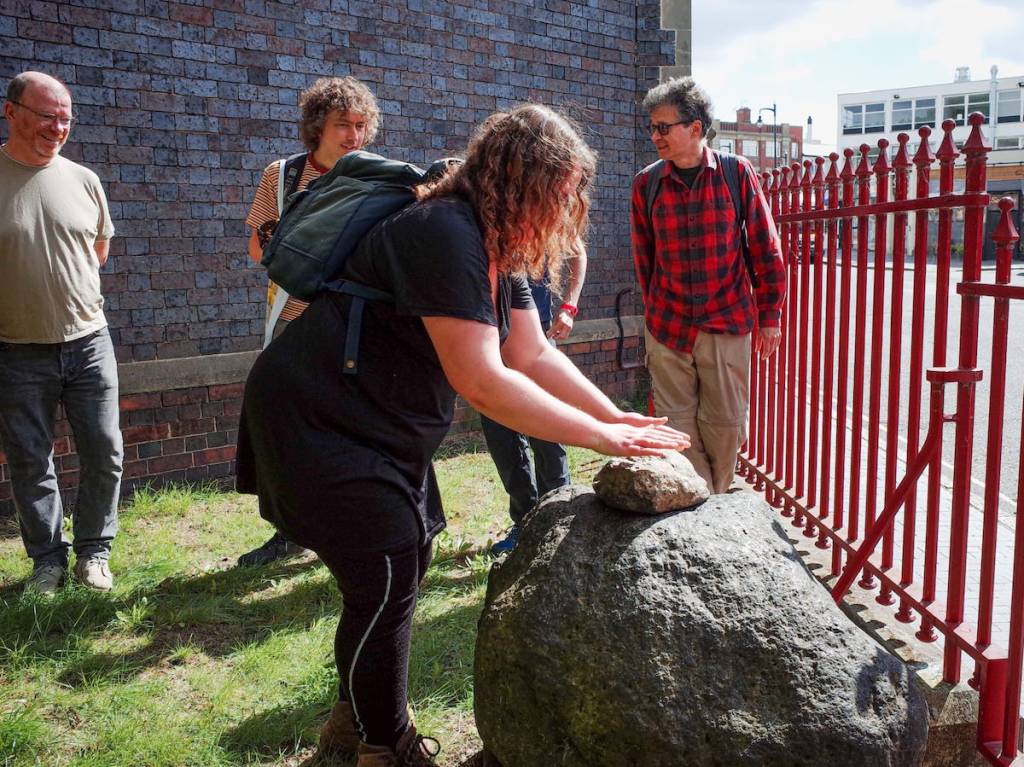
Our first stop was the War Stone which has given its name to the cemetery in which it now resides. An inscription reveals that it once marked the meeting point of the parish boundaries of Birmingham, Aston and Handsworth and that its name is a corruption of “Hoar Stone” meaning boundary stone.

It was an emotional reunion for the War Stone and its smaller cousin who for several millions of years would have been neighbours in the Arenig Mountains.

© Jay Mason-Burns

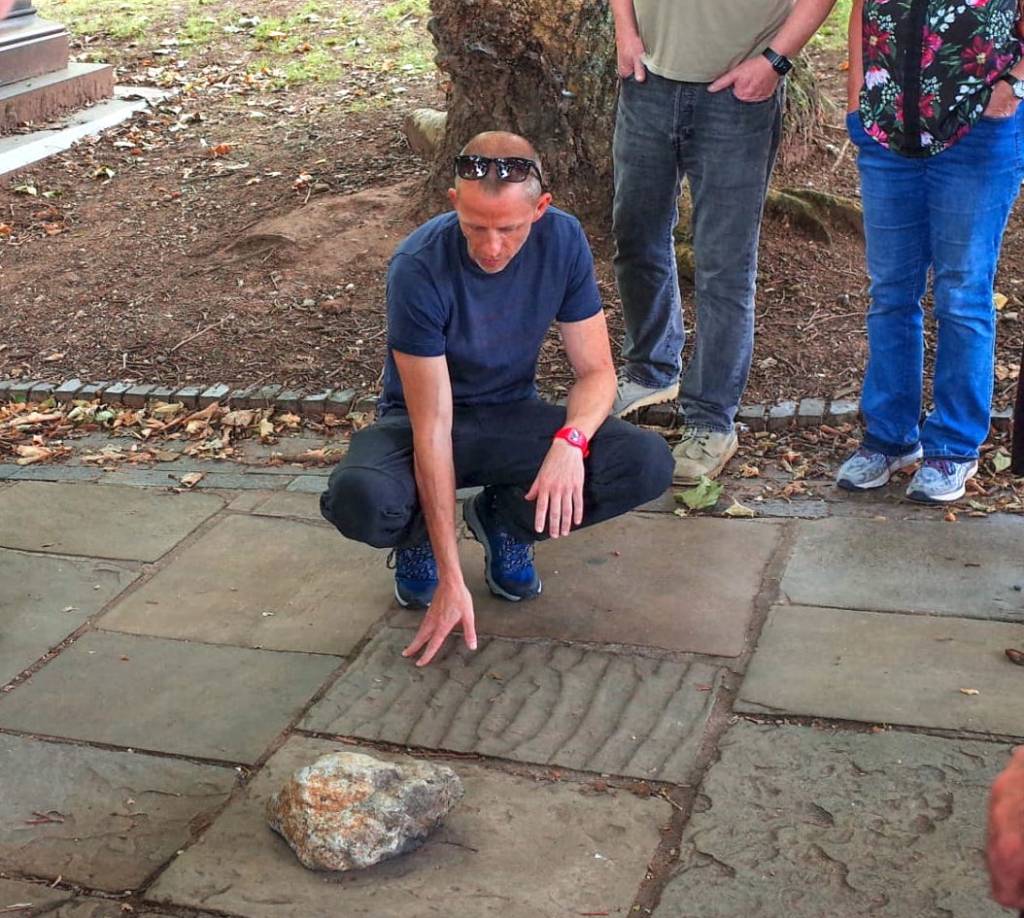
Next up we visited a flagstone in St Paul’s Square which appears to be a petrified slab of riverbed.

© Jay Mason-Burns
© Jay Mason-Burns

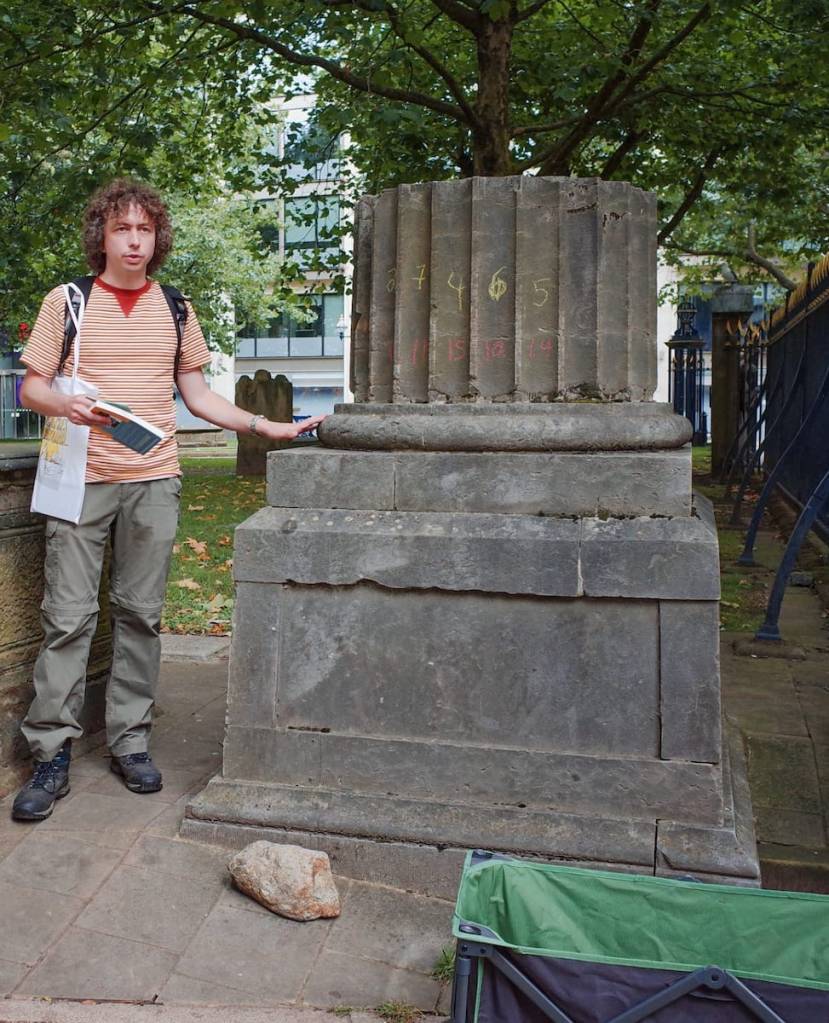
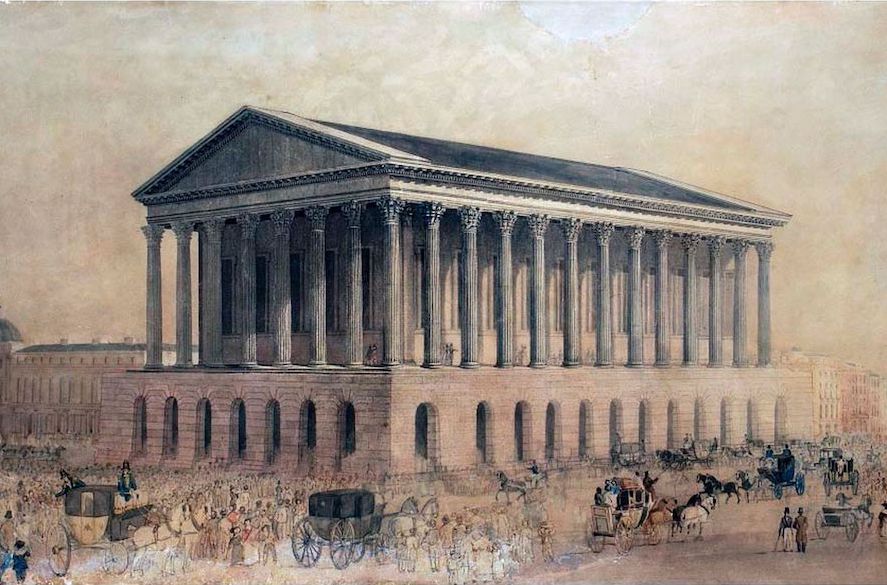
As is often the case on our Erratic walks, many of the best revelations came from our guests. On our visit to the Badger/Heap memorial in Cathedral Square (or “Pigeon Park”), Phil revealed that in funerary architecture a truncated column symbolises a life cut short. The monument commemorates John Heap and William Badger, two stone carvers who were killed by a falling truss during the construction of the Town Hall in 1833. It has since become a focus for International Workers Day to commemorate all workers killed in the workplace.

© Jay Mason-Burns

Curiously this monument isn’t the only “spare part” of the Town Hall to have strayed from its mother building and taken on a new function. In our first Wandering Rocks walk we visited Cannon Hill Park where two of the building’s capitals (the topmost part of a column) enjoy new lives as flowerbed ornaments. How many more architectural “erratics” are out there living incognito? Could you construct an entire building out of them?

In Counter-Tourism: The Handbook Crab Man introduces the concept of “beached heritage” to describe any sort of artefact that has travelled (geographically and/or temporally) and washed up on alien shores.

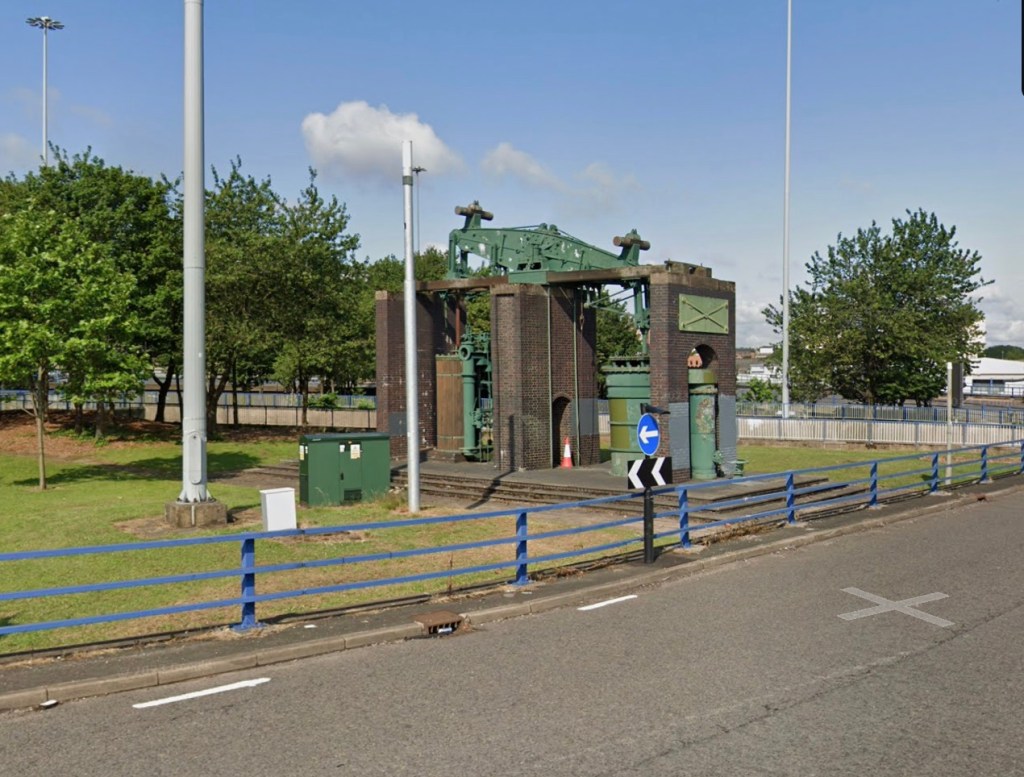
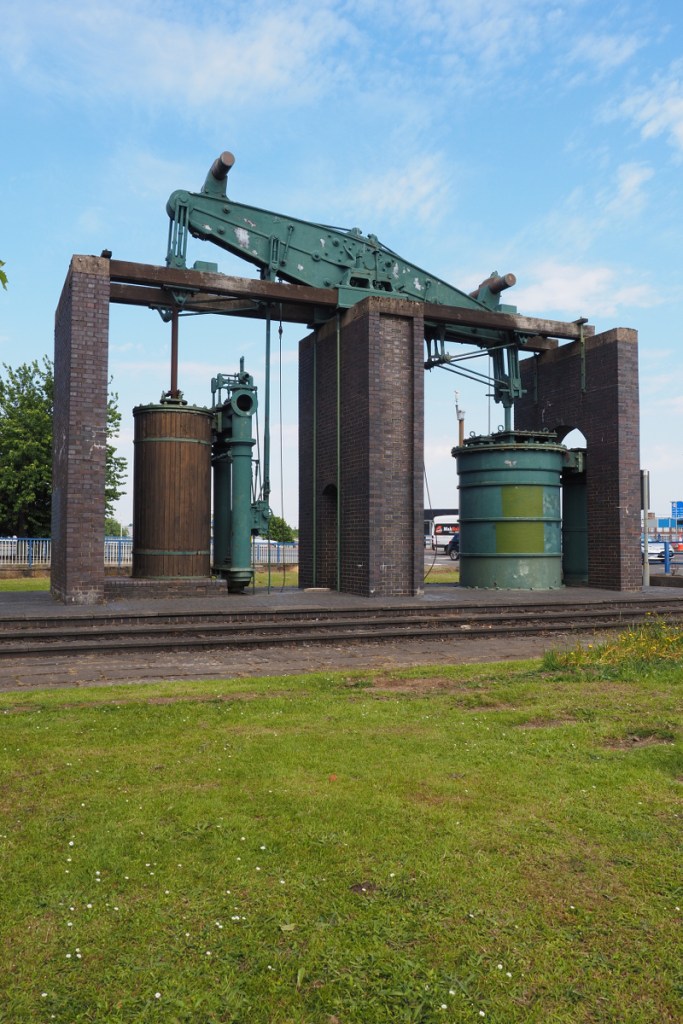
Birmingham’s most striking example of this is surely the Grazebrook Beam Engine of 1817. Built to the design of local inventor and Steam Age pioneer James Watt, the beam engine was used for blowing blast furnaces at the Grazebrook foundry in Dudley. It’s the largest steam engine ever built in the Birmingham/Black Country area and it remained in operation for close to a century. It now sits on a busy traffic island overlooking the Aston Expressway.

Screenshot

The engine is accessible via pedestrian subways but there is no information board to explain its historical significance. Its mute grandeur speaks volumes enough. Just over the way though is a shiny black plaque commemorating the Matalan development of 2001.

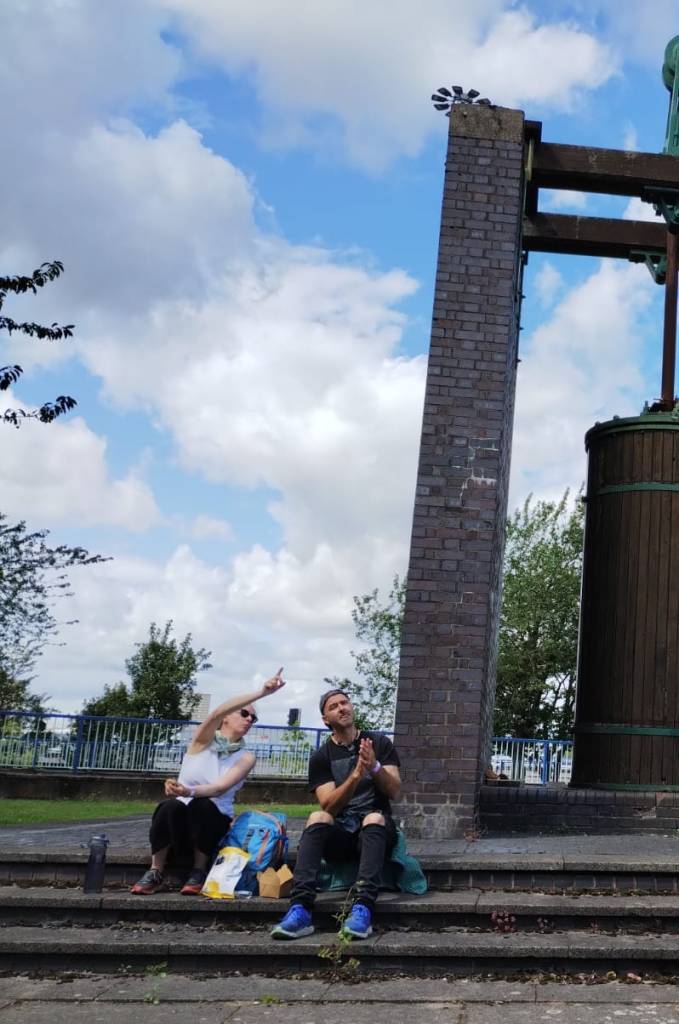
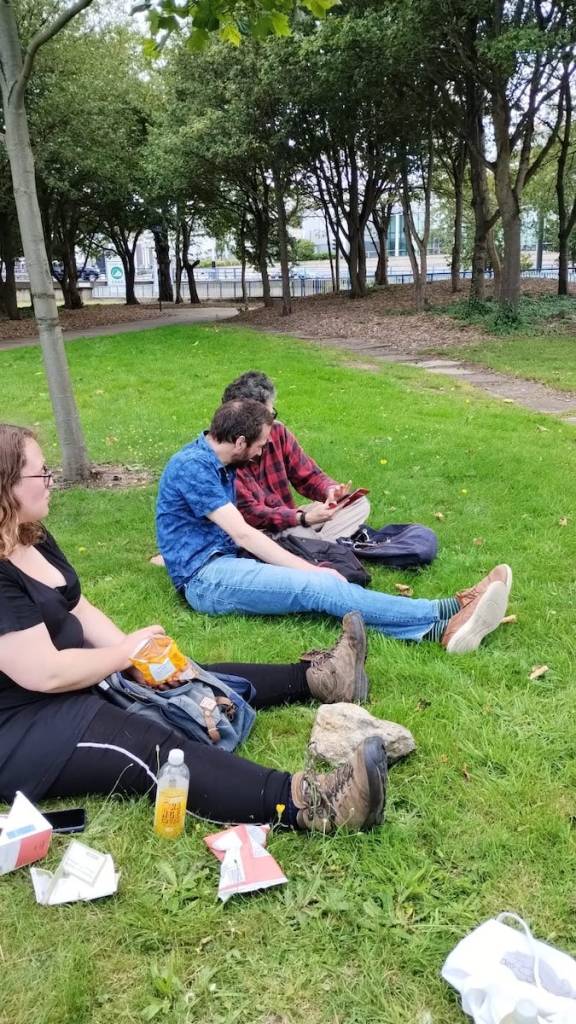
The traffic island itself, Dartmouth Circus, is something of a monument to Birmingham’s motorcity age when the planners reimagined roundabouts as sites for green space and relaxation. In fulfilment of this vision we stopped here for a picnic.

We visited several examples of public art: some for their nomadic history (William Pye’s Peace Sculpture), others for their geological intrigue (Vincent Woropay’s Wattilisk), but perhaps the most pleasing stop of this sort was the one we didn’t plan.

As we passed through Aston University campus one of our party (Phil again) spotted one of John Maine’s Aston Stones which he remembered from his time as a student there. Phil told us how originally there were five of these stones (we only saw one) positioned along two axes in the shape of a cross. They weren’t fastened to the ground though and if several drunk students put their backs into it, the stones could be manoeuvred around the campus in the middle of the night. This earned them the nickname “The Rolling Stones”.

Those other four stones must be out there somewhere. Photo © Brianboru100

Thank you for joining us on this journey, whether that was in person or by screen. If you’d like to join us on future walks and hear about other Walkspace activity please sign up to our mailing list.

For now I shall leave you with an on-theme poem from one of my favourite writers, Joel Lane:

Don't Go

You said, stone dies like us.
They knocked down that pub 
off Deritend, close to the viaduct
that'll be the next thing to go.
I said, but stone doesn't live:

just sweats it day after day,
holding on, but not feeling,
slowly growing a coat of ash
while the lime drips from its pores.
You said, that's not living?
© Charlie Best
Categories
Inspiration Posts

Polaroids, Podcasts and Perambulation: a walking podcast

Sat in a coffee shop in May, Julia O’Connell, artist and co-artistic director of independent, Coventry-based cross-discipline performance company Theatre Absolute, propositioned me with a brand new commission for their new work Project:Public.

I don’t know about other artists, but when I’m offered a new commission my entire being floods almost instantly with nerves and self-doubt. I tried not to show that. I think you learn to trust that, actually, those feelings are natural, and are your body’s way of protecting itself from something challenging. You hide it and push through so you can grow.
Julia asked me to consider what it is right now that I’m obsessed with, what I can’t stop thinking about, what’s at my core.

Project:Public is their first work post-venue. Coventry City Centre South is a redevelopment plan that has pushed long-term independent businesses out of an entire swathe of the city centre. Julia, with co-artistic director and photographer Chris O’Connell, have been seeking new ways of making work.

I’ve been a member of Walkspace West Midlands for a good couple of years. I once led a walk around central Coventry for some amazing artists from the collective. It’s a rich collective. I took part in the group show at Artefact this year, but other than that, I just don’t seem to get the time to join for any of the fascinating wanders, erratics, adventures and exploratory research trips. I feel a bit rubbish about that but nonetheless, I admire the group and themes, and am endlessly inspired and propelled artistically by the subject matter of creative walking.

In the proposed commission, I found an opportunity to hurtle into creative walking – performative walking – conversational walking – disruptive walking. I hoped the Walkspace group would be proud. [We are! – Ed

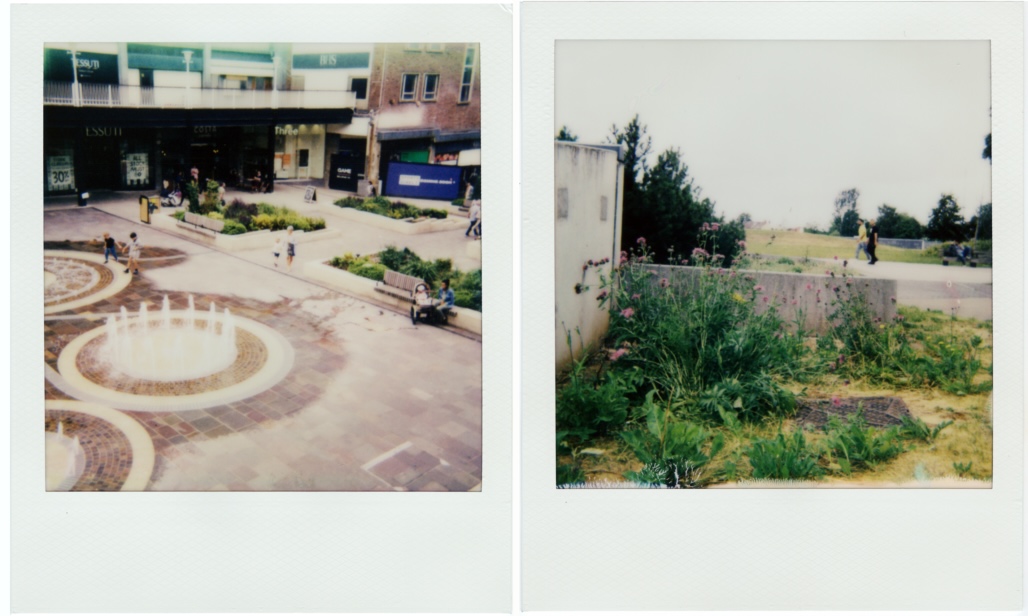
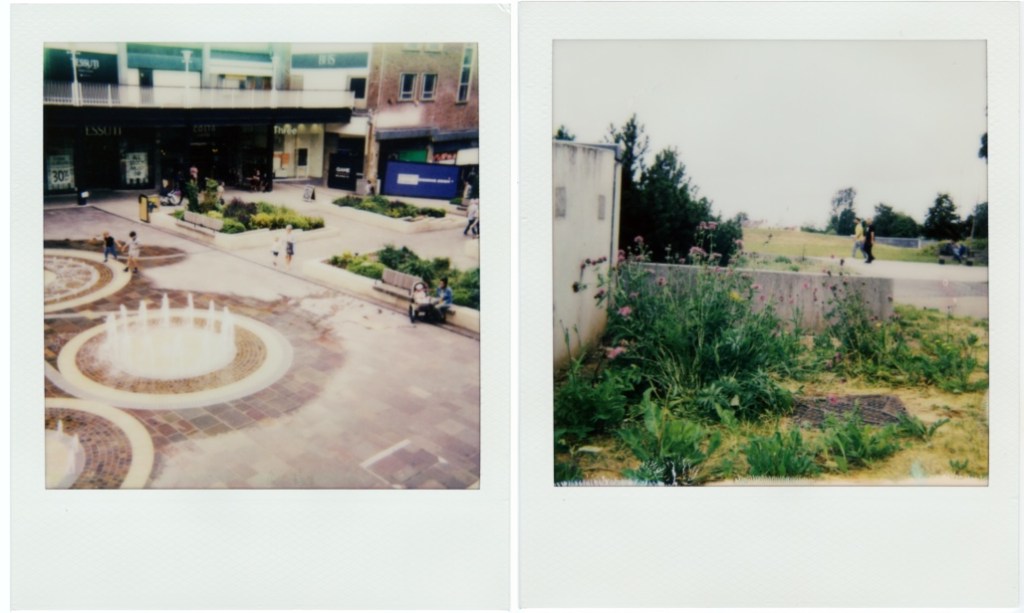
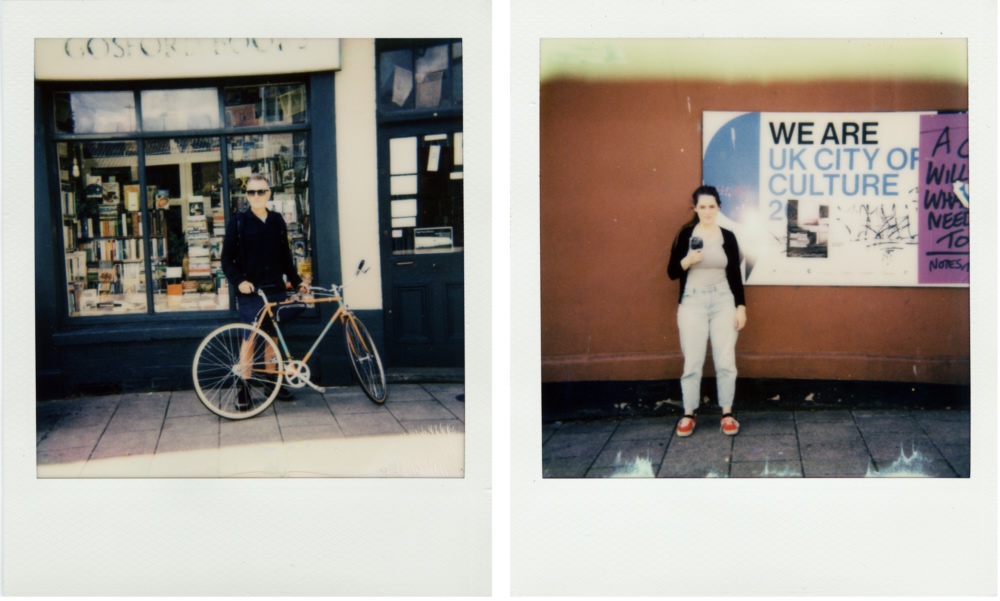
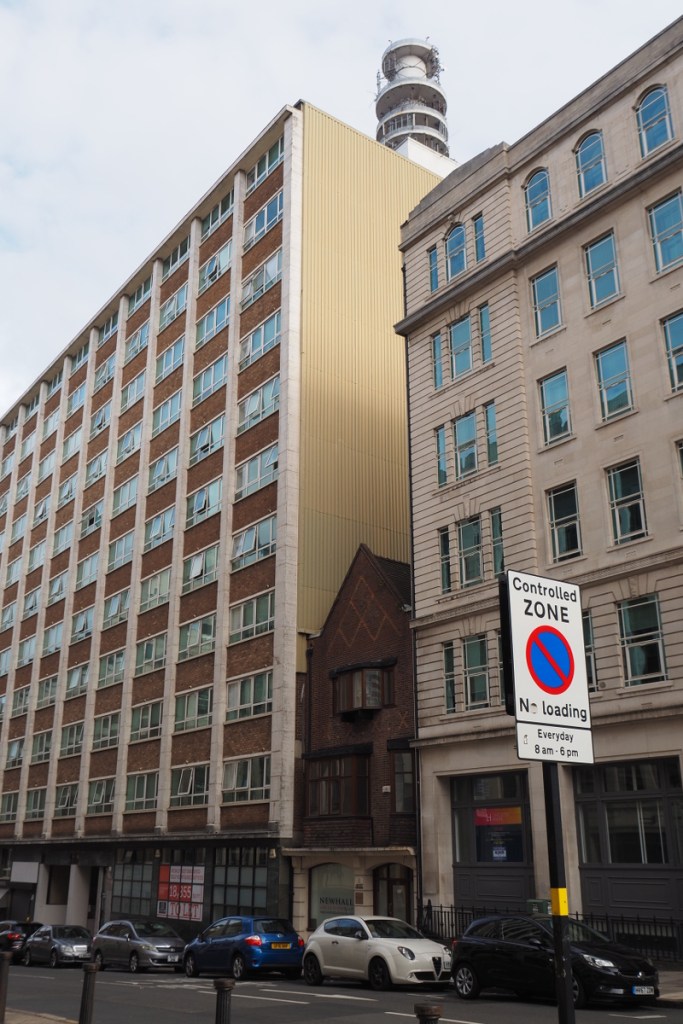
And so, being unable to resist an alliteration, Polaroids, Podcasts and Perambulation was born. Bringing together, as it says on the tin, instant photographs of the city with podcasts recorded whilst perambulating.

We recorded two in July – one walking on Hearsall Common with Julia:

The other walking around Ball Hill and Stoke with Chris:

We used a set of prompts for topics to discuss while talking – moving between many varied themes relating to the arts, from notions of time, pace, pressure, randomness, histories, play, funding, collaboration, getting lost, being reactive, being sensitive, and of course, public space and walking.

They are 47 and 57 minutes long, and published on Soundcloud. You can find all the content – prompts, polaroids and podcasts – at this link. You can also find lists of references of people, things, projects and histories mentioned. 

Please do listen and share any thoughts if you’d like to. My email is adelemreed@yahoo.co.uk and my website is here.

Categories
Posts Upcoming Events

A walk through Selly Oak’s radical history

>> Book here to register your place on the walk.

Most Brummies know Selly Oak as a stopping point along the Bristol Road – or did until it was bypassed in 2011. A suburb where University of Birmingham students come to shop and eat, its terraced hinterlands rented out as student housing. And its narrow high street (still) a pinch point for traffic. But for locals and those with a longer memory, there is much, much more to this busy South Birmingham suburb.

Still from ITV news footage in October 1976 of tenants on Harborne Lane blockading the road to protest poor housing conditions and demand new council houses

As part of the walk programme for the Walkspace 23 exhibition, this walk goes below the modern surface of Selly Oak to explore its radical inclinations, and wonder if Selly Oak’s strategic location may be part of the reason.

A poster from late 1977 advertising a benefit gig at the pub (now the Goose at the OVT) to oppose council plans to evict the People’s Centre, a squatted community centre

Josh Allen will lead the walk. Josh is a writer, contemporary historian, and occasional curator, who runs his own walk-based project Walk Midlands – “A guide to day walks in the English Midlands accessible without a car, for walkers interested in all aspects of the region’s people, landscape and history.”

There are limited places on this walk. Further info and booking here.

Categories
Inspiration Posts Upcoming Events

Still Walking, book launch, and the search for a lost well

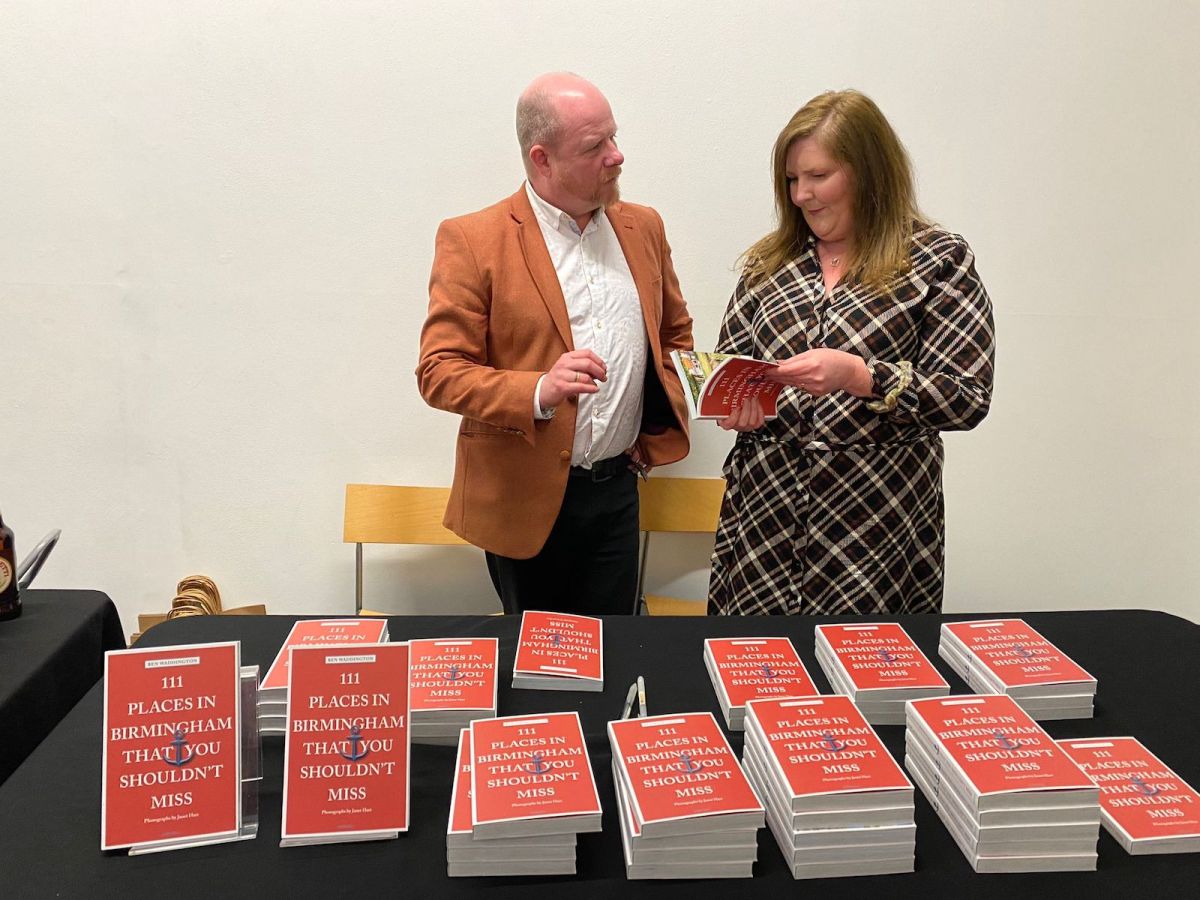
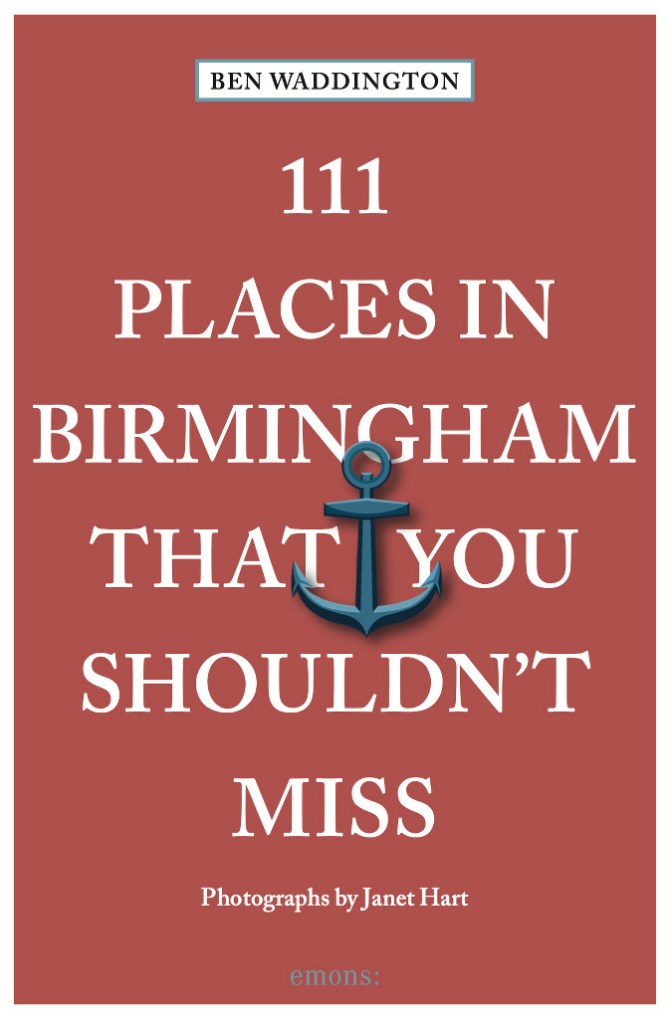
It’s lining up to be a good summer for walking in Birmingham with the return of Still Walking Festival and the accompanying guidebook “111 Places in Birmingham That You Shouldn’t Miss” by Ben Waddington.

Still Walking has been a big influence on many of us at Walkspace with its unusual and highly creative approach to the walking tour format so we’re very excited for its return over May and June. This edition features Sherlock Holmes, Shibboleths and Satan. Book onto the walks now.

As for the book, here are some words from the publisher:

‘111 Places…’ books are known for side-stepping a city’s best known places, instead highlighting the lesser-known— or wholly overlooked— features that more candidly reveal the city’s identity. Ben takes this approach on his guided tours with Still Walking… walks informed by posing the question ‘what would guided tours look like if they weren’t about sight-seeing?’

The aim of the book was to tell Birmingham’s story through its art, architecture, music, industrial history and cultural diversity; showcasing the city’s triumphs while embracing its gritty side. Accordingly, there’s an intriguing mix of urban oddities, micro-museums, sacred sites, epic landscapes, industrial remnants (bridges, tunnels, engines) and a handful of ‘survivors’ from the pre-Revolution Birmingham. 

A few of us went along to the book launch at Ikon gallery earlier in the month and listened to Ben in conversation with Andrew Kulman. The talk was full of fascinating insights but it was especially interesting to hear about all the things that for one reason or another didn’t make it into the book.

The book was several years in the making and in typical Birmingham fashion a number of the places originally due for inclusion were demolished before it went to print. Perhaps we can expect a follow-up volume: “111 Places in Birmingham You Shouldn’t Have Missed”.

Another reason for some places not being included were the difficulties in obtaining permission to photograph private property. Ben told us of the case of the Lady well, “Birmingham’s answer to Leicester’s Richard III car park discovery“.

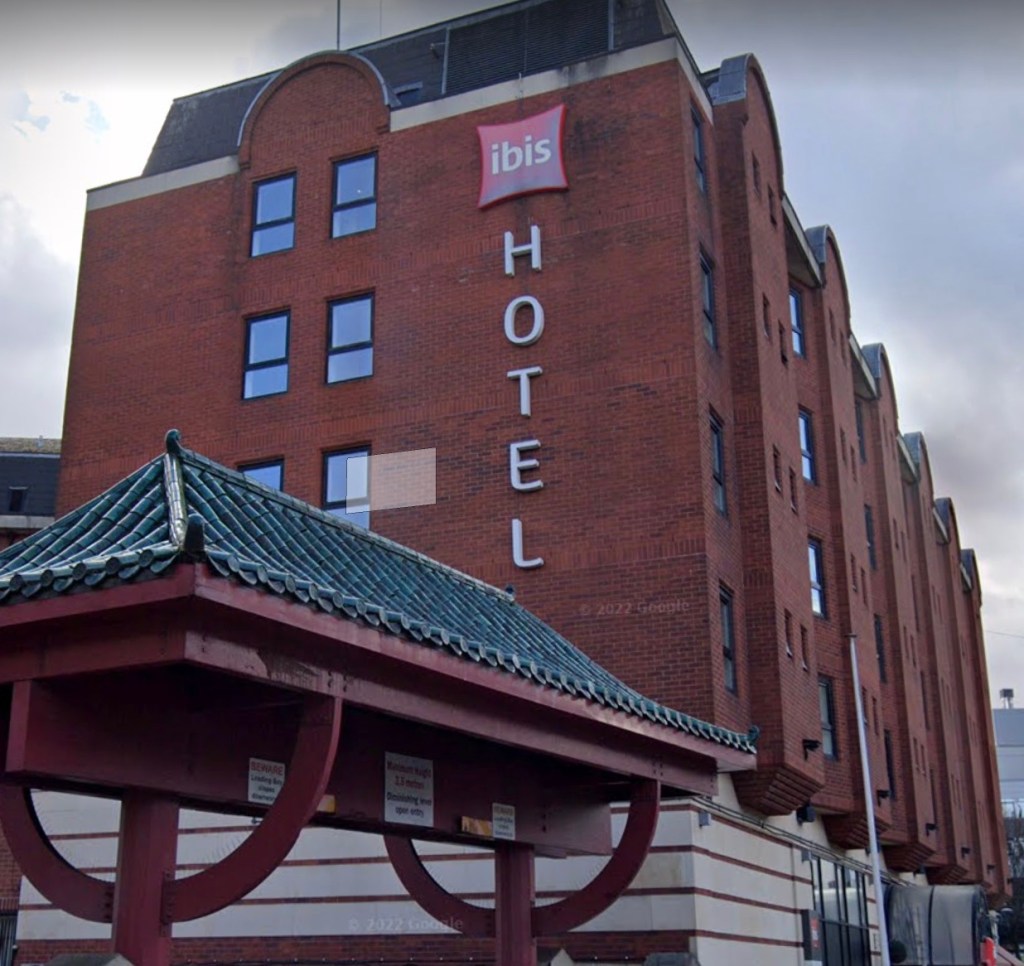
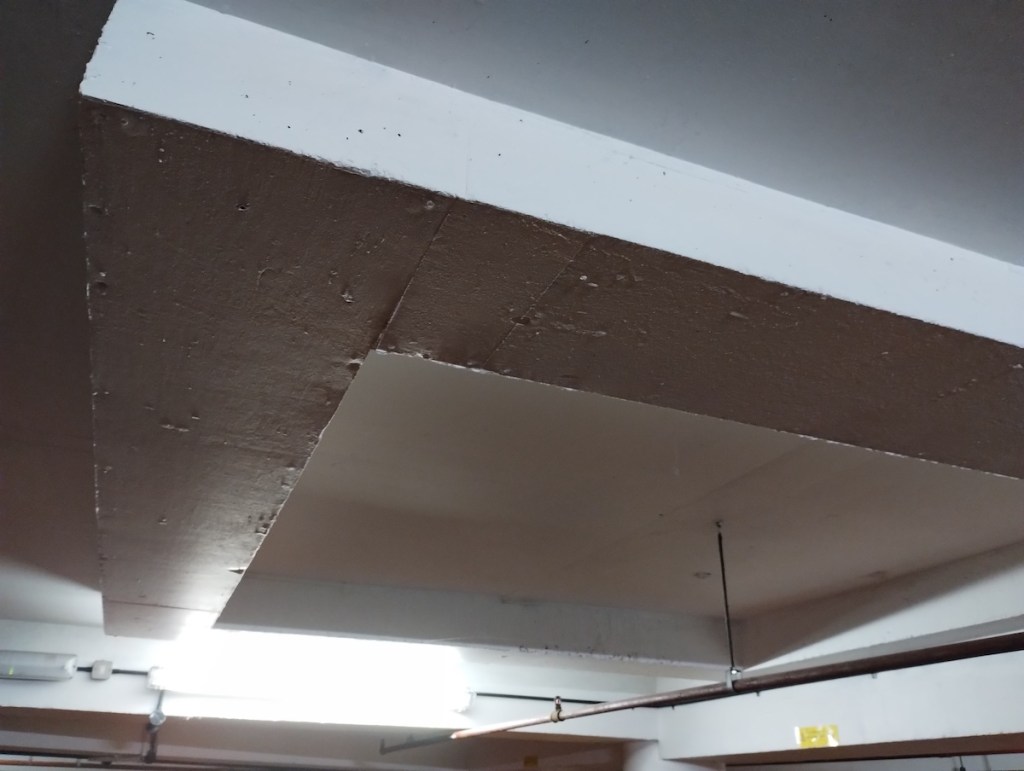
Buried underneath the car park of the Ibis hotel in Chinatown is a holy well, probably once dedicated to the Virgin Mary, that provided water for domestic and industrial purposes until the mid 19th Century. The site of the well is marked only by a concrete square built into the ceiling above.

Ben enquired to Ibis for permission to photograph the sacred site but found himself entering a Kafka-esque, bureaucratic nightmare, being passed from department to department with no one being able to give him a clear answer. Alas, the Lady well doesn’t feature in the book. This story was just too tantalising though so immediately after the book launch three of us decided to schlep over to the other side of town in the pouring rain to investigate.

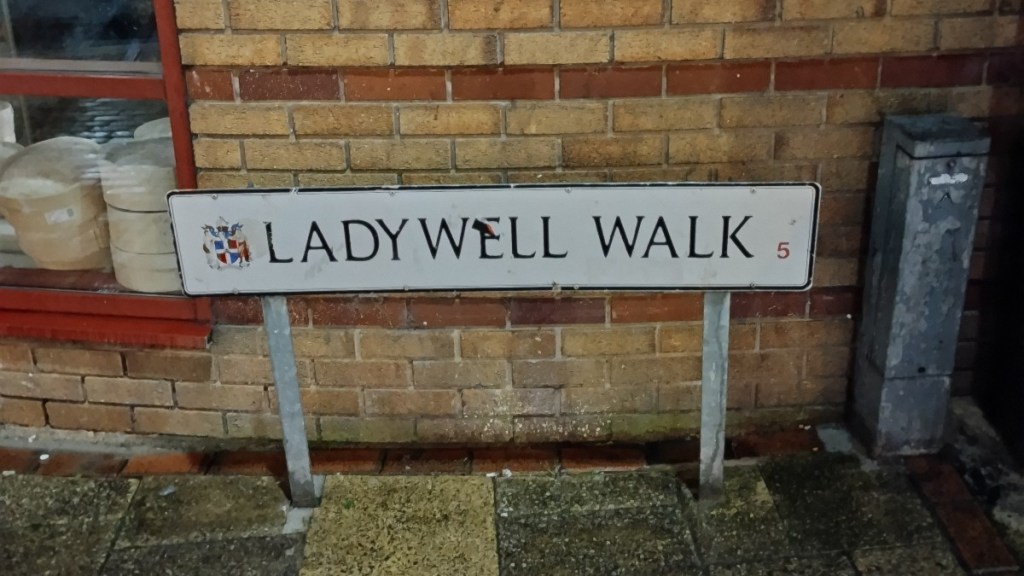
Photo © Andy Howlett

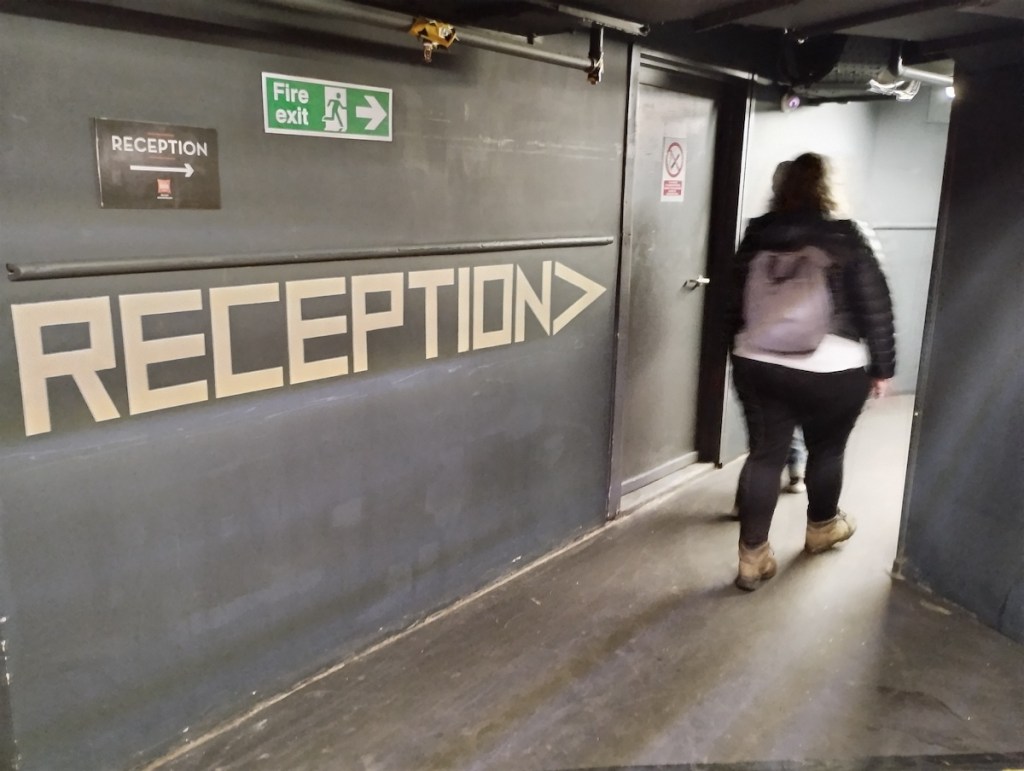
The first clue is in the name of the road that the hotel is on: Ladywell Walk. The car park can only be accessed through the hotel reception so we stepped inside, approached the receptionist and said that we had come to see the site of the holy well. Somewhat perplexed by this request, she told us to take a seat while she went to consult a with colleague.

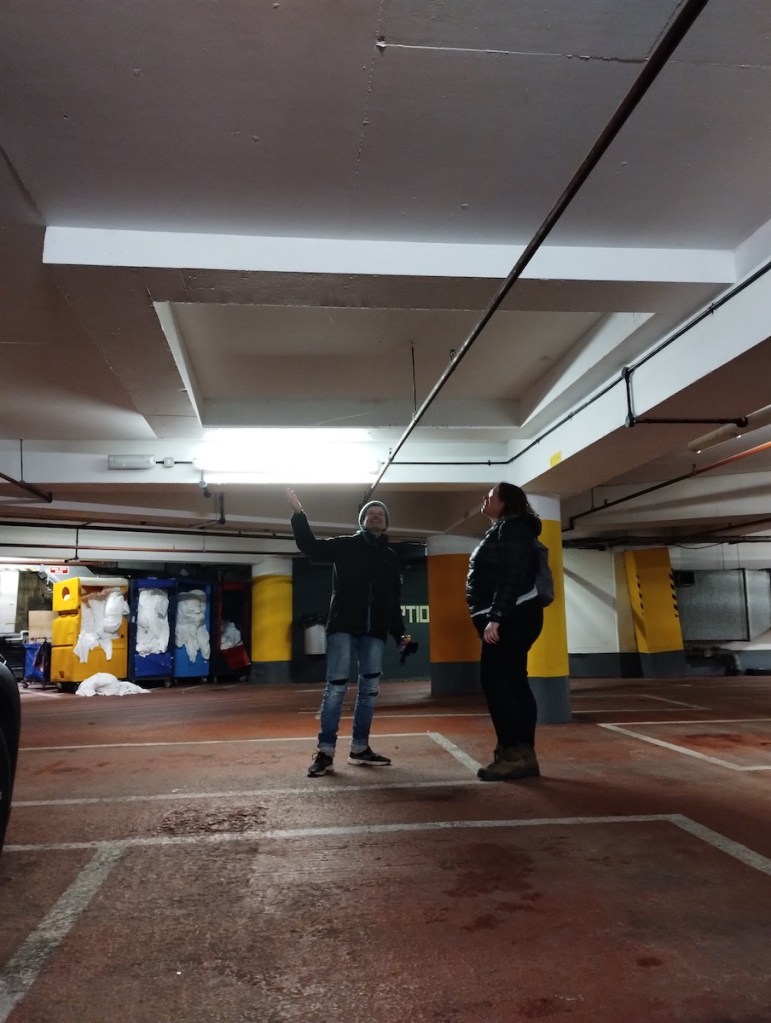
A few minutes later the colleague came and acknowledged the existence of the well but warned us that there wasn’t much to see. She offered us a keycard to get down there and told us about reported ghost sightings associated with the well. Unperturbed we thanked her and made our way down.

Photo © Andy Howlett

This is a taster of the sort of unexpected discoveries and urban adventures that Still Walking and “111 Things…” offer up to the curious city dweller. For the tenth edition of the festival, Still Walking has crafted a special programme of eleven walks inspired by the new guidebook. Head over to the website where you can order a signed copy of the book to collect when you attend any of the walks for the discount price of £12.

Categories
Posts Walk Reports Walkspace Erratics

Photos from Winter Solstice sunrise walk

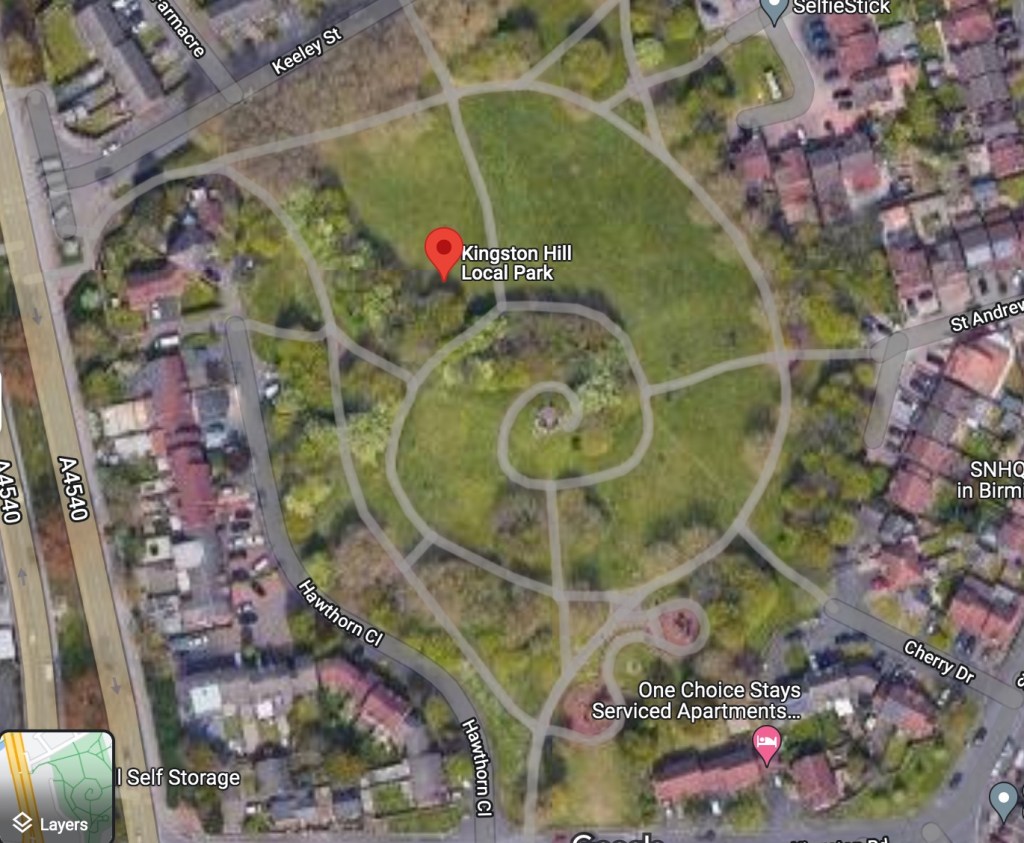
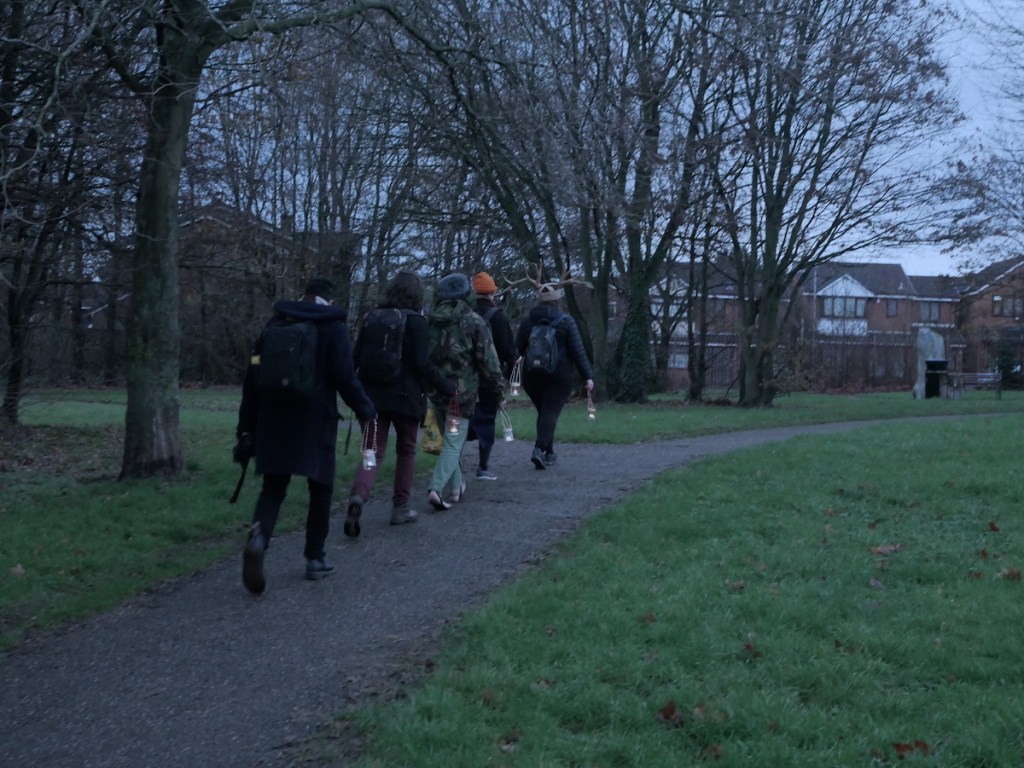
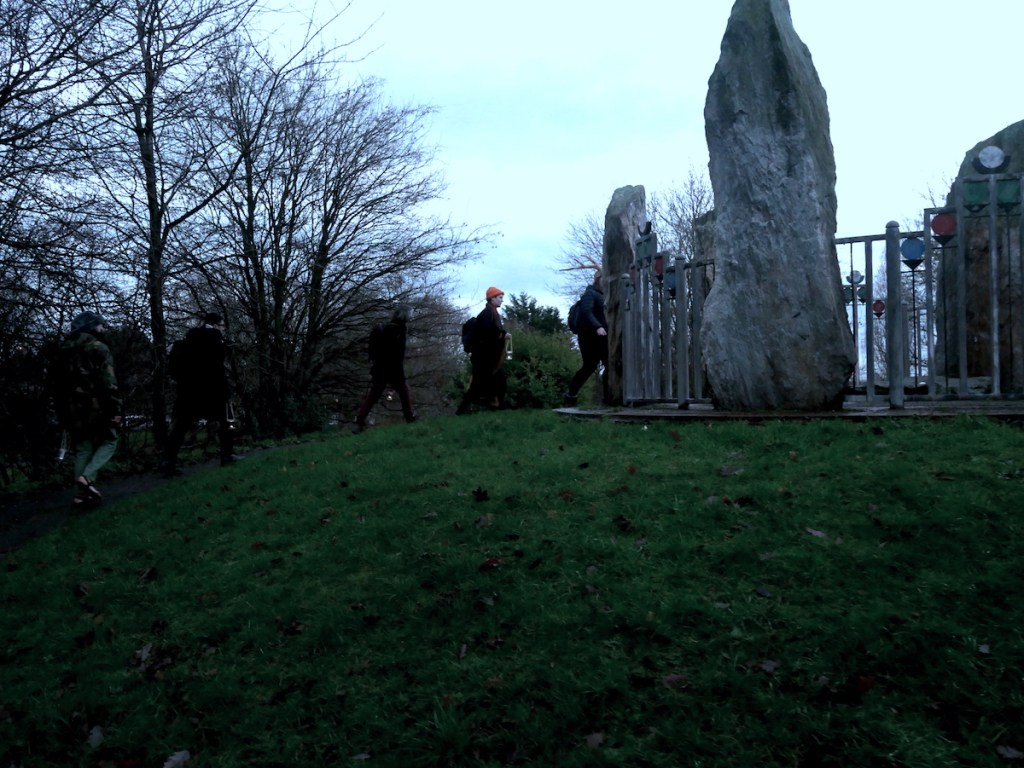
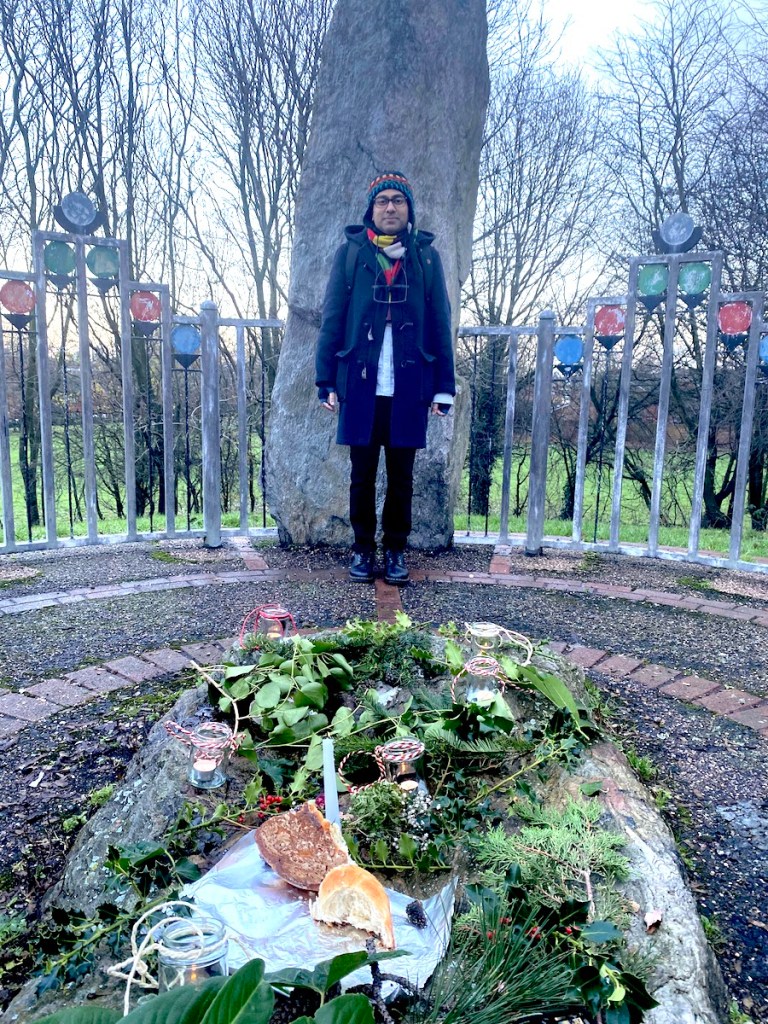
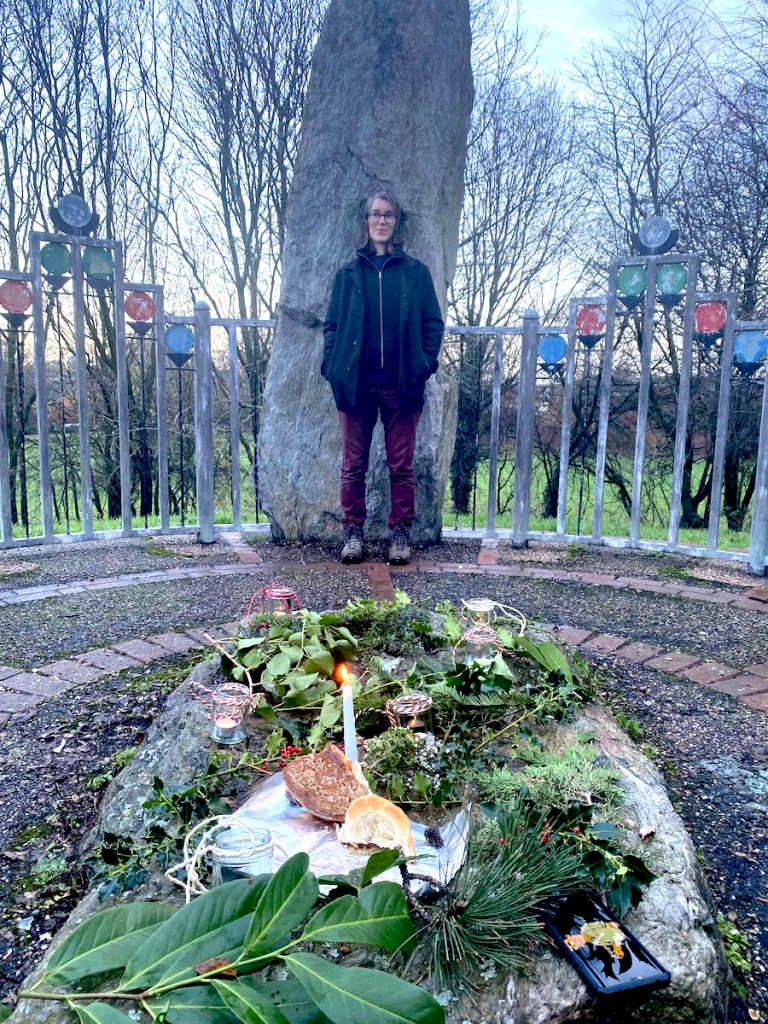
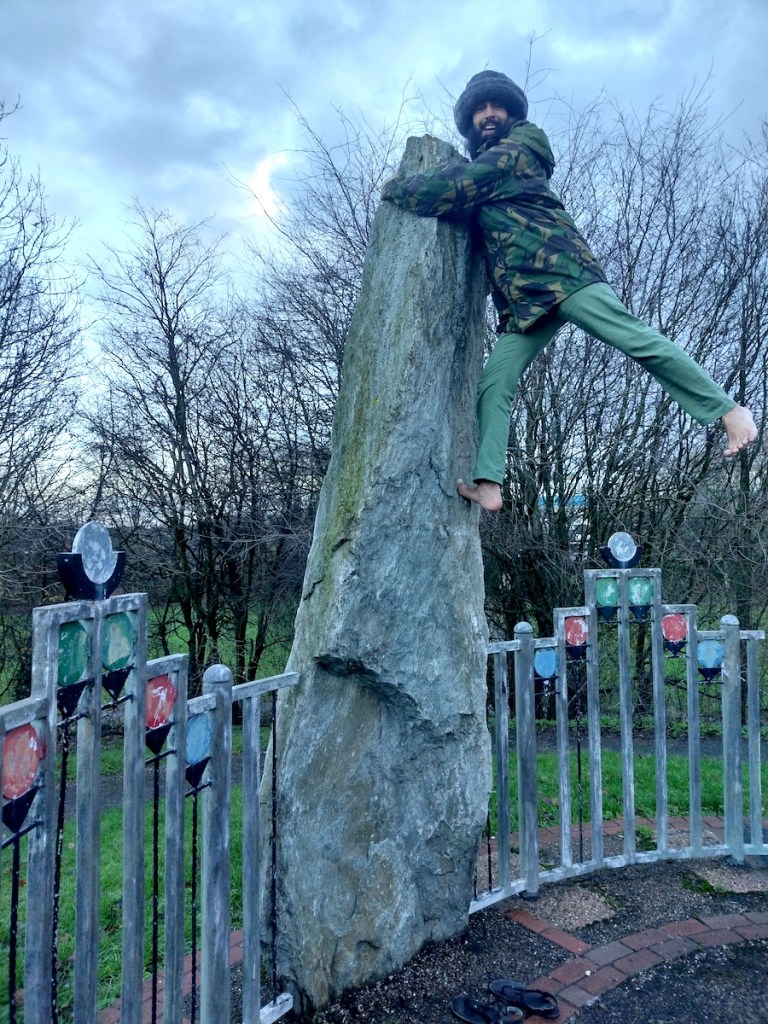
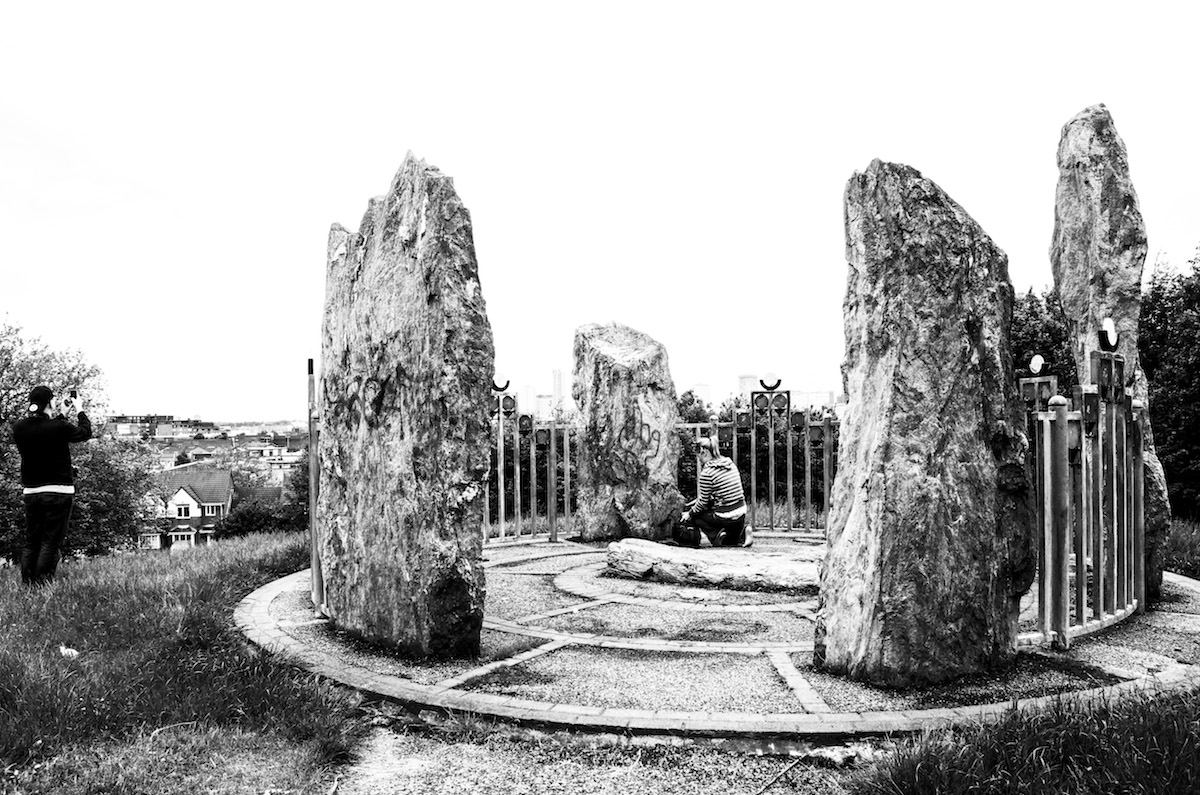
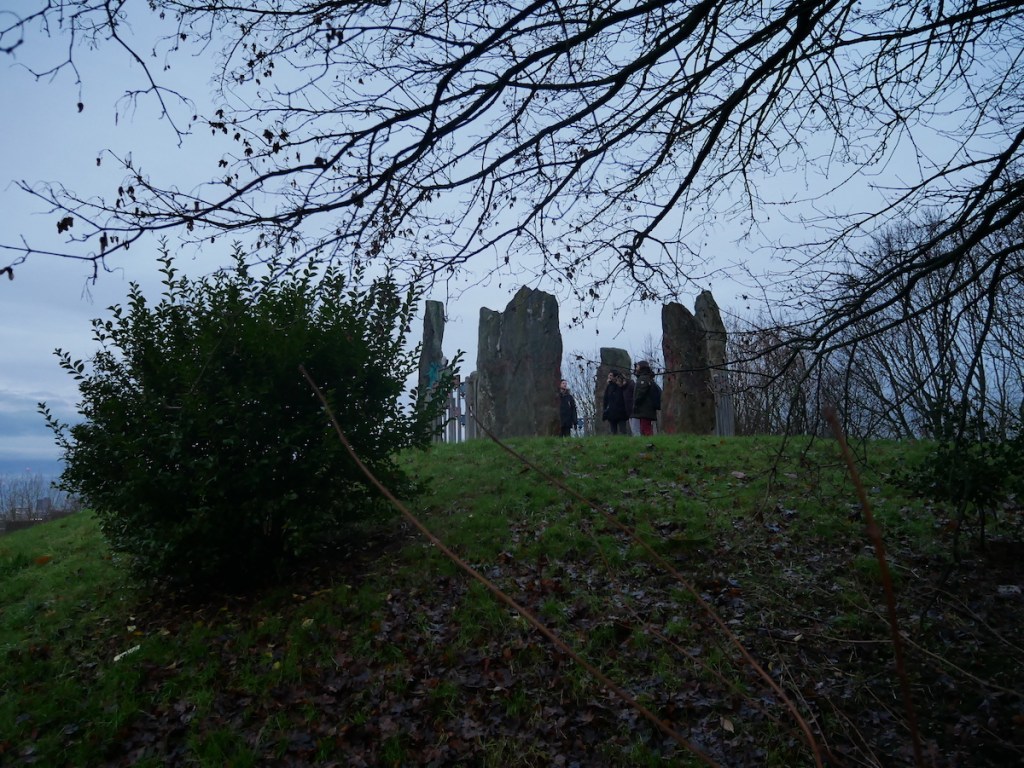
For the final Walkspace Erratic of 2022 we visited Bordesley Henge in Birmingham to mark the Winter Solstice. Bordesley Henge is a municipal stone circle situated in Kingston Hill Park and is believed to date back to the 1990s. Six standing stones form a ring on top of a mound, up which a spiral footpath winds its way from the park’s entrance just off the A4540 Middleway. The park is the very definition of a hidden gem and from above it looks like a giant ammonite.

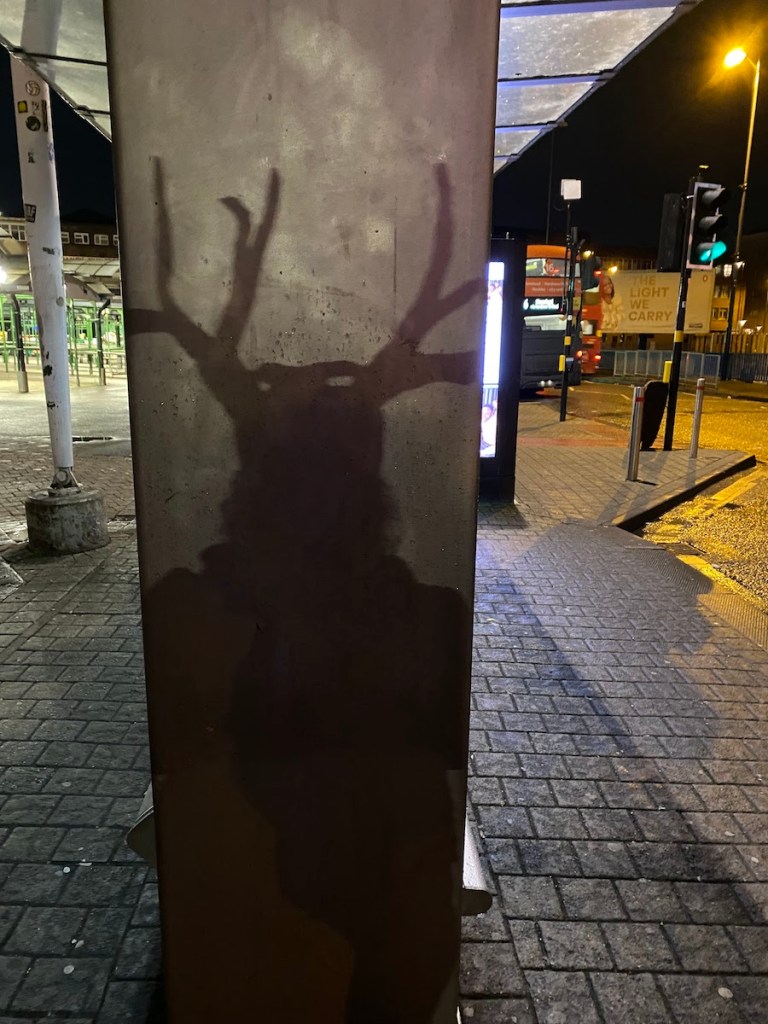
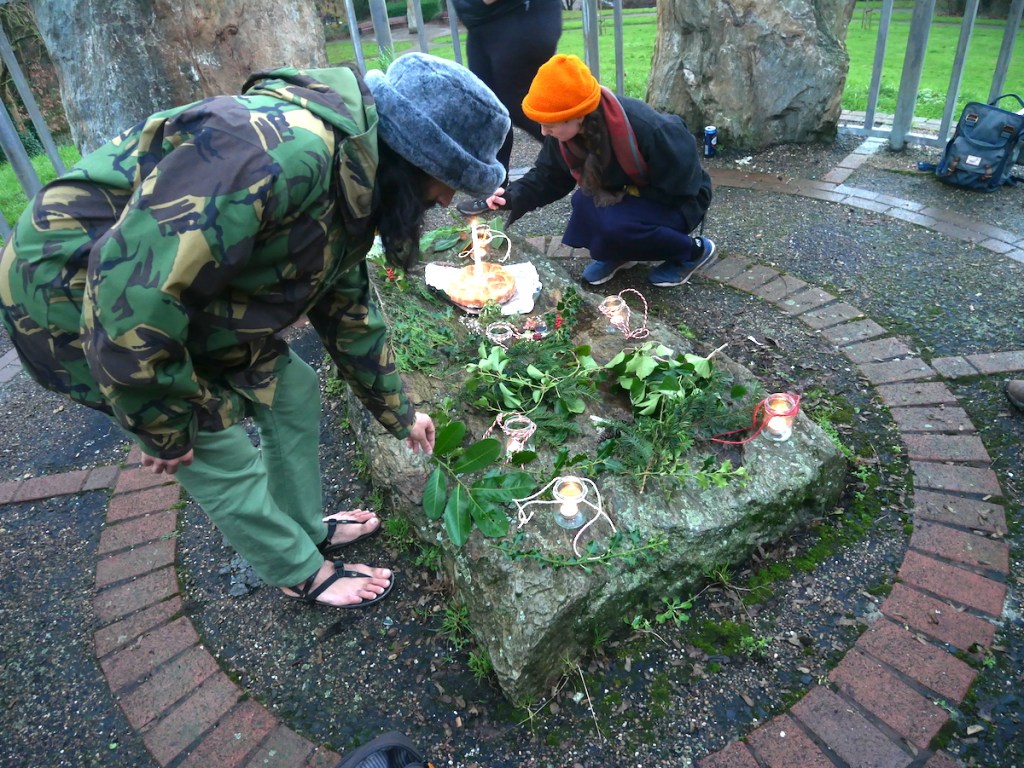
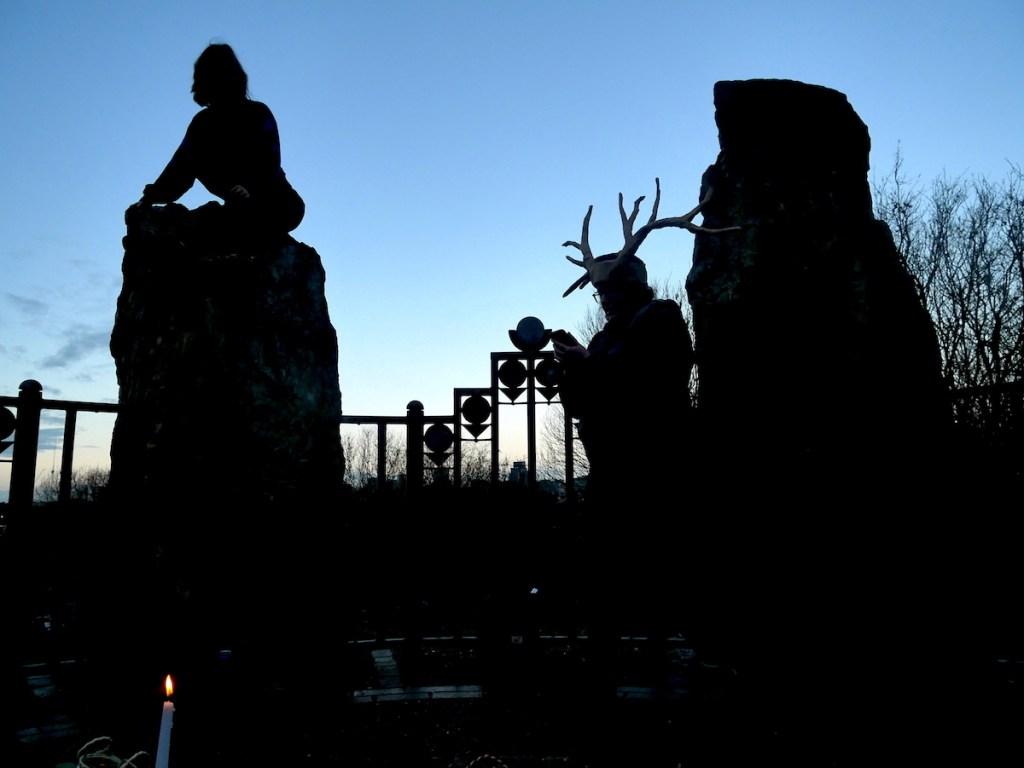
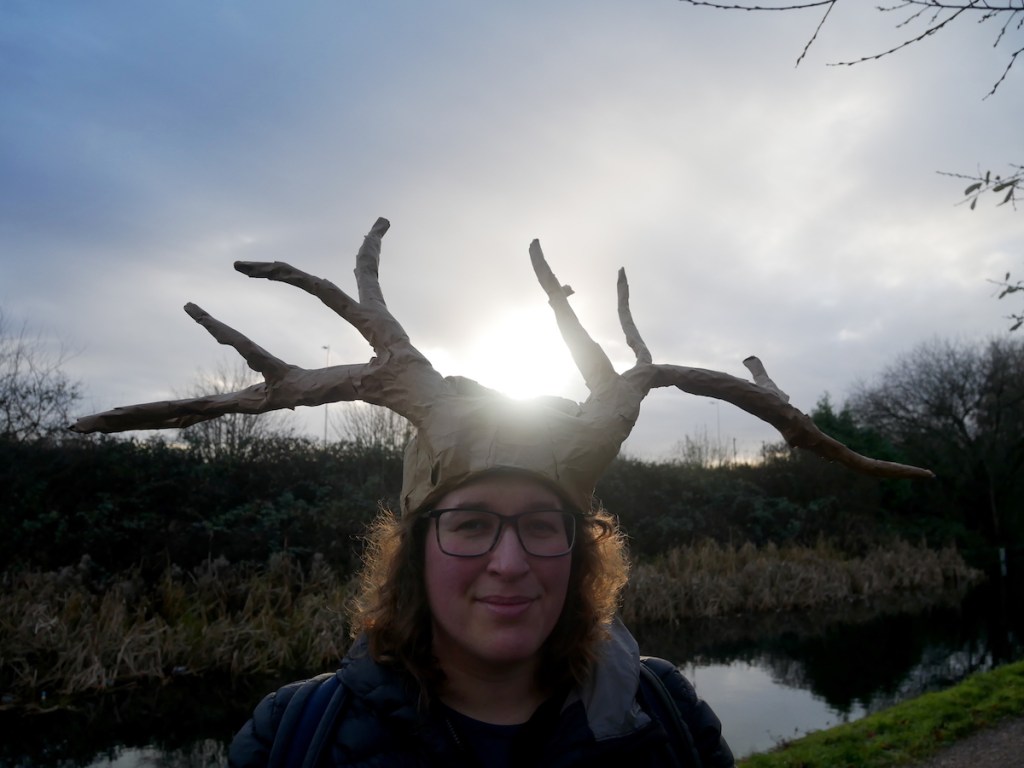
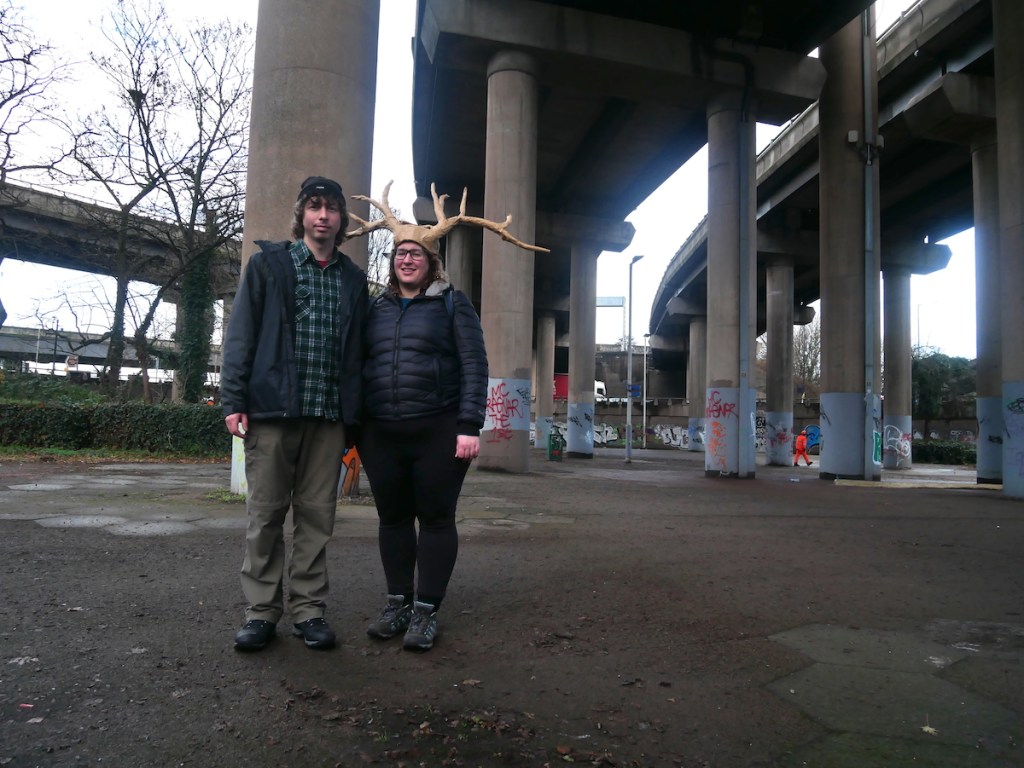
Andy first piloted this walk three years ago in the days before Walkspace but this time around he was joined by Charlie who helped flesh-out the idea with a lamp-lit procession and Yule Altar. Being a sunrise walk we weren’t at all sure how many people to expect but we were delighted to be joined by some friendly faces including the Deer Mother and Holly King.

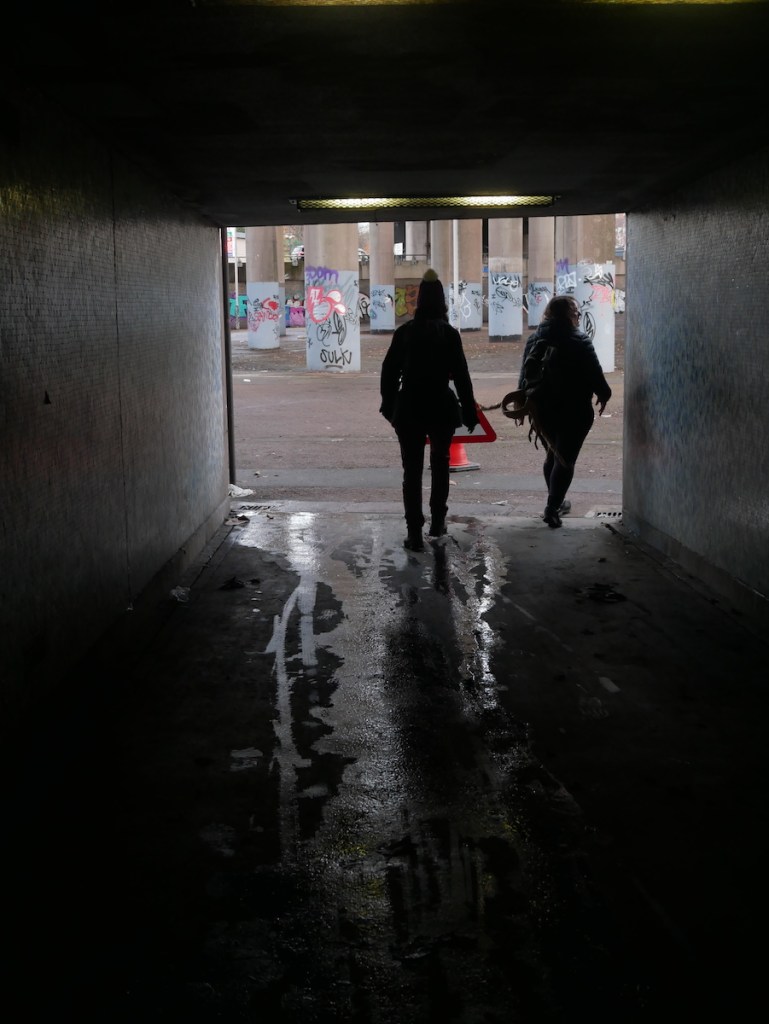
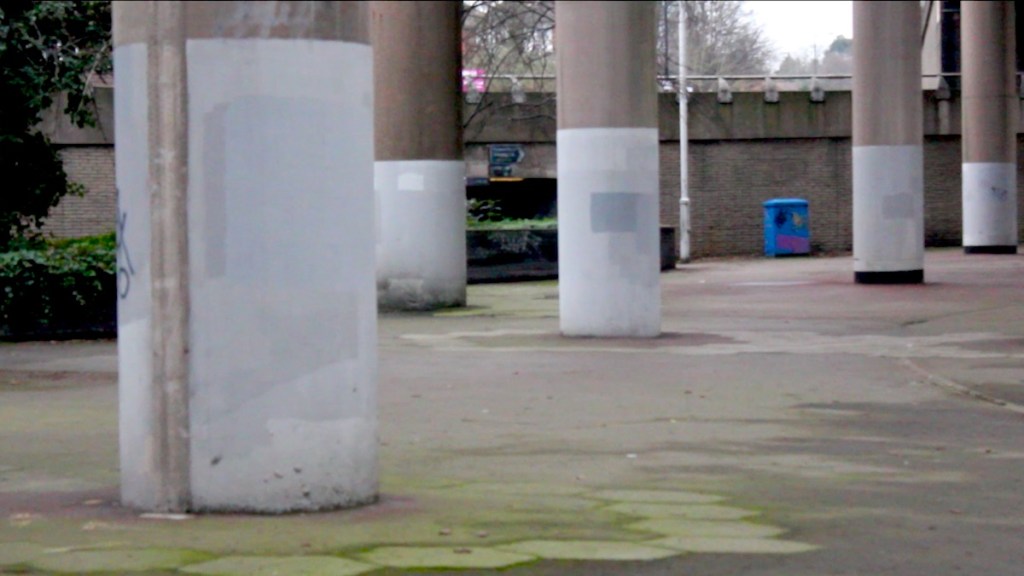
After making our offerings at the altar and enjoying an impromptu singalong, some of us made our way onto the Grand Union Canal and followed the towpath north to Spaghetti Junction for a cup of tea in Salford Circus – a very different type of stone circle.

We hope you enjoy these pictures from the day and here’s to many more Erratics in 2023. It gets lighter from here!

Photos by Andy Howlett unless otherwise stated

Photo: © Charlie Best
Photo: © Roo Hocking
Categories
Posts Upcoming Events Walkspace Erratics

Winter Solstice Sunrise Walk

The Winter Solstice is the midnight of the year: the point at which the sun is furthest away and daylight hours are at their lowest. It’s the shortest day, the longest night but it also marks the beginning of lighter days to come. In the cycle of the year, it’s a time between death and rebirth and so is a time for rest, reflection and dreaming.

The clamour and strain of city living can make it difficult to feel connected to these cosmic cycles but fortunately Birmingham does provide some unorthodox sacred sites that suit the purpose. One of these is the council-commissioned stone circle at Kingston Hill Park in Bordesley Village, believed to date back to the 1990s. This is where we will welcome the sunrise with a silent, lantern-lit procession up the spiral footpath to the stones. Here we will create a Yule altar* and watch the first of the sun’s rays hit the city skyline.

From there we will make our way onto the Grand Union Canal towpath and head north through Saltley towards Gravelly Hill. We’ve already spoken about the significance of Spaghetti Junction as a confluence of confluences and it is here that we shall end our walk with a visit to some very different standing stones: the concrete columns of Salford Circus. If we’re lucky with the weather then the sun will provide us with a natural light show across this mighty colonnade and the surrounding scenery.

Meet Andy and Charlie outside The Rainbow pub on Bordesley High Street at 7:45am, Wednesday 21st December.

The route is three miles long and will likely take upwards of two hours including the procession. For those who just want to come for the sunrise but not the towpath walk you are welcome to do so – we’ll be finished at the Bordesley stones by 8:30. For those carrying on to Spaghetti Junction there are regular trains back from Aston Station and buses into town from Lichfield Road.

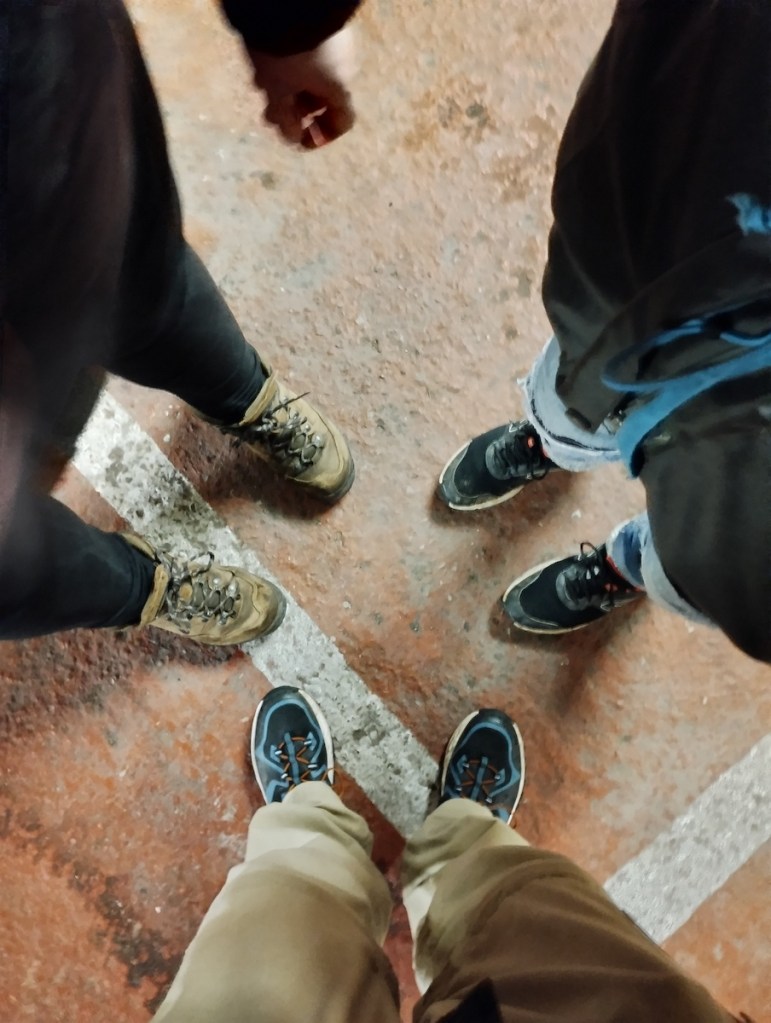
The route will mostly be pavement and towpath with some steep and uneven sections. Steps will be avoided. Wear sturdy footwear and wrap up warm. We recommend bringing bottled water and something to snack on. No need to book, just turn up. The walk will go ahead whatever the weather.

*You are welcome to bring a contribution for the Yule altar eg. holly, mistletoe, pinecones, candles etc.

Categories
Posts Walk Reports

The Contraption – A tribute to Nicholas Monro 1936 – 2022

This piece by Andy Howlett was originally written in April 2021 and appeared in Back to the Future, “a forward looking journal about past-futures, modernism, architecture, and town-planning in Birmingham.” Upon learning of the death of the pop-artist sculptor Nicholas Monro it seemed fitting to repost it here in tribute. Every word of it is true and like all great stories it started with a walk…

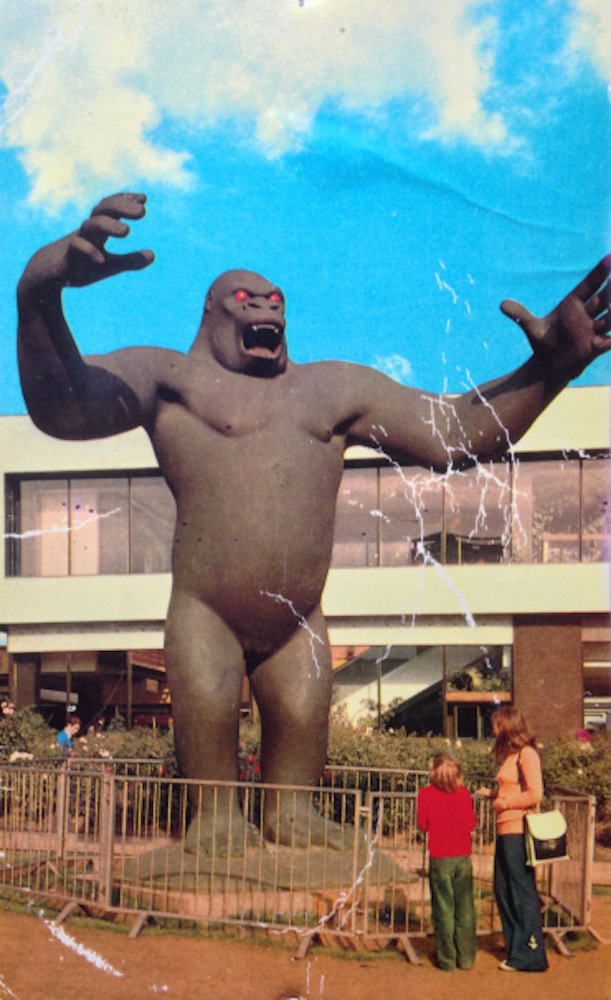
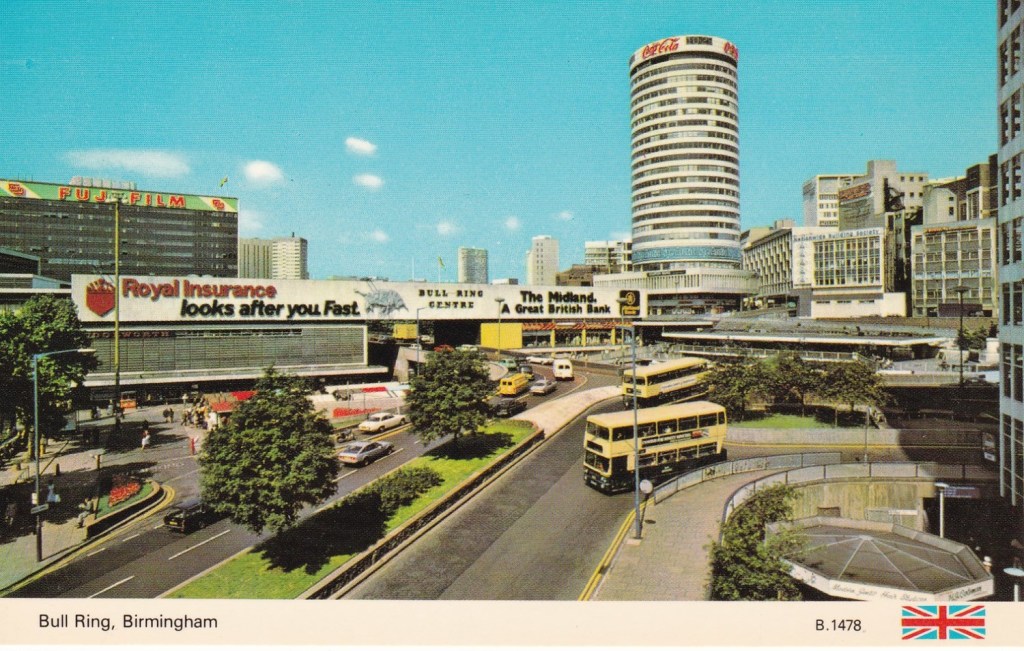
Anyone who’s seen the film King Rocker will know that for a brief time in the early ‘70s, a giant fibreglass gorilla lorded it over the grounds of the Bull Ring shopping centre in central Birmingham. The previous two decades had seen the city rebuilt from the rubble of World War Two in the image of what was then considered the future: soaring flyovers, concrete monoliths, traffic island beauty spots, heroic multi-storey car parks.

“What Birmingham does today, the world does tomorrow”

King Kong watched over this futurescape from the shadow of the Rotunda, encircled by the rumbling flow of the gyratory new road system.

Guardian Spirit

City (dis)oriented

Eighth Wonder of the World

The mighty Kong’s reign however was short-lived. After six months Birmingham City Council sold him off to a second-hand car dealer down the road at Camp Hill. The “City of the Future” swiftly degenerated into a concrete wilderness: the once radiant surfaces became sullied by petrol fumes, pedestrians came to resent their second-class status, and the much vaunted inner ring-road earned itself the nickname “The Concrete Collar”.

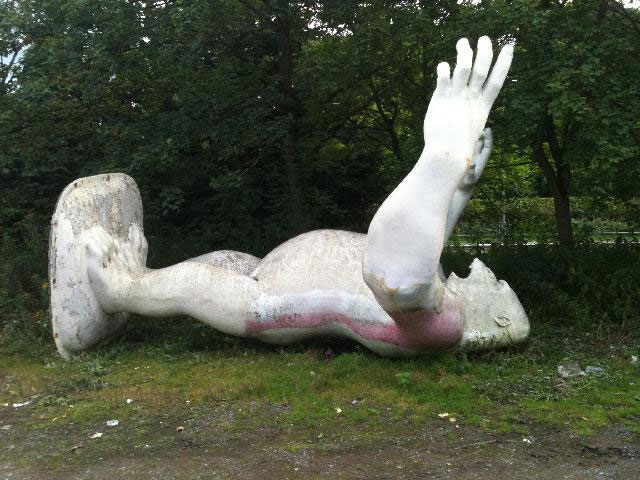
After his stint in second-hand car dealership, King Kong found his way to Scotland, was painted bright pink and displayed in a market, only to be later left abandoned and vandalised in a car park in Penrith.

Photo © fittoprint (CC BY-SA 2.0)

Fast-forward half a century. It’s a sunny May afternoon in suburban Birmingham, the country is in the grips of a deadly pandemic, and I receive a text from my mum:

“You’ll never believe this but I think I met the sculptor of King Kong on a walk in the Dorset countryside this afternoon!!! Tony and I were out walking and we came across this remote cottage and we couldn’t tell if it was inhabited or derelict. Then we walked round and saw this elderly man working on a strange object in a half covered shed. He said his name was Nicholas and talked a while with Tony about his invention. Then we came across the local farm shop and they said he had been a sculptor. We looked him up when we got back and are pretty sure he is Nicholas Monro and that one of his creations was King Kong!! How amazing is that.”

I look up from my phone and regard the King Rocker poster on my wardrobe door. The great ape returns my gaze through a pair of fiery red orbs.

Fast-forward four months. We are walking along a dusty track through the lush Dorset countryside, the site of a lost medieval village. We don’t know if he’ll be home but I have a printed picture of the Kong statue and a sharpie pen, just in case. Anticipation grows as we descend the gentle valley and proceed through a corridor of foliage. Various farm buildings loom up either side of the path, the immense steel and wooden structures swallowed by ivy.

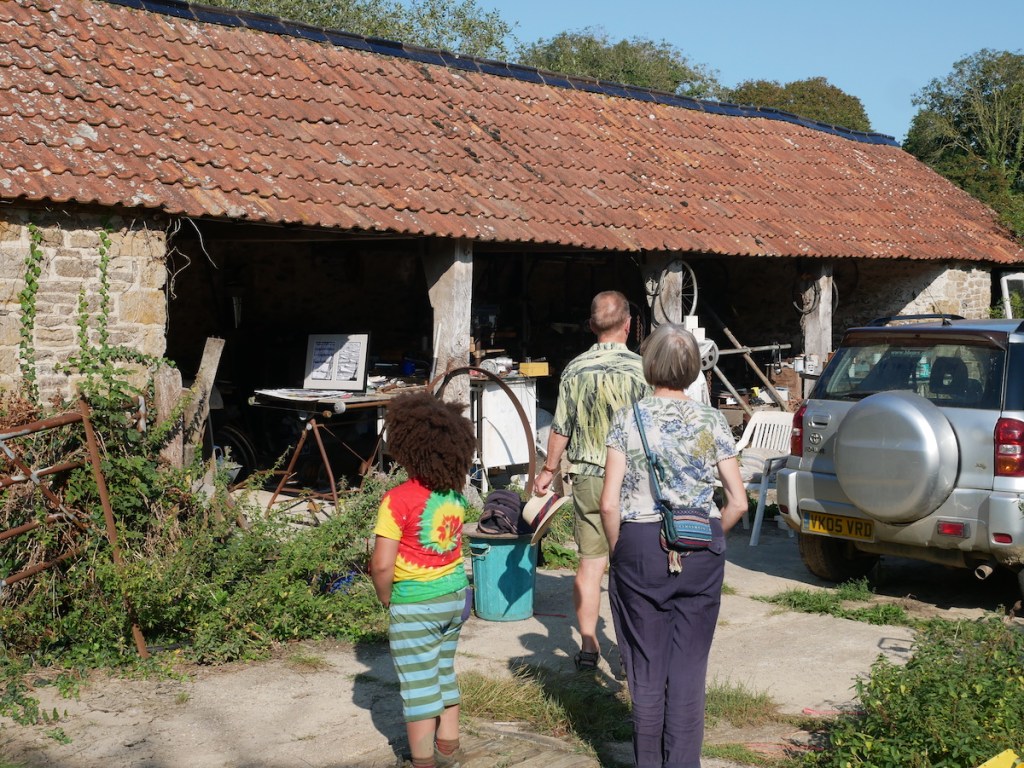
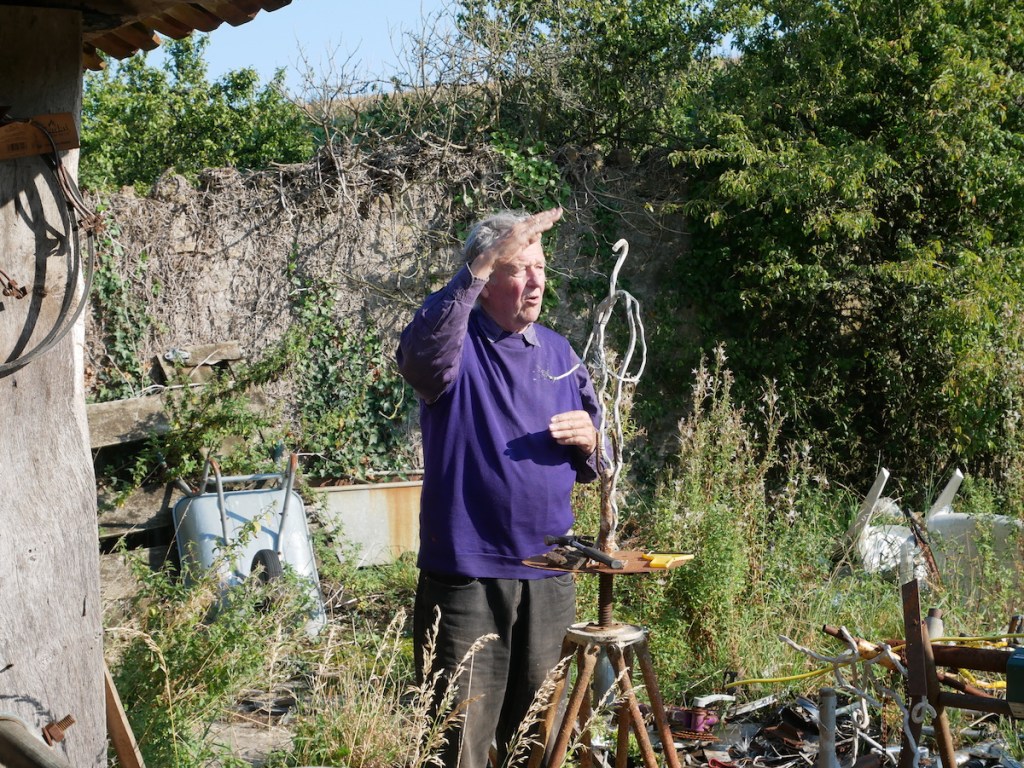
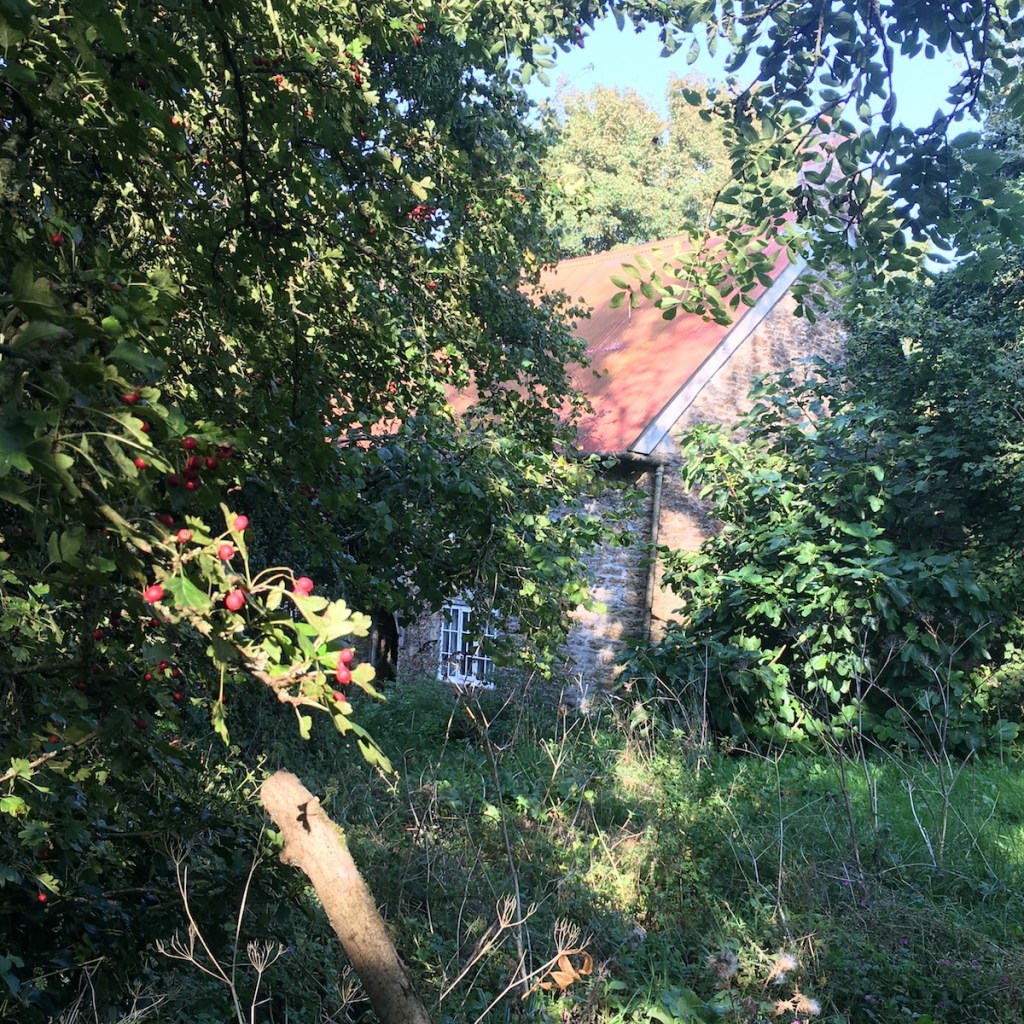
Then we reach the shed; a sturdy structure of stone and wood with a wavy red-tiled roof. One side is open to the world and the contents spill out onto the weed-ridden yard. The vibe is somewhere between a junkyard and a workshop: upturned wheelbarrows, assemblages of rusted machinery, tripod-mounted sculptures including a spindly figure of wire and bone. Other than a lolling tabby, there’s no one here.

Photo © Andy Howlett

“Hello?”

“Is anyone there?”

“Nicholas?”

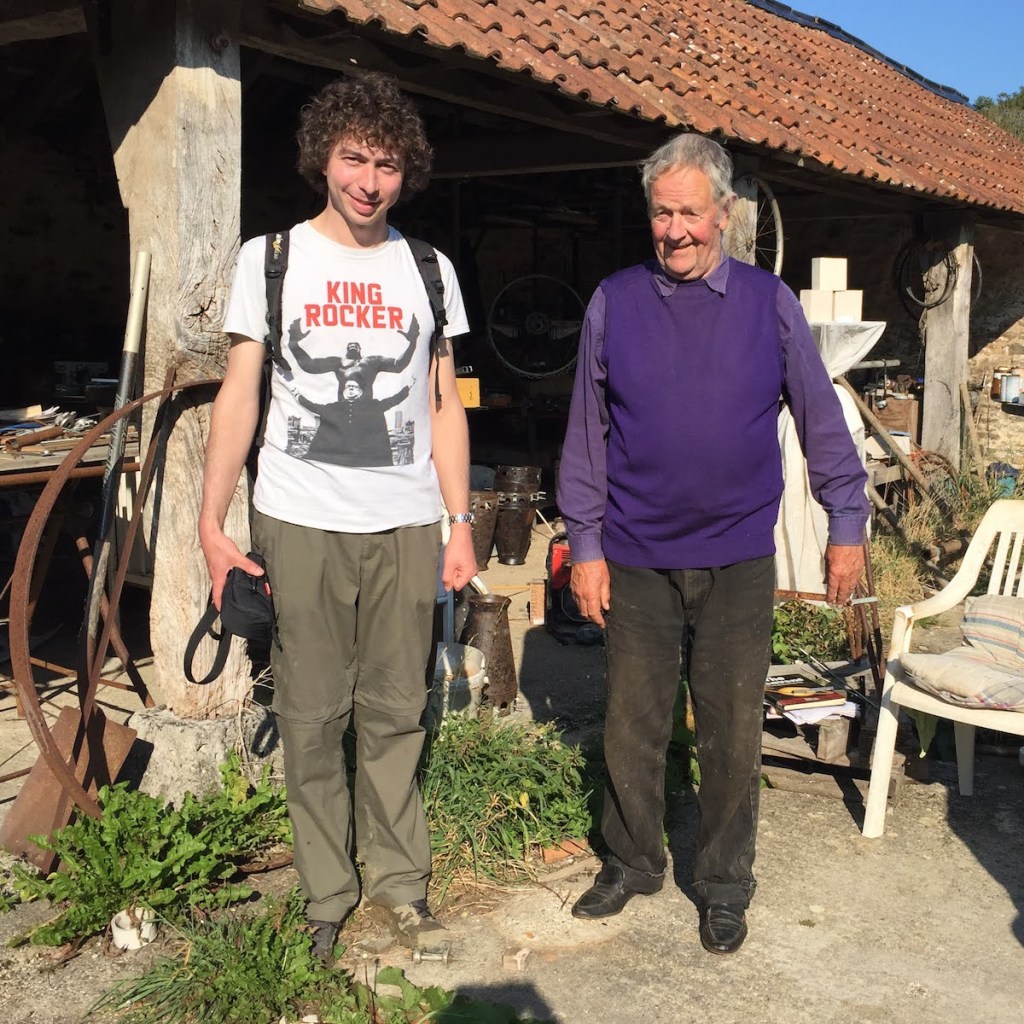
We wait with bated breath, the cottage just visible beyond a sprawling garden. We consider knocking but then he emerges from a track beside the shed in a striking purple jumper and matching long sleeve shirt. We’ve interrupted his afternoon glass of wine but we’re a welcome interruption. He remembers Tony and my mum and is delighted to see that this time they’ve brought company: a ragtag audience. He’s even more delighted and not a little astonished to learn that we know who he is. He sees my King Rocker T-shirt and his eyes light up in recognition of his famous simian creation.

Photo © Andy Howlett

The makers of the film had looked into contacting Monro for an interview but couldn’t get an address and were told he lived off-grid, reachable only by payphone. He tells us about the Kong statue’s critical reappraisal in recent years, how it was rescued from the car park, restored to its original condition and displayed in the Henry Moore Institute in Leeds, star attraction of the City Sculpture Projects 1972 exhibition. He says he wishes he’d known that we were interested because then he could’ve told us about the show.

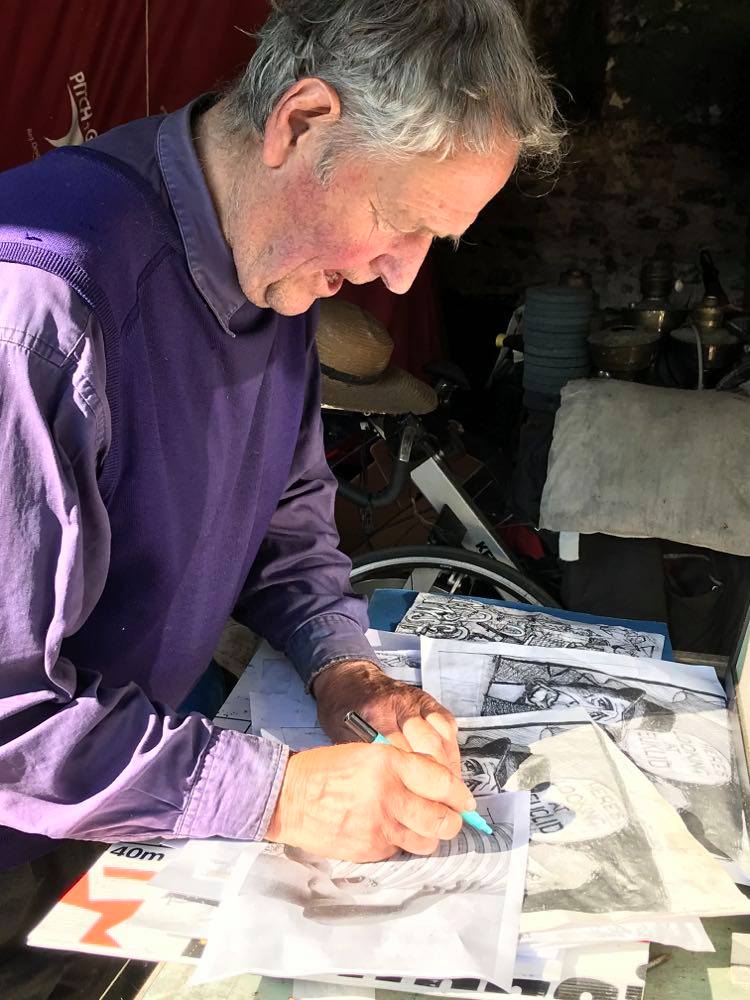
I take the printout from my pocket and ask if he could sign it for me. This clearly isn’t a situation he’s familiar with – how should he address it? “Dear” sounds too personal.

“To Andy,

Nicholas Monro”

Photo © Tiernan Philpot

He takes us into the studio-shed and shows us some of his latest ink drawings: a series of comic-book style scenes based on puns of his own invention: “Here’s looking at Euclid”, “Vermeer to Eternity”. He’s considered approaching the art shop in the nearby market town but hasn’t mustered the courage yet.

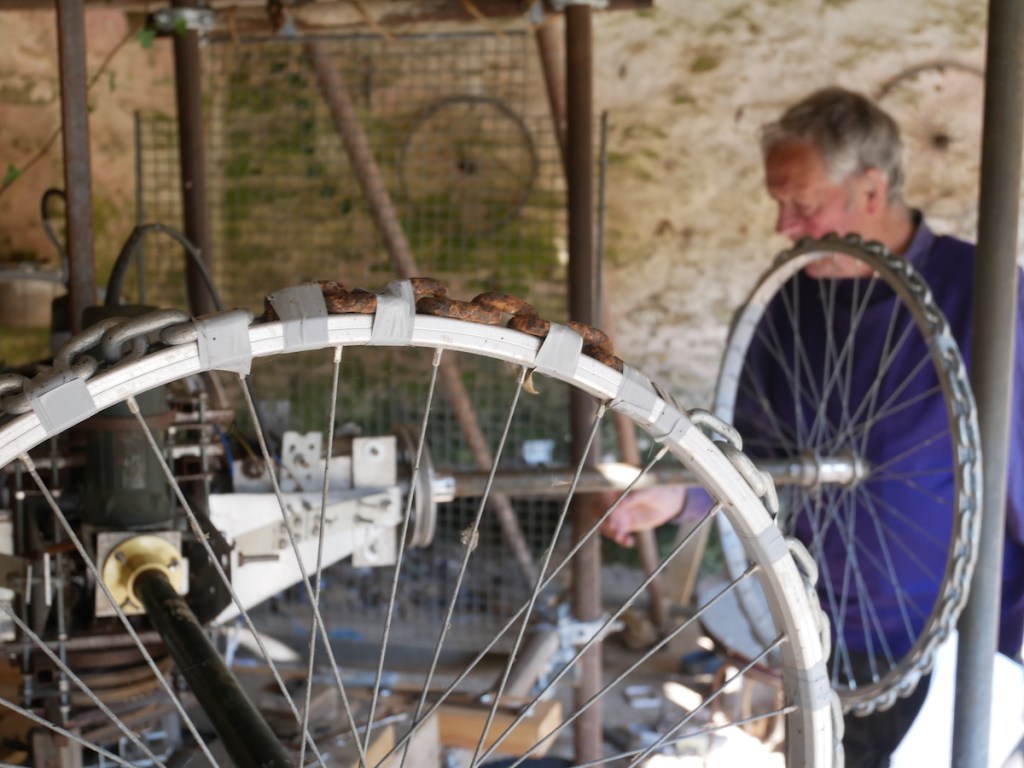
He leads us away from the work-desk towards the grand centrepiece: a work-in-progress he refers to as “The Contraption”. A curious apparatus of scaffolding, breezeblocks and bicycle parts, assembled in a radial configuration with a motor at the centre. It’s immediately clear that this is his true passion project, as he excitedly offers to give us a demonstration.

Photo © Andy Howlett

The generator is located in a small outhouse adjacent to the workshop. He disappears behind the door, starts it up and re-emerges with a makeshift control pad. He turns a dial and The Contraption jumps into life, the bicycle wheels rotating around a central axle in a centrifugal motion, gradually picking up speed. We all take a step back.

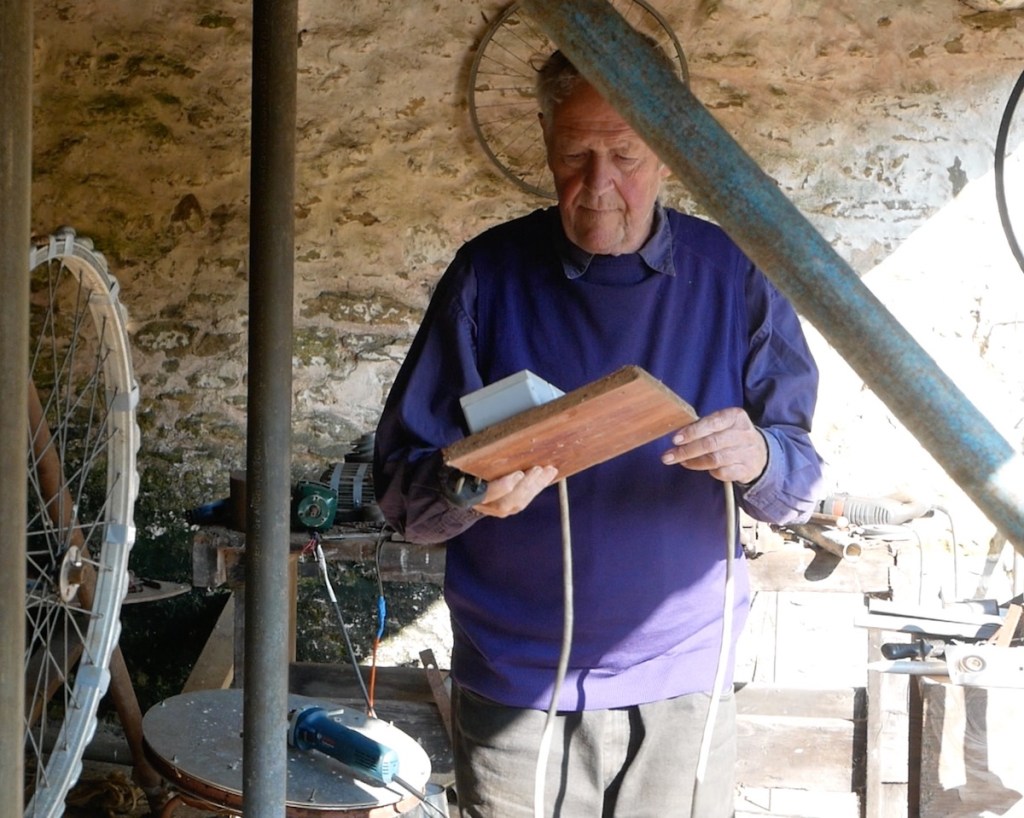
He’s at pains to stress that this isn’t the finished thing but more like a prototype. He points to a pile of physics textbooks and explains how when he’s got it just right, the component parts will rotate in such a way and at such a velocity that the known laws of physics will break down and The Contraption will defy gravity. Yes, Nicholas Monro is building a flying machine. Once the basic principle has been demonstrated he’s confident that it will revolutionise the aviation industry, put an end to our fossil fuel dependence, and make flying cars a reality.

Photo © Andy Howlett

He says that while he’s done his best with the skills he has, what he really needs is an engineer and some decent kit. He’s contacted the physics departments of different universities to tell of his innovation but none have been willing to take him seriously. “They think I’m a charlatan,” he tells me, “I don’t mind really but given the choice I’d rather be thought of as a fool than a charlatan.”

By now The Contraption has picked up quite a bit of speed and the youngest member of our group asks excitedly, “is it going to fly?” to which Nicholas replies with a chuckle, “no it won’t now but it will someday… because I say it will.” Following the demonstration he bids us farewell and tells us we can come and visit any time we like. We promise we will and continue our walk in the scorching late summer sun.

Photo © Helen Burgess

It’s 2021 now; King Rocker has premiered on Sky Arts to great acclaim and Birmingham tentatively looks ahead to a post-pandemic reality. In a time of such uncertainty, when so much has been lost and so much may never return, it’s comforting to know that somewhere in deepest rural Dorset, a kindly elder is keeping the future alive.

Photo © Liz Howlett

Many thanks to Joseph Lilley at The Holodeck for permission to republish

Categories
Posts Upcoming Events Walkspace Erratics

Skull Walk 3: Return of the Wandering Dead

It’s that time of year again. The nights are drawing in, the leaves are falling and the earth quietens as we prepare to enter the dark half of the year. It’s now become a Walkspace tradition to mark this point in the calendar with a Halloween walk around the Stirchley Skull and we hope you can join us.

We created the Stirchley Skull two years ago in the midst of the plague by overlaying an image of a skull onto a map of Stirchley and then walking it into existence under the light of a full moon. We carried jar lanterns to ward off evil spirits and ate soul cakes for sustenance.

A year later our second skull walk was nearly thwarted by an early winter tempest but fortunately the howling gales and horizontal rain were short-lived and the walk was able to go ahead, albeit without the lanterns. Minus the protection of the lanterns we were subjected to many incursions from the Otherworld, this being the time of year when the veil between the physical world and world beyond is at its thinnest. Fortunately we still managed to complete the circuit without losing anyone along the way. Will we be as fortunate this time?

Join us on Monday, October 31st at 7:30pm, outside Stirchley Library on Bournville Lane. This is a gentle circular route lasting no more than 90 minutes with the option of going to the pub after to de-spook. The terrain will mostly be pavement and roads, with a bit of grass and a gravelly track. Prepare for muddy conditions and the first gales of winter. No need to book, just turn up. A number of jar lanterns will be provided, weather permitting, but if you’d like to bring your own please do so.

Categories
Posts Projects Upcoming Events

Unherd! Walking the Land

A group of artists and writers gather together for Unherd! Walking the Land events to explore themes of land ownership/access, climate change, community resilience, rewilding, growing, justice and indigenous culture through walks, creative activities, mapping, discussion and research in the landscape around the Marches Mosses and Rural Art Hub close to the Welsh-English border in North Shropshire.

This is an inclusive group enabling artists to follow their individual artist practices or to find ways to collaborate. We are working together to develop longer term plans for a funded project involving the local community, creating both audiences and activists, raising awareness and much-needed hope of arriving at a collective manifesto.

All are welcome to join our events. For more information email Andrew at: andrew@andrew-howe.com

Next Events

The next event Digging Words is scheduled for Friday October 7th 2022 starting at the Rural Art Hub, 10am.

For Digging Words participants will be invited to pause on different stages of the walk and respond to a range of provocations and instructions which will invite play with words used commonly to describe the experience of the rural. These improvised texts – both writings and readings, sonic and visual – will accumulate to form the basis for a final collective performance-installation at the end of the walk. No experience necessary. All welcome.

Each event has a different theme with walking and or creative activities devised and led by one or more artists. Please consider making a donation on a “pay what you can” basis to contribute towards paying artists/event leaders, Rural Art Hub hosting, general events co-ordination and planning and potentially building towards future projects and community engagement.

The last Unherd! event of 2022 is scheduled for Friday 25th November

Values.Voices.Action.

Unherd! emerged from conversations started by Andrew Howe with other artists about extending the Mosses and Marshes project and it has opened out to link with other ventures.  We are picking up on some of the themes explored during the Mosses + Marshes international discussion panel in November 2021 which led to the Values. Voices. Actions. initiative. Read more

Unherd! is:

  • breaking away from fixed, established narratives in the rural landscape to reveal more nuanced stories
  • hosted by the Rural Art Hub, itself bringing new creative life and perspectives to a former dairy farm, home to the Willenhall herd
  • seeking to give voice to those less heard from across the local community and further afield

Previous Events

Previous events have investigated historic timelines and themes of access to land and justice, rural utopias and deep time.

Walking the Land

Led by Andrew Howe, this circular walk of just over 6 miles to Bettisfield Moss, traversed a timeline rich with stories of Iron Age/Bronze Age bog bodies, land seizure by Norman lords, Turbary rights, Land Enclosures, contentious construction of canal and railways, wind powered and steam powered corn mills, fine churches built by local aristocracy, target practice and bombing during two World Wars, industrial peat extraction, forest clearance and finally peat bog restoration and natural resurgence. 

We walked with the themes of access to land and justice in mind and returned to the Mothershippon studio at the Rural Art Hub to make creative responses.

Rural Utopias – A walk towards Hanmer Mere led by Andrew Howe and creative activities in Hanmer village.

The 6 mile circuit took us from the Mother Shippon to the edges of Bettisfield Park and the epicentre of the Hanmer estate which has had such an influence on the Mosses and surrounding landscape for many centuries. The family descends from an officer of Edward I, and later a supporter of Owain Glyn Dwr – descendants included Tory MPs, high ranking lawyers, local benefactors and they were one of the main instigators of the Enclosure Act which led to large scale peat extraction at the Moss.

During the walk we reflected on what would be different in our rural utopia – for example, if there was reduced demand for meat production, there would be less need for secure boundaries for holding livestock, and land could become more accessible and potentially open to other public uses.

Deep Time

Julie Harrison led this 4 mile walk through the landscape of Fenns Moss, describing some of the geological history of Shropshire and evolution of the Earth through a 4.6km section of the walk. This walk was inspired and based on the work of Dr Stephan Harding, whose own Deep Time Walk is available to download as an app www.deeptimewalk.org

Resources and maps for others to follow these routes and make creative responses are available.

For more information about these and other future events

All images © Andrew Howe

Categories
Posts Upcoming Events Walkspace Erratics

Urban Emoji Mapping

With an increased emphasis on the need to reconnect with nature, to escape the city and restore ourselves in greenery, what happens if we attempt to flip this? What if instead we escape to the city? What if we try to reconnect with the urban and restore ourselves amongst the grey?

Join our newest member Dan Gutteridge on September 18th for a walk through the hyper-urban streets of Birmingham. Rather than simply rushing through the concrete to get from A to B, we’ll take time to see and think about these busy pedestrian streets differently; investigating the emotional influence they have on all who pass through and inhabit them.

As we drift we will use ’emoji mapping’ to unfold how we see and feel in various sections and consider how these spaces might bring new experiences to us. Being away from nature, can we connect to the urban in ways that generate similar emotions to those we feel amongst the green?

Photo © Jonathan Treml

The walk will be a playful attempt to unpack how and why we feel the way we do in the city. Using an empty map of the streets and some emoji stickers we’ll have a go at mapping our emotions (positive and negative) using the stickers as starting points for discussions. Whether you love or hate walking in the city, you’re sure to come away with a fresh perspective.

Meet in Victoria Square at the bottom of the stairs by the fountain at 11am on Sunday 18th September. We’ll then set off down New Street for a 90 minute walk, finishing off back where we started. The terrain will be pavement with only slight inclines and no steps. No need to book, just turn up. The walk will go ahead whatever the weather so check the forecast and dress appropriately.

Those who wish to bring their own cameras/notepads/pens are encouraged to do so but this is not a requirement as all materials needed for the mapping will be provided. After the walk there will be the option of retiring to a pub or cafe to chat further over beverages.

Dan is currently undertaking research on walking in hyper-urban environments for his Masters dissertation. The emoji mapping of New Street will help contribute to this. For more information on this ahead of the walk email Dan on s2104925@uni.cumbria.ac.uk