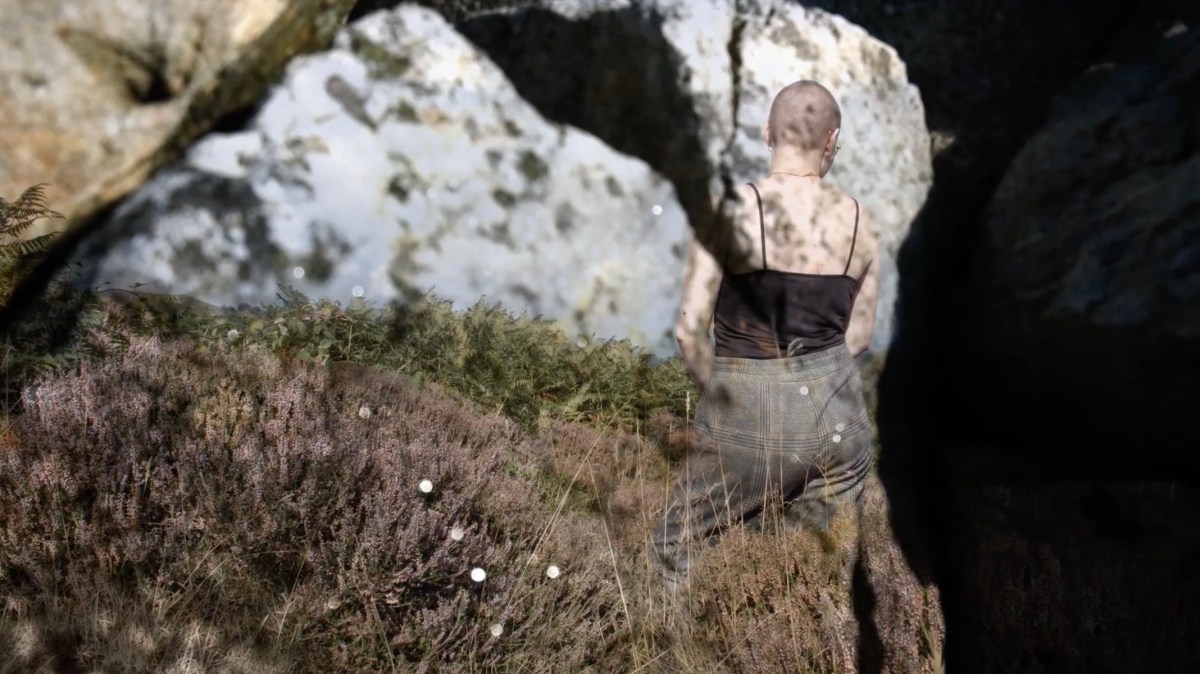
Nine films explore a dizzying array of responses to walking and landscape, both urban and rural. From Rachel Henaghan’s sensual, sensory delight, Elan, to Fiona Cullinan’s witty, super-short Roadwords, from Andy Howlett’s engrossing Escarpment, to Kate Green’s musical Mindwalk.
In Andrew Howe’sCinderloo we delve deep into history, Adele Mary Reed takes us on a visually delightful tour of Coventry whilst grappling with ideas about art and the commons. Fiona Cullinan shows us how it can be to walk as a woman in the world, …kruse takes a surprisingly eloquent pen for a walk, while Simon Jefferies’, WalkaDay is an upbeat celebration of walking and Walkspace.
Saturday 11th May, 7pm. Tickets £6.50 price includes a programme. There will be a licensed bar available all evening.
Walking Shorts is hosted by …kruse who hopes that if people enjoy this sort of thing it might become an annual event, perhaps with talks and walks thrown in too. If you have any queries or questions please email susankruse(at)yahoo(dot)com
Address: Playhouse Cinema, Leominster Community Centre, School Road, Leominster, Herefordshire, HR6 8NJ
Leominster is accessible by train from Birmingham either via Shrewsbury or Hereford. There is free parking at the Community Centre and in Broad st car park, behind the Community Centre.
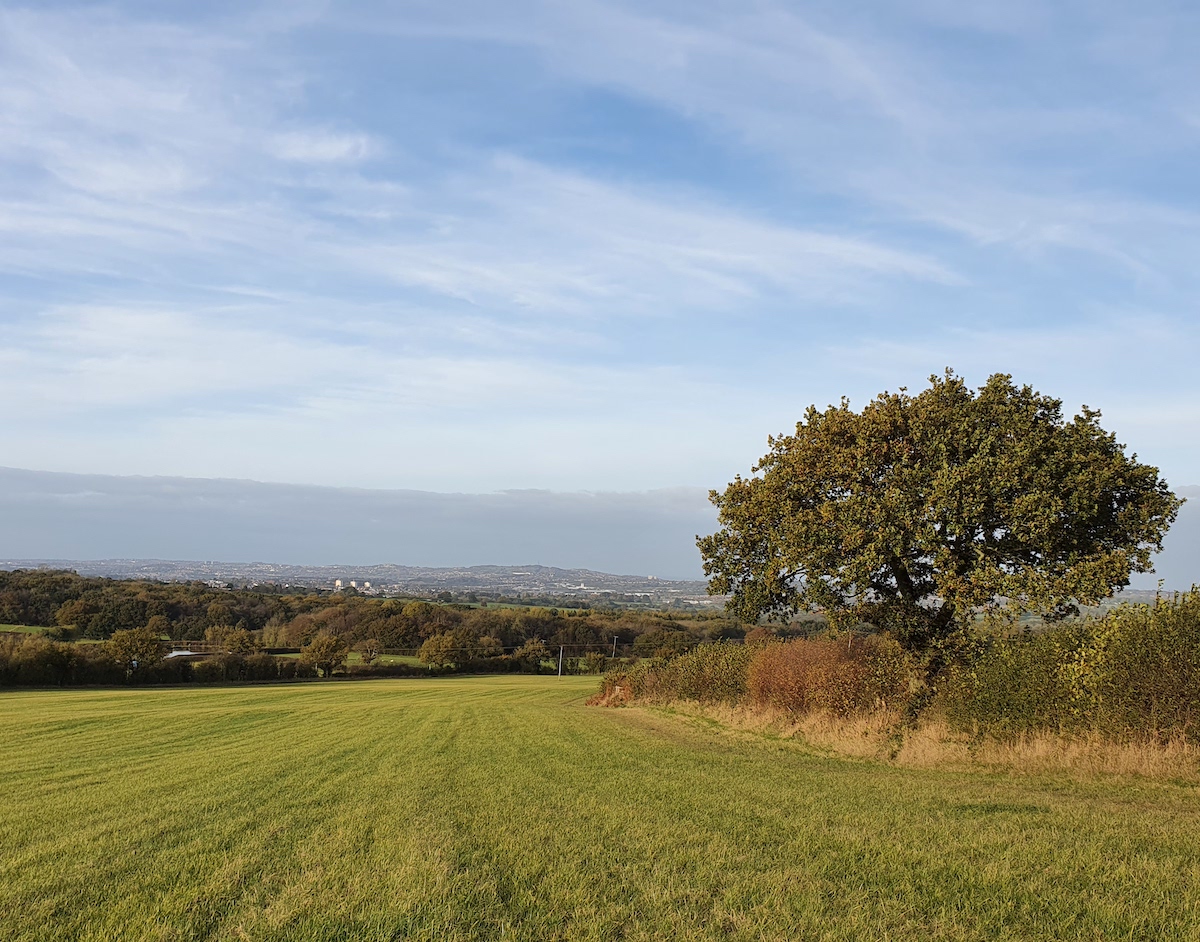
A geographical quirk of living in the middle of the country is that half of our rivers flow northeast towards the Humber estuary and the other half flow southwest towards the Bristol Channel. The natural boundary that separates the two catchments is called a watershed. In the West Midlands the watershed lies along the ridge of the Lickey, Waseley, Clent and Rowley hill ranges. Rainwater that falls on the eastern side of these hills ends up in the North Sea via the Trent, whereas rain landing on the western side ends up in the Atlantic Ocean via the Severn.
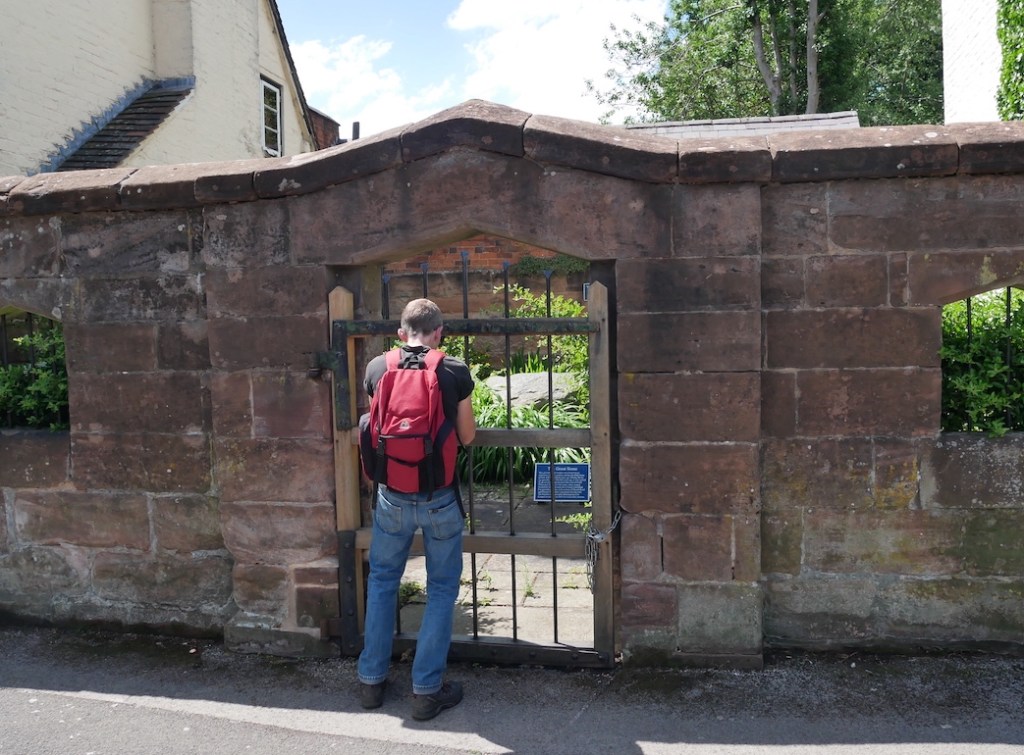
For Terminalia 2024 we will celebrate this quietly mind-blowing feature by walking from the source of the river Rea to the source of the river Stour. The river sources are only 2.5 miles apart but the Rea springs on the east face of the hills and the Stour springs on the west so the two water courses have drastically different journeys, ultimately reaching the sea over 200 miles apart.
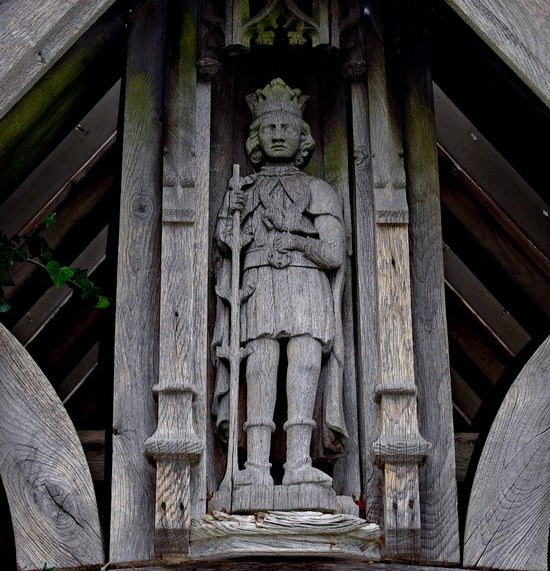
Josh Allen of Walk Midlands (and co-facillitator of this walk) argues that the watershed also forms a significant cultural boundary between the rural southern Midlands, “a land of Morris Dancers, part-timbered buildings, ancient earthworks, 12th Century churches and cider orchards”, and the industrialised northern Midlands, “pockmarked by former collieries and industrial sites, redeveloped as warehouses, retail parks and Barrett houses”. This is reflected in the very different mythologies associated with the two waters: the Rea as Birmingham’s founding river, and the Stour’s role in the fantastical legend of St. Kenelm, Prince of Mercia.
Meet Andy and Josh outside the visitor centre of the Waseley Hills Country Park (B45 9AT) at 12pm, Friday 23rd February. No need to book, just turn up. This is a four mile walk via Romsley and finishing up at Hagley Road on the southwest tip of Halesowen (B63 1DT). This is a walk in the hills so be prepared for some steep sections and muddy conditions. Walking boots advised! Bring a packed lunch and some water. Due to the time of year we can’t recommend ritual bathing but feel free to bring a votive offering of some sort. We aim to be finished by 3pm.
There are toilets and a cafe at Waseley visitor centre and there’s a Harvester at the end of the walk. We can stop half way for a toilet break in Romsley too.The 63 and 61 buses get you close to the Waseley Hills Country Park entrance for the start of the walk. The 4H, 142A and 192 buses can be picked up at the end of the walk for connections to Hagley Station and Halesowen Bus Station. We can advise anyone who needs to get back to Birmingham!
This walk is part of Terminalia, a one day festival of walking, space, place and psychogeography on 23rd February. Terminalia was the festival of Terminus, Roman god of boundaries and landmarks. See what events are happening in other parts of the country here.
“The lost city. I never knew another person had seen it. The black towers. The flames in the windows. I never knew how to get there. But it has to be through another city, like this one. Do you think we could find it together?”
Passing between different worlds is a recurring theme in the work of the late Birmingham based author Joel Lane. Life and death, dreams and reality, cruelty and compassion – all are fluid in his dark and disturbing universe. References to veils lifting and doorways opening appear frequently in his tales of misfits and outsiders desperate to transcend their surroundings.
Canals also feature prominently; in particular the Grand Union Canal which passes through Digbeth. In Lane’s world, the canals are places of transgression, excitement and danger but also a connection point to an ever-present industrial past.
“What are the canals, do you think? A bit of random heritage, a scar tissue under the roads? I can tell you it’s more than that. It’s a palimpsest. A map of industry… and beneath that, the key to another world…”
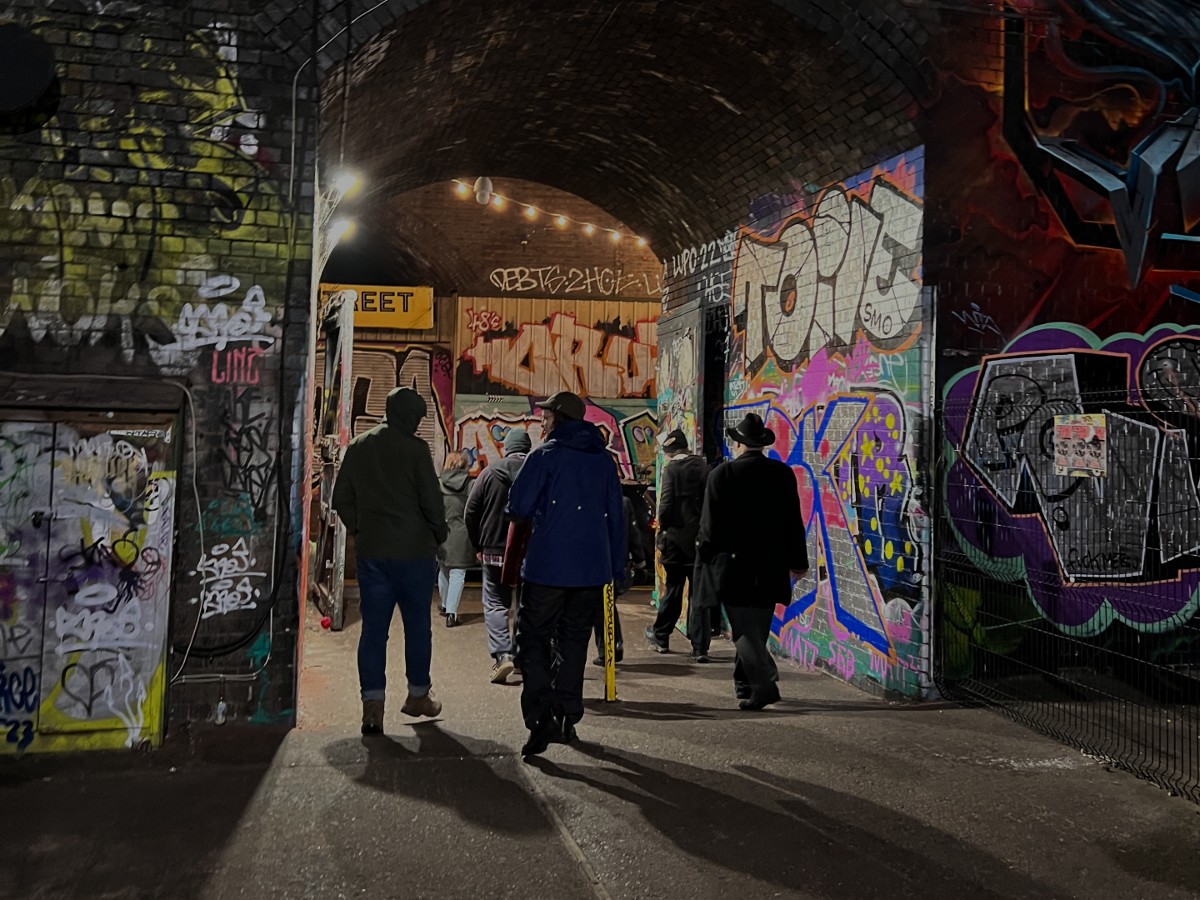
Whether you’re a diehard Joel Lane fan or if you’ve never heard of him, this twilight walk around the backstreets and towpaths of Digbeth will connect you to another world. A world of artist communes, ghost barges and strange rituals.
This walk is part of The Witnesses Are Here: a weekend celebration of the life and work of Joel Lane hosted by Voce Books and Influx Press, 11-12 November. Tickets are £8 for the walk or £20 for the entire weekend.
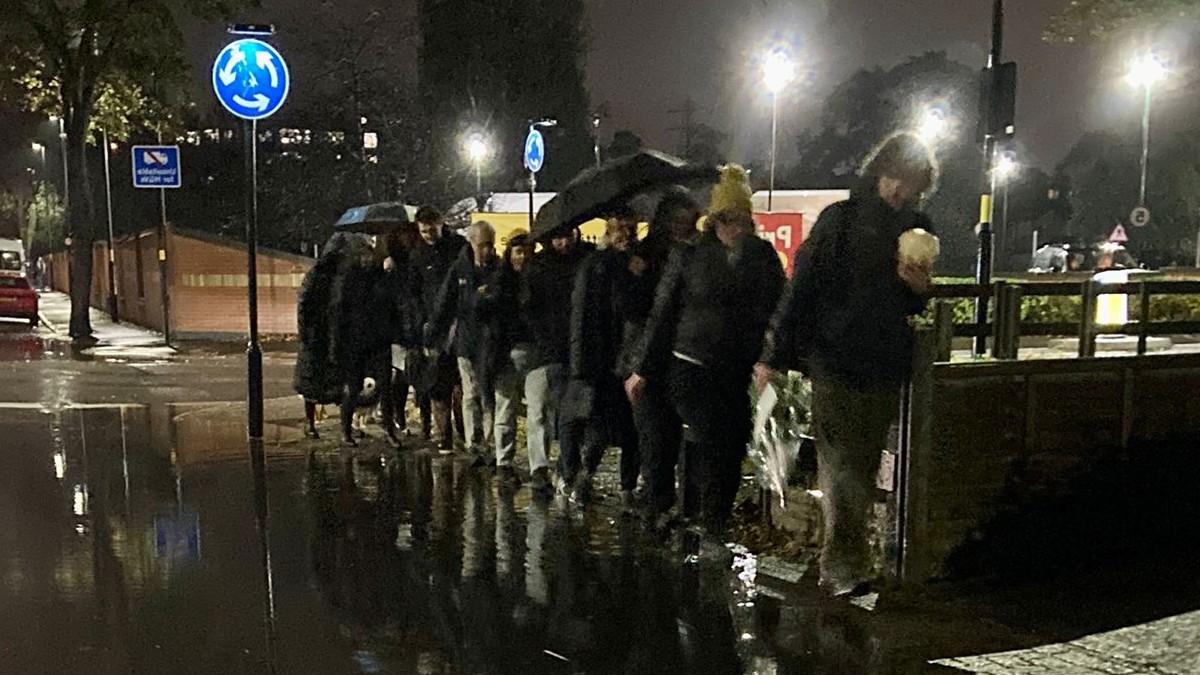
The Witnesses Walk starts and finishes at Voce Books, 54-57 Allison Street on November 12th.Arrive at 3:45pm for a prompt 4pm departure. We aim to finish by 5:30pm with the option of going to a pub for a post-walk pint.
This is a walk event taking place at twilight & taking in a series of urban terrains, including canal towpaths. Please dress accordingly for the time of year & we advise wearing suitable footwear.
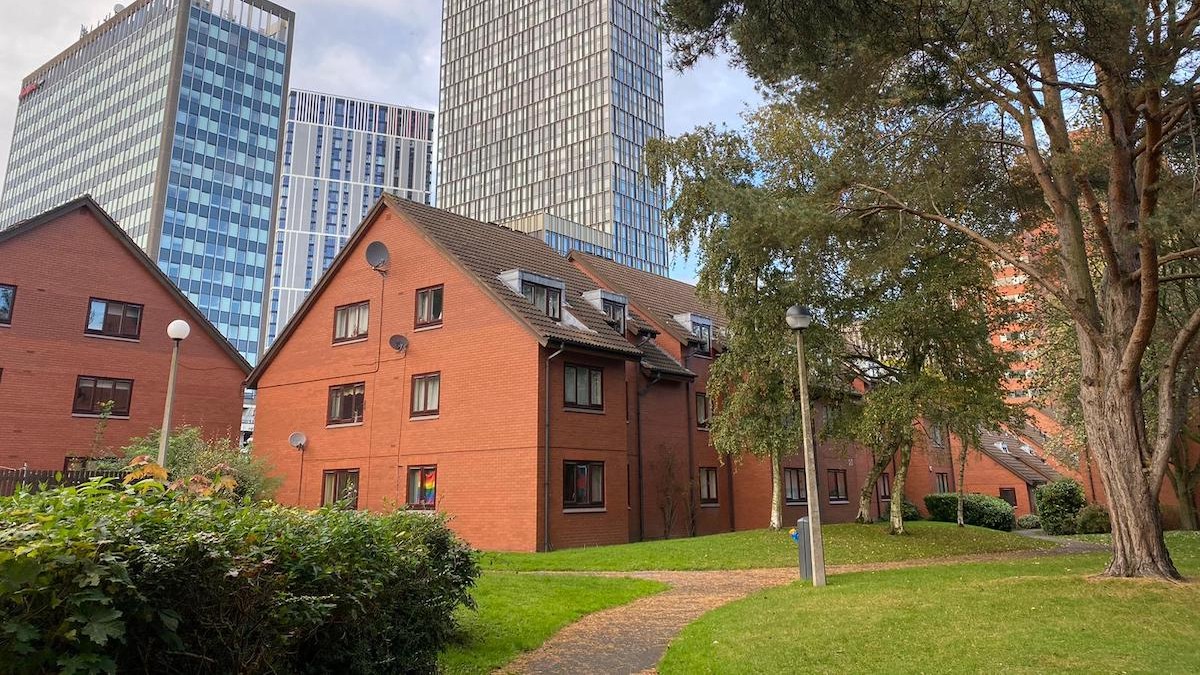
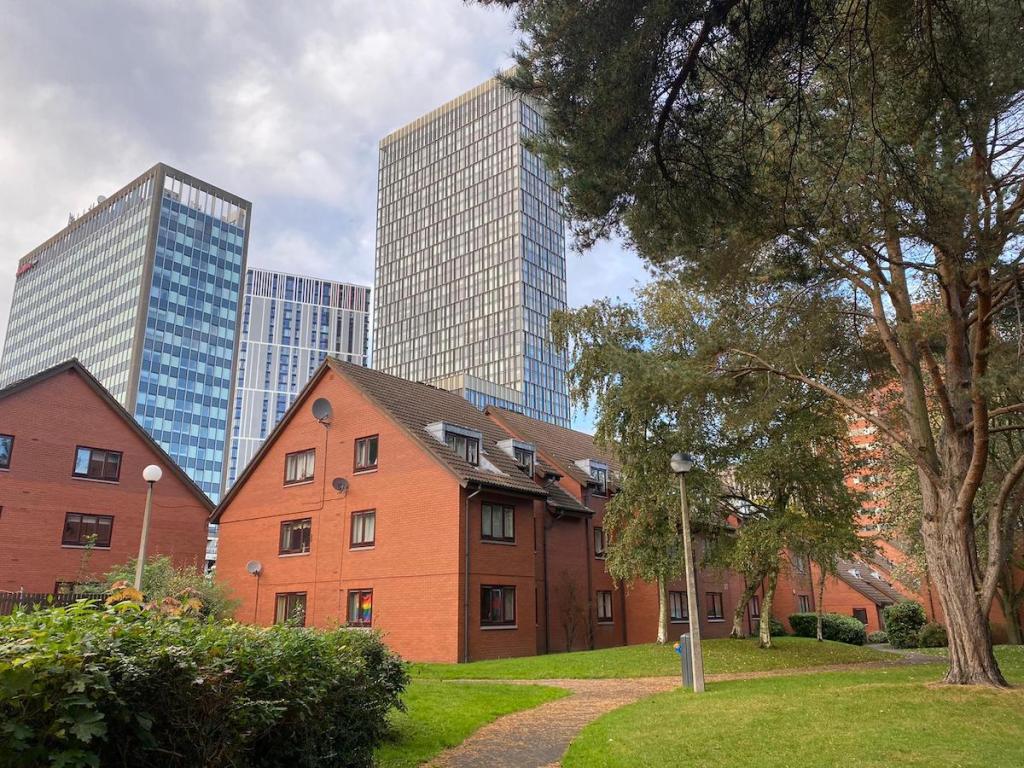
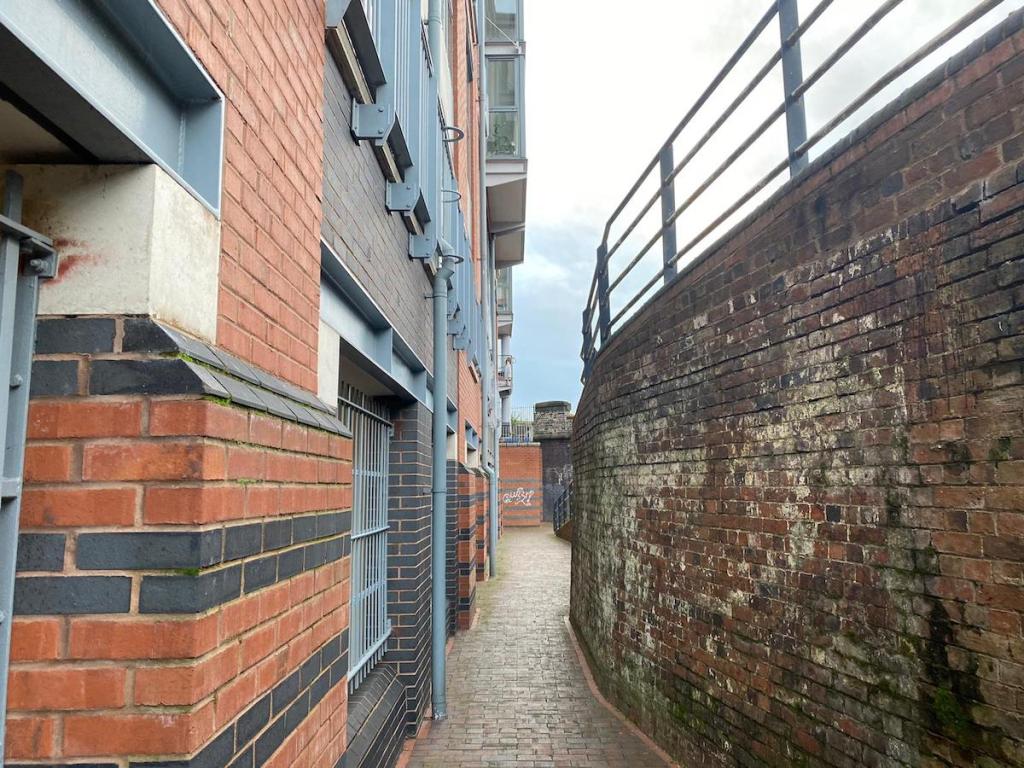
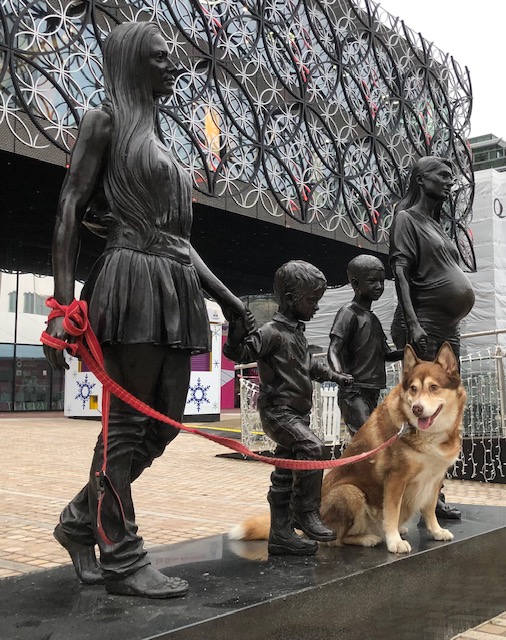
Birmingham is still a city very much dominated by the car. It may not be the most pedestrian friendly place but if you go out looking it is possible to discover a parallel, car-free city of towpaths, alleyways, green corridors, piazzas and footbridges. On this walk, Simon Jefferies (AKA The Badnote Choir) will share how his search for traffic-free dog walking routes led him on an unexpected creative journey.
First I was a musician
Then I was a musician with a dog
Dog got me interested in photography, and between us we devised a method of getting into town and back to take pictures of buildings, and random items, whilst avoiding as many roads as possible
Dog (Siri) is sadly no longer with us, but I may borrow one for the occasion
Join us, and enjoy this artist/dog created circuit
Bring a camera
Bring a dog if you want
And your explore boots
I hope even the most avid investigative walker will discover some new aspect
We will traverse; parkland, alleyways, underpasses, footpaths, towpaths, squares, bridges, piazzas, damwalls and stairs (sorry not wheelchair friendly)
Meet outside the Deaf Cultural Centre on Ladywood Road (B16 8SZ) at 11am on Saturday November 25th.
As this is a lengthier route than usual (approx 5 miles), we’ll be splitting it into two halves with a lunch break in Centenary Square. The full route is a circular one, ending back at the starting point in Ladywood. Those who prefer a shorter walk are welcome to come just for the first 2.5 mile section and leave us in the city centre. For those joining us for the full circuit, we aim to be finished by 2:30/3pm. Then there’s the option of going to The Vine Inn for a post-walk pint.
One good thing about moving into the dark half of the year is that it brings with it the opportunity for some night walking. On our own we may feel apprehensive about venturing out after dark, but with the power of collective presence we can overcome this and take back the night for some seasonal celebration.
As per Walkspace tradition, we shall be observing the beginning of night walking season with a walk around the Stirchley Skull this Halloween. We created the Stirchley Skull three years ago by overlaying a skull image onto a map of the neighbourhood and then walking its outline. We’ve continued to walk the skull every year since but this time we’re going to add a little twist…
Up to now we’ve always walked the skull clockwise but this year we’re going to see what happens if we reverse the direction and go “widdershins” or against the way. To walk widdershins means to walk in a direction contrary to the course of the sun (as it appears from the Northern Hemisphere). In British folklore it’s considered bad luck to walk widdershins around a church. In the fairytale Childe Rowland, a young girl does so and is transported to Elfland where she is held captive by the Elf King. It remains to be seen what happens when you do the same around a neighbourhood skull.
The possibility of moving between worlds is increased on Halloween, it being the time of year when the veil between the physical world and that of spirits is at its thinnest. As such we shall be keeping an eye out for otherworldly apparitions and messages from the beyond.
If people have any of their own traditions, objects or costumes* that they’d like to bring to the walk then we encourage you to do so. In the past we’ve had jar lanterns, crow costumes, soul cakes and an anatomical skull model thrown into the mix. Whether Pagan, Christian or none of the above, this time of year means lots of different things to different people and we embrace this multiplicity. To quote Weird Walk, “if the magic feels real, then it is”.
Join us on Tuesday 31st October at 7:30pm outside Stirchley Library on Bournville Lane. This is a gentle circular route lasting no more than 90 minutes. The terrain will mostly be pavement and roads, with a bit of grass and a gravelly track. Prepare for muddy conditions and the first gales of winter. The walk will go ahead whatever the weather. No need to book, just turn up.
*while costumes are welcome, they are by no means obligatory
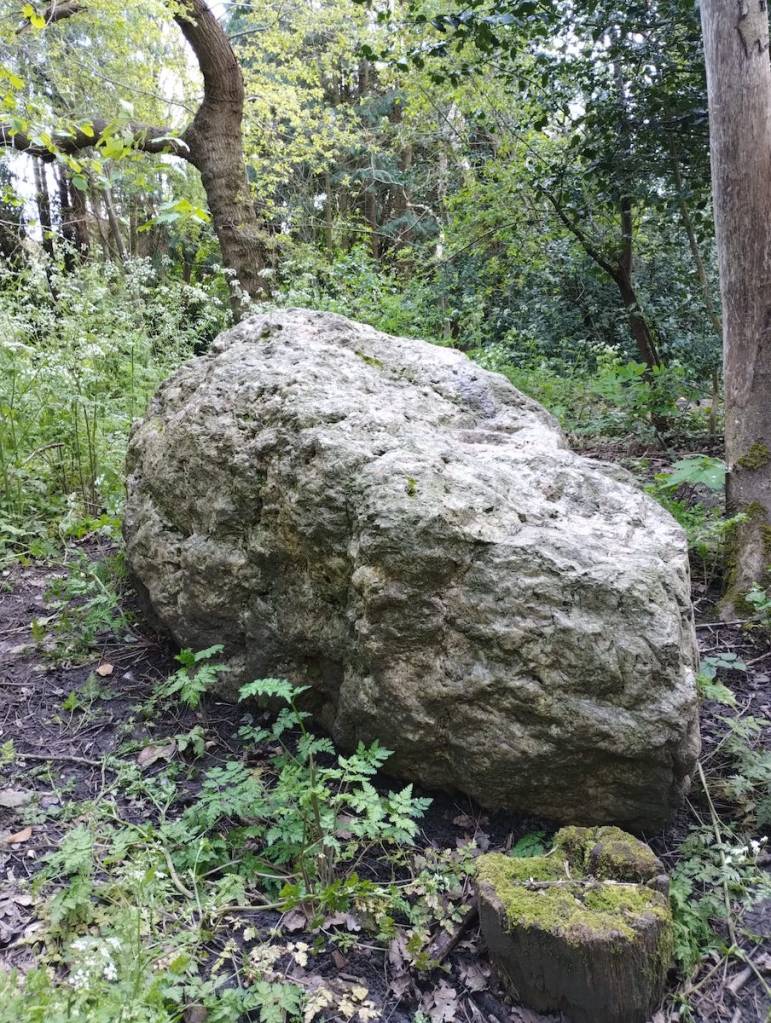
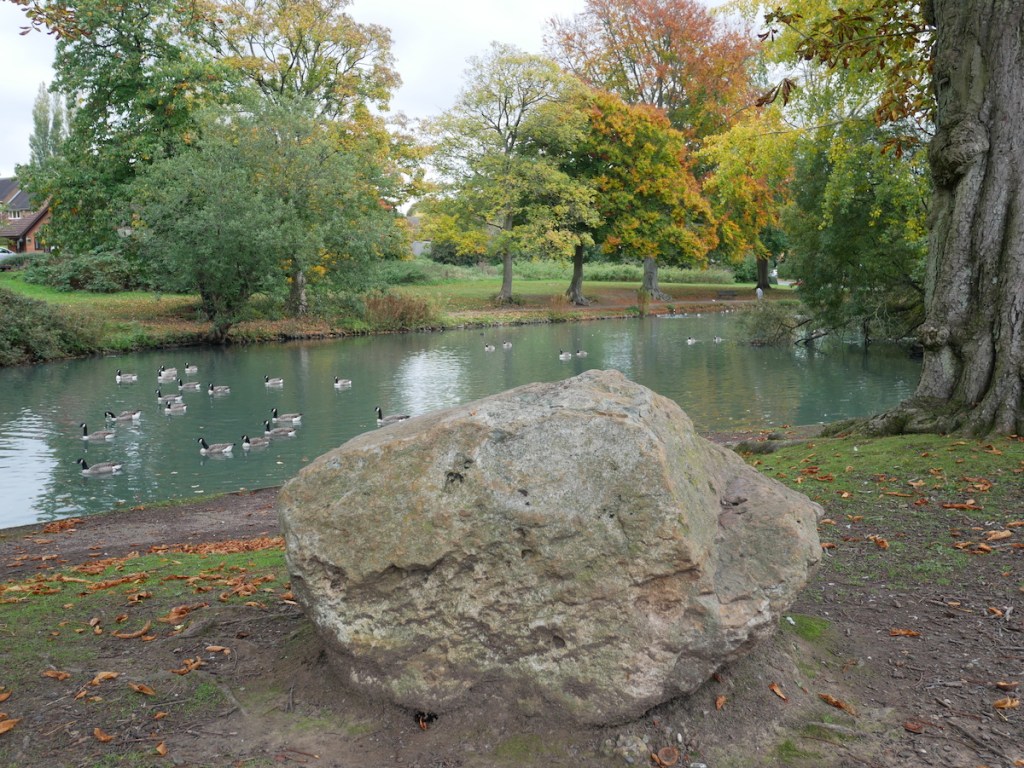
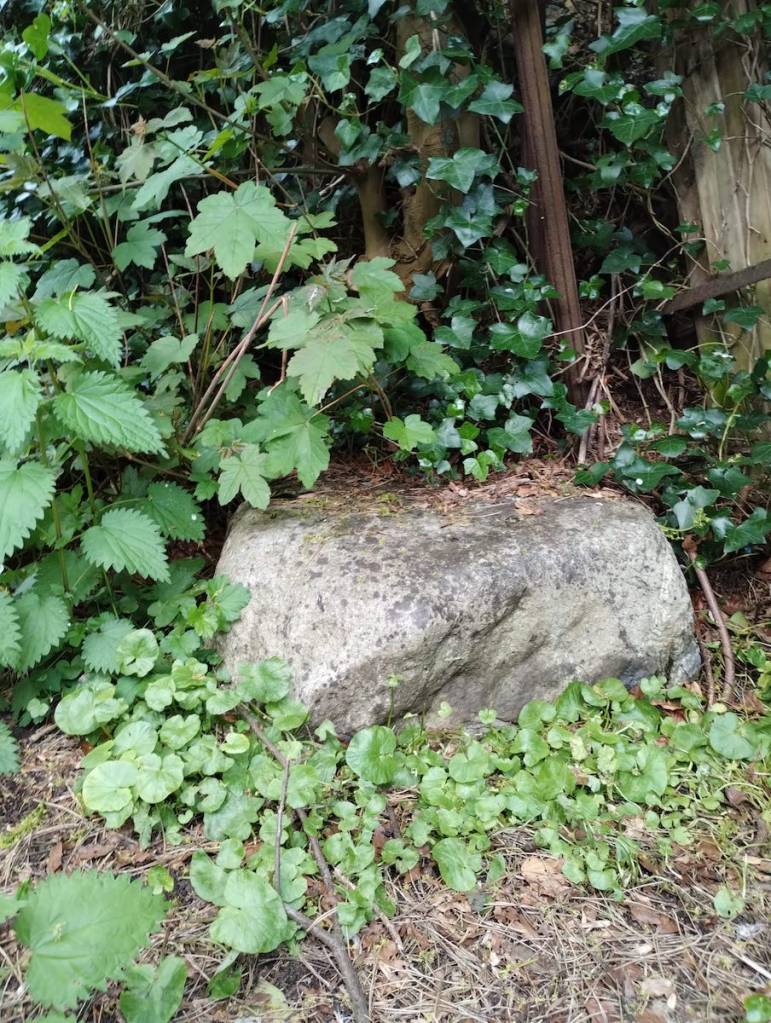
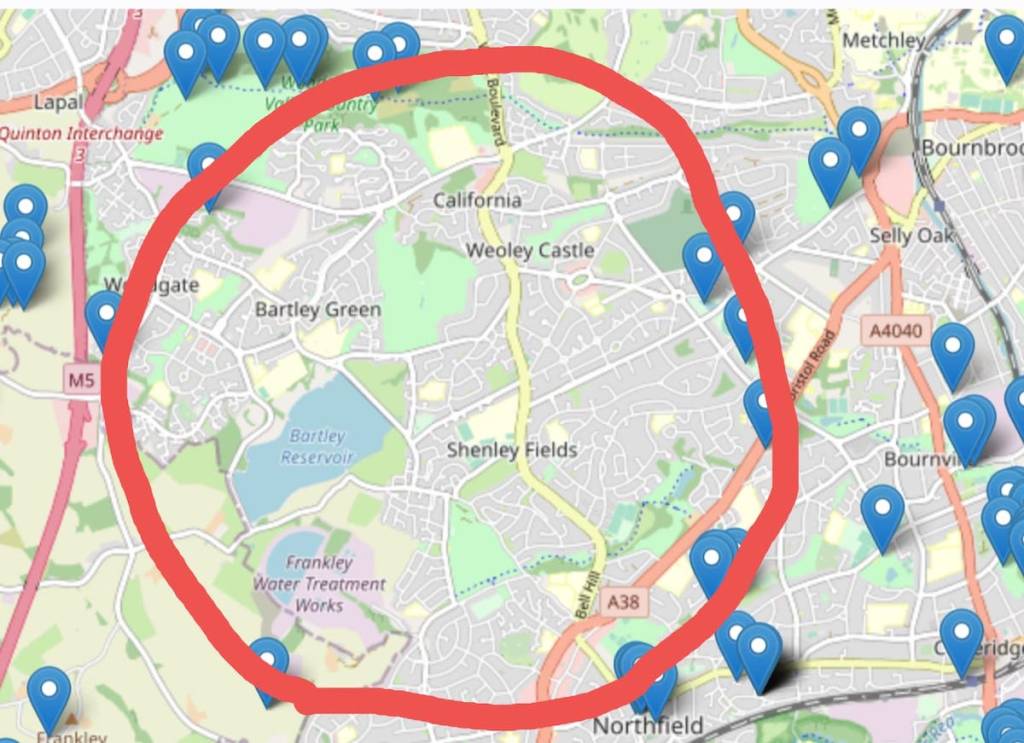
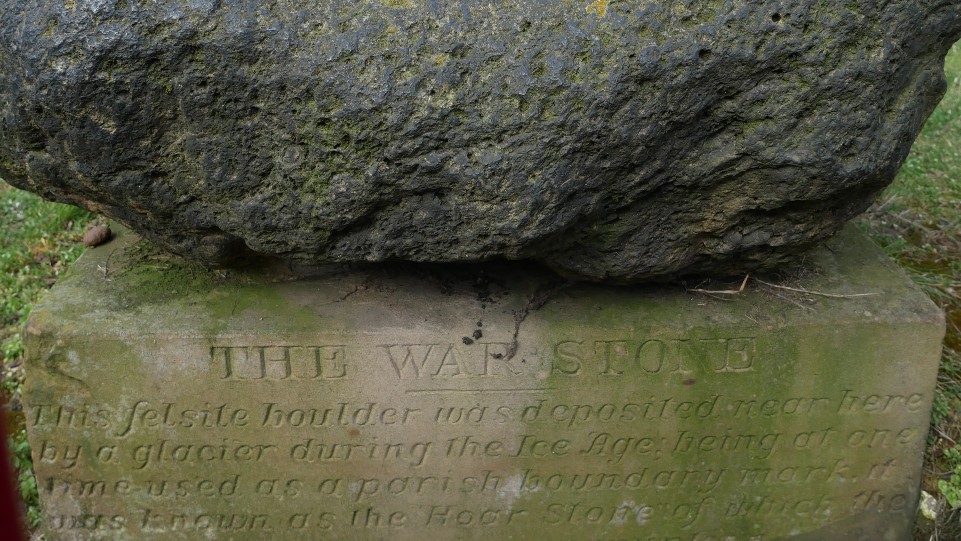
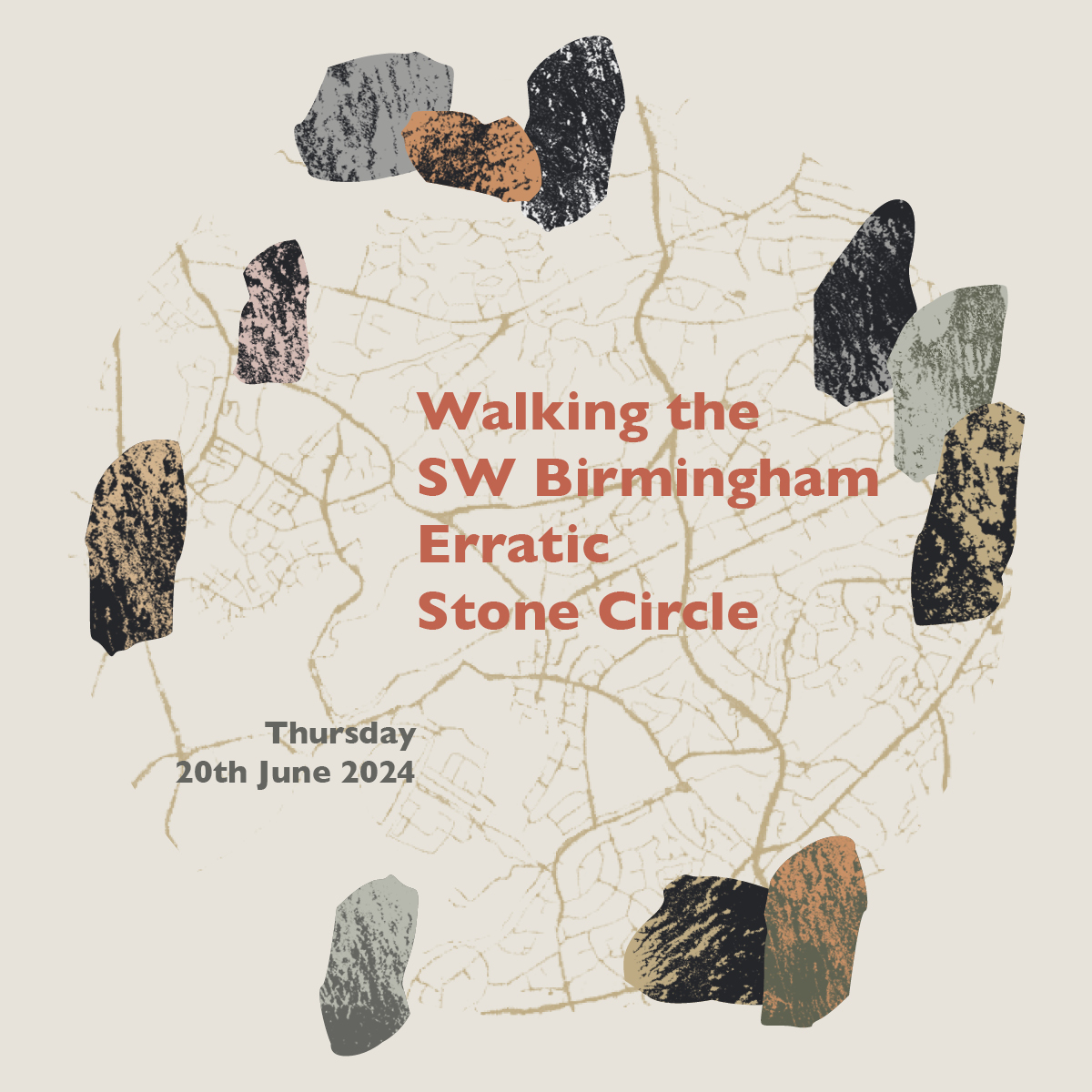
Last year we began our Wandering Rocks series of walks by visiting some of the erratic boulders that travelled here from Wales on a glacier 450,000 years ago. While most of the boulders are to be found in the suburbs to the south and west of Birmingham, for this walk we’ll be heading to the city centre where an outlier erratic can be found disguised as a parish boundary marker.
In Counter-Tourism: The Handbook Crab Man introduces the concept of “beached heritage” to describe artefacts that have travelled and washed up in unlikely places. “Once you become sensitive to these ‘erratics’ you will begin to navigate a landscape from which such anomalies, large and small, repeatedly pop up.”
On this walk we’ll be visiting other examples of beached heritage including an architectural spare part repurposed as a workers’ memorial and a piece of Birmingham’s industrial heritage literally marooned on an island.
We’ll also be joined by a very special guest of the mineral variety: our very own “wandering rock”. If you fancy it then you may take a turn in carrying the guest for part of our city centre tour.
For June’s Erratic we’re trying out a classic walking game devised by Morag Rose and the Loiterer’s Resistance Movement. We’ve long been wanting to try some more experimental approaches to our public walks and the Metaphysical Treasure Hunt seems like a great way to start.
The Loiterers Resistance Movement is a Manchester based collective of urban wanderers founded in 2006 by Morag Rose. Over the years they’ve developed an array of playful techniques “to nurture an awareness of everyday space, (re)engaging with, (re)mapping and (re)enchanting the city.”
The Metaphysical Treasure Hunt is a game in which participants respond to a series of playful prompts which encourage new ways of engaging with space. The game is played as a group, with participants responding collectively and improvising the route of the walk in real time. We’ll be starting ours in Stirchley Park in Birmingham but who knows where we might end up?
Start with something light.Look for the brightest yellow thing you can find.
Look down at the flotsam and jetsom. What are traces and rubbish trying to tell you?
Can you find evidence or rumour of the supernatural or mythological in your landscape? Do ghosts linger?
Each prompt gets around ten minutes dedicated to it before moving on to the next one. For our own Metaphysical Treasure Hunt we will source all of the prompts from the ever-growing Walkspace membership. Whether you’re familiar with Stirchley or if you’ve never visited before, you’re guaranteed to see and experience the world in new ways.
Meet in the centre of Stirchley Park (B30 2JX) at 11am, Saturday 24th June. No need to book just turn up. The route of the walk will be improvised on the day so the terrain is unknown but expect tarmac, paving, lawn and moderate inclines. Steps will be avoided. After the walk there’s the option of heading to Artefact Gallery for refreshments and to see the Walkspace 23 exhibition.
The route, distance and speed of the walk will be determined collectively based on the preferences and mobility requirements of all taking part. In general though you can expect a leisurely stroll of around 1.5 miles lasting 100 minutes. Children are welcome if accompanied by an adult. The walk shall go ahead whatever the weather.
Most Brummies know Selly Oak as a stopping point along the Bristol Road – or did until it was bypassed in 2011. A suburb where University of Birmingham students come to shop and eat, its terraced hinterlands rented out as student housing. And its narrow high street (still) a pinch point for traffic. But for locals and those with a longer memory, there is much, much more to this busy South Birmingham suburb.
Still from ITV news footage in October 1976 of tenants on Harborne Lane blockading the road to protest poor housing conditions and demand new council houses
As part of the walk programme for the Walkspace 23 exhibition, this walk goes below the modern surface of Selly Oak to explore its radical inclinations, and wonder if Selly Oak’s strategic location may be part of the reason.
A poster from late 1977 advertising a benefit gig at the pub (now the Goose at the OVT) to oppose council plans to evict the People’s Centre, a squatted community centre
Josh Allen will lead the walk. Josh is a writer, contemporary historian, and occasional curator, who runs his own walk-based project Walk Midlands – “A guide to day walks in the English Midlands accessible without a car, for walkers interested in all aspects of the region’s people, landscape and history.”
The second Walkspace short film night will take place on Friday 16 June as part of the Walkspace 23 group show. The show runs from 3 June – 1 July at Artefact, Birmingham and it celebrates the diversity of practices of our 40+ membership.
A significant number of our members work with film and moving image and so we decided to dedicate an evening to this art form.
Expect video essays, poetry films, artists’ moving image and Super 8 ambulations, covering everything from hyper-urban strolling, female risk calculations, tree-mapping, cross-city walking, “psycho-geology” and Rural Otherness.
Doors open at 7pm and admission is on a pay-what-you-feel basis.
Still from Cross City Walks by Andy Howlett and Pete Ashton
Still Walking has been a big influence on many of us at Walkspace with its unusual and highly creative approach to the walking tour format so we’re very excited for its return over May and June. This edition features Sherlock Holmes, Shibboleths and Satan. Book onto the walks now.
As for the book, here are some words from the publisher:
‘111 Places…’ books are known for side-stepping a city’s best known places, instead highlighting the lesser-known— or wholly overlooked— features that more candidly reveal the city’s identity. Ben takes this approach on his guided tours with Still Walking… walks informed by posing the question ‘what would guided tours look like if they weren’t about sight-seeing?’
The aim of the book was to tell Birmingham’s story through its art, architecture, music, industrial history and cultural diversity; showcasing the city’s triumphs while embracing its gritty side. Accordingly, there’s an intriguing mix of urban oddities, micro-museums, sacred sites, epic landscapes, industrial remnants (bridges, tunnels, engines) and a handful of ‘survivors’ from the pre-Revolution Birmingham.
Pictures from the book by Janet Hart
A few of us went along to the book launch at Ikon gallery earlier in the month and listened to Ben in conversation with Andrew Kulman. The talk was full of fascinating insights but it was especially interesting to hear about all the things that for one reason or another didn’t make it into the book.
The book was several years in the making and in typical Birmingham fashion a number of the places originally due for inclusion were demolished before it went to print. Perhaps we can expect a follow-up volume: “111 Places in Birmingham You Shouldn’t Have Missed”.
Another reason for some places not being included were the difficulties in obtaining permission to photograph private property. Ben told us of the case of the Lady well, “Birmingham’s answer to Leicester’s Richard III car park discovery“.
Buried underneath the car park of the Ibis hotel in Chinatown is a holy well, probably once dedicated to the Virgin Mary, that provided water for domestic and industrial purposes until the mid 19th Century. The site of the well is marked only by a concrete square built into the ceiling above.
Ben enquired to Ibis for permission to photograph the sacred site but found himself entering a Kafka-esque, bureaucratic nightmare, being passed from department to department with no one being able to give him a clear answer. Alas, the Lady well doesn’t feature in the book. This story was just too tantalising though so immediately after the book launch three of us decided to schlep over to the other side of town in the pouring rain to investigate.
The first clue is in the name of the road that the hotel is on: Ladywell Walk. The car park can only be accessed through the hotel reception so we stepped inside, approached the receptionist and said that we had come to see the site of the holy well. Somewhat perplexed by this request, she told us to take a seat while she went to consult a with colleague.
A few minutes later the colleague came and acknowledged the existence of the well but warned us that there wasn’t much to see. She offered us a keycard to get down there and told us about reported ghost sightings associated with the well. Unperturbed we thanked her and made our way down.
This is a taster of the sort of unexpected discoveries and urban adventures that Still Walking and “111 Things…” offer up to the curious city dweller. For the tenth edition of the festival, Still Walking has crafted a special programme of eleven walks inspired by the new guidebook. Head over to the website where you can order a signed copy of the book to collect when you attend any of the walks for the discount price of £12.