Categories
Posts Reviews

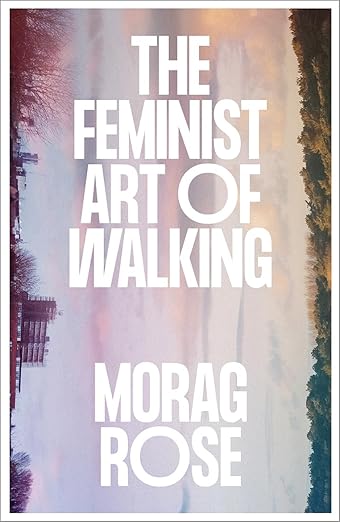
The Feminist Art of Walking with Morag Rose

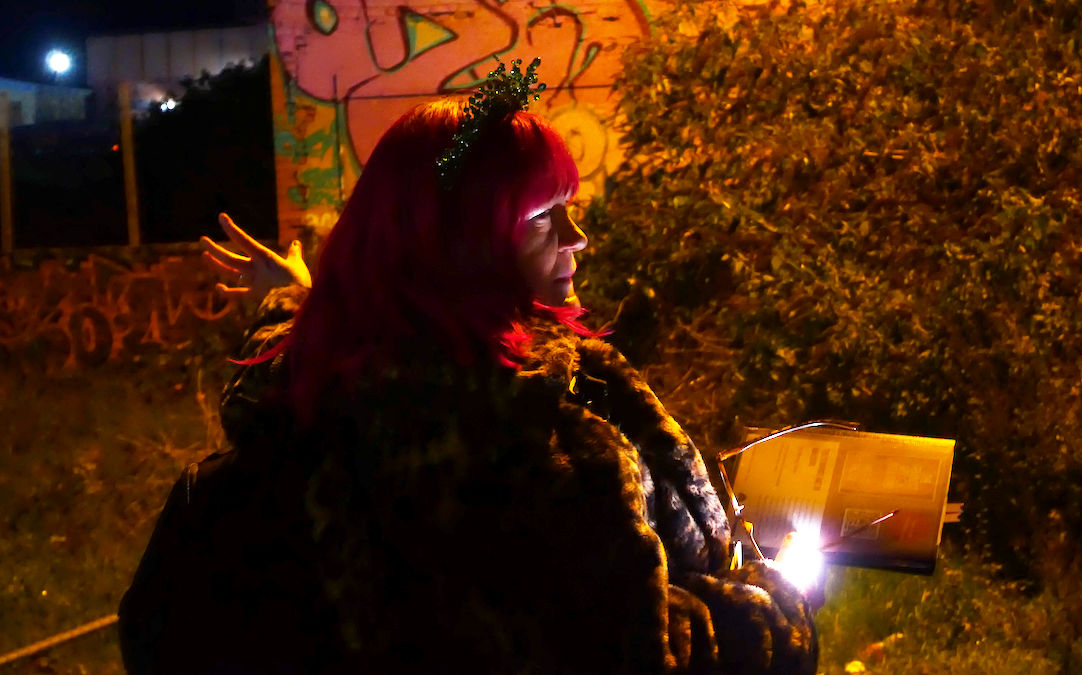
Close your eyes for a few moments, and take a walk in your mind. Wandering urban backstreets and city corners, you pause at a piece of graffiti where a woman with bright pink hair is speaking into the night beneath a spray-painted cosmos of planets and stars. A group of curious-looking people in warm coats stand around her, listening intently. To the average passer-by, we are an intriguing collection of oddballs standing around, loitering on an almost freezing November night. They would be right.
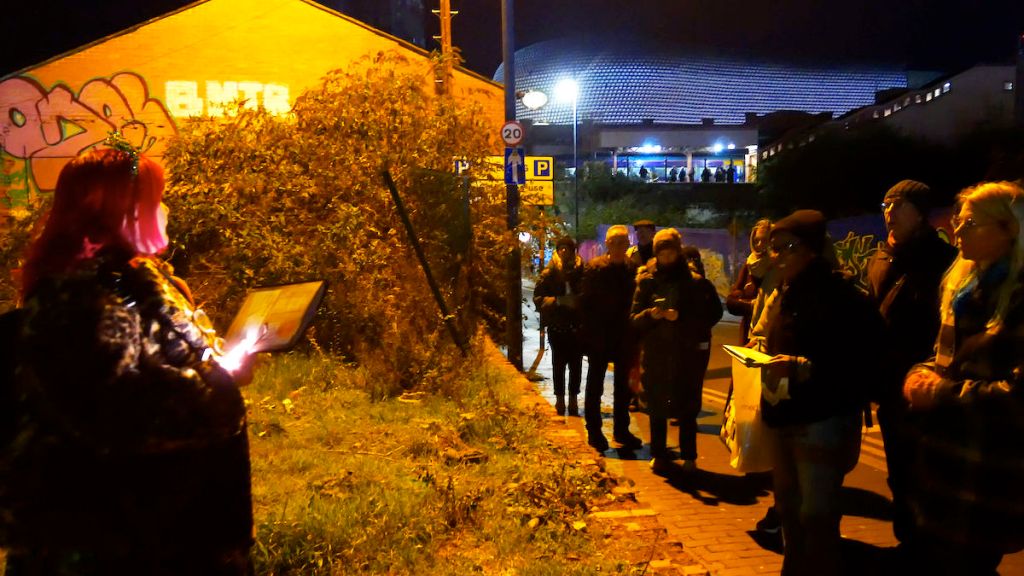
Photo © Andy Howlett

We gathered on that chilly evening for a book launch with a difference. Morag Rose, author of The Feminist Art of Walking, led us on a walk around the streets of Digbeth before her launch event at Voce Books. We stayed close to the bookshop for the duration, doing more loitering than walking whilst Morag gave several readings from the book. As founder of the Loiterer’s Resistance Movement (LRM), Morag is accustomed to reclaiming the art of loitering with intent. A Manchester-based not-for-profit collective of artists, activists and urban wanderers, the activities of the LRM form a radical context for much of this unique publication. 
“I am a loiterer because I am curious, I want to explore and ask awkward questions.” – Morag Rose

Rose claims the mantle of anarcho-flaneuse, alongside performance artist and part-time lecturer in Geography at The University of Liverpool. Her new book is based partly on a PhD thesis about women walking the city, as well as LRM activities and her lived experience. She actively campaigns for better-designed public spaces to make walking and belonging easier for those living with disabilities and from marginalised groups. Rose points out that the “assumption that walking is simple: one foot in front of the other, easy does it, primal, instinctive. This assumption is a fallacy that all bodies are alike and walking comes ‘naturally’ to all”

As for many creatives, the pandemic offered opportunities to say new things about walking and how we get around (or don’t). The Walking Publics/Walking Art: Walking Wellbeing and Community During Covid-19 initiative was an AHRC-funded project by Rose and her collaborators, which explored the potential of the arts to sustain, encourage and more equitably support walking during and following the pandemic. Our lockdown months were when I reoriented my own work towards walking art, having received an Arts Council development grant, which led to a PhD in landscape and inclusion. As a researcher in this field, I can confidently say that walking art is no longer the terrain of lone, white male artists, but an inclusive field nurtured by collectives such as Walkspace. As Rose writes, walking provides “an opportunity for multi-sensual exploration and a deep connection with space, place and communities”. Through the medium of creativity, these opportunities are extended far and wide.
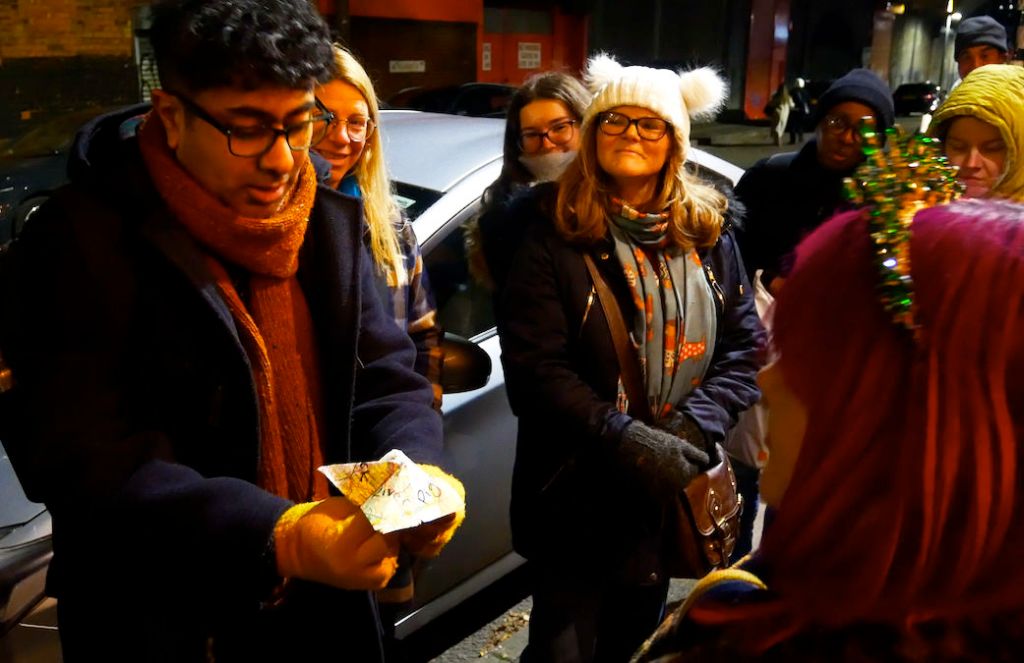
Photo © Andy Howlett

Tracing our footsteps back to the book, Rose builds particularly on feminist perspectives to explore the act of walking in an inclusive and intersectional way. Integrating queer and disabled perspectives, the book also outlines issues around privilege. The Feminist Art of Walking makes assertive strides into questions of where we walk and who public space is for. Taking the reader on a journey through several locations, Rose examines mostly urban locations, with references to the rural. Beginning in Manchester, the book meanders through Liverpool, Sheffield, Eastbourne and smaller communities. The Eastbourne chapter pinpoints the start of Rose’s journey in thinking about how women walk, and the fear-based narratives that inform so much of women’s wayfinding. Rose writes of learning her ‘gender limits’ in younger life, through all-too-common experiences of harassment and intimidation. She asserts that women’s need to protect themselves is “embedded in our daily routine”, a narrative that the LRM attempts to undo. As Rose writes: “I am a loiterer because there are places I feel scared to go alone”. Most chapters in The Feminist Art of Walking are set in England, except for a spin through Ebbw Vale and Rose’s Welsh ancestry. As a resident of Cymru, I particularly enjoyed this chapter and the author’s comments on connections to place and ancestry. 

“There wasn’t an actual photograph in my pocket in Ebbw Vale as I feared a relic would get crumpled or put though the wash. I don’t think I need it – the dialogue is in my head. If I do fancy a visual nudge, there’s a galaxy of images on my phone. We all walk with ghosts, ancestors and descendants wherever we go, it’s whether we choose to let our imaginations tune into them that determines the conversations we have (…) Wherever I walk now, my mother and nan are here, in my genes, my dreams, my wayfinding and my wonky footprints”. 

After the official launch at Voce books (co-organised by Walkspace) our group of temporary loiterers disbanded, all the wiser and a little bit more at home in the world. This is a book about belonging on a deep level, and sharing experiences of what it means to be here. Rose reminds the reader that “you belong here and if that is not obvious then create your own welcoming committee”. Using the metaphor of desire lines, Rose asserts that a path made through intuition may well be walked by others, deepening the grooves and creating bolder paths.

The Feminist Art of Walking does just that, encouraging people of all genders and expressions to move in resistance and solidarity. What strikes me most about this book is the potentiality within its pages, and the power inherent within a simple, everyday walk. As Rose writes, walking is a source of belonging and community, solace and standing up for what we believe in; all within a passing hour, or as Rose puts it “everything and nothing written with our feet”. 
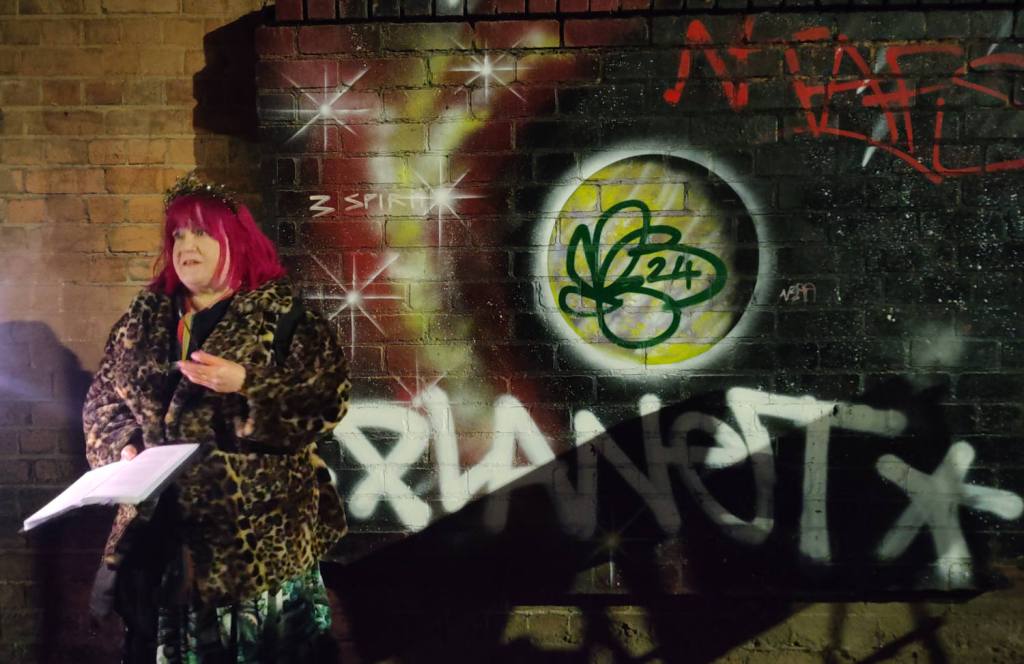
Morag Rose and Digbeth graffiti. Photo Emily Wilkinson

The Feminist Art of Walking is available at Voce Books (online, or if you’re in Birmingham) for £16.99, from bookshop.org or your usual bookseller.
Categories
Guest Posts Inspiration Reviews

This Albion – a book extract

An invitation landed in the Walkspace inbox that was too good to pass up:

“I’m writing to bring your attention to an event – the launch of a pamphlet of writing about walking – that might be of some interest to your members. I’m told there aren’t many tickets left, but there’ll doubtless be walk-ups.”

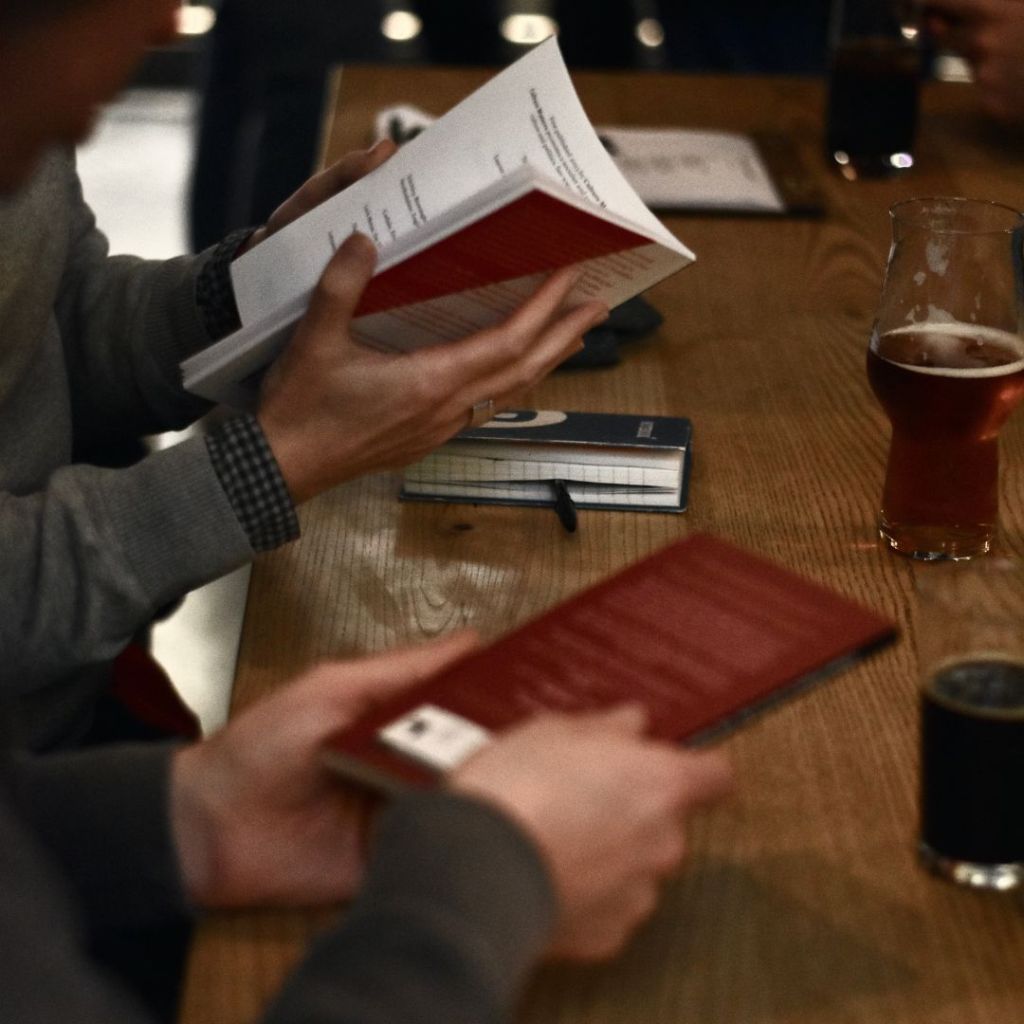
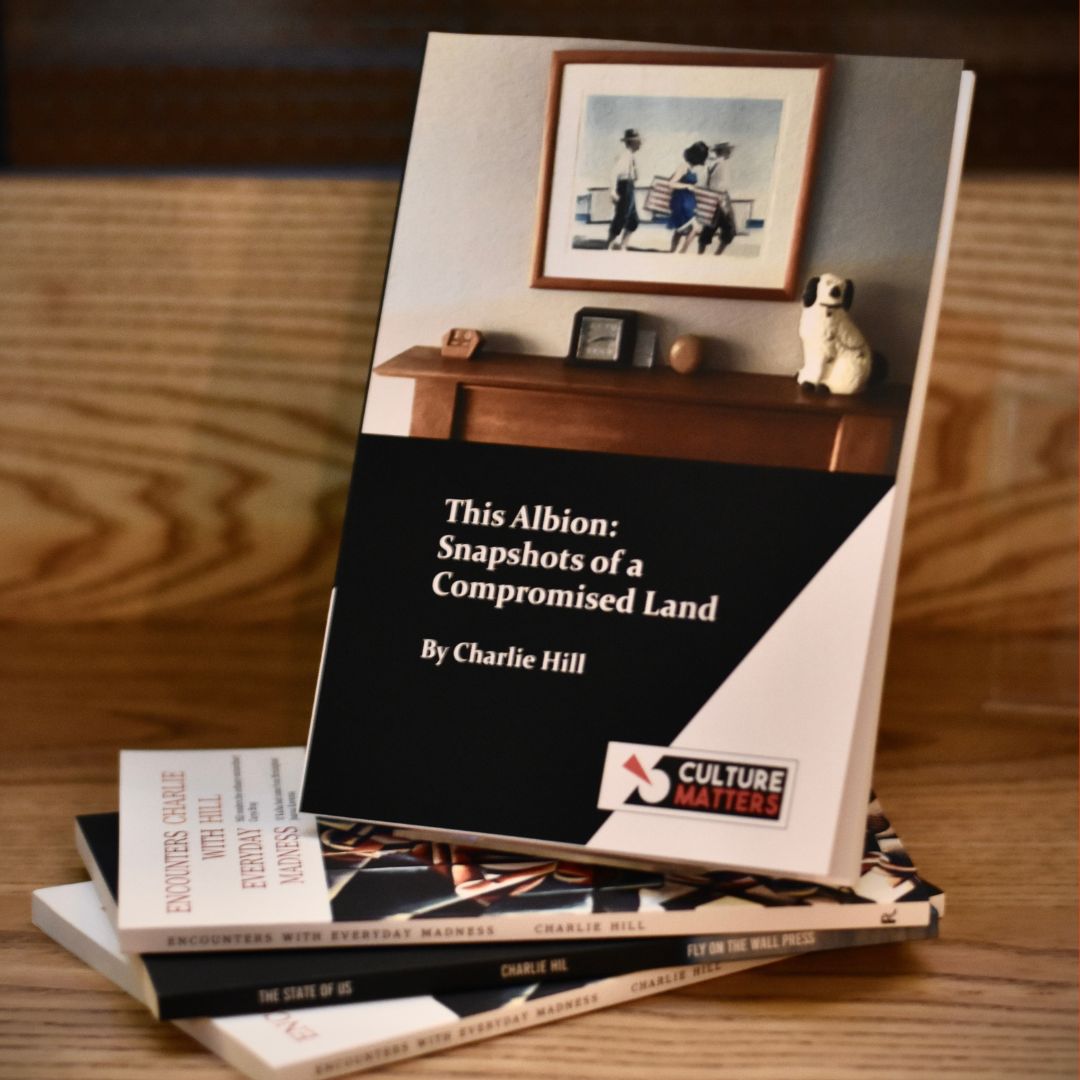
The event was hosted by Voce Books and the pamphlet was “This Albion: Snapshots of a Compromised Land” by Charlie Hill, an author once described as Birmingham’s answer to Franz Kafka. Curiosity piqued, a group of us headed out to Digbeth on a bitter November evening to see what Birmingham’s Kafka had to say about walking.

In the last two years Digbeth has become a hub of Birmingham’s literary scene with the arrival of Voce Books and the founding of Floodgate Press. Between them these two have done invaluable work in championing and showcasing homegrown talent, revealing just how much great writing there is going on in the city. Stepping into the railway arches that house Kilder Bar for one of Voce’s events, you can feel the buzz in the air, and this night is no different.

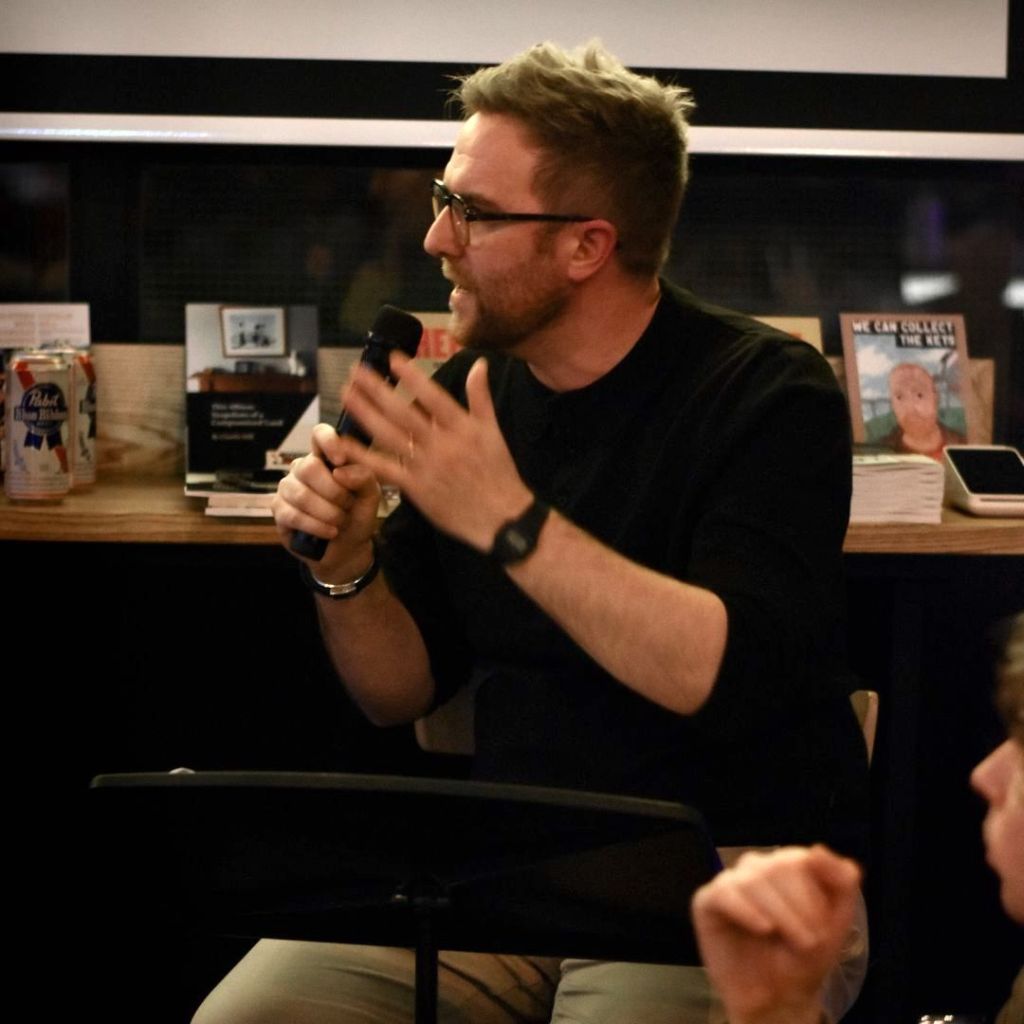
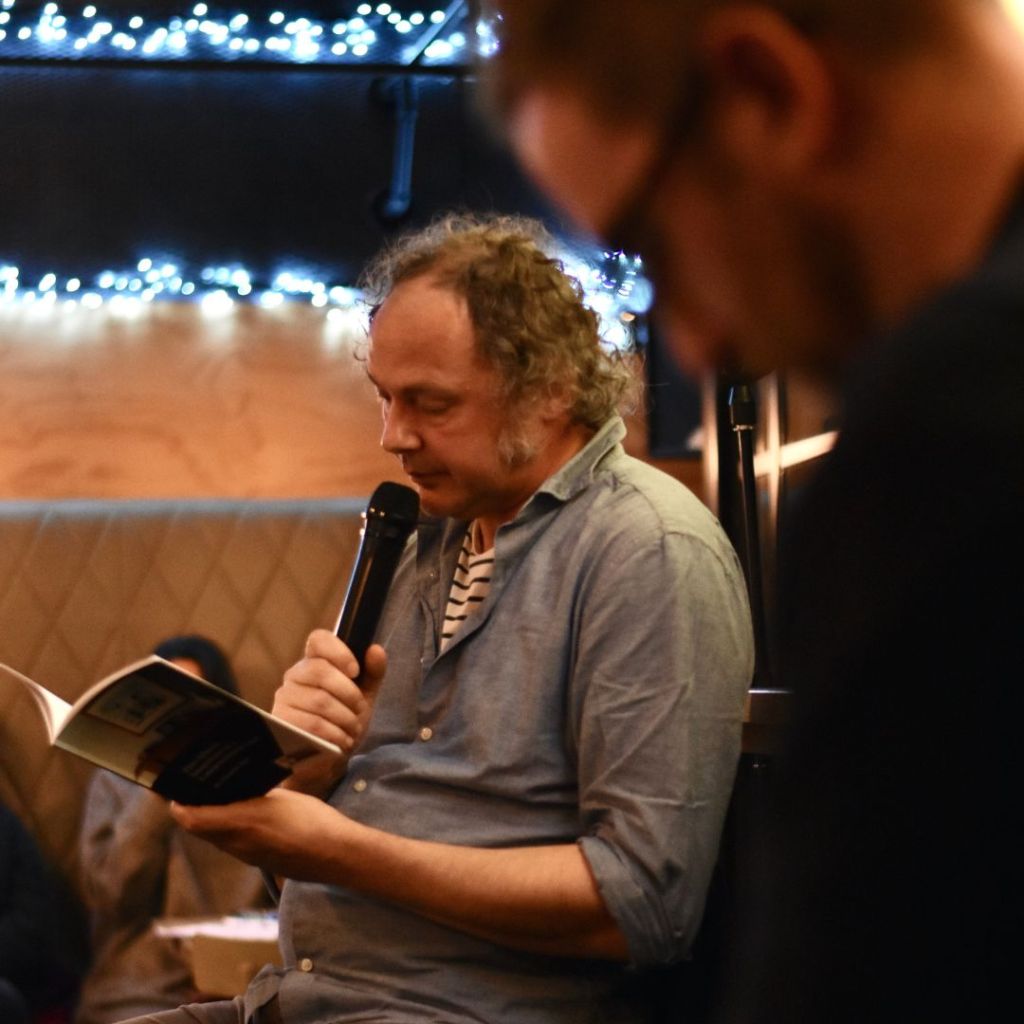
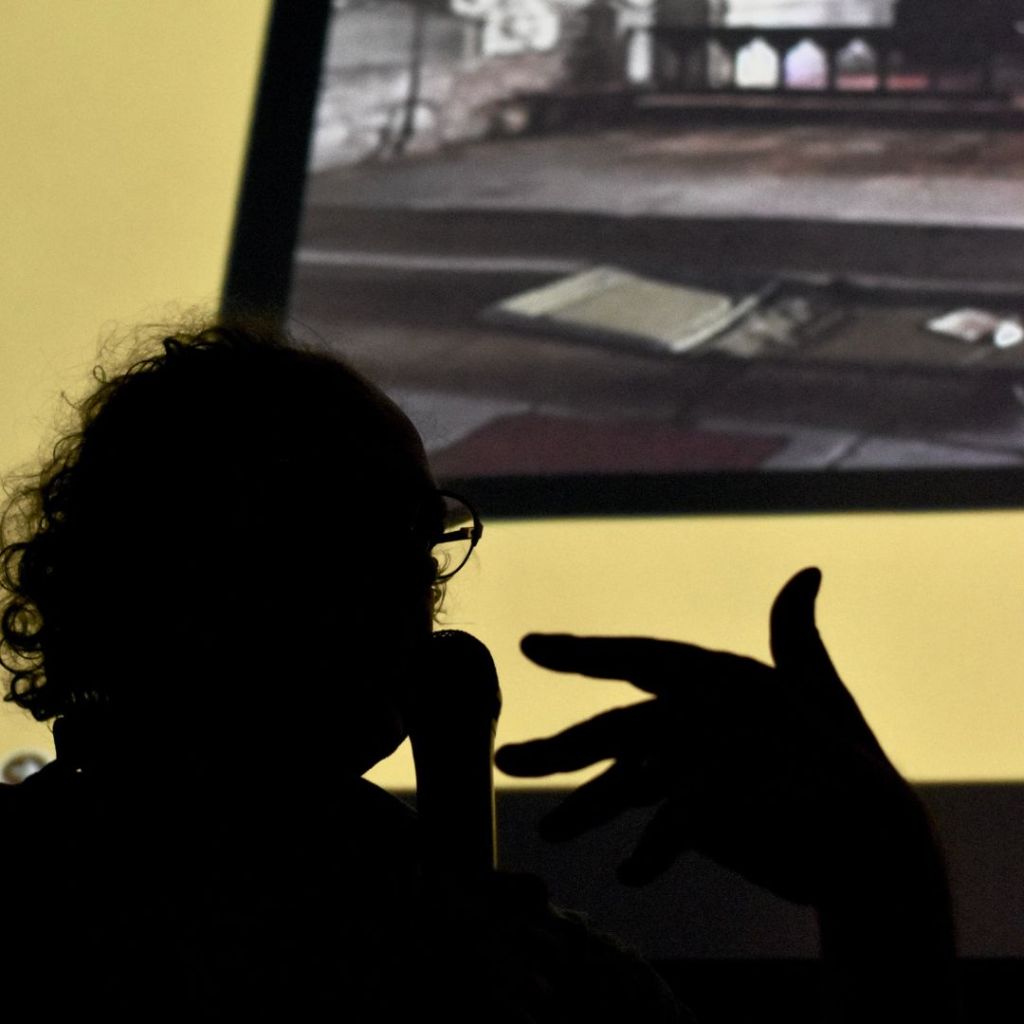
Another sell-out event, we fight our way to the bar and then take the only seats left, right at the front, within sniffing distance of the author. The night unfolds as a casual back-and-forth between Hill and Voce Books co-owner Clive Judd, riffing off some of the themes explored in the book such as authenticity, “champing” (church camping), the joy of Premier Inns and the overuse of the term “edgelands” in contemporary place-writing. Photos from the book appear onscreen behind them; literal snapshots from Hill’s travels, demonstrating his eye for the absurd within the mundane.

The book itself is an offbeat travelogue and part memoir that is by turns poignant, sardonic, world-weary and compassionate. Over the course of its modest 47 pages we visit 21 locations across England, Wales and Scotland and are treated to Hill’s observations and musings about second-hand bookshops, old pubs, Victorian cemeteries and the etiquette of countryside walking. His writing is direct and concise, sometimes very funny and he has a way of crafting a final sentence that reframes all that’s come before, landing a real emotional punch.

With the subtitle “Snapshots of a Compromised Land” this easily could have been a lot of sneering from another grumpy old man but mercifully that’s not the case. Don’t get me wrong, Charlie Hill IS a grumpy old man but his grumpiness stems from a long-simmering rage and sadness at the injustices and indignities of a land riven by inequality. There may not be much hope in these snapshots but there is plenty of humanity.

Charlie kindly shared with us this extract about the Birmingham to Worcester canal to give you a flavour of the work. If you like what you read do consider buying a copy through the link below.

Birmingham to Worcester Canal

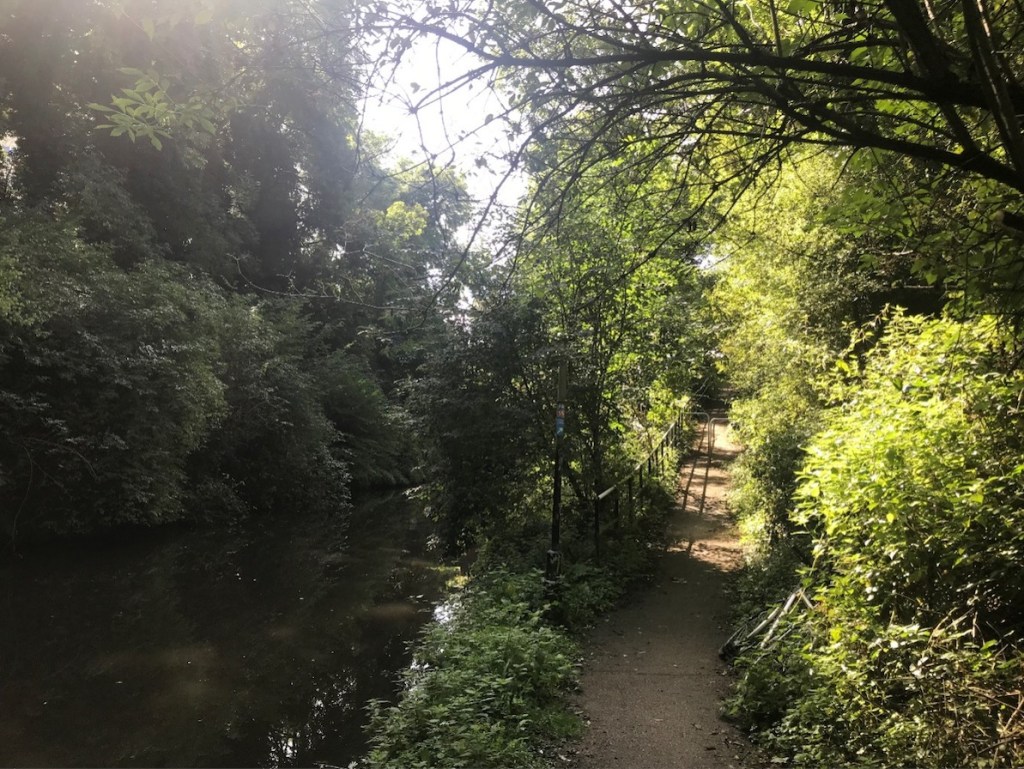
The canals of Birmingham – with their kingfishers and railway lines, their willow herb and jays and graffiti – exist outside the less obviously mutable suburbs they pass through: underneath too; the banks of the towpath are steep and dark and when you re-enter the city, you emerge blinking with surprise at where you are, and how different the light seems. 

There’s a directness to walking the canals. Although they turn corners and curve, they feel like 18th century ley lines connecting factory yards, parks, churches, and other areas of communal ritual. The Birmingham to Worcester canal is like this. From the city centre it goes out past the commercial junctions of Five Ways, through the student accommodation and apple trees of the Vale, past the university itself to Bournville, where the station is done out in Cadbury purple and the air smells of chocolate. You might see egrets here.

Just beyond Kings Norton is Wast Hills tunnel. It’s a mile and a half long. Kings Norton is a parish that used to be in Worcestershire, outside the city’s boundaries. There is no towpath through the tunnel and walkers are sent up and onto the Hawkesley estate, in the overground outskirts of the suburbs. Once I tried to find the other end of the tunnel, setting off past a canalside cottage and a large secondary school in the direction a heron might fly.

Photo © Charlie Hill

I didn’t find it. Roads sweep through Hawkesley but it’s warren-like in places too, with shortcuts as criss-crossed as the towpaths seem straight. There are discarded shopping trollies in this closely-knit patchwork of social housing, twisting alleyways and shin-high picket fences, there are desire paths, and deep scarlet haws in confusions of undergrowth. It’s easy to project, to romanticise this anti-burb, this liminal space, this neither-one-thing-nor-the-other-ness, and that of the waterway that has created an underworld beneath the estate; the entrances to the tunnel are called portals, and I found Yarrow Drive led to Harebell Gardens, which led to Bargehorse Walk. But it’s worth remembering that the canal was cut into the earth like an industrial wound, by working people who died in its cutting.

Extract from This Albion: Snapshots of a Compromised Land © Charlie Hill, 2024

This Albion is available to buy at Culture Matters. Charlie Hill’s other published works can be browsed on his website.

About Charlie

Charlie Hill is an internationally-acclaimed author from Birmingham. He has written long and short form memoir, and contemporary, historical and experimental fiction. He has been described by Natalie Haynes as ‘the chronicler Birmingham needs’ and compared by his fellow writers to KafkaBeckett and Georges M Perec. His second collection of short stories – Encounters With Everyday Madness – was shortlisted for the 2024 Edge Hill Prize.

Categories
Posts Reviews

What is Walkspace three years on?

1 A community and a regional hub

The main benefit of Walkspace – and the reason for starting it – was simply to gather weird walkers together. After attending a walking conference in Plymouth, we figured that between us we probably knew enough people in the Midlands who might be interested in walk-based arts, too. So we made a list and reached out to people across the region.

We’ve had a pretty solid response from that original seed. In three years we grew from three to nearly 50 members (now back down to 30 committed members) and formed a central hub for anyone interested in walking as a creative practice. 

Our community of creative walkers hailed from all kinds of backgrounds, reflecting the universal act of walking (or moving, since not everyone walks). There are, in the group, artists, writers, poets, photographers, filmmakers, academics, conservationists, ethnoecologists, horticulturalists, sociologists, journalists, mindfulness teachers, musicians, performers, producers, curators, pavement plant chalkers and long-distance walkers. 

All we asked as entry criteria were that members:

  • live in the West Midlands region (so we’d have a chance to walk together)
  • use walking in a creative way 
  • share what they were up to with other members

We don’t want there to be a hierarchy. Anyone can run a walk (a Walkspace members walk or a public ‘Erratic’), write for the website, social media or newsletter, pitch ideas to the group, or ask for help, support or collaboration. But for practical reasons, there is a small committee to keep things semi-organised and think about overall direction .

In three years, it’s become a functioning community of quiet lurkers, dip-in-occasionally types and more regular interactors. It blooms into life seasonally with ideas and projects like desert flowers, but also hibernates for days and weeks at a time. And that’s fine.

The point is, we are no longer alone in our various weird walks. We’ve found fish of the same stripe.

2 A place to find collaborators and audience

What’s been interesting to see is the forming of various collaborations. Many of us have now met in person on various members walks or at online member salons where we’ve shared what we’ve been doing walkwise. There’s also a group WhatsApp for everyday chat. Getting a sense of people beyond their member bios has created a lot of connective tissue, inspiration and friendship. 

The first time we met up, for example, I vividly remember long-distance walker and artist Daniella Turbin getting out her highlighter criss-crossed OS map on a beer garden picnic table and impressing everyone with her plan to walk in every single kilometre square. We then visited her on her walking art residency at the New Art Gallery Walsall, went on a walk together and virtually tracked her year-long walk around the UK – which was documented via Daniella’s Instagram. In the background, we also acted as an informal online support crew should she need us.

That’s just one journey within Walkspace. There’ve been plenty more examples of mutual support and collaboration happening as a result of Walkspace. For example:

  • Filmmaker Ben Crawford found a key interviewee in Kate Green for his film From The End of the Road (Ben also roped a few of us into a Dazzle Walk to serve as a visual thread through the film – pictured above). 
  • Interdisciplinary artist Kate Green called out for a team of willing testers for her WalkCreate commission – and so, on a day out to Leominster, we wandered in non-linear ways to understand the challenges facing people with dementia. 
  • Artist …kruse and photographer and mindfulness teacher Laura Babb responded to a call out for walks for Birmingham’s first Urban Tree Festival that I helped organise for a tree charity.
  • Visual artist Andrew Howe, musician Bethany Kay Hopkins and walking artist Andy Howlett came together on a funded project as Walkspace to celebrate a Dudley nature reserve
  • In Parallel Walking, we embarked on a walk-based cultural exchange between Walkspace in Birmingham, UK, and Jalan Gembira collective in Yogyakarta, Indonesia, funded by British Council.
  • Ultimately, in June this year, we held our first group exhibition, – Walkspace 23 – showcasing the works, walks and creative practices of 20 Walkspace members.

It’s been great to see members joining up and doing their thing – individually, together or even en masse. And, of course, many of these walks and projects are publicly oriented, interacting with other arts orgs, reaching different communities and introducing different ways of walking to a wider audience.

3 A support system and a resource

Walkspace members group walk through Handsworth

Originally we thought Walkspace might become a peer learning platform. And that has happened to some extent, although in informal ways. With many different experience levels, skills and backgrounds in the group, there is usually someone to ask for advice or connections. (Personally I’ve learnt a lot from chatting directly with more experienced artists and been given some very useful feedback and support on my first Arts Council application.)

Members learn ambiently through contributing conversations, walk photos and links on the group chat. And there’s a big social element to the members’ walks (Handsworth stone circle walk and picnic, pictured), where people can practice leading walks in a relaxed environment.

Support can also be practical. We’ve been walk marshals, joined walk experiments and promoted member projects through our social channels. For Megan Henebury’s A Figure Walks, for example, we acted as a safety and support crew as she walked the length of the River Rea IN the River Rea – and also created documentation with Pete Ashton following along with a camera. You can read all the Walkspace posts on this project here.

I also think we’ve supported people to join who might not see themselves in a traditional ‘arts context’ to play a part in the collective. It’s been interesting to read the blog posts of Robson, one of the long-distance walkers in the group, for example. And one day I’ll get up early enough to join the Walkspace member who is secret pavement chalker.

4 A place for artistic development

Fiona and Kruse

As a personal example of Walkspace’s value, my experience as part of a collective has been pretty transformational. Before Walkspace I was a walker for health and fitness reasons only, doing my daily 10,000k steps to a soundtrack.

Through Walkspace, I started to develop into a more creative walker: working individually, collaboratively and collectively, personally and publicly, and being mentored through an emerging walking art practice by generous fellow members.

It’s been quite the journey from 2020 to here – from initial walk experiments, to local walk ‘n’ talks, to leading walks, to getting walk commissions, to creating live art walks, to an international walk exchange, to presenting at 4WCoP on how women walk, to being part of the group exhibition. Sometimes I look back in wonder at the projects I’ve been involved in, such as:

  1. Extreme Noticing under Lockdown – a collaborative Walkspace video essay about starting a walking collective during a pandemic.
  2. Night walks – group walks by new moon, full moon and in the snow, tapping into the power of invisibility. 
  3. Birmingham Dazzle Walk (pictured) – testing city surveillance with fellow Walkspace member …kruse using the cloak of female invisibility in middle age (counterbalanced by a follow-up collaborative Crone Walk of high visibility). 
  4. Stirchley High Street Highlights – a counter-touristic, anti-gentrification walk tour leaflet compiled with Walkspace alumni Pete Ashton (that the local newspaper took a bit too seriously).
  5. Parallel Walking – in which three Walkspace artists and three Indonesian artists explored their motor cities in parallel, resulting in an exhibition and digital zine.

All of these were made possible in no small part due to Walkspace.

5 An opportunity to go on a collective journey

At our our last big online salon we asked what the group has meant to members:

“It’s been amazing – I’ve met someone that is now going into a new collaboration”

“It’s a chance to meet other walking artists and understand the range of practices. 

“I value the social walks – a rich experience of walking and talking”

“It’s made me write about not being able to walk, to seize the opportunity to explore that because I’ve been missing something”

“Creating a great community is like tending a garden”

“I like that is has a loose structure but is also fertile ground for collaboration”

“Being part of a cohort is huge, to get to know each other and collaborate – it’s a precious resource”

At our next meet-up, so that we can continue on our collective journey together, we’ll be asking the following question:

Where do we go from here?

Dawn walk through Digbeth

The next steps are about to be decided – with our first ‘AGM’ happening this weekend.

We’ve been approached to run walks, to collaborate on projects and to work with more formal organisations on occasion – and yet we are still informal and loose, and that is part of the charm for many of us. As one member put it, Walkspace is “sliding into being an entity, an organisation – and that’s where things get tricky”.

Whatever path we end up taking, it needs to be one that is viable, sustainable and creative for the membership. And one that we decide to walk together.

Find out more

Categories
Reviews

Walking Weird Britain

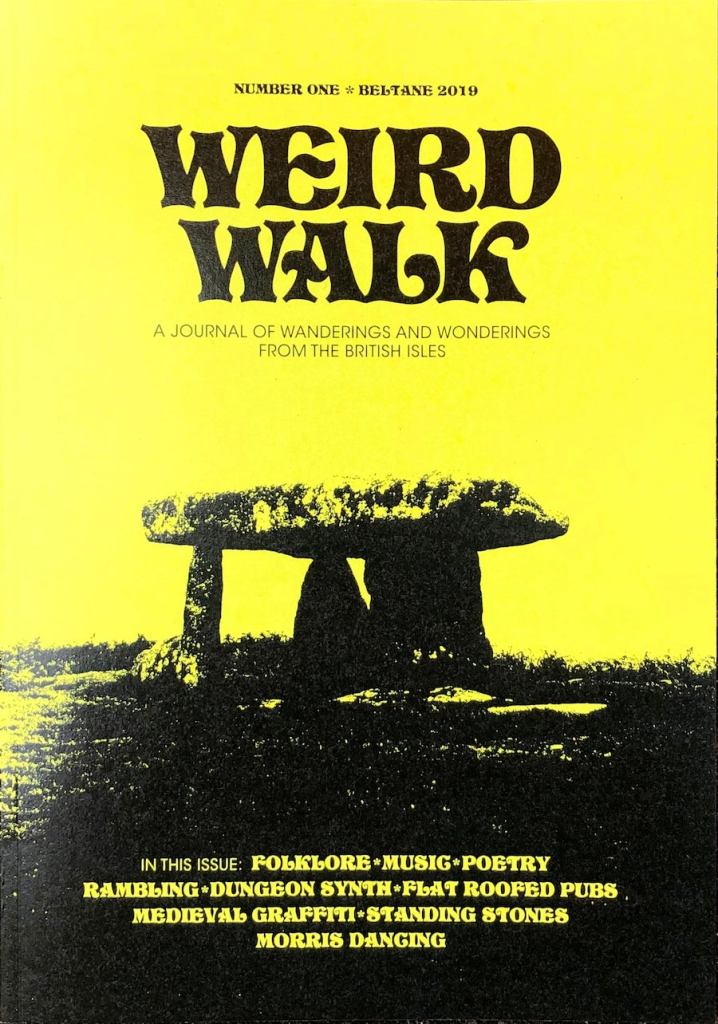
Weird Walk is a zine in the true sense of the word. Sure, it’s an A5 publication of 40-odd pages that you get in the post, but it’s also a collection words and pictures about a thing that the authors are obsessed with and which they need to put in a package to send into the world, hoping it reaches others who are equally obsessed with said thing. A zine, in other words. And in an era of zines-in-name-only (don’t get me started) it’s refreshing to see a real one.

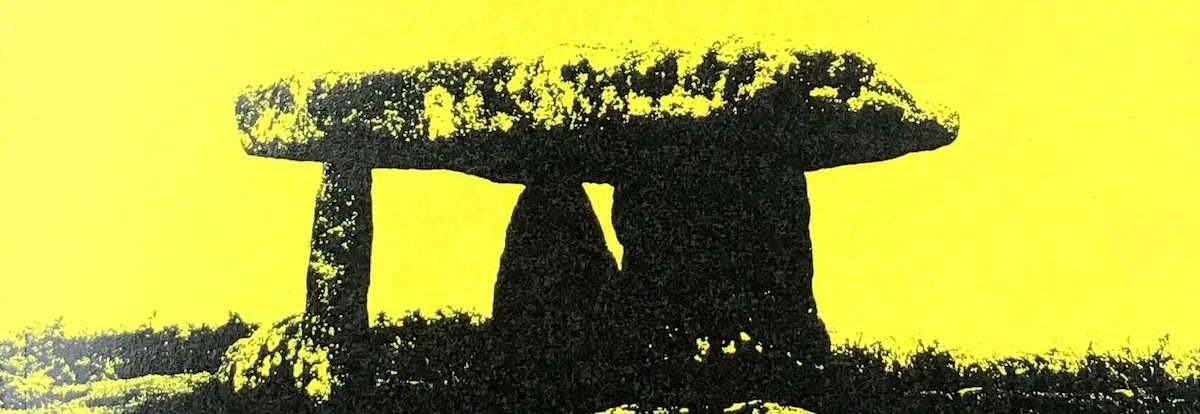
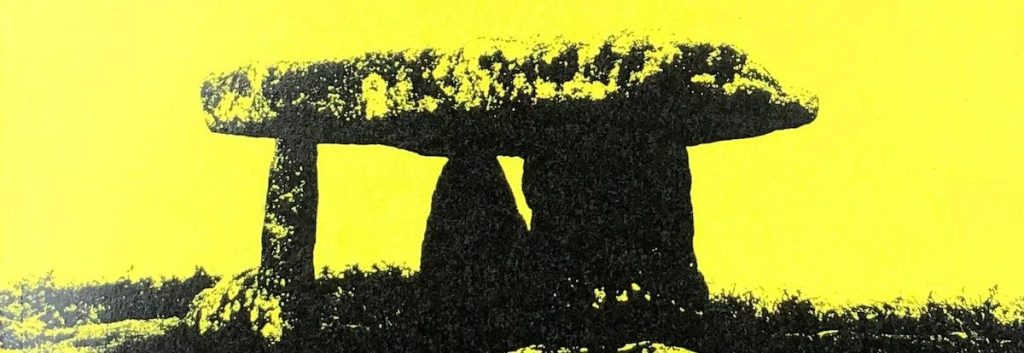
Weird Walk is about walking, obviously, and the stone dolmen on the cover, not to mention the typeface, indicates an interest in the old and ancient. Heading the editorial introduction is Julian Cope quote from his Modern Antiquarian period which pulls us away from traditional heritage and focusses us on a more contemporary take on the old, a revivalism of the pre-modern, looking far, far back for something, anything, that might save us from the eternal now of regurgitated pop-culture nostalgia. A search for something weird.

This idea of the New Weird has been bubbling around for a few years. John Doran of music/culture site The Quietus coined the phrase New Weird Britain as a bucket for all the acts he was seeing at gigs and festivals that didn’t fit into the music industry but also weren’t really part of the art world. Freaks and weirdos doing their thing because they needed to. He wrote a nice introduction to the concept for the BBC and themed The Quietus’ guide to Birmingham’s Supersonic Festival around it. Notably, however, New Weird Britain isn’t a unifying sound or genre. You will find stuff that sounds like folk music in the NWB bucket – Richard Dawson springs to mind – but that’s not why it’s in there. It’s more about being outside of the mainstream, but not in a tedious rebellious way. Less punk, more WTF.

When the New Weird crops up in movies the aesthetic is much more focussed. Paul Wright’s Arcadia, a feature formed from 100 years of archive footage, leans hard into Weird Britannia, joining up ancient pagan rituals with 20th century non-comformity. It’s a celebration of that which the Victorians and Modernists found horrific, but whose attempts to remove it from British identity left an urban, post-colonial Britain unmoored.

I always find it quite telling that, according to the horror tropes, we’re supposed to root for the Edward Woodward’s policeman in The Wicker Man but modern audiences are all about the islanders. Summerisle is no longer a heathen backwater but a utopia that has escaped the futility of the modern world. We want to follow Christopher Lee’s Lord Summerisle, to sing songs and copulate in the fields and burn Christians.

For contemporary movies I always think of Amy Jump and Ben Wheatley’s A Field In England as epitomising the New Weird. This story of four civil war deserters tripping balls in a mushroom-infested 17th century field bypasses heritage period drama, neatly sidesteps Monty Python absurdity and barely nods at Hammer Horror. It seems to be reaching for something older, something Shakespeare or Chaucer might have struggled to reach. The hallucinogenic mycelium threading this field brings the soldiers into contact with a land so vast and unknowable it’s closer to a Lovecraftian void. Britain is old. So old that even people in olden tymes could get lost in it.

English identity is a particularly fraught thing to go in search of, particularly when you associate it with the land. Richard Smyth’s article on Nature Writing’s Fascist Roots is a cautionary tale for those who would seek answers in England’s green and pleasant land. When we talk of the land we think of the countryside and forget that villages and farms are as “natural” as an urban factory and just as infused with class and race inequality, if not more so. In navigating this the weird is a helpful guide. When confronted by an idealisation of England, does it make you feel comfortable? Or does it seem a bit weird? Always go with the weird.

In the introduction to his epic survey of 1970s esoterica, High Weirdness, Erik Davis spends a while unpicking the word and its many applications through history. This bit on “weird naturalism” felt relevant.

Most of us have had experiences that, unless we have utterly misread them, put severe pressure on conventional realistic accounts of how the world works. We may have had a prophetic dream, or been struck by an absurdly recurrent synchronicity, or received advice from a forest creature, or glimpsed a bizarre object in the sky, or felt the presence of a loved one at the time of their distant death. Or we know people who report such experiences in ways we have no reason to disbelieve. If we want to earnestly describe such experiences without rejecting common-sense realism, we reach for the language of the weird. “I know it sounds totally weird but…” or “Pretty weird, huh?”

Why do we do this? One reason is that to characterize a phenomenon or object as “weird” is to sneak in no extra metaphysical claims; no divine writ or occult rumor is needed to vouchsafe the existence of strange and uncanny impressions or experiences. They are part of human life, at least if you are paying attention. At the same time, the weird does announce the appearance of something like anomaly, or at least deviancy—inexplicable, aberrant, or unsettling events or encounters that pull or twist against the norm. Statistically, such deviations may be perfectly routine. But they never feel that way. So we don’t know where to put them. Many of us forget such events, or sweep them under the carpet. And by using the label weird, we acknowledge them, but also trivialize them. The weird twists the profound depths it seems to point to into banal, even throwaway, surfaces.

High Weirdness, p8

The weird is the bucket we put things in that don’t make sense but don’t really matter. Once that bucket fills up and overflows, maybe we should start looking at it.

Weird Walk is a zine about walking. It has photos of prehistoric standing stones and Tudor woodcut figures. The typeface evokes a 70s hippy publication found in an Avebury cafe. Other than a feature on a suburban pub east of Birmingham, its content is firmly beyond the city. It’s a zine in search of something old, something from before. Something weird.

After invoking the arch-drood Julian Cope our editors ask “What is a Weird Walk?”

For us, walking is an active engagement with the British landscape and its lore. Whether traversing the chalk paths of the South Downs, or the shifting landscape of the Black Mountains we want to not just stretch the legs but also get thinking and talking and creating around the land and its history, both real and imagined.

Which strikes me as an admirable refusal to define the weird! You know it when you see it, and when you see it you put it in your zine.

The two main pieces in the first issue are interviews and mark out the boundaries of Weird Walking quite nicely.

Justin Hopper is quickly established as the spiritual father of this enterprise with his book The Old Weird Albion serving as a touchstone for the zine. An exploration of the South Downs, I was struck by how he approaches his walking as someone disconnected from the land. Like myself, he had a rootless upbringing, not really being “from” anywhere specific. So when his grandmother took him on walks he was like a sponge, ready to be “part of something old and wise”. The familiar is the enemy of understanding. To really see something it helps for it to be strange, beyond our everyday understanding. It’s an understandable irony that the rootless are the ones who best see the roots.

The other interview is with Matthew Champion of The Norfolk Medieval Graffiti Survey who leads a growing community of amateur historians looking for ancient markings in churches and other surviving buildings. He sees these scratched symbols as a link to all levels of medieval society, not just the priests and nobility. They also tell us about how people related to these buildings in an active way, physically manifesting their prayers with markings. Indeed, leaving a mark only became frowned upon in the Victorian era. It was seen as an acceptable way of communing with god, to leave your mark in his house.

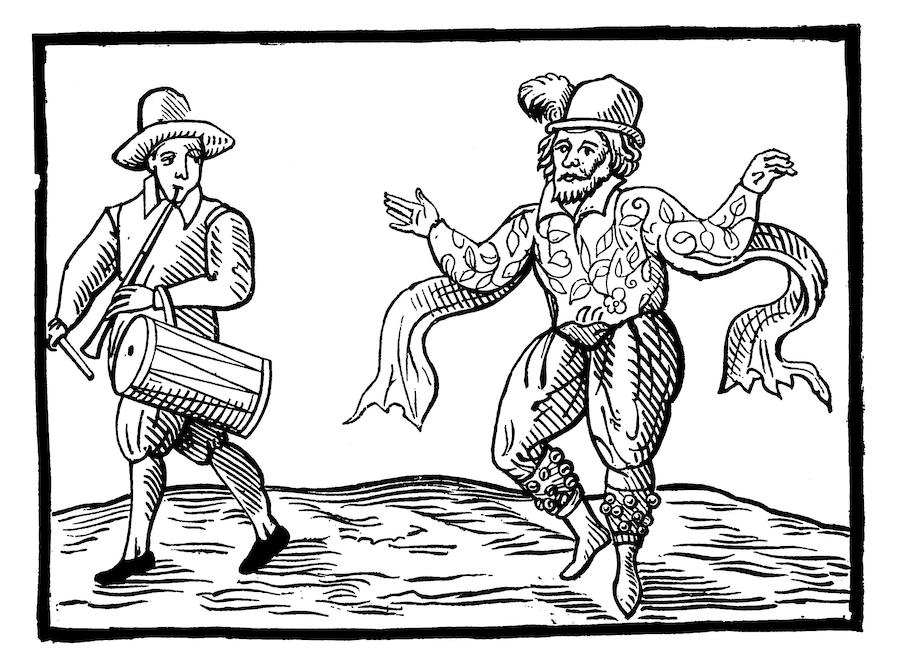
These two interviews give a necessary depth to the Weird Walk venture, anchoring and contextualising what would otherwise be fluffy zine-staples like music reviews and the obligatory poetry page. A two page history of William Kempe, the Shakespearian comic actor who undertook a 100 mile morris dance from London to Norwich, takes on a new pathos in this context. Kicked out of the theatre for his anarchic tomfoolery he embarked on his long dance across the land, embraced by the public and imbibing of much ale. But within three years he had died in poverty and obscurity. The English Renaissance had no place for his medieval pagan nonsense.

Kempe makes for a worthy icon of the weird walk because he was there when the sensible really started to kick in. Let us walk in his shoes and imagine a different, weirder world.

Weird Walk issues 1 and 2 cost £5.50 each plus postage and can be ordered from weirdwalk.co.uk.

This review covers the first issue. I’m saving the second for later, once I’ve properly digested this one.